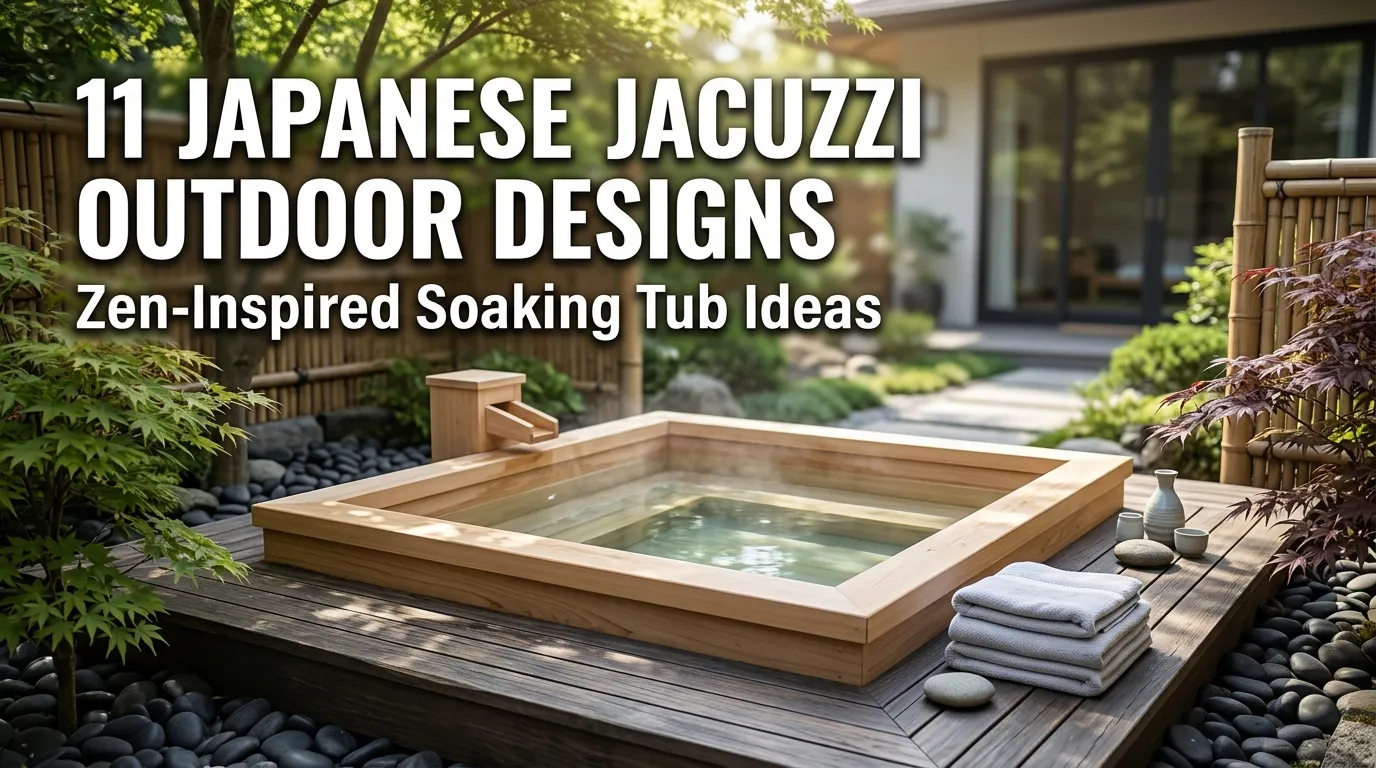
11 Japanese Jacuzzi Outdoor Designs Zen-Inspired Soaking Tub Ideas
A backyard jacuzzi can become much more than a place to soak when its design is inspired by the quiet simplicity of a Japanese garden. Instead of surrounding the water with lots of furniture and decoration, a Zen-inspired outdoor spa focuses on natural materials, thoughtful proportions, privacy, and a strong connection to the landscape.
Japanese-inspired outdoor spaces are especially appealing because they make relaxation feel intentional. Stone, timber, gravel, water, greenery, and warm lighting work together without competing for attention. Even a small backyard can benefit from this philosophy. You don’t need a huge garden or an elaborate architectural project to create a peaceful soaking retreat.
The most important principle is restraint. A few carefully selected materials often create a stronger impression than dozens of decorative accessories. Natural stone can establish the foundation, while timber adds warmth and greenery provides softness. Gravel can create a quiet transition between the spa and garden, while a simple screen can make the soaking area feel private.
In my experience, the most successful Zen-inspired outdoor spaces also pay attention to the journey into the area. A stone pathway, low planting, or change in elevation can make the spa feel like a destination rather than simply another feature beside the house.
Japanese garden design also emphasizes balance between constructed elements and nature. Straight timber lines can sit beside irregular stones. Smooth water can contrast with textured gravel. Carefully shaped shrubs can coexist with more natural planting.
The following ideas take those principles and adapt them for modern American backyards. Whether you are planning a complete outdoor renovation or simply want to make an existing jacuzzi feel calmer and more intentional, these designs offer practical ways to create a peaceful soaking environment.
Table of Contents
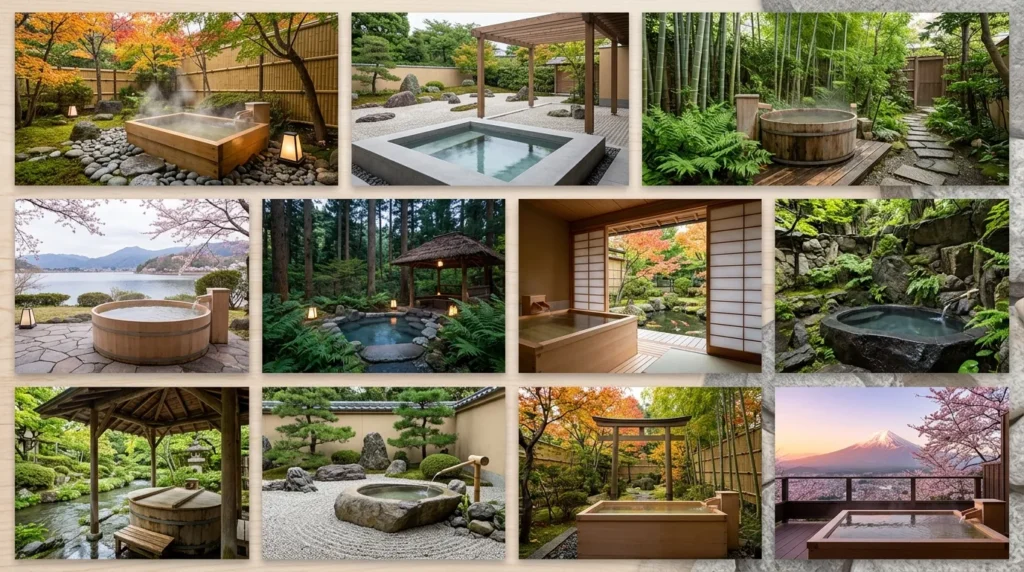
1. Timber Soaking Pavilion
Create a warm architectural shelter inspired by traditional Japanese timber structures.
2. Stone Garden Retreat
Use natural stone, gravel, and restrained planting to surround the spa with Zen-inspired texture.
3. Bamboo Privacy Screen
Create a secluded soaking environment with vertical bamboo and layered greenery.
4. Gravel Zen Patio
Use carefully raked gravel and simple stone elements to create a minimalist setting.
5. Hinoki-Inspired Surround
Bring the warmth of Japanese timber into a contemporary outdoor soaking area.
6. Garden Path Approach
Make the journey to the jacuzzi part of the relaxing experience.
7. Water and Stone
Combine still water, natural stone, and subtle planting for a serene composition.
8. Minimalist Tea Corner
Add a small resting area inspired by the simplicity of Japanese tea spaces.
9. Lantern-Lit Spa
Use warm, understated lighting to create a peaceful evening retreat.
10. Enclosed Garden Soak
Create a private garden room using walls, screens, and carefully selected plants.
11. Modern Zen Sanctuary
Combine the essential elements into one balanced contemporary soaking retreat.
1. Timber Soaking Pavilion
Quick Benefits
- Creates a dedicated spa room outdoors
- Adds warmth to modern landscaping
- Provides shade and privacy
- Works beautifully with stone
- Creates a strong Japanese-inspired focal point
Why It Works
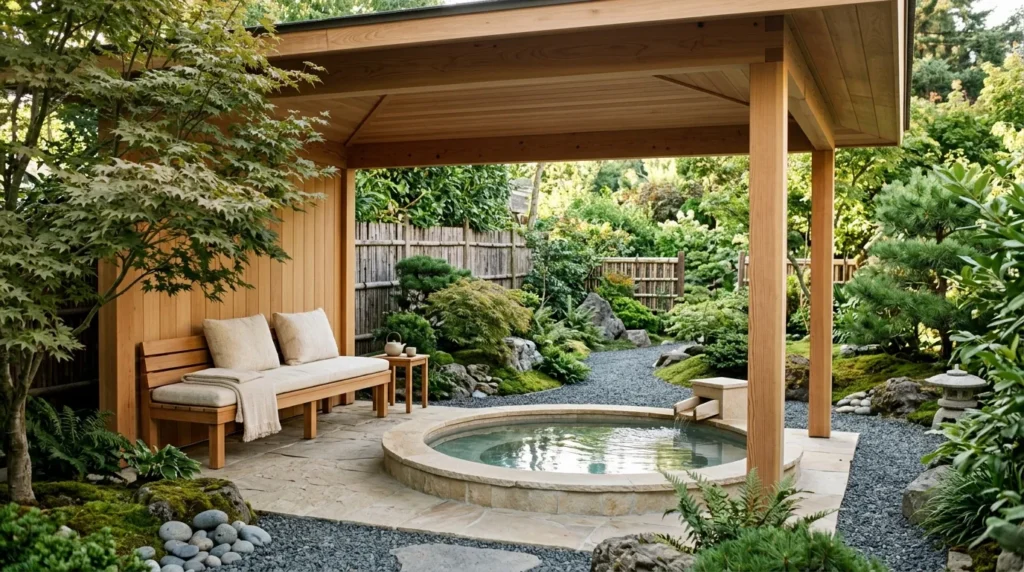
Timber is one of the easiest materials to use when you want an outdoor jacuzzi to feel inspired by Japanese architecture. Its natural grain introduces warmth while simple structural lines maintain the uncluttered appearance associated with Zen spaces.
A pavilion also creates a subtle transition between the home and garden. Instead of seeing the jacuzzi as an isolated object, the structure gives it a sense of place.
The design doesn’t need to imitate a traditional Japanese building literally. A contemporary timber pavilion with a low-profile roof, clean posts, and open sides can capture the same feeling while fitting naturally into an American backyard.
The combination of wood, water, stone, and greenery creates a particularly calming visual rhythm. Each material contributes something different without becoming overwhelming.
How To Style It
Choose durable exterior timber in a natural or lightly stained finish. Cedar and other suitable outdoor woods can create the warm appearance you want while complementing natural landscaping.
Keep the pavilion’s geometry simple. Slim posts and a restrained roofline generally work better than decorative details.
Use stone or concrete beneath the jacuzzi and continue the same material into a small walkway.
Add a simple wooden bench along one side rather than filling the pavilion with furniture. A few neutral outdoor cushions can provide comfort without changing the minimalist character.
If you want additional privacy, use vertical timber slats along one or two sides while keeping the best garden view open.
2. Stone Garden Retreat
Quick Benefits
- Creates natural texture
- Works with modern or traditional homes
- Adds visual permanence
- Complements water beautifully
- Helps integrate the jacuzzi into landscaping
Why It Works
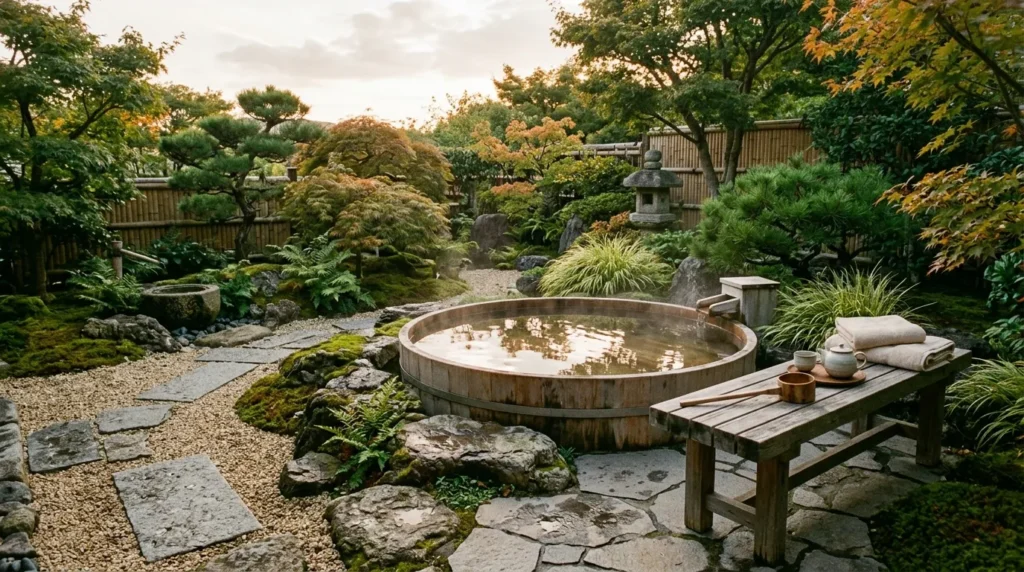
Natural stone is fundamental to many Japanese-inspired garden compositions because it introduces texture, weight, and a sense of permanence.
Around a jacuzzi, stone can visually anchor the water and help the spa feel connected to the ground. Instead of surrounding the soaking area with one large expanse of manufactured paving, you can combine carefully selected stone with gravel and planting.
The beauty comes from contrast. Smooth water sits against rough stone. Warm timber can appear beside cool rock. Soft moss-like greenery can soften hard edges.
The design should feel intentional without appearing overly symmetrical. A few carefully positioned stones can often create more visual interest than a complicated arrangement.
How To Style It
Choose one dominant natural stone and use it consistently around the spa. Large slabs can create a contemporary appearance, while irregular rocks can produce a more traditional garden feeling.
Keep the color palette subdued with gray, beige, brown, and muted green.
Place a few larger stones near planting beds rather than scattering decorative rocks everywhere. The empty spaces are just as important.
Use low-growing plants between stone areas where appropriate, leaving pathways and spa access clear.
A simple timber bench or stool can add warmth. Keep accessories limited so the natural materials remain the focus.
3. Bamboo Privacy Screen
Quick Benefits
- Creates immediate privacy
- Adds vertical texture
- Enhances the Zen atmosphere
- Works well in small spaces
- Softens modern architecture
Why It Works
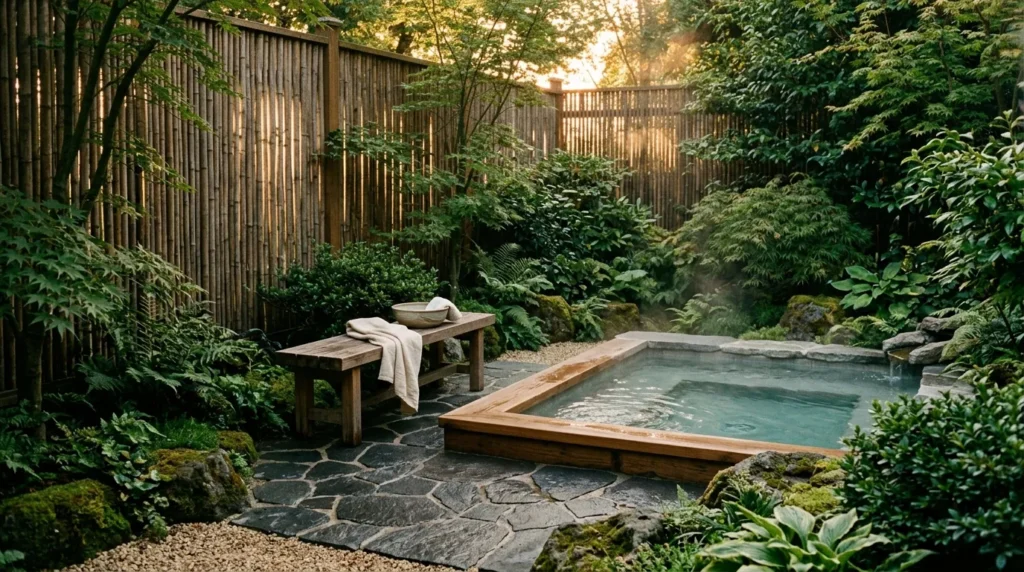
Privacy can make the difference between an ordinary backyard jacuzzi and a genuinely relaxing retreat. Bamboo-inspired screening creates enclosure while maintaining a strong connection to nature.
The vertical rhythm of bamboo also introduces movement and texture without requiring elaborate decoration. When paired with stone and water, the result feels calm and garden-like.
For homeowners who live close to neighbors, a privacy screen can be especially valuable. Instead of building a completely solid wall, a partially screened area can block the most important sightlines while still allowing airflow and natural light.
The key is selecting an appropriate bamboo or alternative screening material for your climate and maintenance preferences.
How To Style It
Use bamboo panels, properly installed timber screening, or a suitable architectural alternative behind the jacuzzi.
Keep the screen relatively uniform rather than mixing many different materials.
Place low plants at the base to soften the transition between screen and ground. Moss-inspired groundcover, grasses, or suitable evergreen plants can work beautifully.
Combine the screen with dark gray stone and warm timber for contrast.
Avoid using too many bright colors. Cream, charcoal, muted green, natural brown, and stone gray keep the environment peaceful.
For evening use, position a soft light near the base of the screen so the vertical texture becomes gently visible.
4. Gravel Zen Patio
Quick Benefits
- Creates a minimalist foundation
- Adds natural texture
- Works in compact spaces
- Visually connects the spa to the garden
- Requires very little decorative styling
Why It Works
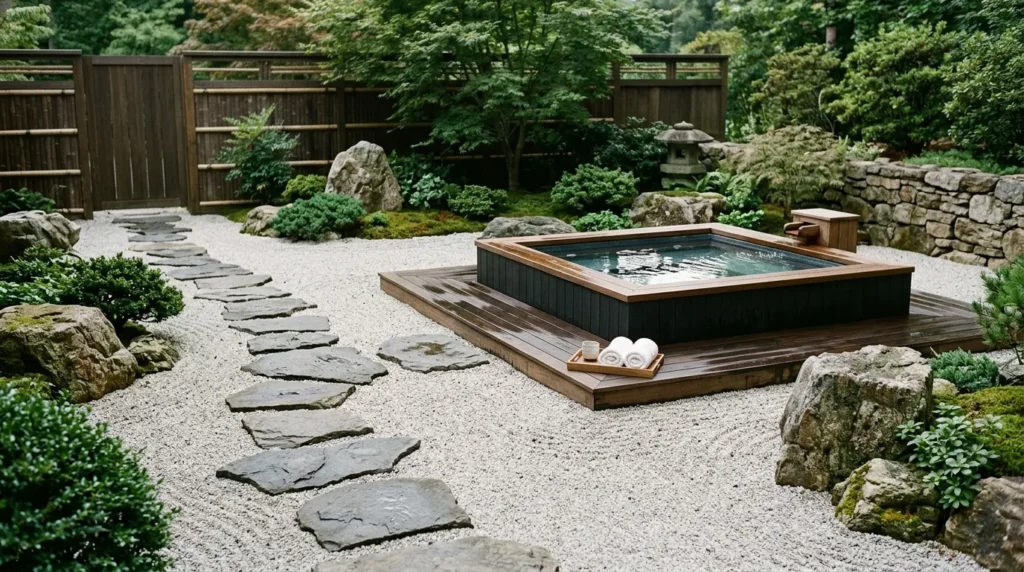
Gravel is a simple but powerful material for creating a Zen-inspired outdoor atmosphere. Its fine texture provides a quiet background for stone, timber, and greenery.
A carefully arranged gravel patio can also create the feeling of a Japanese dry garden without attempting to reproduce one literally. The important idea is visual simplicity and intentional spacing.
For a jacuzzi, the spa itself still requires a properly prepared support surface suitable for the equipment. Gravel can be used around that foundation to create the finished landscape.
This approach is particularly useful when you want the backyard to feel natural rather than like a conventional paved patio.
How To Style It
Select a fine, neutral gravel that complements the surrounding architecture and stone. Soft gray, beige, or warm brown can work well.
Create a clear path through the gravel using large rectangular or irregular stepping stones.
Keep the gravel area visually simple. A few carefully placed rocks or plants are enough.
Add a small timber bench near the jacuzzi and use natural woven or neutral outdoor textiles.
If you like the appearance of raked gravel, keep the pattern subtle and maintain it regularly. The goal is to create a feeling of order rather than excessive decoration.
5. Hinoki-Inspired Surround
Quick Benefits
- Adds natural warmth
- Creates a traditional bathing influence
- Works with contemporary spas
- Makes the jacuzzi feel more custom
- Complements stone and greenery
Why It Works
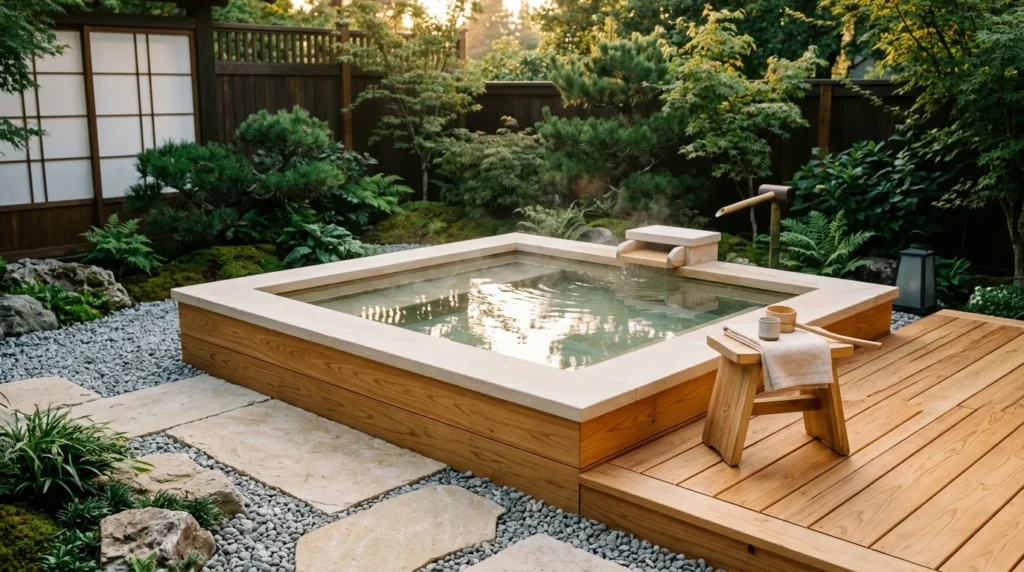
Japanese bathing traditions often emphasize the sensory qualities of natural materials, and warm timber is particularly effective around water. A light, clean wood surround can give a contemporary jacuzzi a softer and more intentional appearance.
You don’t need to use actual hinoki wood to capture the aesthetic. A durable outdoor timber with a similar warm, natural appearance can create the visual effect while being more practical for the conditions of your backyard.
The combination of wood and water feels immediately inviting. It also creates a warmer contrast against concrete, dark stone, or neutral spa cabinetry.
How To Style It
Use horizontal timber boards to create a clean, contemporary surround or bench. Keep the grain visible rather than using a heavy opaque finish.
Pair the wood with pale stone and soft gray gravel.
Add a simple wooden stool or narrow bench nearby for towels and accessories.
Keep the surrounding plants restrained. A few sculptural evergreen plants or grasses can provide enough greenery without hiding the timber.
For a more authentic bathing-inspired feeling, keep the area visually uncluttered and avoid excessive outdoor decorations.
6. Garden Path Approach
Quick Benefits
- Makes the jacuzzi feel like a destination
- Adds visual interest
- Connects the spa to the landscape
- Works well in larger yards
- Creates a calming transition
Why It Works
One of the most beautiful ways to make an outdoor spa feel special is to create a deliberate approach to it.
Instead of walking directly from the patio to the jacuzzi, a garden path creates a small transition between everyday living and relaxation. That simple change can make the experience feel more intentional.
Japanese-inspired gardens often use pathways to control movement and reveal different views gradually. You can adapt that concept without copying a formal garden.
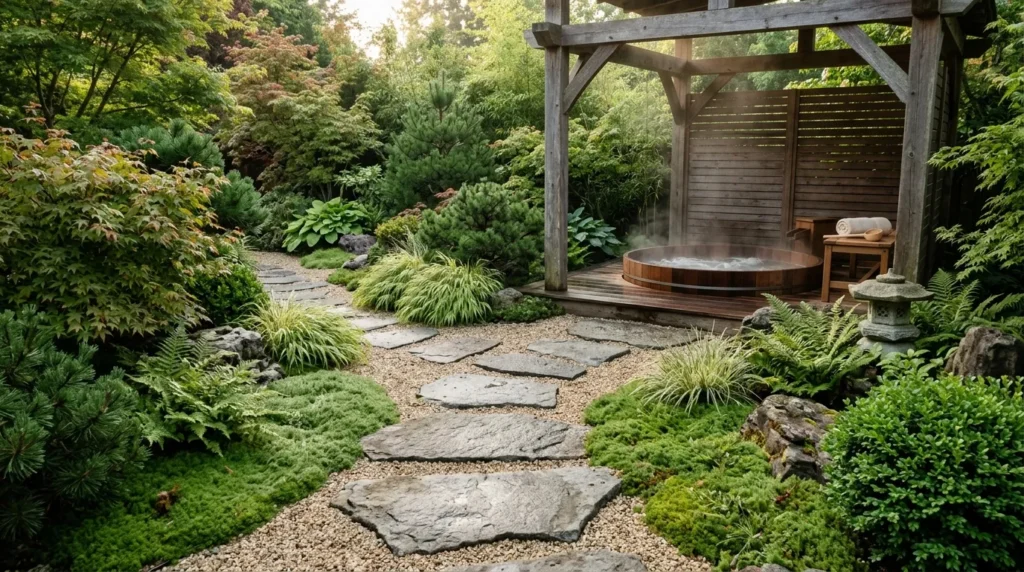
The path might curve slightly around planting, pass between stones, or use stepping slabs across gravel. The goal is to slow the visual experience down.
How To Style It
Choose natural stone stepping stones with enough space for comfortable walking.
Let the path pass through low planting, ornamental grasses, or carefully trimmed shrubs.
Avoid lining every edge with identical plants. Slight variation creates a more natural appearance.
Use the same stone around the jacuzzi so the destination feels connected to the journey.
A simple lantern or subtle ground light can mark the pathway after dark.
If the yard is small, even a short path of three or four stones can create the same feeling of separation.
7. Water and Stone
Quick Benefits
- Creates a soothing focal point
- Emphasizes natural materials
- Adds movement and reflection
- Feels resort-like
- Works beautifully at night
Why It Works
Water is already the central element of a jacuzzi, so introducing another small water feature can reinforce the sense of tranquility.
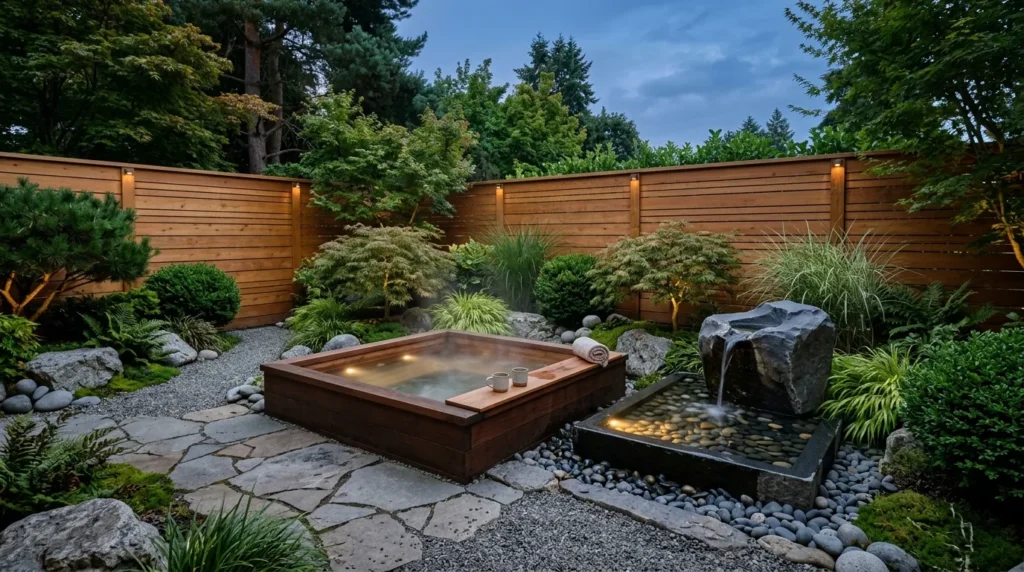
The feature doesn’t need to be elaborate. A narrow reflecting basin, small spillway, or simple stone fountain can provide subtle movement and sound.
Stone creates the grounding element. Its irregular texture contrasts with the smooth surface of the water, while greenery softens the transition between both.
This combination can make a relatively small backyard feel carefully designed because each element supports the others.
How To Style It
Keep the water feature smaller than the jacuzzi so it remains a supporting element.
Use natural stone that matches the spa surround and pathway.
A dark basin can emphasize reflections, while lighter stone can create a softer garden appearance.
Add a few plants near the edge but avoid covering the entire water feature.
At night, use very subtle lighting to highlight the water surface or stone texture.
The sound should remain gentle. A small, quiet feature is usually more relaxing than a loud waterfall.
8. Minimalist Tea Corner
Quick Benefits
- Creates a quiet resting area
- Adds Japanese-inspired character
- Gives the spa a second purpose
- Requires very little furniture
- Encourages slower outdoor living
Why It Works
A soaking retreat becomes even more enjoyable when there is a place to sit before or after using the jacuzzi.
A minimalist tea corner takes inspiration from the simplicity of Japanese tea spaces without attempting to recreate a formal tea ceremony environment. The idea is simply to create a small, peaceful place for sitting, drinking tea, reading, or enjoying the garden.
This works particularly well when the seating is positioned just outside the main spa area. It creates a transition between soaking and the rest of the backyard.
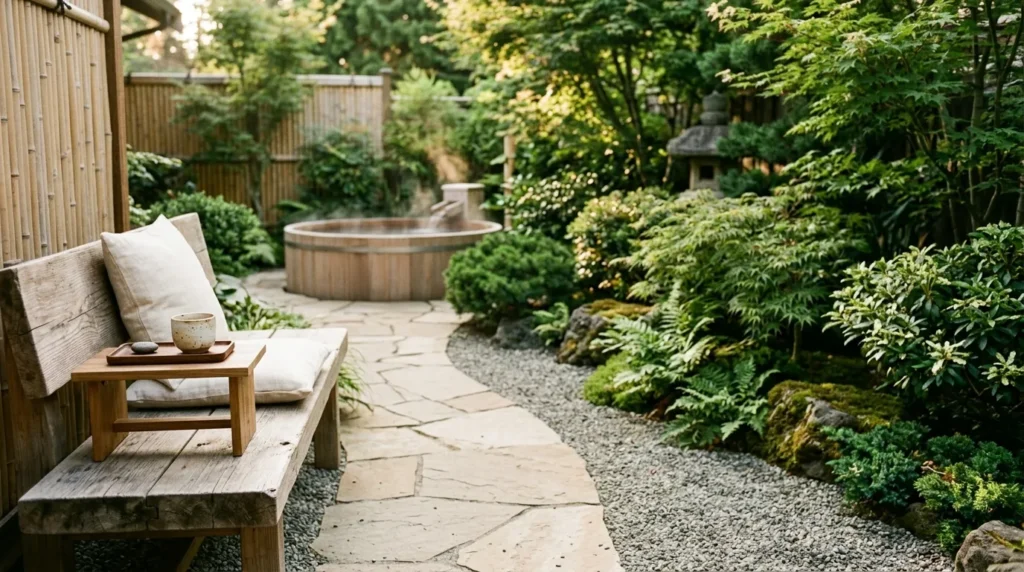
The design should remain extremely simple. One bench, a small table, and a beautiful garden view may be enough.
How To Style It
Use a low-profile timber bench or two simple outdoor chairs.
Add a small stone, wood, or ceramic side table.
Keep cushions in muted colors such as cream, beige, charcoal, or soft green.
Position the seating toward the garden rather than directly toward the jacuzzi if possible.
A single ceramic planter or small lantern can provide a finishing detail.
Avoid filling the area with accessories. Empty space is an important part of the design.
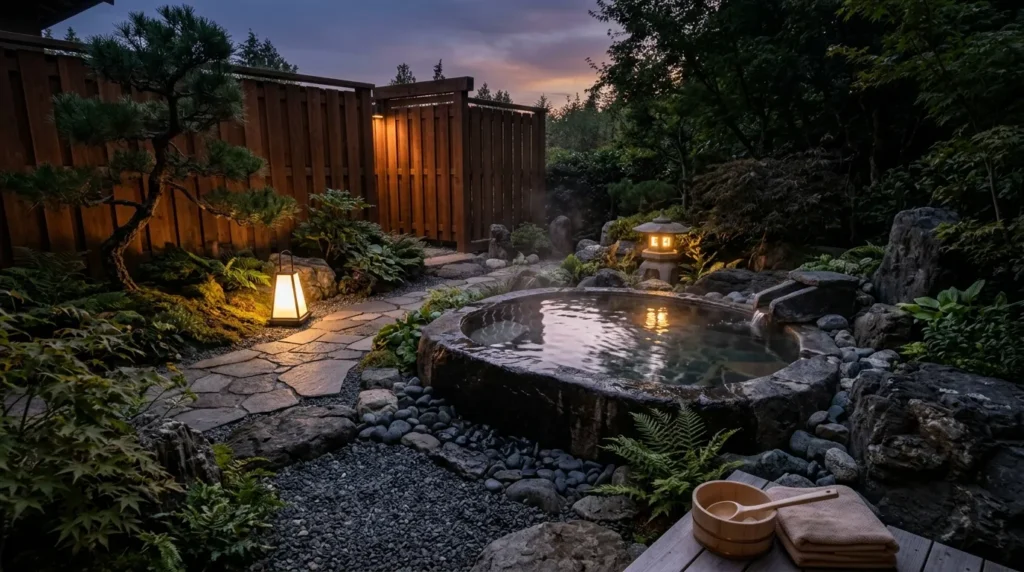
9. Lantern-Lit Spa
Quick Benefits
- Creates a peaceful evening atmosphere
- Highlights natural textures
- Adds warmth
- Improves nighttime visibility
- Makes the spa feel secluded
Why It Works
The atmosphere of a Zen-inspired jacuzzi changes dramatically after sunset. Instead of relying on bright outdoor lighting, use a few warm sources to create a softer environment.
Japanese-inspired lanterns can provide a visual connection to traditional garden design, while concealed modern lighting can keep the overall appearance contemporary.
The goal is not to illuminate every corner. Darkness and shadow are part of the atmosphere.
Warm light reflecting on water and stone can make even a small jacuzzi feel remarkably peaceful.
How To Style It
Place one or two simple stone, ceramic, or modern lantern-style fixtures near the garden path or planting.
Add concealed lighting beneath a timber bench or along a stone wall.
Use warm illumination rather than harsh cool-white light.
Keep fixtures at different heights to create depth without making the area overly bright.
Avoid placing numerous lights directly around the jacuzzi. Let the water remain softly illuminated while the surrounding garden fades into shadow.
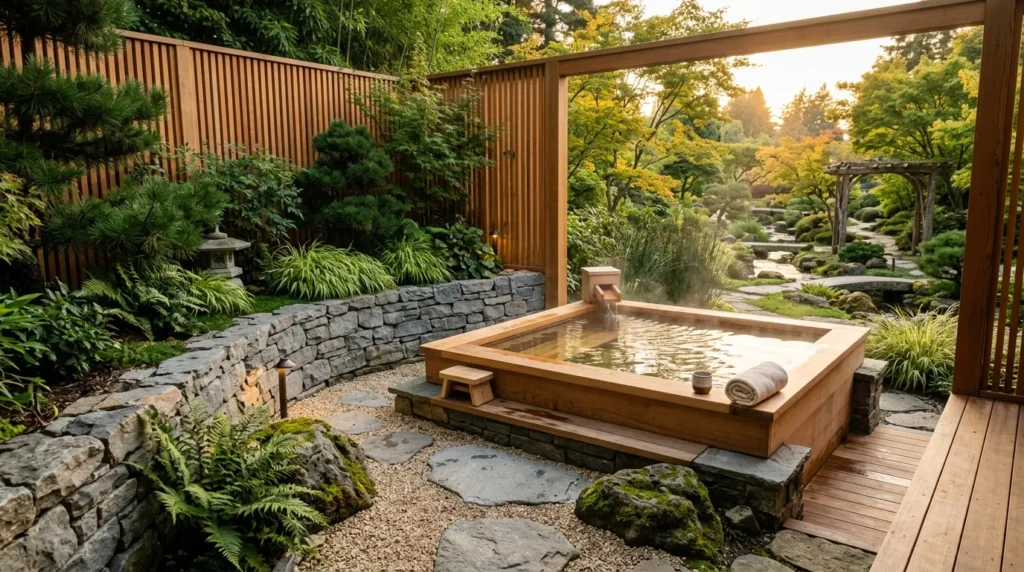
10. Enclosed Garden Soak
Quick Benefits
- Maximizes privacy
- Creates a dedicated retreat
- Works in suburban backyards
- Makes the spa feel intimate
- Allows layered landscaping
Why It Works
An enclosed garden soak creates the feeling of stepping into a separate outdoor room. The enclosure doesn’t have to be completely solid. A combination of timber screens, stone walls, plants, and open views can provide privacy while maintaining a strong connection to nature.
This is especially useful in neighborhoods where homes are positioned close together.
The enclosure also helps the jacuzzi feel intentional. Instead of looking across a large yard, you enter a smaller environment designed specifically for relaxation.
A carefully planned garden room can feel intimate without becoming cramped.
How To Style It
Begin by identifying the sightlines that need to be blocked. You may only need one privacy wall and a few plants rather than screening the entire perimeter.
Use natural stone for a low wall and timber or bamboo-inspired screening above it.
Layer plants at different heights to soften the enclosure.
Keep the jacuzzi centered or slightly offset depending on the space.
Add a simple bench along the perimeter and use warm lighting at night.
Leave one side open toward the most attractive garden view. This prevents the enclosure from feeling boxed in.
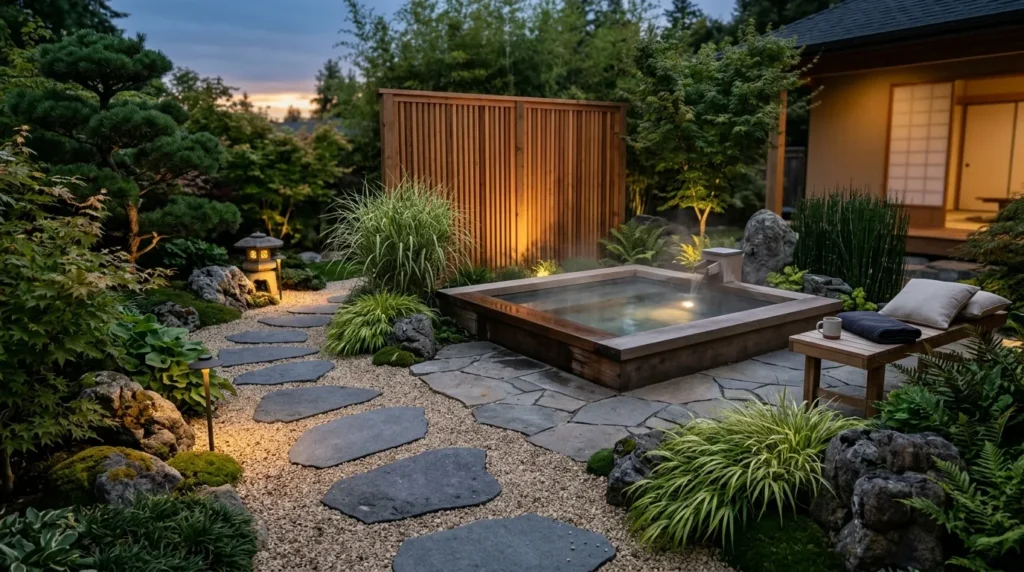
11. Modern Zen Sanctuary
Quick Benefits
- Combines the strongest Zen elements
- Works with contemporary homes
- Creates a complete spa retreat
- Uses a restrained palette
- Feels peaceful year-round
Why It Works
If you want the full Japanese-inspired experience, combine the essential elements rather than relying on one decorative feature.
A modern Zen sanctuary might include a natural stone patio, warm timber screen, gravel path, sculptural greenery, a few carefully placed rocks, soft lighting, and a comfortable jacuzzi.
The magic comes from balance. Nothing should dominate unnecessarily.
The hard surfaces establish structure. Plants provide softness. Water introduces reflection and movement. Timber adds warmth. Gravel creates visual quiet.
This layered approach allows the backyard to feel luxurious without becoming elaborate.
How To Style It
Start with a restrained palette of warm wood, natural stone, charcoal, soft gray, muted green, and cream.
Use large natural stones strategically rather than scattering decorative rocks throughout the yard.
Create a clear approach using stepping stones through gravel.
Frame the jacuzzi with low greenery and taller screening behind it.
Add one comfortable bench or lounge chair rather than several pieces of furniture.
For evening use, combine warm path lights with subtle illumination around stone and timber.
Finally, keep everyday clutter hidden. A discreet storage cabinet or covered box can hold towels and spa accessories without interrupting the visual calm.
FAQ
What makes a jacuzzi look Japanese-inspired?
Natural materials, simple geometry, restrained landscaping, privacy, and visual balance are the foundation of a Japanese-inspired jacuzzi area. Natural stone, timber, gravel, bamboo-style screening, carefully selected greenery, water features, and warm lantern-style lighting can all contribute to the aesthetic without making the space feel themed or overly decorative.
How do I create a Zen backyard jacuzzi?
Start by reducing visual clutter. Choose two or three natural materials, create privacy, add restrained greenery, and establish a comfortable approach to the spa. Natural stone, timber, gravel, water, and warm lighting work especially well together. Leave open space between features so the design feels calm rather than crowded.
What plants work best for a Japanese-style spa?
Choose plants based on your local climate and growing conditions. Evergreen shrubs, ornamental grasses, Japanese-inspired maples where appropriate, bamboo alternatives, moss-like groundcovers, and sculptural foliage can all create the desired feeling. The goal is not to copy a Japanese garden plant-for-plant but to use shape, texture, and repetition thoughtfully.
Can I create a Japanese jacuzzi design in a small backyard?
Absolutely. Small spaces can actually work well because the minimalist philosophy naturally favors fewer elements. A compact jacuzzi, timber privacy screen, gravel surface, a few stones, and carefully selected plants can create a beautiful retreat without requiring a large footprint.
What colors work best for a Zen-inspired jacuzzi?
Natural, muted colors are usually the easiest to work with. Think warm wood brown, stone gray, beige, charcoal, cream, and different shades of green. Avoid introducing too many bright colors because the goal is to create a visually quiet environment where the water and natural materials remain the focus.
How can I make a jacuzzi feel more private?
Identify the direct sightlines first, then use the least amount of screening necessary. Timber slats, bamboo-style panels, stone walls, pergolas, and layered evergreen planting can all provide privacy. Combining screening with plants usually creates a softer result than using a completely solid wall.
Should I add a Japanese water feature near my jacuzzi?
A small water feature can complement the spa beautifully, but it isn’t essential. If you add one, keep it understated so it supports rather than competes with the jacuzzi. A narrow spillway, small reflecting basin, or subtle fountain can introduce gentle movement and sound while reinforcing the connection between water and stone.
Conclusion
A Japanese-inspired jacuzzi doesn’t have to be an exact replica of a traditional Japanese bath or garden. The most successful designs borrow the underlying principles: simplicity, natural materials, privacy, balance, and a strong connection to nature.
Start with the materials that will define the space. Warm timber can add character, natural stone can ground the jacuzzi, and gravel can create a quiet transition into the garden. From there, introduce greenery strategically rather than filling every available space.
Privacy is equally important. A bamboo-inspired screen, timber slats, mature planting, or a simple garden wall can turn an exposed jacuzzi into a secluded retreat. Then consider the experience of arriving at the spa. A few stepping stones through gravel can make the journey feel intentional and calm.
Lighting should remain subtle, especially at night. A warm lantern, softly illuminated stone, or concealed light beneath a bench can create enough atmosphere without washing the garden in bright light.
Most importantly, resist the temptation to overdecorate. A Zen-inspired outdoor space is often most beautiful when there is room for the eye to rest.
Choose a few natural materials, repeat them thoughtfully, preserve attractive garden views, and create a comfortable place to pause. With those simple decisions, your backyard jacuzzi can become a peaceful soaking sanctuary that feels connected to the landscape rather than separated from it.