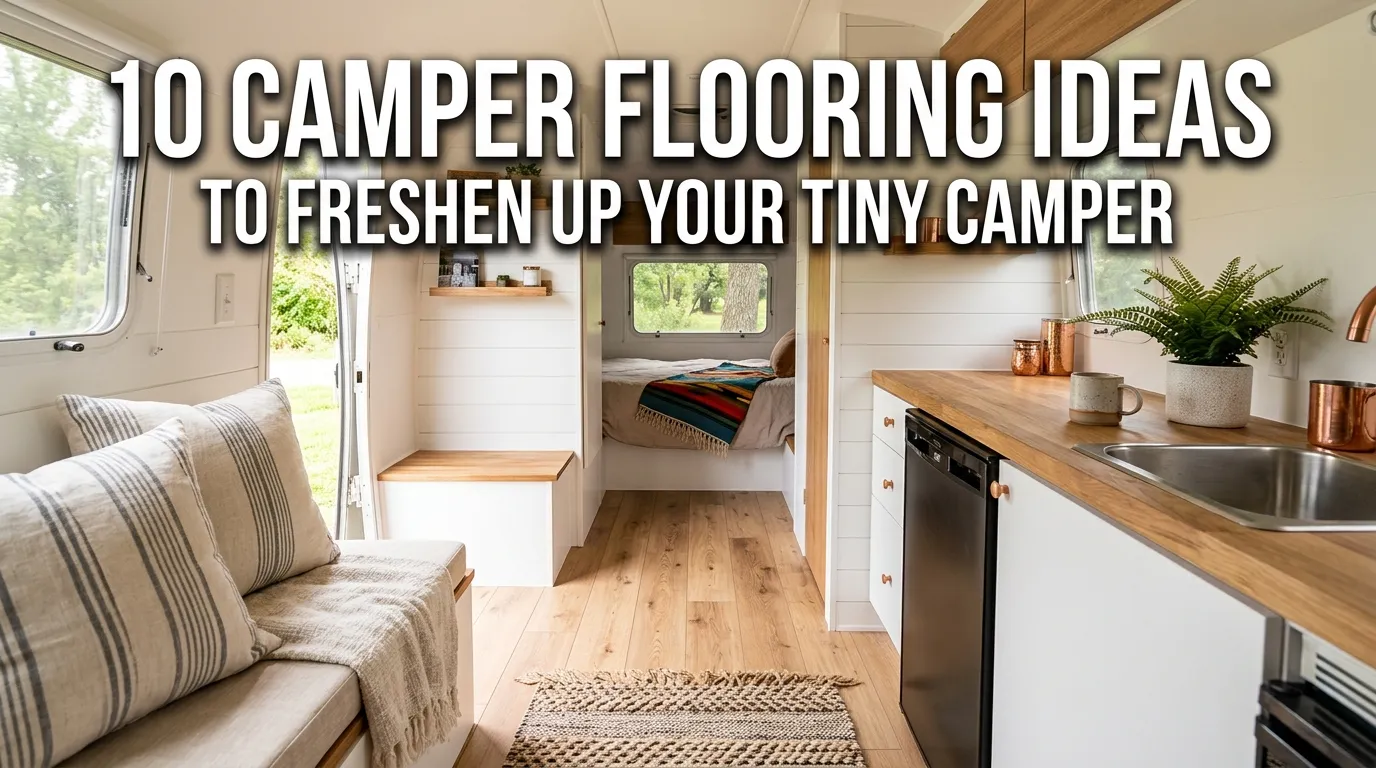
10 Camper Flooring Ideas to Freshen Up Your Tiny Camper
Flooring can completely change the personality of a tiny camper. When the space is small, the floor is one of the largest uninterrupted surfaces you see, so an outdated, dark, damaged, or mismatched floor can make the entire interior feel older than it really is.
The good news is that you don’t necessarily need a complete camper renovation to create a noticeable difference. A fresh flooring surface can make the interior feel cleaner, brighter, warmer, or more modern while also giving your cabinets, seating, and decor a better foundation.
In a camper, though, flooring has to do more than look good. It needs to handle muddy shoes, spilled drinks, pets, road-trip messes, temperature changes, and everyday foot traffic. Weight, moisture resistance, installation method, durability, and maintenance are all worth considering before choosing a material.
I’ve noticed that the most successful small-camper makeovers usually start with a flooring choice that supports everything else in the space. A light floor can make a compact interior feel more open, while warm wood tones can make a basic RV feel much more inviting. Patterned flooring can add personality, but simpler designs often create a more timeless backdrop.
Whether you’re updating an older travel trailer, refreshing a tiny camper for the next road trip, or simply tired of looking at worn flooring, these ideas can help you find a direction that fits your style and everyday needs.
From wood-look finishes and classic vinyl to modern patterns and cozy neutral tones, these camper flooring ideas focus on creating a space that feels comfortable, practical, and genuinely like home.
Table of Contents
1. Light Wood Look
Create an airy camper interior with pale wood-inspired flooring and warm neutral decor.
2. Warm Oak Finish
Add cozy character with a natural oak-inspired floor that complements wood cabinetry.
3. Waterproof Vinyl Planks
Choose a practical flooring solution designed to handle everyday camper messes and moisture.
4. Classic Checkerboard
Introduce playful personality with a timeless checkerboard pattern.
5. Soft Neutral Flooring
Keep the camper calm and cohesive with warm beige, greige, or taupe flooring.
6. Modern Gray Wood
Give the interior a contemporary update with cool-toned wood-look flooring.
7. Rustic Plank Style
Create a cozy cabin atmosphere with weathered or rustic-inspired flooring.
8. Geometric Pattern
Add visual interest with a simple geometric floor pattern that works in small spaces.
9. Natural Stone Look
Bring an upscale appearance to the camper with lightweight stone-inspired flooring.
10. Layered Rug Finish
Use a practical base floor with washable rugs to add softness, color, and personality.
1. Light Wood Look
Quick Benefits
- Makes a tiny camper feel brighter
- Creates a warm, natural foundation
- Works with many decorating styles
- Helps visually open the floor area
- Coordinates easily with neutral furniture
Why It Works
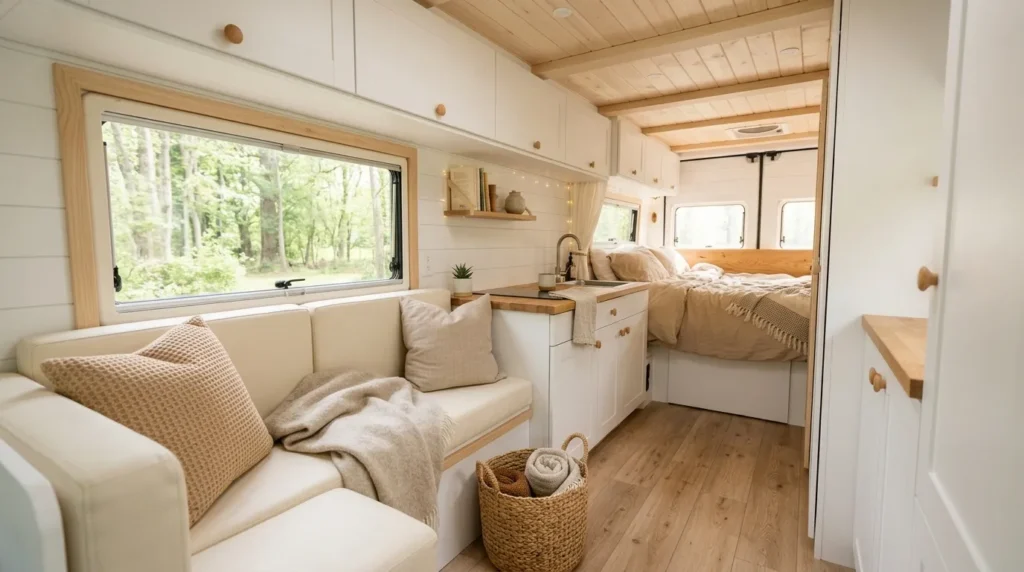
Light wood-look flooring is one of the easiest ways to make a tiny camper feel fresh without making the interior feel overly decorated. Pale oak, light maple, natural pine, and similar tones create warmth while still reflecting plenty of visual light.
This is particularly helpful in campers with limited windows or darker cabinetry. A lighter floor can provide contrast against deeper wood tones while creating a more continuous, open appearance.
The wood appearance also brings a natural connection to the outdoors, which feels especially appropriate in a camper. It works equally well with farmhouse, Scandinavian, modern, coastal, and relaxed cabin-inspired interiors.
In my experience, the most versatile wood-look floors aren’t overly orange or heavily distressed. Subtle grain variation and natural-looking tones tend to remain attractive even when the rest of the camper’s decor changes.
How To Style It
Choose a light wood-look flooring with subtle grain rather than a highly dramatic pattern. Pale oak and natural maple-inspired tones are especially versatile.
If your camper has existing wood cabinets, don’t worry about matching the flooring exactly. Slightly different wood tones can create depth as long as their undertones work together.
Pair the floor with cream upholstery, beige textiles, white curtains, and woven accessories. For a more modern appearance, add matte black hardware. For a softer farmhouse look, use brushed metal and natural wood accents.
A small washable runner can define the kitchen or entry area while still allowing most of the flooring to remain visible.
Before installation, check the flooring manufacturer’s recommendations for RV use, subfloor preparation, expansion requirements, temperature conditions, and adhesive or fastening methods. A camper experiences movement and temperature changes that a stationary home floor may not.
2. Warm Oak Finish
Quick Benefits
- Adds cozy visual warmth
- Complements wood cabinetry
- Creates a classic camper atmosphere
- Works with farmhouse and modern styles
- Hides minor everyday dirt better than very pale flooring
Why It Works
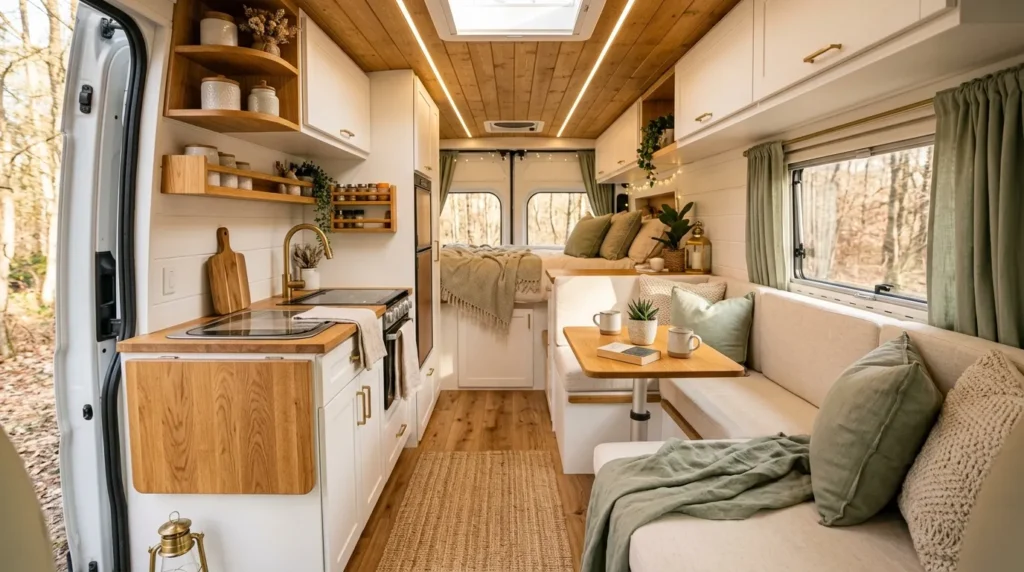
Warm oak-inspired flooring can give a tiny camper the comfortable feeling of a small cabin without requiring a rustic decorating theme. Its natural golden and honey undertones create warmth throughout the interior, especially when the camper has white or cream walls.
Oak-inspired designs are also remarkably flexible. A natural finish can support farmhouse decor, while a cleaner plank with less visible distressing can work beautifully in a modern RV.
The key is avoiding a floor that is dramatically darker than everything around it. In a tiny space, too much contrast can visually divide the room and make it feel smaller.
A warm medium-tone floor also has a practical advantage: everyday dust and small marks may be less noticeable than they are on an extremely dark or completely white surface.
If you’re working with existing cabinetry, use the floor as a coordinating element rather than trying to create a perfect wood match.
How To Style It
Choose a natural or lightly honey-toned oak appearance with realistic grain variation. Avoid overly glossy finishes if you want a relaxed, contemporary look.
Cream, ivory, soft beige, muted sage, dusty blue, and charcoal can all work beautifully with warm oak. If the camper has white cabinetry, the flooring can provide the warmth needed to prevent the interior from feeling too stark.
Add a neutral washable runner in a high-traffic area, especially near the kitchen or entry door. Keep the pattern subtle so it doesn’t compete with the wood grain.
For hardware, matte black creates modern contrast, while brushed nickel provides a lighter traditional appearance.
Use natural accessories sparingly. A woven basket, wood tray, or linen-look curtain can reinforce the warm aesthetic without making the camper feel overly themed.
Pay attention to transitions between flooring areas and preserve access to any required inspection panels or service components. A beautiful floor should remain easy to maintain during actual travel.
3. Waterproof Vinyl Planks
Quick Benefits
- Practical for busy camper interiors
- Easy to coordinate with many styles
- Available in numerous wood-look finishes
- Handles everyday spills well
- Offers a polished updated appearance
Why It Works
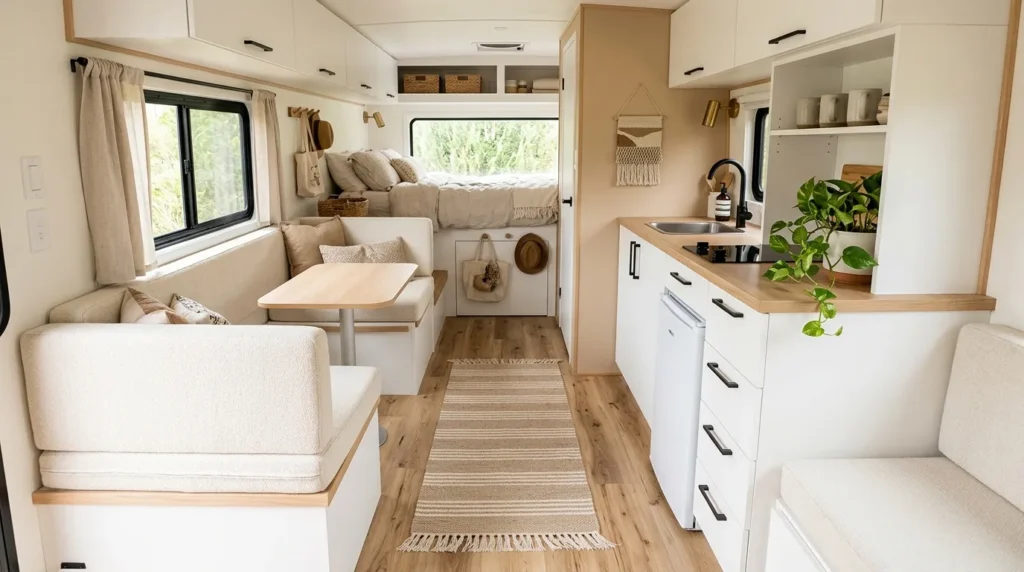
For many campers, practicality is just as important as appearance, and vinyl flooring can offer a useful balance between the two. Modern vinyl products come in a wide range of colors and wood-inspired patterns, making it possible to achieve a designer-looking floor without relying on a delicate surface.
Moisture resistance is particularly useful in a camper because the floor can encounter wet shoes, damp towels, spilled drinks, and other everyday messes. However, it’s important not to assume that every vinyl product has the same specifications. Check the manufacturer’s actual water-resistance, installation, and RV-use guidance before purchasing.
Wood-look vinyl planks can create the appearance of hardwood while providing a practical surface for an active travel lifestyle. Neutral stone-inspired designs can also work if you want something less rustic.
I’ve found that medium-light flooring tends to be a particularly flexible choice because it provides warmth while remaining relatively easy to coordinate with changing decor.
How To Style It
Start by choosing a vinyl plank or suitable vinyl flooring in a finish that complements the existing camper. Light oak, warm maple, neutral beige, and soft gray are all versatile choices.
If you want a wood-floor appearance, select a pattern with realistic grain and relatively subtle variation. Extremely repetitive prints can look less natural across a larger floor area.
Keep textiles simple. A solid cream or beige runner can soften the flooring while making the camper feel more comfortable.
For a contemporary interior, pair the floor with white cabinets, black accents, and streamlined storage. For a farmhouse camper, combine it with warm wood, plaid textiles, and soft neutral colors.
Before installation, inspect the subfloor carefully. Existing water damage, soft spots, uneven areas, or structural problems should be addressed rather than covered. Follow the flooring manufacturer’s instructions regarding adhesive, seams, temperature, acclimation, and installation.
Also consider how the flooring interacts with doors, slide-outs, cabinets, and trim. In a tiny camper, even a small change in floor height can affect how other components operate.
Here is Part 2, continuing with Ideas 4–7.
4. Classic Checkerboard
Quick Benefits
- Adds instant personality
- Creates a timeless vintage feeling
- Works beautifully in small kitchens
- Pairs well with simple cabinetry
- Makes the floor a decorative feature
Why It Works
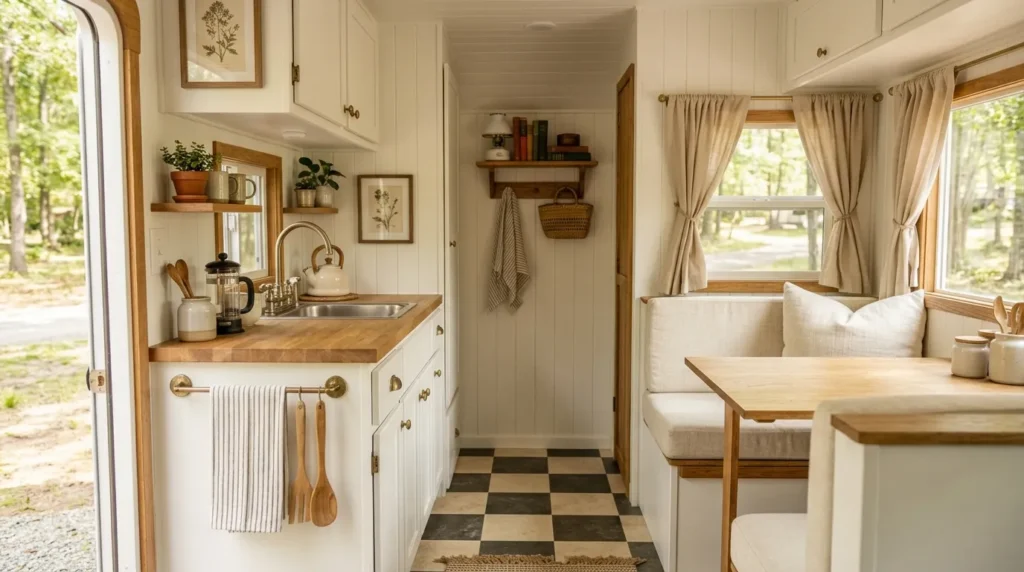
Checkerboard flooring can give a tiny camper an entirely different personality. The classic combination of alternating squares feels nostalgic, playful, and surprisingly versatile. It can work in a vintage-inspired trailer, a modern camper, or even a farmhouse-style interior depending on the colors and surrounding decor.
Black and white is the most recognizable combination, but softer versions can feel much more relaxed. Cream and taupe, ivory and sage, or muted blue and white can create the same graphic effect without making the floor feel too intense.
Because the pattern itself is strong, it can reduce the need for additional decoration. This is particularly useful in a small camper where too many competing patterns can make the interior feel crowded.
A good checkerboard floor becomes a visual anchor. Instead of trying to hide the small size of the room, it gives the space a deliberate design feature.
How To Style It
For a classic look, choose black-and-white or charcoal-and-ivory squares. If you prefer something softer, use muted colors with a warm cream base.
Keep the cabinetry relatively simple. White cabinets create a crisp vintage appearance, while warm wood can make the same pattern feel more rustic and cozy.
Solid-color curtains, towels, cushions, and rugs are generally easier to coordinate than additional patterns. If you want to introduce another print, keep it very subtle.
For hardware, matte black naturally complements a dark-and-light checkerboard. Brushed nickel can create a softer traditional appearance.
A small runner can be useful, but don’t cover too much of the patterned flooring. The design is part of the visual appeal.
Before installation, carefully measure the space and consider how the pattern will align around cabinets, corners, and other fixed elements. A well-planned layout makes the finished floor look intentional rather than pieced together.
5. Soft Neutral Flooring
Quick Benefits
- Creates a calm atmosphere
- Makes decorating easier
- Works with changing accessories
- Helps small spaces feel cohesive
- Provides a timeless foundation
Why It Works
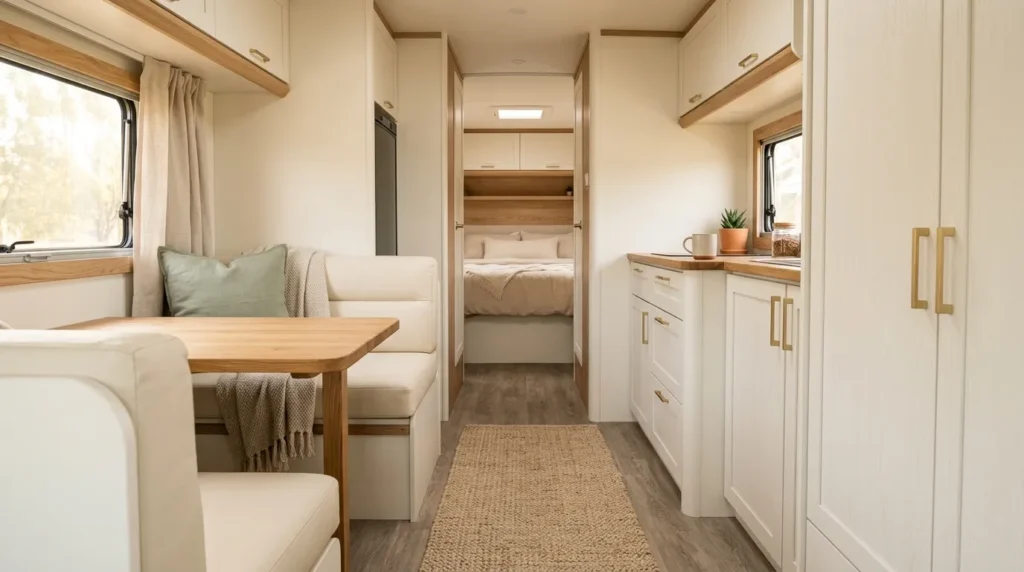
Soft neutral flooring is ideal when you want the camper to feel comfortable and polished without committing to a strong design trend. Warm beige, taupe, greige, ivory, and soft stone tones can create a quiet foundation that allows the rest of the interior to take center stage.
This approach is particularly useful if your camper already has patterned upholstery, colorful curtains, or distinctive cabinetry. A neutral floor can visually calm those elements and make the entire interior feel more balanced.
Neutral doesn’t have to mean boring. Texture, subtle grain, gentle variation, and matte finishes can create plenty of visual interest without adding a noticeable pattern.
The beauty of this choice is flexibility. If you decide to change your bedding from blue to sage or your curtains from floral to striped, the floor can remain exactly the same.
For a camper that will evolve over several seasons, that’s a valuable quality.
How To Style It
Choose a neutral floor with warm or balanced undertones. If the camper already contains a lot of beige, consider a slightly lighter or greige finish to prevent the interior from looking flat.
Layer in color through removable pieces. A sage runner, dusty-blue cushion, terracotta blanket, or patterned curtain can all introduce personality without changing the underlying flooring.
Natural wood accessories and woven baskets work especially well with neutral floors. For a more contemporary look, add black accents and clean-lined storage.
Avoid using too many nearly identical beige shades. Instead, create contrast through texture and small variations in tone.
For example, combine a matte neutral floor with a woven rug, smooth cabinetry, linen-look curtains, and a textured cushion. The different surfaces create depth while keeping the palette calm.
Choose a finish that is practical to clean, especially if the camper will regularly be used for outdoor adventures. Easy maintenance is part of good design in a travel space.
6. Modern Gray Wood
Quick Benefits
- Creates a contemporary appearance
- Works with white cabinetry
- Provides a cooler visual palette
- Pairs well with black hardware
- Gives older campers a modern update
Why It Works
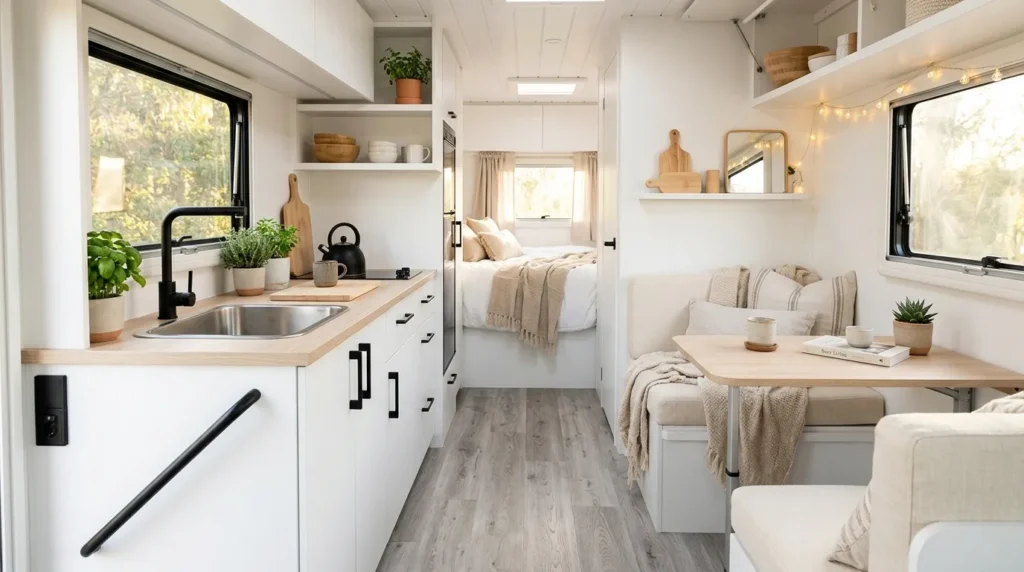
Gray wood-look flooring can make an older camper feel significantly more contemporary. Its cooler undertones work particularly well with white cabinets, stainless or brushed-metal fixtures, and modern upholstery.
However, not every gray floor creates the same effect. Blue-gray flooring can feel quite cool, while a greige or weathered oak finish can provide more warmth. In a tiny camper, a slightly warmer gray is often easier to live with because it prevents the interior from feeling too stark.
The amount of visible grain also matters. A subtle wood pattern can create a sophisticated appearance, while a heavily distressed design may push the interior toward a more rustic style.
Gray is especially useful when you want a neutral floor but don’t want the traditional beige or honey-oak look.
The result can feel clean and modern while still retaining enough texture to keep the small interior from looking flat.
How To Style It
Pair gray wood-look flooring with white or soft-gray cabinetry for a streamlined modern appearance. If the camper feels too cool, add warmth through cream textiles, light wood accessories, or woven baskets.
Matte black hardware can create strong contrast and give the interior a contemporary edge. Brushed nickel can produce a softer, more traditional finish.
Use accent colors carefully. Dusty blue, sage green, muted terracotta, and warm beige can all balance gray beautifully.
Avoid using gray for every surface. If the floor is cool-toned, bring in warmer elements through upholstery, curtains, rugs, and accessories.
A cream runner with subtle texture can soften the flooring in high-traffic areas while maintaining the modern aesthetic.
As with any flooring project, confirm that the selected product is suitable for your camper’s conditions and installation method. Pay special attention to temperature changes and the manufacturer’s requirements for movement or expansion.
7. Rustic Plank Style
Quick Benefits
- Creates a cozy cabin feeling
- Adds natural character
- Works with outdoor-inspired decor
- Hides small everyday marks well
- Complements warm camper interiors
Why It Works
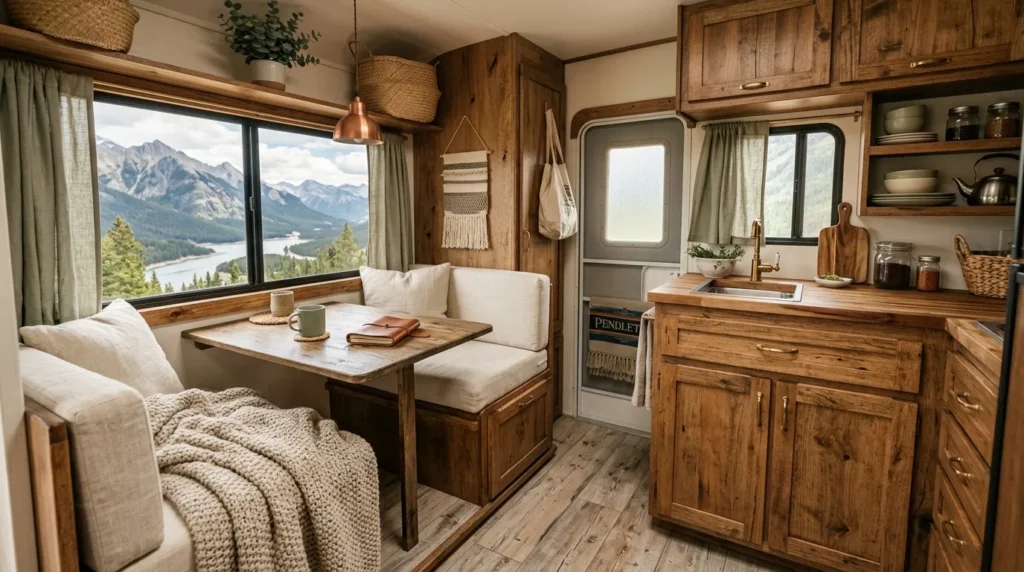
Rustic plank flooring can make a camper feel like a miniature cabin on wheels. It works particularly well for travelers who want their interior to reflect the places they visit—mountains, forests, lakes, campgrounds, and other outdoor destinations.
The best rustic flooring doesn’t necessarily need to look heavily distressed. A subtle weathered oak, reclaimed-wood appearance, or natural plank pattern can provide character while remaining sophisticated.
This flooring style also pairs naturally with the textures commonly found in cozy campers. Woven baskets, wool-inspired blankets, canvas upholstery, leather accents, and warm wood cabinetry all feel at home alongside rustic flooring.
In a tiny space, though, balance matters. A very dark, heavily distressed floor combined with dark cabinetry can make the interior feel smaller. Lighter rustic finishes are usually more versatile.
The goal is to create warmth and character without turning the camper into a themed cabin.
How To Style It
Choose a rustic floor with visible but controlled grain variation. Weathered oak, light reclaimed wood, and soft brown plank designs are all good directions.
Pair the floor with cream, oatmeal, sage, muted blue, and warm gray textiles. These colors reinforce the outdoor-inspired feeling without making everything look overly coordinated.
If your cabinets are dark, consider a lighter rustic floor. If the cabinets are white or cream, a medium wood tone can provide a beautiful anchor.
Use a few natural accessories such as woven baskets, a canvas storage bag, or a small wooden tray. Avoid filling the camper with multiple rustic signs or themed decorations.
Warm lighting will emphasize the natural undertones of the flooring in the evening.
A washable runner can also add comfort and protect the most frequently used areas.
Before installation, make sure the selected product is appropriate for a mobile environment and that the subfloor is properly prepared. A rustic appearance should never require sacrificing stability or safe installation.
Here is Part 3, finishing Ideas 8–10, followed by the FAQ, conclusion, related articles, Pinterest image prompts, and SEO package.
8. Geometric Pattern
Quick Benefits
- Adds personality without wall clutter
- Creates a strong visual focal point
- Works with modern and retro interiors
- Makes a basic camper feel customized
- Can be softened with neutral accessories
Why It Works
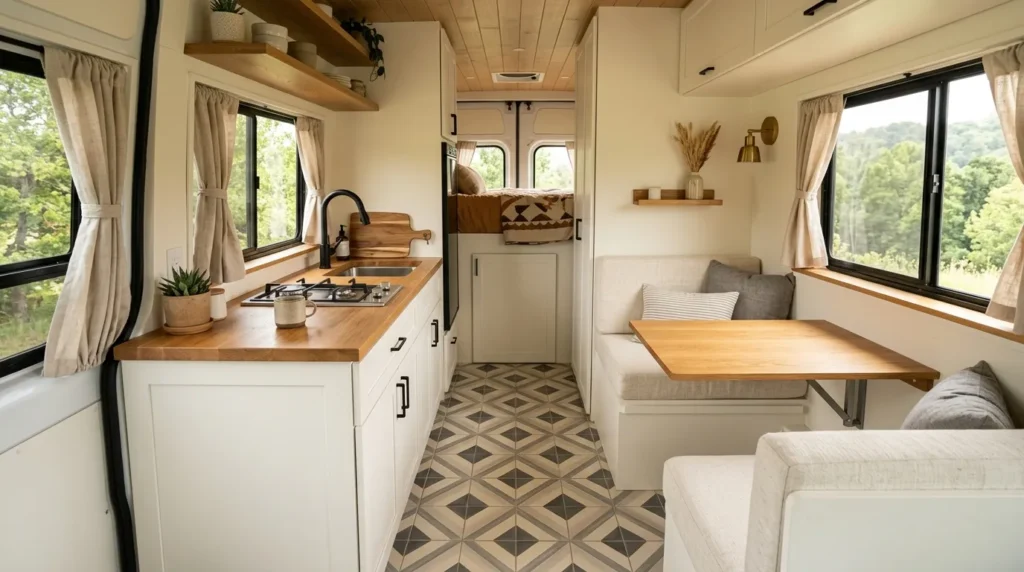
A geometric floor can bring an unexpected designer touch to a tiny camper. Simple diamonds, hexagons, small grids, repeating lines, and other geometric shapes create visual interest while keeping the decorating focused on one major surface.
This approach is especially useful when the camper walls and cabinetry are plain. Instead of adding artwork, shelving, and numerous accessories to create personality, you can let the floor do much of that work.
Scale is important. Large geometric patterns can overwhelm a tiny floor area, while small repeating designs may look too busy. A medium-scale pattern with plenty of visual breathing room often creates the best balance.
Color is equally important. A neutral geometric pattern can feel sophisticated, while muted colors can introduce personality without overwhelming the room.
I’ve noticed that geometric flooring looks most polished when the rest of the camper remains relatively restrained. Let the floor make the statement.
How To Style It
Choose a pattern with two or three coordinated colors rather than a design containing numerous competing shades.
For a modern camper, black, white, cream, and soft gray can create a crisp appearance. For a warmer look, consider beige, ivory, terracotta, or muted sage.
Keep furniture and textiles mostly solid. A simple runner can soften the pattern, but avoid covering the majority of the floor.
Repeat one color from the flooring in a curtain, cushion, towel, or small accessory. This creates a visual connection without making the entire camper match.
Use simple hardware and uncluttered countertops to balance the graphic floor.
If you’re using a tile-look product, pay attention to the pattern layout around cabinets and corners. A centered, carefully planned pattern generally looks more intentional than a layout that leaves awkward partial shapes in highly visible areas.
Always follow the flooring manufacturer’s installation recommendations and verify suitability for the camper environment.
9. Natural Stone Look
Quick Benefits
- Creates an upscale appearance
- Works with modern and coastal styles
- Adds subtle visual texture
- Can brighten a neutral interior
- Provides an alternative to wood-look flooring
Why It Works
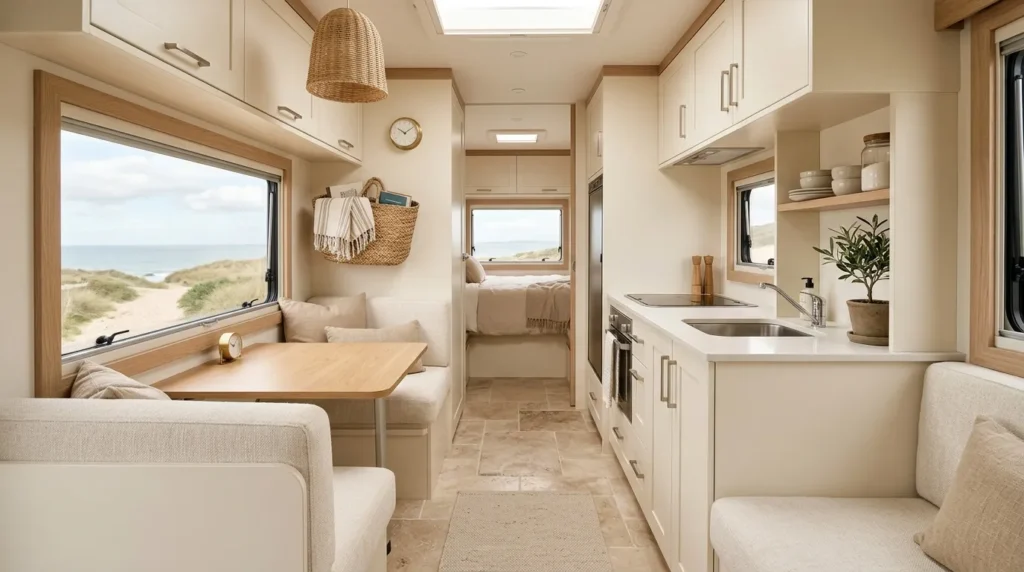
Stone-inspired flooring can give a camper an elevated appearance without the visual warmth of traditional wood. Marble-look, limestone-inspired, travertine-style, and soft concrete patterns can all create a clean foundation for modern, coastal, or minimalist interiors.
The important distinction is between the appearance of stone and actual heavy stone. In a mobile camper, lightweight flooring products are generally more practical than installing traditional heavy materials.
Soft stone patterns are particularly attractive in small spaces because they can provide variation without strong directional lines. A pale beige or ivory stone-look floor can also work beautifully with white cabinetry and warm neutral textiles.
For a more modern appearance, choose a soft gray concrete-inspired design. For a warmer interior, cream or sandy stone tones may be a better choice.
This approach can make an older camper feel surprisingly contemporary while remaining visually understated.
How To Style It
Choose a stone-look flooring with subtle variation rather than a highly dramatic marble pattern. In a tiny camper, large veining can quickly become the dominant visual feature.
Pair cream or ivory stone tones with white cabinetry, beige upholstery, and brushed-metal hardware for a soft upscale appearance.
If you’re using a gray stone-inspired floor, add warm wood accessories or cream textiles to prevent the interior from feeling too cool.
A woven runner can introduce softness and texture while protecting the most frequently walked areas.
Keep accessories minimal. A simple ceramic container, small plant, or woven basket may be enough to complete the look.
For a coastal interior, combine the flooring with soft blue and white accents. For a modern camper, use black hardware and clean-lined furniture.
When selecting a product, pay attention to surface texture and cleaning requirements. A floor that looks beautiful but is difficult to maintain isn’t ideal for an active camper.
10. Layered Rug Finish
Quick Benefits
- Adds comfort without replacing the entire floor
- Offers an easy style update
- Helps define small zones
- Provides color and texture
- Can protect high-traffic areas
Why It Works
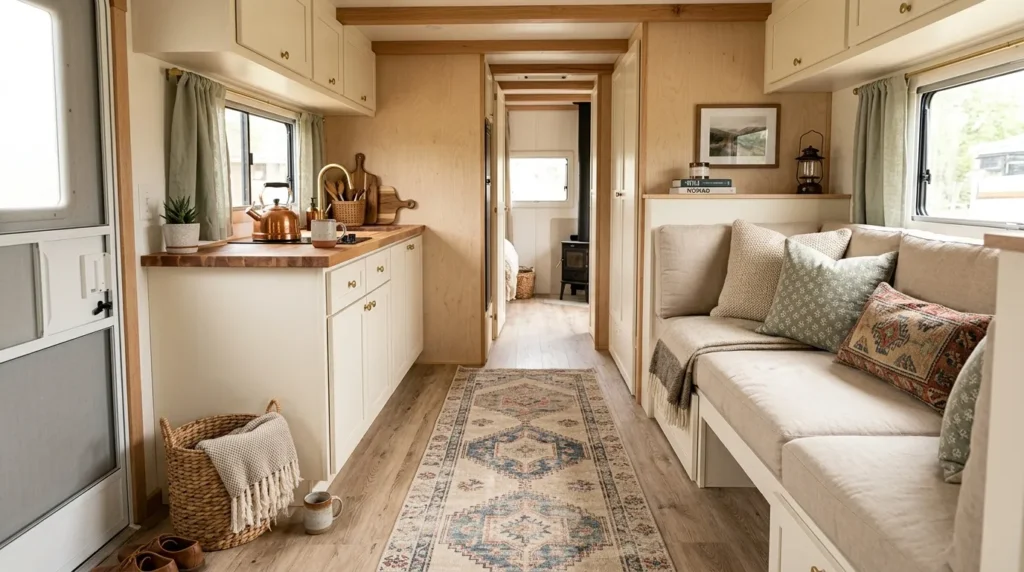
Sometimes you don’t need to replace the camper flooring at all. If the existing floor is still structurally sound and reasonably attractive, strategically placed washable rugs can completely change how the space feels.
This is one of the simplest approaches for renters, seasonal campers, or anyone who doesn’t want to take on a full flooring renovation. A rug can introduce color, pattern, warmth, and softness while leaving the underlying floor intact.
In a tiny camper, rugs can also help define functional zones. A runner through the kitchen area, a small mat near the entry, or a compact rug beside the bed can make the interior feel more layered.
The key is choosing materials that can handle real camper life. Outdoor dirt, food spills, moisture, and frequent foot traffic are all part of the experience.
Washable and easy-to-clean options are particularly practical.
How To Style It
Start with a neutral base floor and add one washable runner in a color that connects with your existing decor. A muted vintage pattern can work beautifully with a farmhouse camper, while a simple geometric rug can suit a modern interior.
For a cozy cabin look, choose warm beige, brown, rust, or sage tones. For a coastal camper, soft blue and cream can introduce a relaxed vacation feeling.
Avoid using too many rugs in such a small space. One or two strategically placed pieces are usually enough.
Choose low-profile rugs where doors, drawers, slide-outs, or other moving components need clearance. Secure the rug appropriately so it doesn’t become a trip hazard while the camper is parked or being used.
A rug is also an easy way to update the interior seasonally. You can switch colors and patterns without changing the underlying floor.
If the existing flooring is damaged, soft, damp, or structurally compromised, address that issue first rather than using a rug to conceal it.
Frequently Asked Questions
What is the best flooring for a tiny camper?
The best flooring depends on your camper, lifestyle, and installation requirements. Lightweight vinyl, suitable wood-look flooring, and other RV-appropriate materials can provide a practical combination of durability and style. Look for flooring that is easy to clean, suitable for temperature changes, and compatible with your existing subfloor.
What color flooring makes a camper look bigger?
Light and medium-light flooring can help a tiny camper feel more open. Pale oak, light maple, warm ivory, soft beige, and light greige are versatile choices. Keeping the flooring visually consistent throughout connected areas can also reduce strong boundaries and make the interior feel more cohesive.
Is vinyl flooring good for an RV?
Vinyl can be a practical RV flooring option, particularly when the selected product is appropriate for mobile use and installed according to the manufacturer’s requirements. It comes in many wood and stone looks and can be relatively easy to maintain. Always check the specific product’s specifications rather than assuming every vinyl floor is suitable for an RV.
Can you put laminate flooring in a camper?
Some laminate products may be used in camper applications, but suitability depends on the specific product, subfloor, installation method, temperature changes, and manufacturer requirements. Campers move and experience conditions that stationary homes do not, so flooring should not be selected solely on appearance.
How do I make an old camper floor look better?
If the existing floor is structurally sound, you can refresh its appearance with suitable new flooring, a carefully selected runner, or washable rugs. Light wood-look flooring, neutral finishes, and simple patterns can make an older camper feel more current. Address moisture damage, soft spots, or other underlying problems before applying a cosmetic update.
What flooring is easiest to clean in a camper?
Smooth, appropriately rated flooring that can be cleaned with the manufacturer’s recommended products is generally practical for a camper. Vinyl and other easy-maintenance surfaces are popular because they don’t require the same care as some natural materials. Washable rugs can also help protect high-traffic areas.
Should camper flooring be light or dark?
Either can work, but light and medium tones are often easier in a tiny camper because they help maintain an open visual appearance. Dark flooring can create a dramatic look, especially with light cabinetry, but it may make a small interior feel more enclosed if the rest of the space is also dark.
Conclusion
A flooring update can have a surprisingly large impact on a tiny camper. Because the floor covers such a substantial portion of the interior, changing its color, texture, or pattern can make the entire space feel cleaner, warmer, brighter, or more modern.
Light wood looks are excellent for creating an airy atmosphere, while warm oak and rustic plank styles add cozy character. Vinyl can provide a practical foundation for an active travel lifestyle, and checkerboard or geometric patterns can bring personality into an otherwise simple interior. If you’re not ready for a full renovation, washable rugs offer an easy way to introduce softness and color without replacing the existing floor.
The most important thing is to choose flooring that works for the way you actually use your camper. Consider moisture, dirt, pets, children, road-trip traffic, cleaning, installation, weight, and temperature changes—not just the appearance in a showroom photo.
And remember, you don’t have to redesign the entire camper at once. Sometimes a lighter floor, a small runner, or a fresh neutral surface is enough to make the interior feel completely different.
Start with the flooring style that best complements your existing cabinets and furniture, then build the rest of the space around it. With a thoughtful choice, even the smallest camper can feel comfortable, cohesive, and genuinely inviting.
Related Articles
- 11 Camper Ceiling Ideas to Freshen Up Your Tiny Camper
- 11 Camper Shower Curtain Ideas to Freshen Up Your Tiny Camper
- 10 Camper Window Treatment Ideas for a Cozy RV
- 11 Small Camper Storage Ideas That Save Valuable Space
- 10 Cozy Camper Interior Ideas for a Stylish RV