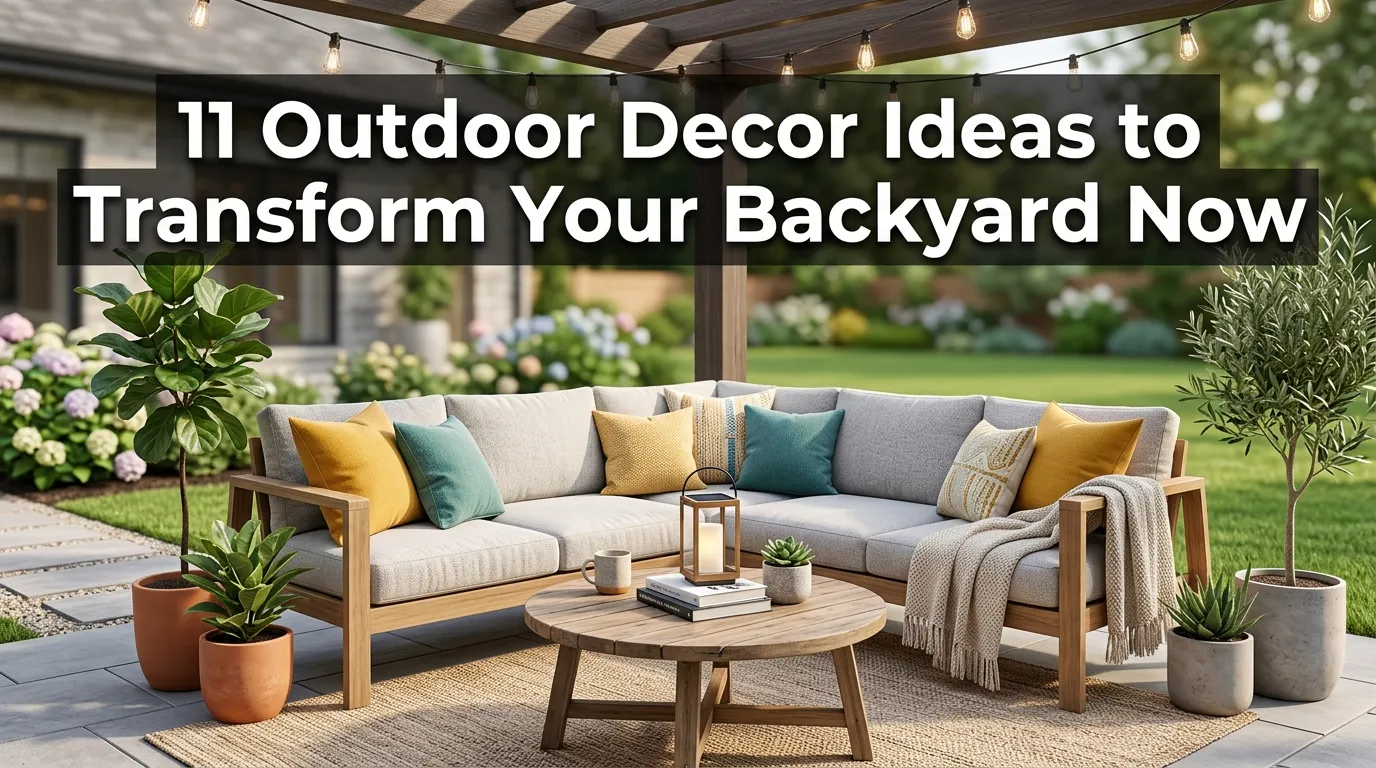
11 Outdoor Decor Ideas to Transform Your Backyard Now
Your backyard doesn’t have to be huge, expensive, or professionally landscaped to become a place you genuinely want to spend time in.
Sometimes the biggest difference comes from a few thoughtful decorating decisions: a comfortable place to sit, warm lighting, a defined dining area, layered textiles, or greenery arranged where it can actually be enjoyed.
Outdoor decorating is especially rewarding because even small changes can make a backyard feel more finished. A plain patio can become an inviting lounge, an unused corner can turn into a quiet reading spot, and a simple dining table can create a natural gathering place for summer meals.
In my experience, the best outdoor spaces aren’t necessarily the ones with the most accessories. They are the ones where every element has a purpose. Comfortable furniture encourages people to stay. Lighting extends the usable hours. Plants add softness and privacy. Outdoor rugs help define zones, while decorative accents give the space personality.
The good news is that you don’t have to tackle everything at once. Start with the area you use most often, then build outward.
These backyard decorating ideas cover a range of styles, budgets, and outdoor layouts. You’ll find simple updates for small patios, cozy seating ideas, entertaining spaces, natural garden-inspired details, and practical ways to make your backyard feel more like an extension of your home.
Whether you’re refreshing an established yard or starting with a mostly empty patio, these ideas can help you create a backyard that feels comfortable, intentional, and ready to enjoy.
Table of Contents
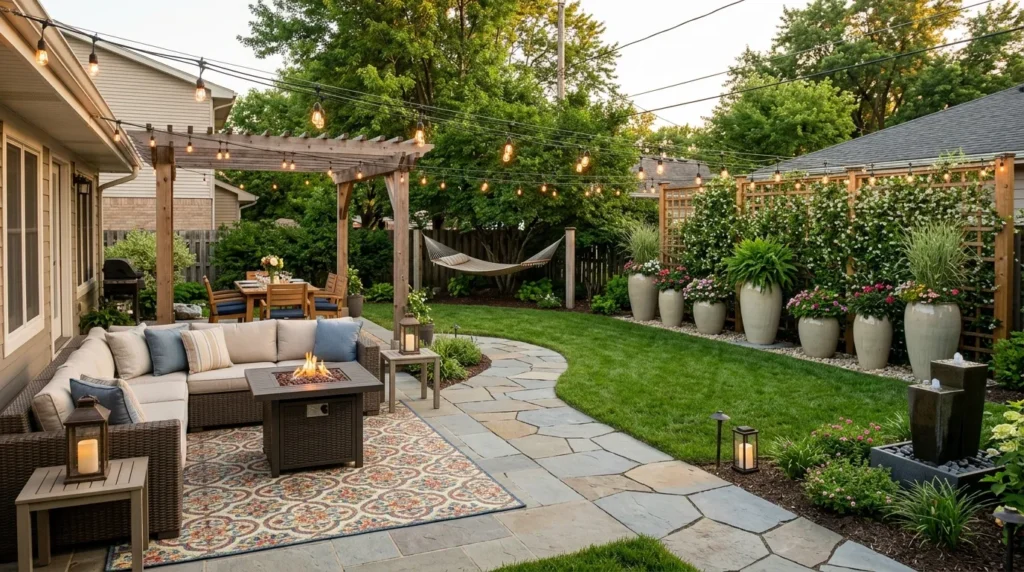
1. Outdoor Living Room
Create a comfortable lounge that feels like an extension of your indoor space.
2. Layered Outdoor Rugs
Use rugs to define seating and dining zones while adding warmth.
3. Cozy Fire Pit
Build a gathering area around a welcoming outdoor fire feature.
4. String Light Canopy
Add warm overhead lighting for relaxed evenings outdoors.
5. Garden Seating Nook
Turn an unused backyard corner into a peaceful retreat.
6. Outdoor Dining
Create a practical space for casual meals and entertaining.
7. Container Garden
Use decorative planters to add greenery without major landscaping.
8. Privacy Greenery
Combine plants and outdoor structures to create a more secluded space.
9. Covered Patio
Add shade and protection so the backyard becomes more comfortable.
10. Water Feature
Introduce the soothing visual and sound of moving water.
11. Natural Texture
Layer wood, stone, wicker, and textiles for an organic outdoor look.
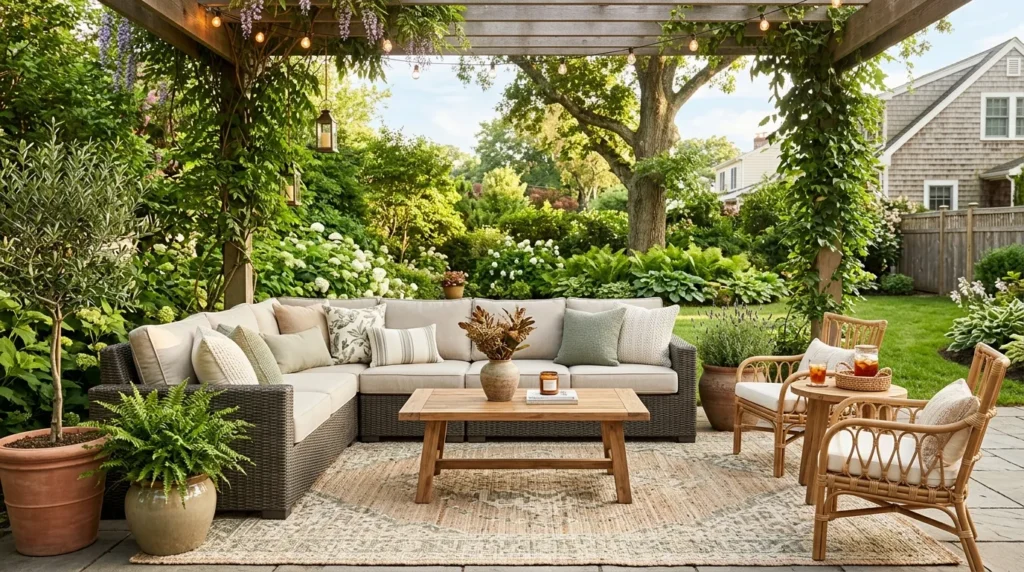
1. Outdoor Living Room
Quick Benefits
- Creates a true outdoor gathering area
- Makes patios feel more inviting
- Adds indoor-style comfort
- Works for entertaining
- Can be adapted to small spaces
Why It Works
An outdoor living room changes the way a backyard functions.
Instead of treating the patio as a place where furniture simply sits, think about it as an outdoor room with its own seating arrangement, focal point, lighting, and accessories.
Comfort is the priority. A sofa or deep lounge chairs give people a reason to settle in, while a coffee table provides a practical surface for drinks and snacks.
The best arrangements also consider conversation. Furniture should face each other rather than simply point toward the house.
How To Style It
Begin with weather-appropriate seating in a neutral shade such as beige, gray, cream, or taupe.
Add outdoor cushions in two or three coordinating colors.
Place a weather-resistant coffee table in the center.
Use an outdoor rug underneath the main seating group to visually anchor everything.
Add planters around the edges to soften hard surfaces.
For a polished finish, repeat indoor-style details such as lanterns, trays, textured cushions, and decorative side tables.
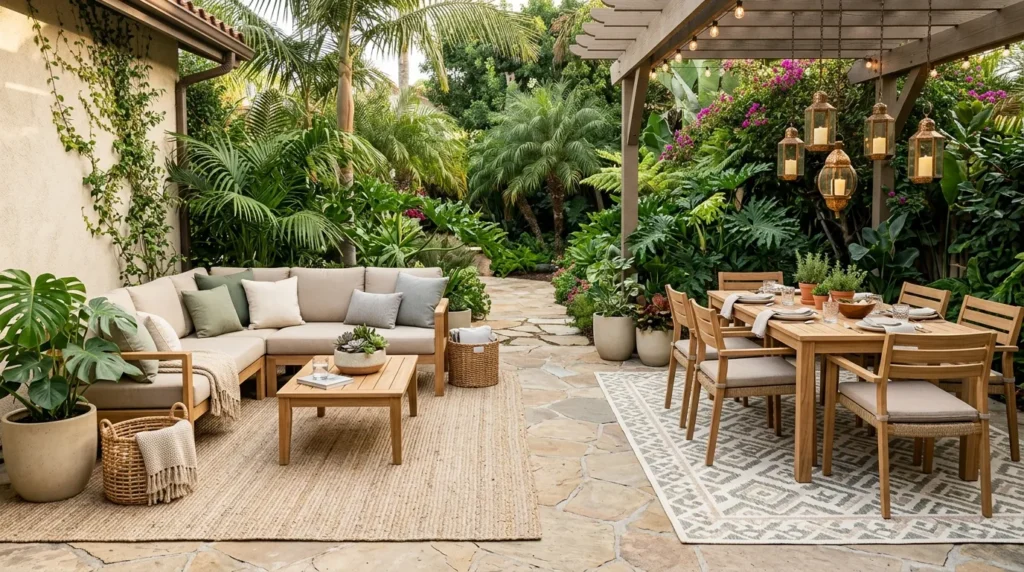
2. Layered Outdoor Rugs
Quick Benefits
- Defines outdoor zones
- Adds color and pattern
- Makes patios feel finished
- Softens hard flooring
- Helps furniture feel connected
Why It Works
Outdoor rugs are one of the easiest ways to make a backyard feel intentionally designed.
A large rug can visually connect a sofa, chairs, and coffee table, while a separate rug can define an outdoor dining area.
Rugs are especially helpful on large patios where furniture can otherwise look scattered.
For outdoor spaces, select materials designed for exterior conditions and follow the manufacturer’s care recommendations.
How To Style It
Use a neutral patterned rug beneath your main lounge arrangement.
For a dining area, choose a flat-weave outdoor rug large enough for chairs to remain on the rug when pulled away from the table.
Coordinate rug colors with your cushions and planters.
If your furniture is colorful, choose a quieter rug.
If your furniture is neutral, a patterned rug can become the visual focal point.
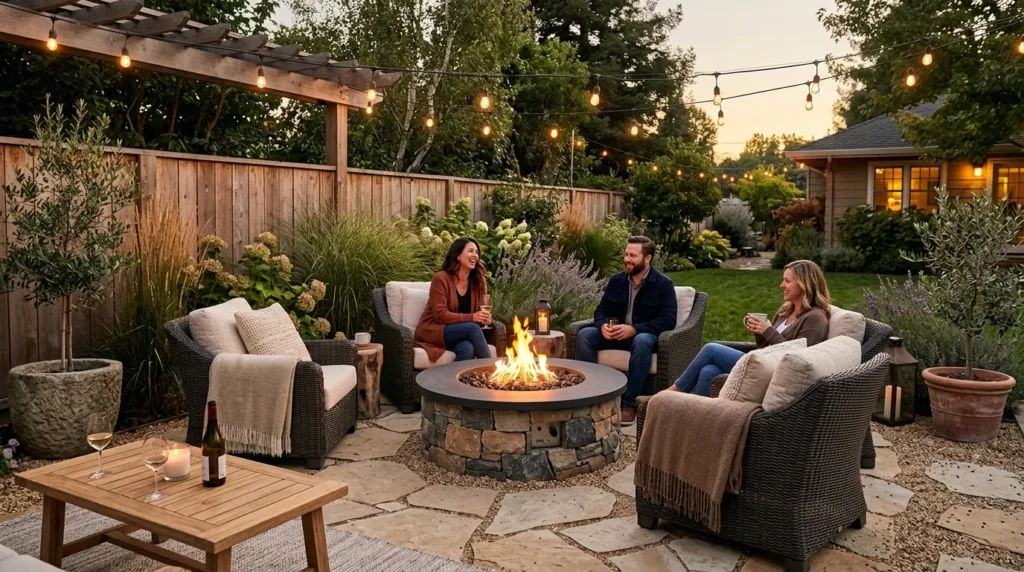
3. Cozy Fire Pit
Quick Benefits
- Creates a natural gathering point
- Extends evening use
- Adds warmth and ambiance
- Works for entertaining
- Gives the yard a focal point
Why It Works
A fire pit naturally draws people together.
It can turn an empty section of the backyard into a destination, particularly during cooler evenings.
The surrounding furniture is just as important as the fire feature itself. Comfortable chairs arranged in a loose circle encourage conversation and create a welcoming atmosphere.
Always follow local regulations, manufacturer instructions, and appropriate fire-safety practices when installing or using an outdoor fire feature.
How To Style It
Choose seating that allows everyone to see the fire comfortably.
Arrange chairs with enough space for people to move around safely.
Use weather-resistant cushions in neutral or earthy colors.
Add a low outdoor table for drinks.
Surround the area with gravel, stone, pavers, or another suitable outdoor surface as appropriate for your fire feature.
Keep decorative plants and flammable materials at a safe distance.
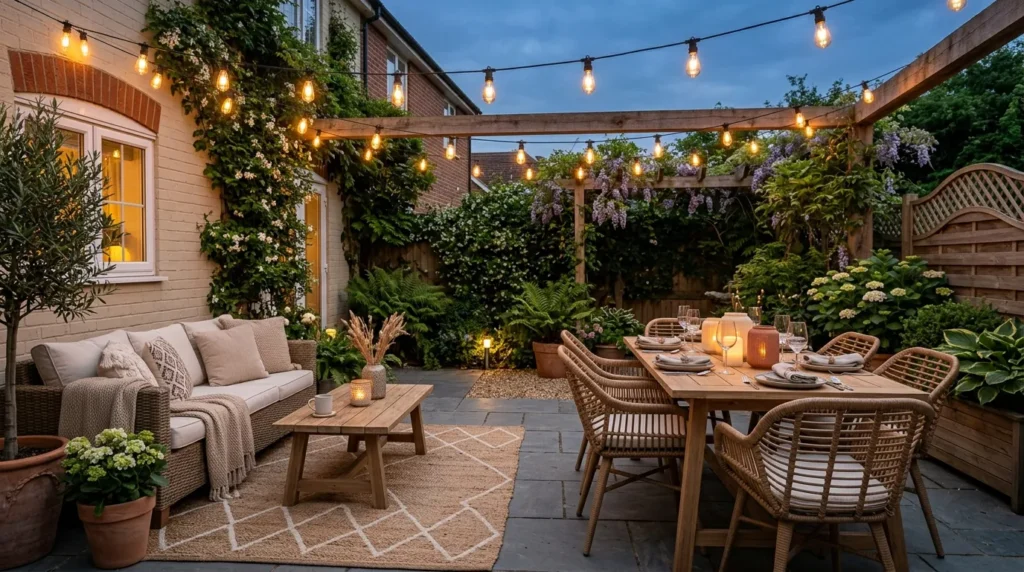
4. String Light Canopy
Quick Benefits
- Creates warm evening ambiance
- Adds vertical interest
- Makes patios feel magical
- Relatively simple update
- Works with many styles
Why It Works
Lighting can completely change the personality of a backyard after sunset.
String lights are particularly effective because they provide a soft visual glow while drawing attention upward.
They also help make an outdoor seating area feel more like a defined room.
Use outdoor-rated lighting and install it securely according to manufacturer instructions. Avoid improvising electrical connections or hanging systems that aren’t designed for exterior use.
How To Style It
Create a simple overhead pattern above the main seating or dining zone.
Attach lights to suitable structures such as sturdy posts, a pergola designed for the purpose, or other properly supported mounting points.
Pair the lights with warm-toned outdoor lanterns.
Keep the furniture neutral if you want the lighting to become the main evening feature.
For daytime interest, add hanging plants or a pergola canopy where appropriate.
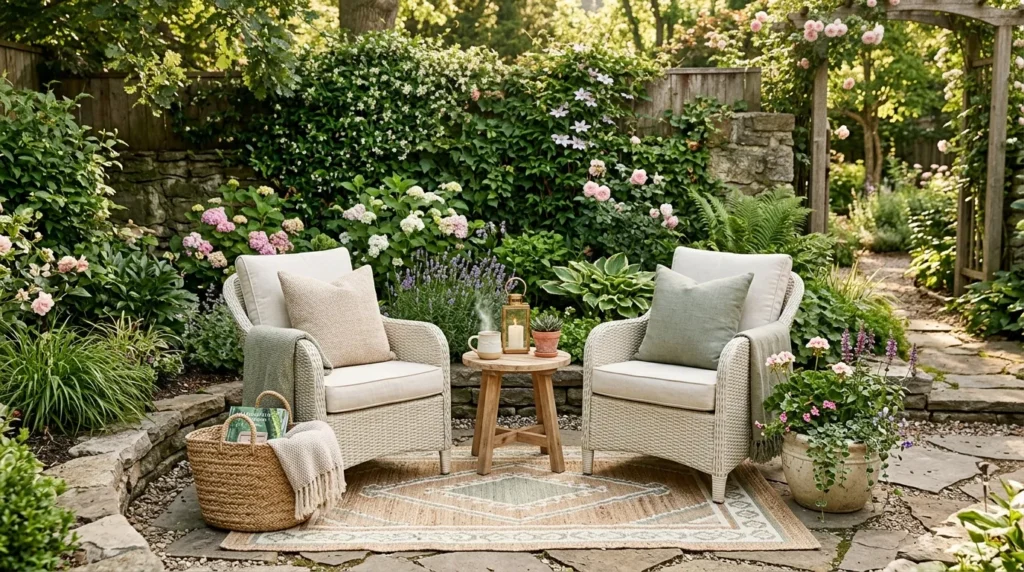
5. Garden Seating Nook
Quick Benefits
- Uses overlooked corners
- Creates a quiet retreat
- Adds charm
- Works in small backyards
- Encourages relaxation
Why It Works
Not every part of a backyard needs to accommodate a large group.
A small seating nook can give the yard another purpose while making use of a corner that might otherwise remain empty.
This works particularly well near flowering plants, mature trees, garden beds, or privacy fencing.
The goal is to create a sense of enclosure without making the area feel crowded.
How To Style It
Choose two comfortable chairs or a compact outdoor loveseat.
Add a small side table.
Position the seating toward the garden rather than directly toward the house.
Use potted plants to frame the area.
A small outdoor rug can visually separate the nook from the rest of the yard.
Add a lantern or suitable outdoor light nearby for evening use.
6. Outdoor Dining
Quick Benefits
- Encourages outdoor meals
- Creates a dedicated entertaining area
- Works for families
- Adds structure to large patios
- Can be styled beautifully
Why It Works
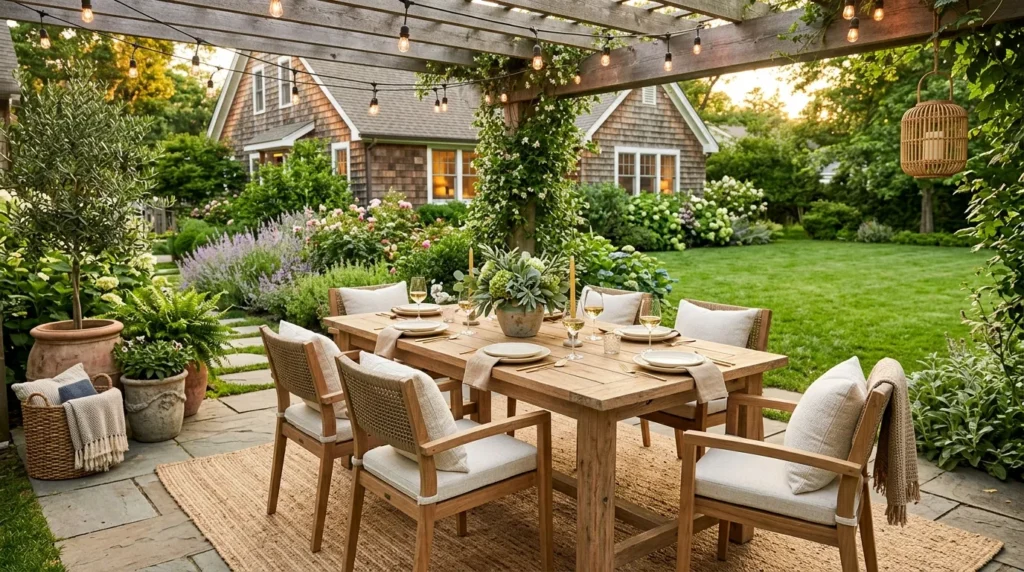
A dining area gives a backyard a clear function.
Instead of carrying meals outside and improvising where everyone will sit, a dedicated table creates an easy destination for breakfast, dinner, weekend gatherings, and summer entertaining.
It doesn’t need to be elaborate. The right proportions and comfortable seating matter more than excessive decoration.
How To Style It
Choose a table appropriate for the size of your patio and household.
Allow enough clearance around the chairs so people can move comfortably.
Add weather-appropriate seat cushions.
Use a simple centerpiece such as a planter, lantern, or low vase.
Outdoor tableware can introduce seasonal color without requiring permanent changes.
For evening meals, combine overhead lighting with table-level lanterns.
7. Container Garden
Quick Benefits
- Adds greenery quickly
- Works for renters
- Doesn’t require major landscaping
- Adds movable color
- Defines outdoor areas
Why It Works
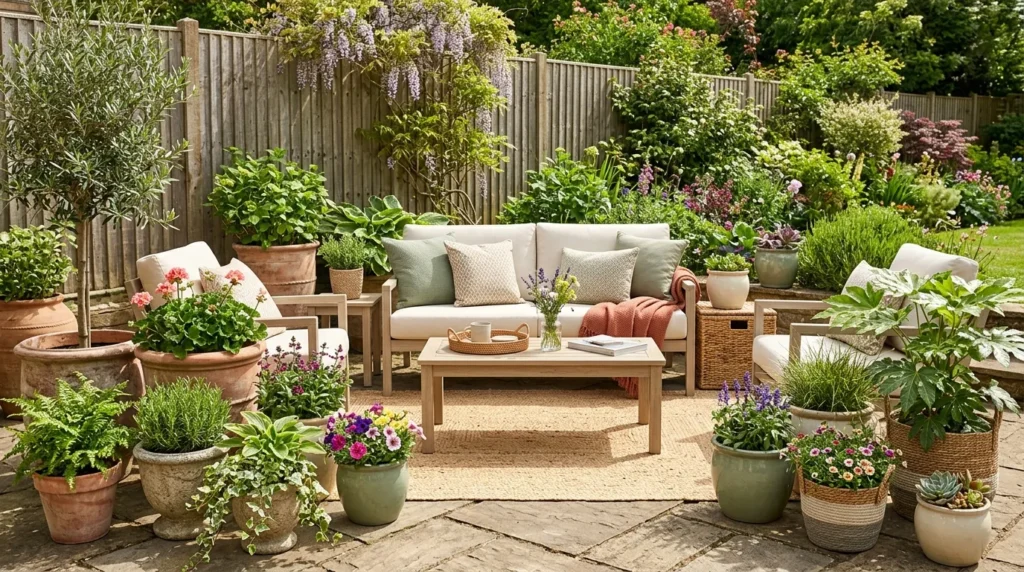
Container plants offer one of the easiest ways to add personality to a backyard without redesigning the entire landscape.
Large planters can frame an entry, define a patio, soften a fence, or create visual separation between outdoor zones.
They are also useful when your existing soil or planting conditions make traditional gardening difficult.
How To Style It
Mix planter sizes rather than using identical containers everywhere.
Use larger planters near seating areas and smaller pots on tables or steps.
Combine plants with different heights and textures.
Choose containers that complement your home’s exterior.
Terracotta, stone-look, ceramic, concrete-look, and woven-style planters can all work depending on your aesthetic.
Group three containers together for a more intentional display, varying their heights.
8. Privacy Greenery
Quick Benefits
- Makes the backyard feel more private
- Adds natural beauty
- Softens fences
- Creates a relaxing atmosphere
- Can define outdoor rooms
Why It Works
Privacy doesn’t always have to come from a solid fence.
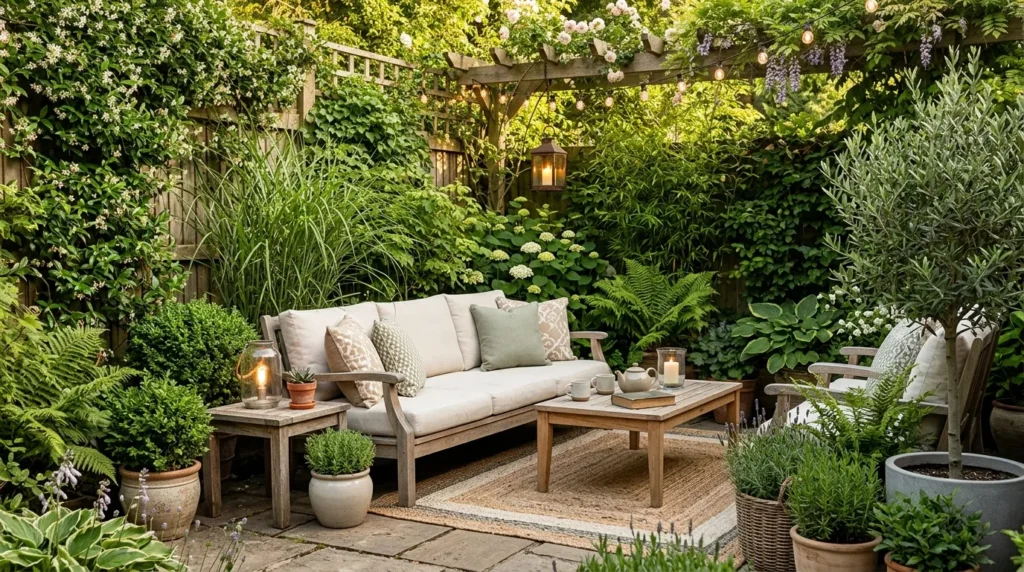
Plants can soften boundaries and create a more natural sense of enclosure.
Depending on your climate and available space, evergreen plants, shrubs, vines, tall grasses, or strategically placed containers may help create privacy.
Choose plants appropriate for your local growing conditions and consider their mature size before planting.
How To Style It
Place taller plants along the perimeter or around the seating area.
Use a mix of heights rather than one continuous row of identical plants.
Add lower planters near furniture to connect the greenery to the seating area.
A trellis can provide structure for suitable climbing plants.
Keep the central area open so the backyard doesn’t feel boxed in.
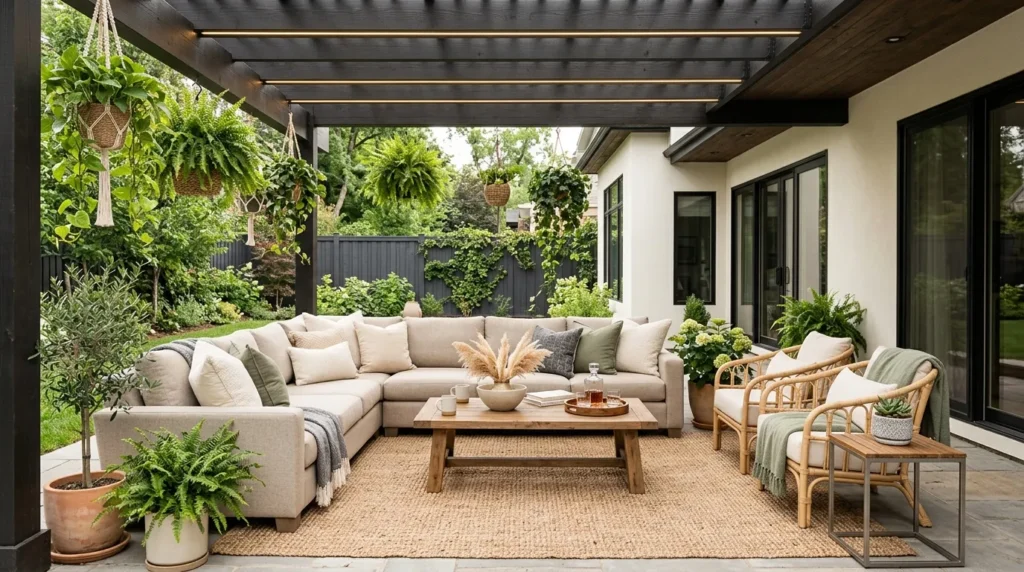
9. Covered Patio
Quick Benefits
- Provides shade
- Adds architectural definition
- Creates an outdoor room
- Helps protect furniture
- Makes the patio more versatile
Why It Works
Shade can make a major difference in how often you actually use a backyard.
A covered patio can create a more comfortable outdoor room while also providing a defined place for seating, dining, or entertaining.
The covering doesn’t have to be elaborate. Depending on the property, options can include a pergola, roof extension, shade structure, or suitable outdoor canopy.
How To Style It
Place your main seating or dining arrangement beneath the covered zone.
Use an outdoor rug to establish the floor area visually.
Add layered lighting rather than relying on a single fixture.
Introduce hanging plants or climbing greenery where appropriate.
Choose cushions and accessories that coordinate with your home’s exterior.
Keep the furniture arrangement open enough for airflow and easy movement.
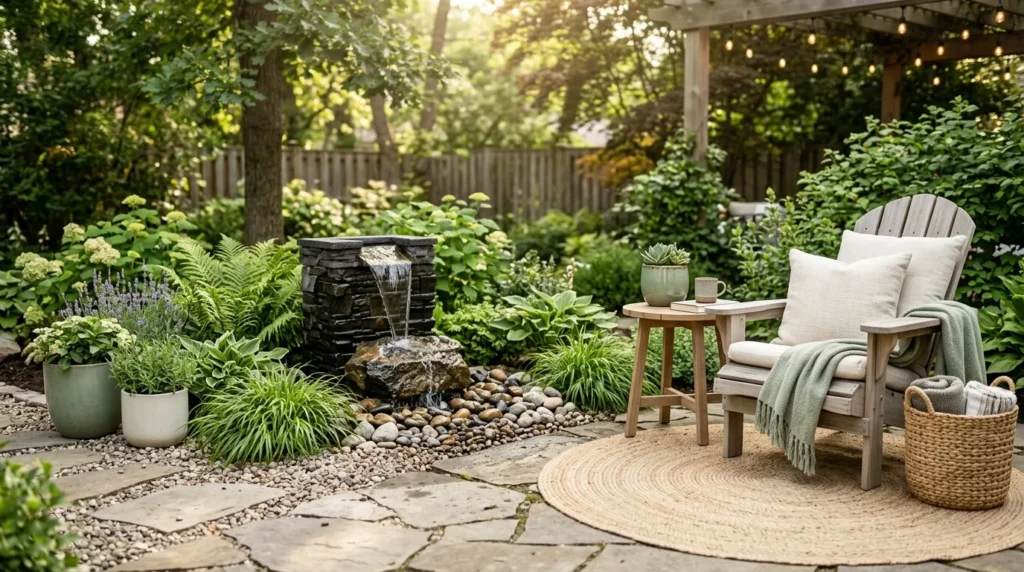
10. Water Feature
Quick Benefits
- Adds a calming focal point
- Introduces movement
- Creates visual interest
- Works in many garden styles
- Enhances relaxation
Why It Works
Moving water can add a completely different sensory element to a backyard.
The sound and movement of water can make a seating area feel more peaceful while giving the eye a natural focal point.
You don’t need a large pond. A compact fountain, wall feature, or appropriately sized water element can work beautifully in smaller spaces.
Choose a feature suitable for your location, maintenance preferences, and available utilities.
How To Style It
Place a smaller fountain near a seating area where the sound can be appreciated.
Surround it with greenery and natural stone or gravel.
Use simple planters rather than competing decorations.
For a modern backyard, choose clean geometric shapes.
For a cottage or garden-style space, a more organic design can work beautifully.
Keep the area around the feature uncluttered.
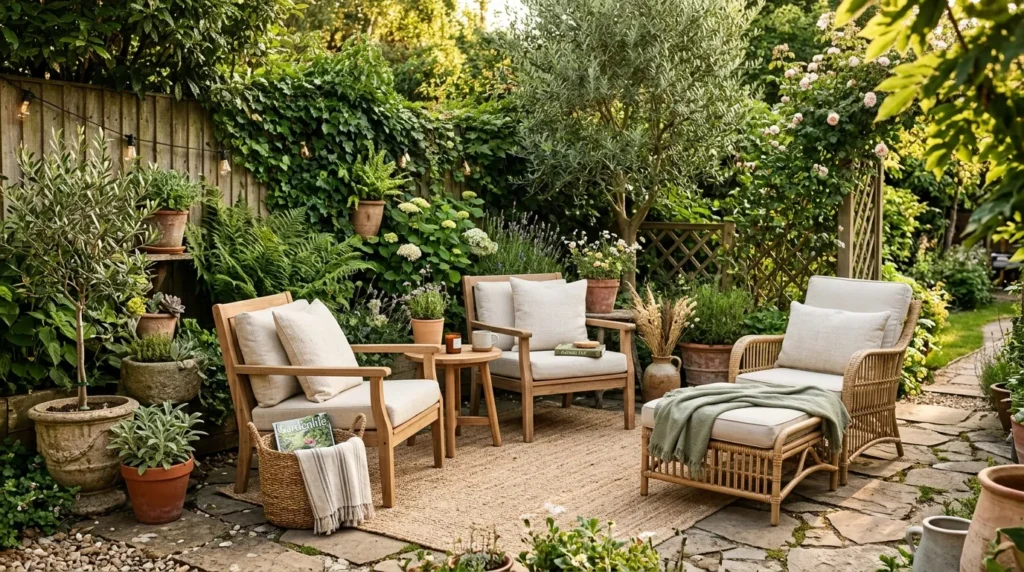
11. Natural Texture
Quick Benefits
- Creates an organic atmosphere
- Adds visual depth
- Works with many decorating styles
- Softens modern materials
- Makes outdoor areas feel layered
Why It Works
Natural materials are especially effective outdoors because they visually connect the decorated areas with the surrounding landscape.
Wood, stone, rattan, wicker, bamboo-inspired materials, jute, linen-look fabrics, and woven textures can make a patio feel warmer and less sterile.
Even a modern backyard can benefit from a few organic elements.
How To Style It
Start with your largest materials.
A wood dining table, stone planter, or woven seating piece can establish the foundation.
Then add smaller textures through cushions, rugs, baskets, lanterns, and accessories.
Keep the color palette grounded with cream, beige, brown, sage, charcoal, or muted terracotta.
Add greenery throughout the space so the materials feel naturally connected.
FAQ
How can I make my backyard look more inviting?
Start by creating a clear purpose for the space. Add comfortable seating, define the area with an outdoor rug, introduce greenery, and use layered lighting. A few coordinated accessories can make the area feel much more intentional without overcrowding it.
What should I add to my backyard first?
Begin with the feature you’ll use most. For many homeowners, that’s comfortable seating. Once the main furniture is in place, add a rug, lighting, plants, and smaller decorative accents around it.
How do I decorate a small backyard?
Focus on multifunctional furniture and clearly defined zones. A compact bistro table, bench, vertical garden, folding chairs, or small loveseat can provide function without consuming the entire yard. Keep accessories proportional to the available space.
How can I make my backyard feel like an outdoor room?
Use the same design principles you would use indoors. Define a seating area, add a rug, layer lighting, introduce textiles, use a focal point, and incorporate greenery. The combination makes the space feel intentional rather than simply furnished.
What colors work best for outdoor decor?
Neutral shades such as cream, beige, taupe, gray, and natural brown provide a versatile foundation. Add seasonal colors such as sage, terracotta, blue, coral, or muted yellow through cushions, rugs, planters, and accessories.
How do I make my backyard cozy at night?
Use multiple layers of outdoor lighting rather than relying on one bright source. String lights, lanterns, pathway lighting, and appropriate table or wall fixtures can create a softer atmosphere. Add comfortable cushions and throws designed for outdoor use where appropriate.
How can I decorate a backyard on a budget?
Prioritize the elements that make the biggest functional difference. Rearrange existing furniture, add a few coordinated cushions, use inexpensive planters, refresh the area with outdoor lighting, and create one defined seating zone before purchasing more accessories.
Conclusion
A beautiful backyard doesn’t have to be complicated.
The most successful outdoor spaces usually begin with a simple question: How do you want to use the space?
If you love entertaining, prioritize an outdoor dining area or comfortable lounge. If relaxation is more important, create a small garden seating nook or add a soothing water feature. If your patio feels unfinished, an outdoor rug and layered lighting may make the biggest difference.
Plants are another powerful tool. Container gardens can add instant color, while carefully selected greenery can soften fences and create a greater sense of privacy.
And don’t overlook texture. Wood, stone, woven materials, outdoor fabrics, and greenery help connect the decorated areas to the natural surroundings.
You also don’t need to complete all eleven ideas at once. Start with one area that feels underused or unfinished. Add comfortable furniture, define the space, introduce lighting, and then layer in the decorative details.
Once the basics are working, the smaller touches become much easier.
A few pillows, a beautiful planter, a glowing string-light canopy, or a simple outdoor rug can completely change how the backyard feels.
The goal isn’t to create a perfect outdoor space. It’s to create one that makes you want to open the door, step outside, and stay awhile.