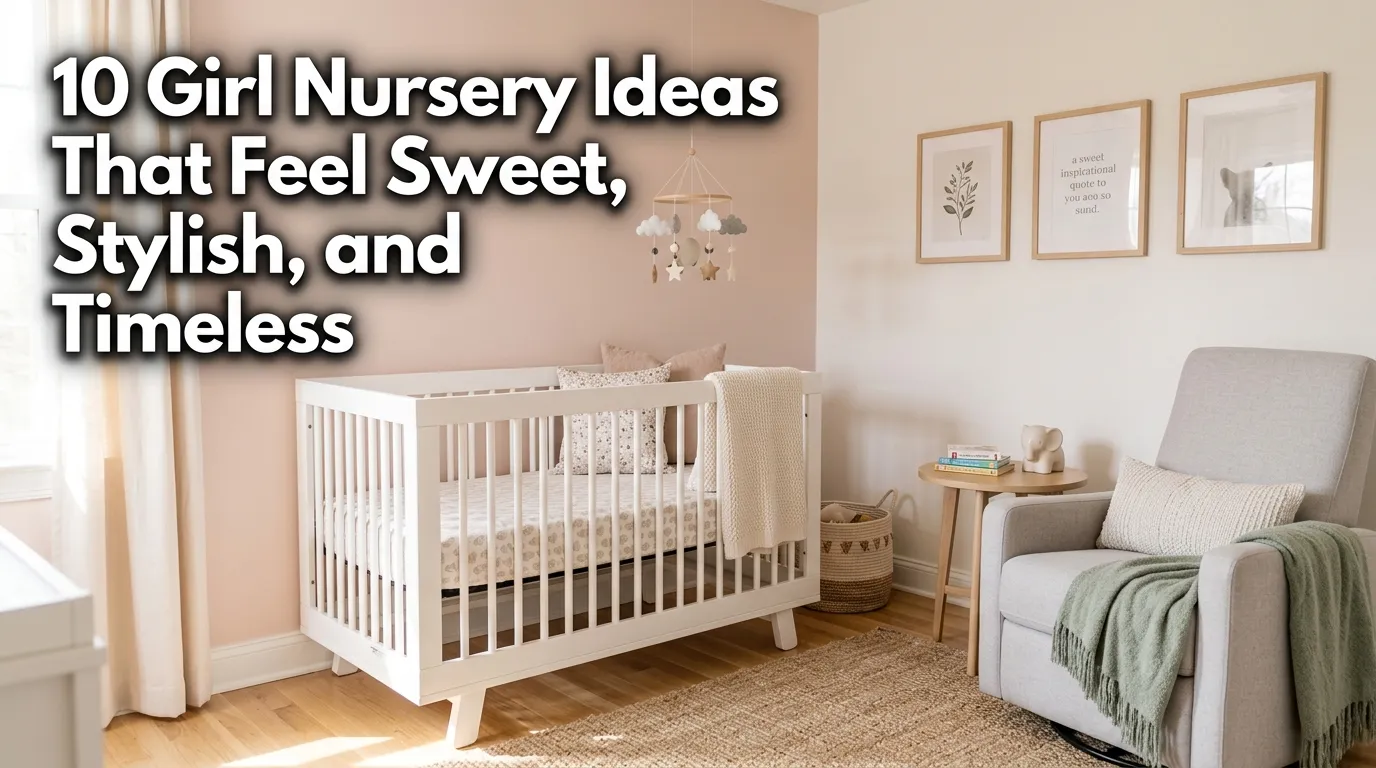
10 Girl Nursery Ideas That Feel Sweet, Stylish, and Timeless
Creating a nursery for a baby girl is one of those decorating projects that can be both incredibly exciting and surprisingly overwhelming. There are so many beautiful directions to take—from soft blush and floral details to warm neutrals, vintage-inspired furniture, modern arches, and whimsical woodland touches.
The trick is creating a room that feels special without making every detail overly themed. A nursery should be beautiful enough to make you smile, but practical enough for real everyday life. You’ll be spending plenty of time changing clothes, organizing tiny socks, feeding, rocking, and reaching for blankets, so the room needs to work just as well as it looks.
In my experience, the most timeless girl nurseries start with a simple foundation and build personality through layers. A warm ivory wall can become the backdrop for blush textiles, natural wood, delicate artwork, and soft lighting. Or you can skip pink altogether and create a sophisticated space using sage green, cream, beige, dusty rose, or muted terracotta.
Whether you’re decorating a large dedicated nursery or transforming a smaller bedroom, these ideas focus on details that are genuinely achievable. You’ll find ways to use color, texture, storage, lighting, furniture, and personal touches to create a room that feels cozy and thoughtfully designed.
And remember, you don’t have to finish everything before your baby arrives. Start with the essentials, create a comfortable layout, and add the sentimental details gradually. Some of the sweetest nursery elements are the ones collected over time.
Table of Contents
1. Blush and Cream
Create a soft, feminine nursery with blush accents balanced by warm neutral tones.
2. Natural Wood Charm
Use natural wood furniture and organic textures for a timeless, welcoming foundation.
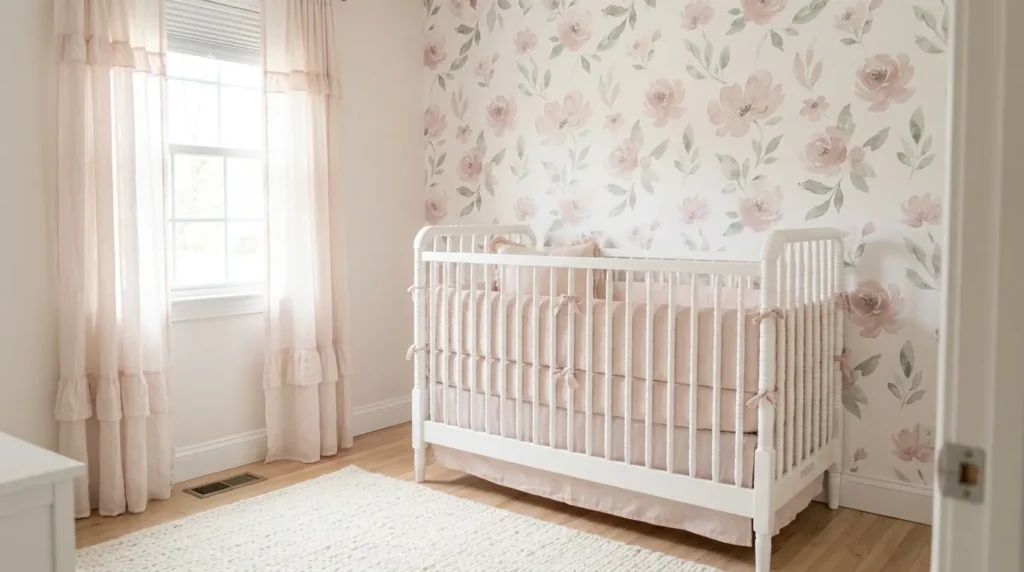
3. Floral Wallpaper
Add personality with a delicate botanical or floral feature wall.
4. Vintage Romance
Combine traditional furniture and nostalgic details for a charming old-fashioned nursery.
5. Sage Green Beauty
Move beyond traditional pink with a calming sage and cream color palette.
6. Cozy Reading Nook
Create a comfortable corner for feeding, cuddling, and future story time.
7. Whimsical Canopy
Add a dreamy focal point with soft fabric and carefully chosen decorative details.
8. Modern Arched Details
Use curves and clean lines for a contemporary nursery with a softer feel.
9. Pretty Practical Storage
Make everyday baby essentials easy to organize without sacrificing style.
10. Personalized Gallery Wall
Finish the nursery with meaningful artwork, photographs, and sentimental details.
1. Blush and Cream
Quick Benefits
- Creates a soft atmosphere
- Feels feminine without being overly themed
- Easy to coordinate
- Works with natural wood
- Can transition beautifully
Why It Works
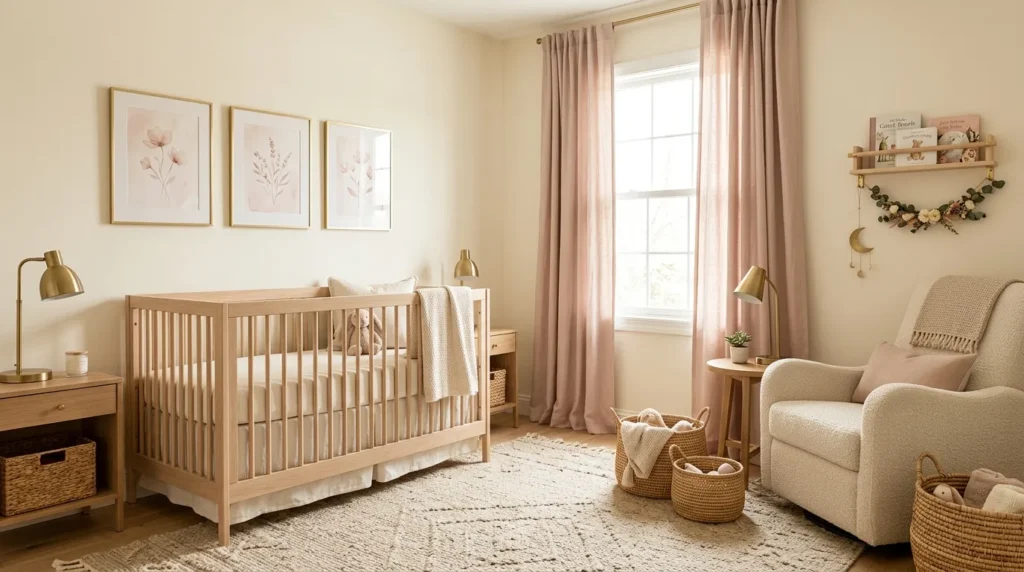
Blush pink becomes especially beautiful when it isn’t used everywhere. Instead of turning the entire nursery pink, use it as an accent against warm cream, ivory, beige, and natural wood. This creates a softer and more sophisticated appearance while still giving the room a distinctly feminine feeling. Different shades can work together too, from barely-there dusty rose to muted blush and slightly deeper mauve. The neutral foundation keeps the room bright and gives you plenty of flexibility when choosing furniture and accessories.
How To Style It
Start with warm ivory or creamy white walls and introduce blush through curtains, a rug, crib sheets, artwork, or a small upholstered chair.
Natural oak furniture adds warmth, while brass hardware provides a subtle polished finish. Keep larger surfaces neutral so the pink accents don’t become overwhelming.
A blush floral print above the dresser or a dusty-rose throw over the nursery chair can add personality without making the room feel overly coordinated.
For a more modern finish, add small touches of sage green or warm terracotta.
2. Natural Wood Charm
Quick Benefits
- Creates warmth
- Feels timeless
- Works with many color palettes
- Adds natural texture
- Can grow with your child
Why It Works
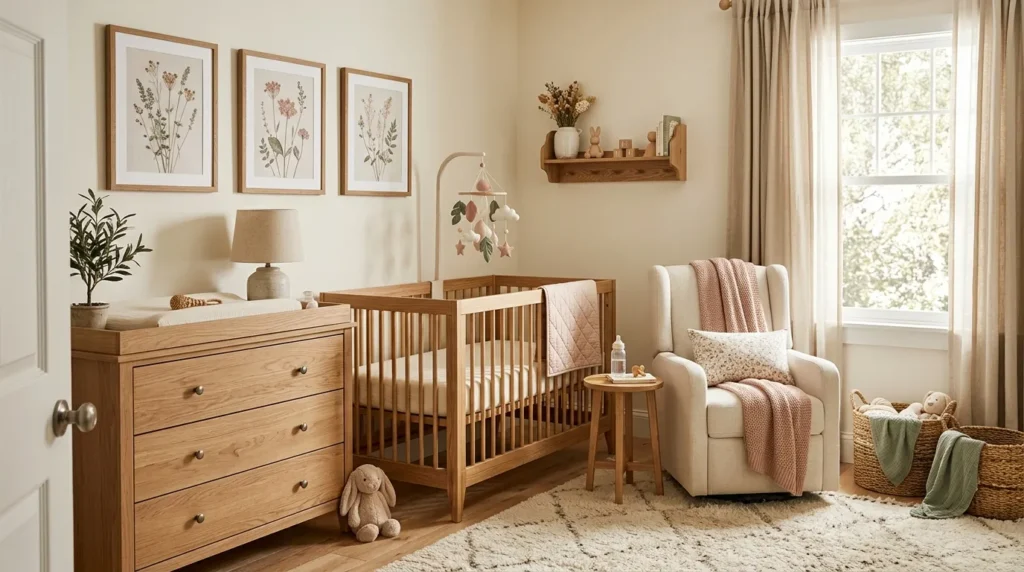
Natural wood has a way of making a nursery feel immediately welcoming. Pale oak gives the room an airy Scandinavian-inspired feeling, while medium or darker wood can create a richer vintage atmosphere. Wood also works beautifully with feminine colors because it prevents blush, floral patterns, and soft pastels from feeling too sweet. When paired with woven baskets, cotton textiles, and warm lighting, it creates the kind of cozy atmosphere that feels relaxed rather than overly styled.
How To Style It
Choose a natural wood crib as the main anchor and repeat the finish through the dresser, shelves, or small accessories.
Pair the wood with cream walls and a soft neutral rug. Add blush, dusty rose, sage, or muted lavender through smaller textiles.
Woven baskets can provide additional storage while reinforcing the organic feeling.
Don’t worry about matching every wood piece perfectly. A few complementary wood tones can create a more collected and natural look.
3. Floral Wallpaper
Quick Benefits
- Creates an instant focal point
- Adds personality
- Makes a simple nursery feel finished
- Works with neutral furniture
- Easy to customize
Why It Works
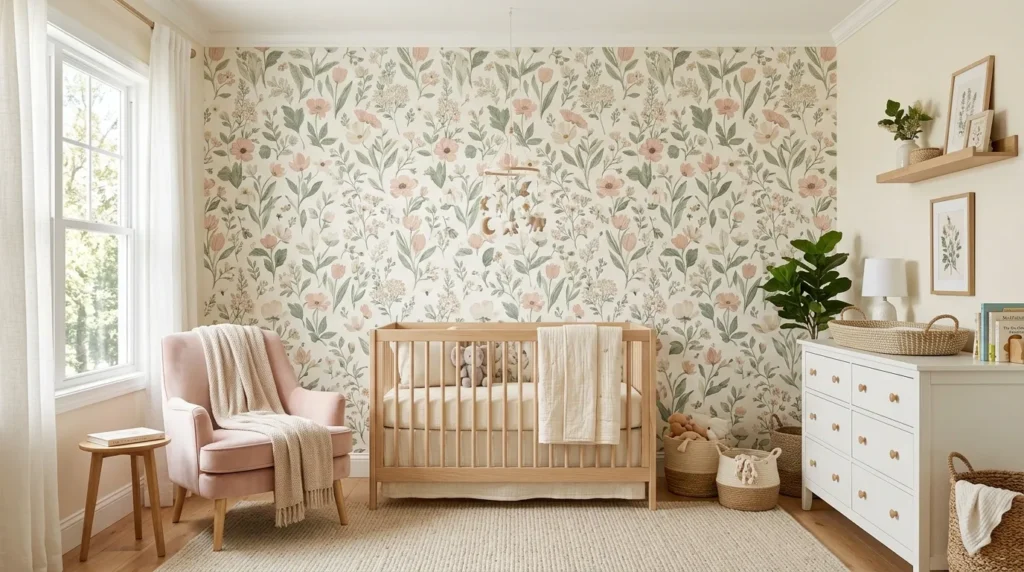
A floral feature wall can transform a nursery without requiring dozens of decorative accessories. The pattern provides color, movement, and personality all at once, which is especially useful if you’re trying to keep the rest of the room simple. Small-scale botanical prints feel delicate and timeless, while larger florals can create a more dramatic designer-inspired look. Choosing wallpaper with several colors already present in the nursery also makes decorating easier because those shades can guide your choices for rugs, curtains, artwork, and furniture.
How To Style It
Use floral wallpaper on one wall rather than covering every surface if you want a more restrained appearance.
A soft botanical print with blush, sage, cream, and muted green can create an especially versatile palette.
Keep the crib and larger furniture simple so the wallpaper remains the star. Natural wood, white, or cream furniture works particularly well.
Add solid-colored bedding and curtains instead of competing patterns. A small floral print can also be repeated in one accessory for cohesion.
4. Vintage Romance
Quick Benefits
- Creates character
- Feels nostalgic
- Works beautifully with soft colors
- Encourages meaningful details
- Can feel collected rather than decorated
Why It Works
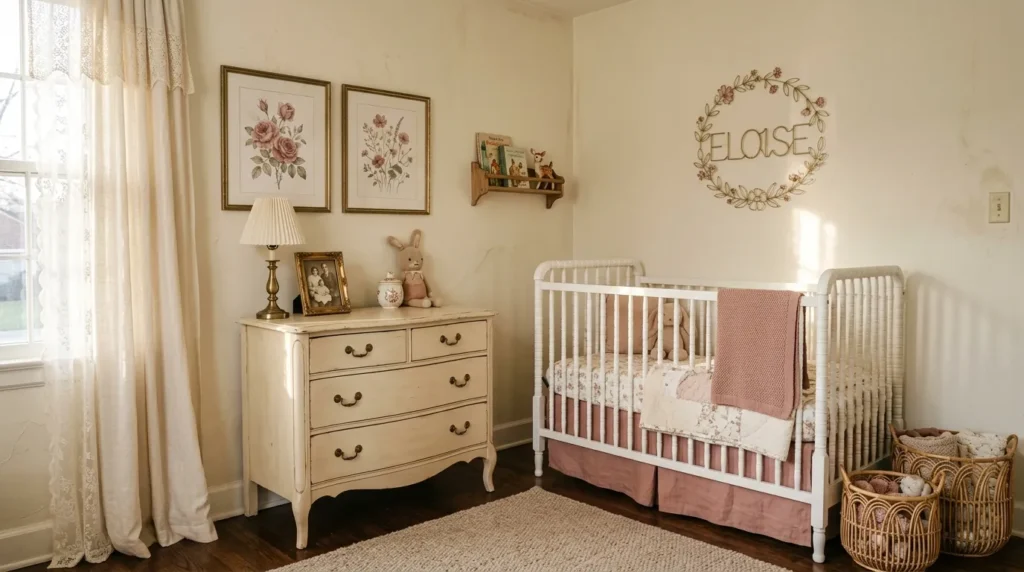
A vintage-inspired nursery has a warmth that can be difficult to recreate with brand-new matching furniture. The style works through details: an antique-looking dresser, traditional framed artwork, floral textiles, warm brass, and soft colors. You don’t need actual antiques to achieve the feeling. Modern nursery furniture combined with a few vintage-inspired accessories can create the same atmosphere while remaining practical. This approach also gives you an opportunity to include family heirlooms or sentimental pieces that make the nursery feel personal.
How To Style It
Choose a classic crib silhouette and pair it with a traditional-looking dresser in white, cream, or warm wood.
Add floral artwork, an old-fashioned style rug, brass hardware, and delicate curtains.
A vintage-inspired lamp or framed family photograph can make the room feel collected.
Keep the color palette soft—think ivory, dusty rose, faded sage, beige, and muted mauve.
Avoid filling every surface with antiques or decorative objects. A few special pieces will have much more impact.
5. Sage Green Beauty
Quick Benefits
- Offers an alternative to pink
- Feels calming
- Works with natural materials
- Looks contemporary
- Ages well
Why It Works
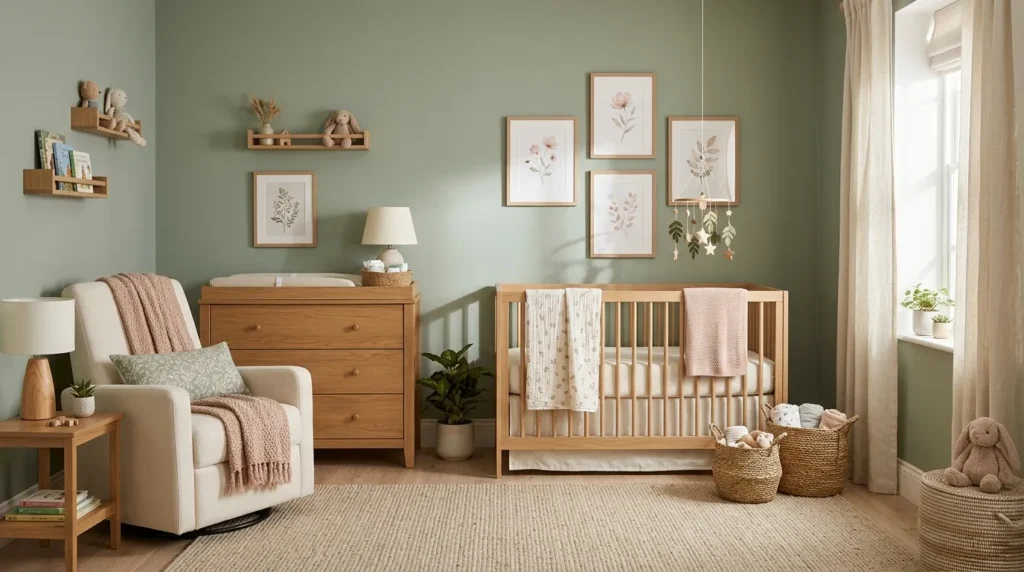
Sage green has become a favorite nursery shade because it feels gentle without being overly traditional. It pairs naturally with warm ivory, beige, oak, and soft blush, making it surprisingly versatile for a girl’s nursery. A muted green wall can also provide enough color to make the room interesting without requiring many additional accessories. As your child grows, sage can remain relevant, making it a smart foundation if you don’t want to redesign the room after the nursery stage.
How To Style It
Use sage on one accent wall or throughout the room if the shade is light enough to maintain an airy feeling.
Pair it with a natural wood crib, cream bedding, beige rug, and woven baskets.
Add small blush or dusty rose accents if you want a subtle feminine touch.
Botanical artwork, floral illustrations, and natural textures reinforce the palette without making the nursery feel like a strict theme.
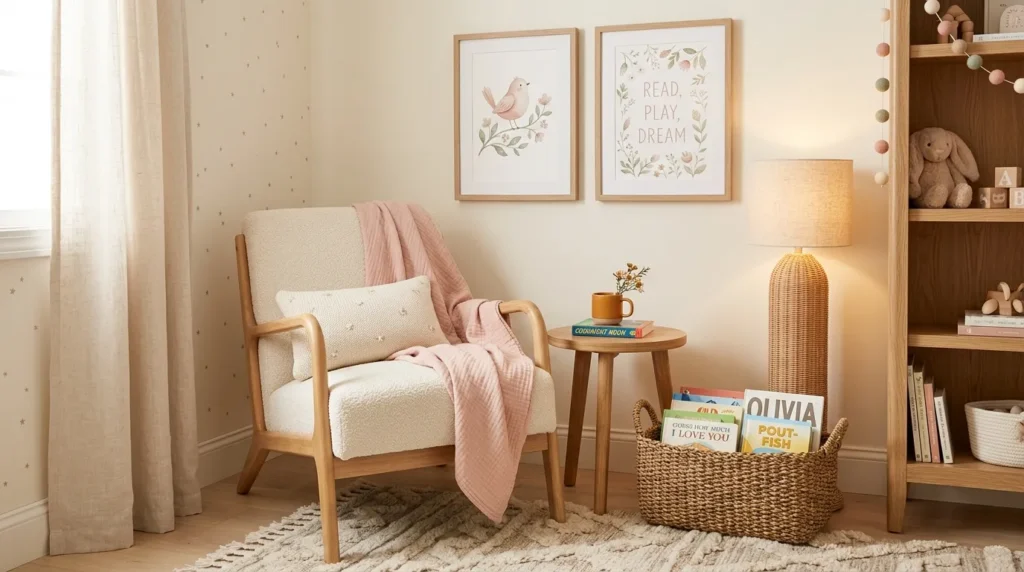
6. Cozy Reading Nook
Quick Benefits
- Provides comfortable seating
- Supports feeding routines
- Creates a relaxing corner
- Becomes useful for story time
- Adds warmth to the room
Why It Works
A nursery chair often becomes one of the most frequently used pieces in the room. It’s where you’ll feed, cuddle, rock, and eventually read bedtime stories. Even in a girl’s nursery, the chair doesn’t need to be overly decorative. Comfort and practicality should lead the decision, while the color and fabric can help it fit beautifully into the design. Creating a dedicated corner also makes the room feel more complete because it gives the nursery multiple functional zones.
How To Style It
Choose a comfortable cream, beige, blush, or soft gray chair and place it somewhere with enough room to move around it.
Add a small side table for books or adult essentials and a warm lamp for evening use.
A woven basket beside the chair can hold books, burp cloths, or extra blankets.
Use one soft throw for texture, but keep loose soft items away from the baby’s sleep space.
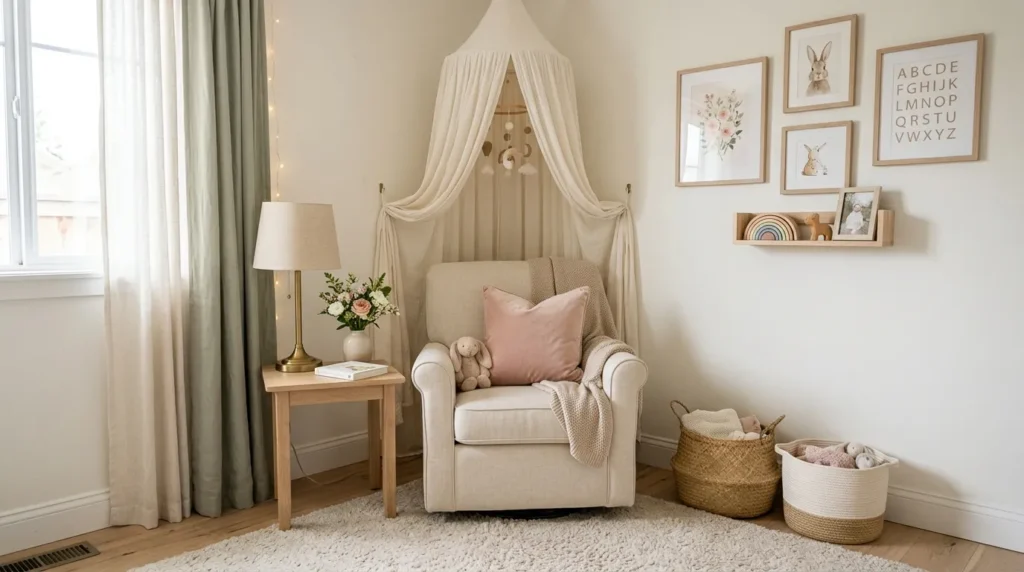
7. Whimsical Canopy
Quick Benefits
- Creates a dreamy focal point
- Adds softness
- Works in many nursery styles
- Makes the room feel special
- Doesn’t require much furniture
Why It Works
A fabric canopy can introduce a whimsical feeling without covering the nursery in themed decorations. Soft draping fabric adds height, movement, and texture, while the canopy itself can become the main decorative moment. Cream, blush, dusty rose, or muted sage fabrics can coordinate beautifully with the rest of the room. The important consideration is safety: decorative fabric should never create a hazard around a baby’s sleeping area. A canopy is best treated as a carefully installed decorative element in an appropriate location rather than loose fabric near the crib.
How To Style It
Consider placing a decorative canopy over a reading chair or cozy corner rather than directly around the crib.
Choose lightweight fabric in ivory, blush, beige, or another shade from your palette.
Pair it with simple furniture and soft lighting so the canopy remains the focal point.
Add a small rug and comfortable chair underneath to create a dreamy reading or feeding area.
Always secure decorative elements carefully and keep cords, fabric, and other potentially hazardous materials away from the baby’s reach and sleep environment.
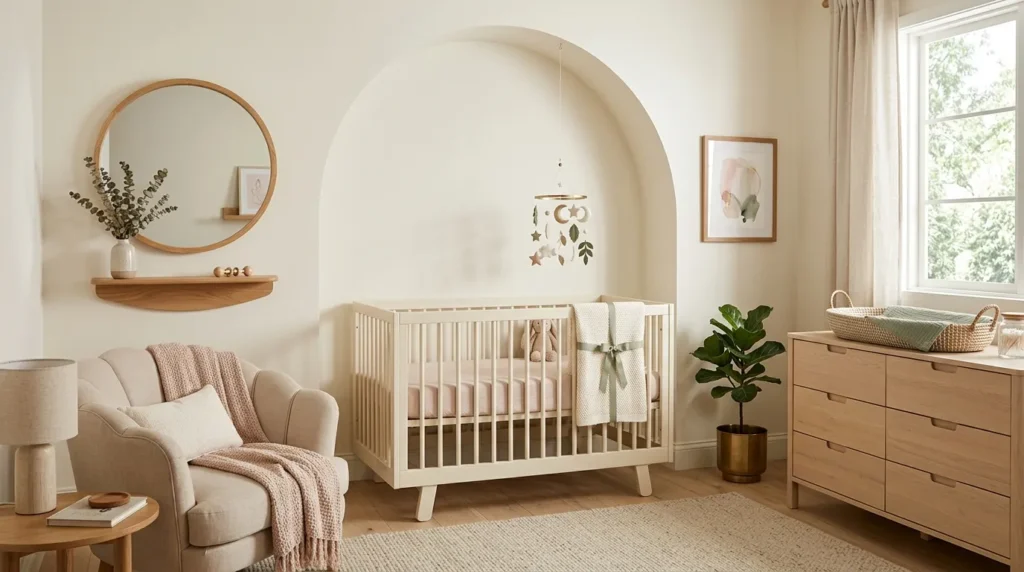
8. Modern Arched Details
Quick Benefits
- Adds contemporary style
- Softens straight furniture lines
- Creates visual interest
- Feels sophisticated
- Works with neutral palettes
Why It Works
Curved shapes can make a nursery feel softer and more playful without relying on traditional baby motifs. An arched wall detail, rounded mirror, curved chair, or arched bookcase introduces visual movement while maintaining a sophisticated appearance. This is particularly effective when the rest of the furniture has clean, straight lines. The contrast makes the room feel intentionally designed. Curves also work beautifully with feminine colors because they reinforce the softness of the palette without becoming overly decorative.
How To Style It
Choose one major curved feature rather than introducing arches everywhere.
An arched mirror above a dresser, rounded wall niche, or curved bookshelf can become the room’s focal point.
Pair it with simple natural wood furniture, cream walls, and blush or sage accents.
Keep artwork and accessories relatively minimal so the architectural shape remains noticeable.
For a modern nursery, use black or brushed brass accents sparingly against the softer colors.
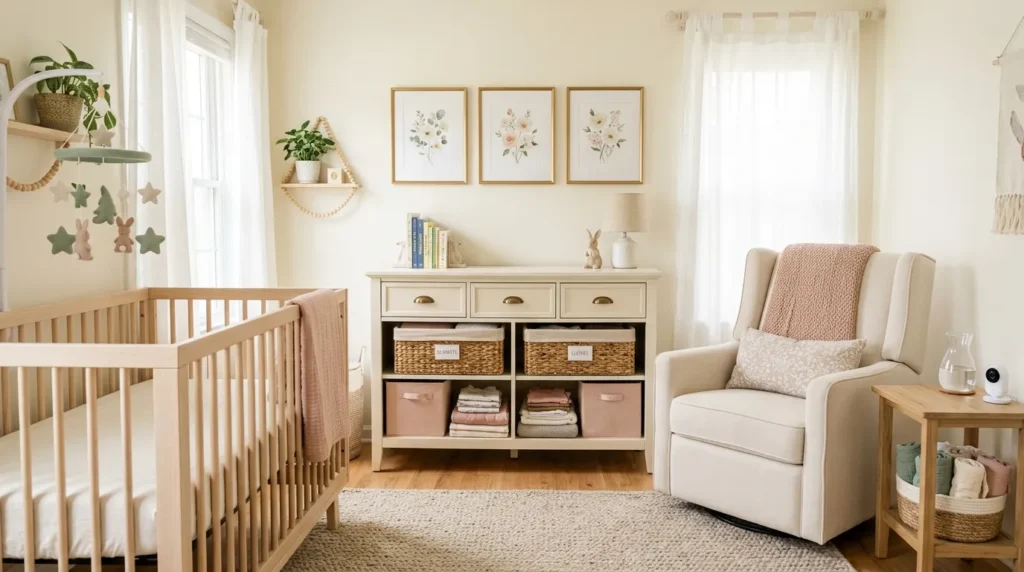
9. Pretty Practical Storage
Quick Benefits
- Keeps clutter under control
- Makes everyday routines easier
- Adds visual organization
- Works in small rooms
- Can grow with the child
Why It Works
Nurseries accumulate things incredibly quickly. Tiny clothes, diapers, blankets, toys, books, and keepsakes all need a home. Storage therefore shouldn’t be treated as an afterthought. In a stylish nursery, practical storage can become part of the decor. Woven baskets add texture, a beautiful dresser provides hidden storage, and simple shelving can display books. Keeping frequently used supplies organized means the nursery can remain visually peaceful even during busy days.
How To Style It
Choose a dresser with enough drawers for clothing and everyday supplies. If appropriate and securely installed, it can also serve as a changing station.
Use woven baskets for blankets and toys, and choose coordinated containers for open shelving.
Wall-mounted shelves can display a small selection of books and artwork without using floor space.
Keep the dresser top relatively clear. One lamp, one framed piece, and a small organizer often look more polished than a collection of accessories.
Secure furniture and shelving appropriately and keep potentially hazardous items inaccessible to children.
10. Personalized Gallery Wall
Quick Benefits
- Makes the nursery unique
- Adds visual interest
- Creates a focal point
- Allows sentimental pieces
- Can evolve over time
Why It Works
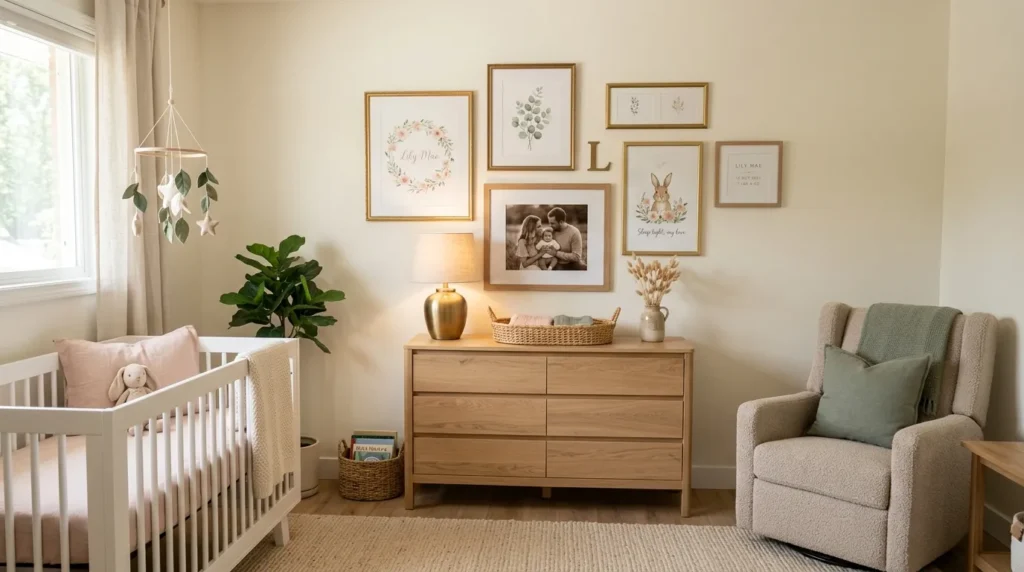
The final layer of a beautiful nursery is often the most personal. A gallery wall can combine family photographs, botanical artwork, meaningful quotes, initials, watercolor illustrations, and keepsakes. It doesn’t have to look perfectly matched. Repeating a few colors or frame finishes is usually enough to make the collection feel cohesive. As your daughter grows, you can replace pieces and add new memories, allowing the wall to evolve with her. This creates a room that feels less like a showroom and more like a genuine part of your family home.
How To Style It
Start with one larger piece and arrange smaller frames around it. Lay everything on the floor first to experiment with spacing and proportions.
Natural wood, white, brass, or soft gold frames can all work beautifully depending on the nursery’s style.
Choose artwork that repeats colors already present in the room, such as blush, sage, cream, beige, or muted lavender.
Keep the arrangement visually balanced rather than filling every available inch.
Secure every piece appropriately and avoid placing heavy or fragile objects where they could become accessible to the baby.
Frequently Asked Questions
What colors are best for a girl’s nursery?
Blush, dusty rose, cream, ivory, sage green, beige, lavender, warm white, and muted terracotta can all create beautiful girl nurseries. Pink is certainly an option, but it isn’t required. Combining a soft color with warm neutrals usually creates a more timeless result and gives you greater flexibility as your child grows.
How can I make a girl’s nursery feel elegant?
Focus on quality-looking basics rather than adding lots of decorations. Natural wood furniture, warm lighting, coordinated textiles, subtle wallpaper, brass accents, and a restrained color palette can create an elegant atmosphere. One beautiful focal point is usually more effective than many competing decorative pieces.
How do I create a girl nursery without using pink?
Start with a neutral or nature-inspired palette such as cream, beige, sage green, warm wood, or soft gray. Add personality through floral artwork, botanical prints, curved furniture, textured textiles, and sentimental accessories. A room can feel distinctly feminine through softness and styling rather than color alone.
What should I put above the crib in a girl’s nursery?
A simple focal point such as artwork, a subtle wall treatment, or properly secured decorative design can work. Safety is the priority. Avoid heavy objects, unsecured shelves, cords, or anything that could fall into the crib. Keep the baby’s sleep space free from loose pillows, blankets, toys, and decorations.
How can I make a nursery feel cozy?
Layer warm textures and lighting. A soft rug, comfortable chair, woven baskets, cotton bedding, curtains, natural wood, and warm lamps can make the room feel inviting. Keep the palette cohesive and avoid excessive clutter. Cozy doesn’t mean crowded; leaving some empty space often makes the room feel more relaxing.
How can I make a nursery grow with my daughter?
Choose timeless furniture and use removable or easily replaceable decor to express the nursery theme. A simple wood or white crib, versatile dresser, comfortable chair, and neutral rug can remain useful while artwork, bedding, and accessories change. This approach allows you to update the room without replacing all the major pieces.
Conclusion
A girl’s nursery can be soft and feminine without feeling overly sweet, and it can be stylish without becoming impractical. The most beautiful rooms tend to balance both sides: they have a clear visual style while still making everyday life easier.
You might love the classic combination of blush and cream, or perhaps sage green and natural wood feels more like your style. A floral feature wall can provide the wow factor, while vintage details, curved furniture, cozy seating, and personalized artwork can make the room feel genuinely special.
Start with your foundation first. Choose the crib, storage, rug, and main color palette. Once those pieces are in place, add the details gradually. This prevents the room from becoming overcrowded and gives you a chance to see what it actually needs.
Don’t underestimate the importance of practical choices, either. Good storage, comfortable seating, warm lighting, and clear walkways will matter every single day.
And most importantly, let the nursery reflect your family. A framed photograph, handmade blanket, favorite book, or treasured keepsake can mean more than the trendiest accessory.
Whether you choose soft pink, earthy green, warm neutrals, or a completely different palette, the goal is the same: create a peaceful little room where your baby can sleep, grow, cuddle, and make memories.