
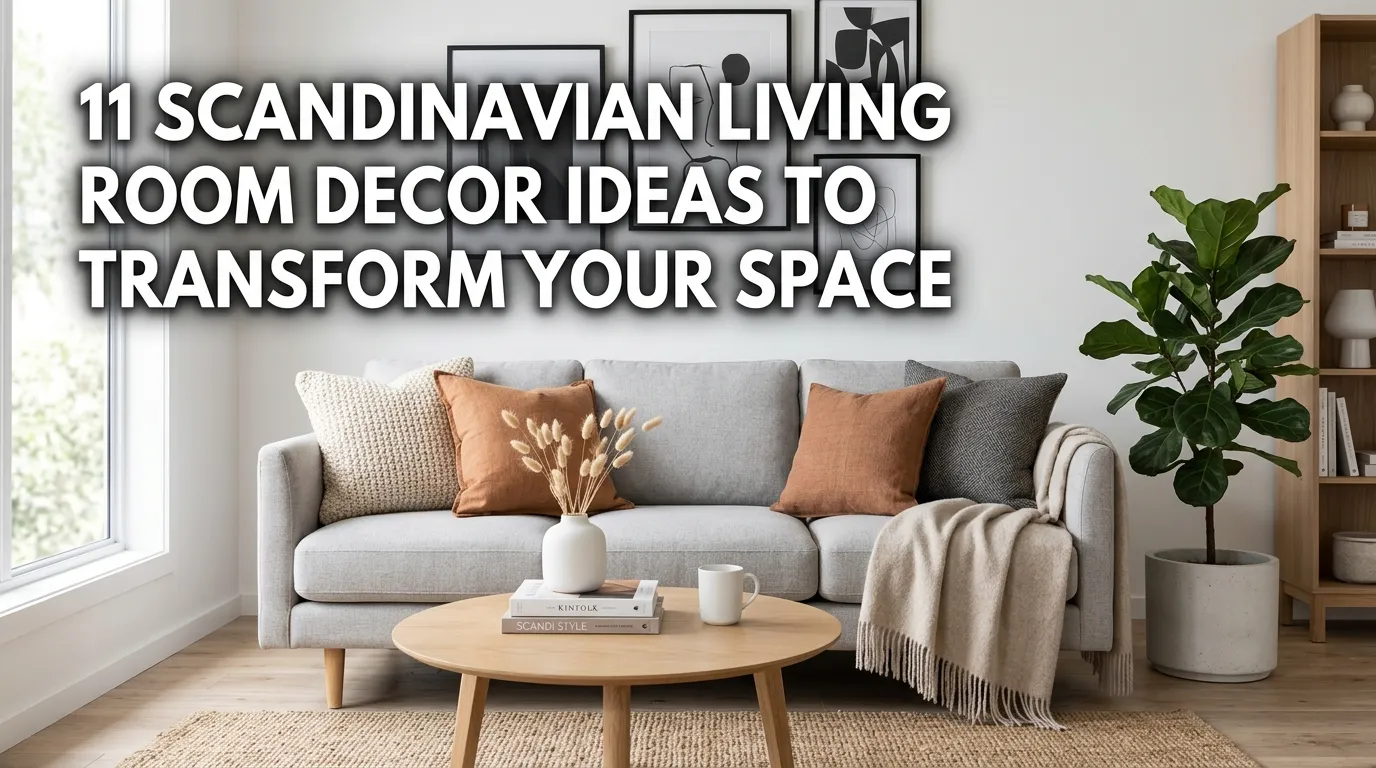
11 Scandinavian Living Room Decor Ideas to Transform Your Space
Scandinavian living rooms have a way of feeling effortlessly beautiful. They’re bright without being stark, minimal without feeling empty, and cozy without looking cluttered. That balance is what makes Nordic-inspired interiors so appealing—and why the style continues to work beautifully in both modern houses and smaller apartments.
If your living room feels dark, crowded, or disconnected, Scandinavian design offers a practical way to rethink the space. Instead of adding more decoration, the approach focuses on thoughtful furniture, natural materials, soft textiles, functional storage, and plenty of daylight.
In my experience, the most inviting Scandinavian rooms aren’t perfectly white or completely minimalist. They have layers. A pale wood coffee table warms up a neutral sofa. A textured rug softens a simple floor. A few books and ceramics add personality. Greenery brings an organic element that keeps the room from feeling too polished.
The beauty of this decorating style is that you can adapt it to your existing home. You don’t need to replace everything with Scandinavian furniture. A few changes to your color palette, lighting, furniture arrangement, and accessories can shift the atmosphere dramatically.
Whether you’re starting from scratch or simply want to make your living room feel lighter and more peaceful, these Scandinavian living room ideas will help you create a space that feels practical, comfortable, and beautifully understated.
Table of Contents
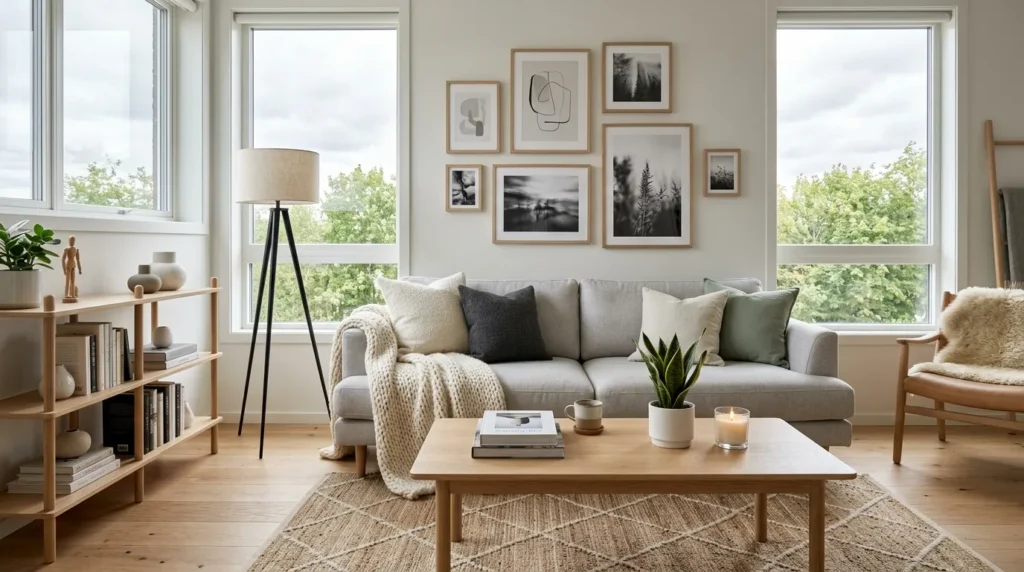
1. Light Wood Furniture
Introduce pale natural wood for warmth and Nordic character.
2. Soft Neutral Colors
Create a bright, peaceful foundation with understated shades.
3. Cozy Layered Textiles
Add softness through rugs, cushions, throws, and curtains.
4. Functional Furniture
Choose pieces that combine practical use with simple design.
5. Natural Greenery
Bring organic color and freshness into the room.
6. Hygge Lighting
Create a warm atmosphere with layered, comfortable lighting.
7. Minimal Wall Art
Use simple artwork to add personality without visual clutter.
8. Scandinavian Storage
Keep everyday belongings organized with clean-lined solutions.
9. Organic Shapes
Soften straight architectural lines with rounded furniture.
10. Textured Neutral Rug
Ground the seating area with a warm tactile foundation.
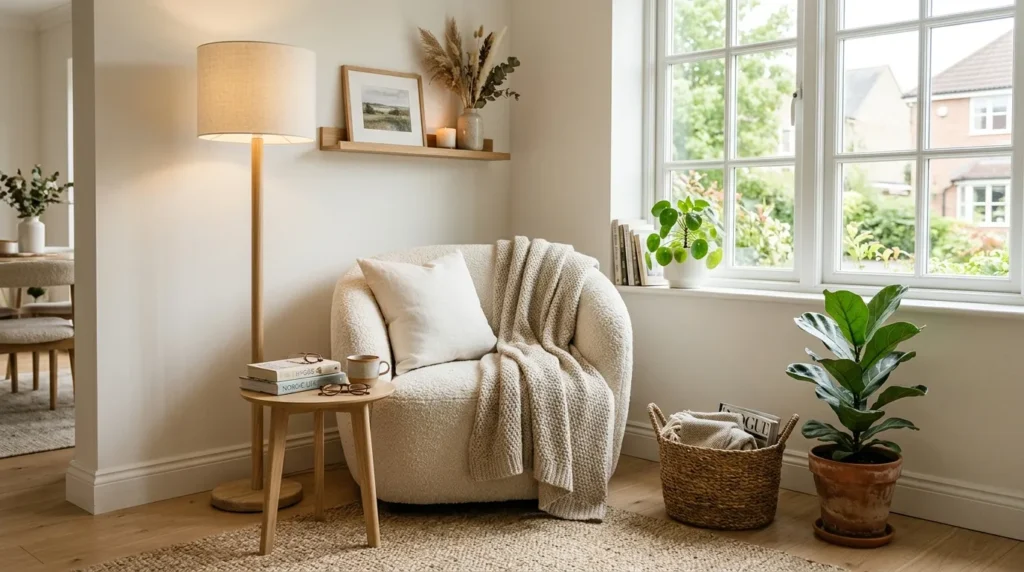
11. Cozy Reading Corner
Create a functional little retreat for relaxing at home.
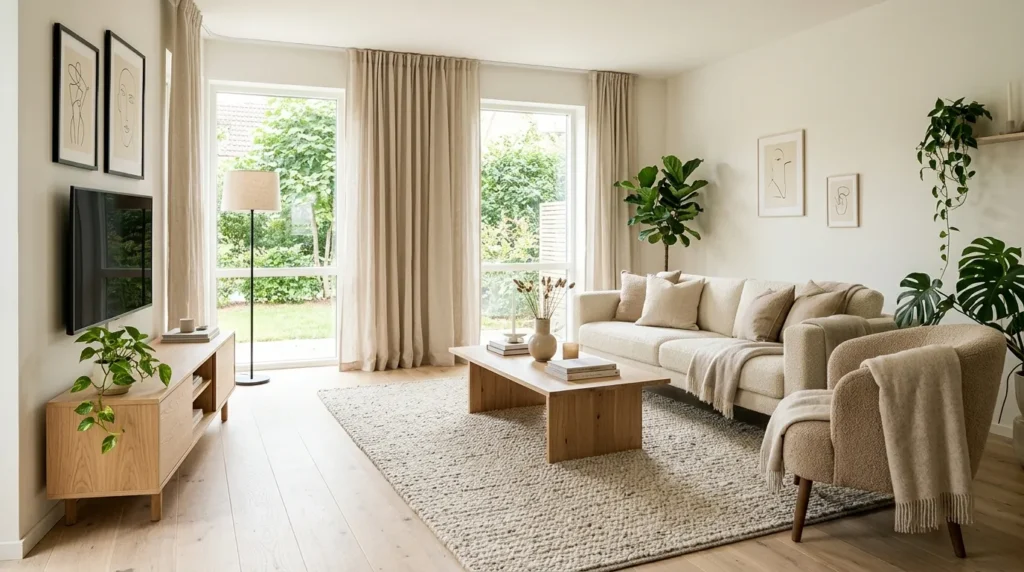
1. Light Wood Furniture
Quick Benefits
- Adds warmth to pale interiors
- Creates a natural Scandinavian feel
- Works with neutral color palettes
- Makes rooms feel visually lighter
- Provides timeless versatility
Why It Works
Light wood is one of the easiest ways to give a living room Scandinavian character. Oak, ash, birch, and similar pale finishes bring natural warmth while keeping the overall room bright.
This is particularly useful when your walls and upholstery are already neutral. Instead of introducing bold colors, the wood grain provides subtle visual variation.
Scandinavian interiors often favor materials that feel natural and approachable rather than overly glossy or formal. That’s why pale wood works so well alongside linen, wool, cotton, and simple ceramics.
The result feels relaxed enough for everyday life while still looking thoughtfully designed.
How To Style It
Start with one substantial wooden piece, such as a coffee table, media console, or sideboard.
Light oak is particularly versatile with cream and beige upholstery.
Add a simple wooden side table or stool.
Keep the finish relatively natural rather than heavily polished.
For more contrast, pair pale wood with small black accents.
Avoid matching every wooden item perfectly. Slight differences in grain and tone can make the room feel more collected and authentic.
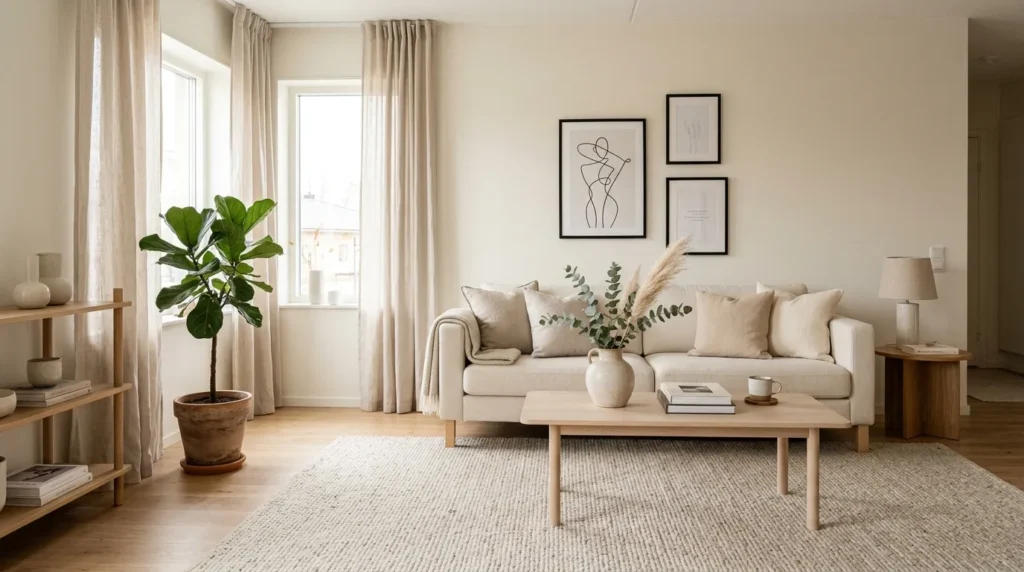
2. Soft Neutral Colors
Quick Benefits
- Makes the room feel brighter
- Creates a calm foundation
- Complements natural materials
- Helps small spaces feel open
- Makes decorating easier
Why It Works
Scandinavian interiors are often associated with white, but today’s Nordic-inspired rooms frequently use a much warmer range of neutrals.
Think warm white, ivory, oatmeal, pale beige, greige, soft gray, and muted earthy tones.
These shades reflect natural light while providing a comfortable backdrop for wood and textiles.
A mistake many homeowners make is using a single shade of white throughout the room. The result can feel flat or overly cool.
Instead, layer several closely related neutrals to create subtle depth.
How To Style It
Use warm white or soft ivory for the walls.
Choose a cream or light gray sofa.
Introduce beige through curtains or cushions.
Add pale wood for warmth.
Use muted green or dusty blue as a small accent if you want color.
For a classic Scandinavian palette, try:
Warm white + light oak + oatmeal + soft gray
For something warmer:
Ivory + beige + oak + muted olive
3. Cozy Layered Textiles
Quick Benefits
- Adds warmth
- Makes minimalist furniture more comfortable
- Creates visual depth
- Softens hard flooring
- Supports the hygge feeling
Why It Works
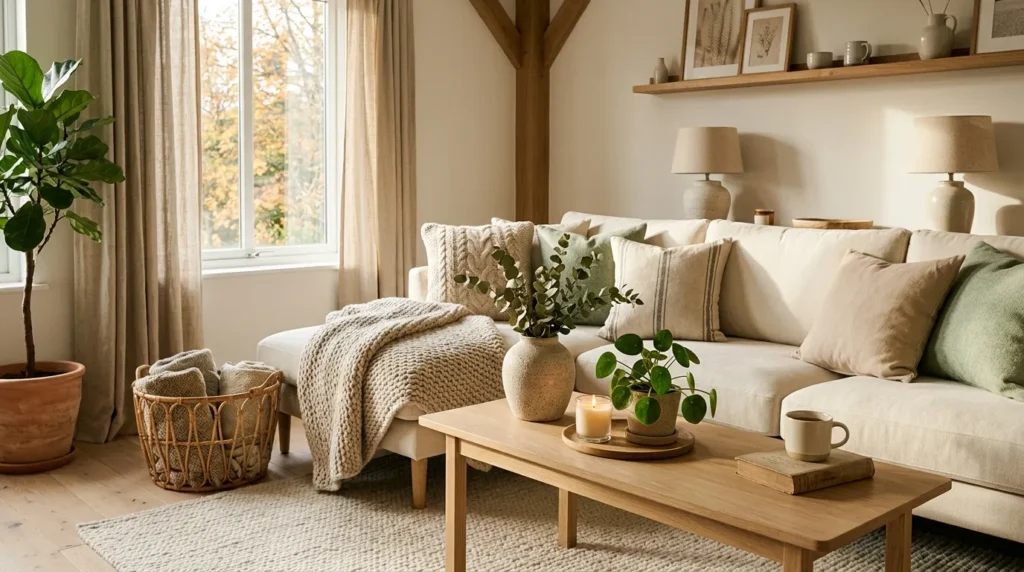
Texture is essential when working with a restrained color palette.
If your living room uses mostly cream, white, gray, and wood, textiles prevent the space from feeling plain.
A chunky throw, linen curtain, wool rug, and textured cushions can create plenty of interest without introducing lots of colors.
Scandinavian design is strongly connected with comfort, so softness isn’t an afterthought. It’s part of the overall design.
How To Style It
Layer a neutral wool or woven rug beneath the seating.
Add two or three cushions in different fabrics.
Use a soft throw over one side of the sofa.
Choose linen or cotton curtains that allow daylight to filter through.
Combine smooth upholstery with chunky knits or woven textures.
Keep the colors coordinated so the room remains calm.
4. Functional Furniture
Quick Benefits
- Keeps the room practical
- Reduces unnecessary clutter
- Improves everyday flow
- Supports small-space living
- Creates a clean appearance
Why It Works
Scandinavian design has always placed importance on function.
Furniture should look beautiful, but it should also make daily life easier.
Instead of choosing a decorative item simply because it looks good, consider whether it solves a problem or improves how you use the room.
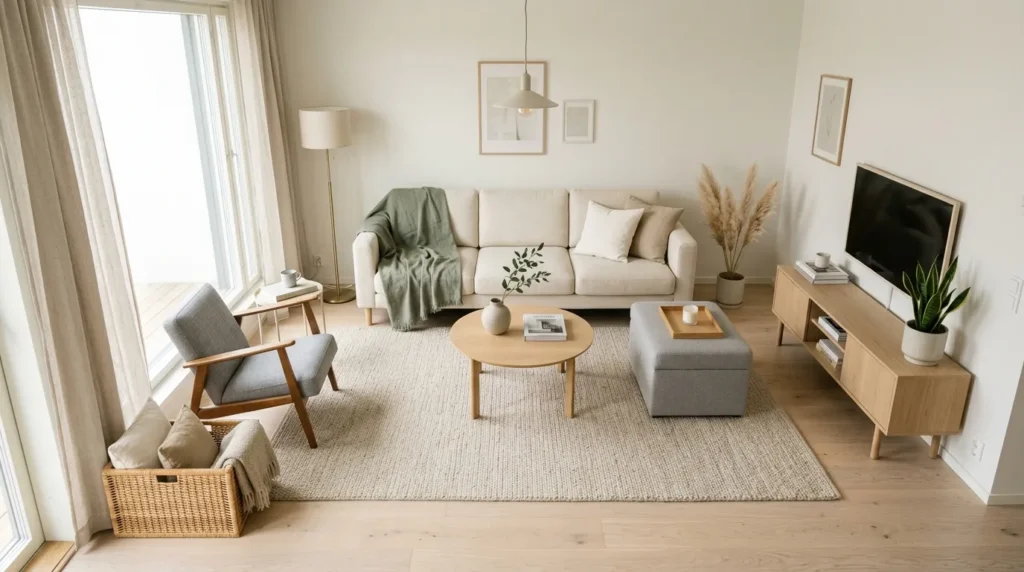
A streamlined storage console, comfortable sofa, nesting tables, or practical ottoman can contribute to the design while serving an everyday purpose.
This approach is especially helpful in smaller American homes and apartments where space needs to work harder.
How To Style It
Choose furniture based on the room’s actual needs.
Use a storage ottoman for blankets.
Choose nesting tables when flexibility is useful.
Use a slim media console rather than bulky cabinetry.
Consider a sofa with raised legs to create visual openness.
Keep pathways clear.
Don’t add furniture simply to fill empty space.
5. Natural Greenery
Quick Benefits
- Adds organic color
- Softens minimalist furniture
- Brings nature indoors
- Creates visual freshness
- Complements wood beautifully
Why It Works
Plants provide a beautiful contrast to Scandinavian interiors.
Their irregular shapes soften clean furniture lines, while their green leaves add color without overwhelming a neutral palette.
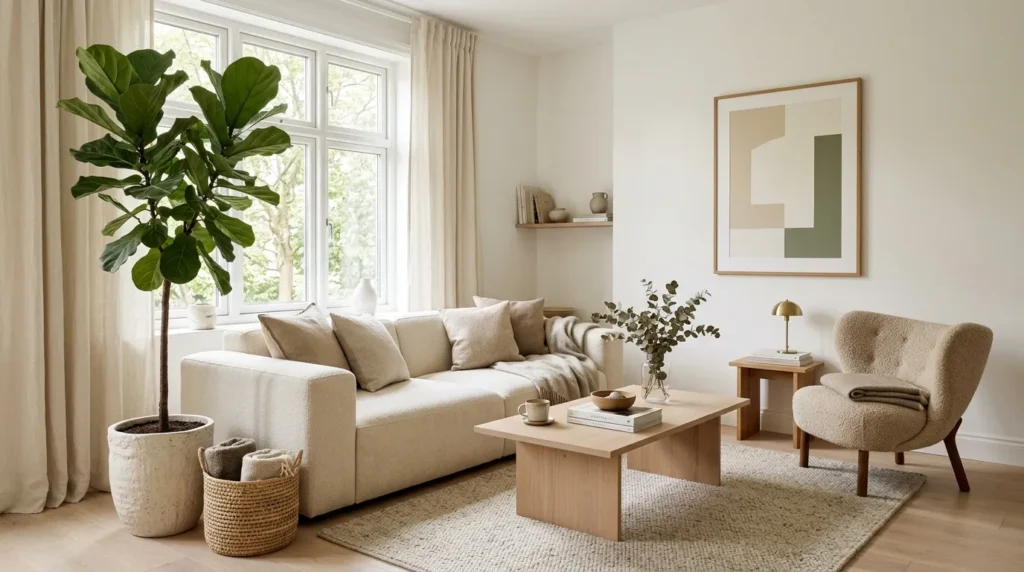
A single large plant can make a bigger impact than multiple small accessories.
If you’re decorating a very neutral living room, greenery can also become a natural focal point.
How To Style It
Place a tall plant beside the sofa or in an empty corner.
Use a simple ceramic, stone, or woven planter.
Add a small plant to a shelf or side table.
Try branches in a large glass or ceramic vase.
Choose plants according to the natural light in your space.
If maintaining plants isn’t practical, high-quality faux greenery can still provide the desired visual effect.
6. Hygge Lighting
Quick Benefits
- Creates a cozy atmosphere
- Adds warmth after sunset
- Provides functional illumination
- Makes neutral colors feel richer
- Creates visual layers
Why It Works
Natural light is important to Scandinavian interiors, but so is what happens after the sun goes down.
Multiple warm light sources create a comfortable evening atmosphere.
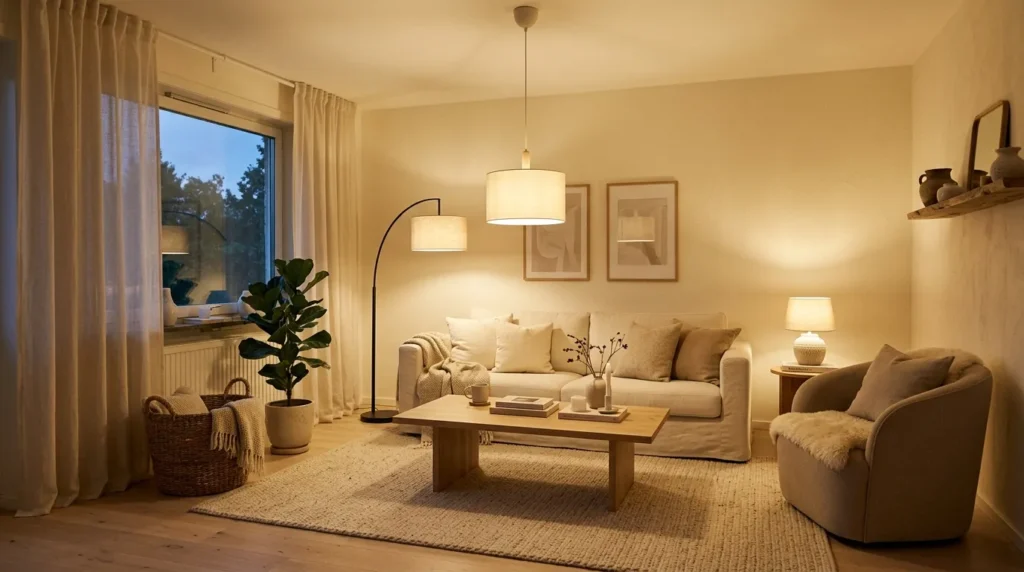
Instead of relying on one bright ceiling fixture, think in layers: floor lamps, table lamps, pendant lights, and candles where appropriate.
This makes the room feel more intimate and adaptable.
I’ve noticed that even a beautifully decorated living room can feel unfinished when the lighting is harsh. Soft illumination brings the textures and materials to life.
How To Style It
Place a floor lamp beside a reading chair.
Add a table lamp to a console or side table.
Use a simple pendant as the primary overhead fixture.
Choose warm-toned bulbs.
Consider dimmable lighting where possible.
For an authentic Nordic-inspired mood, look for fixtures made from wood, paper, linen, ceramic, or matte metal.
7. Minimal Wall Art
Quick Benefits
- Adds personality
- Creates focal points
- Keeps walls visually calm
- Complements neutral interiors
- Makes the space feel finished
Why It Works
Scandinavian walls don’t have to be completely bare.
The key is choosing artwork with restraint.
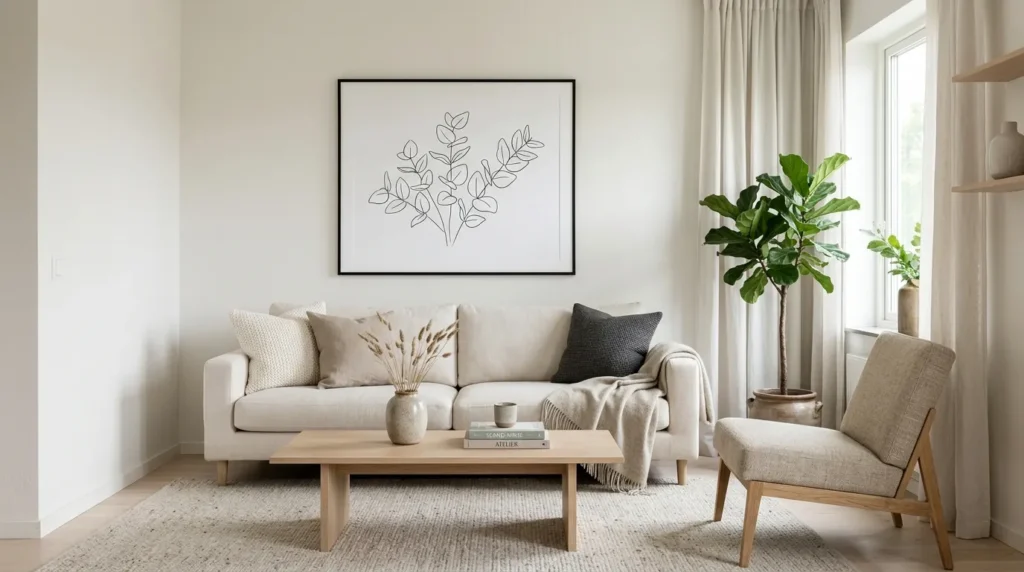
Black-and-white photography, simple botanical prints, abstract artwork, line drawings, and muted landscapes work especially well.
Instead of filling every wall, allow one or two pieces to stand out.
Large artwork can often create a stronger visual effect than several tiny prints.
How To Style It
Hang one oversized piece above the sofa.
Create a small gallery arrangement with coordinated frames.
Choose black, natural wood, or light-colored frames.
Repeat colors from the artwork in cushions or accessories.
Leave some wall space empty.
This negative space helps the artwork feel intentional rather than crowded.
8. Scandinavian Storage
Quick Benefits
- Keeps clutter hidden
- Makes small spaces more functional
- Creates clean visual lines
- Supports everyday organization
- Makes decorating easier
Why It Works
Beautiful Scandinavian rooms may look effortless, but good storage is usually doing a lot of behind-the-scenes work.
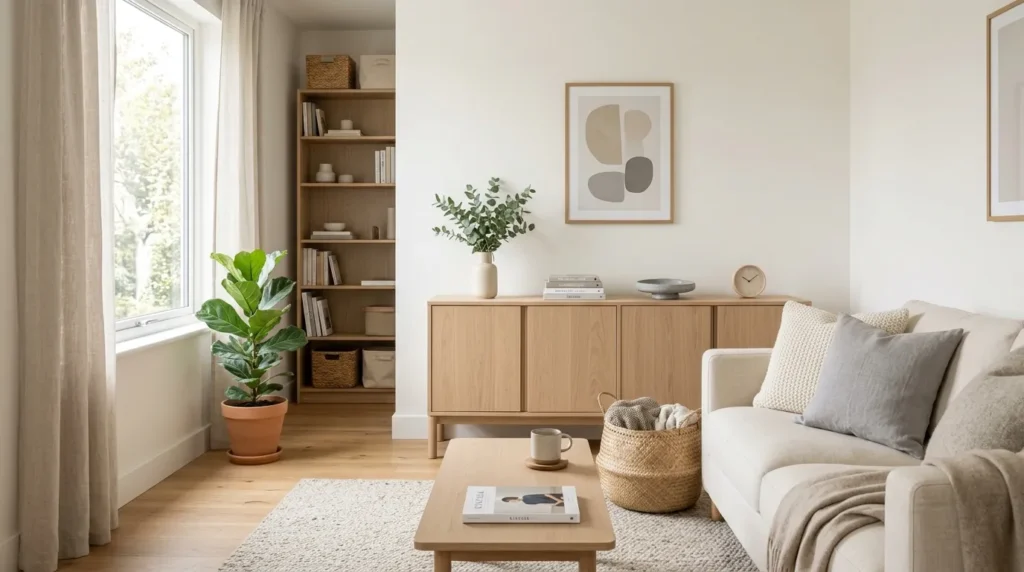
Closed cabinetry, simple shelving, baskets, and multifunctional furniture allow everyday belongings to stay organized without visually overwhelming the room.
This is especially useful if your living room doubles as a family room, workspace, or entertainment area.
How To Style It
Choose a streamlined sideboard or media console.
Use woven baskets for blankets.
Display only your favorite books and objects on open shelves.
Keep cables organized and hidden where possible.
Choose storage in white, light oak, beige, or another shade that complements the room.
Leave some shelf sections empty to maintain visual breathing room.
9. Organic Shapes
Quick Benefits
- Softens straight lines
- Creates visual movement
- Adds contemporary character
- Makes furniture feel approachable
- Works beautifully with natural materials
Why It Works
Traditional Scandinavian interiors often emphasize simplicity, but modern Nordic spaces increasingly use curves and organic silhouettes.
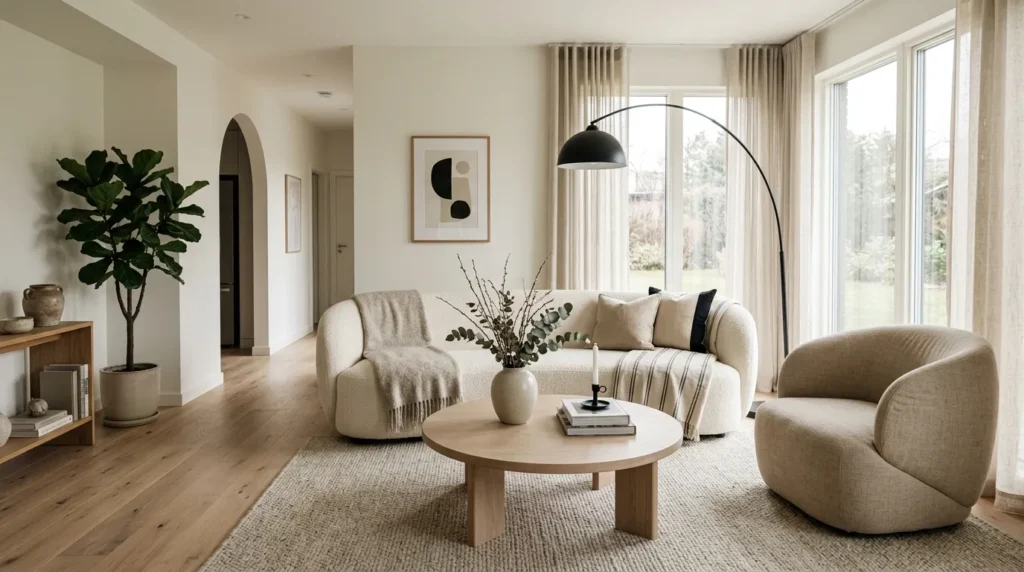
A round coffee table, curved sofa, arched floor lamp, or rounded chair can soften a room dominated by rectangular architecture.
These shapes also create a subtle sense of movement.
If your living room contains many straight lines—from windows to cabinetry to shelving—introducing just a few curves can make the entire arrangement feel more balanced.
How To Style It
Try a round oak coffee table.
Choose a curved accent chair.
Use an arched floor lamp.
Add a rounded ceramic vase.
Consider a softly curved sofa if the room allows.
Keep the rest of the decor simple so the organic shapes remain noticeable.
10. Textured Neutral Rug
Quick Benefits
- Defines the seating area
- Adds softness
- Creates visual warmth
- Connects furniture pieces
- Introduces subtle texture
Why It Works
The right rug can make a Scandinavian living room feel much more complete.
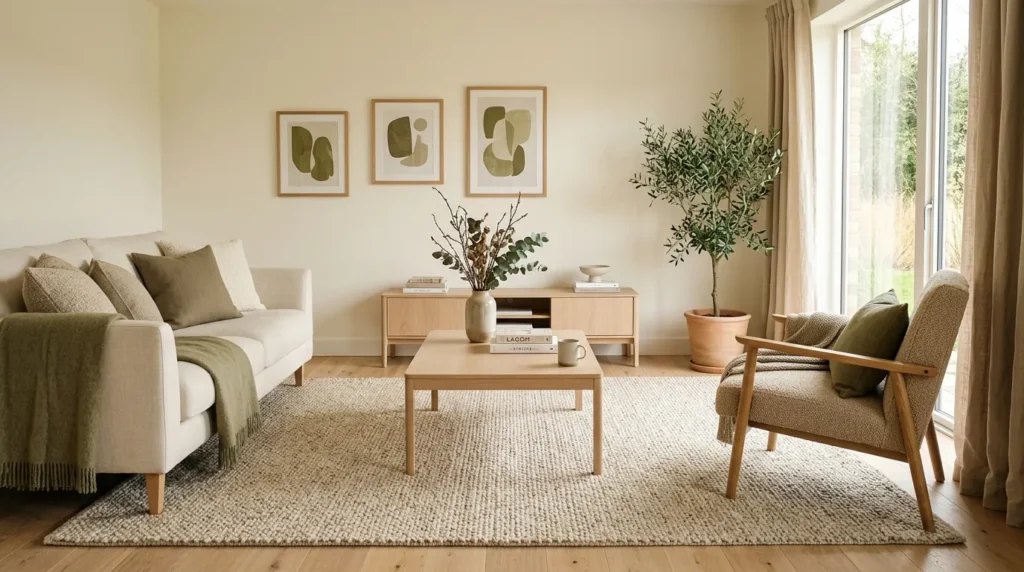
A neutral rug doesn’t need a dramatic pattern. Texture alone can provide enough interest.
Wool, woven cotton, jute blends, and subtle geometric designs can all complement Nordic-inspired furniture.
The rug also establishes a visual boundary around the seating arrangement, which is particularly helpful in open-plan homes.
How To Style It
Choose a rug large enough for the front legs of your sofa and chairs to rest on.
If the room is spacious, consider placing the entire seating arrangement on the rug.
Choose cream, oatmeal, light gray, beige, or soft taupe.
Look for subtle patterns rather than high-contrast designs.
Pair the rug with a light wood coffee table and soft neutral upholstery for a cohesive Scandinavian foundation.
11. Cozy Reading Corner
Quick Benefits
- Makes unused corners functional
- Adds personality
- Encourages relaxation
- Creates a secondary seating area
- Complements hygge-inspired decorating
Why It Works
A Scandinavian living room should be designed for living, not simply photographed.
A reading corner is a perfect example of how function can become part of the decor.
A comfortable chair, small side table, warm lamp, and soft throw can transform an unused corner into one of the most inviting spots in the home.
It also gives a larger living room another purpose without adding unnecessary furniture.
How To Style It
Choose a comfortable chair in cream, beige, gray, or natural fabric.
Place a small round table nearby.
Add a floor lamp for focused light.
Keep a soft throw within reach.
Add a small stack of favorite books.
Place the arrangement near a window when possible so you can take advantage of natural daylight.
Keep the surrounding area relatively open.
How to Make a Scandinavian Living Room Cozy
Scandinavian style works best when you don’t interpret minimalism as emptiness.
Start with a light foundation.
Use warm white walls, pale wood, and neutral upholstery.
Then introduce texture.
A wool rug, linen curtains, knitted throw, boucle chair, and woven basket can make the room feel significantly warmer.
Lighting is equally important.
During the day, maximize natural light by keeping window treatments light and uncluttered. In the evening, use several warm lamps instead of one harsh overhead source.
Finally, add a few personal details.
Books, artwork, ceramics, plants, and photographs can make the room feel like yours.
The goal is a balance between simplicity and comfort.
Scandinavian Living Room Ideas for Small Spaces
Scandinavian design is particularly effective in small living rooms because it emphasizes function and visual openness.
Choose furniture with simple silhouettes and, when possible, visible legs.
Use light colors to reflect natural light.
A round coffee table can improve circulation.
Wall-mounted or slim storage can keep the floor open.
Choose one large rug instead of several small ones.
Use mirrors strategically to reflect light.
Avoid filling every corner.
One plant, one lamp, and one carefully chosen artwork can be enough to give a small living room personality.
For multifunctional spaces, look for furniture that serves more than one purpose, such as nesting tables, storage ottomans, or compact desks that can double as consoles.
Scandinavian Living Room Color Combinations
Warm White + Light Oak + Oatmeal
Classic, bright, and inviting.
Cream + Beige + Pale Gray
Soft and sophisticated.
White + Natural Wood + Black
Clean with subtle contrast.
Ivory + Oak + Muted Green
Organic and fresh.
Beige + Walnut + Dusty Blue
A slightly richer Scandinavian palette.
Warm White + Taupe + Terracotta
Cozy and earthy without becoming overwhelming.
The most important thing is to keep the palette cohesive.
Choose one dominant neutral, one supporting shade, and one subtle accent.
Scandinavian Living Room Mistakes to Avoid
Making Everything White
Too much cool white can make the room feel sterile.
Using Too Many Accessories
Scandinavian style relies on intentional simplicity.
Ignoring Texture
A neutral room needs tactile variation.
Choosing Furniture Without Considering Function
Every major piece should contribute to how you actually use the room.
Using Harsh Lighting
Warm layered lighting creates a much more comfortable atmosphere.
Making Everything Match
Natural variation in wood, textiles, and ceramics gives the room personality.
Choosing a Tiny Rug
A properly sized rug helps connect the entire seating arrangement.
Frequently Asked Questions
What makes a living room Scandinavian?
Scandinavian living rooms typically combine simplicity, functionality, natural materials, light colors, comfortable textiles, and practical furniture. Light wood, neutral upholstery, greenery, warm lighting, and uncluttered layouts are common elements of the style.
What colors are best for Scandinavian living rooms?
Warm white, cream, beige, oatmeal, soft gray, pale blue, muted green, and natural wood tones work particularly well. Small amounts of black can add definition without disrupting the calm aesthetic.
How can I make Scandinavian decor feel cozy?
Focus on texture and lighting. Add wool rugs, linen curtains, knitted throws, comfortable cushions, natural wood, greenery, and several warm light sources. These details create the cozy atmosphere often associated with Scandinavian interiors.
Is Scandinavian decor the same as minimalist decor?
They’re related but not identical. Scandinavian design emphasizes simplicity and functionality but also places strong importance on comfort, natural materials, and warmth. A Scandinavian room can therefore feel more inviting and layered than a strictly minimalist interior.
Can Scandinavian style work in a traditional home?
Yes. The style adapts beautifully to many architectural settings. Keep existing character such as hardwood floors or trim, then introduce lighter furniture, neutral textiles, simple artwork, natural wood, and understated lighting.
What type of sofa works best in a Scandinavian living room?
Look for sofas with clean lines, comfortable upholstery, and relatively simple detailing. Cream, beige, light gray, oatmeal, and muted earthy colors are versatile choices. Raised legs can also help create a lighter visual appearance.
How do I make a Scandinavian living room look more modern?
Introduce contemporary curves, sculptural lighting, minimalist artwork, black accents, and streamlined storage. Keep the natural materials and neutral palette that define Scandinavian style while choosing updated silhouettes.
Conclusion
A Scandinavian living room is ultimately about creating a home that feels good to live in.
The style’s greatest strength is its balance. Clean furniture is softened by wool and linen. Pale colors are warmed by natural wood. Simple walls gain personality through carefully selected artwork. Functional storage keeps clutter under control, while greenery brings an organic touch into the room.
You don’t need to completely redesign your living room to achieve the look.
Start with one area.
Replace a heavy coffee table with a lighter wooden design. Add a textured neutral rug. Introduce a few warm lamps. Simplify your accessories. Bring in a plant. Then build from there.
The best Scandinavian interiors aren’t overly perfect. They’re comfortable, practical, bright, and personal.
Focus on what you genuinely need, choose materials that feel good, and leave enough open space for the room to breathe.
With the right combination of natural textures, warm neutrals, functional furniture, and cozy details, you can create a living room that feels beautifully Nordic while still feeling completely like home.