

11 Sage Green Bedroom Ideas for a Calm Stylish Retreat
There is something wonderfully calming about a bedroom filled with soft sage green. The color feels connected to nature without being overly bright, and it can make a room feel peaceful while still looking polished and current. Whether you love modern interiors, cozy farmhouse spaces, relaxed boho rooms, or timeless traditional decorating, sage green has enough versatility to work beautifully with all of them.
The secret is in how you use it.
A sage green bedroom doesn’t have to mean painting every wall green or covering the bed in matching bedding. You can introduce the shade through a headboard, curtains, artwork, accent pillows, plants, or a single painted wall. Pair it with warm white, cream, natural wood, beige, brass, or muted pink, and the result can feel layered rather than overly coordinated.
In my experience, the most inviting bedrooms use sage as part of a broader palette. Texture matters just as much as color. Linen bedding, woven baskets, wood furniture, soft rugs, and warm lighting can keep a green bedroom feeling comfortable and sophisticated.
Sage is also practical for different types of homes. Renters can bring it in through textiles and removable wallpaper, while homeowners can experiment with paint, furniture, and permanent finishes.
If your bedroom currently feels plain, cold, or unfinished, you don’t necessarily need a complete makeover. A few intentional changes can completely shift the atmosphere.
These sage green bedroom ideas will help you create a space that feels calm enough for winding down, stylish enough to inspire you every day, and comfortable enough to truly live in.
Table of Contents
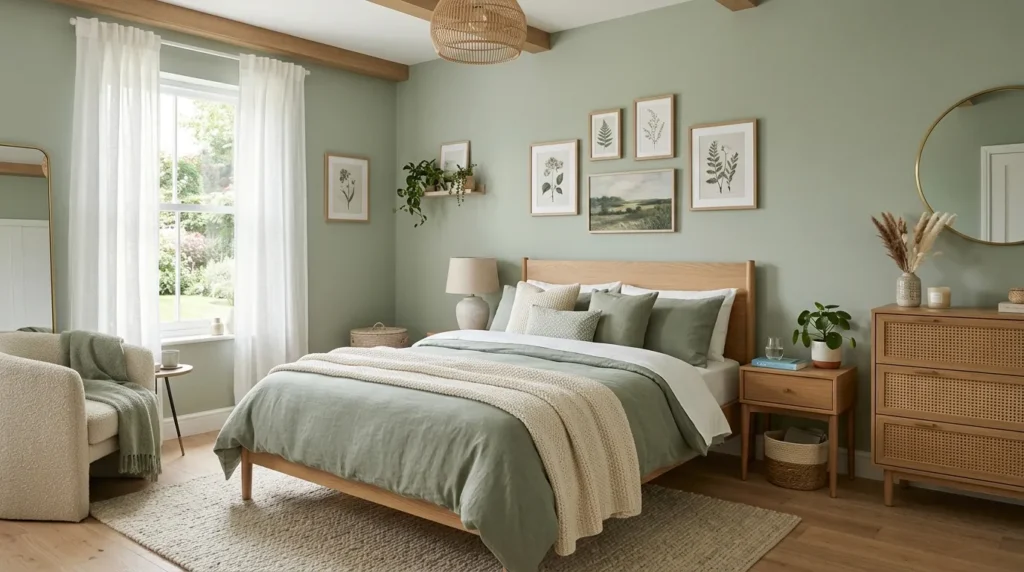
1. Sage Green Walls
Create a soothing foundation with soft green walls.
2. Cream Layered Bedding
Balance green with cozy ivory and cream textiles.
3. Natural Wood Furniture
Warm up the room with organic wood tones.
4. Sage Upholstered Headboard
Make the bed a stylish green focal point.
5. Botanical Greenery
Layer living plants into the bedroom for natural texture.
6. Sage and White
Keep the room bright with a crisp but warm palette.
7. Vintage Green Accents
Add personality with traditional and vintage-inspired details.
8. Soft Green Curtains
Use window treatments to introduce elegant color and texture.
9. Sage and Blush
Create a romantic bedroom with muted pink accents.
10. Warm Layered Lighting
Use ambient illumination to make sage feel cozy after dark.
11. Textured Green Layers
Finish the retreat with rugs, throws, pillows, and tactile materials.
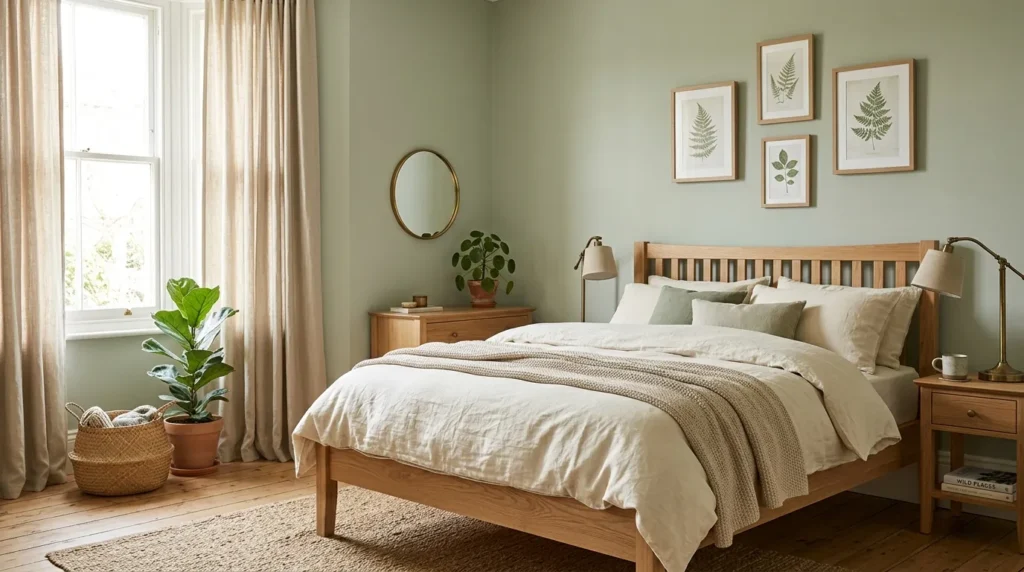
1. Sage Green Walls
Quick Benefits
- Creates an instant calming backdrop
- Adds color without overwhelming the room
- Works with many decorating styles
- Complements natural materials
- Makes a strong visual impact
Why It Works
Painting the bedroom walls sage green is one of the simplest ways to establish a calm and cohesive atmosphere. Unlike saturated emerald or bright grassy greens, sage has a muted quality that makes it much easier to live with.
The right shade can feel airy during the day and cozy in the evening. Its versatility also means you can change the personality of the room simply by changing the accompanying furniture and accessories.
Light sage works particularly well in bedrooms that receive limited natural light, while deeper sage can create a more enveloping look in larger spaces. Always test paint samples on several walls because natural light, bulbs, and surrounding colors can change how the shade appears.
How To Style It
For an airy retreat, paint the walls a soft sage and pair them with warm white bedding, pale oak furniture, and cream curtains.
If you want more drama, choose a deeper muted sage for the wall behind the bed and keep the remaining walls warm white.
Add brass or aged-gold lighting for warmth, or use black accents for a more contemporary appearance.
Keep the accessories relatively restrained. The wall color already provides plenty of visual interest, so simple artwork, natural textures, and a few plants can be enough.
For renters, removable botanical wallpaper or large fabric wall panels can create a similar effect without permanent paint.
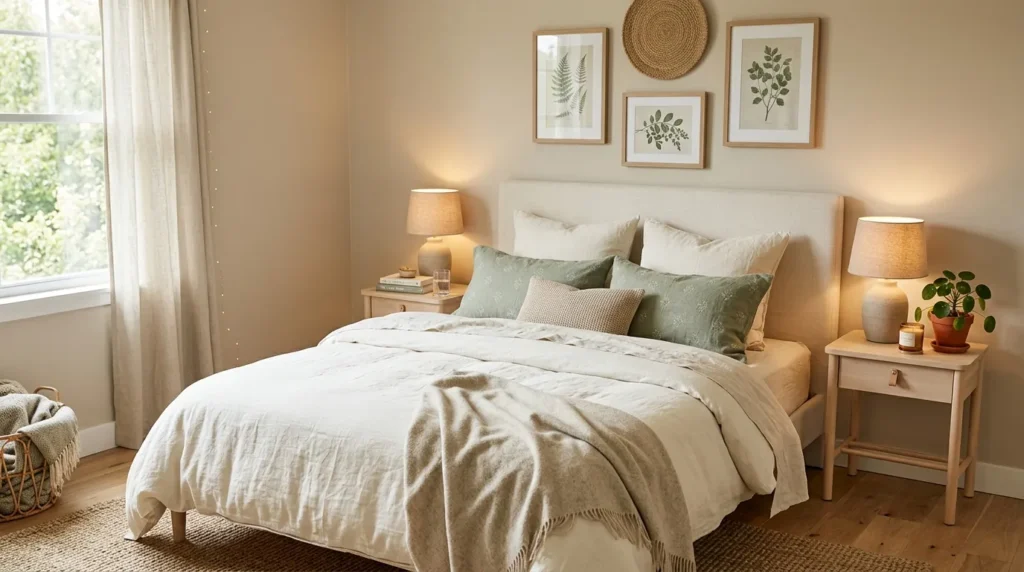
2. Cream Layered Bedding
Quick Benefits
- Creates a softer bedroom atmosphere
- Balances green beautifully
- Adds warmth and comfort
- Works for every decorating style
- Easy to update seasonally
Why It Works
Cream and sage are a natural combination because warm cream prevents green from feeling too cool while allowing the color to remain the star of the room.
Layering several neutral textiles also gives the bed a relaxed, luxurious appearance. Instead of choosing bedding where every piece is exactly the same shade, combine ivory, oatmeal, beige, and subtle sage.
Different textures make an even bigger difference. Linen, cotton, quilted fabrics, knitted throws, and woven pillows each catch light differently, making a simple color palette feel much richer.
This approach is particularly useful if you want a bedroom that feels cozy without becoming visually cluttered.
How To Style It
Start with warm white or ivory sheets. Add a cream duvet or quilt and introduce sage through a throw, lumbar pillow, or pair of accent cushions.
For a stronger green presence, reverse the combination with a sage duvet and cream sheets.
Add an oatmeal knitted blanket across the foot of the bed.
A few pillows in beige, muted olive, or natural linen can create additional depth.
If the walls are dark sage, keep most bedding light to create contrast. If your walls are pale sage, you can introduce slightly deeper green through the bedding.
The goal is a bed that looks inviting rather than perfectly staged.
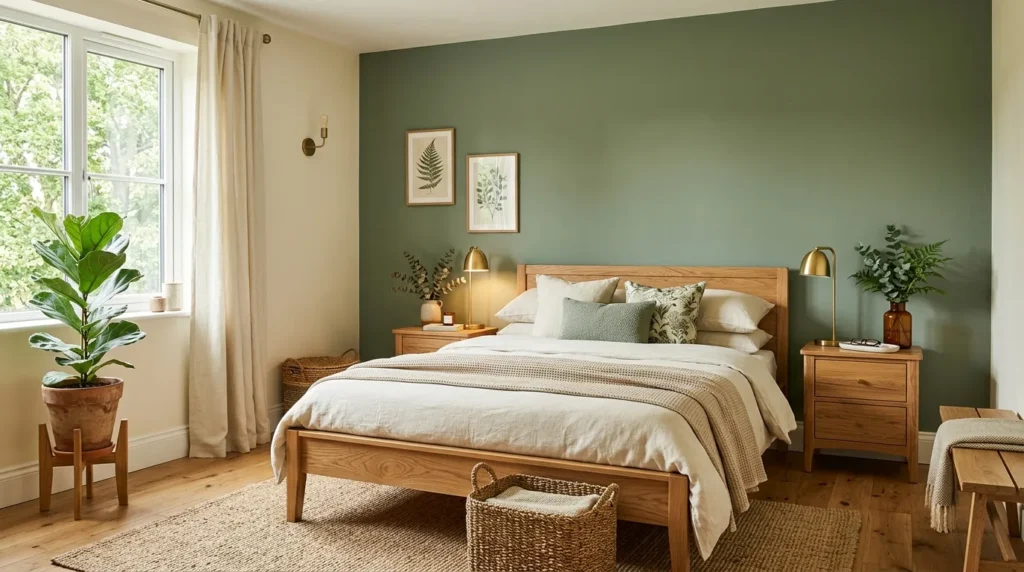
3. Natural Wood Furniture
Quick Benefits
- Adds warmth and character
- Complements green naturally
- Introduces organic texture
- Works with modern or traditional spaces
- Creates visual balance
Why It Works
Natural wood is one of the easiest materials to pair with sage green because both have an organic visual quality.
Light oak creates a fresh, contemporary bedroom, while walnut creates a richer and more dramatic atmosphere. Medium-toned woods can provide a comfortable middle ground.
Wood also keeps green interiors from feeling too polished or one-dimensional. Visible grain, natural variations, and slightly imperfect surfaces introduce character.
You don’t need to replace all your furniture. Sometimes one beautiful wooden piece is enough to change the feeling of the room.
How To Style It
Use a natural wood bed as the primary anchor and add matching or complementary wood through nightstands or a dresser.
For a light, modern look, combine pale oak with sage walls, cream bedding, and simple black accents.
For a warmer bedroom, use walnut furniture with deeper sage, ivory bedding, brass lighting, and vintage artwork.
A wooden bench at the foot of the bed is another practical option. It provides seating while reinforcing the natural theme.
Don’t worry about every wood tone being identical. A controlled mix of natural finishes can actually make the room feel more collected and authentic.
4. Sage Upholstered Headboard
Quick Benefits
- Creates a beautiful focal point
- Adds softness
- Introduces color without painting
- Works with neutral walls
- Makes the bedroom feel finished
Why It Works
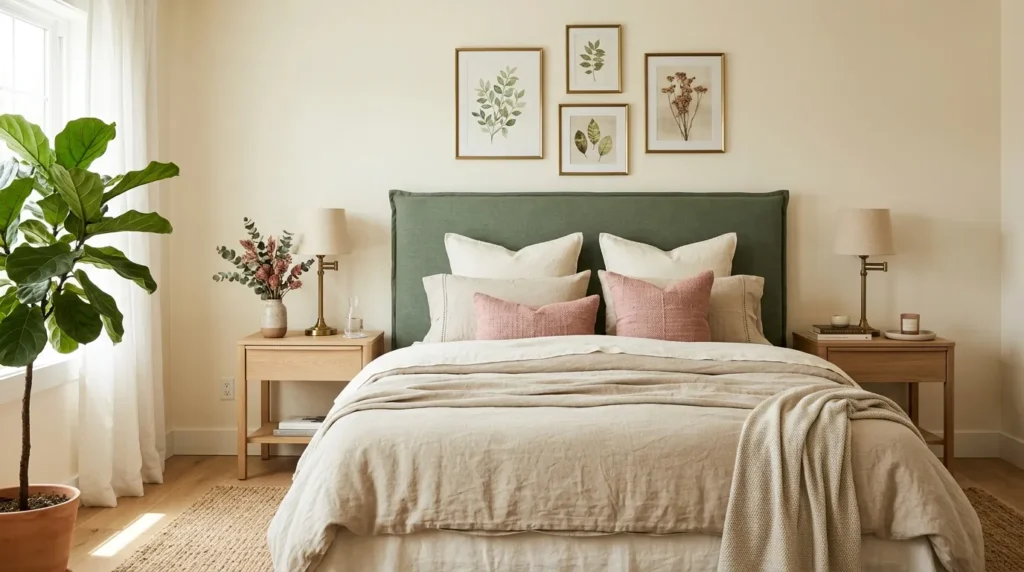
An upholstered sage headboard is ideal if you want the color to have a strong presence without committing to green walls.
Because the bed is already the natural focal point of a bedroom, using sage upholstery gives the room an intentional look without requiring many additional accessories.
Linen creates a relaxed, organic feeling, while velvet gives the room a richer and more luxurious appearance. A simple rectangular headboard works beautifully in contemporary spaces, while curved silhouettes can create a softer, romantic aesthetic.
How To Style It
Against warm white walls, a sage headboard can become the main color statement.
Use cream or ivory bedding to create contrast and layer pillows in beige, oatmeal, and muted green.
Natural wood nightstands help soften the upholstered material, while brass lamps add a refined accent.
For a romantic look, introduce a dusty pink throw or floral pillow.
For a modern bedroom, keep the accessories minimal and combine sage with cream, oak, and small amounts of black.
If your existing headboard is neutral, consider a removable upholstered cover as a lower-cost way to experiment with the color.
5. Botanical Greenery
Quick Benefits
- Adds authentic natural texture
- Creates visual movement
- Complements sage walls
- Makes corners feel intentional
- Works in small doses
Why It Works
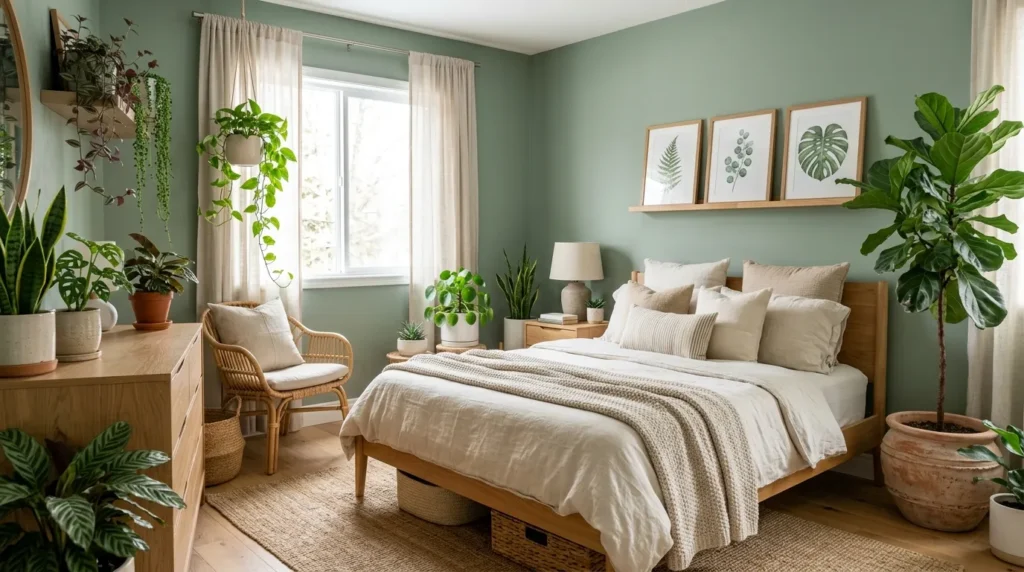
Plants and sage green naturally reinforce each other. The painted color creates a soft botanical backdrop while real foliage introduces varied shades, shapes, and textures.
The important thing is not to make the bedroom feel like a greenhouse. A few carefully positioned plants usually have more impact than dozens scattered across every surface.
Different plant heights can also help balance furniture. A tall plant beside a dresser can soften a vertical corner, while a small plant on a nightstand adds a subtle organic detail.
How To Style It
Place one substantial plant beside a window, dresser, or empty corner.
Add a smaller plant to a shelf or nightstand and consider a trailing variety on a higher surface.
Use ceramic, terracotta, stone, or woven planters to introduce additional natural materials.
If your bedroom has limited natural light, choose plants suited to those conditions rather than selecting purely for appearance.
For a low-maintenance option, combine one or two real plants with realistic faux greenery.
Keep pathways clear and avoid placing plants where leaves or pots interfere with everyday movement.
6. Sage and White
Quick Benefits
- Creates a bright atmosphere
- Makes small rooms feel more open
- Gives sage a clean appearance
- Works beautifully with modern decor
- Easy to accessorize
Why It Works
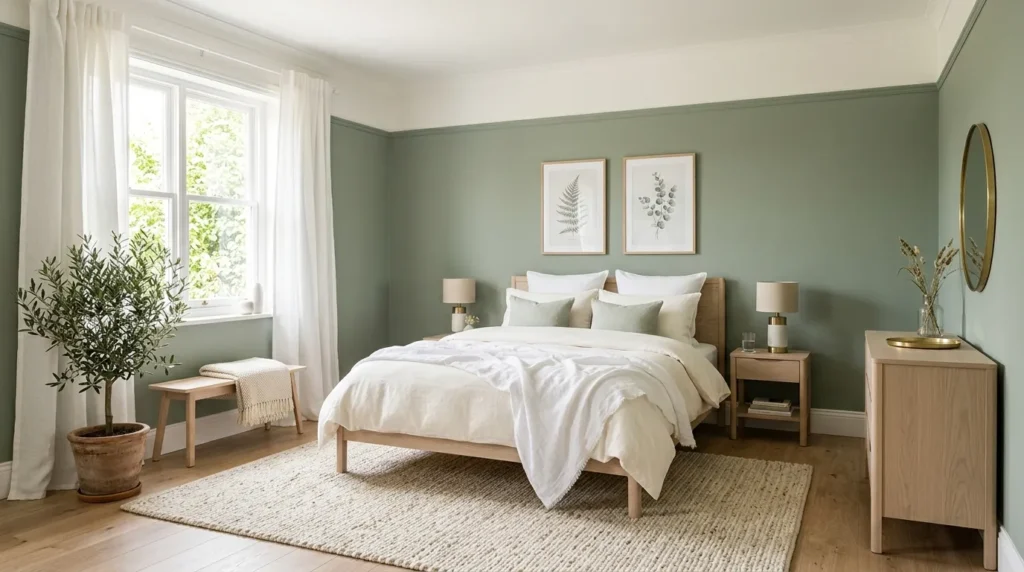
Sage and white create a classic combination, but the exact white you choose matters. Very cool white can make sage appear colder, while warm white or soft ivory creates a more inviting result.
This palette works especially well when you want your bedroom to feel fresh without becoming stark.
White also gives the eye somewhere to rest. If your sage walls, bedding, or furniture provide the color, white curtains, bedding, or rugs can keep the overall room balanced.
How To Style It
Use sage as the primary accent and warm white as the supporting neutral.
For example, combine sage walls with white bedding, or use white walls with a sage upholstered bed.
Add pale wood to introduce warmth.
Simple botanical prints can connect the colors without adding too much pattern.
For a modern look, use clean furniture lines and minimal accessories.
For a softer aesthetic, add linen curtains, woven baskets, rounded furniture, and subtle floral details.
If your room is small, incorporate a mirror to reflect natural light and maintain the airy feeling.
7. Vintage Green Accents
Quick Benefits
- Adds personality
- Creates timeless character
- Works with antique-inspired pieces
- Makes the bedroom feel collected
- Pairs beautifully with muted colors
Why It Works
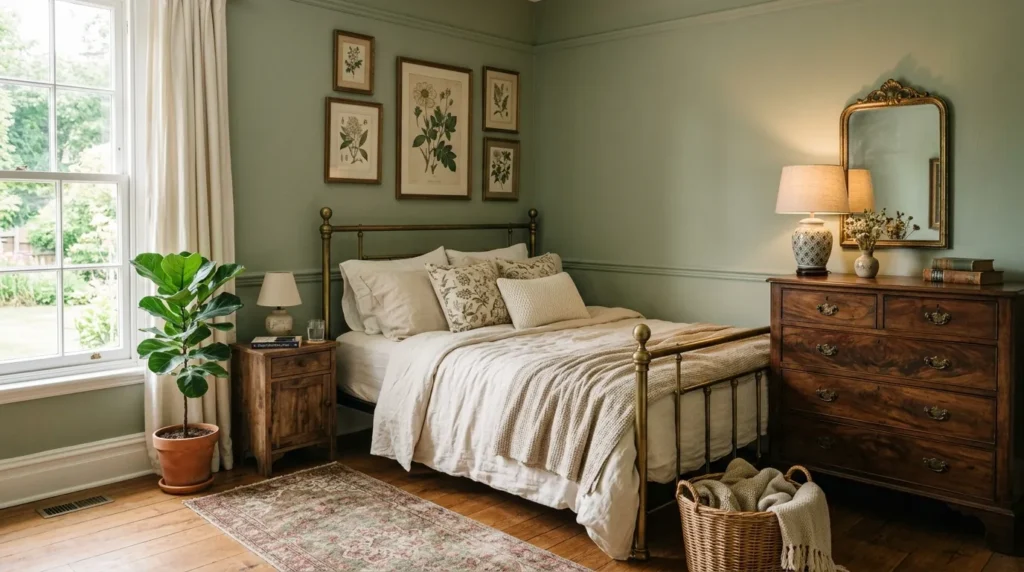
Sage has a natural connection to vintage interiors because its muted undertones work beautifully with aged wood, antique brass, botanical artwork, and traditional furniture.
You don’t need an entirely vintage bedroom. Mixing one or two older-looking pieces with contemporary furniture creates a much more interesting result.
A vintage dresser, old-fashioned mirror, botanical print, or antique-style lamp can give a sage bedroom personality that isn’t possible with a matching furniture set.
How To Style It
Start with one standout vintage-inspired piece.
An aged wood dresser can become a beautiful focal point against sage walls. Add a brass-framed mirror above it and decorate the surface with a ceramic lamp and a small plant.
Keep the bedding simple so the furniture remains noticeable.
Vintage botanical artwork is another easy addition. Choose frames in wood, black, or aged brass.
Avoid making every item look antique. Mixing old and new keeps the bedroom fresh and prevents it from feeling like a themed space.
8. Soft Green Curtains
Quick Benefits
- Adds softness to windows
- Introduces vertical color
- Creates privacy
- Helps control natural light
- Makes the room feel more finished
Why It Works
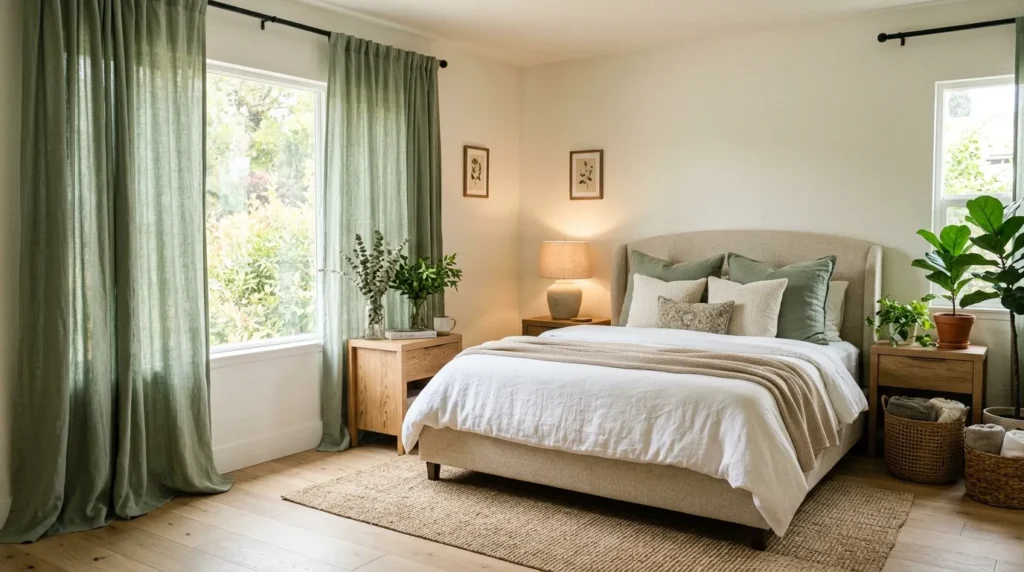
Curtains can have a surprisingly large impact on a bedroom. Sage green window treatments extend the color palette upward and can visually connect the windows with the rest of the room.
Textured fabrics such as linen and cotton are particularly effective because they add movement and softness.
If your walls are neutral, sage curtains can become the main green feature. If the walls are already green, use a lighter or darker variation rather than trying to match the exact shade.
How To Style It
Whenever possible, hang curtain rods slightly higher and wider than the window frame. Let the fabric fall close to the floor for a more polished appearance.
Pair sage curtains with cream bedding and natural wood furniture.
If your walls are sage, consider warm ivory curtains with a subtle green undertone instead.
For a romantic look, use soft linen panels with gentle gathers.
For a modern bedroom, choose simple, full-length panels with minimal pattern.
Layering curtains with blinds or shades can also give you better control over morning sunlight and privacy.
9. Sage and Blush
Quick Benefits
- Creates a soft romantic palette
- Adds warmth to green
- Works beautifully with floral patterns
- Feels feminine without being overly sweet
- Adds subtle color contrast
Why It Works
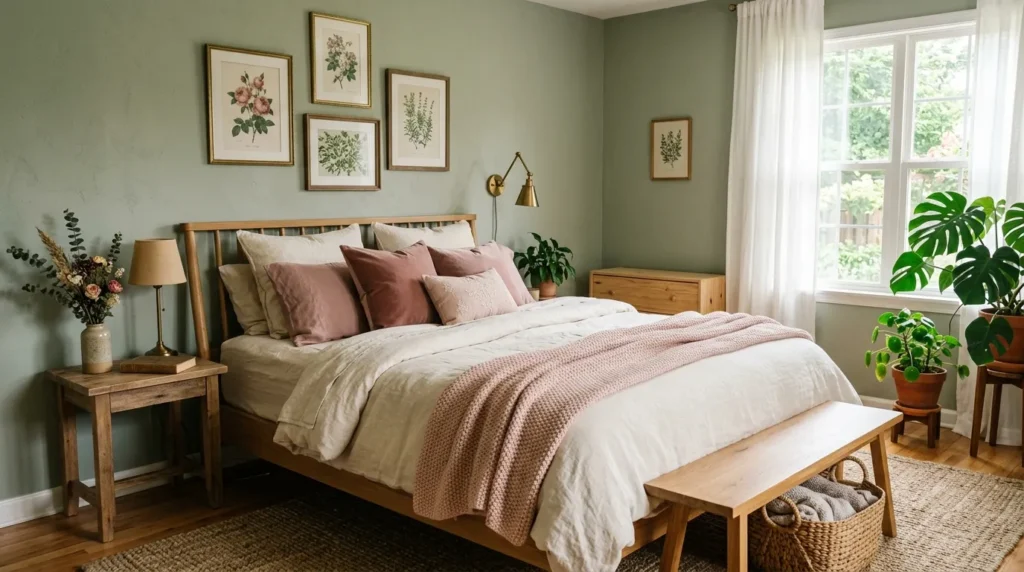
Sage and blush create a particularly beautiful combination because the muted green provides an earthy foundation while dusty pink introduces warmth.
The secret is choosing a subdued pink rather than an extremely bright shade. Blush, dusty rose, muted mauve, and clay pink tend to feel more sophisticated alongside sage.
This combination works especially well in bedrooms because both colors can be softened further with cream and natural wood.
How To Style It
Use sage as the dominant color and introduce blush through one or two accents.
A dusty rose throw, floral pillow, artwork, or upholstered bench can be enough.
Add cream bedding and light wood to keep the palette grounded.
For a romantic room, include vintage-style brass lighting and delicate floral artwork.
For a contemporary space, use cleaner furniture and just a small amount of pink.
Avoid making every accessory either green or pink. Cream, beige, and wood should provide plenty of visual breathing room.
10. Warm Layered Lighting
Quick Benefits
- Makes sage feel warmer at night
- Creates a relaxing atmosphere
- Improves bedside functionality
- Highlights natural textures
- Adds depth after sunset
Why It Works
A bedroom can look completely different after dark, which is why lighting deserves as much attention as paint and furniture.
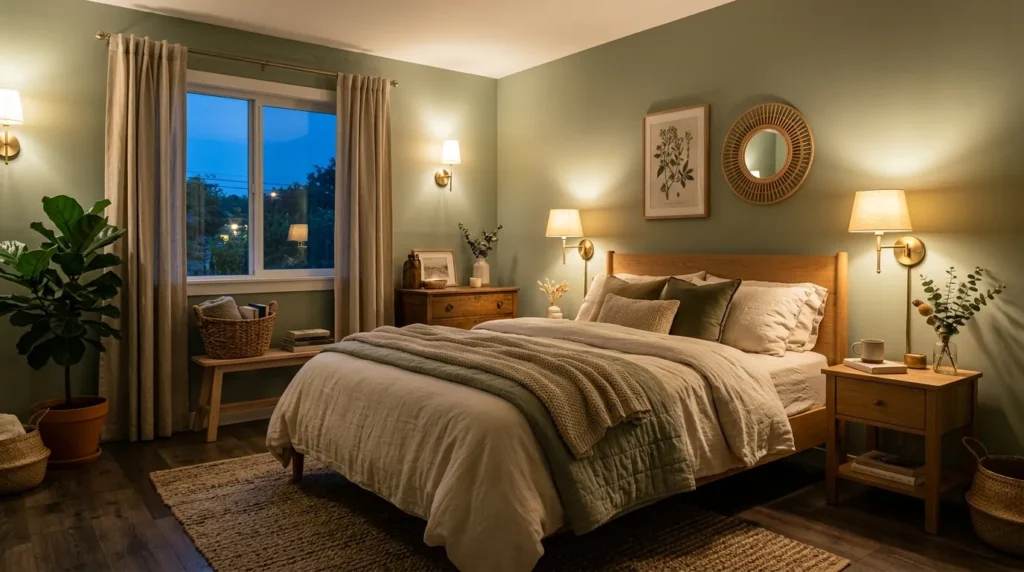
Warm lighting brings out the earthy qualities in sage and makes cream, wood, brass, and woven materials appear richer.
Rather than relying on one ceiling fixture, layer several sources. Bedside lamps, wall sconces, floor lamps, and accent lighting each serve different purposes.
This makes the bedroom easier to use while creating a more relaxing evening environment.
How To Style It
Place a warm bedside lamp on each nightstand if space allows.
Choose shades made from linen, cotton, ceramic, or woven materials to soften the light.
A brass or aged-metal fixture can add subtle sophistication.
If you have a reading chair, place a floor lamp nearby.
Keep overhead lighting available for practical tasks, but use the smaller lights when you want the room to feel cozy.
Warm illumination is particularly effective against deeper sage walls because it creates a soft contrast between the green backdrop and golden pools of light.
11. Textured Green Layers
Quick Benefits
- Adds depth without excessive color
- Makes the room feel comfortable
- Creates a more sophisticated finish
- Works with minimalist spaces
- Gives a monochromatic palette personality
Why It Works
When decorating with a muted color, texture becomes incredibly important. If everything is smooth and flat, even a beautiful palette can feel lifeless.
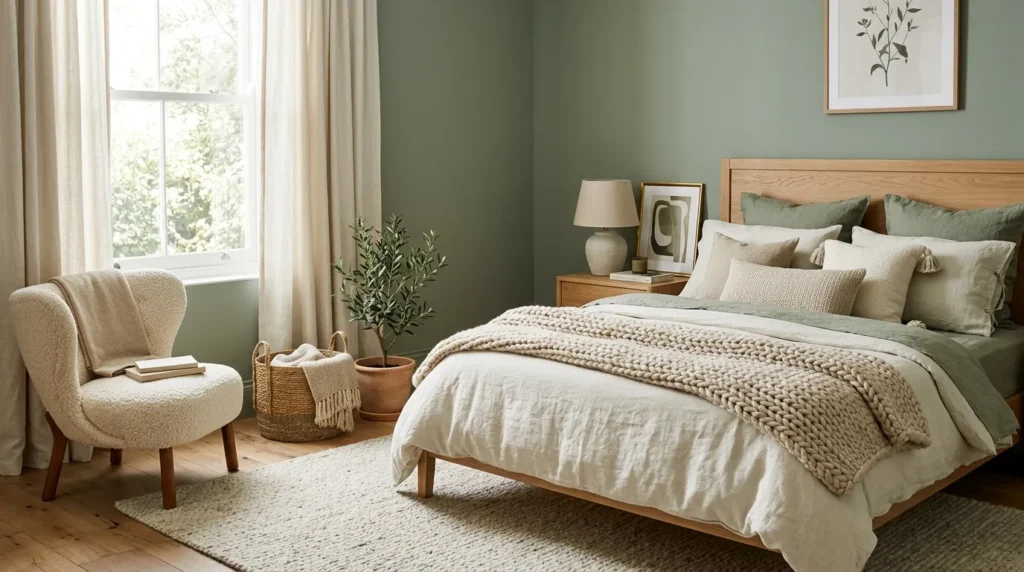
Layering linen, cotton, wool, boucle, velvet, jute, rattan, and knitted materials creates dimension without requiring more colors.
This is particularly effective in a sage green bedroom because the color itself is understated. Different textures allow the eye to experience the space in multiple ways.
The result feels cozy and intentional rather than overly decorated.
How To Style It
Start with a soft area rug beneath the bed. Add linen bedding and a textured throw.
Introduce a boucle or upholstered chair if you have enough floor space.
Use woven baskets for practical storage, which adds texture without unnecessary clutter.
Mix smooth wood with soft textiles and rougher natural fibers.
If your walls are sage, keep most of the large textiles neutral and introduce green through smaller layers.
Don’t try to make every surface textured. A few contrasting materials are enough to create depth.
Creating a Cohesive Sage Green Bedroom
Choosing sage is only the beginning. The real difference comes from how the individual pieces work together.
Start by deciding where you want the strongest concentration of green.
If you have sage walls, you may want cream bedding and natural wood furniture. If your walls are white, you can make a sage bed or duvet the focal point.
Then choose two or three supporting materials.
Natural wood is an easy choice because it brings warmth. Linen adds softness. Woven accessories add texture. Brass can introduce a small amount of elegance.
Try not to purchase every item at once.
A bedroom often looks more personal when it develops gradually. Start with the largest pieces, live with them for a little while, and then decide what the room actually needs.
One simple trick I always suggest is to repeat your main color in at least three areas. Sage might appear on the walls, in a pillow, and in artwork. This creates visual continuity without making the room look overly matched.
Making Sage Work in a Small Bedroom
Sage green can absolutely work in a small bedroom.
The key is choosing a softer shade and balancing it with plenty of light neutrals.
Use warm white bedding, pale wood, simple curtains, and a limited number of accessories.
If you want to paint all the walls green, choose a relatively light sage. This can create a cozy feeling without making the room appear unnecessarily heavy.
Vertical elements can also help. Full-length curtains, tall plants, narrow shelving, and vertically oriented artwork draw the eye upward.
Keep the floor as open as possible. A wall-mounted nightstand or narrow furniture can provide useful storage without making the room feel crowded.
Making Sage Feel More Luxurious
Luxury isn’t necessarily about expensive furniture. It is often about restraint, proportion, lighting, and texture.
Choose bedding that feels substantial and comfortable.
Use layered lighting instead of one harsh ceiling fixture.
Add one or two pieces of natural wood with beautiful grain.
Choose curtains that reach the floor.
Keep accessories intentional rather than filling every available surface.
Brass or aged-metal accents can add a subtle refined quality, while natural materials prevent the room from becoming overly formal.
A well-made upholstered headboard, textured rug, or beautiful lamp can have more visual impact than a large collection of inexpensive decorations.
Frequently Asked Questions
Is sage green a good color for a bedroom?
Yes. Sage green is particularly well suited to bedrooms because its muted, earthy quality can create a peaceful atmosphere. It also works with a wide range of neutrals and natural materials, making it easy to adapt to modern, farmhouse, boho, traditional, and minimalist interiors.
What colors go with sage green in a bedroom?
Warm white, cream, beige, natural wood, brown, dusty pink, muted blue, terracotta, brass, and soft gray can all complement sage. For a bright bedroom, pair sage with ivory and pale wood. For a richer look, use walnut, cream, brass, and deeper green.
Can sage green make a bedroom look dark?
It can, depending on the shade and the amount of natural light. Very deep sage may make a poorly lit bedroom feel darker. If your room receives limited daylight, choose a lighter sage and balance it with cream bedding, warm white surfaces, mirrors, and lighter furniture.
What bedding looks best with sage green walls?
Cream, ivory, beige, oatmeal, and warm white bedding are especially versatile. You can also add subtle sage accents for cohesion. Linen and cotton work beautifully because their natural texture complements the organic quality of the color.
Does sage green work with wood furniture?
Absolutely. Natural wood is one of the easiest materials to pair with sage. Light oak creates an airy appearance, while walnut gives the bedroom a richer and more sophisticated feel. Both can work beautifully depending on the mood you want.
Is sage green suitable for a modern bedroom?
Yes. Use a clean sage shade with streamlined furniture, warm white bedding, pale wood, simple artwork, and minimal accessories. Small black or brass accents can add definition without taking away from the calming palette.
How can I decorate with sage green without painting my walls?
Use sage bedding, curtains, an upholstered headboard, rugs, pillows, artwork, throws, or accent furniture. This is especially useful for renters because most of these updates are easy to change or take with you.
Conclusion
Sage green can give a bedroom that rare combination of calm and character. It has enough color to make a space feel thoughtfully decorated, yet its muted quality allows it to remain restful and easy to live with.
The best approach is to treat sage as part of a layered design rather than the entire story.
Pair it with warm white for brightness, natural wood for warmth, linen for softness, greenery for an organic touch, and brass or vintage details for personality. If you love a more romantic look, introduce dusty rose. If you prefer modern interiors, keep the lines clean and accessories minimal.
You also don’t have to completely redesign the room to get started.
Try changing the bedding first. Add a sage curtain, introduce a few plants, replace harsh lighting with warmer lamps, or paint a single accent wall. Small changes can reveal whether you want to take the look further.
A calm bedroom should ultimately feel like your own retreat—not a perfectly matched showroom.
Choose the elements that fit your lifestyle, leave enough room for everyday comfort, and let the color palette develop naturally. With the right balance of green, warm neutrals, natural materials, and texture, your bedroom can feel stylish, cozy, and genuinely relaxing for years to come.