11 Tiny Patio Decorating Ideas
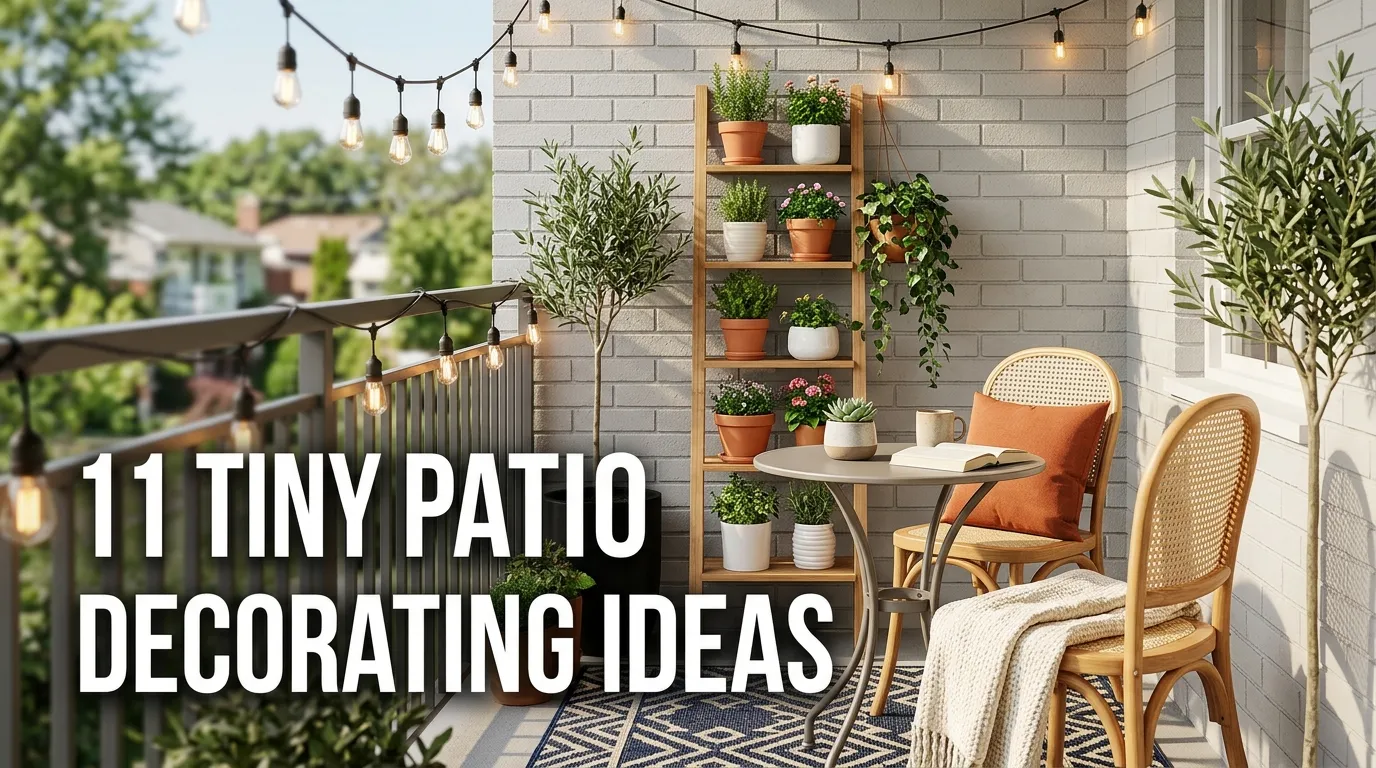
A tiny patio can become one of the most enjoyable areas of your home when every piece is chosen with purpose. You don’t need a sprawling deck or a huge backyard to create an outdoor space that feels comfortable, stylish, and inviting. With the right layout, even a narrow apartment patio, small townhouse terrace, or compact backyard corner can feel like a true extension of your living space.
The biggest challenge with a tiny patio is usually not decorating it—it’s avoiding clutter. Oversized furniture, too many planters, and accessories that don’t serve a purpose can quickly make a small outdoor area feel cramped. Instead, think in terms of scale, vertical space, flexible furniture, and visual breathing room.
In my experience, the most successful small patios start with one clear purpose. Maybe you want a quiet coffee spot, a cozy reading nook, a place for weekend drinks, or simply somewhere to enjoy a little fresh air. Once you decide how you’ll use it, the decorating decisions become much easier.
These ideas focus on practical ways to make a compact patio feel bigger and more welcoming without sacrificing personality. You’ll find suggestions for seating, plants, lighting, privacy, textiles, and multifunctional pieces that work particularly well when floor space is limited.
Whether you’re decorating a rental or refreshing a permanent outdoor space, start with the ideas that solve your biggest problem first. A few intentional updates can make a surprisingly dramatic difference.
Table of Contents
1. Slimline Seating
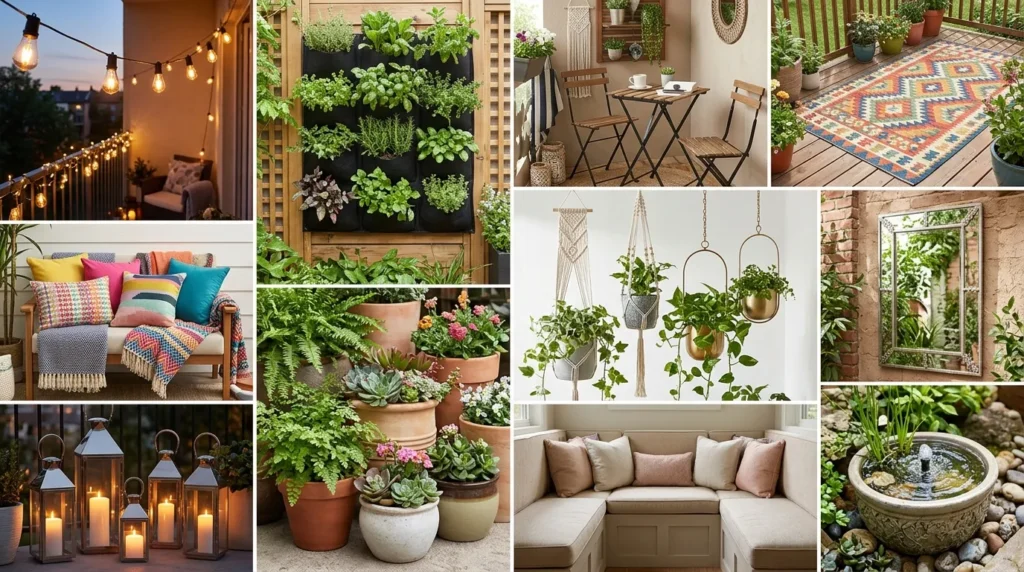
Use streamlined furniture to create comfortable seating without overwhelming the patio.
2. Bistro Table
Turn a tiny patio into a charming breakfast or coffee spot with a compact café table.
3. Vertical Greenery
Bring plants upward to add lushness while preserving precious floor space.
4. Outdoor Rug
Define your seating zone and soften hard patio surfaces with a weather-resistant rug.
5. Folding Furniture
Create a flexible layout with furniture that can be folded away whenever you need more room.
6. Hanging Planters
Decorate walls and railings with plants without filling the floor with pots.
7. Cozy Lighting
Use layered lighting to make your small patio inviting after sunset.
8. Privacy Screen
Add privacy and visual interest with a compact screen, trellis, or plant wall.
9. Built-In Bench
Maximize seating with a streamlined bench that uses otherwise overlooked space.
10. Layered Textures
Add comfort and personality with outdoor cushions, throws, woven pieces, and natural materials.
11. Multifunctional Decor
Choose accessories and furniture that perform more than one job in your tiny outdoor space.
1. Slimline Seating
Quick Benefits
- Preserves valuable walking space
- Makes the patio feel less crowded
- Creates a comfortable lounge area
- Works for apartments and small homes
- Leaves room for plants and accessories
Why It Works
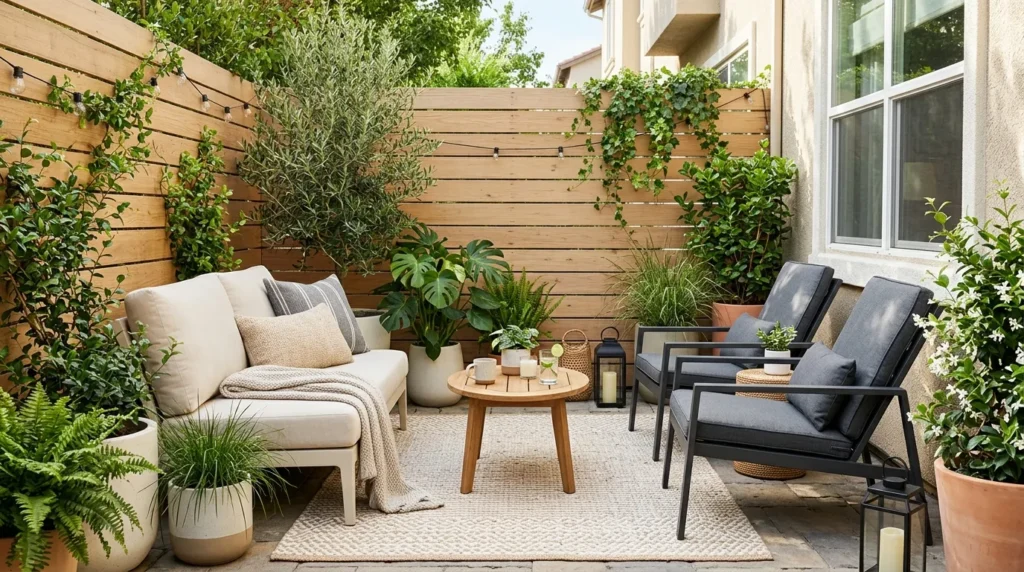
When floor space is limited, furniture proportions become incredibly important. A bulky outdoor sofa may technically fit, but it can make a tiny patio feel blocked and difficult to navigate. Slimline seating gives you the comfort you want without visually consuming the entire area.
Look for chairs and sofas with narrow arms, streamlined frames, and raised legs. These details allow more of the floor to remain visible, which can make the patio feel more open.
A simple seating arrangement also creates a stronger focal point. Instead of scattering several pieces around the patio, concentrate them into one intentional conversation area.
How To Style It
Start with one compact loveseat or two slim lounge chairs. Measure the patio carefully before buying, remembering to leave enough clearance for opening doors and walking through the space.
Choose neutral upholstery such as ivory, beige, taupe, or charcoal. These colors provide a calm foundation and make it easier to add seasonal accents later.
Pair the seating with a narrow side table rather than a large coffee table. A small round table can soften the arrangement and provide enough room for drinks or a book.
If your patio is extremely narrow, place the seating along the longest wall. This keeps the center open and creates a clearer path through the space.
Add just a few cushions for comfort rather than filling every inch with pillows.
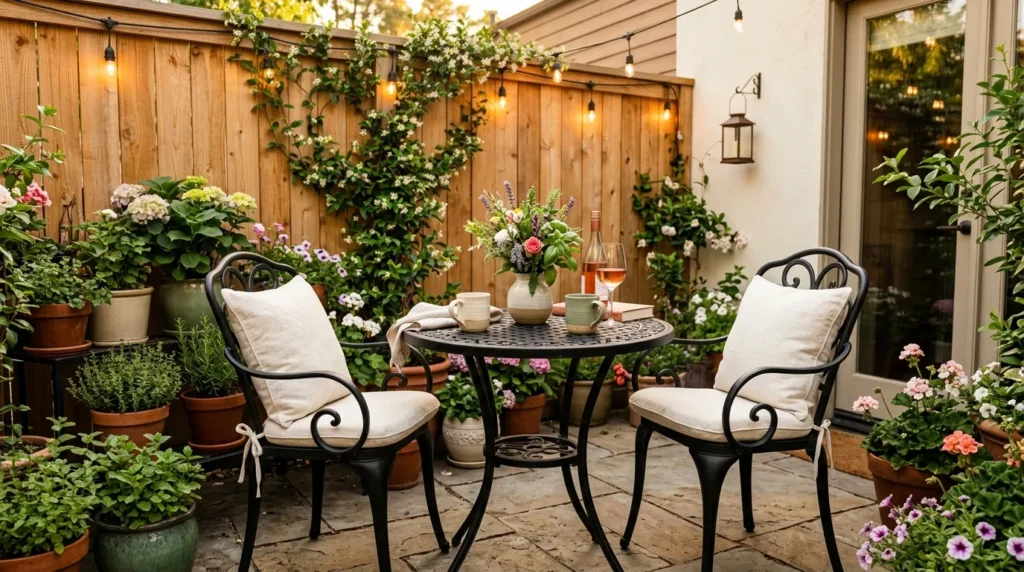
2. Bistro Table
Quick Benefits
- Perfect for two people
- Creates a dedicated dining area
- Takes up minimal floor space
- Adds charming visual character
- Works especially well on balconies and patios
Why It Works
A full-sized outdoor dining set is often unnecessary on a tiny patio. A bistro table offers nearly all the function with a much smaller footprint.
Its compact proportions make it ideal for morning coffee, breakfast, lunch, or an evening drink. Round café tables are particularly useful because their curved edges allow easier movement around the furniture.
Bistro sets also have a natural European-inspired charm. Even a very simple metal table and two chairs can make a patio feel intentionally decorated rather than simply furnished.
How To Style It
Choose a table that leaves enough room to pull the chairs out comfortably. A small round table is usually one of the easiest shapes to work with in tight spaces.
Black metal creates a classic appearance, while white gives the patio a brighter look. Natural wood can bring warmth to a modern space.
Add two outdoor seat cushions in a coordinating color. A small potted herb or flowering plant can serve as the centerpiece.
If the patio is uncovered, place the table where it won’t interfere with drainage or access.
For maximum flexibility, select a folding bistro set that can be stored against the wall when you need more open floor space.
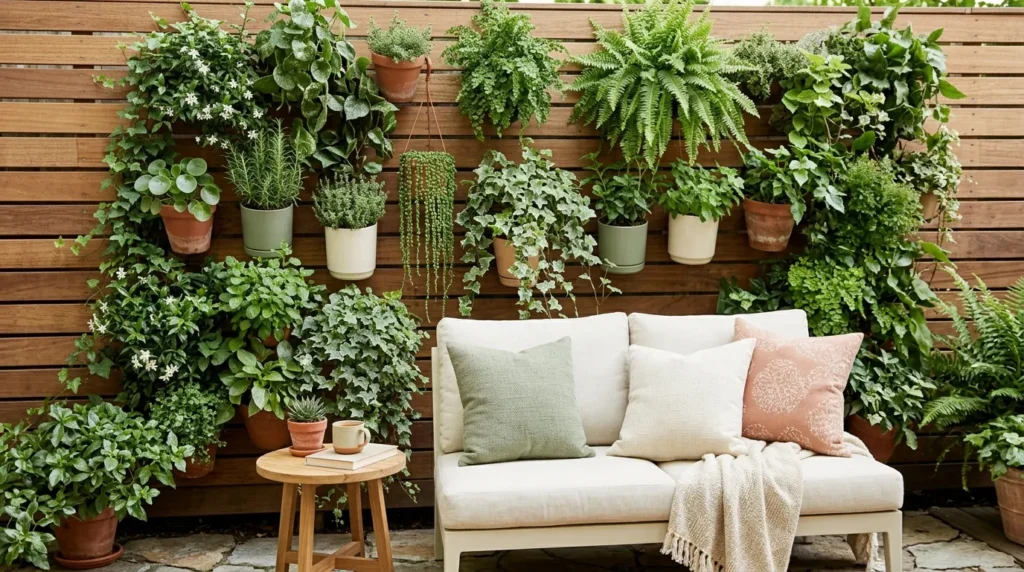
3. Vertical Greenery
Quick Benefits
- Adds plants without crowding the floor
- Creates visual height
- Makes plain walls more attractive
- Can improve privacy
- Brings a natural feeling to compact spaces
Why It Works
Tiny patios often have more usable vertical space than floor space. Walls, railings, fences, and privacy screens can all become opportunities for greenery.
Vertical plants draw the eye upward, which can make a small patio feel taller and more layered. They also soften hard materials such as concrete, brick, metal, and composite decking.
A simple trellis covered with climbing greenery can become a beautiful focal point. Wall-mounted planters provide another option for renters or anyone who doesn’t want to make permanent changes.
How To Style It
Choose one main vertical feature rather than trying to decorate every wall.
A wooden trellis can provide warmth and support climbing plants. For a modern patio, matching matte planters arranged in a clean grid can look especially polished.
Use a mixture of foliage shapes to keep the display interesting. Trailing plants can soften edges, while upright plants add structure.
If your patio receives plenty of sunlight, select plants that can handle those conditions. Shaded spaces need varieties suited to lower light.
Keep the plant display concentrated along one wall or railing so the remaining space stays visually calm.
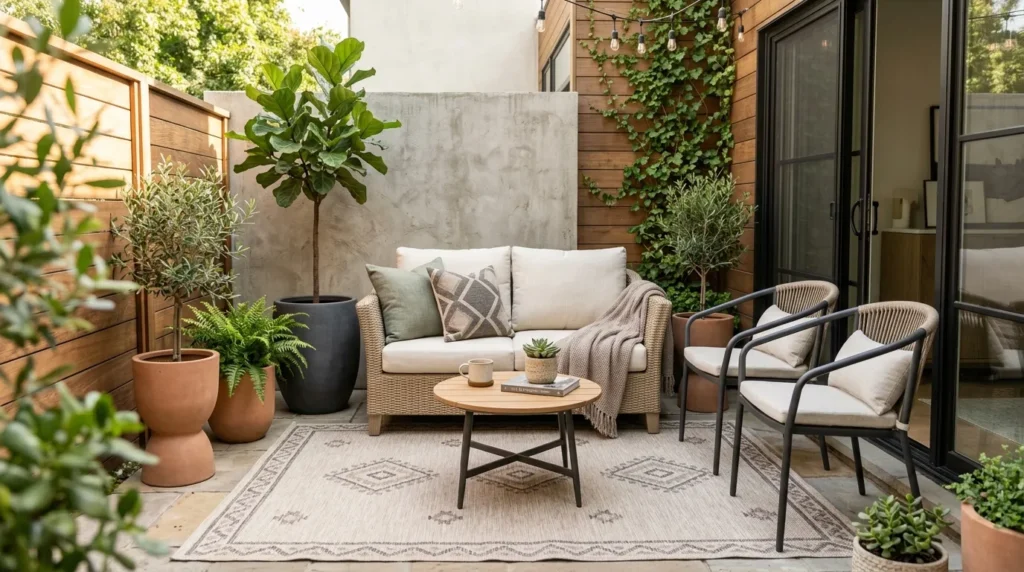
4. Outdoor Rug
Quick Benefits
- Defines the seating area
- Adds softness and comfort
- Introduces color and pattern
- Makes the patio feel more finished
- Helps create an outdoor room
Why It Works
A rug can visually connect furniture that might otherwise look disconnected. This is particularly helpful on tiny patios because the limited space often makes every furniture piece feel separate.
An outdoor rug creates a defined zone, almost like an indoor living room. It also adds texture to hard surfaces and gives the space a more finished appearance.
The trick is getting the scale right. A tiny rug underneath only the coffee table can make the seating arrangement feel fragmented. Whenever possible, choose one large enough for at least the front legs of the primary seating pieces.
How To Style It
Choose an outdoor-rated rug in a neutral or lightly patterned design. Stripes, subtle geometric shapes, and understated textures can add interest without making the patio feel busy.
For a tiny patio, consider a rug that follows the shape of the space. A rectangular rug works well for a narrow seating arrangement, while a round rug can complement a small bistro table.
Coordinate the rug with your cushions and surrounding plants.
If the patio is already visually busy, choose a solid neutral. If the furniture is plain, the rug can introduce a little pattern.
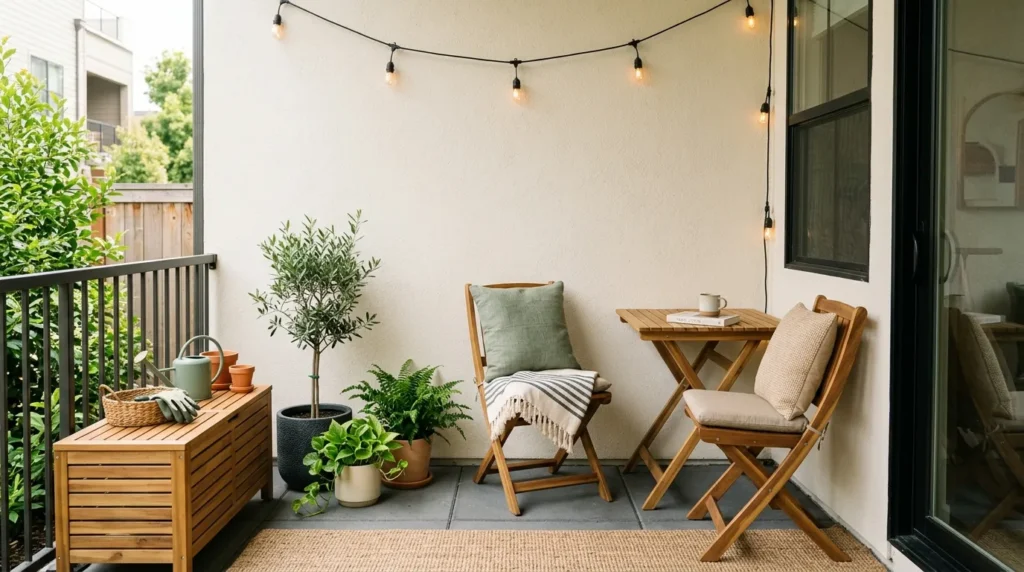
5. Folding Furniture
Quick Benefits
- Creates flexible floor space
- Easy to store
- Ideal for renters
- Supports multiple patio activities
- Makes entertaining easier
Why It Works
One of the best ways to make a tiny patio work harder is to avoid permanently occupying every square foot. Folding furniture gives you the ability to change the layout depending on what you’re doing.
You might want a dining table for dinner one evening and an open area for plants, stretching, or entertaining the next. Foldable chairs and tables allow that transition without requiring a large storage area.
Modern folding outdoor furniture can also look stylish. You don’t have to settle for pieces that feel temporary or purely functional.
How To Style It
Choose one consistent finish for your folding pieces. Natural wood feels warm and casual, while black metal tends to create a more contemporary look.
Keep folded chairs in a narrow storage area or hang them from suitable wall hooks if permitted.
A folding wall-mounted table can be particularly useful for extremely small patios. Fold it down when you need a surface and up when you want more space.
Pair folding furniture with permanent elements such as planters, lighting, or a rug so the patio still feels cohesive when the furniture is stored.
6. Hanging Planters
Quick Benefits
- Saves floor space
- Adds greenery at eye level
- Creates visual layers
- Works well on railings and walls
- Adds personality to small patios
Why It Works
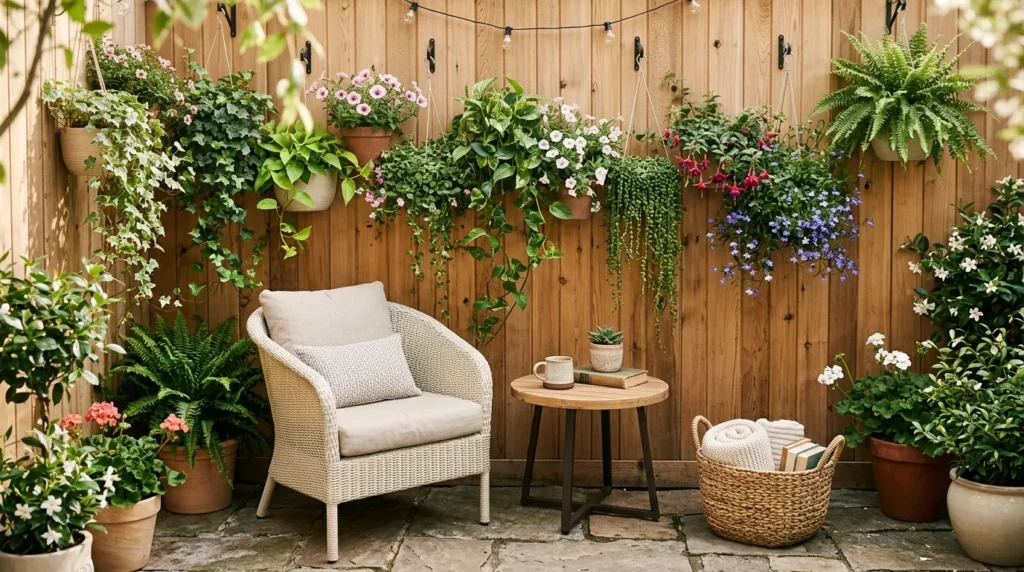
When you don’t have room for a collection of floor planters, hanging containers provide another decorating layer. They use vertical space while bringing greenery closer to eye level.
Hanging plants can also soften railings and walls. Trailing varieties are particularly effective because their foliage naturally cascades downward, creating movement.
For small patios, this is a simple way to get the lush appearance of a larger garden without filling the floor with pots.
How To Style It
Group hanging planters in a simple arrangement rather than scattering them randomly.
Three matching planters at different heights can create a polished look. You can also combine one larger hanging basket with smaller wall-mounted pots.
Use natural materials such as woven baskets for a relaxed style, or matte ceramic and metal for a modern aesthetic.
Before installing anything, make sure the mounting system is appropriate for the surface and weight of the planter.
If you’re renting, look for freestanding structures or removable options that don’t require permanent installation.
7. Cozy Lighting
Quick Benefits
- Makes the patio inviting at night
- Creates visual depth
- Adds warmth without taking floor space
- Improves evening usability
- Creates Pinterest-worthy ambiance
Why It Works
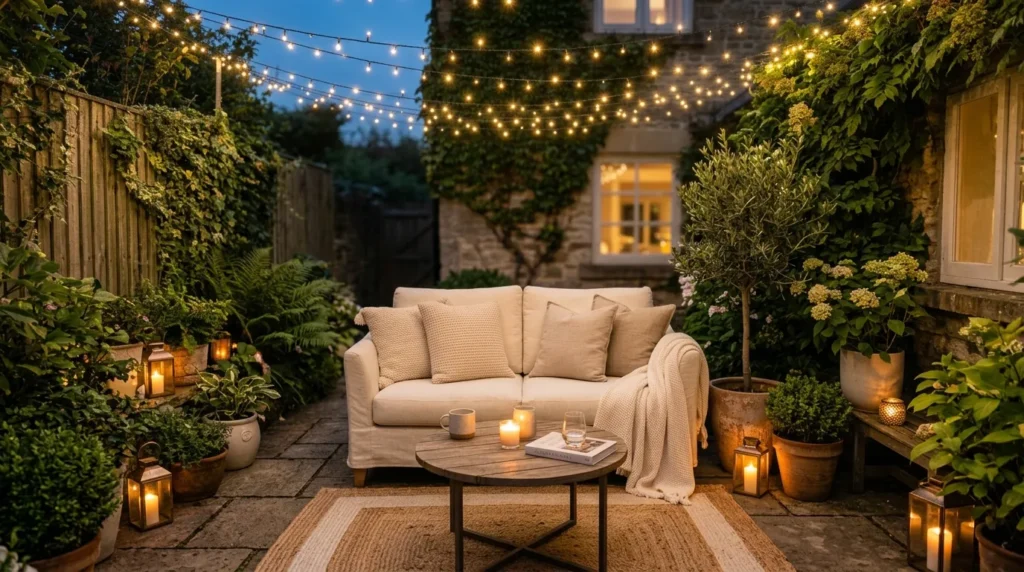
Lighting can make a tiny patio feel completely different after dark. Because it doesn’t require additional floor space, it is particularly valuable when you’re decorating a compact outdoor area.
Instead of relying on one bright overhead fixture, layer several smaller sources of light. String lights, lanterns, wall lights, and small rechargeable outdoor lamps can create a softer atmosphere.
Warm lighting also enhances natural materials and greenery. A patio that looks simple during the day can feel intimate and sophisticated at night with the right illumination.
How To Style It
String lights are an easy starting point. Hang them in clean lines above the seating area or attach them along a fence.
Add a small lantern to a side table. If you have plants, subtle accent lighting can highlight their shapes and create shadows against a wall.
Avoid lighting every surface equally. Concentrate the brightest light where you actually need it, such as around a dining table or walkway.
For electrical products, choose fixtures designed for outdoor use and follow the manufacturer’s installation instructions.
8. Privacy Screen
Quick Benefits
- Creates a more private atmosphere
- Adds architectural interest
- Can hide unattractive views
- Provides a backdrop for plants
- Helps define a small outdoor room
Why It Works
A tiny patio can feel less relaxing when it’s completely exposed to neighbors or nearby windows. A privacy screen can create a sense of enclosure without requiring a massive fence.
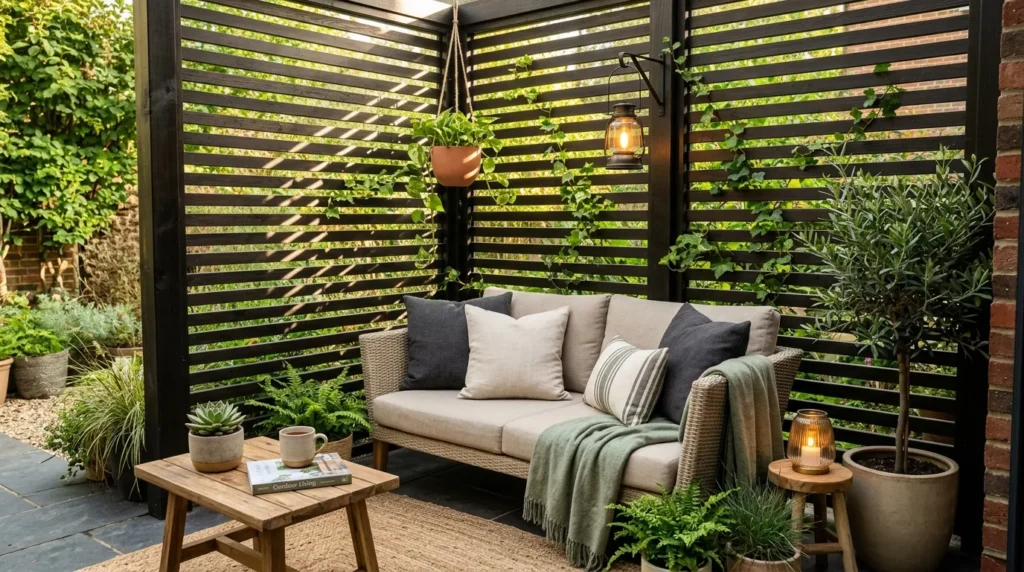
Slatted wood, trellis panels, decorative metal screens, and tall plants can all provide varying levels of privacy.
The key is choosing a solution that blocks the views you actually want to hide while keeping the patio open enough for sunlight and airflow.
How To Style It
A wood slat screen is an excellent choice for a warm contemporary look. Paint it a deep charcoal or black if you want a more dramatic modern backdrop.
Add climbing plants or hanging baskets to soften the structure.
For a rental, use freestanding privacy screens or tall planters where permitted.
Keep the furniture in front of the screen relatively simple. The screen itself can become the main backdrop, so you don’t need to decorate it with dozens of additional objects.
Before installing permanent structures, check applicable property, rental, or local requirements.
9. Built-In Bench
Quick Benefits
- Maximizes wall space
- Provides generous seating
- Can include hidden storage
- Keeps the center open
- Creates a custom look
Why It Works
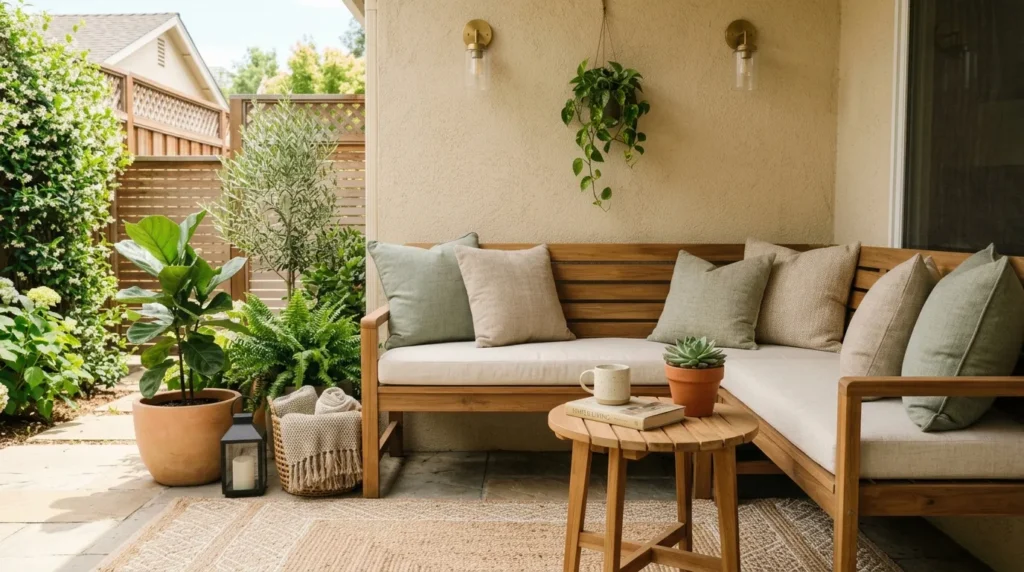
A bench can be one of the smartest seating solutions for a tiny patio because it uses linear wall space rather than requiring multiple chairs.
Built-in benches are particularly useful along fences, exterior walls, or awkward edges that would otherwise remain unused. They can also provide storage beneath the seat for cushions, gardening supplies, or outdoor accessories.
Even when you can’t build a permanent bench, a narrow freestanding bench can provide a similar visual effect.
How To Style It
Place the bench along the longest available wall. Add a comfortable weather-resistant seat cushion and two or three back cushions.
Choose a wood finish for a natural look or paint the structure a neutral shade that complements your home’s exterior.
If storage is included, keep the design streamlined so it doesn’t appear bulky.
Pair the bench with a small round table rather than a large coffee table. This preserves legroom and keeps the arrangement light.
Add greenery behind or beside the bench to create a layered backdrop.
10. Layered Textures
Quick Benefits
- Makes small spaces feel comfortable
- Adds personality without clutter
- Creates visual warmth
- Works with neutral furniture
- Makes the patio feel more like an indoor room
Why It Works
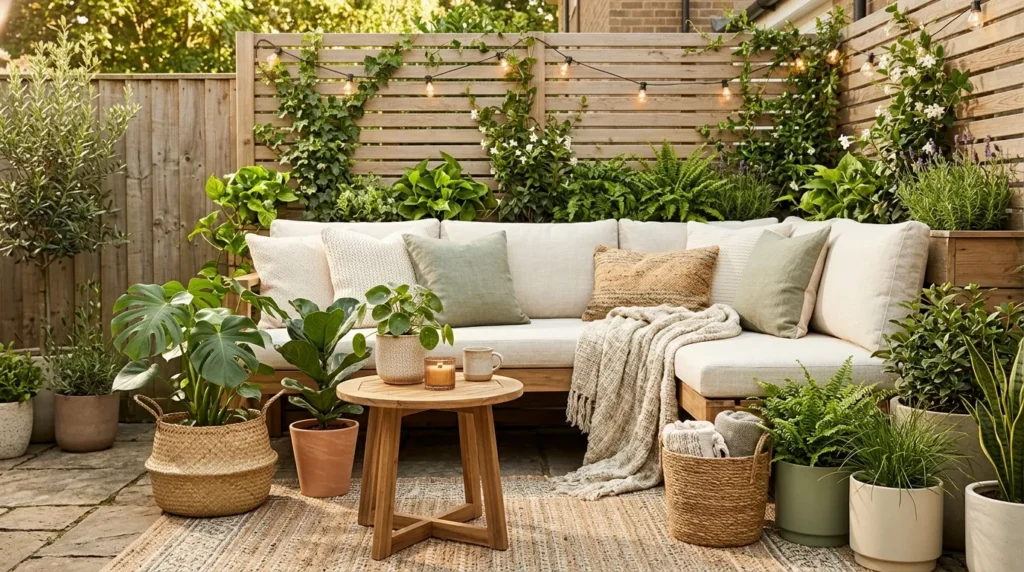
Tiny patios can sometimes feel visually hard because they’re dominated by concrete, metal, stone, or decking. Texture introduces softness and makes the space feel more inviting without requiring additional furniture.
Outdoor cushions, woven baskets, natural wood, textured rugs, ceramic pots, and soft throws can all contribute.
The trick is layering materials rather than simply adding more objects. A single woven chair, a textured rug, and a few cushions may create more warmth than a collection of decorative accessories.
How To Style It
Choose two or three primary textures and repeat them throughout the patio.
For example, combine woven materials with natural wood and soft outdoor fabric. A modern patio could use smooth concrete planters alongside textured cushions and a slatted wood privacy screen.
Keep your color palette relatively controlled. Cream, beige, muted green, warm brown, and charcoal can create a sophisticated foundation.
If you like seasonal decorating, change the textiles rather than the furniture. Swap cushion covers or throws to create a fresh look for spring, summer, or fall.
11. Multifunctional Decor
Quick Benefits
- Saves valuable floor space
- Reduces visual clutter
- Makes the patio more practical
- Supports multiple activities
- Helps justify every purchase
Why It Works
In a tiny outdoor area, every item should ideally earn its place. Multifunctional furniture and decor allow you to get more use from fewer pieces.
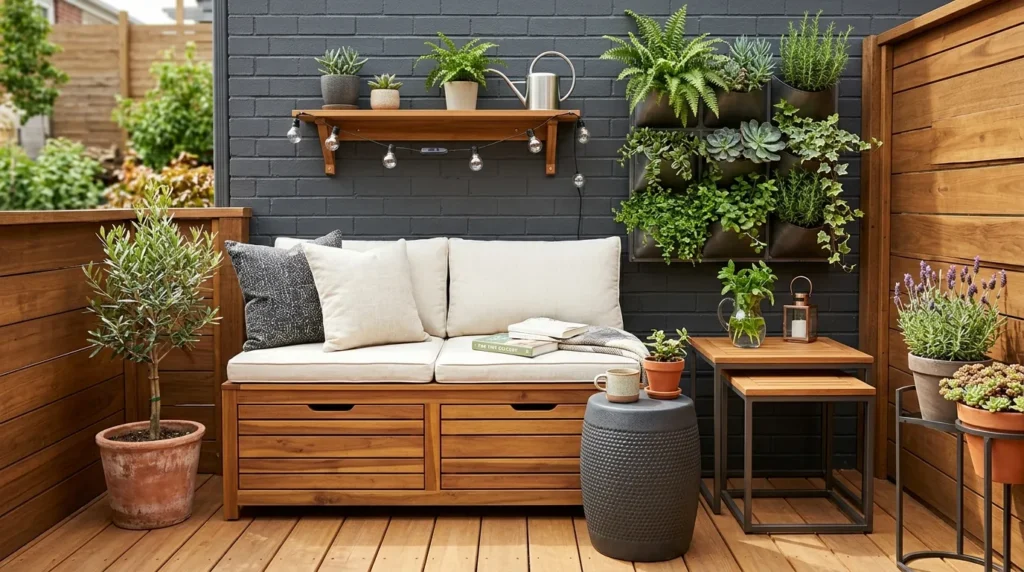
A storage bench can provide seating and hide gardening supplies. A garden stool can serve as a plant stand, side table, or extra seat. A narrow console can hold plants while also providing a surface for drinks or outdoor accessories.
This approach keeps the patio visually clean while giving you more functionality.
How To Style It
Before purchasing anything, ask what jobs the piece can perform.
A compact storage ottoman might work as seating and a footrest. A nesting table can separate into multiple surfaces when guests arrive. A wall-mounted shelf can display plants while keeping the floor completely open.
Choose multifunctional pieces that share the same design language as your other furniture. Matching materials and finishes help everything feel intentional.
Avoid buying multifunctional items simply because they technically serve several purposes. The functions should actually be useful for your lifestyle.
The best small patio design feels effortless because the space works hard without looking overloaded.
Frequently Asked Questions
How do you decorate a very small patio?
Start by choosing one primary purpose, such as lounging, dining, or gardening. Then select appropriately scaled furniture and keep the center of the patio as open as possible. Use vertical greenery, hanging planters, outdoor rugs, and wall-mounted lighting to add visual interest without consuming valuable floor space.
What furniture is best for a tiny patio?
Slimline loveseats, compact lounge chairs, bistro sets, folding furniture, and narrow benches are excellent options. Choose pieces based on the actual dimensions of the patio and leave enough room for doors and walking paths. Multifunctional furniture can be especially valuable because it provides more function without requiring additional pieces.
How can I make a tiny patio feel bigger?
Keep the color palette simple, use furniture with lightweight frames, and avoid overcrowding. Vertical plants draw the eye upward, while a properly sized outdoor rug can create a defined room-like area. Keeping one clear path through the patio can also make the layout feel more spacious.
How do I add plants without taking up patio space?
Use hanging planters, wall-mounted containers, railing planters, vertical gardens, and narrow raised planters. These options move greenery away from the main floor area. Concentrating plants along one wall or boundary can also create a lush effect without making the patio feel cluttered.
What colors are best for a tiny patio?
Light neutrals such as ivory, beige, soft gray, and warm white can create a calm and open appearance. Natural wood and muted greens add warmth without overwhelming the space. Darker shades like charcoal and black can be used as accents on furniture, planters, lighting, or privacy screens.
How can I make a tiny patio cozy at night?
Layer warm outdoor lighting through string lights, lanterns, wall fixtures, and small portable lamps. Add comfortable cushions, an outdoor rug, and a few plants. Keep the lighting focused around the areas you actually use rather than illuminating the entire patio equally.
Conclusion
A tiny patio doesn’t have to feel like a decorating limitation. In many cases, its smaller size can actually make it easier to create a cozy, intentional outdoor retreat because every choice becomes more noticeable.
Start with the essentials: appropriately scaled seating, a practical layout, and enough open space to move comfortably. Then build personality through greenery, outdoor textiles, lighting, privacy features, and a few multifunctional pieces.
Vertical decorating is especially powerful in compact spaces. Hanging planters, trellises, wall-mounted greenery, and privacy screens allow you to add layers without sacrificing floor space. Folding furniture and multifunctional accessories can also give the patio flexibility when you want to use it for different activities.
Don’t feel pressured to fill every empty corner. One of the secrets to making a small patio look polished is knowing when to stop. A little breathing room can make the furniture, plants, and decorative details you choose feel more special.
Whether you have a tiny apartment patio, a narrow backyard terrace, or a compact outdoor corner, start with one improvement that solves a real problem. Add a comfortable seat, create a small dining spot, hang some greenery, or install warmer lighting. Then let the space evolve naturally.
The best tiny patio is ultimately one that makes you want to step outside.