10 Smart Stylish Garden Ideas
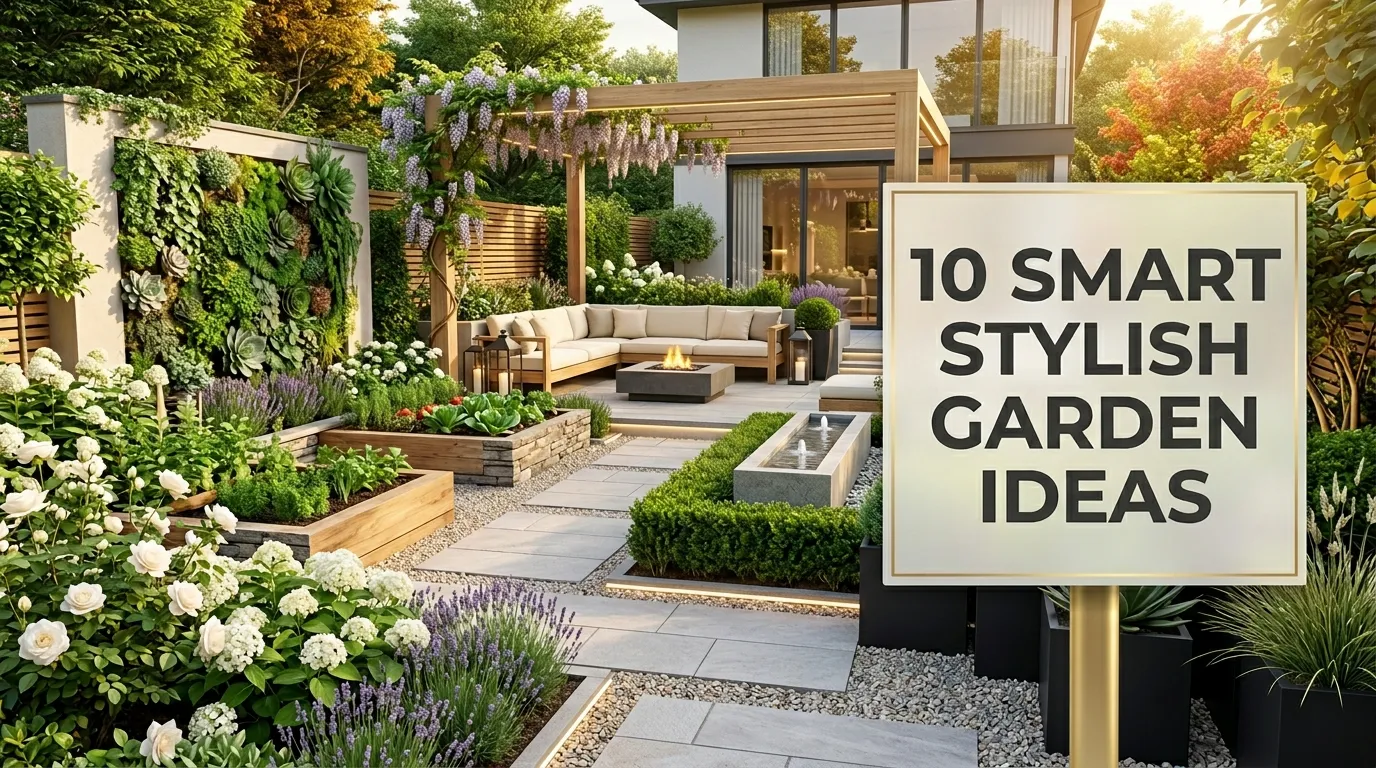
A beautiful garden is no longer just about colorful flowers and neatly trimmed hedges. Today’s most inspiring outdoor spaces combine smart functionality with stylish design, creating gardens that are both practical and visually stunning. Whether you have a spacious backyard, a compact side yard, or a small urban garden, thoughtful planning can help you maximize every square foot while creating a landscape that feels modern, organized, and inviting.
One thing I’ve noticed is that homeowners often focus on appearance alone when designing a garden. While aesthetics are important, the most successful landscapes also consider maintenance, usability, sustainability, and year-round enjoyment. Smart garden design incorporates features that make outdoor spaces easier to care for while enhancing their beauty.
Stylish gardens also reflect personal lifestyle needs. Some homeowners prioritize entertaining, while others prefer quiet retreats, productive vegetable gardens, or family-friendly outdoor areas. By combining innovative ideas with attractive landscaping, it’s possible to create a garden that works beautifully for daily life while still looking Pinterest-worthy.
Whether you’re planning a complete garden makeover or simply looking for fresh inspiration, these smart and stylish ideas can help transform your outdoor space into an area that feels both elegant and highly functional.
Table of Contents
- Zoned Garden Layouts
Create purposeful spaces for different activities. - Raised Modern Planters
Combine style with efficient gardening. - Multi-Level Landscaping
Add dimension and visual interest. - Outdoor Living Extensions
Expand usable space beyond the home. - Smart Irrigation Systems
Simplify watering while saving resources. - Low Maintenance Planting Plans
Create beauty with less upkeep. - Statement Garden Lighting
Enhance the landscape day and night. - Stylish Gravel Pathways
Improve function and curb appeal. - Vertical Green Features
Maximize planting opportunities creatively. - Four-Season Garden Design
Keep the landscape attractive year-round.
1. Zoned Garden Layouts
Quick Benefits
- Improves functionality
- Creates organization
- Supports multiple activities
- Enhances visual flow
- Maximizes space
Why It Works
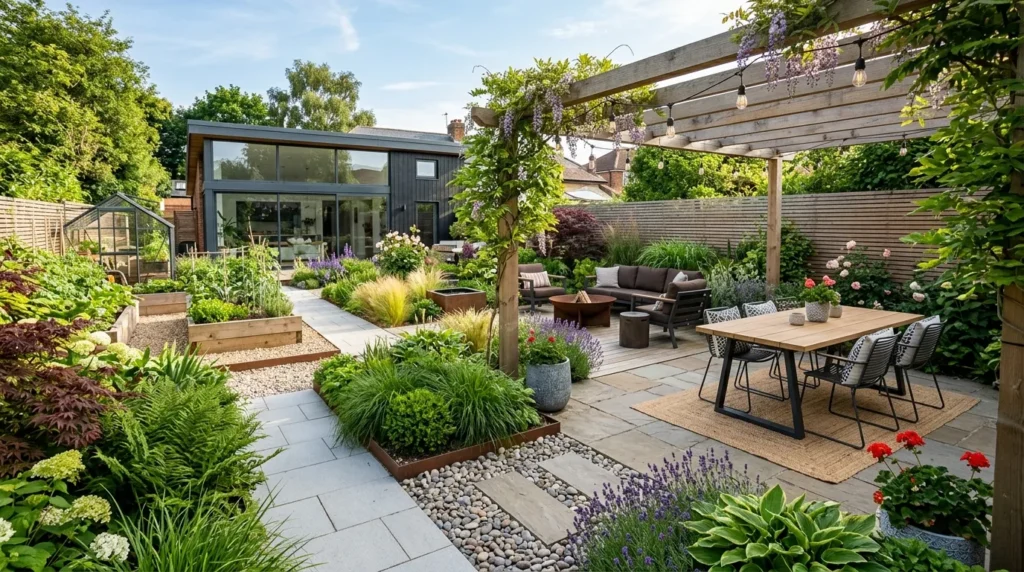
Dividing a garden into distinct zones helps create structure while making outdoor spaces more useful. Rather than treating the yard as one large area, zoning allows homeowners to dedicate spaces for dining, relaxing, gardening, entertaining, or play. This approach makes the garden feel larger and more intentional.
I’ve seen even small properties benefit from zoning because it improves flow and helps each area serve a clear purpose. The result is a landscape that feels professionally designed rather than randomly arranged.
How To Style It
Use pathways, planters, hedges, pergolas, or changes in materials to define different zones. Maintain visual continuity through consistent colors and landscaping elements.
Ensure each area remains connected while serving a unique function.
2. Raised Modern Planters
Quick Benefits
- Improves drainage
- Enhances organization
- Creates architectural interest
- Simplifies maintenance
- Supports versatile planting
Why It Works
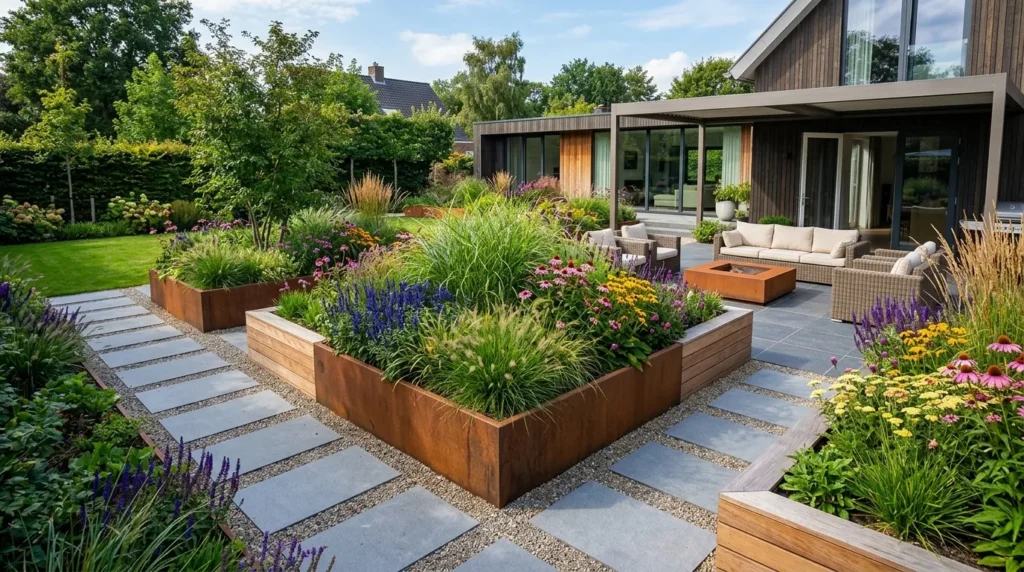
Raised planters provide structure while creating opportunities for both ornamental and edible gardening. Their clean lines complement contemporary landscapes while helping plants thrive through improved drainage and soil control.
Many designers recommend raised planters because they introduce height variation and make gardens feel more curated.
How To Style It
Choose materials such as corten steel, wood, concrete, or stone. Use repeated planter shapes throughout the garden for a cohesive appearance.
Mix flowers, herbs, shrubs, and ornamental grasses for visual diversity.
3. Multi-Level Landscaping
Quick Benefits
- Adds visual depth
- Creates interest
- Maximizes sloped yards
- Enhances drainage
- Supports layered planting
Why It Works
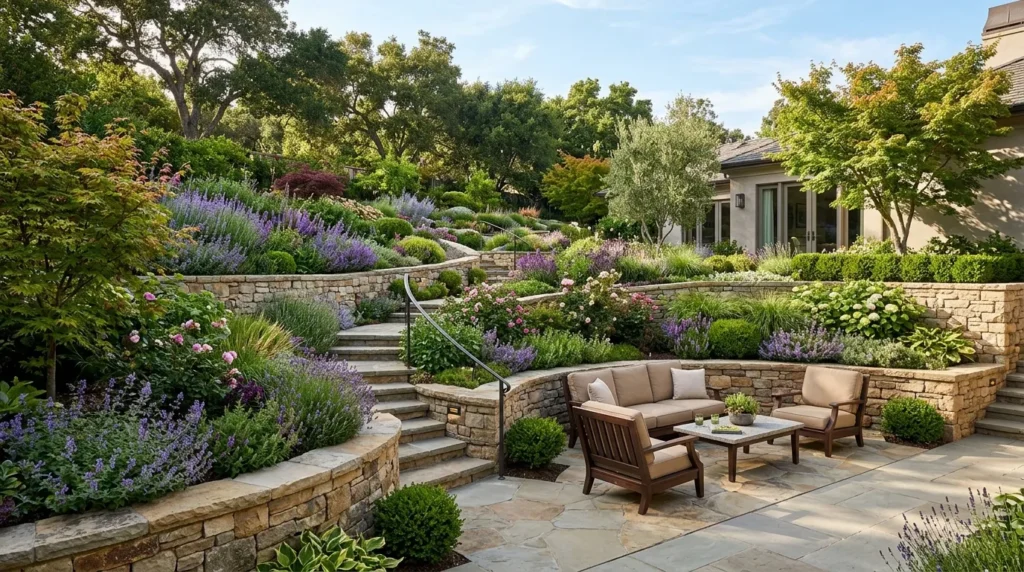
Multi-level landscapes create dimension that flat gardens often lack. By incorporating terraces, retaining walls, raised beds, and varying elevations, homeowners can create more dynamic and engaging outdoor environments.
One thing that works especially well is using different levels to separate garden functions while maintaining visual harmony.
How To Style It
Incorporate stone retaining walls, stairs, and layered plantings. Use consistent materials throughout the design to unify different elevations.
Balance hardscape elements with soft landscaping.
4. Outdoor Living Extensions
Quick Benefits
- Expands usable space
- Supports entertaining
- Enhances comfort
- Increases property appeal
- Improves lifestyle flexibility
Why It Works
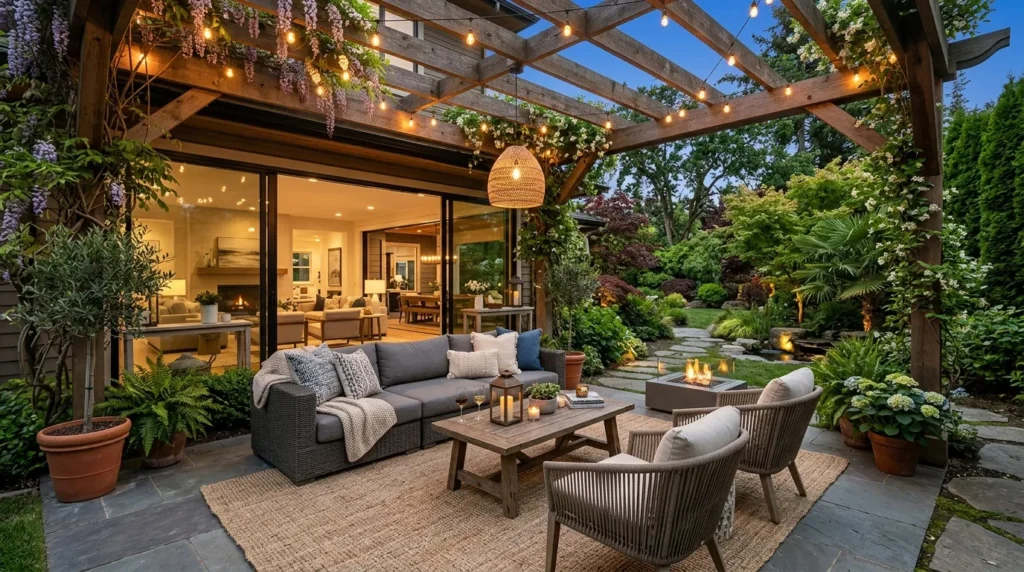
Modern gardens increasingly function as outdoor living rooms. Comfortable seating, dining areas, pergolas, and fire features transform gardens into spaces where homeowners can relax and entertain.
I’ve noticed that gardens become significantly more valuable when they encourage regular use rather than simply serving as visual backdrops.
How To Style It
Use weather-resistant furniture, outdoor rugs, and layered lighting. Coordinate colors and materials with the home’s interior for a seamless transition.
Create comfortable seating arrangements that encourage conversation.
5. Smart Irrigation Systems
Quick Benefits
- Conserves water
- Reduces maintenance
- Supports plant health
- Saves time
- Improves efficiency
Why It Works
Smart irrigation technology automatically adjusts watering schedules based on weather conditions, soil moisture, and plant needs. This reduces water waste while helping landscapes remain healthy throughout the year.
A mistake many homeowners make is relying on inconsistent manual watering, which often leads to both overwatering and underwatering.
How To Style It
Install drip irrigation for planting beds and smart controllers for lawns. Conceal equipment whenever possible to preserve the garden’s appearance.
Choose systems that can be adjusted seasonally.
6. Low Maintenance Planting Plans
Quick Benefits
- Reduces upkeep
- Saves time
- Supports sustainability
- Maintains beauty
- Improves long-term success
Why It Works
A stylish garden should remain attractive without requiring constant attention. Low-maintenance planting plans focus on resilient species that thrive in local conditions while providing year-round interest.
Many homeowners find that reducing maintenance allows them to enjoy the garden more frequently.
How To Style It
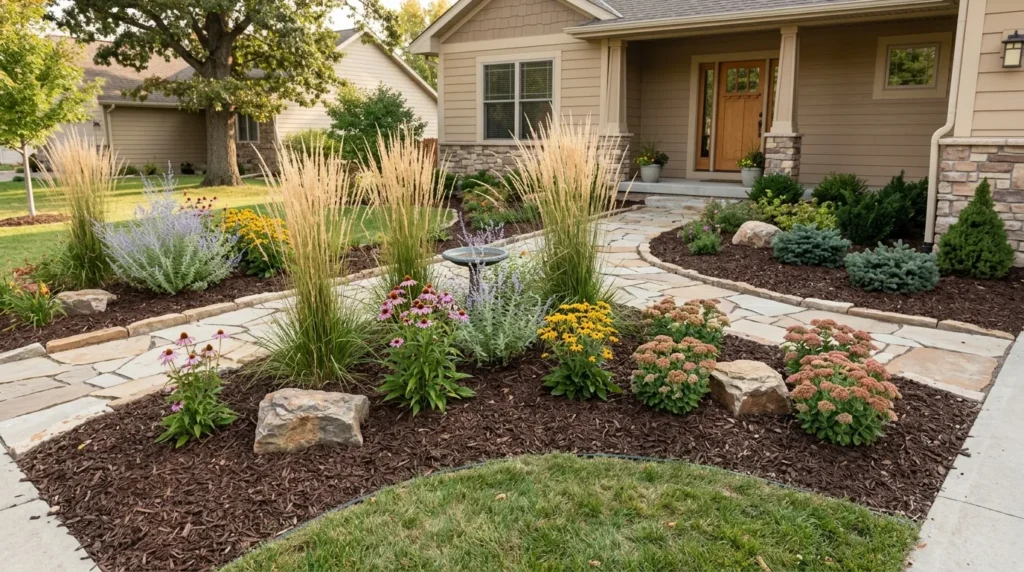
Choose native plants, ornamental grasses, evergreen shrubs, and drought-tolerant perennials. Group plants with similar water requirements together.
Use mulch to suppress weeds and retain moisture.
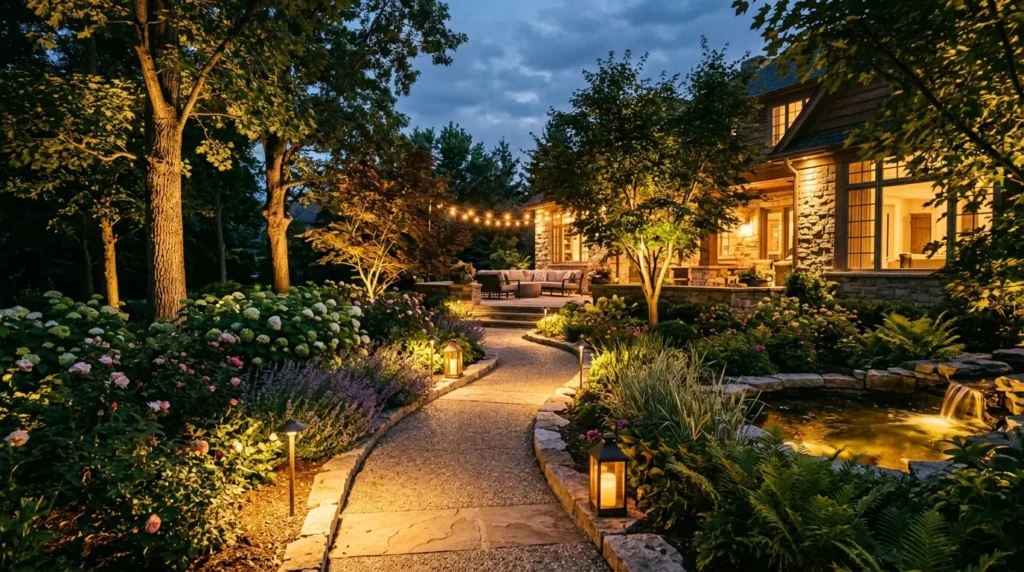
7. Statement Garden Lighting
Quick Benefits
- Extends usability
- Improves safety
- Creates ambiance
- Highlights focal points
- Enhances nighttime beauty
Why It Works
Lighting dramatically changes how a garden looks after dark. Properly placed fixtures highlight textures, pathways, trees, and architectural features while creating a welcoming atmosphere.
That’s why many professional landscape designs include lighting as a core component rather than an afterthought.
How To Style It
Layer pathway lights, uplights, string lights, and accent fixtures. Focus on highlighting key elements rather than illuminating every surface equally.
Choose warm light tones for a sophisticated appearance.
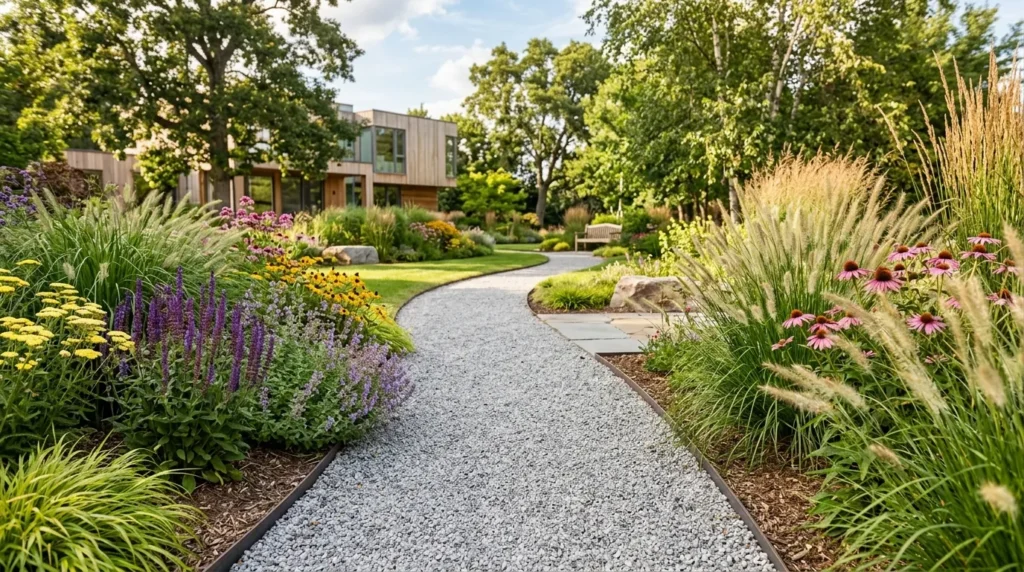
8. Stylish Gravel Pathways
Quick Benefits
- Improves accessibility
- Supports drainage
- Adds texture
- Affordable installation
- Complements many styles
Why It Works
Gravel pathways create clean and attractive circulation routes while helping manage water runoff. Their natural appearance works equally well in modern, cottage, farmhouse, and minimalist gardens.
I’ve seen gravel paths instantly improve organization and visual flow in landscapes of all sizes.
How To Style It
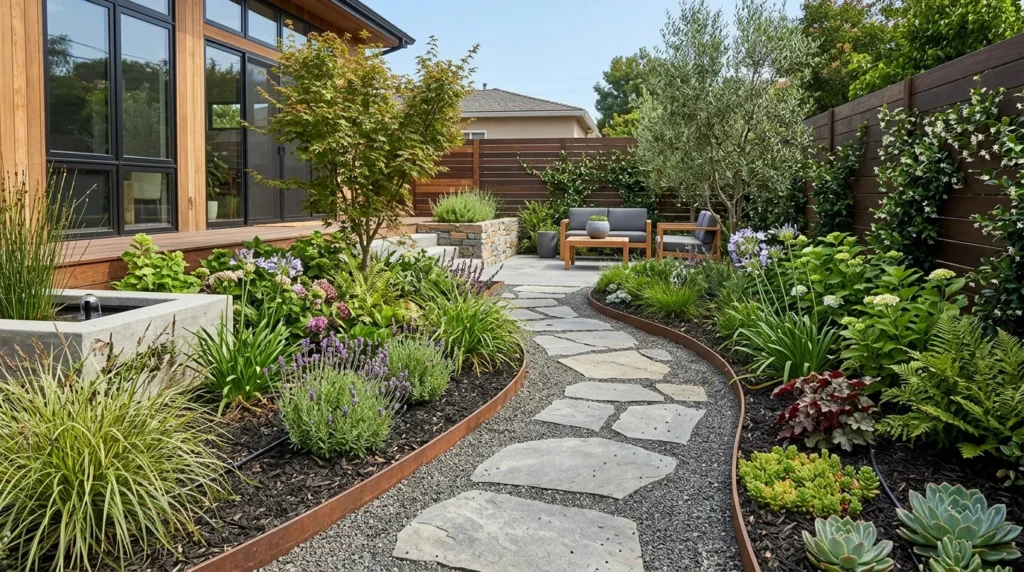
Define edges with metal, stone, or brick borders. Pair pathways with ornamental grasses, flowering plants, or structured shrubs.
Use consistent gravel colors throughout the garden.
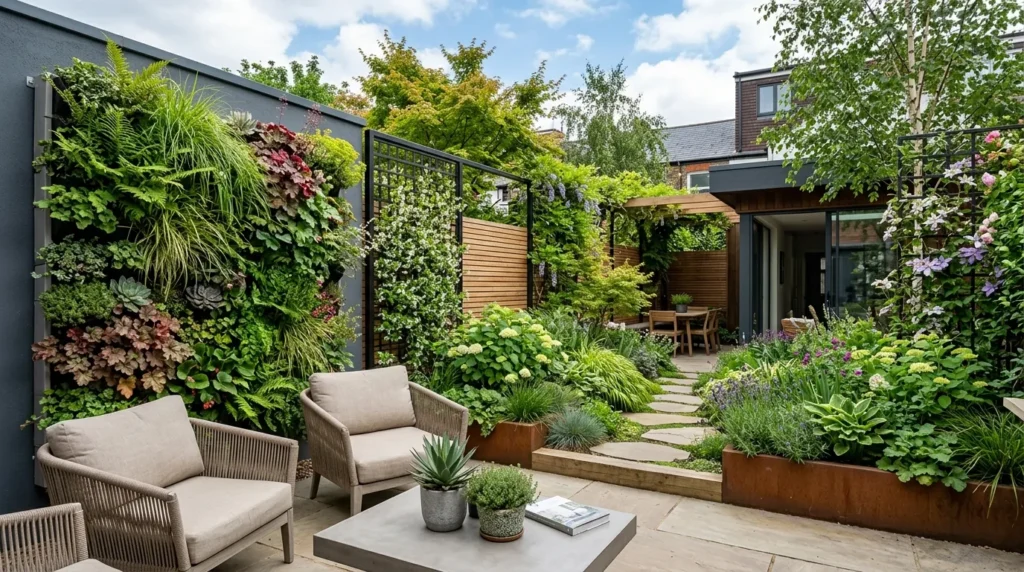
9. Vertical Green Features
Quick Benefits
- Maximizes space
- Adds greenery
- Creates focal points
- Improves privacy
- Enhances design interest
Why It Works
Vertical gardening introduces greenery without requiring large amounts of ground space. Green walls, trellises, climbing plants, and living screens add dimension while making gardens feel more lush and immersive.
A mistake many gardeners make is focusing only on horizontal planting. Vertical elements dramatically improve visual impact.
How To Style It
Use climbing roses, jasmine, ivy, clematis, or decorative trellis systems. Incorporate vertical features near seating areas and boundaries.
Balance vertical elements with surrounding plantings.
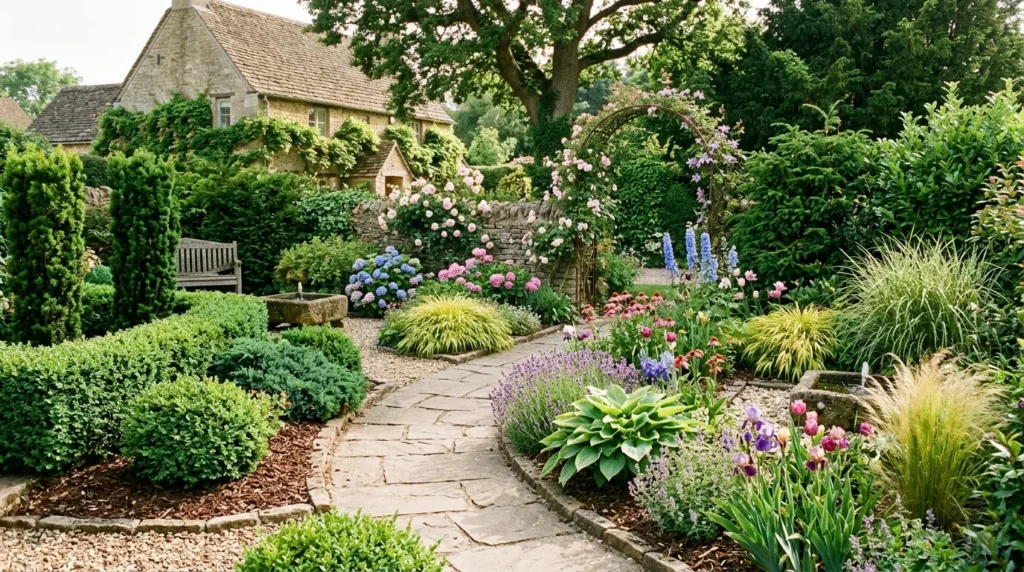
10. Four-Season Garden Design
Quick Benefits
- Maintains year-round beauty
- Supports seasonal interest
- Improves landscape value
- Enhances visual variety
- Encourages outdoor enjoyment
Why It Works
The most successful gardens remain attractive throughout all seasons rather than peaking for only a few months. Combining evergreen structure, seasonal blooms, ornamental grasses, and winter-interest plants creates continuous appeal.
If you’re anything like me, a garden that remains beautiful year-round feels far more rewarding than one that only shines during spring.
How To Style It
Mix evergreen shrubs, flowering perennials, ornamental grasses, and trees with interesting bark or foliage. Plan for seasonal succession to maintain visual interest.
Incorporate decorative hardscape elements that look attractive in every season.
Frequently Asked Questions
What makes a garden both smart and stylish?
A smart and stylish garden combines attractive design with practical features such as efficient irrigation, low-maintenance plants, organized layouts, and functional outdoor living spaces.
How can I make a small garden look more expensive?
Focus on clean lines, quality materials, layered planting, strategic lighting, and cohesive design elements. Simplicity often creates a more upscale appearance.
Are raised planters worth the investment?
Yes. Raised planters improve drainage, simplify maintenance, and create strong visual structure within the landscape.
What is the best low-maintenance garden design?
Native plants, ornamental grasses, evergreen shrubs, mulch, and automated irrigation systems help create attractive landscapes with reduced upkeep.
How important is lighting in garden design?
Lighting improves safety, extends usability, and significantly enhances the appearance of the landscape after dark.
Can modern gardens still feel cozy?
Absolutely. Comfortable seating, warm lighting, layered planting, and natural materials help create inviting spaces without sacrificing modern aesthetics.
Conclusion
Smart and stylish garden design is about creating outdoor spaces that look beautiful while supporting everyday life. By combining thoughtful layouts, efficient systems, attractive materials, and practical landscaping, homeowners can build gardens that are both functional and visually impressive.
The most successful gardens balance beauty with usability. Features such as outdoor living areas, smart irrigation, low-maintenance plants, and layered lighting make landscapes easier to enjoy while enhancing long-term value. Even small improvements can have a dramatic impact when implemented thoughtfully.
Start by identifying the features that would most improve your outdoor experience. Whether it’s creating a relaxing retreat, simplifying maintenance, or increasing curb appeal, these smart garden ideas can help transform your landscape into a space you’ll enjoy for years to come.
Related Articles
- Modern Backyard Landscaping Ideas
- Outdoor Living Space Inspiration
- Low Maintenance Garden Designs
- Garden Pathway Ideas
- Small Backyard Makeover Tips