
10 Sage Green and Blue Bedroom Ideas to Inspire Your Space
Sage green and blue create a bedroom palette that feels effortlessly peaceful. Sage brings an earthy, botanical quality, while blue adds a cool, restful layer that can make the room feel fresh without looking stark. Together, they create a color combination that feels collected rather than overly coordinated.
The beauty of this pairing is how easily it adapts to different decorating styles. Soft sage with dusty blue can create a relaxed cottage bedroom, while deeper blue paired with muted green can feel sophisticated and dramatic. Add natural wood and cream for warmth, or bring in brass accents when you want a slightly more polished finish.
You also don’t need to use both colors equally. In fact, choosing one dominant shade usually creates a more sophisticated result. Sage can take center stage on the walls while blue appears through bedding and artwork, or blue can become the focal point while sage works as the supporting color.
In my experience, the most inviting colorful bedrooms also have plenty of neutral breathing room. Cream bedding, natural wood, woven textures, and warm lighting can keep the green-and-blue combination feeling cozy instead of cold.
Whether you’re updating a small bedroom, refreshing a rental, or planning a complete makeover, these ideas offer practical ways to introduce the palette without making the room feel overly themed.
Table of Contents
1. Sage Green Walls
Create a calming foundation with muted green walls.
2. Blue Layered Bedding
Bring restful blue tones into the focal point.
3. Creamy Neutral Layers
Balance the cool palette with warm neutrals.
4. Natural Wood Furniture
Add warmth and organic character to the room.
5. Blue Upholstered Headboard
Make the bed a sophisticated focal point.
6. Botanical Artwork
Connect both colors through nature-inspired details.
7. Sage Green Curtains
Introduce softness and vertical color.
8. Brass Accent Details
Add warmth and subtle sophistication.
9. Layered Natural Textures
Give the palette depth and comfort.
10. Blue and Green Gallery Wall
Create personality with coordinated artwork.
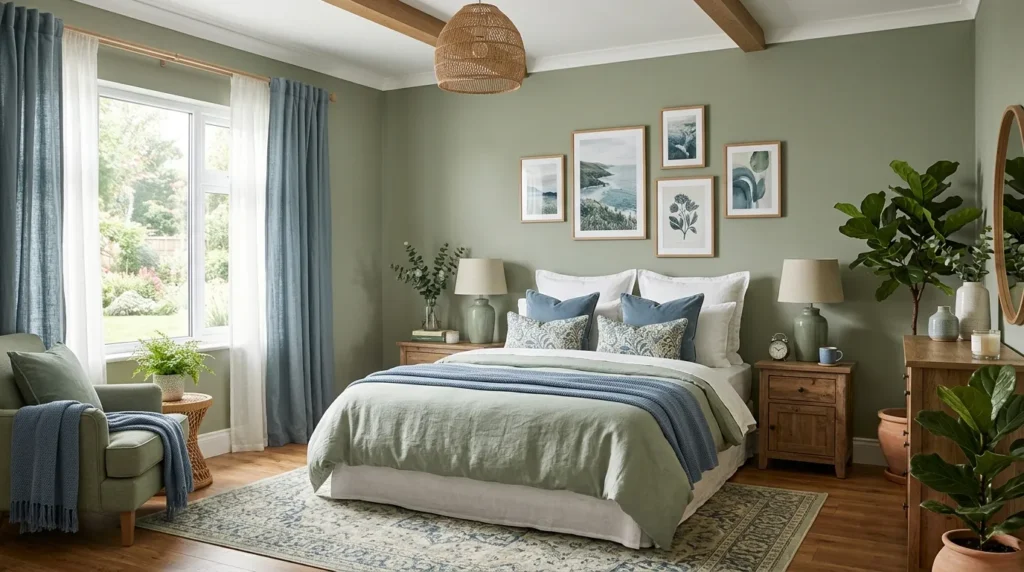
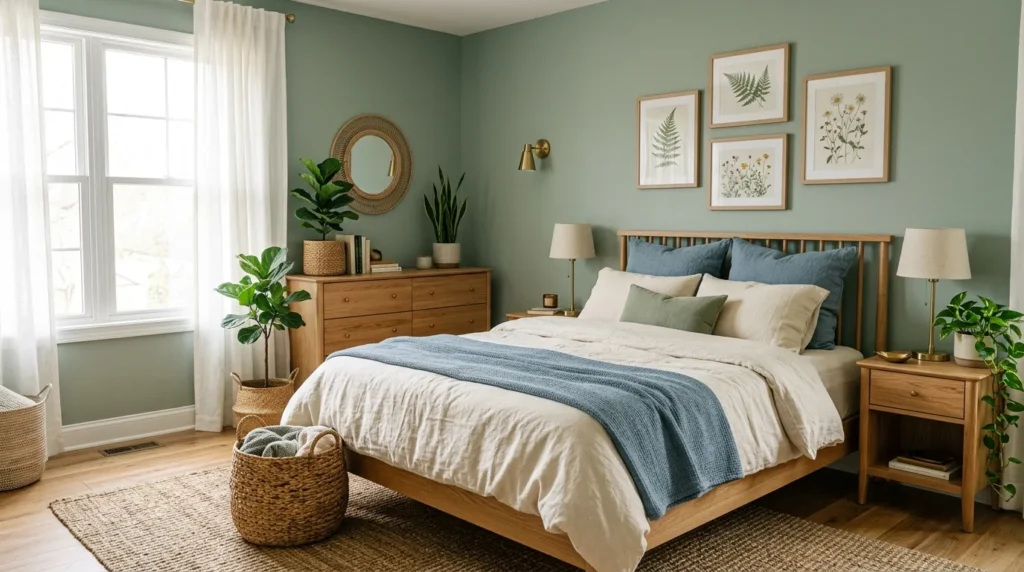
1. Sage Green Walls
Quick Benefits
- Creates a soothing backdrop
- Works beautifully with blue
- Adds color without overwhelming
- Complements natural materials
- Suits many decorating styles
Why It Works
Sage green is an excellent wall color because it has enough gray and earthy character to behave almost like a neutral. That makes it a particularly easy partner for blue.
The combination feels connected to nature without becoming overly literal. Think leafy plants, blue skies, and soft natural materials rather than a room decorated around a strict color theme.
A pale sage can keep a smaller bedroom feeling bright, while a medium or deeper sage creates a more enveloping atmosphere. Your room’s natural light should guide the choice.
Before committing, test samples on multiple walls. Green can look noticeably different in direct sunlight, shade, and warm evening light.
How To Style It
Paint the walls a muted sage and keep the ceiling and trim warm white.
Introduce blue through bedding, curtains, artwork, or an upholstered chair.
For a light bedroom, choose dusty blue and pale oak furniture.
For a moodier look, pair deeper sage with navy or slate blue and walnut furniture.
Keep decorative accessories relatively simple so the wall color remains the foundation.
If you’re renting, consider removable wallpaper with a subtle green botanical or textured pattern.
2. Blue Layered Bedding
Quick Benefits
- Makes the bed a focal point
- Adds a restful color
- Easy to change seasonally
- Works with sage walls
- Creates visual depth
Why It Works
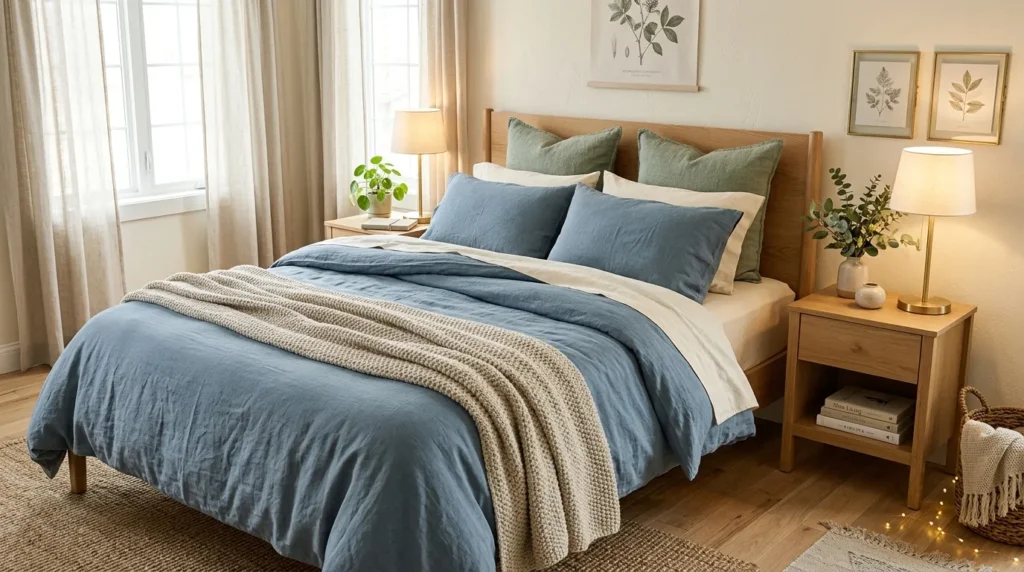
Blue bedding is one of the easiest ways to introduce a second color into a sage bedroom. Because the bed is naturally the largest visual element, it can establish the balance between green and blue without requiring additional major changes.
Soft blue, dusty blue, denim, slate, and muted navy all create different moods.
The key is to layer shades rather than searching for one exact blue. Combining several related tones makes the bed feel more relaxed and collected.
Neutral bedding also plays an important role. Cream and ivory prevent the two cool colors from making the room feel too chilly.
How To Style It
Start with warm ivory sheets.
Add a muted blue duvet or quilt, then layer sage pillows toward the back.
Place a cream or oatmeal throw across the foot of the bed.
For a coastal-inspired bedroom, choose pale blue and sage with light oak.
For a sophisticated room, use navy accents with medium sage and walnut.
Avoid making every pillow blue or green. A few neutral pillows can give the eye a place to rest.
3. Creamy Neutral Layers
Quick Benefits
- Warms up cool colors
- Creates visual breathing room
- Makes the bedroom feel cozy
- Highlights texture
- Works with any style
Why It Works
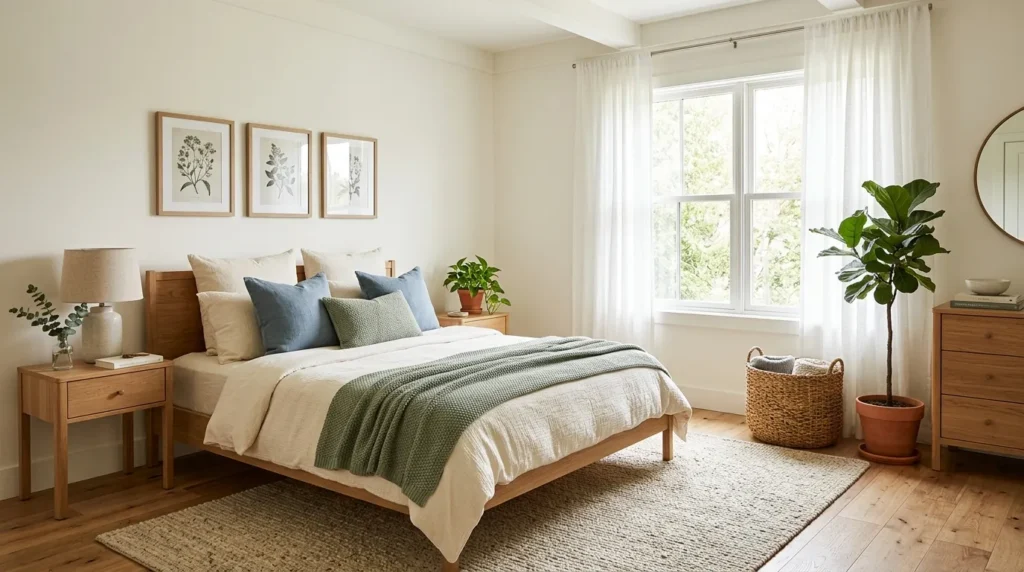
Sage and blue can both lean cool, particularly under certain lighting. Warm neutrals are therefore essential when you want the room to feel inviting.
Cream, ivory, oatmeal, beige, and warm taupe can soften the palette without competing with it.
Rather than using one flat neutral, layer several shades and textures. A cream duvet, beige rug, oatmeal throw, and natural linen curtains can create plenty of depth.
This approach also makes future decorating changes easier because the neutral foundation can support different accent colors.
How To Style It
Use ivory as the main bedding color and introduce blue and sage through pillows and throws.
Add a beige upholstered bench or textured area rug.
Choose warm white curtains instead of bright optic white.
Natural wood furniture can reinforce the warm side of the palette.
If your walls are dark sage, increase the amount of cream and ivory to maintain balance.
If your walls are pale sage, you can use slightly deeper blue accents without making the bedroom feel heavy.
4. Natural Wood Furniture
Quick Benefits
- Adds warmth
- Grounds cool colors
- Introduces organic texture
- Works with modern and traditional styles
- Makes the room feel more collected
Why It Works
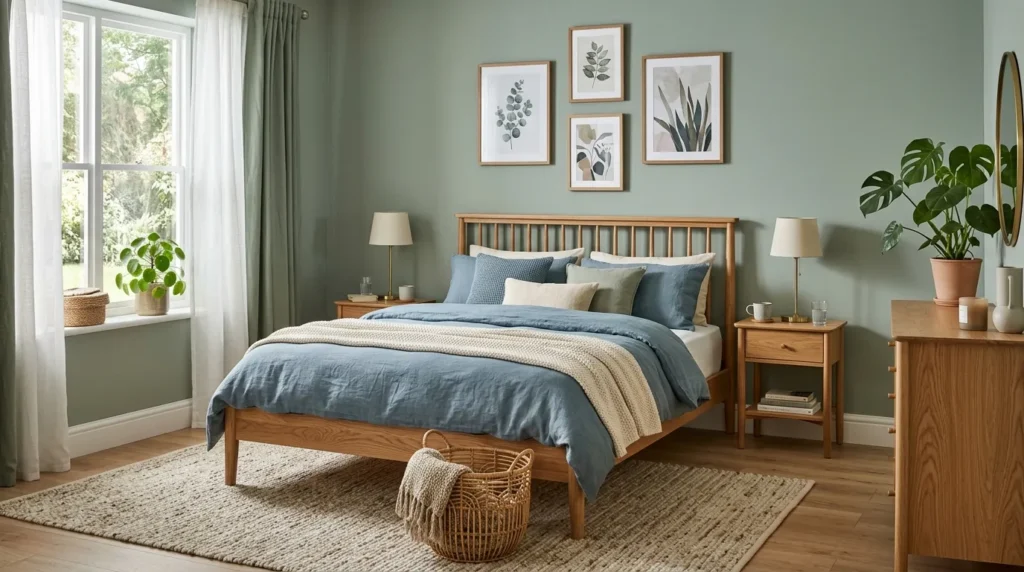
Natural wood is one of the most reliable ways to balance sage and blue.
The warmth of wood offsets the coolness of the colors, while the organic grain complements sage’s connection to nature.
Light oak gives the bedroom an airy, casual quality. Walnut creates a richer and more sophisticated atmosphere. Medium-toned wood can work beautifully if you want something between the two.
Wood also provides visual texture without requiring another accent color.
How To Style It
Use a natural wood bed as the main furniture piece.
Add wood nightstands and a dresser in similar or complementary tones.
For a relaxed bedroom, combine pale oak with sage walls, dusty blue bedding, and cream textiles.
For a moodier room, use walnut furniture with deeper sage and navy accents.
Add small wooden details through picture frames, stools, trays, or plant stands.
Don’t worry about matching every wood tone perfectly. A thoughtful combination often feels more natural than a complete matching set.
5. Blue Upholstered Headboard
Quick Benefits
- Creates an elegant focal point
- Adds softness
- Introduces blue without painting
- Works with neutral walls
- Makes the bed feel substantial
Why It Works
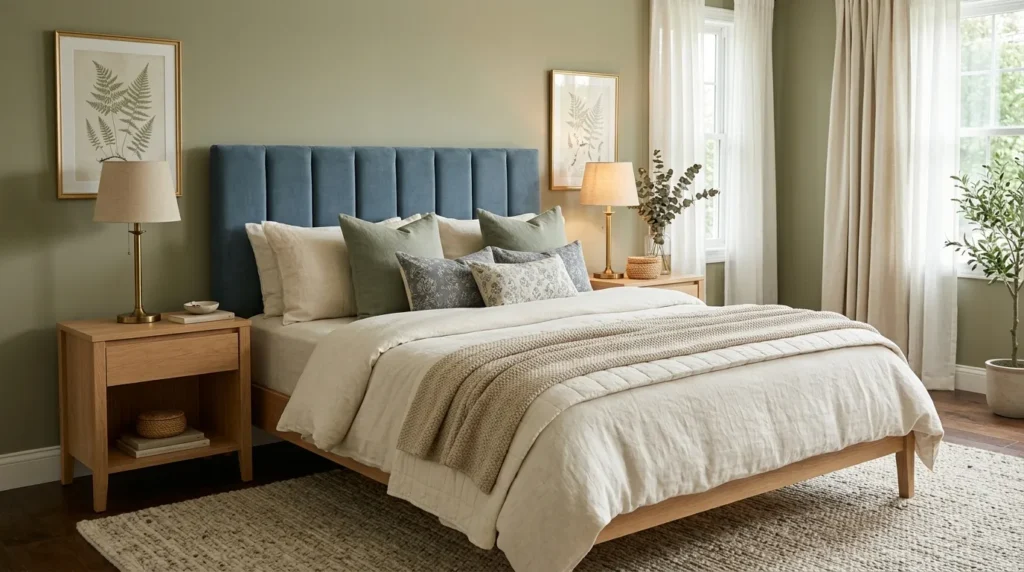
A blue upholstered headboard gives the bedroom a strong color anchor while allowing the walls to remain neutral or sage.
Fabric also changes how the color feels. Linen or cotton creates a relaxed look, while velvet can make navy or dusty blue feel richer and more dramatic.
Because the headboard is already connected to the bed, you can repeat sage through pillows, artwork, or curtains without making the room look too coordinated.
How To Style It
Place a dusty blue or muted navy upholstered headboard against a warm white or sage wall.
Layer the bed with cream bedding and sage accent pillows.
Add natural wood nightstands and simple brass or black lamps.
For a contemporary bedroom, choose a clean rectangular headboard.
For a softer look, choose a rounded or gently curved silhouette.
Keep the surrounding furniture relatively understated so the headboard remains the focal point.
6. Botanical Artwork
Quick Benefits
- Connects green and blue naturally
- Adds personality
- Introduces pattern
- Creates a focal point
- Easy to change
Why It Works
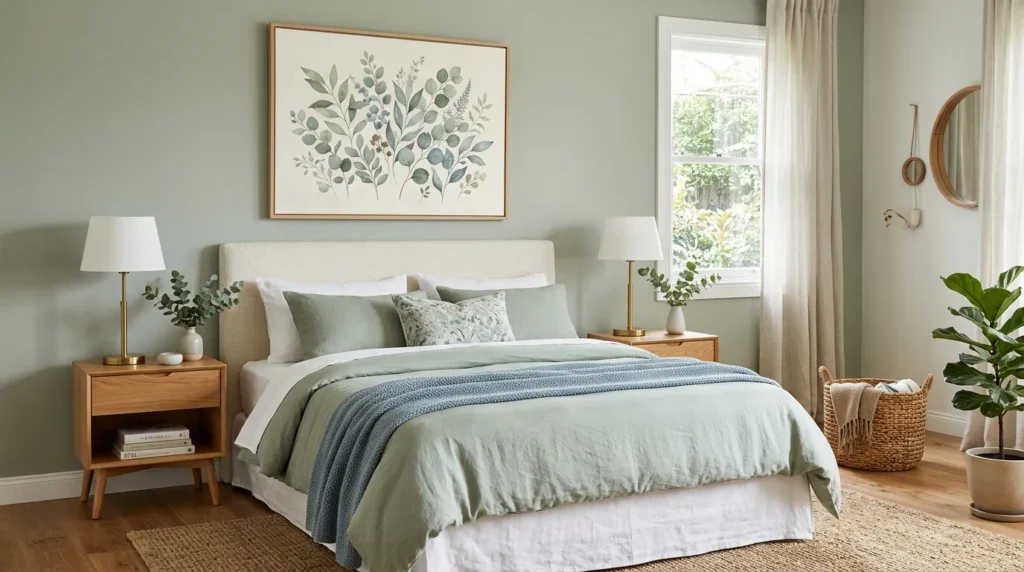
Botanical artwork is an effortless way to bring sage and blue together because nature-inspired illustrations often contain both muted greens and cool blue tones.
A botanical print can also introduce pattern without overwhelming the room.
This makes it especially useful if your bedding and walls are solid colors.
The artwork doesn’t need to contain exactly the same shades as your paint and bedding. Slight variations can actually make the room feel more layered.
How To Style It
Hang one large botanical print above the bed for a clean statement.
Alternatively, create a small gallery wall using botanical illustrations, landscapes, and abstract pieces that include green and blue.
Use natural wood frames for an organic feel.
For a more polished room, choose thin brass or black frames.
Keep the surrounding wall relatively uncluttered so the artwork has room to breathe.
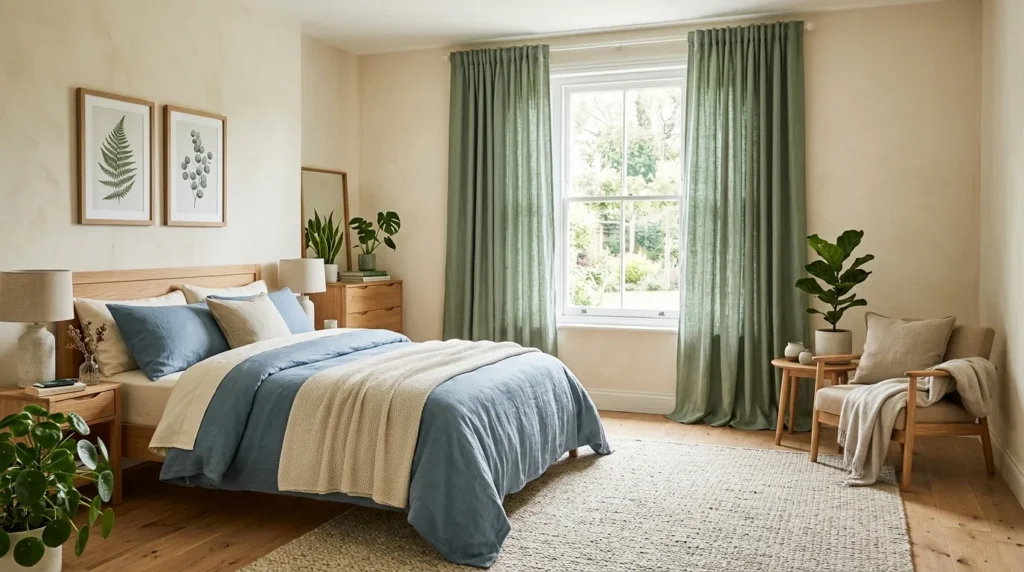
7. Sage Green Curtains
Quick Benefits
- Adds vertical color
- Softens windows
- Creates privacy
- Introduces fabric texture
- Helps connect the palette
Why It Works
Curtains can make a bedroom feel much more finished, and sage green panels are an especially easy way to reinforce the palette.
Because curtains occupy a large vertical area, they can help distribute green throughout the room without requiring additional furniture.
Linen and cotton are particularly effective because their natural texture keeps the green feeling relaxed.
If the walls are already sage, consider cream curtains instead so the room doesn’t become too monochromatic.
How To Style It
Use full-length sage curtains with a soft, slightly textured fabric.
Hang the rod wider than the window when possible so the panels frame rather than cover the glass.
Pair the curtains with dusty blue bedding and warm cream walls.
Add natural wood furniture and a neutral rug.
For a modern room, use simple panels with minimal pattern.
For a cottage-inspired bedroom, lightly gathered linen curtains can create a softer appearance.
8. Brass Accent Details
Quick Benefits
- Adds warmth
- Prevents the palette from feeling cold
- Creates subtle sophistication
- Works with modern or traditional decor
- Easy to introduce
Why It Works
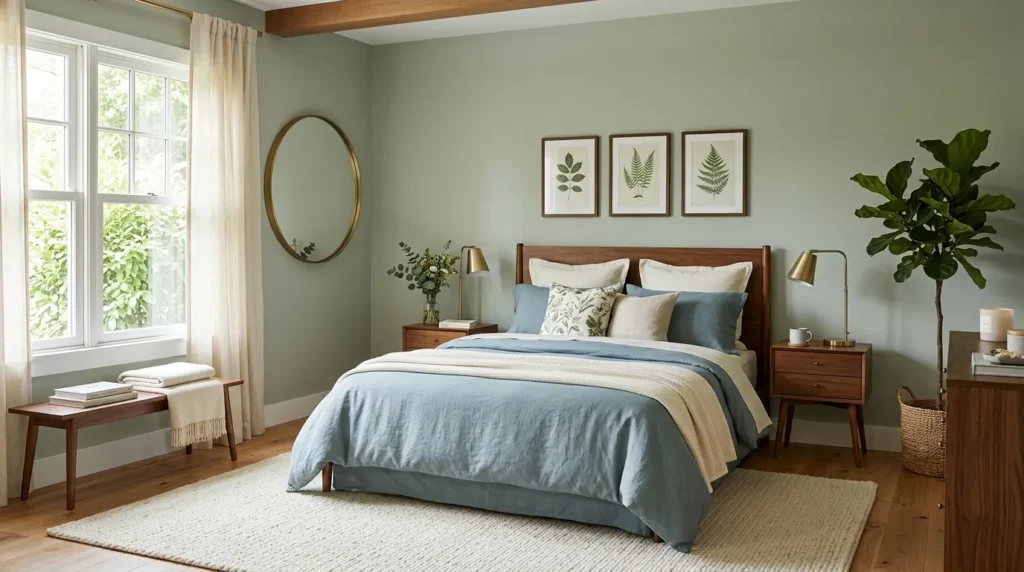
A small amount of brass can make a sage-and-blue bedroom feel warmer and more polished.
Because both main colors can have cool undertones, a warm metallic provides useful contrast.
You don’t need a lot. A bedside lamp, mirror frame, drawer hardware, or small picture frame can be enough to repeat the warm accent.
Brushed brass and aged brass tend to feel softer and more timeless than highly reflective gold.
How To Style It
Choose one or two brass elements as your primary metallic accents.
Matching bedside lamps can create symmetry.
A round brass mirror above a dresser can add visual interest.
Repeat the finish through drawer pulls or a small decorative object.
If you prefer a more casual bedroom, combine brass with natural wood and linen.
If your style is modern, use clean-lined brass fixtures and keep the rest of the accessories restrained.
9. Layered Natural Textures
Quick Benefits
- Makes the room feel cozy
- Adds visual depth
- Softens cool colors
- Creates an organic atmosphere
- Prevents the palette from looking flat
Why It Works
Color alone doesn’t make a bedroom feel comfortable. Texture is what gives the palette dimension.
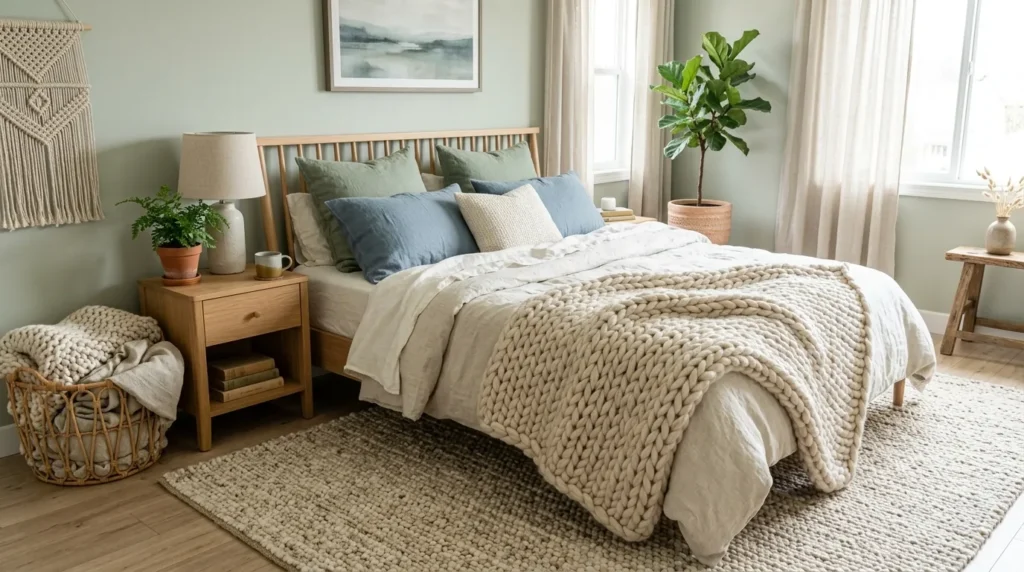
Linen, cotton, wool, boucle, jute, rattan, and woven materials all work beautifully with sage and blue.
Natural textures are especially useful here because they reinforce the earthy side of sage while preventing blue from feeling too crisp or coastal.
Mixing materials also makes the room feel more lived-in and personal.
How To Style It
Place a textured rug beneath the bed.
Layer linen bedding with a knitted or woven throw.
Use a rattan basket for blankets or laundry.
Add a boucle chair if you have space.
Combine smooth wood furniture with soft textiles and slightly rough woven accessories.
Keep the color palette restrained while letting the textures provide the visual interest.
10. Blue and Green Gallery Wall
Quick Benefits
- Creates personality
- Connects both colors
- Works above beds and dressers
- Adds visual interest
- Easy to customize
Why It Works
A gallery wall gives you an opportunity to bring sage and blue together in a more artistic way.
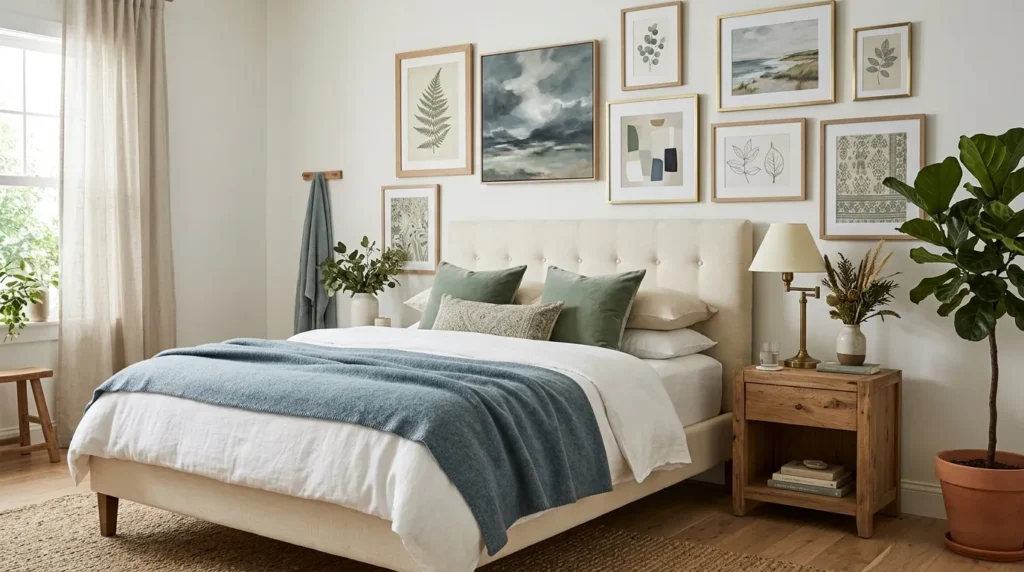
Instead of choosing pieces that all look identical, combine botanical prints, abstract artwork, landscapes, photographs, and simple typography.
The goal is to repeat the colors subtly rather than creating a wall where every piece is strongly green or blue.
This makes the bedroom feel personal and collected.
How To Style It
Start with one larger piece containing sage or blue.
Build around it with smaller botanical prints, landscape artwork, or abstract designs.
Use a mix of natural wood, brass, or simple black frames.
Leave consistent spacing between pieces for a polished arrangement.
For a small bedroom, keep the gallery wall compact rather than filling an entire wall.
Place it above a dresser or beside the bed if the wall above the headboard is already visually busy.
How to Balance Sage Green and Blue
The easiest way to make sage and blue feel sophisticated is to decide which shade will dominate.
If you love green, let sage appear on the walls, curtains, or upholstered furniture while blue becomes the bedding and artwork accent.
If you prefer blue, reverse the relationship. Use blue on the bed or a feature wall and bring sage in through curtains, pillows, plants, and artwork.
Then introduce warm neutrals.
Cream, ivory, beige, oatmeal, and natural wood are particularly useful because they prevent the palette from becoming too cool.
A simple visual formula is:
Dominant color + secondary color + warm neutral + natural texture.
You can then add a small metallic accent if desired.
Don’t feel pressured to make every item coordinate perfectly. Slight variations in green and blue usually create a more sophisticated appearance.
Choosing the Right Blue
Blue can dramatically change the mood of the bedroom.
Dusty blue feels relaxed and soft.
Powder blue creates a light, airy atmosphere.
Denim blue feels casual and comfortable.
Slate blue adds sophistication.
Navy blue creates depth and drama.
For a bright bedroom, dusty or powder blue is usually easiest.
For a more luxurious or moody room, navy or slate blue can work beautifully with medium or deep sage.
If you’re unsure, start with a muted blue rather than a highly saturated shade.
Making the Palette Work in a Small Bedroom
Small bedrooms can absolutely use two colors.
The key is to give the eye plenty of neutral space.
Choose pale sage walls, cream bedding, and dusty blue accents.
A large mirror can help reflect light.
Use furniture with visible legs to keep the floor visually open.
Choose full-length curtains to emphasize ceiling height.
Avoid placing large amounts of dark navy and deep sage next to each other unless you intentionally want a dramatic, cocooning atmosphere.
For a rental, focus on removable elements such as bedding, curtains, rugs, artwork, and accent furniture.
Frequently Asked Questions
Do sage green and blue go together in a bedroom?
Yes. Sage green and blue create a calm, nature-inspired palette. Sage brings earthy warmth while blue contributes a restful, cool tone. The combination works especially well with cream, beige, natural wood, and warm lighting.
What shade of blue looks best with sage green?
Dusty blue, slate, denim, and muted navy can all work beautifully. For a light and airy bedroom, choose powder or dusty blue. For a richer space, try slate or navy with a deeper sage.
What bedding goes with sage green walls?
Cream, ivory, beige, and muted blue bedding are excellent choices. You can layer several of these colors instead of choosing one. For example, use cream sheets, a dusty blue duvet, and sage pillows.
Is sage green and blue good for a small bedroom?
Yes. Use lighter shades, warm neutrals, and plenty of natural light. Pale sage walls with cream bedding and dusty blue accents can create a peaceful look without visually overwhelming the space.
What wood color goes with sage green and blue?
Light oak works well for a bright, relaxed bedroom, while walnut creates a richer appearance. Medium natural wood can provide a balanced option between the two.
How can I make sage and blue feel warmer?
Add cream, beige, natural wood, woven textures, warm lighting, and small amounts of brass. These elements offset the cooler qualities of green and blue and make the room feel more inviting.
Can sage green and blue work in a modern bedroom?
Absolutely. Use clean-lined furniture, muted sage, dusty blue or navy accents, warm white textiles, natural wood, and minimal accessories. Keep patterns restrained and let texture provide the visual interest.
Conclusion
Sage green and blue can transform a bedroom into a peaceful retreat without sacrificing personality.
The combination works because it brings together two colors that naturally feel at home in a restful space. Sage adds an earthy, botanical quality, while blue introduces calm and depth.
Start by deciding which shade you want to dominate. Use sage on the walls if you want a green foundation, or let blue take center stage through an upholstered headboard or bedding.
Then soften the palette with cream, ivory, beige, and natural wood. Add linen, woven materials, greenery, and warm lighting to create the layers that make a bedroom feel comfortable rather than simply color-coordinated.
You don’t need a complete makeover to get started. A new duvet, pair of curtains, botanical print, or set of pillows can be enough to test the combination.
Build slowly and pay attention to how the colors look throughout the day. Your bedroom should ultimately feel like a place you want to retreat to—not a room designed only for photographs.
With thoughtful color balance, natural textures, and a few personal details, sage and blue can create a bedroom that feels calm, stylish, and timeless.
Related Articles
- 11 Sage Green Bedroom Ideas for a Calm Stylish Retreat
- 10 Sage Green and Gold Bedroom Ideas to Elevate Your Space
- 11 Sage Green and Lavender Bedroom Ideas to Inspire You
- 11 Botanical Bedroom Ideas to Bring Nature Indoors
- 10 Pink and Sage Green Bedroom Ideas to Inspire Your Space
Pinterest Image Prompts
1. Sage Green Walls
Image Description: A serene bedroom with muted sage green walls, warm ivory bedding, dusty blue pillows and throw, natural oak furniture, botanical artwork, leafy plants, woven baskets, and subtle brass lighting. Use sage, dusty blue, cream, beige, pale wood, and warm brass. Emphasize linen, wood grain, and natural textures. Photograph from a wide three-quarter corner angle with soft morning daylight and realistic editorial interior photography.
2. Blue Layered Bedding
Image Description: A cozy bedroom centered around layered dusty blue bedding with warm ivory sheets, sage green pillows, an oatmeal throw, natural wood nightstands, leafy greenery, botanical artwork, and soft brass lamps. Use muted blue rather than bright navy, paired with sage, cream, beige, and oak. Highlight linen and knitted textures. Photograph from a slightly elevated three-quarter angle with gentle natural daylight and sophisticated Pinterest-worthy bedroom styling.
3. Creamy Neutral Layers
Image Description: A peaceful sage and blue bedroom featuring warm ivory bedding, cream duvet, beige textured rug, dusty blue cushions, sage throw, natural oak furniture, woven baskets, leafy plants, and soft botanical artwork. Create a warm neutral foundation with muted green and blue accents. Emphasize linen, cotton, wood, and woven textures. Photograph from a wide corner perspective with bright natural daylight and realistic editorial interior photography.
4. Natural Wood Furniture
Image Description: A warm sage green and blue bedroom with a beautiful natural oak bed, wooden nightstands, muted sage walls, dusty blue bedding, cream textiles, botanical artwork, leafy plants, and subtle brass lamps. Highlight natural wood grain against the cool colors. Use sage, blue, ivory, beige, and warm oak. Photograph from a wide three-quarter angle with gentle afternoon light and polished magazine-style interior styling.
5. Blue Upholstered Headboard
Image Description: A sophisticated bedroom featuring a dusty blue upholstered headboard against warm sage green walls, cream linen bedding, sage pillows, natural wood nightstands, brass lamps, botanical artwork, and a textured neutral rug. Emphasize soft fabric and layered textiles. Use sage, slate blue, ivory, beige, natural wood, and warm brass. Photograph straight-on with soft daylight and realistic high-end interior photography.
6. Botanical Artwork
Image Description: A stylish sage and blue bedroom featuring an oversized botanical print with muted green leaves and dusty blue details above a cream upholstered bed. Include sage pillows, blue throw, natural wood nightstands, brass lamps, leafy plants, and woven accessories. Keep the room calm and uncluttered. Photograph from a straight-on perspective with soft morning light, realistic artwork texture, and Pinterest-worthy editorial bedroom styling.
7. Sage Green Curtains
Image Description: A peaceful bedroom with full-length sage green linen curtains framing a bright window, warm cream walls, dusty blue bedding, natural oak furniture, botanical artwork, leafy plants, and a textured neutral rug. Emphasize flowing fabric and filtered daylight. Use sage, dusty blue, ivory, beige, and pale wood. Photograph from a three-quarter corner angle with realistic shadows and elegant interior magazine styling.
8. Brass Accent Details
Image Description: A refined sage and blue bedroom with muted sage walls, dusty blue bedding, cream linen textiles, natural wood furniture, brushed brass bedside lamps, a round brass mirror, botanical artwork, and leafy greenery. Keep metallic accents subtle and sophisticated. Use sage, blue, ivory, walnut, and warm brass. Photograph from a wide corner perspective with soft natural daylight and realistic Pinterest interior photography.
9. Layered Natural Textures
Image Description: A cozy sage and blue bedroom featuring layered linen bedding, a chunky knitted throw, textured wool rug, rattan basket, natural wood furniture, sage pillows, dusty blue accents, leafy plants, and woven accessories. Emphasize tactile contrast between linen, wool, wood, and rattan. Use muted sage, dusty blue, ivory, oatmeal, and natural brown. Photograph from a bright corner angle with soft daylight and polished lifestyle interior styling.
10. Blue and Green Gallery Wall
Image Description: A sophisticated bedroom with a curated gallery wall featuring botanical prints, landscapes, and abstract artwork in muted sage green, dusty blue, cream, and beige. Include natural wood and thin brass frames, a warm ivory upholstered bed, sage pillows, blue throw, leafy plants, and wooden nightstands. Create a collected yet uncluttered mood. Photograph from a three-quarter perspective with soft natural light and realistic Pinterest editorial photography.