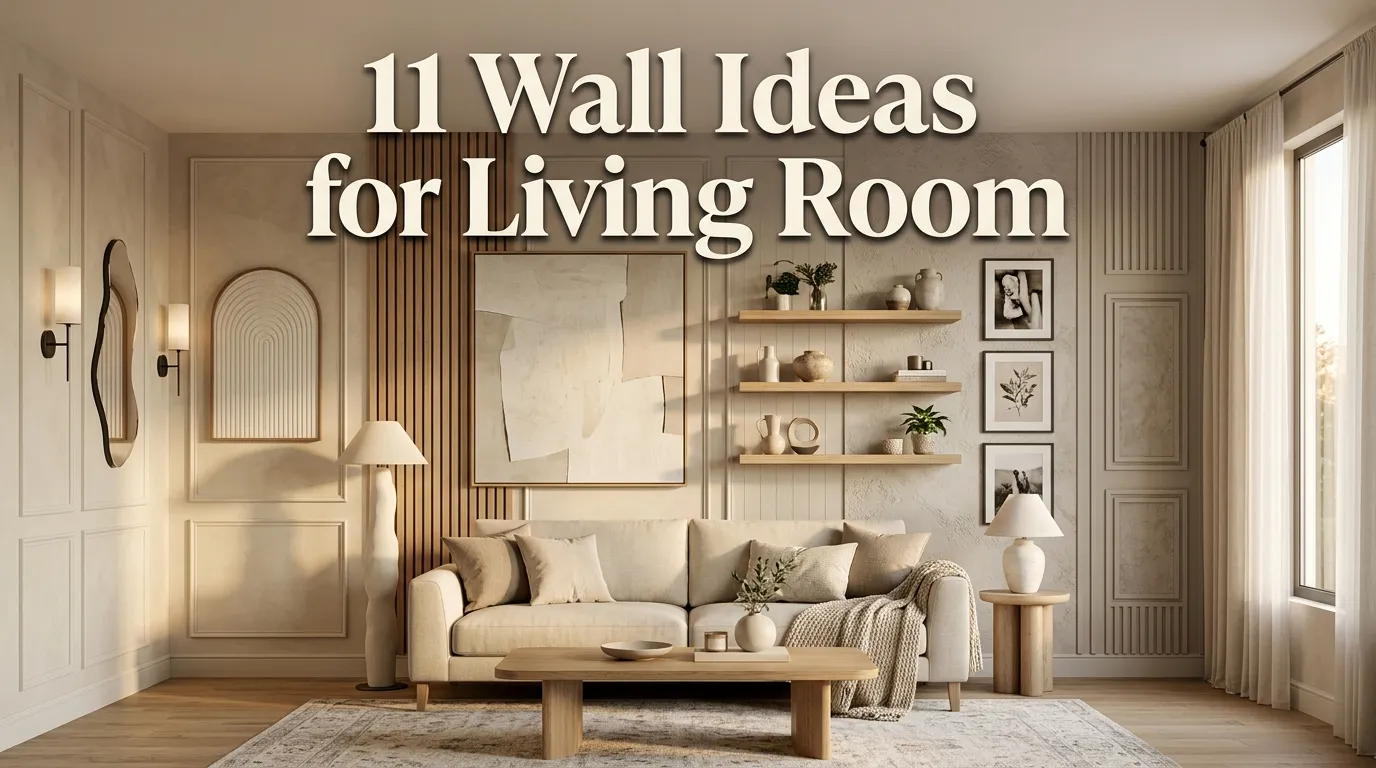
11 Wall Ideas for Living Room
A living room can have beautiful furniture, soft lighting, and thoughtful accessories, yet the walls can still feel like an afterthought. I’ve noticed that this is one of the easiest places to make a room feel unfinished. The good news is that you don’t always need a major renovation to change that. A well-chosen wall treatment, a collection of meaningful artwork, or even a simple change in color can completely shift the atmosphere of the room.
Warm living rooms especially benefit from wall decor that adds texture and personality without making the space feel crowded. Think softly painted walls, natural wood, woven materials, oversized artwork, vintage-inspired pieces, and carefully layered gallery arrangements. These details can make a room feel more comfortable while giving the eye something interesting to explore.
The best part is that these ideas can be adapted to different homes and budgets. If you live in a small apartment, a rental, a suburban house, or an open-concept home, you can usually borrow the same design principles and adjust the materials or scale. In my experience, the most successful rooms aren’t necessarily the ones filled with the most decoration. They’re the ones where every wall treatment feels connected to the furniture, lighting, flooring, and overall mood.
In this guide, we’ll look at warm and inviting ways to decorate living room walls, from simple painted finishes to textured accents and personality-filled displays. You’ll also find practical styling suggestions so you can decide which approach makes sense for your room before buying anything.
Whether your walls currently feel completely bare or simply need a little more character, these ideas can help you create a living room that feels layered, comfortable, and distinctly yours.
Table of Contents

1. Warm Neutral Walls
Create a calm foundation with creamy, beige, or soft greige paint that makes the entire room feel warmer.
2. Wood Accent Wall
Bring natural character into the living room with wood tones that add depth, texture, and an inviting atmosphere.
3. Oversized Artwork
Make one large piece the focal point of the room for an effortless look that feels collected without being cluttered.
4. Textured Plaster Finish
Add subtle dimension with a softly textured wall finish that gives neutral rooms more visual interest.
5. Cozy Gallery Wall
Combine artwork, photographs, and meaningful objects to create a personal wall arrangement with plenty of warmth.
6. Woven Wall Decor
Use baskets, woven pieces, and natural fibers to introduce softness and organic texture.
7. Built-In Shelving
Turn an empty wall into useful display space with shelves that combine storage, books, artwork, and decorative objects.
8. Picture Ledge Display
Create an easy-to-change arrangement using layered artwork, photographs, and small decorative accents.
9. Vintage-Inspired Wall
Add character with antique-looking artwork, aged frames, and pieces that make the room feel collected over time.
10. Soft Accent Color
Use a muted earthy color to give one wall personality while keeping the rest of the room calm and welcoming.
11. Fireplace Feature Wall
Make the fireplace wall the visual anchor by combining warm materials, artwork, lighting, and carefully chosen accessories.
1. Warm Neutral Walls
Quick Benefits
- Creates an instantly softer atmosphere
- Works with many furniture styles
- Makes natural materials feel richer
- Helps small rooms feel calm rather than busy
- Provides a flexible backdrop for seasonal decorating
Why It Works
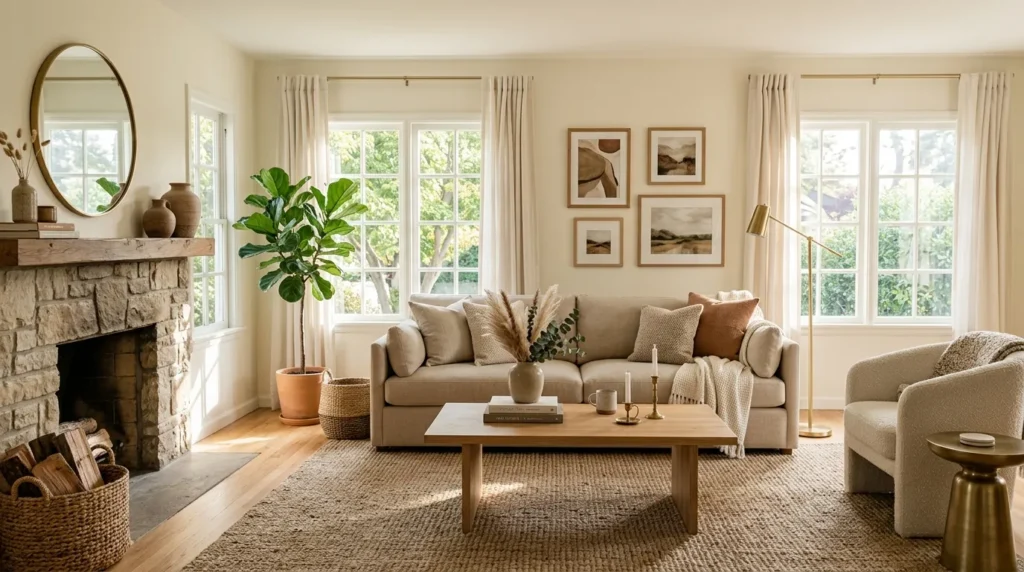
Warm neutrals are one of the easiest ways to make a living room feel comfortable without relying heavily on accessories. Shades such as creamy white, warm beige, mushroom, oatmeal, and soft greige have enough warmth to prevent the room from feeling stark, while still keeping the walls light and versatile.
I’ve noticed that warm neutrals are especially effective when a room already contains wood furniture, woven accents, leather, linen, or other natural materials. Instead of competing with those elements, the wall color quietly connects them. The result feels layered rather than overly decorated.
This approach is also useful when you want flexibility. A warm neutral wall can support everything from relaxed farmhouse furniture to contemporary sofas and traditional wood pieces. It gives artwork and decorative objects room to stand out while maintaining a cohesive background.
How To Style It
Start by choosing a wall color with a noticeable warm undertone rather than a cool gray or blue-based white. Test samples at different times of day because natural light can dramatically change how paint appears.
Pair the walls with a comfortable sofa in cream, camel, taupe, or warm gray. Add a natural wood coffee table and layer the room with linen curtains, woven baskets, textured pillows, and a soft area rug.
For artwork, look for muted landscapes, abstract prints, botanical illustrations, or photography with earthy colors. Brass, aged bronze, and warm wood frames generally complement this palette beautifully.
If the room feels too plain, don’t immediately add more objects. Instead, introduce texture. A plaster-style lamp, chunky throw, woven wall piece, or carved wood accessory can provide much more visual interest than several small decorations.
2. Wood Accent Wall
Quick Benefits
- Adds natural warmth and texture
- Creates a strong focal point
- Works beautifully with neutral furniture
- Can make a plain room feel custom-designed
- Complements modern and traditional interiors
Why It Works
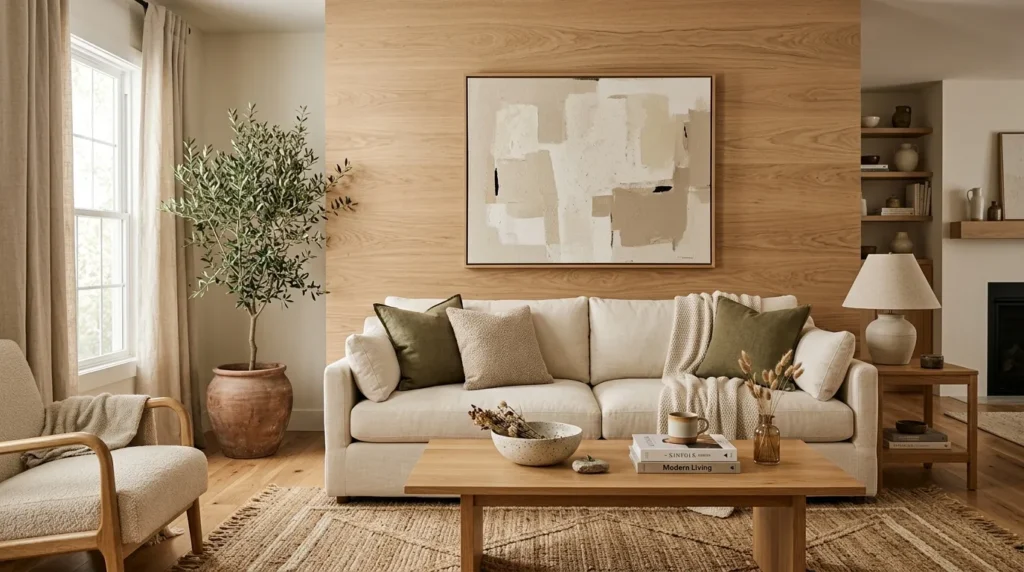
Wood has a natural ability to make a room feel warmer and more grounded. A wood accent wall can transform an otherwise ordinary living room into a space that feels intentional, especially when the rest of the room uses a restrained color palette.
The key is choosing a wood tone that works with the existing furniture. Light oak creates an airy Scandinavian-inspired feeling, while medium walnut brings richness and contrast. Reclaimed or distressed wood can introduce a more rustic character, while clean vertical or horizontal slats can give the wall a modern architectural appearance.
A mistake many homeowners make is treating the wood wall as an isolated feature. It looks much better when its color appears elsewhere in the room. Even a small wooden side table, picture frame, shelf, or decorative bowl can visually connect the wall to the rest of the space.
How To Style It
Consider using the wood behind the sofa, television, fireplace, or another naturally important area. If you’re working with a small living room, vertical wood slats can visually emphasize ceiling height without making the room feel heavy.
Keep the surrounding furniture relatively simple. A cream sofa, textured neutral rug, and soft upholstered chairs allow the wood to become the feature without overwhelming the room.
For a warmer look, add linen curtains, woven baskets, ceramic accessories, and a few plants. Black metal accents can provide contrast, but use them selectively so the room doesn’t lose its cozy quality.
If you prefer a subtle treatment, try a light oak or white-oak finish instead of dark wood. For a more dramatic living room, medium or deep walnut can work beautifully with cream upholstery and warm lighting.
3. Oversized Artwork
Quick Benefits
- Creates an immediate focal point
- Makes a large blank wall feel intentional
- Reduces the need for multiple small accessories
- Adds personality without visual clutter
- Works especially well above sofas and consoles
Why It Works
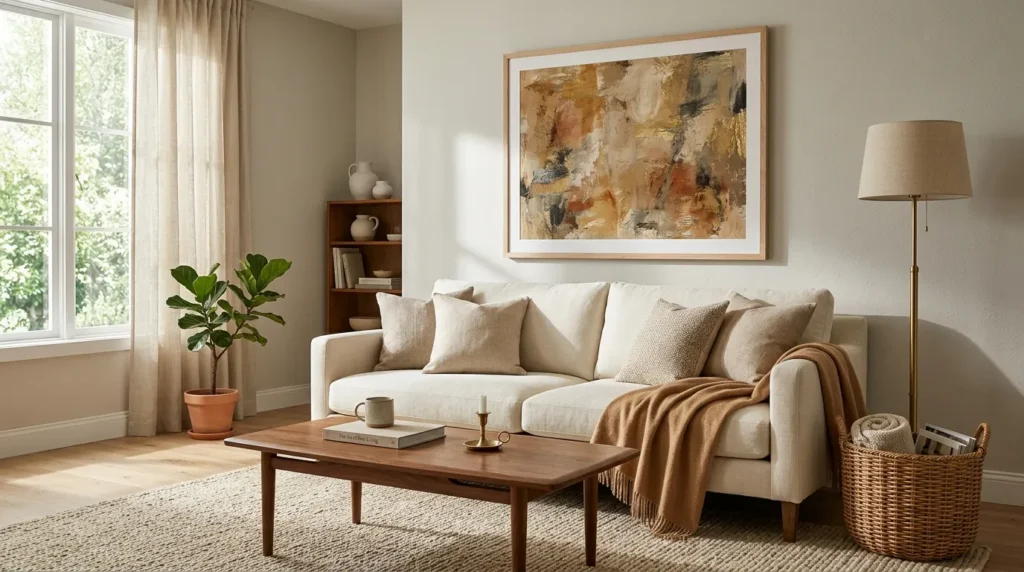
One large piece of artwork can often have more impact than a wall filled with small decorations. Oversized art gives the eye one clear destination and can make a living room feel finished without requiring dozens of accessories.
This is particularly useful when you have a large wall behind the sofa. Several tiny frames can look disconnected if they’re too small for the available space, while one generously scaled painting or print can anchor the entire seating area.
For a cozy atmosphere, choose artwork with warm neutrals, muted landscapes, soft abstract shapes, botanical details, or earthy tones. The artwork doesn’t have to match the sofa exactly. In fact, a little contrast usually makes the room more interesting.
I’ve found that the frame matters almost as much as the artwork itself. Natural oak, walnut, aged wood, and softly finished metal can each change the character of the piece.
How To Style It
When hanging oversized artwork above a sofa, choose a piece that feels proportional to the furniture rather than something that leaves a large amount of empty space on either side. As a general design principle, the artwork should visually relate to the width of the seating area.
Keep the surrounding wall relatively quiet. Instead of adding several competing frames, let the main artwork breathe.
Below it, style the sofa with a combination of solid and patterned pillows in warm shades such as cream, rust, olive, caramel, or muted brown. A textured throw can reinforce the relaxed feeling.
If the artwork contains several colors, repeat one or two of those colors in small accessories around the room. This creates cohesion without making the space look overly coordinated.
For renters, a large lightweight framed print can provide much of the same visual effect without requiring a permanent wall treatment. The goal is to make the artwork feel like an intentional part of the room rather than something placed on an empty wall simply to fill space.
Absolutely — here is Part 2, continuing with the same cozy, warm direction and section structure.
4. Textured Plaster Finish
Quick Benefits
- Adds subtle depth to plain walls
- Creates a soft, handcrafted appearance
- Works beautifully with neutral palettes
- Makes minimalist rooms feel more layered
- Complements wood, linen, and natural stone
Why It Works
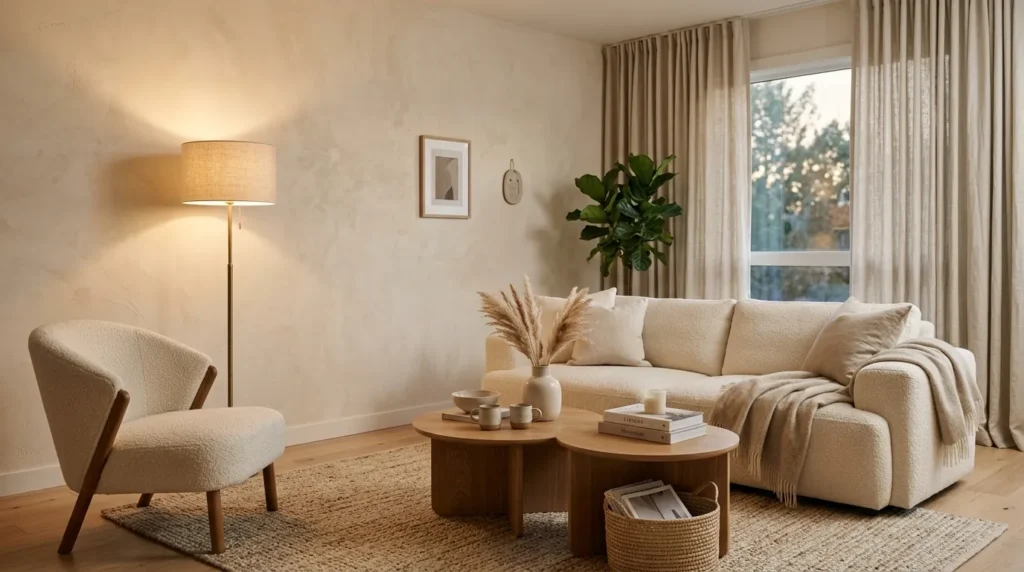
A textured plaster finish can give a living room the quiet character of an older, thoughtfully designed home without requiring bold patterns or bright colors. Instead of relying on artwork or accessories for visual interest, the wall itself becomes part of the room’s texture story.
The beauty of plaster-inspired finishes is their subtle variation. Gentle movement across the surface catches natural and artificial light differently throughout the day, creating depth without making the room feel busy. This works especially well in cozy spaces where you want the walls to feel soft and tactile.
Warm white, creamy beige, sand, mushroom, and muted taupe are particularly effective choices. They allow the texture to remain the star while giving furniture and accessories a calm backdrop.
I’ve noticed this type of finish works especially well when repeated materials appear elsewhere in the room. Linen upholstery, ceramic accessories, natural wood, woven baskets, and stone details can all reinforce the handcrafted feeling.
How To Style It
Use a plaster-inspired finish on the main focal wall rather than automatically covering every surface. Behind a sofa, fireplace, or reading nook can be especially effective.
Keep the furniture comfortable and uncomplicated. A deep cream sofa paired with a chunky woven rug and natural wood coffee table creates an inviting foundation. Add cushions in oatmeal, caramel, muted olive, or warm brown for gentle contrast.
Lighting is important because texture becomes much more noticeable when light moves across the surface. A floor lamp positioned near the wall can create soft evening shadows, while warm ceiling lighting keeps the finish looking inviting at night.
If authentic plaster isn’t practical for your project, look for decorative paint techniques or removable textured wall products that create a similar effect. Always test the finish on a small area first so you can see how the texture behaves under your room’s lighting.
5. Cozy Gallery Wall
Quick Benefits
- Adds personality to blank walls
- Makes the room feel collected
- Allows meaningful pieces to be displayed
- Works with many decorating styles
- Can evolve over time
Why It Works
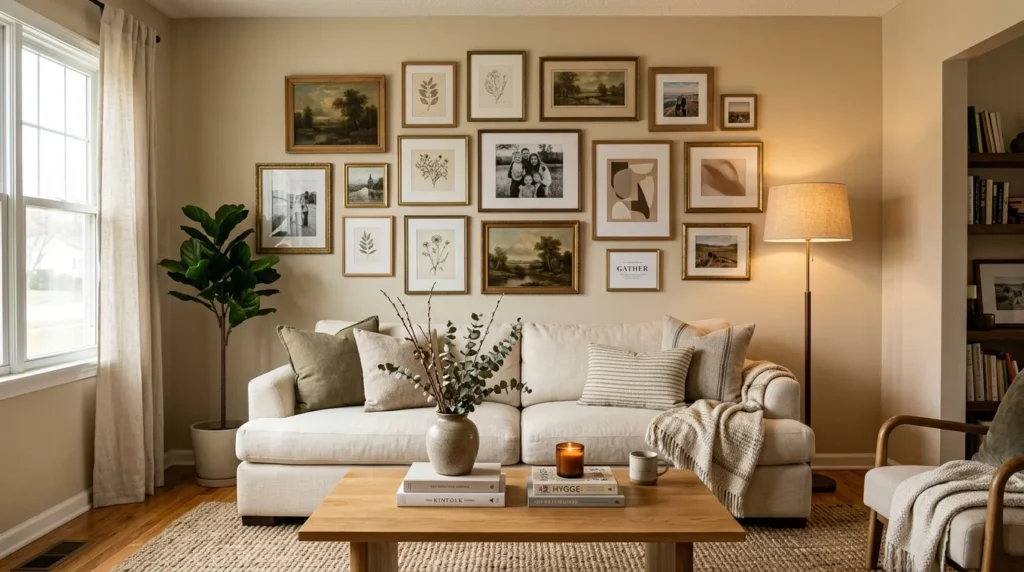
A gallery wall brings a personal quality to a living room that a single decorative object often can’t provide. Instead of making the wall look like a showroom display, you can combine artwork, family photographs, vintage finds, sketches, and meaningful pieces to create something that feels connected to the people who live there.
The secret to a cozy gallery wall is balance rather than perfect uniformity. Matching frames can create a polished appearance, but mixing a few related frame finishes can make the arrangement feel more collected and relaxed.
For a warm living room, consider using artwork with muted landscapes, botanical illustrations, neutral abstracts, vintage photography, or subtle architectural prints. The colors don’t need to be identical, but they should share a visual relationship.
One thing that works especially well is repeating a few colors already present in the room. If your sofa has olive pillows and your rug contains beige and rust, artwork incorporating those shades will make the gallery feel naturally connected.
How To Style It
Start by deciding how much wall space you want the gallery to occupy. A larger arrangement can anchor a sofa, while a smaller collection works well above a console table or beside a reading chair.
Before putting holes in the wall, arrange your frames on the floor. Begin with your largest piece and build outward, keeping relatively consistent spacing between frames.
Don’t be afraid to mix dimensions. A combination of portrait, landscape, and square frames usually feels more relaxed than using identical sizes.
For the warmest effect, combine natural wood, aged brass, cream, or dark brown frames. Add one or two three-dimensional pieces, such as a small woven element or decorative object, if the arrangement needs more texture.
Leave enough breathing room around the collection. A gallery wall should feel intentional rather than packed into every available inch.
6. Woven Wall Decor
Quick Benefits
- Introduces natural texture
- Softens hard wall surfaces
- Creates an organic atmosphere
- Adds warmth without strong color
- Works well in small living rooms
Why It Works
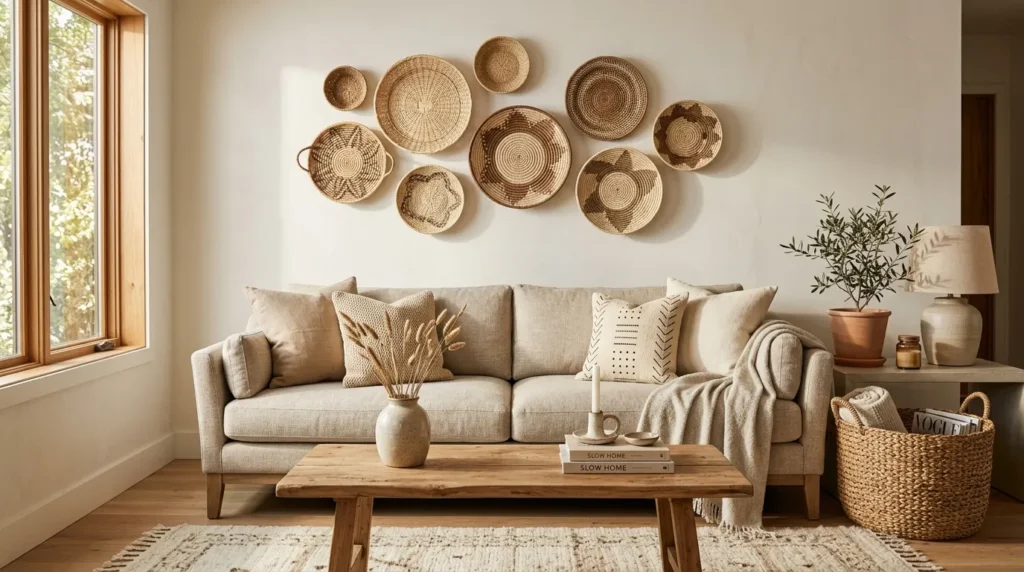
Woven wall decor is an easy way to bring softness and natural texture into a living room. Materials such as rattan, seagrass, cane, jute, and woven cotton have subtle irregularities that make a space feel more relaxed and tactile.
This approach is particularly useful when your room already has a lot of smooth surfaces. A leather sofa, painted walls, glass table, and polished flooring can sometimes make a living room feel visually flat. A woven wall piece breaks up those surfaces and introduces a more organic quality.
Baskets are another versatile option. A collection of shallow woven baskets arranged in an artistic composition can create an interesting focal point without the formality of framed artwork.
In my experience, natural textures work best when they aren’t isolated. Repeating the material in a rug, pendant light, basket, or chair creates continuity throughout the room.
How To Style It
For a relaxed arrangement, choose three to seven woven pieces in different sizes and shapes. Arrange them around a central point rather than creating a perfectly symmetrical grid.
Keep the color palette natural. Tan, wheat, honey, cream, and light brown work beautifully against warm white, beige, or muted earthy walls.
If you have a narrow wall, one tall woven piece can work better than a large horizontal collection. For a wide sofa wall, several rounded baskets can create a gentle rhythm above the furniture.
Balance the texture with softer textiles. Linen curtains, boucle cushions, cotton throws, and a plush rug can keep the room comfortable.
Avoid placing too many competing natural materials in one small area. If the wall already has several woven pieces, let the nearby furniture and accessories remain relatively simple so the overall room still feels calm.
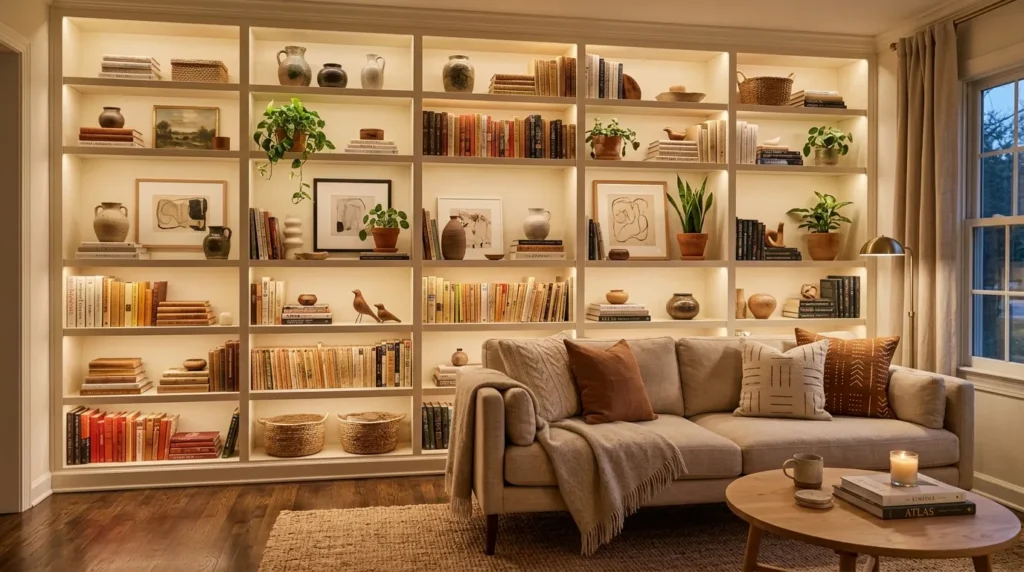
7. Built-In Shelving
Quick Benefits
- Combines storage and decoration
- Makes a blank wall useful
- Provides space for books and artwork
- Creates a custom architectural feeling
- Can visually frame a fireplace or television
Why It Works
Built-in shelving can completely change how a living room wall functions. Instead of treating the wall as a surface that only holds artwork, you turn it into useful storage and display space.
This is particularly valuable in family rooms where books, baskets, games, photographs, and everyday objects need a home. When thoughtfully arranged, shelving can make those necessities part of the design rather than something that needs to be hidden.
The warmest built-ins usually combine practical storage with plenty of breathing room. Every shelf doesn’t need to be full. Empty space helps books, ceramics, artwork, and plants stand out.
A mistake many homeowners make is buying decorative objects before deciding what the shelves actually need to accomplish. Start with function first, then layer in decorative pieces.
How To Style It
Begin by dividing the shelves visually into sections. Place books in both vertical and horizontal stacks, then add a few decorative objects between them.
Use baskets on lower shelves for items that need to be concealed. This is especially helpful in family living rooms where toys, blankets, or electronics accessories can quickly create clutter.
Add natural wood, ceramic, glass, and woven elements for texture. Small plants can soften the hard lines of shelving, while framed artwork leaned against the back panel adds depth.
For a cozy appearance, use warm lighting inside or beneath selected shelves. Avoid illuminating every section equally; a few softly lit areas can create a more intimate evening atmosphere.
If full built-ins aren’t possible, freestanding bookcases placed together can create a similar visual effect. Painting the shelving and wall in the same warm tone can make the installation feel more integrated.
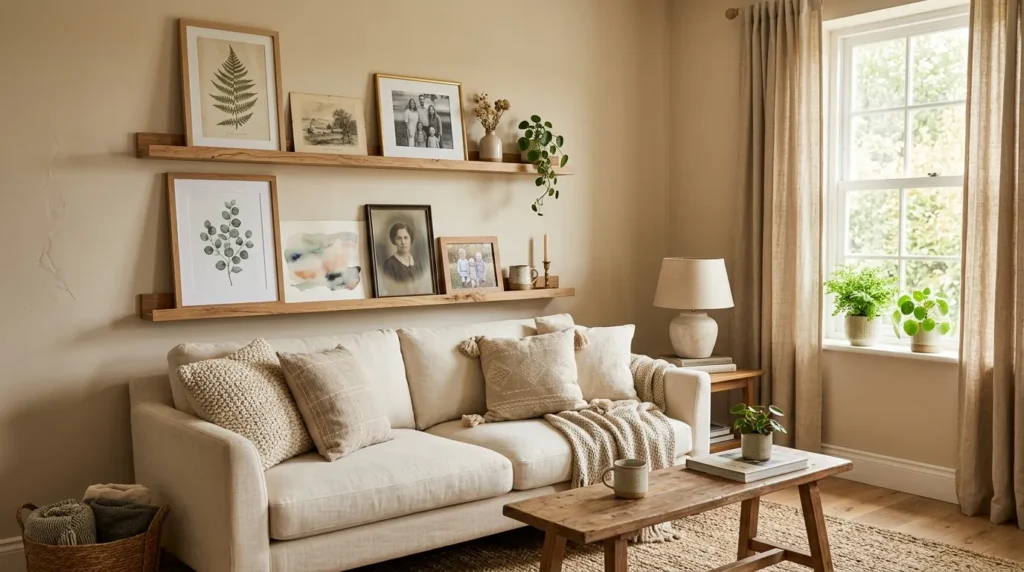
8. Picture Ledge Display
Quick Benefits
- Easy to rearrange
- Ideal for renters
- Creates layered visual interest
- Works with artwork and photographs
- Allows seasonal updates
Why It Works
Picture ledges offer the flexibility of a gallery wall without requiring you to permanently commit to one arrangement. Instead of hanging every frame separately, you can lean artwork against the wall and change the composition whenever your style evolves.
This makes picture ledges especially practical for people who enjoy refreshing their living room throughout the year. You might use botanical prints in spring, warm landscapes in fall, or family photographs when you want the room to feel more personal.
Layering also creates depth. Place larger artwork toward the back and smaller frames in front, allowing portions of each piece to remain visible. This gives the wall a relaxed, collected appearance.
The display doesn’t have to be perfectly symmetrical. In fact, slightly varied heights and overlapping frames often create a warmer feeling than a rigid arrangement.
How To Style It
Choose a ledge that complements the existing furniture. Natural wood is an easy choice for warm interiors, while painted ledges can blend into the wall for a quieter appearance.
Start with two or three larger pieces and layer smaller frames in front. Add a small vase, candleholder, ceramic object, or miniature plant to break up the rectangular shapes.
Keep the overall palette connected to the room. Cream, beige, muted green, brown, rust, and soft black can work together beautifully when balanced carefully.
For a sofa wall, install the ledge high enough to avoid making the furniture feel crowded, while still keeping the artwork visually connected to the seating area.
One of the biggest advantages is that you can change the display without repainting or reorganizing an entire gallery wall. If you get tired of the arrangement, simply move a few pieces around and create a completely different composition.
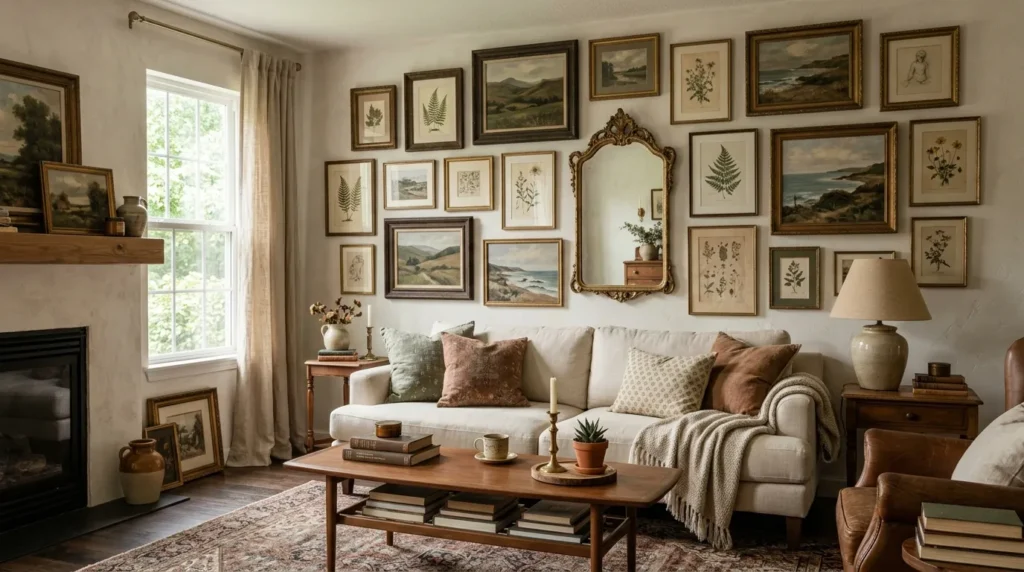
9. Vintage-Inspired Wall
Quick Benefits
- Adds character and personality
- Makes a new home feel more established
- Works beautifully with warm neutrals
- Creates a collected, timeless appearance
- Gives inexpensive finds more decorating value
Why It Works
A vintage-inspired wall can make a living room feel as though it has evolved naturally over time. Instead of relying entirely on new, perfectly coordinated pieces, this approach introduces artwork, frames, mirrors, and decorative objects with a little history or an aged appearance.
The appeal comes from contrast. A modern sofa can look surprisingly inviting beside an antique-style landscape painting or an old-fashioned wooden frame. Likewise, a contemporary living room can gain warmth from sepia photography, botanical prints, or traditional artwork.
You don’t need genuine antiques to achieve the look. Reproduction prints, thrifted frames, vintage-style mirrors, and secondhand artwork can all create a similar atmosphere. What matters most is variation in texture, scale, and finish.
I’ve noticed that vintage elements work especially well when they are balanced with modern pieces. Too many aged finishes can make a room feel themed, while one thoughtfully arranged wall can make the entire space feel more personal.
How To Style It
Begin with one larger vintage-inspired piece as the anchor. A landscape painting, architectural print, botanical illustration, or oversized decorative mirror can work beautifully.
Surround it with smaller pieces using different but related frames. Look for wood, aged brass, antique gold, or dark finishes rather than perfectly matching frames.
Keep the colors relatively muted. Warm cream, tobacco brown, faded green, dusty blue, rust, and ochre can create a comfortable palette without making the room feel overly colorful.
Place the display near furniture with simple silhouettes so the wall has room to stand out. A cream sofa, wooden coffee table, linen curtains, and woven rug can provide a modern foundation.
For a more authentic collected look, mix in something personal. A family photograph, travel print, handmade piece, or inherited object can make the arrangement feel like part of your home’s story rather than a purely decorative installation.
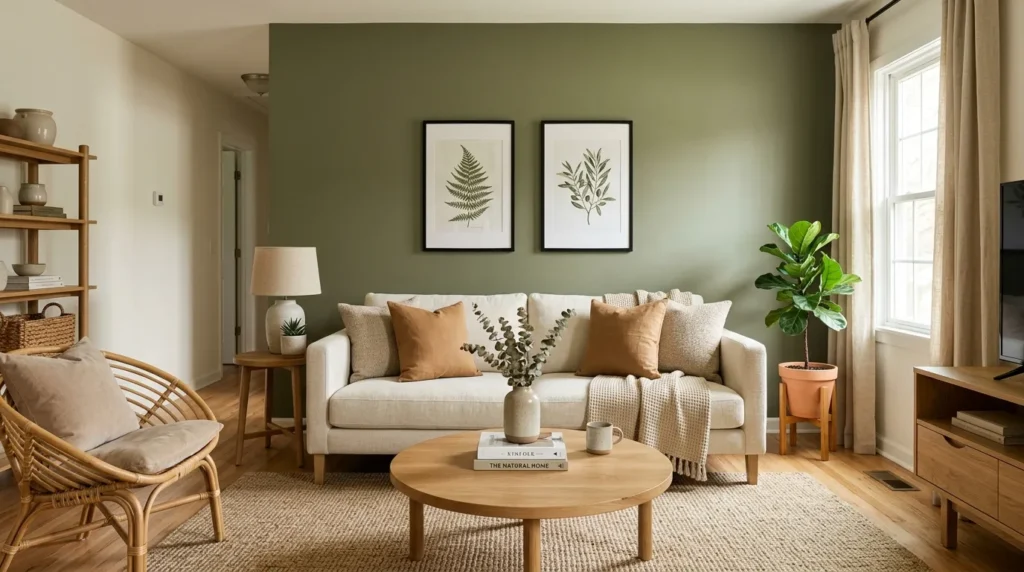
10. Soft Accent Color
Quick Benefits
- Adds personality without overwhelming the room
- Defines a focal wall
- Makes neutral furniture more interesting
- Can visually separate areas in open layouts
- Easy to update compared with permanent treatments
Why It Works
A soft accent color can bring warmth and personality to a living room while keeping the overall atmosphere calm. Rather than choosing a bright statement shade, consider earthy colors such as muted olive, clay, warm taupe, dusty terracotta, soft caramel, or subdued mushroom.
These colors work particularly well because they feel connected to natural materials. They can echo the tones found in wood, stone, leather, dried grasses, and woven textiles, making the entire room feel more cohesive.
An accent wall can also help define an area in an open-concept home. For example, a painted wall behind the sofa can visually distinguish the living area from an adjacent dining or kitchen space without requiring a physical divider.
The key is choosing a color that relates to something already in the room. Instead of selecting a shade simply because it looks beautiful on a paint card, look at your flooring, furniture, rugs, and window treatments first.
How To Style It
Choose one wall with a clear architectural or functional purpose. The wall behind the main sofa is often an easy choice, but a fireplace wall or reading nook can work just as well.
For a cozy look, consider muted olive green, warm clay, soft caramel, or earthy beige. Avoid overly saturated shades if your goal is a relaxed atmosphere.
Repeat the accent color in small doses throughout the room. A pillow, artwork detail, vase, throw, or rug pattern can create enough repetition to make the wall feel intentional.
Keep larger furniture pieces relatively neutral so the wall provides personality without dominating the space.
If you’re hesitant about painting, removable wallpaper or temporary wall coverings can offer a similar effect. This can be particularly useful in rental homes where you want to experiment with color while keeping the overall design flexible.
11. Fireplace Feature Wall
Quick Benefits
- Creates a natural focal point
- Adds architectural character
- Makes the seating arrangement feel intentional
- Works with traditional and modern interiors
- Provides an opportunity to layer texture and lighting
Why It Works
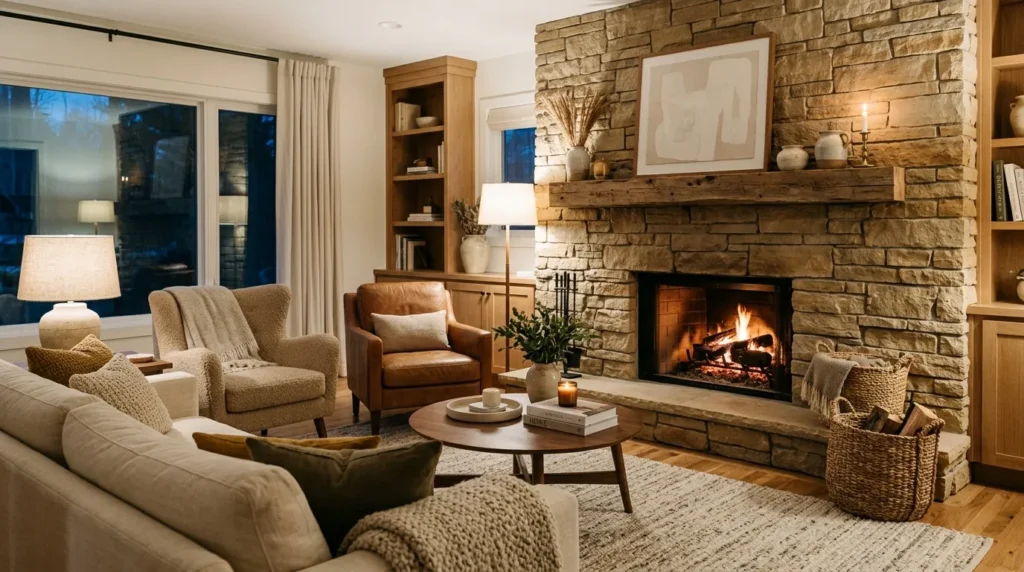
A fireplace naturally draws attention, which makes the surrounding wall one of the most valuable decorating opportunities in a living room. Rather than treating the fireplace as an isolated feature, you can use the entire wall to create a cohesive focal point.
Warm materials are particularly effective here. Wood, stone, brick, plaster, limewash-style finishes, and textured tile can give the fireplace more presence while making the room feel comfortable and grounded.
The style of the fireplace doesn’t have to dictate the entire room. A sleek modern fireplace can be softened with natural wood and woven accessories, while a traditional mantel can be paired with simple contemporary artwork.
Lighting also plays an important role. A fireplace feature wall should look attractive during the daytime but become even more inviting in the evening when the room’s lighting changes.
In my experience, the best fireplace walls aren’t necessarily the most decorated. They have a clear focal point and enough empty space around it to let the architecture breathe.
How To Style It
Start by identifying the fireplace as the anchor. If the wall already has strong stone, brick, or tile, avoid competing with it using too many decorative objects.
For a warm modern look, combine a simple mantel with oversized artwork, a natural wood accessory, and a few restrained ceramic pieces. If the fireplace has a traditional mantel, a vintage-inspired mirror or painting can create a timeless effect.
Place comfortable seating so it naturally faces or relates to the fireplace. A large area rug can visually connect the chairs and sofa, making the entire seating arrangement feel intentional.
Use warm lamps, sconces, or subtle accent lighting to highlight the wall after sunset. If the fireplace is nonfunctional, candles or soft decorative lighting can still create a welcoming focal point.
Finish with a few tactile details: a woven basket beside the hearth, a folded throw, natural wood, or a small plant. These details make the fireplace wall feel lived-in rather than staged.
The goal is balance. Let the fireplace and its surrounding materials provide the visual weight, then use furniture and accessories to support that focal point rather than compete with it.
FAQ
What is the easiest way to decorate a living room wall?
Painting the wall a warm neutral is one of the easiest approaches because it changes the overall atmosphere without requiring complicated installation. Creamy white, beige, greige, and soft taupe can provide a flexible background for artwork, wood furniture, woven accessories, and textiles.
How do I make a blank living room wall feel cozy?
Layer texture rather than simply adding more decorations. Wood, woven baskets, framed artwork, linen, shelves, soft lighting, and warm paint colors can make a blank wall feel much more inviting. Choose a few larger elements instead of filling the wall with many small objects.
What colors make a living room feel warmer?
Warm whites, beige, cream, taupe, muted olive, terracotta, caramel, and earthy brown can all create a warmer atmosphere. The best choice depends on your natural lighting, flooring, furniture, and existing finishes.
How should I decorate a large wall behind a sofa?
Start with the scale of the sofa. An oversized artwork piece, large gallery wall, picture ledges, or a textured accent wall can all work well. Keep the arrangement visually connected to the furniture rather than placing small decorations randomly across a large surface.
How can I decorate living room walls without making them cluttered?
Give each wall a clear focal point and leave some negative space. One large artwork piece can often look more polished than many small pieces. When using shelves or galleries, vary heights and textures while keeping the overall color palette connected.
What wall decor works with a neutral living room?
Natural wood, woven wall decor, vintage-inspired artwork, botanical prints, oversized neutral art, ceramic pieces, and muted accent colors all pair beautifully with neutral furniture. Adding texture is especially useful when the room contains many similar beige or cream shades.
How can renters decorate living room walls?
Renters can use removable wallpaper, picture ledges, lightweight artwork, gallery arrangements with appropriate removable hanging solutions, and freestanding shelving. Focus on changes that can be removed or repositioned easily when the lease ends.
Conclusion
Your living room walls don’t need to be complicated to make a noticeable difference. Sometimes the most inviting result comes from one thoughtful change, such as a warm paint color, a beautiful piece of oversized artwork, or a simple arrangement of natural textures.
If your room feels cold, start by looking at the materials already around you. Wood, linen, woven fibers, ceramics, soft rugs, and warm lighting can all guide your wall choices. If the room feels plain, consider introducing a focal point through artwork, a gallery arrangement, shelving, or an accent finish.
I’ve found that the most comfortable living rooms usually have a combination of texture, warmth, and personality rather than one perfectly matched decorating style. Don’t feel pressured to recreate an entire room at once. Choose one wall that naturally catches your attention and begin there.
Whether you prefer a quiet neutral backdrop or a more character-filled vintage display, the best wall treatment is the one that works with your furniture and reflects how you actually use the room.
Start with one or two ideas, layer them thoughtfully, and give yourself permission to let the space evolve. A cozy living room should feel welcoming and personal—not simply decorated for a photograph.