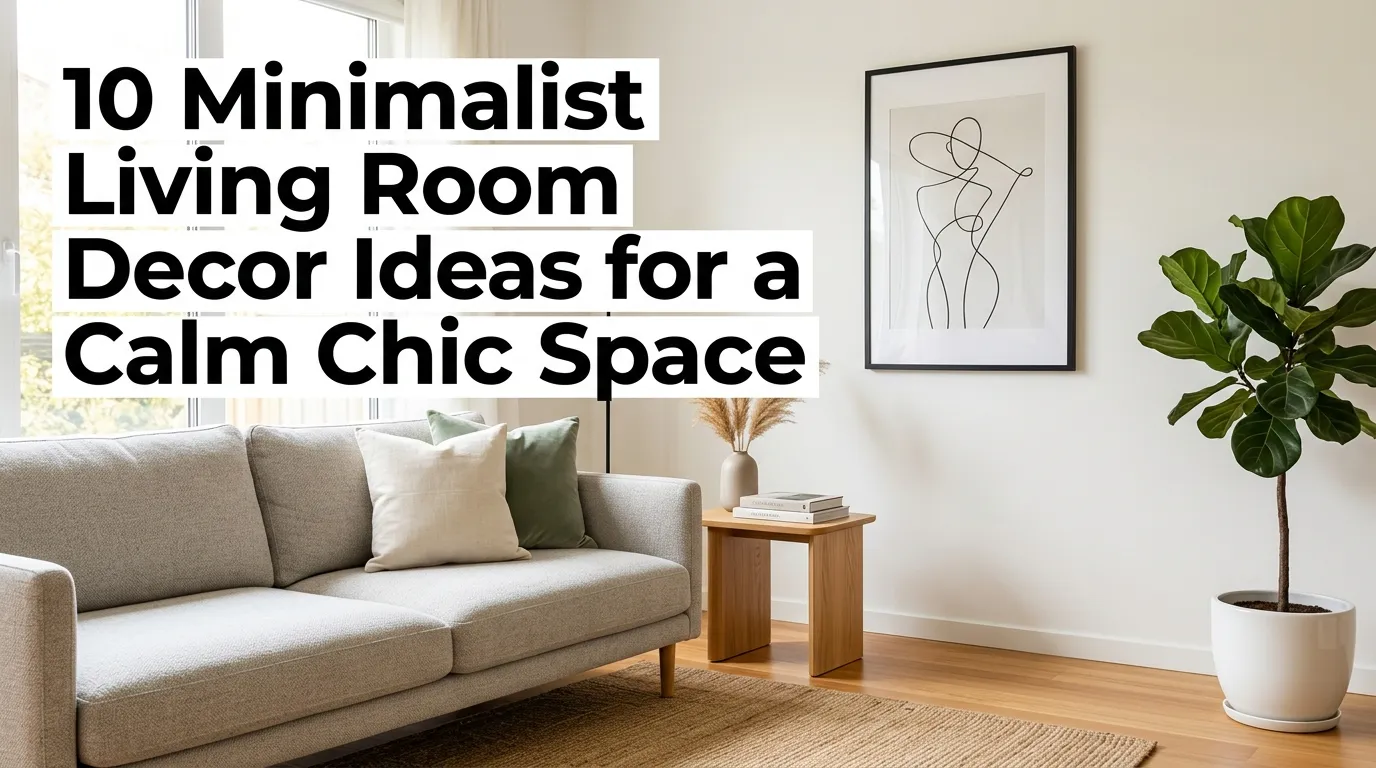
10 Minimalist Living Room Decor Ideas for a Calm Chic Space
A minimalist living room can be one of the most relaxing spaces in a home, but creating that effortless look takes more thought than simply removing things. The best minimalist rooms feel calm, warm, and intentional. Every piece has a purpose, yet the space still feels comfortable enough for everyday life.
If your living room feels visually busy, you may not need more storage or another round of decorating. You may simply need fewer, better-chosen elements. A streamlined sofa, natural textures, thoughtful lighting, and a restrained color palette can completely change how the room feels.
In my experience, the secret to beautiful minimalism is balance. Too many hard surfaces can make a room feel cold, while too many accessories defeat the purpose of a simplified space. The sweet spot comes from combining clean silhouettes with soft fabrics, warm wood, natural materials, and plenty of breathing room.
Minimalist decorating is also surprisingly practical. A less cluttered room is easier to clean, easier to rearrange, and often easier to live in. You can still have books, artwork, plants, blankets, and personal pieces—the difference is that they’re displayed intentionally rather than competing for attention.
These minimalist living room ideas focus on creating a space that feels sophisticated without feeling precious. Whether you’re decorating a small apartment, refreshing a family room, or simply craving a calmer home, you’ll find practical ways to simplify your layout while keeping plenty of warmth and personality.
Table of Contents
1. Streamlined Seating
Create a comfortable foundation with simple furniture silhouettes.
2. Soft Neutral Palette
Build a calm atmosphere with warm, understated colors.
3. Open Floor Space
Use thoughtful furniture placement to create breathing room.
4. Natural Wood Accents
Bring warmth and organic character into a simple interior.
5. Textured Area Rugs
Add softness and definition without visual clutter.
6. Sculptural Lighting
Use simple fixtures as functional decorative elements.
7. Curated Wall Art
Make a statement with fewer, larger pieces of artwork.
8. Hidden Storage
Keep everyday belongings organized and visually quiet.
9. Simple Greenery
Introduce natural color and softness through plants.
10. Layered Soft Textures
Make minimalism comfortable with carefully chosen textiles.
1. Streamlined Seating
Quick Benefits
- Creates a clean visual foundation
- Makes the room feel organized
- Provides comfortable everyday seating
- Works especially well in smaller rooms
- Makes other design details stand out
Why It Works
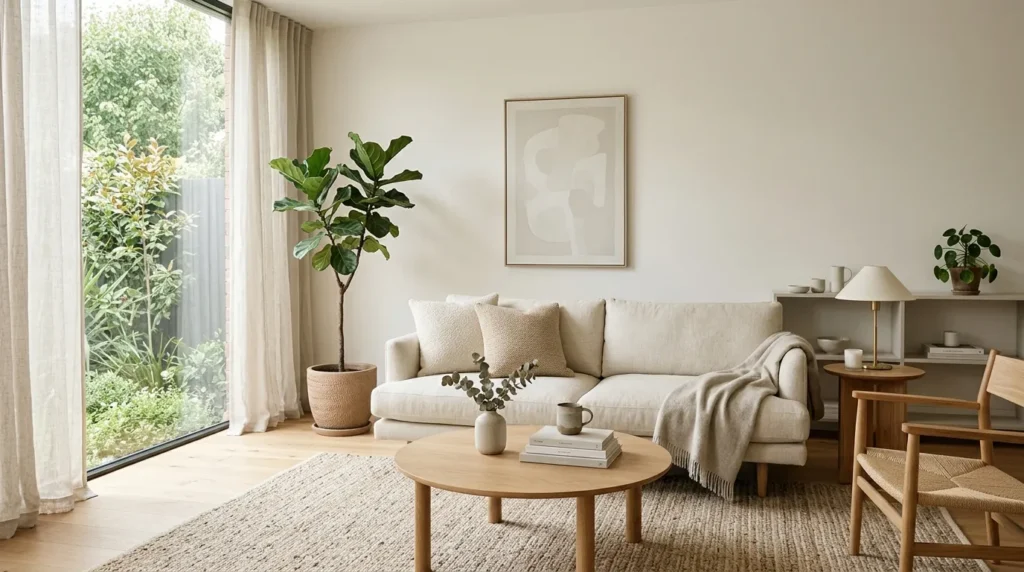
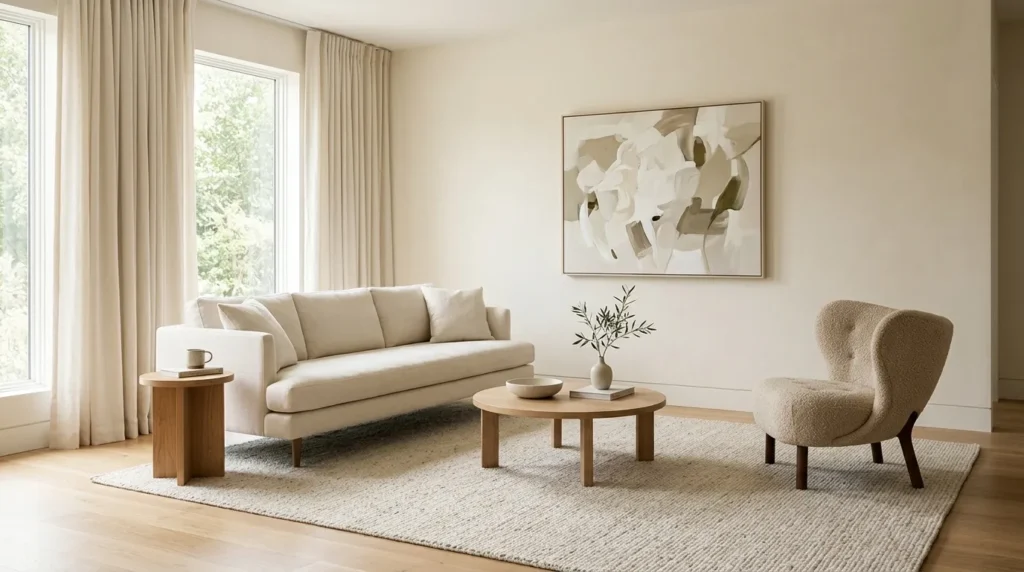
Furniture has the biggest visual impact in a living room, so choosing streamlined pieces is one of the easiest ways to establish a minimalist aesthetic. Look for sofas and chairs with simple silhouettes, restrained detailing, and proportions that suit the room.
Minimalism doesn’t mean choosing uncomfortable furniture. A deep, soft sofa can still look sophisticated when its shape is uncomplicated.
A mistake many homeowners make is buying several small pieces because they seem easier to fit into a room. In practice, fewer substantial pieces often create a cleaner appearance and make the room easier to navigate.
How To Style It
Choose one primary sofa in cream, ivory, beige, taupe, or soft gray.
Add one or two complementary chairs rather than filling every corner.
For a small living room, consider a compact sofa with raised legs to maintain a sense of visual openness.
Keep side tables simple.
Avoid excessive decorative pillows.
Two or three well-chosen cushions can provide enough comfort without making the sofa look crowded.
Position seating around a clear focal point such as a coffee table, fireplace, or window.
2. Soft Neutral Palette
Quick Benefits
- Creates a peaceful atmosphere
- Makes the room feel cohesive
- Works with natural materials
- Makes small rooms feel visually lighter
- Provides timeless flexibility
Why It Works
Color has a huge influence on how calm a room feels.
Minimalist interiors often use restrained palettes because fewer competing colors allow shapes, textures, and natural materials to become more noticeable.
But an all-white room isn’t the only option.
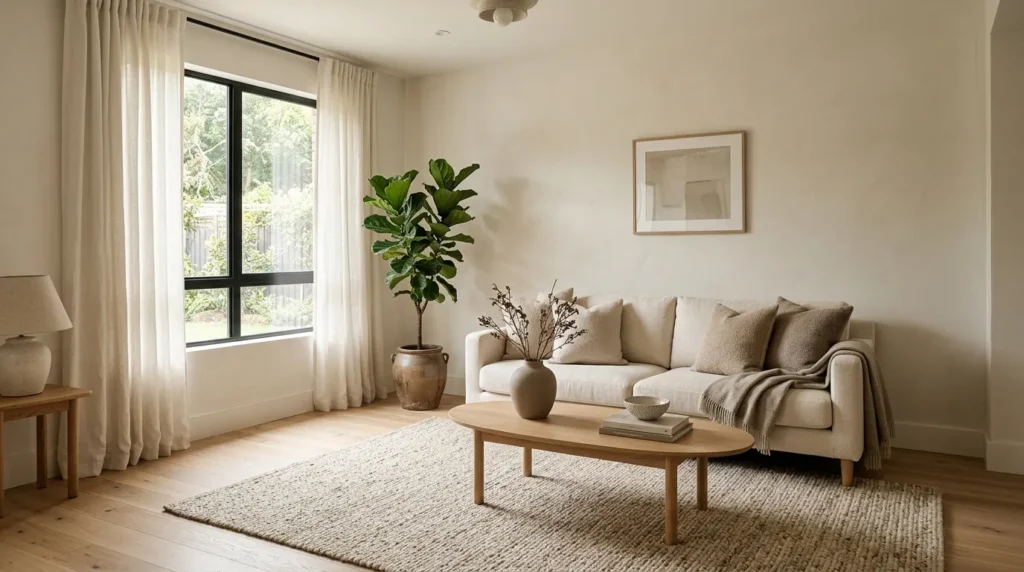
Warm ivory, oatmeal, mushroom, beige, taupe, soft gray, and muted earthy tones can create a much more welcoming version of minimalism.
The key is variation. Using several related shades prevents the room from looking flat.
How To Style It
Choose one dominant neutral for the walls and largest furniture piece.
Introduce a second neutral through the rug or curtains.
Add a slightly darker tone through wood, ceramics, or one accent chair.
For example, try:
Ivory + oatmeal + light oak
for an airy Scandinavian-inspired look.
Or:
Cream + taupe + walnut
for something warmer and more sophisticated.
Keep stronger colors limited to small decorative elements or greenery.
3. Open Floor Space
Quick Benefits
- Makes the room feel larger
- Improves circulation
- Reduces visual stress
- Makes furniture easier to appreciate
- Creates a more peaceful atmosphere
Why It Works
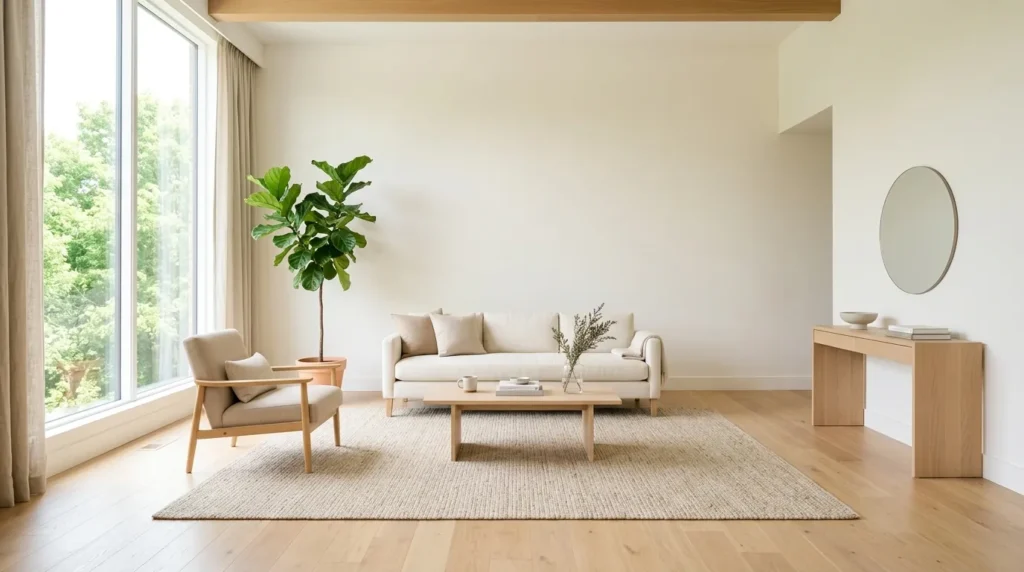
Empty space is an important part of minimalist design.
It isn’t wasted space. It’s what allows the furniture and architecture to breathe.
Instead of trying to fill every available corner, consider what the room actually needs.
Furniture that is pushed too close together can make even a large living room feel cramped. Likewise, placing every piece against the walls can create an awkward arrangement.
A little breathing room around furniture often creates a more sophisticated result.
How To Style It
Start by removing anything that doesn’t serve a clear purpose.
Then create one primary seating zone.
Keep walkways open.
Avoid placing decorative baskets, stools, or plants directly in circulation paths.
If your room is large, resist the temptation to fill the center with furniture.
Use negative space intentionally.
For open-plan homes, define the living area with a large rug rather than additional furniture.
4. Natural Wood Accents
Quick Benefits
- Adds warmth
- Prevents minimalism from feeling cold
- Introduces organic variation
- Works with neutral colors
- Adds subtle visual interest
Why It Works
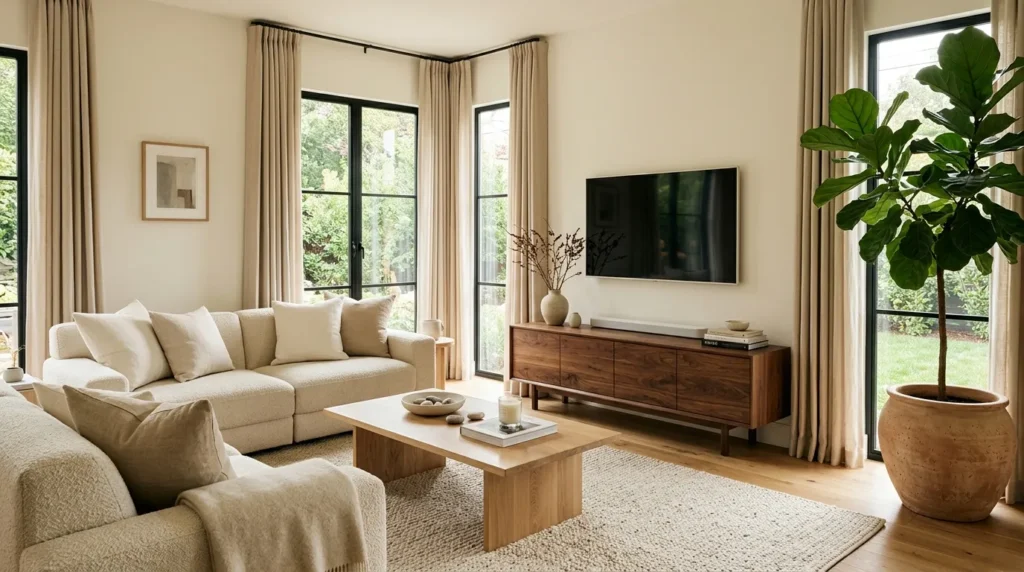
Wood is one of the best materials for softening minimalist interiors.
Smooth white walls, simple furniture, and neutral upholstery can sometimes feel overly uniform. Natural wood introduces grain, warmth, and variation without creating visual chaos.
Light oak works beautifully in airy spaces, while walnut creates a deeper and more sophisticated atmosphere.
You don’t need to use wood everywhere. One or two thoughtfully chosen pieces can have a strong impact.
How To Style It
Try a simple oak coffee table.
Add a walnut media console.
Choose a wooden side table.
Use natural wood picture frames.
Introduce a small wooden stool or bench if the room needs additional seating.
Pair wood with cream upholstery and stone for an organic minimalist look.
Don’t worry about matching every wood finish perfectly. A subtle mix of tones can make the room feel more collected and natural.
5. Textured Area Rugs
Quick Benefits
- Softens hard flooring
- Defines the seating zone
- Adds warmth
- Creates subtle visual interest
- Makes minimalist furniture feel more connected
Why It Works
A minimalist room can become visually flat when every surface is smooth and hard.
A textured rug solves that problem without adding clutter.
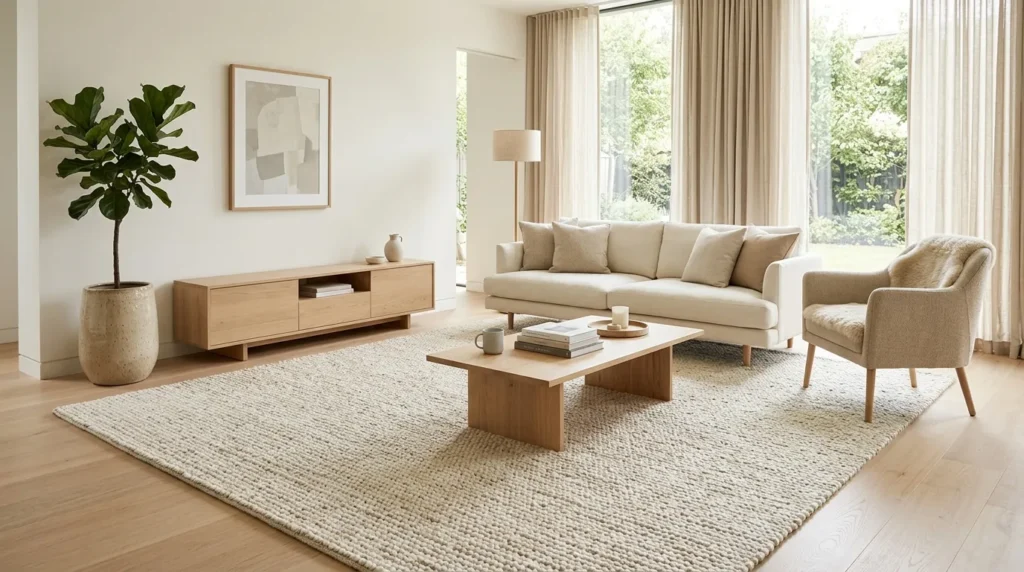
Wool, cotton, jute, and other natural fibers can introduce tactile variation while maintaining a restrained color palette.
The rug also has an important spatial function. It visually groups the seating arrangement together, making the room feel intentional.
How To Style It
Choose a rug large enough to sit beneath at least the front legs of the sofa and chairs.
For larger rooms, placing all major furniture on the rug can create a more cohesive effect.
Stick to subtle patterns or solid textures.
Cream, oatmeal, beige, taupe, and soft gray are versatile choices.
If your furniture is very simple, consider a rug with a gentle woven pattern.
Avoid extremely small rugs that make furniture look disconnected.
6. Sculptural Lighting
Quick Benefits
- Provides functional illumination
- Adds personality without clutter
- Creates visual interest
- Improves evening ambiance
- Works as understated decor
Why It Works
Minimalist rooms needn’t be completely undecorated.
Instead, choose objects that are both useful and visually interesting.
Lighting is perfect for this.
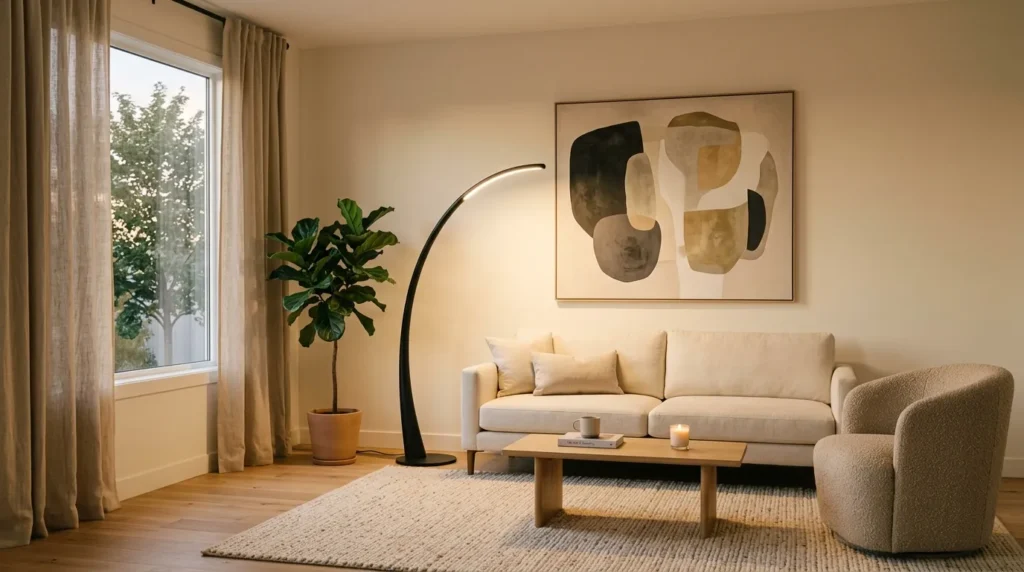
A curved floor lamp, sculptural pendant, simple wall sconce, or architectural table lamp can add personality while serving a practical purpose.
Layered lighting is especially important because one overhead fixture can make a minimalist room feel flat and harsh.
How To Style It
Start with the main ceiling fixture.
Then add one floor lamp near a reading chair or sofa.
Use a table lamp on a console or side table if space allows.
Choose fixtures with simple silhouettes.
Brushed brass, matte black, natural wood, ceramic, and soft metal finishes all work beautifully.
Use warm lighting in the evening to make neutral materials feel softer and more inviting.
7. Curated Wall Art
Quick Benefits
- Adds personality
- Prevents bare walls from feeling unfinished
- Creates a focal point
- Introduces subtle color
- Keeps the room visually intentional
Why It Works
Minimalist decorating doesn’t mean leaving every wall completely empty.
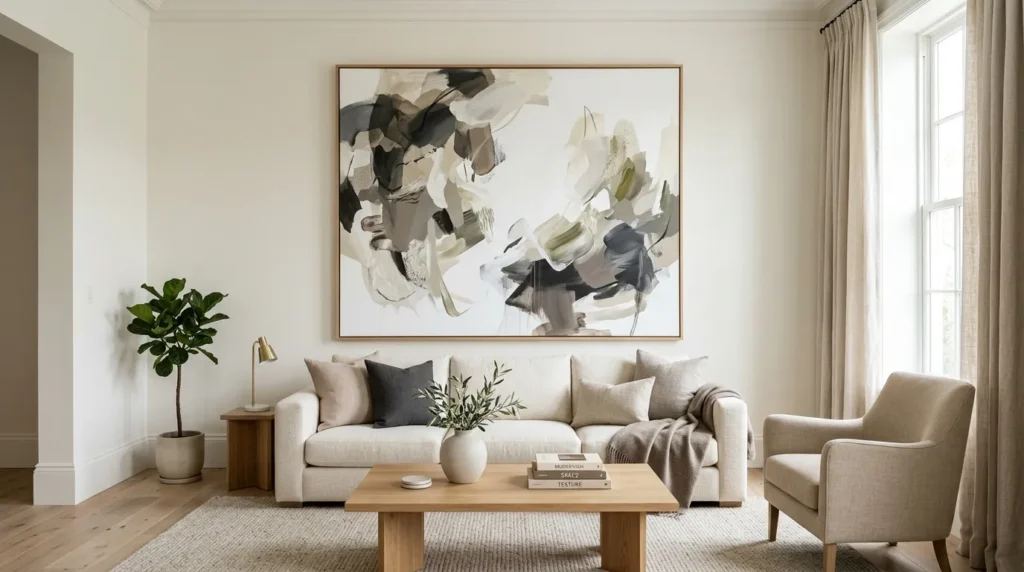
In fact, one large artwork can have more impact than a dozen small decorations.
Oversized abstract art, monochromatic photography, simple landscapes, line drawings, and textured canvases all work well.
The goal is to choose pieces that complement the room rather than overwhelm it.
How To Style It
Consider one large artwork above the sofa.
Choose a piece that relates to the room’s neutral palette.
If you prefer a gallery wall, limit the number of pieces and keep the frames visually cohesive.
Don’t hang artwork too high.
Use the furniture below it as a guide for scale.
For an especially calm look, choose artwork with muted colors and plenty of negative space.
8. Hidden Storage
Quick Benefits
- Keeps surfaces clear
- Reduces visual clutter
- Makes cleaning easier
- Improves everyday organization
- Creates a more polished appearance
Why It Works
A beautiful minimalist living room still has to accommodate real life.
Remote controls, blankets, toys, books, chargers, and everyday items need somewhere to go.
Hidden storage allows you to keep these necessities accessible without allowing them to dominate the room.
This is particularly useful in family homes and small apartments where every square foot matters.
How To Style It
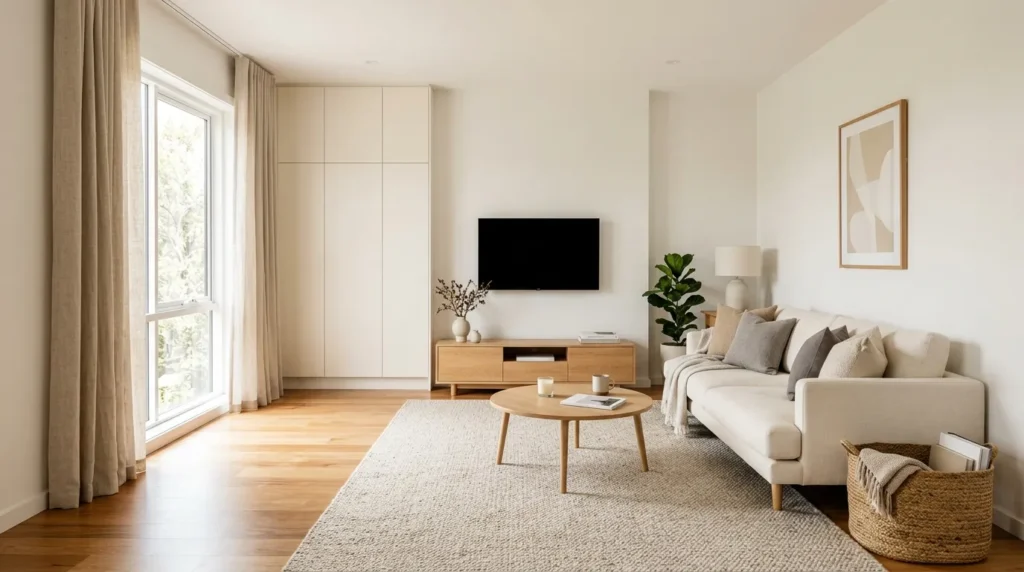
Choose a media console with closed doors.
Use baskets inside open shelving.
Consider an upholstered ottoman with hidden storage.
Install built-in cabinetry when practical.
Use a storage coffee table if you need additional organization.
Keep frequently used items in designated locations so tidying the room takes only a few minutes.
The goal isn’t to hide everything. It’s to give everything a home.
9. Simple Greenery
Quick Benefits
- Adds organic color
- Softens minimalist architecture
- Creates visual balance
- Brings natural texture indoors
- Adds personality without clutter
Why It Works
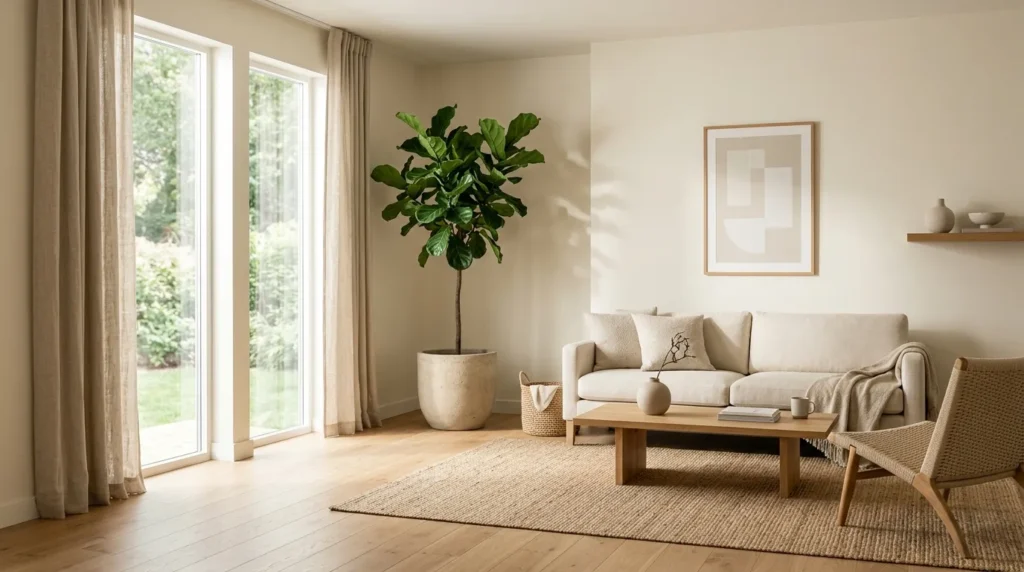
Plants are particularly effective in minimalist rooms because their organic shapes contrast beautifully with clean furniture and architectural lines.
A single large plant can become a focal point without requiring multiple decorative accessories.
Smaller plants can also work on shelves or consoles.
Greenery is especially helpful when the color palette is mostly cream, beige, gray, and wood.
How To Style It
Place a tall plant in an unused corner.
Choose a simple ceramic, stone, or woven planter.
Use one or two smaller plants on shelving.
Try branches in a large sculptural vase if you prefer a more architectural look.
Choose plants based on the natural light available in your room.
For homes with limited light or demanding schedules, realistic faux greenery can provide a similar visual effect.
10. Layered Soft Textures
Quick Benefits
- Makes minimalism feel cozy
- Adds depth without clutter
- Improves comfort
- Creates visual variation
- Softens modern furniture
Why It Works
Texture is the secret to making a minimalist living room feel warm rather than empty.
When colors are restrained, differences in material become much more noticeable.
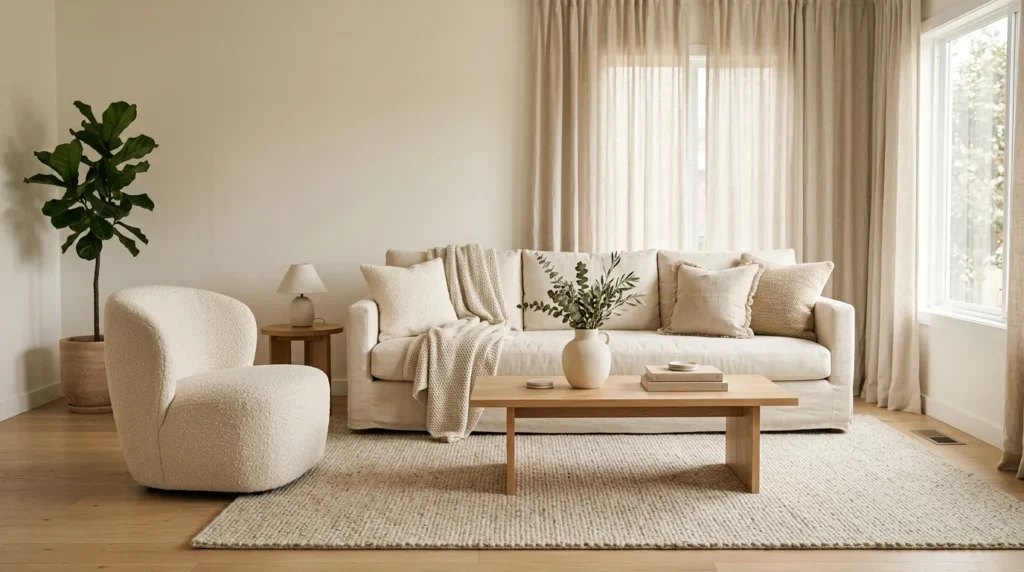
Think linen beside boucle, wool beside smooth wood, woven fibers beside stone, or soft cotton beside leather.
The room remains visually simple, but it feels much richer.
If you’re anything like me, this is also where minimalism becomes much more enjoyable to live with. You get the calm appearance without sacrificing comfort.
How To Style It
Layer a soft throw over one side of the sofa.
Add two or three pillows in different fabrics.
Use linen or cotton curtains.
Choose a wool or woven rug.
Add one boucle or textured accent chair.
Combine smooth ceramics with rougher natural materials.
Keep the colors within the same family so texture remains the main source of variation.
How to Make Minimalism Feel Warm
Minimalism becomes much more inviting when you focus on materials rather than adding more objects.
Start with warm neutrals instead of stark white.
Add natural wood.
Use soft rugs.
Choose linen curtains.
Layer a few comfortable pillows and throws.
Bring in greenery.
Then pay attention to lighting.
Warm lamps positioned around the room create a gentle glow that makes simple furniture and neutral finishes feel much more inviting at night.
A mistake many homeowners make is assuming that minimalist means empty. It doesn’t.
The goal is intentional simplicity.
Keep what you love, remove what doesn’t serve the room, and give the remaining pieces enough space to be appreciated.
Minimalist Living Room Ideas for Small Spaces
Small living rooms are natural candidates for minimalist decorating because clutter becomes noticeable quickly.
Begin with furniture scale.
A compact sofa may work better than an oversized sectional.
Choose a coffee table with a simple silhouette.
Round tables can make movement easier.
Use vertical storage to keep the floor clear.
A wall-mounted media console can create a lighter appearance when appropriate.
Mirrors can help reflect light, while a large neutral rug can visually unify the room.
Don’t fill every corner with decor.
One tall plant, one piece of artwork, and one beautiful lamp may have more impact than numerous small accessories.
Keep frequently used items organized in closed storage so the room can return to a calm appearance quickly.
Minimalist Living Room Color Combinations
A restrained palette doesn’t have to be boring.
Ivory + Light Oak + Beige
Bright, airy, and naturally warm.
Cream + Walnut + Taupe
Sophisticated and cozy.
White + Soft Gray + Natural Wood
Clean and contemporary.
Beige + Olive + Black
Organic with a little contrast.
Oatmeal + Warm White + Terracotta
Soft and earthy.
Taupe + Charcoal + Cream
More dramatic while remaining restrained.
Choose one dominant shade, one supporting neutral, and one subtle accent.
Repeat those colors through furniture, textiles, artwork, and accessories.
Minimalist Living Room Mistakes to Avoid
Removing Too Much
A room without personality can feel unfinished. Keep meaningful pieces that contribute to the space.
Using Only White
Too much white without texture can make a room feel cold.
Choosing Furniture That’s Too Small
Several tiny pieces can create more visual clutter than one appropriately sized sofa and chair.
Ignoring Storage
A minimalist room still needs to accommodate everyday life.
Using One Light Source
Layered lighting creates considerably more depth.
Decorating Every Surface
Leave some tables, shelves, and walls intentionally open.
Forgetting Texture
Without texture, neutral minimalism can look flat.
Frequently Asked Questions
What makes a living room minimalist?
A minimalist living room uses fewer, more intentional pieces while prioritizing function, proportion, and visual breathing room. A restrained color palette, streamlined furniture, organized storage, natural materials, and limited accessories are common characteristics.
What colors work best for minimalist living rooms?
Warm white, ivory, beige, oatmeal, taupe, soft gray, muted olive, and natural wood tones work beautifully. Using several shades within the same palette adds depth while preserving the calm feeling associated with minimalist design.
How do I make a minimalist living room cozy?
Add texture rather than clutter. Use a soft rug, linen curtains, comfortable cushions, a warm throw, natural wood, greenery, and layered lighting. These elements create warmth without compromising the clean appearance of the room.
Can minimalist decor work in a family home?
Absolutely. The key is practical organization. Choose furniture that can withstand everyday use, incorporate closed storage for toys and clutter, and use washable or durable textiles where needed. Minimalism can actually make busy family spaces easier to maintain.
How many decorative items should a minimalist living room have?
There is no exact number. The better approach is to choose pieces intentionally and leave breathing room between them. A few larger, meaningful objects often look more sophisticated than many small accessories.
How can I make a minimalist living room look expensive?
Focus on proportion, materials, and restraint. A properly sized rug, quality-looking curtains, natural wood, beautiful lighting, large artwork, and textured upholstery can create an elevated appearance without filling the room with expensive accessories.
Is minimalist living room decor going out of style?
The principles of minimalist design—function, simplicity, quality, and thoughtful organization—are unlikely to disappear. Current interiors often soften traditional minimalism with warm colors, natural materials, curves, and comfortable textiles.
Conclusion
A minimalist living room should make your home feel calmer, not less personal.
The most successful spaces aren’t completely empty. They’re carefully edited. Every piece has a reason for being there, and the room has enough breathing space for those pieces to feel intentional.
Start with the largest elements: your sofa, rug, and furniture arrangement. Then build warmth through natural wood, soft textiles, greenery, and layered lighting. Choose one or two pieces of artwork that genuinely speak to you rather than filling every wall.
If your room feels cluttered, don’t rush out to buy more storage or accessories. Begin by removing what you don’t use and identifying what you actually want the space to accomplish.
A calm living room can still be cozy, practical, stylish, and personal.
Start small. Clear one surface, simplify one corner, or replace one visually distracting piece. Then gradually build a space where everything feels considered and nothing feels excessive.
That’s the beauty of minimalist decorating: less visual noise, more room to enjoy your home.