
10 Dark Academia Bedroom Decor Elements for a Cinematic Look
There is something wonderfully atmospheric about a bedroom that feels as though it belongs inside an old library, a historic European apartment, or the setting of a beautifully shot period film. Dark academia decor captures that feeling with deep colors, vintage-inspired furnishings, layered textiles, books, warm lighting, and details that look collected rather than mass-produced.
The style is especially appealing in a bedroom because it naturally creates a sense of quiet and intimacy. Instead of relying on bright colors or highly coordinated furniture, dark academia embraces mood, texture, and personality. A walnut nightstand beside a warm lamp, an old-looking landscape print above the bed, a rumpled linen duvet, and a stack of books can make the entire room feel more thoughtful.
But creating a moody bedroom doesn’t mean covering every surface in black or filling the room with antiques. In fact, one of the biggest decorating mistakes is assuming that “dark” automatically means dramatic. The most successful spaces balance deeper tones with warm neutrals, natural materials, soft fabrics, and plenty of visual breathing room.
Whether you’re decorating a spacious primary bedroom, a small apartment bedroom, or a cozy rental, you can borrow the most effective elements of the aesthetic without completely changing your existing furniture.
These ideas focus on the details that make the biggest difference, from color and lighting to bedding, artwork, bookshelves, and vintage accents. You’ll also find practical styling tips for combining them without making the room feel cluttered or overly themed.
If you’re looking for a bedroom that feels cozy, sophisticated, timeless, and just a little mysterious, these dark academia-inspired ideas are a beautiful place to begin.
Table of Contents
1. Moody Color Palette
Create a dramatic foundation with sophisticated deep shades and warm neutrals.
2. Dark Wood Furniture
Use rich wood tones to bring warmth and old-world character into the bedroom.
3. Vintage Artwork
Layer classic artwork and traditional frames for a collected, intellectual feeling.
4. Layered Bedding
Build a cozy bed with natural fabrics, rich colors, and relaxed layers.
5. Warm Ambient Lighting
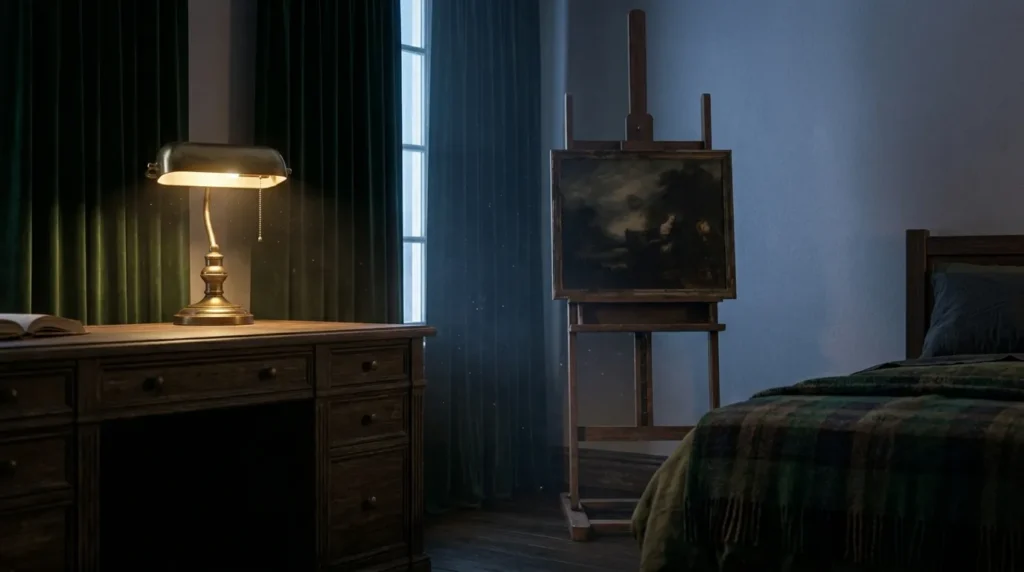
Use lamps and soft illumination to create the cinematic mood associated with dark academia.
6. Classic Bookshelves
Bring books and meaningful objects into the room for authentic academic character.
7. Antique Inspired Accents
Add small decorative details that make the bedroom feel collected over time.
8. Dramatic Window Treatments
Frame the windows with substantial fabrics that add softness and visual height.
9. Cozy Reading Corner
Turn an unused bedroom corner into a beautiful place for reading and relaxing.
10. Rich Layered Textures
Combine wood, linen, wool, velvet, leather, and rugs to make the room feel warm and dimensional.
1. Moody Color Palette
Quick Benefits
- Creates an instantly atmospheric bedroom
- Makes furniture and artwork feel more dramatic
- Works beautifully with warm lighting
- Gives small decorative details more visual impact
- Can be adapted to both traditional and modern bedrooms
Why It Works
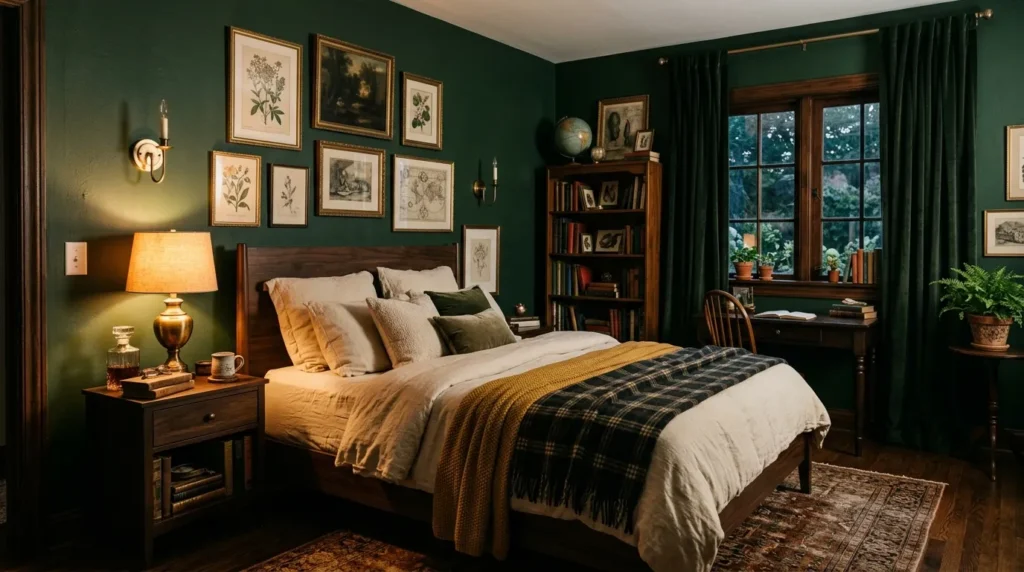
Color is the foundation of any moody bedroom, and dark academia interiors are particularly effective because they use depth rather than simply darkness. Deep forest green, charcoal, chocolate brown, oxblood, muted navy, smoky plum, and warm black can all establish the right atmosphere.
The secret is balance. A room covered entirely in extremely dark shades can sometimes feel visually heavy, particularly if it has limited natural light. Warm cream, oatmeal, aged beige, and soft taupe provide contrast while keeping the palette sophisticated.
In my experience, the most inviting dark rooms aren’t necessarily the darkest ones. They are the rooms where several related shades have been layered together. A charcoal wall paired with walnut furniture, cream bedding, olive accents, and antique brass can feel much richer than a room using black everywhere.
How To Style It
Start by choosing one dominant deep shade for the walls or largest visual surface. If you’re comfortable painting, a muted olive green, deep taupe, charcoal, or smoky navy can create an elegant backdrop.
Then introduce lighter colors through bedding, curtains, rugs, and artwork. Cream is particularly useful because it softens darker colors without creating the stark contrast that bright white can sometimes produce.
For renters, use removable wallpaper, large framed artwork, dark bedding, or a dramatic rug to introduce deeper tones without painting. You can also create a darker effect by placing a substantial walnut headboard against a lighter wall.
Keep the palette intentional by repeating two or three colors throughout the room. For example, deep green might appear on the wall, a throw pillow, and a small ceramic vase. This repetition makes the bedroom feel designed without becoming overly coordinated.
Styling Details That Make It Work
Consider the room’s natural light before selecting your deepest shade. A sunny south-facing bedroom can often handle richer colors beautifully, while a darker room may benefit from a slightly warmer or lighter version of the same palette.
If you’re unsure, sample paint on several walls and look at it in the morning, afternoon, and evening. Artificial lighting can dramatically change how deep colors appear.
For a particularly cinematic effect, allow the ceiling and trim to remain slightly lighter than the walls, or use warm ivory trim instead of bright white. This keeps architectural details visible while preserving the moody atmosphere.
2. Dark Wood Furniture
Quick Benefits
- Adds warmth to deep wall colors
- Creates traditional visual character
- Works with vintage and modern pieces
- Makes the bedroom feel more grounded
- Provides a natural contrast to soft textiles
Why It Works
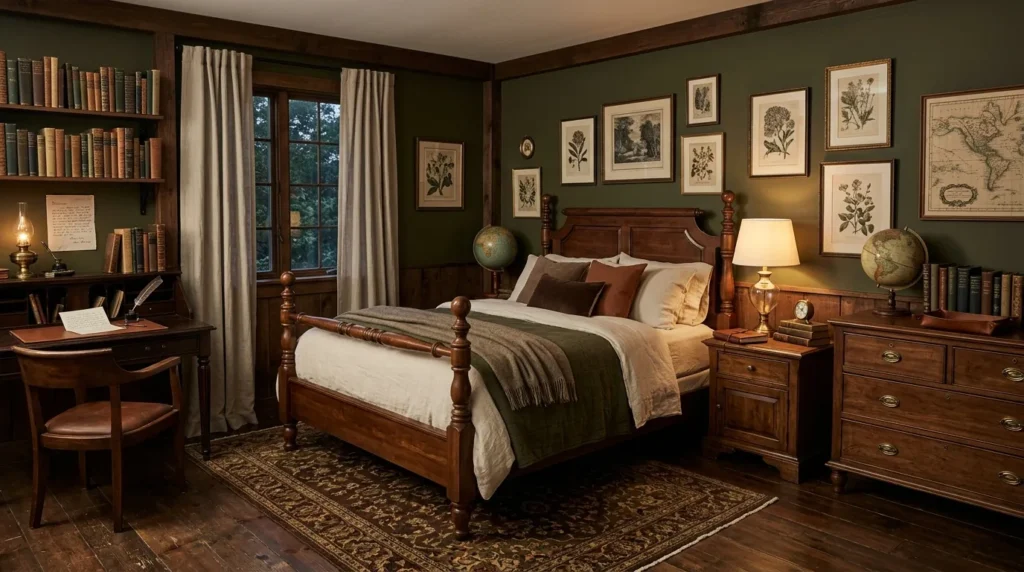
Dark wood is one of the easiest ways to give a bedroom an old-world feeling without making it look like a themed room. Walnut, mahogany, espresso, teak, and richly stained oak all bring warmth and visual weight to the space.
Wood also introduces natural variation. Unlike perfectly smooth painted furniture, a wood surface has grain, knots, subtle color shifts, and imperfections that make it feel more authentic.
A dark wooden bed frame can anchor the entire bedroom, while a vintage nightstand or writing desk can reinforce the academic atmosphere. The beauty of this approach is that you don’t need every piece to come from the same furniture collection.
Mixing woods can actually make the room more interesting. A walnut headboard can sit comfortably beside a slightly lighter oak desk if the overall undertones work together.
How To Style It
If you’re furnishing a bedroom from scratch, begin with one substantial dark wood piece, such as a bed, dresser, or desk. Then introduce smaller wooden accents rather than matching every item.
A traditional writing desk beside a window can create a natural focal point. Pair it with a vintage-style chair, brass desk lamp, and a few books to make it feel functional rather than decorative.
For a more contemporary bedroom, choose furniture with simple silhouettes in a deep walnut finish. Add traditional accessories through artwork, lighting, and textiles.
If you’re shopping secondhand, don’t worry about small scratches or signs of age. Those imperfections can actually contribute to the collected quality that makes this style so appealing.
Budget-Friendly Approach
You can also transform lighter furniture with a dark wood stain or paint designed for furniture, depending on the material and finish. Always prepare the surface properly and test your chosen finish before committing to the entire piece.
Another affordable option is to introduce dark wood through a thrifted bedside table, framed mirror, wooden tray, or floating shelf.
One substantial vintage-looking piece often has more impact than several inexpensive decorative items.
3. Vintage Artwork
Quick Benefits
- Creates an instant focal point
- Adds personality without clutter
- Reinforces the scholarly aesthetic
- Works above beds, desks, and dressers
- Makes the room feel collected over time
Why It Works
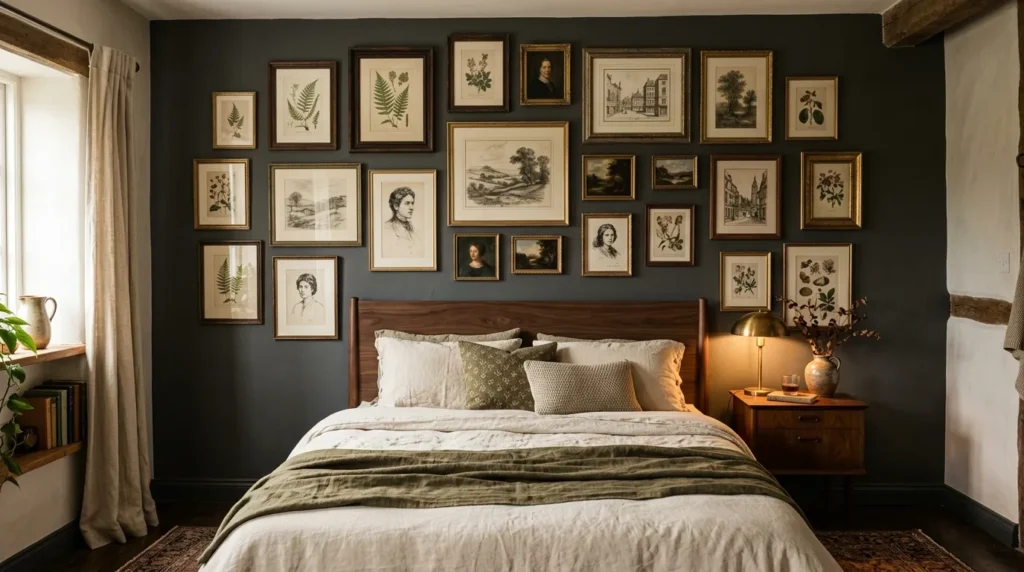
Artwork gives a bedroom emotional character, and vintage-inspired pieces are especially effective in dark academia spaces. Botanical illustrations, classical portraits, landscapes, architectural drawings, still lifes, maps, and old book-style prints can all contribute to the aesthetic.
The important part is choosing artwork that feels believable within the room rather than simply buying anything labeled “academic.” A faded landscape above a wooden dresser can feel more natural than an assortment of unrelated decorative prints.
Frames matter, too. Dark walnut, aged gold, bronze, black, and distressed wood can make inexpensive prints appear much more substantial.
A gallery wall can be particularly effective because it creates the impression that the collection has developed gradually. That’s exactly the type of visual storytelling that makes a room feel personal.
How To Style It
For a gallery wall, begin with your largest piece and build outward. Mix portrait and landscape orientations, but keep a consistent color relationship between the artwork.
You can combine botanical prints with landscapes, sketches, and small decorative mirrors. Try leaving slightly different spaces between pieces rather than forcing everything into a perfect grid.
If you prefer a cleaner appearance, choose one large vintage-style landscape or portrait above the bed. A substantial frame can provide enough visual weight without requiring several smaller pieces.
Above a desk, consider architectural drawings, old maps, botanical studies, or typography-inspired artwork. This gives the workspace an appropriately scholarly character.
Make It Feel Authentic
Avoid making every item look artificially aged. A room becomes more convincing when modern and vintage-inspired pieces coexist naturally.
Thrift stores, flea markets, antique shops, estate sales, and online vintage marketplaces can be excellent places to find frames and artwork. You can also print public-domain artwork and place it in a secondhand frame.
The goal isn’t to make the bedroom look like a museum. It’s to create the feeling of a space occupied by someone who genuinely appreciates literature, art, history, and beautiful objects.
4. Layered Bedding
Quick Benefits
- Makes the bedroom feel immediately cozier
- Adds softness against dark furniture
- Creates visual depth
- Gives you flexibility to change colors seasonally
- Makes the bed look inviting rather than overly styled
Why It Works
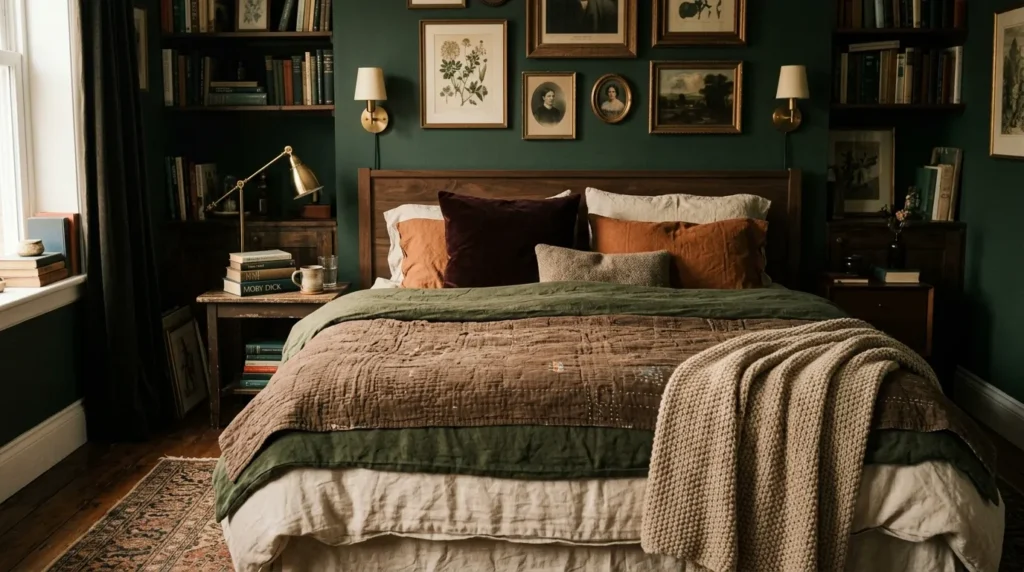
The bed is usually the largest visual element in a bedroom, so bedding has an enormous influence on the overall mood. Dark academia interiors benefit from bedding that feels soft, substantial, and slightly relaxed rather than perfectly crisp.
Natural materials are particularly effective. Linen, cotton, wool, quilted fabrics, velvet, and textured knits introduce subtle variation that prevents a darker color palette from feeling flat.
Cream sheets beneath a deep olive duvet can create beautiful contrast. A brown quilt, rust-colored throw, or muted burgundy pillow can then introduce additional warmth.
I’ve noticed that bedrooms with layered bedding tend to feel much more inviting because they combine visual interest with practical comfort. The bed looks like somewhere you actually want to spend time.
How To Style It
Begin with neutral sheets in cream, ivory, oatmeal, or muted beige. Add a duvet or quilt in a deeper shade, then place a folded blanket across the bottom third of the bed.
Use pillows in different sizes rather than arranging every pillow identically. Two sleeping pillows, a pair of decorative pillows, and one smaller lumbar pillow can provide plenty of dimension without overwhelming the bed.
For a more traditional look, introduce subtle patterns such as stripes, checks, botanical motifs, or classic ticking-inspired designs.
A velvet cushion can add a touch of luxury, while a chunky knitted throw creates softness and warmth.
Seasonal Adjustments
You can easily adapt the bedding throughout the year. Lightweight linen works well during warmer months, while wool blankets, heavier quilts, and brushed cotton can make the room especially cozy during fall and winter.
Stick with your core color palette so seasonal changes feel cohesive.
For example, cream, olive, brown, and charcoal can remain the foundation while rust and burgundy become stronger accents during autumn.
5. Warm Ambient Lighting
Quick Benefits
- Creates a softer nighttime atmosphere
- Highlights artwork and textures
- Makes dark walls feel warmer
- Adds functionality beside the bed
- Creates a cinematic glow
Why It Works
Lighting is one of the most important elements in a moody bedroom because even the most beautiful color palette can feel flat under harsh overhead illumination.
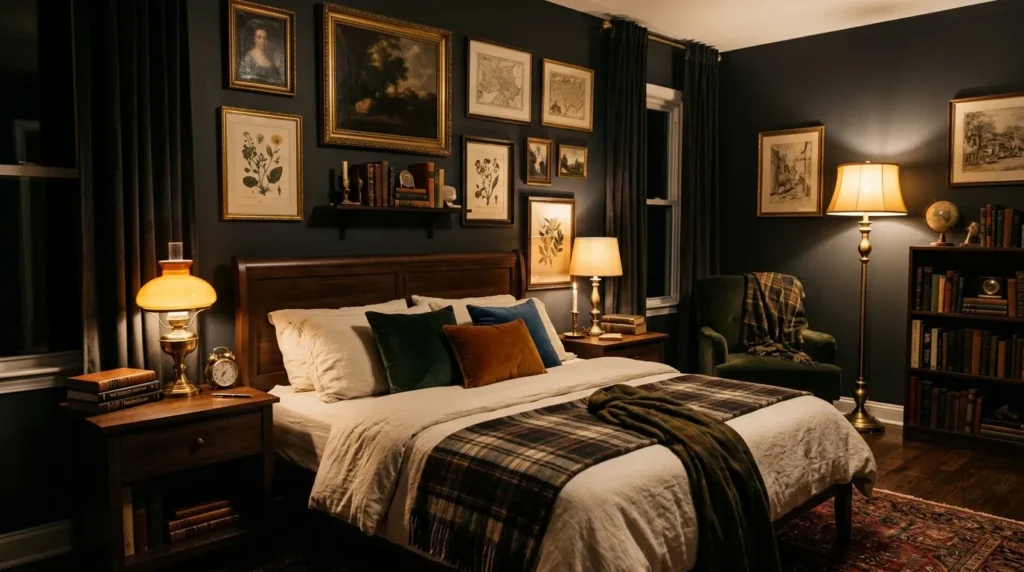
Dark academia rooms look best when light comes from several warm sources rather than one bright ceiling fixture. Table lamps, wall sconces, floor lamps, and small accent lights create individual pools of illumination.
Warm bulbs also bring out the richness of wood, leather, brass, and deep-colored fabrics. In the evening, these materials can look completely different than they do under daylight.
One simple trick I always suggest is to treat lighting as part of the decor rather than an afterthought. A beautiful brass lamp or ceramic table lamp can function as both a practical fixture and a decorative object.
How To Style It
Place a lamp on each bedside table if space permits. Traditional shades in cream, beige, or pleated fabric work beautifully with this aesthetic.
If your nightstands are small, wall sconces can free up valuable surface area. Choose fixtures in aged brass, bronze, black metal, or another finish that complements the furniture.
A floor lamp beside a reading chair can create a second focal point. A small desk lamp can provide task lighting for a writing desk.
Avoid relying entirely on overhead lighting. If you need a ceiling fixture, choose something with an understated traditional silhouette and use a warm bulb.
Creating the Evening Mood
Think about where shadows naturally fall in the room. You don’t want every corner illuminated equally. Some darker areas help create the intimate, cinematic feeling associated with the style.
A lamp behind a chair, beside a stack of books, or near artwork can make an otherwise overlooked area visually interesting.
Candles can also add atmosphere, but treat them as optional decorative elements rather than the primary source of bedroom lighting. Flameless candles are an easy alternative for a similar glow.
6. Classic Bookshelves
Quick Benefits
- Adds authentic academic character
- Provides useful bedroom storage
- Creates a strong vertical focal point
- Gives you room to display meaningful objects
- Works in both large and small bedrooms
Why It Works
Books instantly communicate the intellectual side of dark academia, but they also serve an important decorating function. A bookshelf introduces height, color variation, texture, and personality all at once.
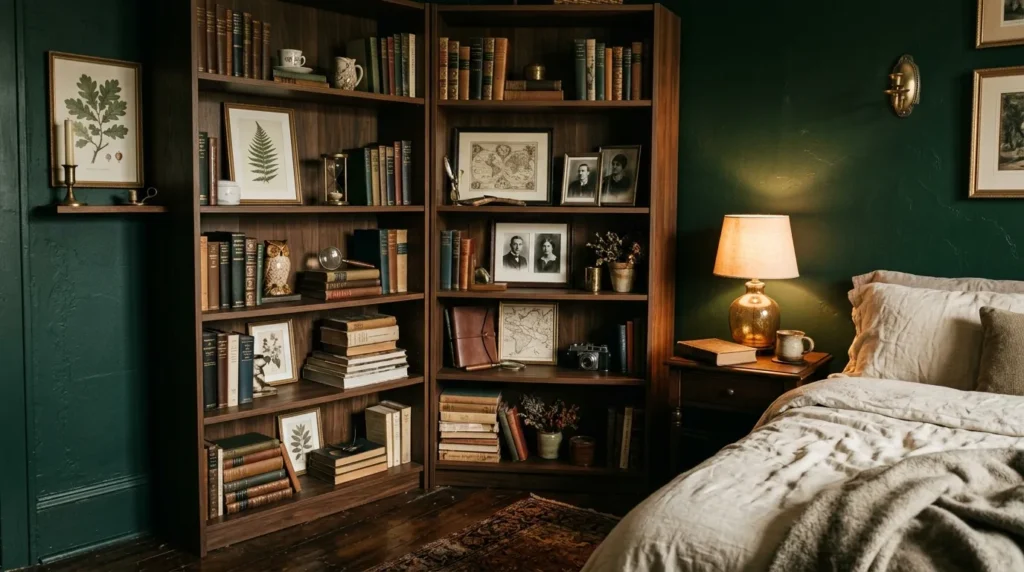
The key is to avoid making the shelves look like a staged bookstore. Mix books with personal objects, artwork, ceramics, photographs, and small sculptures.
A wooden bookcase with slightly irregular shelves can feel particularly appropriate. If you have a large collection, organize some books traditionally and stack others horizontally.
This creates visual rhythm while allowing decorative objects to break up the rows.
How To Style It
Start by filling roughly two-thirds of the available shelf space with books. Then use the remaining space for decorative objects.
Stack three or four books horizontally and place a small vase or object on top. On another shelf, lean a framed botanical print against the back panel.
Don’t feel obligated to arrange books by color. While color-coordinated shelves can look beautiful in photographs, mixed spines often feel more natural and personal.
For a small bedroom, use a narrow vertical bookshelf. You can also install floating wooden shelves above a desk or beside the bed.
Small-Space Alternative
If a full bookcase isn’t practical, create miniature book displays around the room.
A stack of favorite novels on the nightstand, several books on a dresser, or a small wall shelf can establish the same atmosphere.
Choose books you actually enjoy rather than purchasing decorative books solely for their appearance. Personal collections always make a bedroom feel more authentic.
7. Antique Inspired Accents
Quick Benefits
- Adds personality through small details
- Creates a collected appearance
- Works with modern furniture
- Makes surfaces more visually interesting
- Can be added gradually on a budget
Why It Works
Small accessories often provide the finishing layer that makes a bedroom feel complete. Dark academia is particularly well suited to objects with a sense of history, whether they’re genuinely vintage or simply inspired by traditional design.
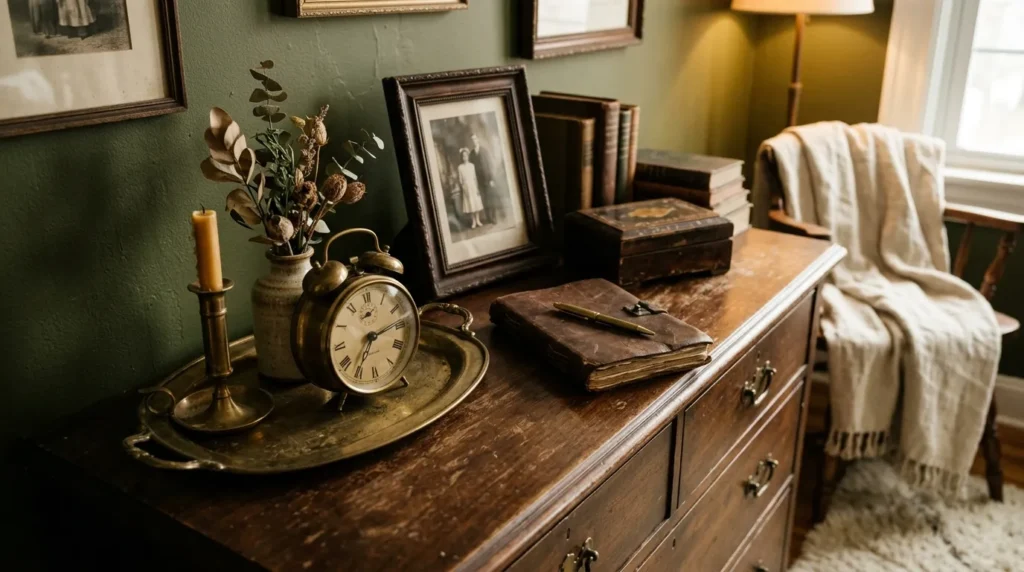
Think brass candlesticks, old-style clocks, decorative boxes, ceramic vessels, framed photographs, leather-bound journals, traditional trays, and sculptural objects.
You don’t need to fill every surface. In fact, too many accessories can make the bedroom feel cluttered and distract from the larger design elements.
A few meaningful objects placed intentionally tend to have more impact.
How To Style It
Create small groupings rather than scattering objects randomly. On a dresser, for example, you might combine a brass tray, a ceramic vase, and a framed photograph.
On a bedside table, keep things functional: a lamp, book, small dish, and perhaps a vintage-inspired clock can be enough.
A wooden tray can gather several small items and make the arrangement look deliberate. On a desk, a brass lamp, notebook, pen holder, and small framed artwork can create a beautiful workspace.
Use different heights to keep arrangements interesting. A tall lamp beside a medium-sized frame and a low tray creates natural variation.
Avoiding the Themed-Look Problem
A common mistake with dark academia decorating is buying too many obviously themed accessories. Once every surface features an hourglass, antique-looking book, globe, or fake candle, the room can start to feel more like a set than a home.
Instead, mix vintage-inspired pieces with objects you already own.
A contemporary ceramic mug, family photograph, modern reading lamp, or favorite plant can make the room feel lived-in and current.
8. Dramatic Window Treatments
Quick Benefits
- Makes windows look taller
- Adds softness to darker rooms
- Provides privacy and light control
- Introduces another layer of texture
- Gives the bedroom a more finished appearance
Why It Works
Curtains are often overlooked when decorating a bedroom, yet they can dramatically change the room’s proportions and mood. Long, substantial curtains create softness against dark walls and wooden furniture.
Traditional fabrics such as linen, velvet, cotton, and textured blends work especially well. The choice depends on how formal or relaxed you want the bedroom to feel.
Deep olive, brown, charcoal, muted burgundy, cream, and taupe are versatile choices. If your walls are already very dark, lighter curtains can provide useful contrast.
Full-length curtains also make a room feel taller when hung properly, which is especially helpful in smaller bedrooms.
How To Style It
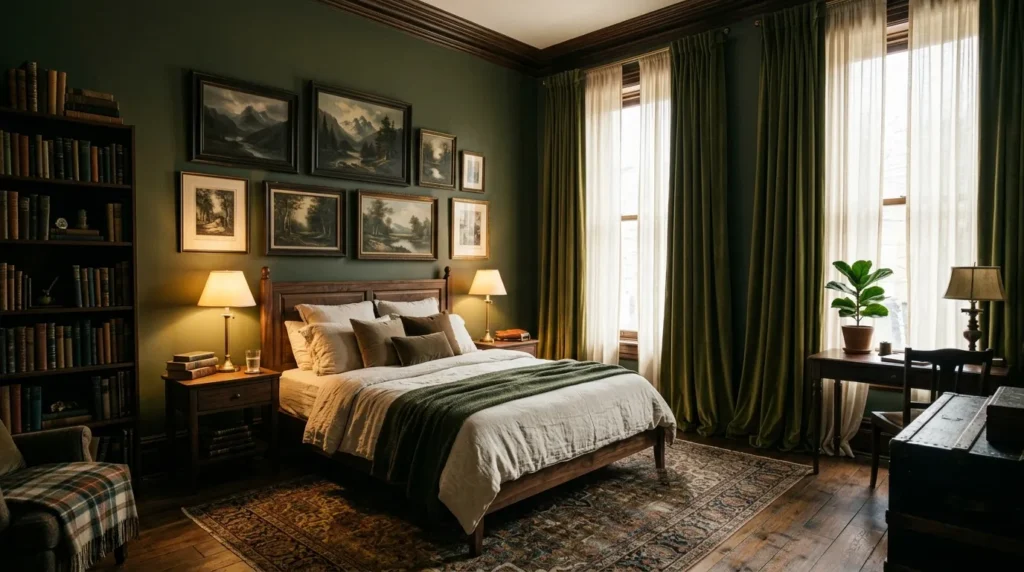
Whenever possible, mount the curtain rod several inches above the window frame and extend it beyond the sides of the window. This creates the impression of a larger window and allows more natural light into the room when the curtains are open.
Let the fabric reach the floor. Avoid curtains that stop awkwardly above the floor because they can make the room look shorter.
For a luxurious effect, layer sheer curtains with heavier panels. The sheer layer softens daylight while the outer curtains provide privacy and nighttime darkness.
If you prefer a simpler look, choose one substantial curtain fabric and keep the rest of the window treatment understated.
Choosing Between Light and Dark Curtains
Use cream or oatmeal curtains when the bedroom already has several deep colors and needs brightness.
Choose olive, chocolate, charcoal, or burgundy when the walls and furniture are lighter and you want to introduce more drama.
The best choice is the one that balances the room rather than simply adding another dark element.
9. Cozy Reading Corner
Quick Benefits
- Creates a functional secondary zone
- Encourages relaxation
- Adds personality to unused space
- Complements the academic theme naturally
- Makes the bedroom feel more intentional
Why It Works
A reading corner may be one of the most natural additions to a dark academia bedroom because the aesthetic is closely connected with books, study, reflection, and quiet hobbies.
You don’t need a huge bedroom to create one. Even a small chair tucked beside a window can become a useful retreat.
A comfortable seat also breaks up the visual dominance of the bed. Instead of every piece of furniture facing the same direction, you can create a second area with its own purpose.
The result feels more like a thoughtfully designed room and less like a space containing only bedroom necessities.
How To Style It
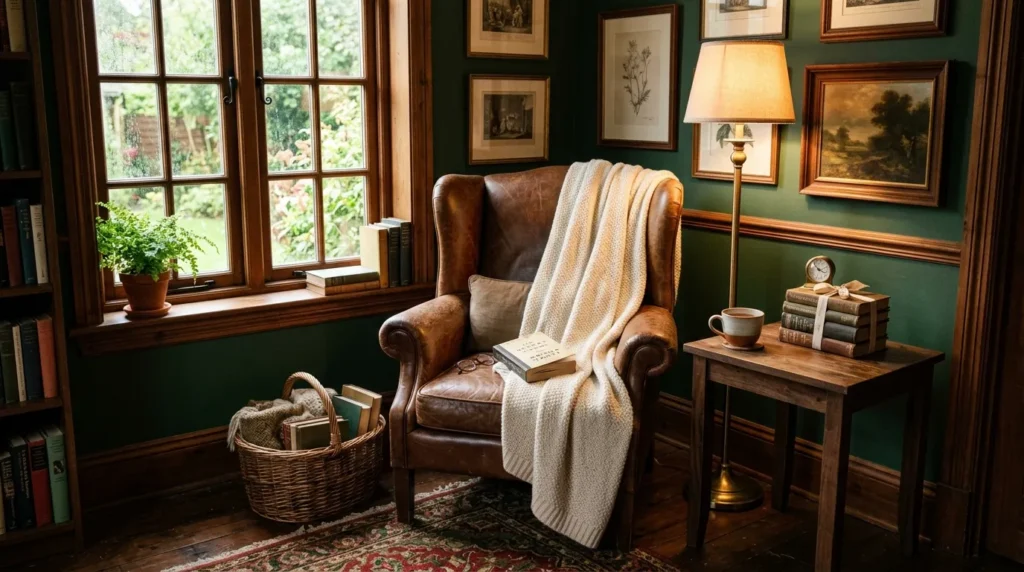
For a larger bedroom, choose a traditional upholstered armchair, leather chair, or vintage-style reading chair. Add a small side table and a floor lamp.
A woven basket beside the chair can hold blankets, while a small stack of books provides an easy decorative detail.
If space is limited, consider a compact slipper chair or small bench. A cushioned window seat can be even better if your bedroom already has a suitable architectural feature.
Keep the reading area close to a light source. Natural daylight is ideal during the day, while a warm floor or table lamp can provide comfortable illumination in the evening.
Making It Feel Inviting
The chair should look comfortable rather than merely decorative. Add a soft throw, small cushion, and perhaps a footstool if there is room.
Choose materials that contrast with the surrounding furniture. If your bed is dark wood, a textured upholstered chair can soften the composition. If the room contains lots of fabric, a leather chair can provide useful contrast.
This is also an excellent place to introduce one accent color, such as rust, muted mustard, burgundy, or forest green.
10. Rich Layered Textures
Quick Benefits
- Prevents dark colors from feeling flat
- Makes the bedroom more comfortable
- Adds visual depth
- Creates a luxurious atmosphere
- Helps mix traditional and modern elements
Why It Works
Texture is what turns a dark color palette into a warm, inviting bedroom. Without texture, deep walls and dark furniture can sometimes feel visually severe. With the right materials, the exact same colors can feel luxurious and comfortable.
Think about how many different surfaces you experience in a well-designed bedroom: smooth wood, soft bedding, woven rugs, cool metal, textured curtains, plush upholstery, and perhaps a little worn leather.
Each material catches light differently, creating subtle variation throughout the room.
This is particularly important for Pinterest-inspired spaces because photographs benefit from visible layers. A textured throw, patterned rug, linen bedding, and aged wood can make an otherwise simple room feel richly styled.
How To Style It
Begin with the largest surfaces. A rug beneath the bed can provide warmth underfoot and visually anchor the furniture.
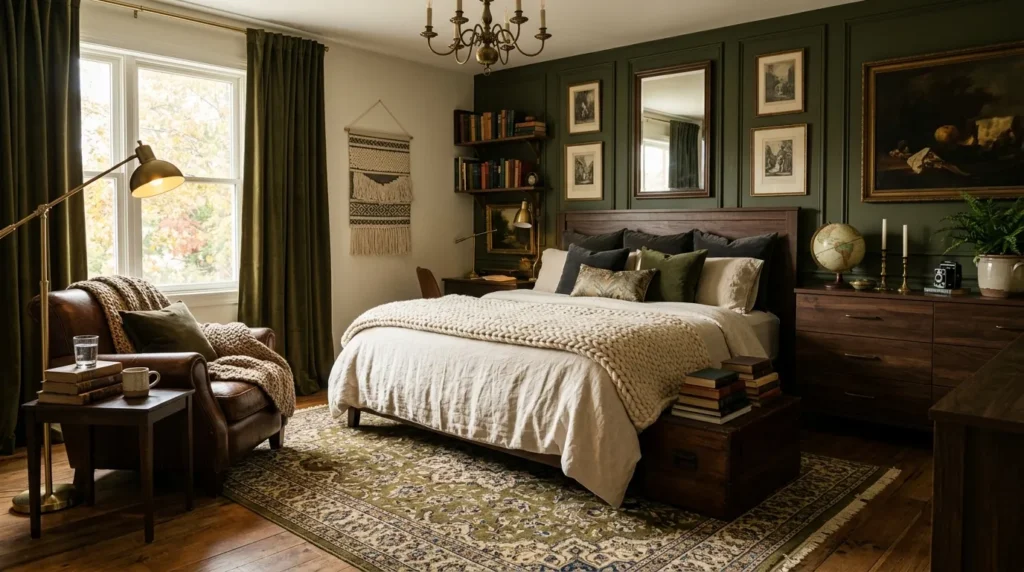
Layer natural bedding materials such as linen or cotton with a wool or knitted throw. Add velvet through one or two accent pillows rather than covering the entire bed.
Introduce leather through a chair, journal cover, storage box, or small accessory. Brass and aged metal can provide a harder surface that contrasts beautifully with textiles.
If you have hardwood floors, a vintage-style rug can soften the room. If you already have carpeting, focus on bedding, curtains, upholstery, and accessories for texture.
Creating Balance
Don’t introduce every possible texture at equal strength. Choose a few dominant materials and let the others act as accents.
For example, dark wood, linen, and wool can form the main material story while brass and velvet appear in smaller amounts.
This creates a bedroom that feels layered without becoming visually chaotic.
Creating the Full Cinematic Effect
Once you’ve chosen your favorite elements, the next step is combining them in a way that feels intentional. You don’t need to use every idea at maximum intensity.
A bedroom with dark green walls, walnut furniture, cream bedding, vintage artwork, and warm lamps may already have enough atmosphere. Adding additional layers should enhance the room rather than compete with it.
Start with the largest elements first: wall color, bed, rug, and curtains. Then introduce lighting and artwork. Finally, add smaller accessories, books, and personal objects.
Pay attention to contrast. Dark colors need lighter elements, hard furniture benefits from soft textiles, and traditional accessories can look fresher when paired with one or two contemporary pieces.
If you’re decorating a rental, focus on removable and portable changes such as bedding, lighting, artwork, curtains, rugs, books, and accessories.
If you own your home, you have more opportunities to experiment with paint, built-in shelving, trim, wall treatments, or custom furniture.
The goal isn’t to recreate someone else’s bedroom exactly. Pinterest can provide inspiration, but your final space should reflect your own habits and personality.
A beautiful bedroom is also a functional one. Keep frequently used items within reach, make sure reading areas have adequate lighting, and choose fabrics that are comfortable for everyday use.
When style and practicality work together, the room feels much more natural.
Frequently Asked Questions
What colors are best for a dark academia bedroom?
Deep forest green, charcoal, chocolate brown, burgundy, muted navy, plum, and warm black are popular choices. Balance these deeper colors with cream, oatmeal, taupe, or warm beige to keep the bedroom inviting rather than overly heavy.
Can dark academia work in a small bedroom?
Yes. Small bedrooms can look especially cozy with this aesthetic. Use one dominant dark shade, vertical storage, warm lighting, and lighter bedding to maintain visual balance. Mirrors and strategically placed artwork can also help the room feel more open.
How can I create dark academia decor on a budget?
Start with inexpensive changes that have a large visual impact. Thrifted artwork, secondhand wooden furniture, layered bedding, warm table lamps, books, curtains, and vintage-style accessories can dramatically change the atmosphere without requiring a complete renovation.
Does dark academia require antique furniture?
No. Antique furniture can reinforce the aesthetic, but it isn’t required. Modern furniture with simple silhouettes can work beautifully when combined with traditional artwork, dark colors, warm lighting, natural materials, and vintage-inspired accessories.
What type of bedding works best with this style?
Natural-looking fabrics such as linen, cotton, wool, and textured quilts are excellent choices. Use cream or oatmeal as a foundation, then introduce deeper colors such as olive, brown, burgundy, charcoal, or navy through blankets and pillows.
How do I make a dark bedroom feel cozy instead of gloomy?
Warm lighting, layered textiles, natural wood, and lighter accents are key. Instead of using dark colors everywhere, combine them with cream bedding, warm rugs, soft curtains, and plenty of texture. Multiple small light sources also make a major difference.
What makes a bedroom look cinematic?
Cinematic bedrooms usually have strong contrast, layered lighting, rich textures, intentional composition, and a clear color palette. Framed artwork, dramatic curtains, dark wood, warm lamps, and thoughtfully arranged accessories can create that film-inspired atmosphere without making the room feel artificial.
Conclusion
Creating a dark academia bedroom is really about atmosphere rather than following a strict decorating formula. The most memorable rooms combine rich colors, natural materials, traditional details, comfortable textiles, and personal objects in a way that feels collected and authentic.
Start with one or two major changes. A deep wall color or dark wood bed can establish the foundation, while layered bedding and warm lighting can immediately make the room feel softer. From there, add vintage artwork, books, curtains, and small accessories as your budget and space allow.
Remember that contrast is your friend. Pair deep walls with warm cream textiles, substantial wood with soft fabrics, and vintage-inspired accessories with pieces that reflect your current lifestyle.
Whether you live in a spacious home or a small apartment, you can create a bedroom that feels quiet, sophisticated, and wonderfully atmospheric.
The best result won’t look like a showroom. It will look like a room with a story.
Start with the elements that genuinely appeal to you, layer them slowly, and create a bedroom that feels like your own private retreat.