
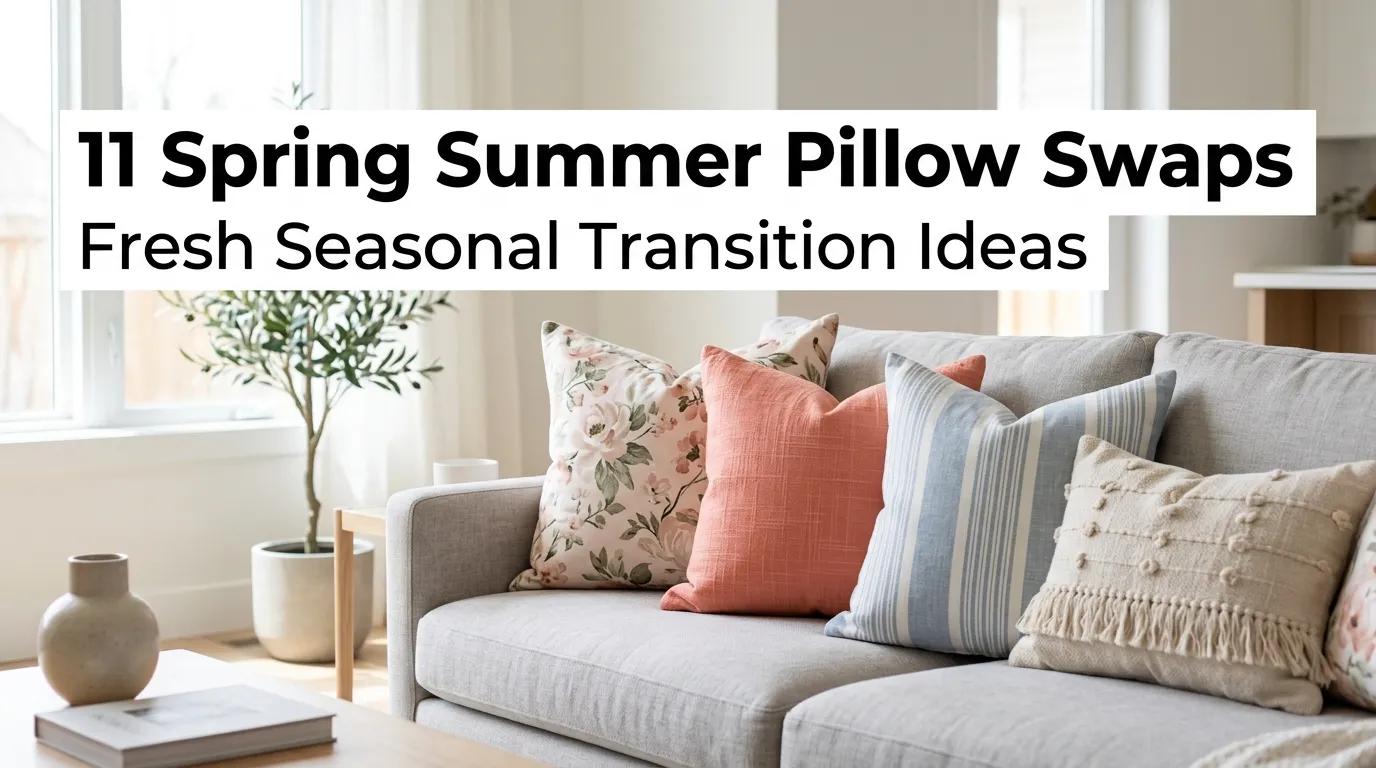
11 Spring Summer Pillow Swaps Fresh Seasonal Transition Ideas
Changing your throw pillows is one of the simplest ways to move your home from spring into summer without completely redecorating. As the days become longer and brighter, heavier textures and darker accents can start to feel out of place. A few thoughtful pillow swaps can make your rooms feel lighter, fresher, and more relaxed while still preserving the decorating style you already love.
The trick is not to make your home look dramatically different overnight. Instead, think of the transition as a gradual shift. Spring often welcomes florals, fresh greens, soft pastels, and playful patterns, while summer naturally leans toward airy neutrals, sun-washed colors, natural textures, and relaxed coastal or organic influences.
In my experience, the easiest seasonal transitions happen when you keep your largest neutral pillows and simply change the accent layers. This saves storage space, keeps your decor cohesive, and allows you to refresh several rooms without buying an entirely new collection.
You can also use the transition to correct common decorating problems. If a sofa feels too dark, introduce ivory or flax-colored pillows. If a bedroom feels flat, add woven texture. If a patio feels too plain, bring in a brighter stripe or botanical pattern.
The ideas below focus on practical swaps you can use throughout the home, from living rooms and bedrooms to reading corners, entryways, and outdoor seating. Some are subtle, while others create a more noticeable seasonal refresh.
Whether your style is modern, farmhouse, coastal, organic, traditional, or eclectic, these spring-to-summer pillow ideas will help you create a home that feels naturally connected to the changing season.
Table of Contents
1. Pastel to Neutral
Replace delicate spring pastels with warm summer neutrals for a softer transition.
2. Floral to Botanical
Move from traditional florals toward relaxed botanical patterns.
3. Velvet to Linen
Exchange heavier fabrics for breathable-looking summer textures.
4. Pink to Coral
Shift spring pinks toward warmer coral and sun-washed tones.
5. Green to Sage
Soften bright spring greens into muted natural shades.
6. Floral to Stripe
Trade busy floral patterns for timeless summer stripes.
7. Quilted to Woven
Replace structured spring textures with casual woven accents.
8. Blue Layering
Introduce blue tones for an airy summer-inspired palette.
9. Bright to Earthy
Balance spring colors with warm natural summer shades.
10. Indoor to Outdoor
Coordinate pillows between indoor and outdoor living areas.
11. Minimal Accent
Simplify the pillow arrangement for an effortless summer finish.
1. Pastel to Neutral
Quick Benefits
- Creates a subtle seasonal change
- Keeps existing decor useful
- Makes rooms feel brighter
- Works with many design styles
- Requires only a few pillow covers
Why It Works
Spring decor often celebrates pale pink, lavender, butter yellow, mint, and soft blue. These colors can feel beautiful as temperatures rise, but you may want your home to feel slightly more grounded and relaxed for summer.
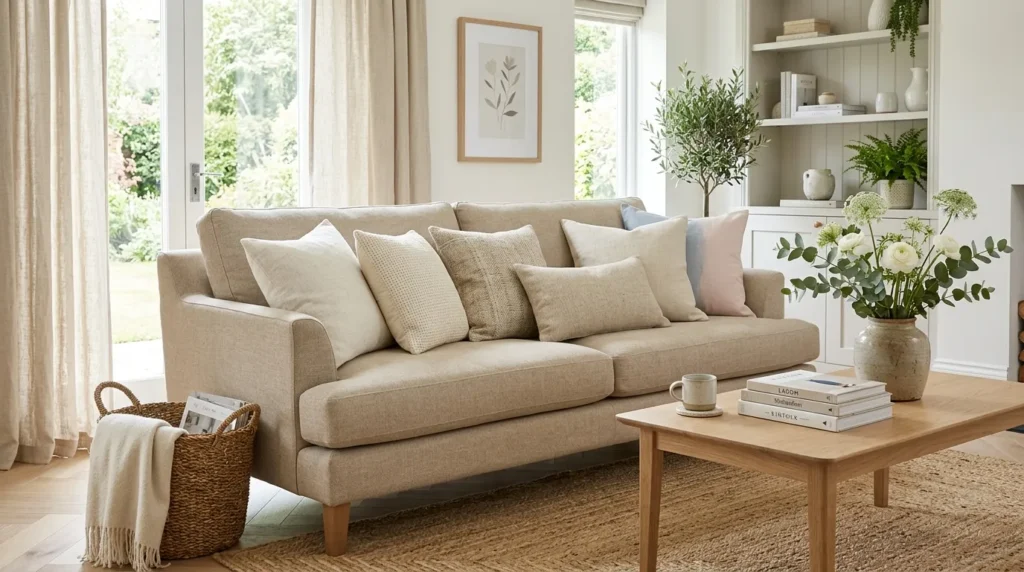
Replacing a few pastel accents with ivory, cream, flax, sand, or warm beige creates an easy transition without making the room look completely different.
The neutral colors also make summer decorating easier because they work with natural materials such as rattan, light wood, jute, linen, and woven baskets.
Rather than removing every spring pillow, keep one favorite pastel piece and surround it with warmer neutrals.
How To Style It
Keep your largest neutral pillows exactly where they are.
Remove one or two pastel accent cushions and replace them with ivory or oatmeal covers.
Add one textured beige lumbar pillow for depth.
For a softer transition, keep one pale blue or blush pillow and introduce cream around it.
This approach works particularly well on living room sofas and bedroom benches.
Finish with a lightweight throw in cream or natural flax to reinforce the relaxed summer palette.
2. Floral to Botanical
Quick Benefits
- Keeps nature-inspired decor
- Feels less traditionally springlike
- Adds visual interest
- Works with neutral furniture
- Creates an organic summer atmosphere
Why It Works
Florals are a natural choice for spring, but they can sometimes make a room feel strongly tied to one season.
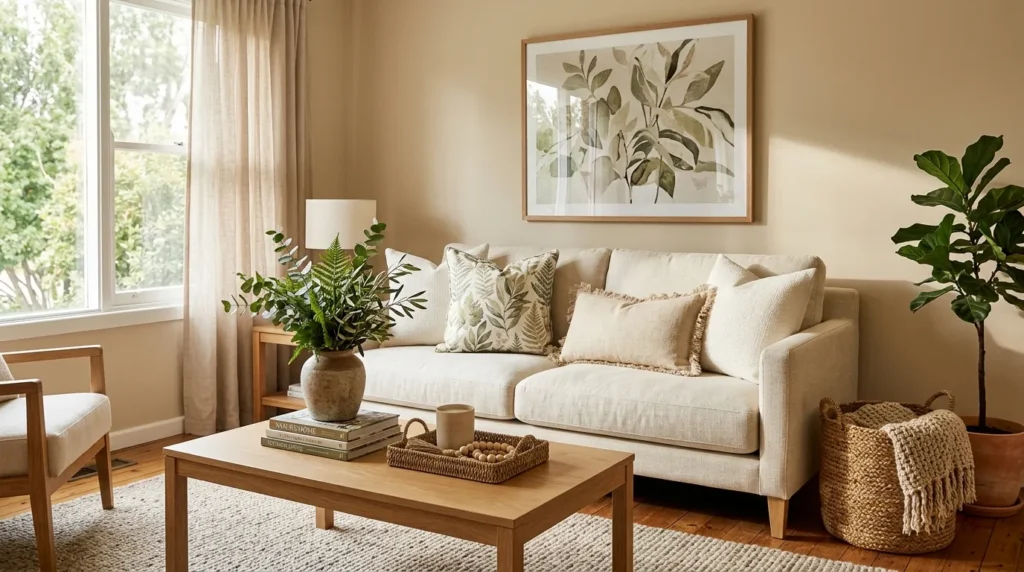
A botanical print provides a more relaxed alternative. Instead of delicate bouquets, look for leafy branches, olive leaves, palms, grasses, or simple plant silhouettes.
This creates continuity because both styles reference nature, but the botanical pattern often feels more understated and summery.
The transition is especially effective in homes with neutral sofas, natural wood furniture, or organic decor.
How To Style It
Replace one floral pillow with a botanical-print cushion.
Choose a design featuring muted sage, olive, beige, or soft blue.
Keep the remaining pillows solid so the botanical pattern becomes the focal point.
Pair it with linen, cotton, or woven textures.
For a coastal-organic look, combine a leafy print with ivory and sandy beige.
For a farmhouse space, try botanical greenery with ticking stripes and warm cream.
3. Velvet to Linen
Quick Benefits
- Makes rooms feel lighter
- Introduces natural texture
- Creates a relaxed appearance
- Works beautifully with neutral colors
- Easy to use year after year
Why It Works
Fabric can influence how a room feels just as much as color.
Velvet, chenille, and other plush materials are wonderfully cozy during cooler months, while linen and lightweight cotton visually communicate freshness.
You don’t necessarily need to remove every soft pillow. Instead, replace the heaviest-looking covers with linen or linen-look alternatives.
The contrast between one remaining plush pillow and several breathable textures can actually make the room feel more layered.
How To Style It
Remove one or two velvet accent covers.
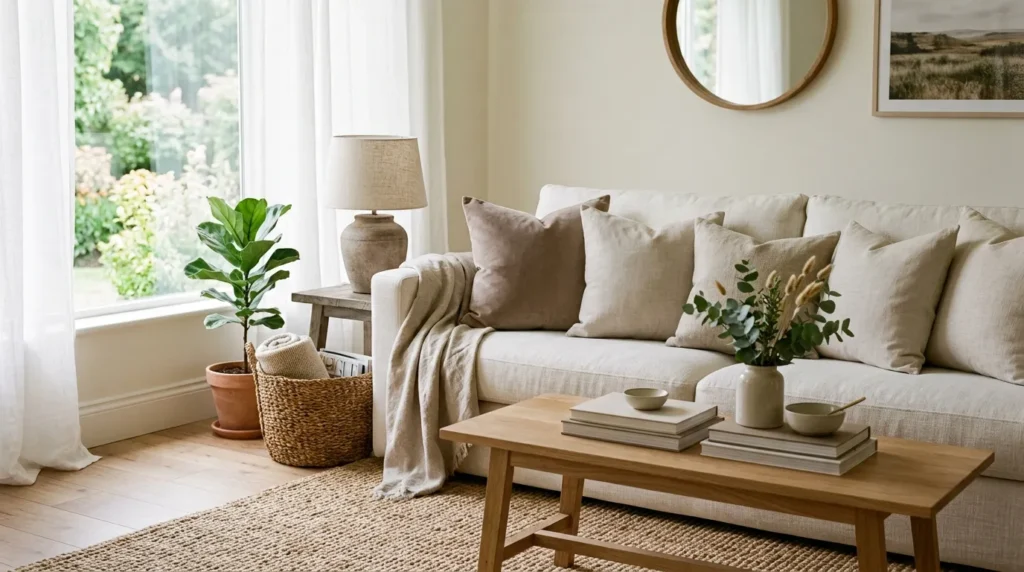
Replace them with natural linen in ivory, flax, beige, or soft sage.
Keep one plush pillow if you enjoy the texture.
Add a woven cushion for additional dimension.
On a sofa, place linen pillows toward the outer edges and a smaller textured pillow toward the center.
The result should feel comfortable rather than overly formal.
4. Pink to Coral
Quick Benefits
- Warms up spring colors
- Adds summer energy
- Works with neutral backgrounds
- Creates a cheerful accent
- Easy to introduce gradually
Why It Works
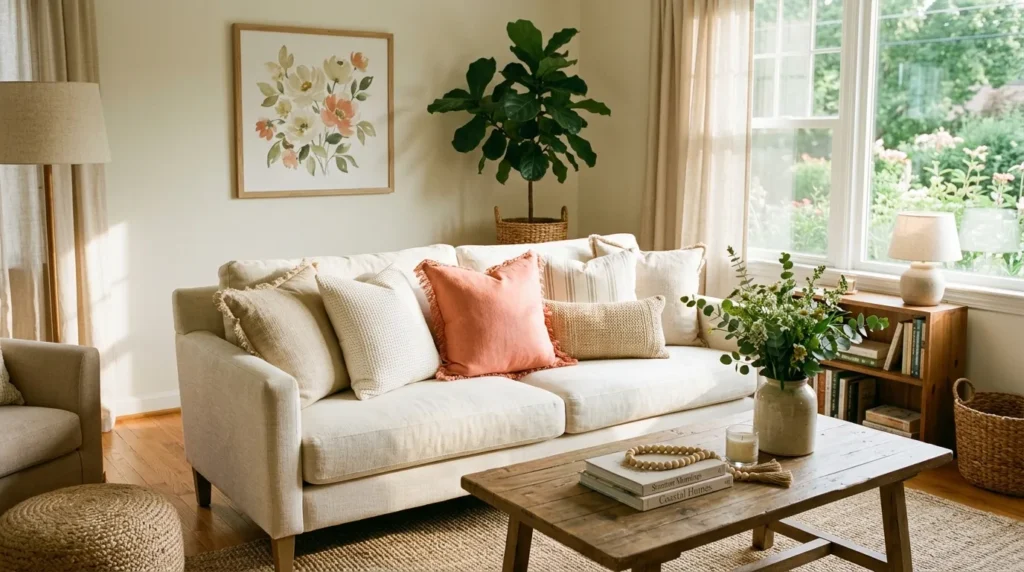
Soft pink can feel romantic and fresh during spring, while coral introduces a warmer, sun-inspired quality that feels appropriate for summer.
The transition doesn’t have to involve bright orange-coral. Muted coral, dusty terracotta, peach, and salmon can all create a sophisticated seasonal shift.
These shades work especially well against white, cream, beige, and light wood.
How To Style It
Replace a pale pink pillow with one muted coral cushion.
Keep the surrounding pillows neutral.
Pair coral with cream and warm beige for a sophisticated look.
For a coastal room, combine muted coral with pale blue.
For a Mediterranean-inspired space, add terracotta and natural woven textures.
Repeat a small amount of the coral color elsewhere in the room through artwork, flowers, or a decorative object.
5. Green to Sage
Quick Benefits
- Softens bright spring greens
- Creates an organic mood
- Works with neutral interiors
- Feels calm and natural
- Complements wood beautifully
Why It Works
Spring often brings brighter greens into the home, especially through floral and botanical decorating.
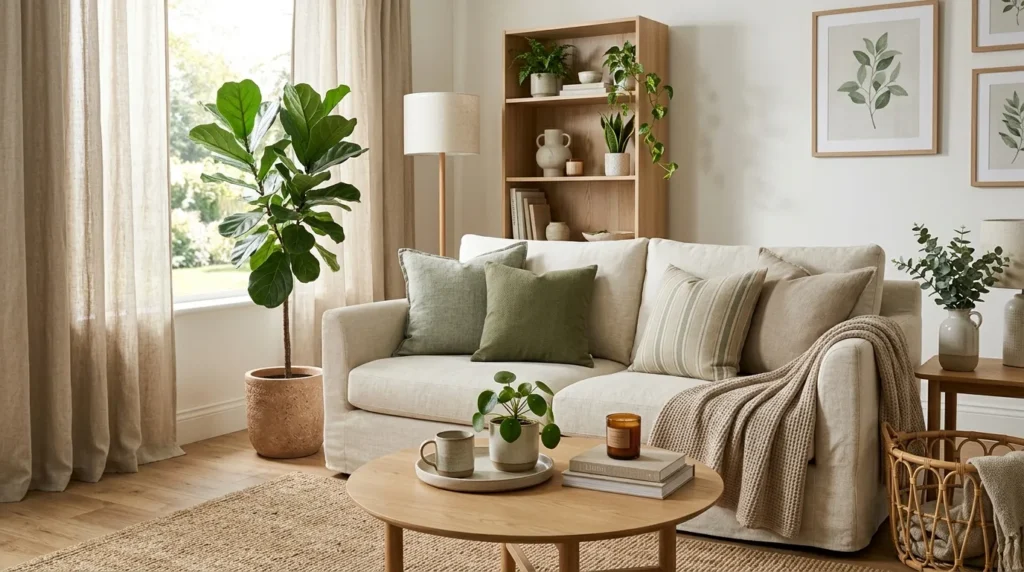
For summer, a muted sage or olive tone can create a calmer, more sophisticated interpretation of greenery.
These shades work particularly well with cream, beige, warm white, and natural wood.
Because sage is relatively understated, it can function as a neutral accent while still adding color.
How To Style It
Replace bright green pillows with sage or muted olive covers.
Keep cream and beige pillows around them.
Add a woven lumbar pillow in natural flax.
Pair the arrangement with light oak furniture, rattan accessories, or potted plants.
For a modern look, use solid sage pillows with minimal patterns.
For a farmhouse room, combine sage with ticking stripes or subtle checks.
6. Floral to Stripe
Quick Benefits
- Creates a timeless look
- Simplifies busy arrangements
- Adds coastal character
- Works across decorating styles
- Easy to mix with solids
Why It Works
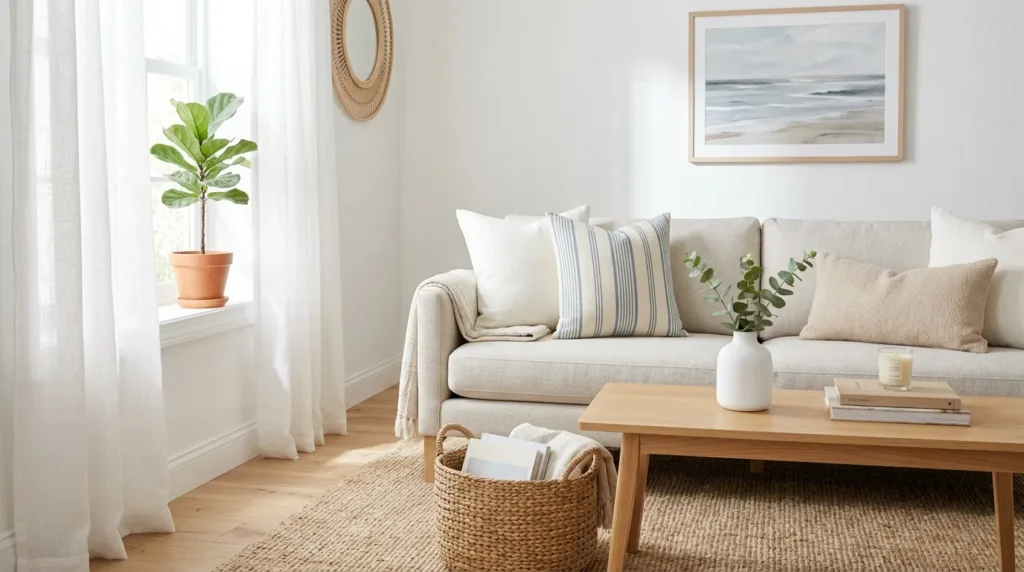
Stripes are one of the easiest patterns to use when transitioning from spring to summer.
They still provide visual interest, but they tend to feel cleaner and more relaxed than many floral prints.
A simple stripe can also bridge several design styles. Blue and white stripes suggest coastal decor, beige stripes work beautifully in organic interiors, and black-and-cream stripes can suit modern spaces.
How To Style It
Replace one busy floral pillow with a striped cushion.
Choose a stripe that repeats a color already found in the room.
Keep one small floral pillow if you want to maintain a hint of spring.
Pair the stripe with solid linen pillows.
For a relaxed summer look, try ivory and faded blue.
For farmhouse style, choose cream and muted gray or tan.
For modern spaces, consider a simple black-and-ivory stripe.
7. Quilted to Woven
Quick Benefits
- Adds casual texture
- Makes rooms feel relaxed
- Works with natural decor
- Creates visual depth
- Ideal for summer interiors
Why It Works
Quilted pillows can provide beautiful structure during spring, particularly in farmhouse and traditional interiors.
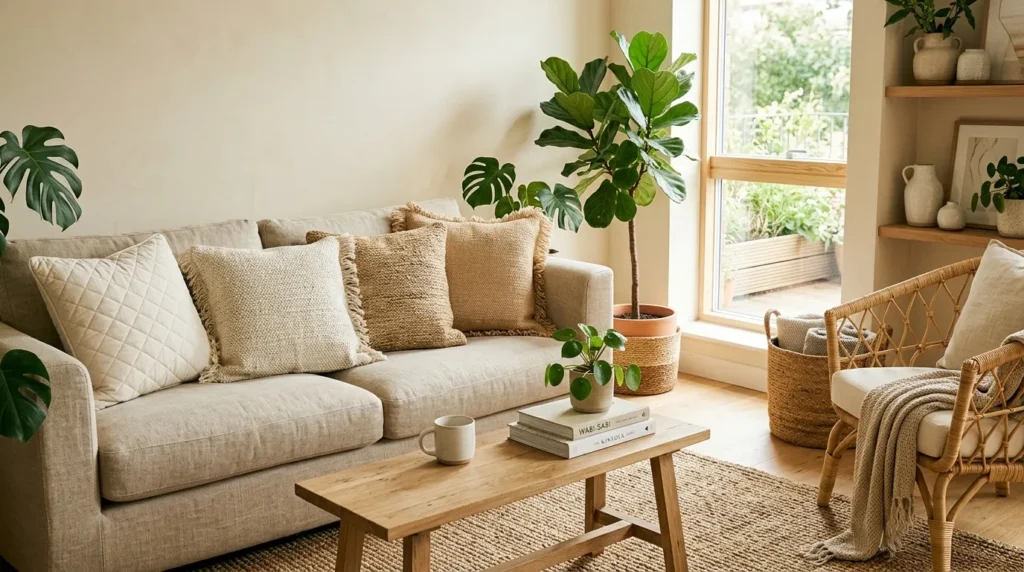
As summer approaches, woven textures can create a more casual, breathable-looking appearance.
Jute-inspired materials, cotton weaves, basket textures, and natural fibers bring a subtle connection to outdoor spaces.
This works particularly well when your furniture already includes wood, rattan, cane, or other natural materials.
How To Style It
Replace one structured quilted pillow with a woven cushion.
Choose natural beige, ivory, sand, or soft tan.
Pair it with a linen pillow to avoid using too many similar textures.
Add one subtle patterned cushion for contrast.
Keep the arrangement comfortable and relaxed rather than perfectly symmetrical.
8. Blue Layering
Quick Benefits
- Creates an airy atmosphere
- Works beautifully with white
- Adds summer color
- Supports coastal and traditional styles
- Easy to coordinate
Why It Works
Blue is one of the most versatile colors for the spring-to-summer transition.
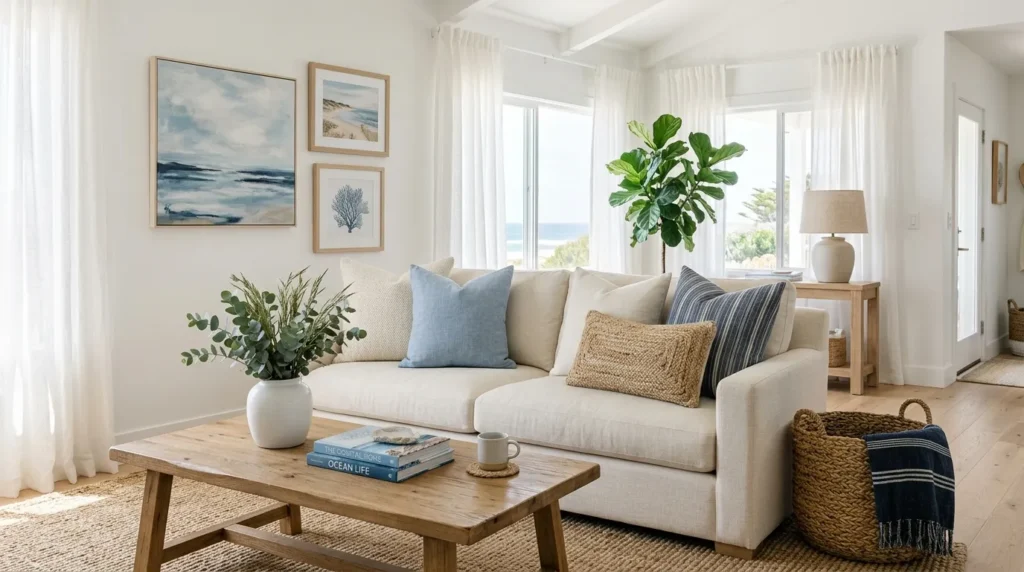
Pale blue can maintain the freshness of spring, while dusty blue, denim, navy, and blue-gray can gradually introduce deeper summer contrast.
The trick is layering related shades rather than choosing one exact blue.
Blue also pairs beautifully with natural materials, making it easy to create a relaxed indoor-outdoor feeling.
How To Style It
Start with ivory or cream pillows.
Add a pale-blue linen cushion.
Layer a muted navy or blue-gray striped pillow.
Include a natural woven lumbar to warm the arrangement.
For a more modern look, use dusty blue and charcoal.
For coastal style, combine white, pale blue, navy, and sandy beige.
9. Bright to Earthy
Quick Benefits
- Softens colorful spring decor
- Adds warmth
- Creates an organic feeling
- Works with natural materials
- Feels sophisticated
Why It Works
Some spring interiors use bright yellow, pink, green, or blue accents. If you love color but want a quieter summer atmosphere, shift those colors toward earthy versions.
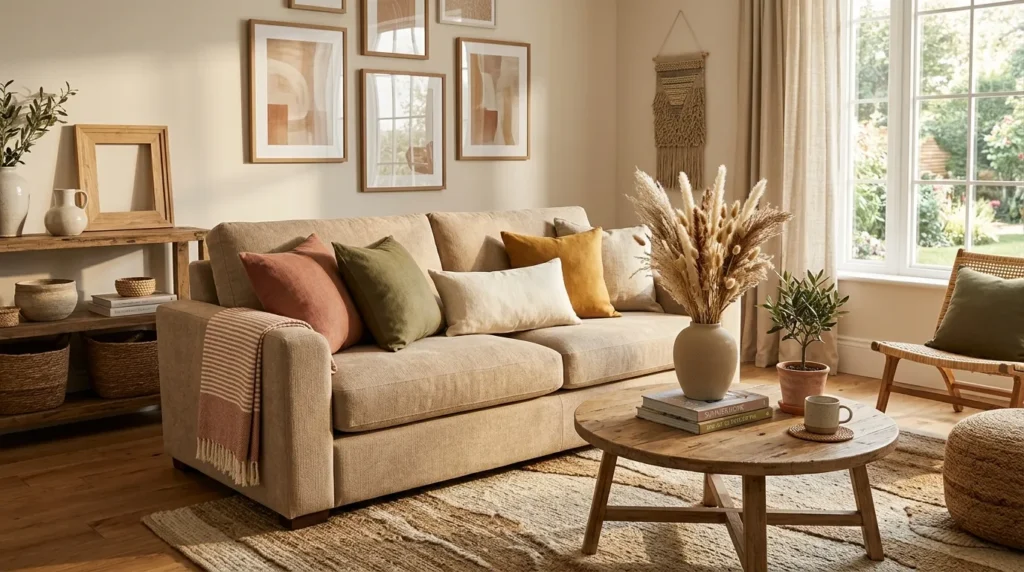
Think mustard instead of lemon, terracotta instead of bright orange, olive instead of emerald, and dusty blue instead of saturated turquoise.
The result maintains personality while becoming more grounded.
How To Style It
Choose one spring accent color and find its warmer or more muted counterpart.
Replace bright yellow with ochre or soft mustard.
Replace bright green with olive.
Replace hot pink with dusty terracotta or muted coral.
Surround the accent with ivory, beige, and natural wood.
Add woven accessories to strengthen the earthy summer aesthetic.
10. Indoor to Outdoor
Quick Benefits
- Creates continuity
- Makes outdoor spaces feel intentional
- Connects indoor and outdoor decor
- Simplifies seasonal styling
- Helps extend living areas
Why It Works
Summer naturally encourages people to spend more time outdoors.
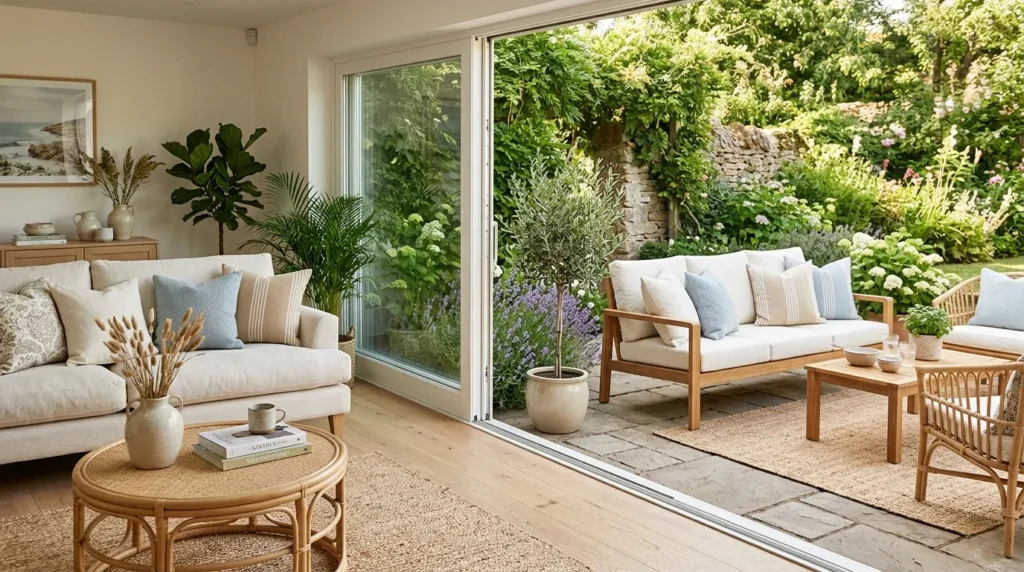
Coordinating your indoor and outdoor pillow colors can visually connect a living room with a patio, porch, balcony, or garden seating area.
The two spaces don’t need to match perfectly. Simply repeat one or two colors or materials.
For example, a pale-blue pillow inside can inspire blue outdoor cushions, while natural beige can connect a living room sofa with a rattan patio set.
How To Style It
Choose one anchor color from your indoor room.
Repeat it outdoors through one or two pillows.
Add natural beige or cream to both areas.
Use performance fabrics outside.
Bring in woven textures, light wood, or greenery to strengthen the connection.
This technique works particularly well in homes with large windows or glass doors facing outdoor seating.
11. Minimal Accent
Quick Benefits
- Creates a clean summer look
- Reduces visual clutter
- Makes rooms feel spacious
- Easy to maintain
- Works with modern interiors
Why It Works
One of the easiest ways to transition into summer is simply to remove a few decorative pillows.
Spring styling can sometimes include multiple patterns, florals, pastel colors, and layered textures. Summer can feel more effortless when you allow more of the sofa, chair, or bedding to remain visible.
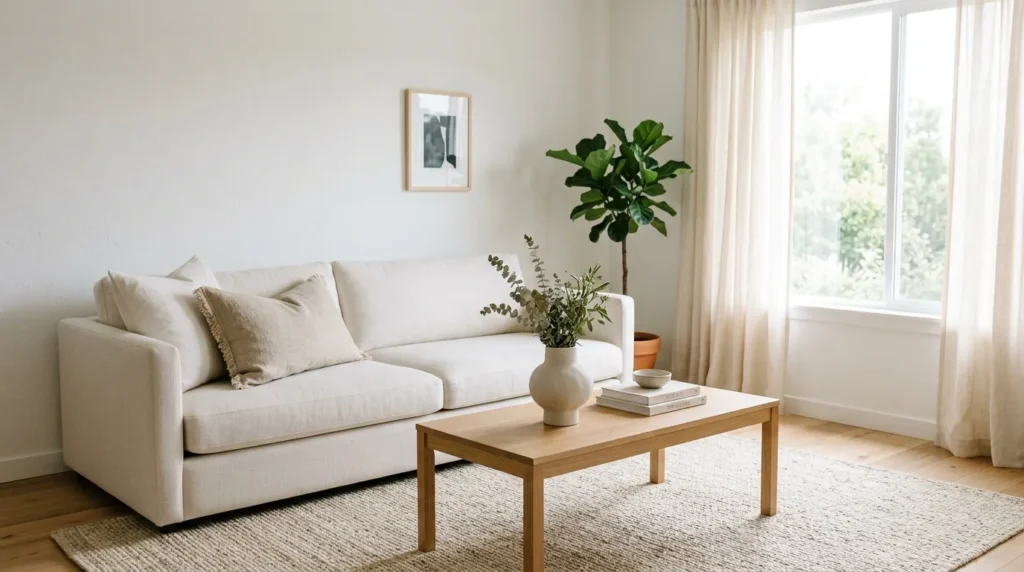
Minimal styling doesn’t mean boring. A single oversized linen pillow or textured lumbar can become the focal point.
How To Style It
Remove two or three smaller decorative pillows.
Keep your largest neutral pillows.
Add one oversized linen or woven accent pillow.
Choose ivory, flax, beige, muted blue, or sage.
Allow the surrounding furniture and natural light to become part of the visual composition.
This approach is especially effective in modern, Scandinavian, organic, and minimalist homes.
FAQ
When should I switch from spring to summer pillows?
There is no strict date, but late spring is a practical time to begin transitioning. As temperatures rise and natural light increases, you can gradually replace heavier textures and spring-specific colors with linen, cotton, warm neutrals, blue, sage, and other relaxed summer accents.
Do I need completely new pillows for summer?
No. Buying new covers rather than entire pillows is often a more practical approach. Keep your favorite inserts and larger neutral pillows, then change only the removable covers. This gives you more seasonal flexibility while reducing storage needs.
What colors transition best from spring to summer?
Soft blue, sage, ivory, cream, beige, muted coral, terracotta, and natural tan are especially versatile. They can bridge spring’s fresh palette and summer’s warmer, more relaxed atmosphere without creating an abrupt decorating change.
Can I keep floral pillows in summer?
Absolutely. Choose relaxed botanical or larger-scale floral patterns rather than replacing everything. You can also balance spring florals with linen, woven textures, stripes, and warm neutrals to make the arrangement feel more summery.
What pillow fabrics work best for summer?
Linen, cotton, lightweight canvas, woven materials, and breathable-looking blends are excellent choices. If pillows will be used outdoors, choose fabrics specifically designed for exterior conditions and follow the manufacturer’s care instructions.
How do I transition a dark sofa for summer?
Use lighter pillow covers in ivory, cream, flax, pale blue, or sage. Add one natural woven texture to soften the darker upholstery. You don’t need to eliminate all contrast; keeping one deeper accent can actually make the lighter summer colors look more intentional.
Should spring and summer pillows match?
They don’t have to match, but they should coordinate. The easiest approach is to keep a few foundational neutral pillows and change only the seasonal accents. This creates continuity while still allowing the room to evolve throughout the year.
Conclusion
A seasonal pillow swap should feel easy, not like another major decorating project.
The most successful spring-to-summer transitions usually happen through small changes: replacing velvet with linen, trading bright spring greens for sage, exchanging busy florals for simple stripes, or adding a few warm neutrals around the pillows you already own.
You don’t have to change every room at once. Start with the living room, bedroom, or outdoor space you use most often. Keep your larger neutral pillows as the foundation and rotate seasonal covers as the weather changes.
Think about how you want the room to feel. If you want an airy atmosphere, use ivory, pale blue, and natural linen. For an organic look, combine sage, flax, beige, and woven textures. If you love color, try muted coral, terracotta, or soft mustard as a controlled accent.
The goal isn’t to make your home look like a seasonal display. It is to make the spaces you already love feel naturally connected to the brighter, warmer months.
With a few intentional pillow swaps, you can move from spring’s fresh energy into summer’s relaxed character while keeping your existing furniture and decorating style completely intact.