
11 Gothic Botanical Bedroom Ideas for Enchanting Decor
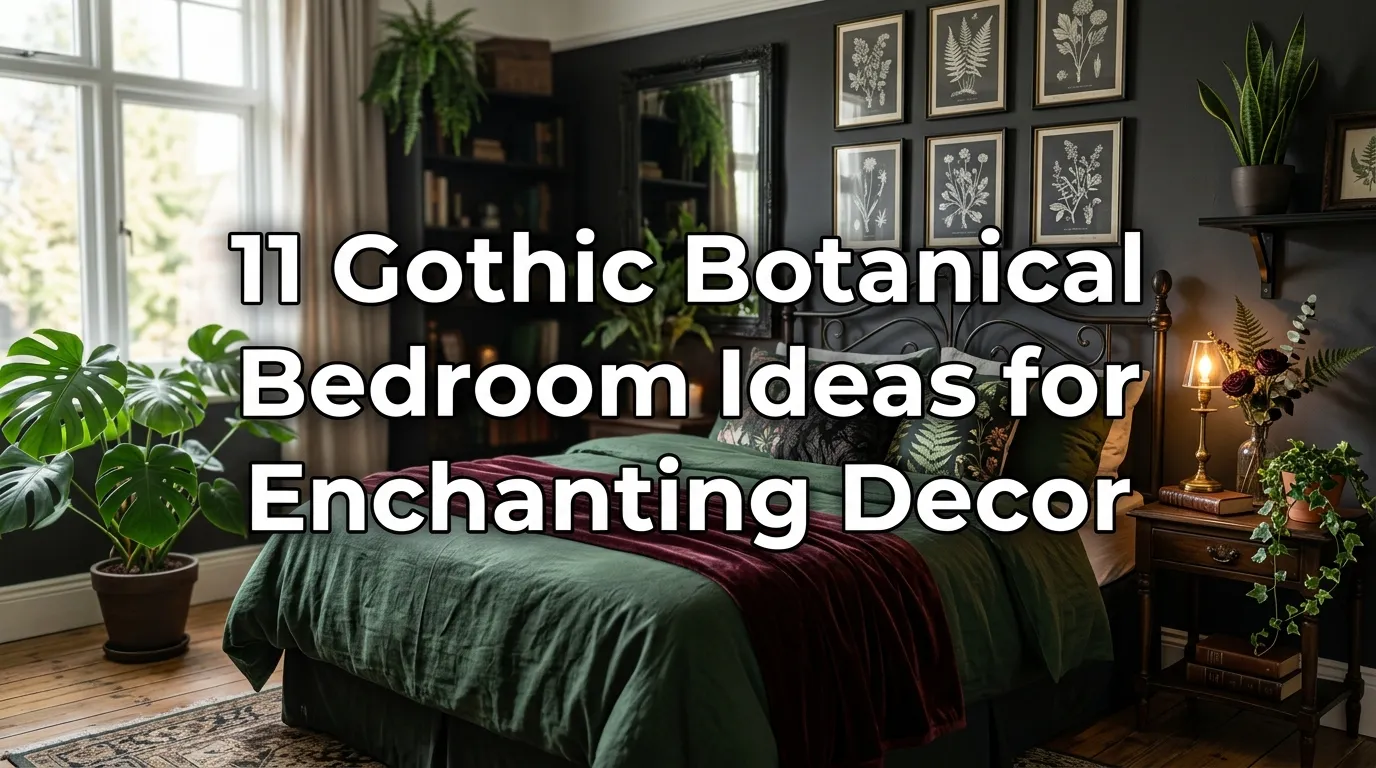
There is something wonderfully atmospheric about a bedroom where deep, moody colors meet the untamed beauty of plants and flowers. Gothic botanical decor creates exactly that feeling. Instead of making a bedroom feel gloomy, the right combination of dramatic color, vintage-inspired details, botanical patterns, and natural textures can make it feel intimate, mysterious, and surprisingly inviting.
The secret is balance.
A gothic bedroom doesn’t need to be filled with black furniture or heavy decorations. In fact, some of the most beautiful spaces use a restrained palette of charcoal, forest green, burgundy, antique brass, and warm cream. Botanical elements then soften the darker foundation with leafy silhouettes, pressed flowers, trailing plants, and floral artwork.
This decorating style works especially well in bedrooms because it naturally creates a cocooning atmosphere. Deep walls can make the room feel enclosed and cozy, while layered fabrics and warm lighting keep it comfortable rather than severe.
In my experience, the most successful gothic botanical bedrooms also have a little imperfection. An antique-looking frame, an aged wood nightstand, a slightly rumpled linen duvet, or a collection of mismatched botanical prints can make the space feel collected over time rather than decorated all at once.
Whether you love Victorian interiors, dark academia, romantic gothic style, or simply want a bedroom with more personality, these ideas can help you build a space that feels enchanting without becoming theatrical.
Table of Contents
1. Moody Botanical Walls
Create a dramatic foundation for the bedroom.
2. Vintage Floral Wallpaper
Bring old-world botanical character to the walls.
3. Dark Wood Furniture
Ground the room with rich natural materials.
4. Dramatic Floral Bedding
Make the bed the visual centerpiece.
5. Antique Brass Lighting
Add a warm glow to the darker palette.
6. Botanical Gallery Wall
Build an artistic collection of nature-inspired pieces.
7. Velvet Accent Layers
Introduce richness through soft, dramatic textiles.
8. Trailing Greenery
Bring living botanical shapes into the room.
9. Ornate Mirror Details
Add vintage character and visual depth.
10. Dark Floral Drapery
Frame the windows with luxurious texture.
11. Candlelit Finishing Touches
Complete the atmosphere with warm decorative details.
1. Moody Botanical Walls
Quick Benefits
- Creates an intimate atmosphere
- Makes lighter botanical details stand out
- Works beautifully with vintage furniture
- Adds depth to the bedroom
- Creates a dramatic focal point
Why It Works
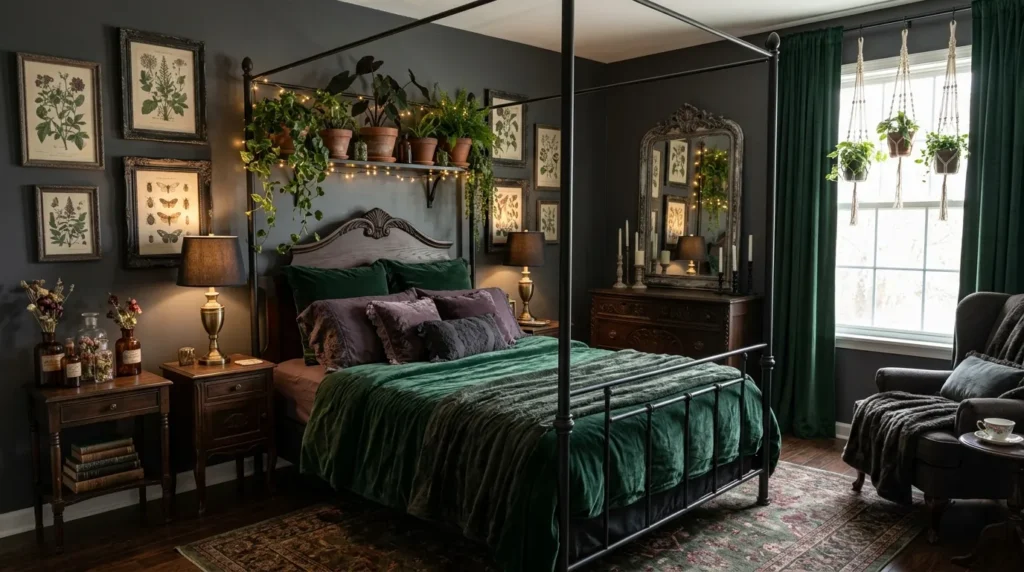
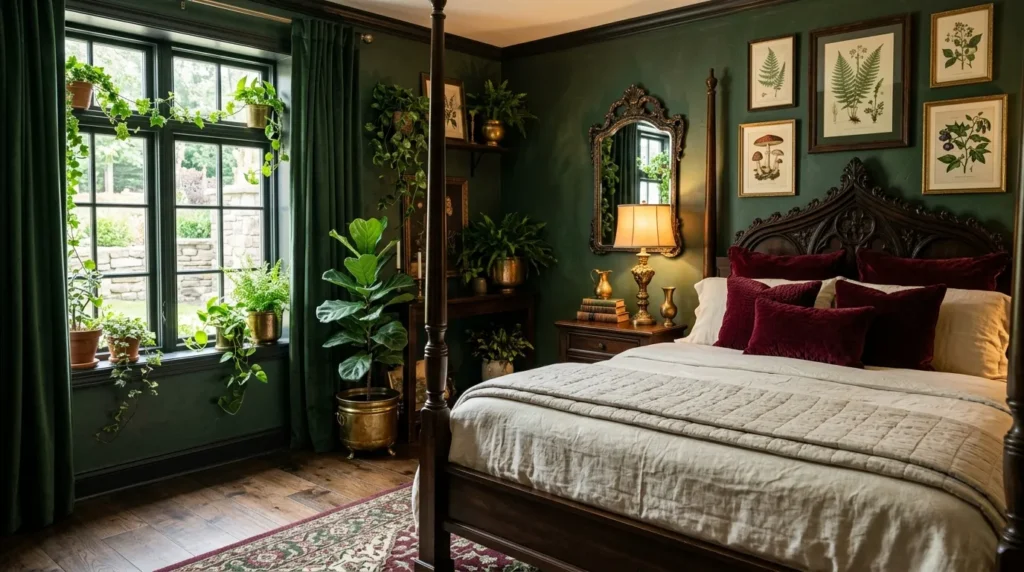
Deep wall colors are one of the easiest ways to establish a gothic mood. Charcoal, forest green, deep olive, espresso brown, and blue-black can all create that enveloping feeling without requiring elaborate decoration.
The botanical aspect becomes especially effective against a dark background. Green leaves, pale flowers, antique frames, and warm metallic finishes immediately stand out.
A common mistake is assuming every gothic bedroom needs pure black walls. In practice, softer dark shades can be much easier to live with and often feel more sophisticated.
Choose a color based on your natural light. A room with large windows can handle deeper tones, while a darker bedroom may benefit from a rich but slightly lighter shade such as moss or charcoal.
How To Style It
Paint the walls in a deep forest green, charcoal, or muted olive.
Keep the ceiling warm white if you want to maintain some visual openness.
Add dark wood furniture and botanical artwork.
Use cream or faded floral bedding to create contrast.
For a stronger gothic effect, choose antique brass lighting and ornate picture frames.
If painting isn’t an option, consider a removable dark botanical wallpaper or large-scale wall mural.
2. Vintage Floral Wallpaper
Quick Benefits
- Adds instant personality
- Creates an old-world atmosphere
- Combines gothic and botanical styles
- Works as an accent wall
- Provides pattern without extra accessories
Why It Works
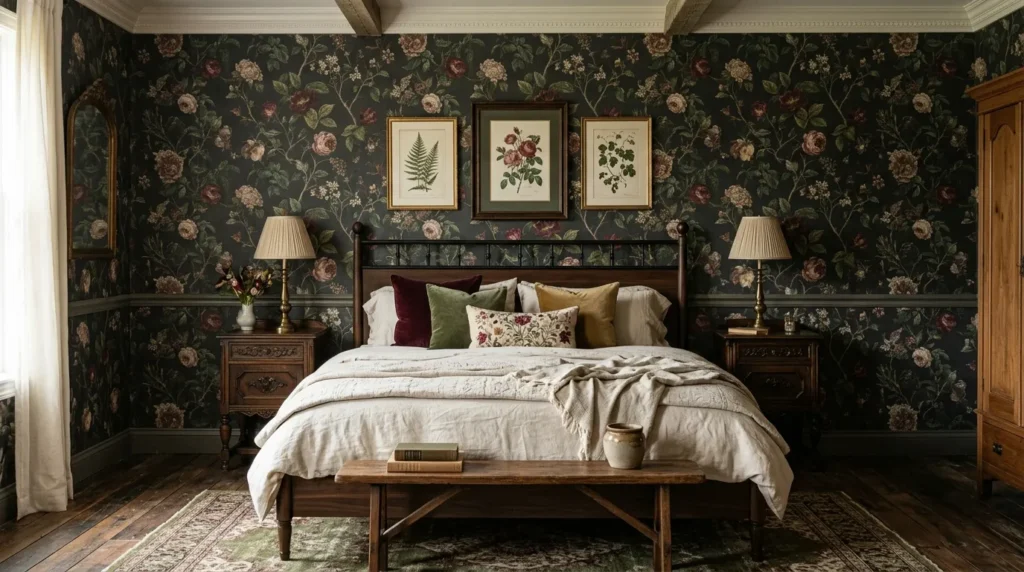
Floral wallpaper can give a gothic bedroom the feeling of an old European manor or an antique botanical study.
Look for designs featuring roses, vines, wildflowers, leaves, or dramatic blooms against dark backgrounds.
The most sophisticated patterns usually have muted rather than highly saturated colors. Think faded burgundy, dusty rose, forest green, cream, ochre, and charcoal.
A botanical wallpaper can also do some of the decorating work for you. Once the pattern is installed, you need fewer accessories to create visual interest.
How To Style It
Use wallpaper behind the bed as a feature wall.
Choose bedding in one or two colors pulled from the wallpaper.
For example, a charcoal floral print can pair with cream bedding and burgundy velvet pillows.
Add dark wood furniture and antique brass lamps.
Keep artwork relatively minimal so the wallpaper doesn’t compete with multiple focal points.
For renters, removable wallpaper can create a similar effect without making a permanent change.
3. Dark Wood Furniture
Quick Benefits
- Adds warmth
- Creates an old-world feeling
- Grounds dramatic colors
- Works with botanical patterns
- Adds natural texture
Why It Works
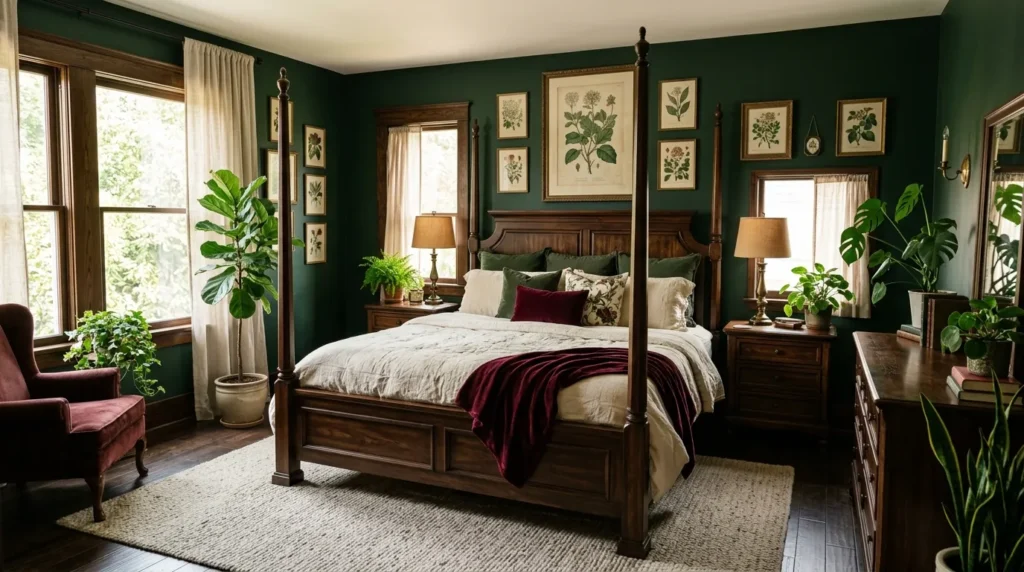
Dark wood is almost made for gothic botanical interiors.
Mahogany, walnut, espresso-stained oak, and antique wood finishes add richness without introducing another bright color.
Wood also connects the room to the natural world. The grain provides subtle texture that complements leaves, flowers, and vines.
You don’t need a complete matching furniture set. A combination of dark wood pieces can make the room feel more collected and authentic.
How To Style It
Choose a dark wood bed as the main furniture piece.
Pair it with vintage-style nightstands or a substantial wooden dresser.
Look for furniture with turned legs, carved details, or aged hardware if you enjoy a traditional gothic aesthetic.
For a modern interpretation, choose clean-lined walnut furniture.
Layer the furniture with cream linen, dark green textiles, and antique brass details.
Add a small wooden stool or plant stand to repeat the material around the room.
4. Dramatic Floral Bedding
Quick Benefits
- Creates a striking focal point
- Adds pattern
- Softens dark furniture
- Reinforces the botanical theme
- Makes the room feel layered
Why It Works
The bed naturally becomes one of the most important visual elements in a bedroom, making it an ideal place to combine gothic drama with botanical beauty.
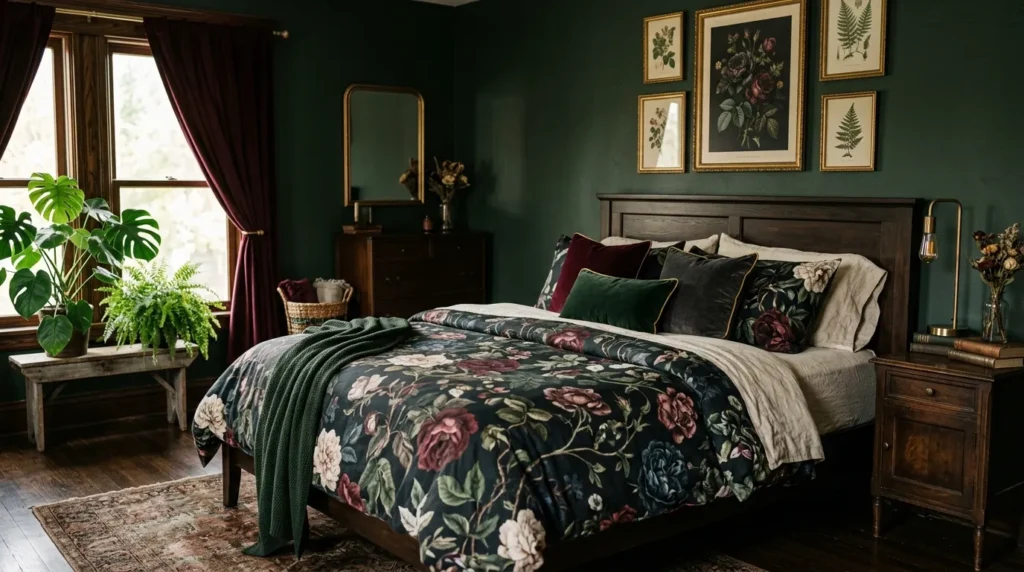
Dark floral bedding can feature oversized roses, climbing vines, wildflowers, or vintage botanical illustrations.
If your walls are already heavily patterned, choose a simpler duvet and let pillows provide the floral detail.
For a quieter bedroom, cream bedding with dark botanical embroidery can deliver the same feeling without overwhelming the room.
How To Style It
Start with a linen or cotton duvet in charcoal, forest green, cream, or muted floral print.
Layer velvet or embroidered pillows in burgundy, moss, or deep plum.
Add a textured throw across the foot of the bed.
Choose dark wood or black metal furniture around it.
For a romantic look, use floral bedding with faded roses.
For a darker aesthetic, choose oversized botanical patterns with black, charcoal, and deep green backgrounds.
5. Antique Brass Lighting
Quick Benefits
- Adds warmth
- Softens dark colors
- Creates atmospheric illumination
- Complements vintage furniture
- Provides decorative detail
Why It Works
Lighting can completely change how a gothic botanical bedroom feels.
Dark colors naturally absorb more light, so warm layered lighting becomes essential.
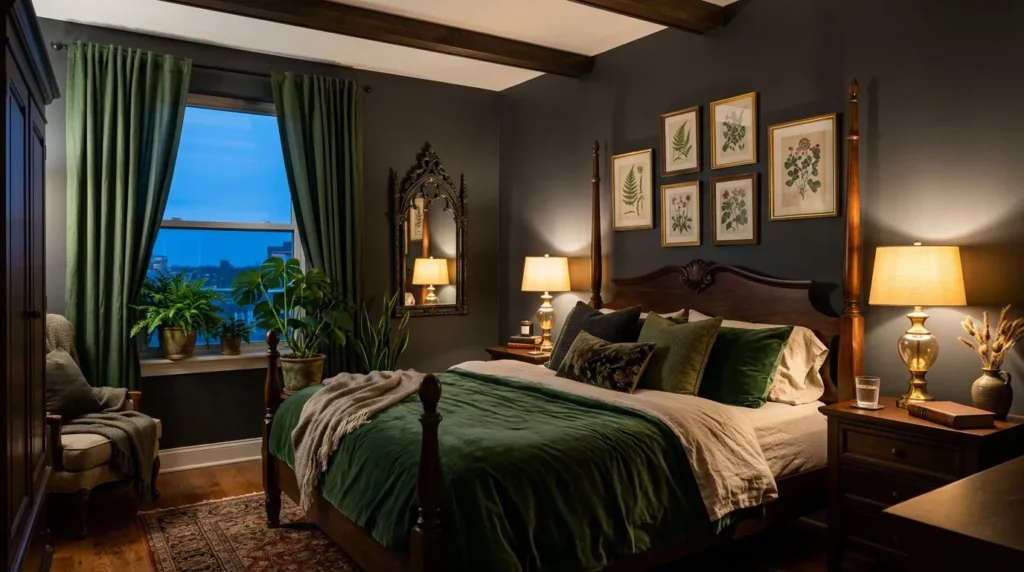
Antique brass is particularly effective because its warm metallic tone contrasts beautifully with forest green, charcoal, black, and burgundy.
Instead of relying on one bright ceiling fixture, several smaller light sources create a much more atmospheric result.
How To Style It
Place matching brass lamps on the bedside tables.
Choose warm bulbs with soft illumination.
Add a brass wall sconce near a reading chair or dresser.
A vintage-inspired chandelier can become a dramatic centerpiece if the ceiling height allows it.
Use linen or fabric lampshades to diffuse the light.
Avoid overly cool white bulbs, which can make deep colors appear harsh.
6. Botanical Gallery Wall
Quick Benefits
- Adds personality
- Reinforces the nature theme
- Creates a collected appearance
- Works above beds or dressers
- Offers flexibility
Why It Works
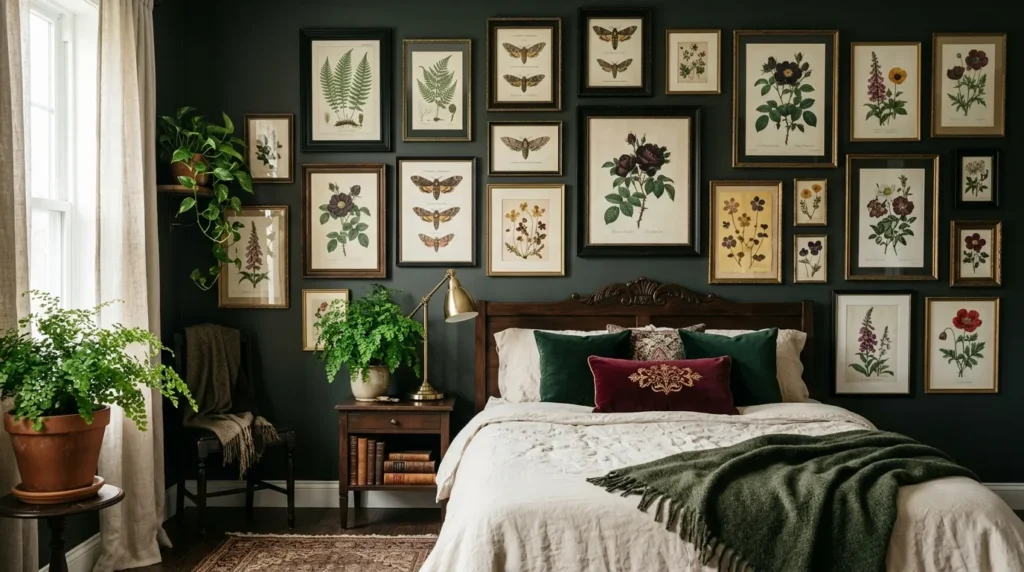
A botanical gallery wall can make a bedroom feel like a private collection from an old natural-history library.
The artwork doesn’t have to match perfectly. In fact, a mixture of botanical illustrations, pressed-flower artwork, vintage landscapes, moth illustrations, and floral paintings can create a more interesting composition.
This is also a practical way to introduce gothic character without changing your walls.
How To Style It
Choose a mixture of frames in aged brass, dark wood, and black.
Combine different sizes rather than using identical frames.
Look for artwork featuring ferns, roses, mushrooms, herbs, butterflies, moths, or wildflowers.
Arrange the largest piece first, then build around it.
For a symmetrical bedroom, center the gallery above the bed.
For a more collected look, create a slightly irregular arrangement above a dresser or reading nook.
7. Velvet Accent Layers
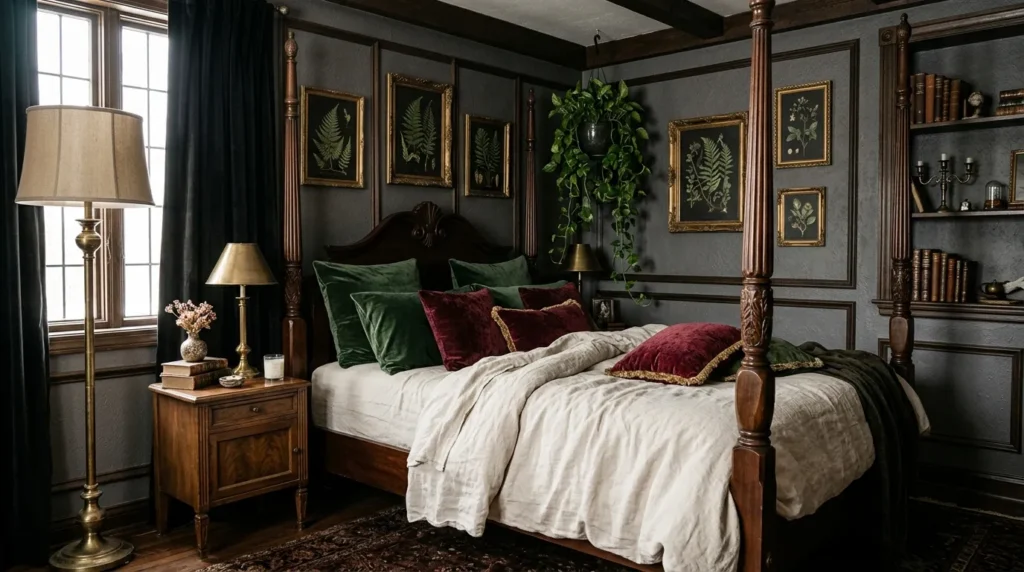
Quick Benefits
- Adds luxurious texture
- Makes the room feel cozy
- Enhances gothic character
- Creates visual depth
- Works with rich colors
Why It Works
Velvet has a naturally dramatic quality.
Its soft surface catches light differently depending on the direction of the fabric, which gives deep colors additional dimension.
A small amount of velvet can make a bedroom feel much richer without turning the space into a formal room.
Burgundy, forest green, black, navy, and antique gold all work beautifully.
How To Style It
Use velvet through accent pillows, a bench, an upholstered headboard, or a small accent chair.
A burgundy velvet pillow can bring warmth to a charcoal bed.
A forest green velvet chair can create a cozy reading corner.
If you’re using several dark colors, keep larger textiles in neutral linen to prevent the room from becoming too heavy.
Combine velvet with linen, cotton, wool, and natural wood for a more relaxed result.
8. Trailing Greenery
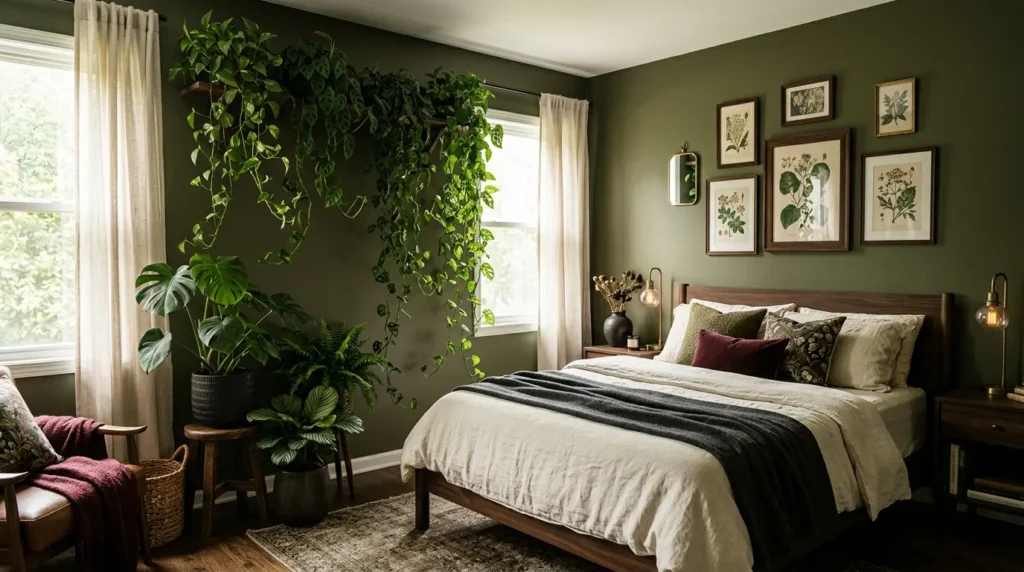
Quick Benefits
- Brings nature indoors
- Softens dark furniture
- Adds movement
- Creates visual height
- Reinforces the botanical theme
Why It Works
Living greenery gives gothic decor a fresh element.
Trailing plants can soften hard furniture edges and add an organic sense of movement.
You don’t need dozens of plants. A few thoughtfully positioned specimens can have more impact than filling every surface.
If natural light is limited, choose plants suited to the conditions of your room or use high-quality faux greenery.
How To Style It
Place a trailing plant on a high shelf so the vines can fall naturally.
Use a dark ceramic planter to keep the look cohesive.
Add a small fern on a dresser or bedside table.
A tall plant in a dark woven basket can fill an empty corner.
Avoid overcrowding the room. Leave negative space around your greenery so each plant becomes a deliberate decorative element.
9. Ornate Mirror Details
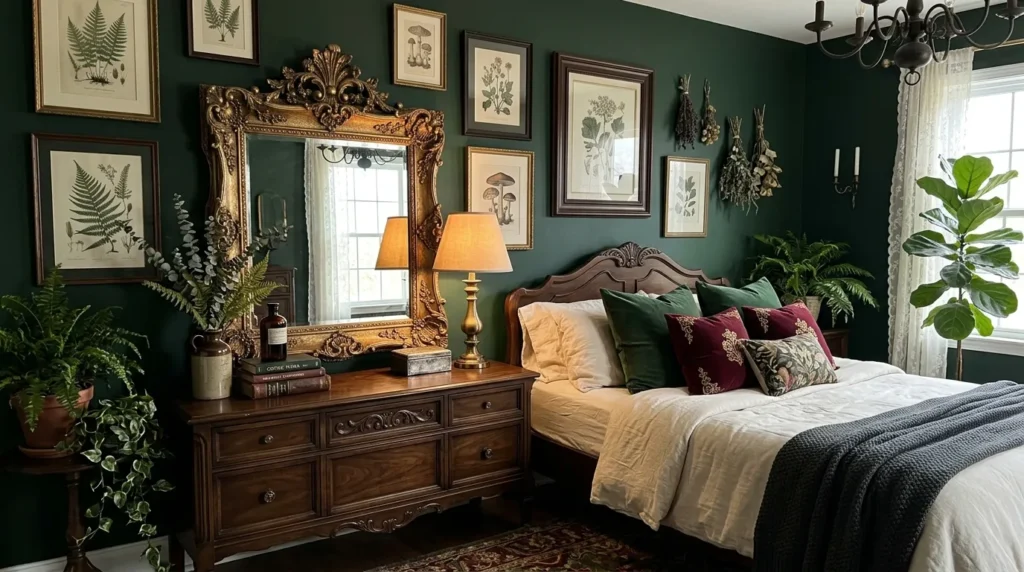
Quick Benefits
- Reflects light
- Adds vintage character
- Creates visual depth
- Works in small rooms
- Makes dark walls more interesting
Why It Works
A mirror is particularly useful in a dark bedroom because it can reflect both natural and artificial light.
An ornate frame adds another layer of gothic character.
Look for aged gold, antique brass, dark wood, or black frames depending on the rest of your decor.
The mirror doesn’t need to be enormous. Even a small decorative mirror above a dresser can become an attractive focal point.
How To Style It
Hang an ornate mirror above a vintage dresser.
Place a warm lamp nearby so the mirror reflects its glow.
For a dramatic bedroom, choose an arched or carved frame.
For a more contemporary interpretation, use a simple black frame with a slightly vintage silhouette.
Keep the area around the mirror relatively uncluttered so it can reflect light and decorative details.
10. Dark Floral Drapery
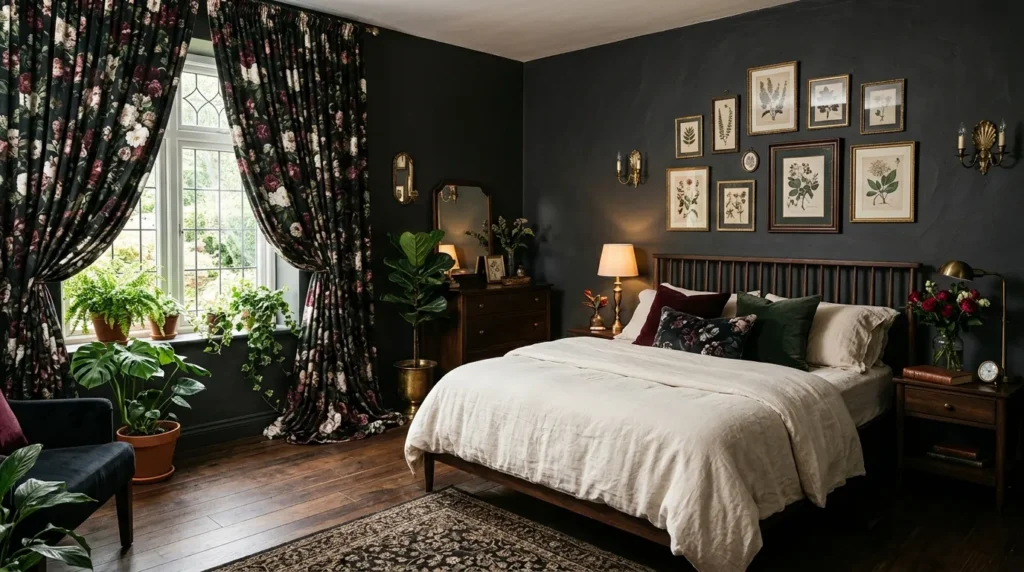
Quick Benefits
- Adds softness
- Creates dramatic framing
- Provides privacy
- Enhances the gothic mood
- Introduces pattern
Why It Works
Drapery can transform a bedroom because it combines color, pattern, and texture in one element.
Dark floral curtains can make windows feel almost theatrical, particularly when paired with rich wall colors and vintage furniture.
If patterned curtains feel too dramatic, choose solid forest green, charcoal, or burgundy linen instead.
Floor-length panels tend to look more substantial and elegant than short curtains.
How To Style It
Choose full-length curtains in a dark botanical print or rich solid shade.
Hang them close to the ceiling when possible to emphasize vertical height.
Pair patterned curtains with simpler bedding.
If the bedding already features bold florals, use solid curtains in forest green or charcoal.
Add a neutral rug and cream textiles to keep the room from becoming visually overwhelming.
11. Candlelit Finishing Touches
Quick Benefits
- Creates a warm atmosphere
- Adds romance
- Complements gothic decor
- Works with vintage accessories
- Makes evenings feel cozy
Why It Works
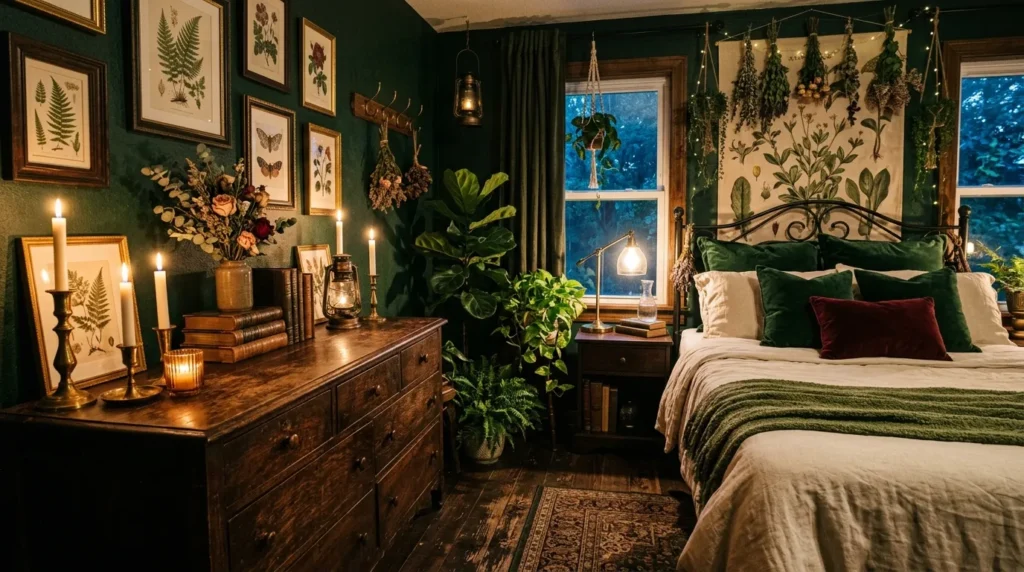
The final layer of a gothic botanical bedroom is often atmosphere rather than another major piece of furniture.
Warm candlelight can highlight wood grain, velvet, brass, and botanical artwork beautifully.
For everyday practicality, flameless candles can create a similar visual effect without an open flame.
Small decorative details such as vintage-style books, ceramic vessels, dried flowers, and antique trays can also help complete the room.
How To Style It
Arrange flameless candles on a dresser or bedside table.
Use vintage-inspired candleholders in aged brass or black metal.
Add a stack of old-style books and a small botanical arrangement nearby.
Place a decorative tray on the dresser to keep small accessories organized.
Keep candle groupings away from bedding, curtains, and other flammable materials, and follow the safety instructions for any candles you use.
Creating a Gothic Botanical Color Palette
The easiest way to keep this style sophisticated is to start with three or four main tones.
A beautiful palette might include:
- Charcoal for depth
- Forest green for the botanical foundation
- Burgundy for warmth
- Warm cream for balance
- Antique brass as a small metallic accent
Another option is softer:
- Moss green
- Dusty rose
- Chocolate brown
- Ivory
- Aged gold
You don’t need to use black everywhere.
In fact, combining several deep shades often creates more depth than using black as the primary color.
Making Gothic Decor Feel Cozy
Gothic decor can sometimes become visually heavy if every element is dark and ornate.
The easiest solution is contrast.
Add warm ivory bedding.
Use natural wood.
Layer linen with velvet.
Bring in plants.
Add woven baskets.
Use warm lighting.
Leave some negative space.
These details keep the bedroom from feeling like a themed room and instead make it feel like a comfortable personal retreat with a dramatic aesthetic.
Gothic Botanical Style on a Budget
You don’t need expensive antiques to create this look.
Start with the pieces that have the biggest visual impact.
A dark duvet cover can change the entire bed.
Removable botanical wallpaper can create a feature wall.
Vintage-style frames from thrift stores can become part of a gallery wall.
Dark wood furniture can often be refreshed with stain or paint.
Brass-look lamps and hardware can add warmth without requiring a complete furniture replacement.
Plants, dried flowers, books, and thrifted decorative objects can provide personality at relatively little cost.
The goal isn’t to make everything look expensive. It’s to create layers that feel intentional.
Frequently Asked Questions
What colors work best for a gothic botanical bedroom?
Deep forest green, charcoal, black, burgundy, plum, chocolate brown, and muted olive work beautifully. Balance these deeper shades with warm cream, beige, or faded floral tones so the bedroom remains inviting.
How can I make a gothic bedroom feel less dark?
Use warm lighting, cream bedding, natural wood, mirrors, greenery, and lighter textiles. You can also choose forest green or charcoal instead of pure black for the walls.
What plants work well with gothic decor?
Plants with interesting foliage or trailing shapes can complement the aesthetic. Ferns, pothos, ivy-style plants, and other leafy varieties can work beautifully. Choose plants based on the actual light and humidity conditions in your bedroom.
Can gothic botanical decor work in a small bedroom?
Yes. Use one dramatic element, such as a dark accent wall or floral wallpaper, rather than making every surface dark. Mirrors, lighter bedding, and vertical curtains can help maintain visual openness.
What furniture works with gothic botanical style?
Dark walnut, mahogany, espresso wood, antique-style pieces, black metal, and vintage furniture are excellent options. You can also mix modern silhouettes with antique accessories for a less traditional interpretation.
Is gothic botanical decor the same as dark academia?
They overlap but aren’t identical. Gothic botanical decor emphasizes dramatic nature-inspired elements, while dark academia often focuses more heavily on books, classical references, vintage study furniture, and scholarly imagery. The two styles can easily be combined.
How do I decorate a gothic bedroom without making it look themed?
Focus on color, texture, and a few carefully selected vintage details instead of obvious novelty decorations. Natural wood, botanical artwork, quality textiles, warm lighting, and real plants can create the atmosphere without making the room feel like a set.
Conclusion
A gothic botanical bedroom can be dramatic without being gloomy and romantic without feeling overly decorated.
The strongest rooms balance darkness with warmth. Deep green walls, charcoal textiles, dark wood, and vintage floral patterns establish the mood, while cream bedding, natural materials, greenery, and warm lighting make the room comfortable.
You don’t have to incorporate every idea at once. Start with one statement element—a dark wall, floral wallpaper, dramatic bedding, or an antique-style mirror—and build outward.
Then add texture.
Velvet can bring richness, linen can soften the bed, wood can ground the colors, and plants can introduce the organic quality that makes botanical decor feel alive.
Most importantly, allow the room to reflect your own taste. Mix vintage pieces with modern furniture, use artwork that genuinely interests you, and leave space for everyday objects.
The result should feel like a bedroom with a story: moody, natural, personal, and just mysterious enough to make you want to stay a little longer.