
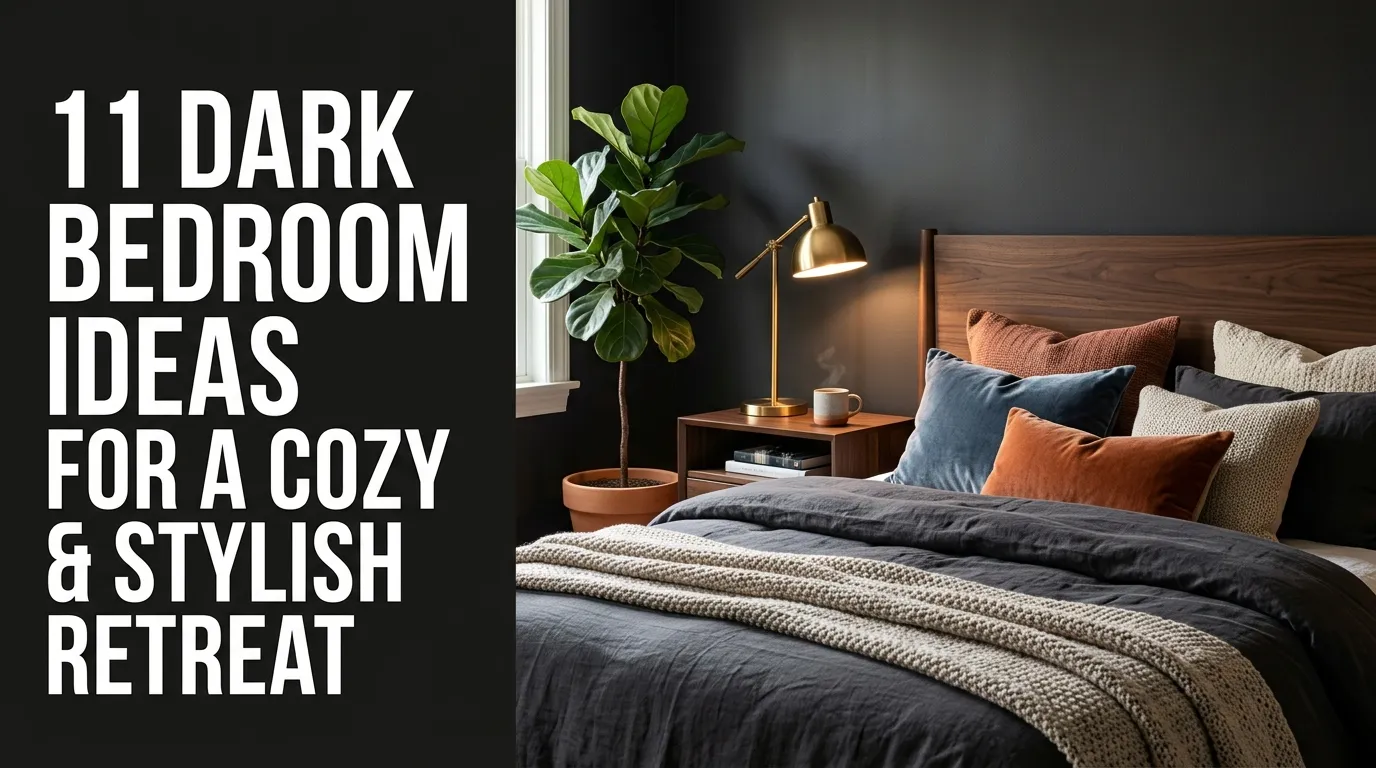
11 Dark Bedroom Ideas for a Cozy and Stylish Retreat
Dark bedrooms have a special kind of atmosphere. They can feel cocooning, sophisticated, intimate, and incredibly relaxing—especially when they’re balanced with the right textures and lighting. If you’ve ever looked at a bedroom with deep charcoal walls, rich brown furniture, moody green bedding, or dramatic navy accents and thought, I want my room to feel like that, you’re not alone.
The key to getting the look right is understanding that dark doesn’t have to mean gloomy.
A successful moody bedroom combines deeper colors with layers of warmth. Think soft linen bedding, chunky knit throws, natural wood, aged brass, woven textures, plush rugs, and lamps that cast a gentle glow. These details prevent the room from feeling flat while making the darker palette feel intentional.
I’ve noticed that dark bedrooms can work surprisingly well in both large and small spaces. In a smaller room, wrapping the walls in a deep color can create a cozy, enveloping feeling. In a larger bedroom, darker tones can make the space feel more grounded and luxurious.
You also don’t need to repaint the entire room to experiment with the style. Dark bedding, curtains, artwork, a statement headboard, or even one accent wall can introduce the mood gradually.
Whether your taste leans modern, vintage, rustic, boho, or hotel-inspired, these ideas will help you create a bedroom that feels dramatic without sacrificing comfort. The goal isn’t simply to make the room darker. It’s to create layers that make you want to stay in bed a little longer.
Table of Contents
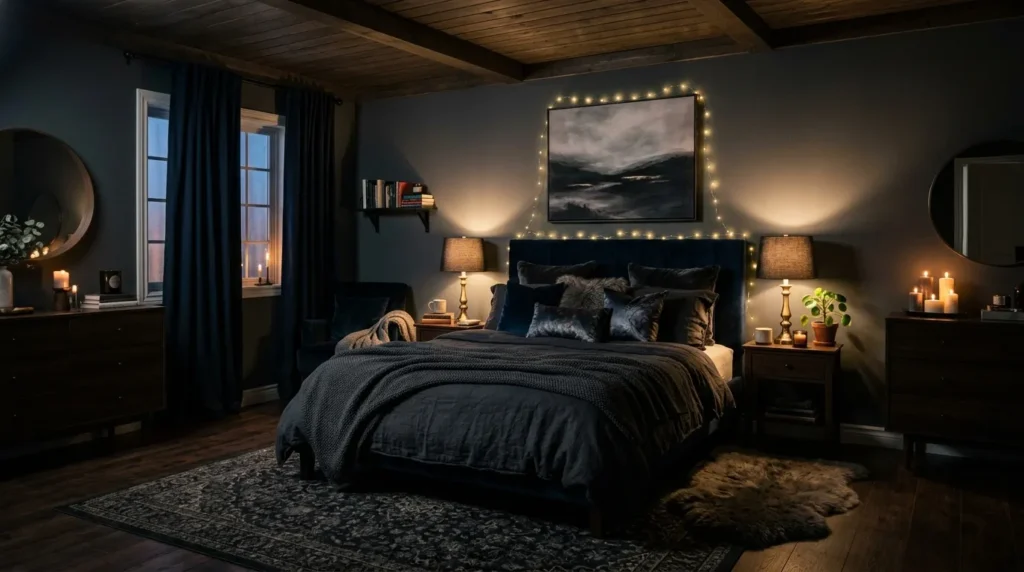
1. Charcoal Cocoon
Wrap the bedroom in deep charcoal for an intimate, sophisticated atmosphere.
2. Moody Green Walls
Bring an earthy feeling into the room with rich green shades and natural textures.
3. Dark Wood Layers
Use rich wood furniture to add warmth and depth to a dramatic bedroom palette.
4. Navy Blue Retreat
Create a serene bedroom with deep navy walls, bedding, and soft contrasting textures.
5. Black Accent Wall
Make one wall the dramatic focal point while keeping the rest of the bedroom balanced.
6. Warm Layered Lighting
Use several soft light sources to keep a dark bedroom inviting after sunset.
7. Moody Bedding
Build a cozy bed with deep colors, tactile fabrics, and plenty of layered texture.
8. Vintage Dark Charm
Combine traditional pieces, aged finishes, and deep colors for timeless character.
9. Dark Boho Layers
Mix moody colors with natural materials and relaxed textiles for an earthy retreat.
10. Luxe Hotel Mood
Create a sophisticated bedroom inspired by boutique hotels using rich tones and elegant details.
11. Warm Neutral Contrast
Balance dramatic walls with creamy textiles and natural accents for a softer finish.
1. Charcoal Cocoon
Quick Benefits
- Creates an intimate atmosphere
- Feels sophisticated
- Works with modern decor
- Makes warm lighting stand out
- Provides a versatile backdrop
Why It Works
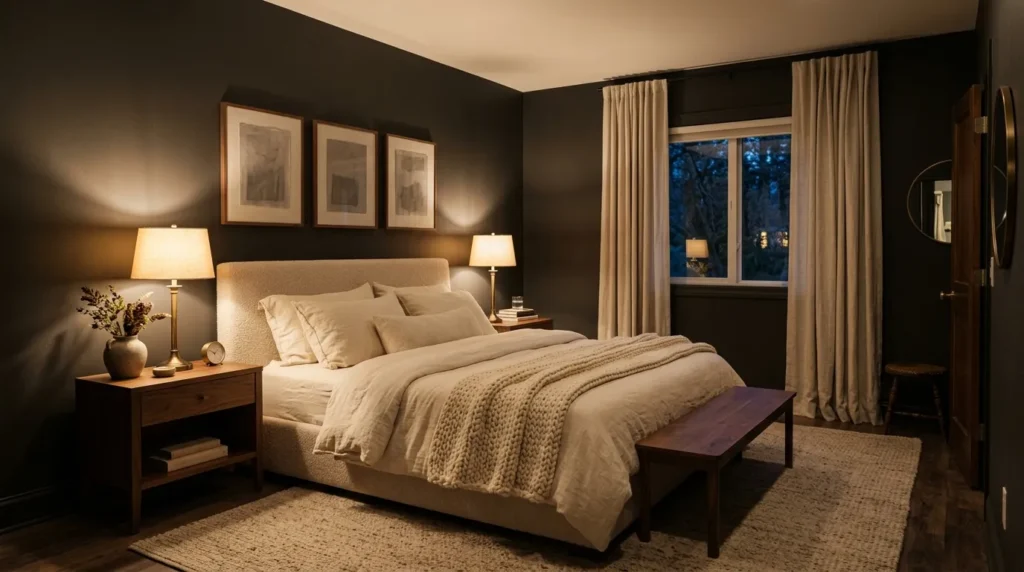
Charcoal is one of the easiest dark shades to work with because it has the drama of black without feeling quite as severe. On bedroom walls, it creates a cocoon-like effect that can make the space feel wonderfully private and relaxing. The secret is adding enough variation in texture and tone. If everything is the same charcoal shade and the same flat finish, the room can feel heavy. Layering charcoal with warm gray, cream, walnut, brass, and natural fabrics gives the color dimension. In my experience, charcoal becomes especially beautiful in the evening when warm lamps create soft pools of light against the walls.
How To Style It
Paint the walls in a deep charcoal with a slightly warm undertone rather than an extremely blue-gray shade.
Pair it with a bed upholstered in oatmeal, taupe, or dark gray fabric. Add crisp cream bedding to create contrast without making the room feel too bright.
Natural wood nightstands can soften the look, while aged brass lamps introduce warmth.
Finish with a textured rug, linen curtains, and one or two large pieces of understated artwork.
If you’re hesitant about painting the whole room, start with the wall behind the bed.
2. Moody Green Walls
Quick Benefits
- Adds an earthy feeling
- Feels sophisticated
- Pairs beautifully with wood
- Works with vintage styles
- Creates a restful atmosphere
Why It Works
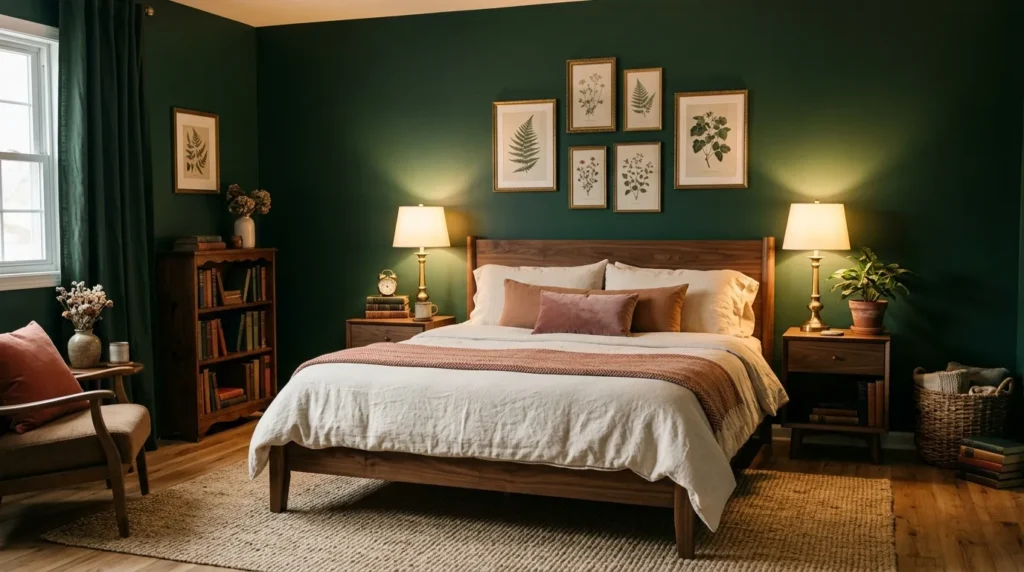
Deep green can make a bedroom feel connected to nature while still delivering the drama associated with a dark palette. Shades such as forest green, olive, moss, and deep sage can all work, depending on the mood you’re after. Green is particularly effective because it pairs naturally with warm wood, woven textures, brass, and cream. Instead of feeling stark, the room can take on an almost library-like quality. This makes dark green an excellent option if you want your bedroom to feel cozy and layered rather than strictly modern.
How To Style It
Choose a deep olive, forest, or moss green for the walls and repeat small amounts of the color through bedding or artwork.
Pair the walls with walnut or medium-toned wood furniture. Cream bedding will keep the bed from disappearing into the darker backdrop.
Add woven baskets, linen curtains, and a vintage-style rug for organic texture.
Brushed brass or antique brass lighting works especially well against green.
For a softer look, introduce dusty blush or muted terracotta through a cushion or artwork.
3. Dark Wood Layers
Quick Benefits
- Adds natural warmth
- Creates visual depth
- Feels timeless
- Works with rustic and modern styles
- Makes a bedroom feel grounded
Why It Works
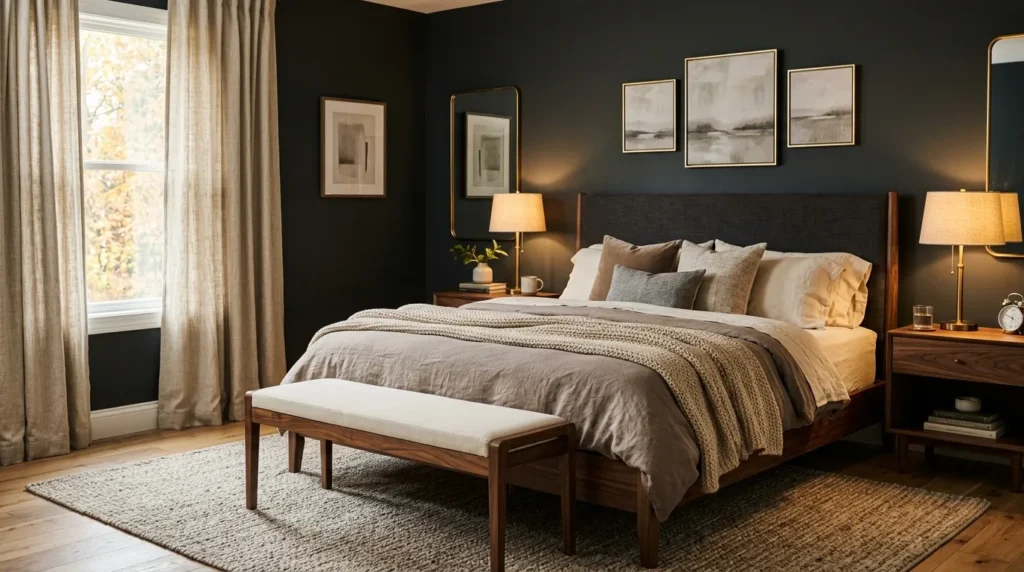
Dark wood furniture can introduce a rich, almost architectural quality to a bedroom. Walnut, espresso, smoked oak, and other deeper wood finishes naturally complement charcoal, navy, forest green, and warm neutrals. Unlike painted furniture, wood brings visible grain and organic variation into the space. This keeps a dark bedroom from becoming visually flat. You don’t need every piece to match either. A walnut nightstand beside a darker wood bed can look more collected and interesting than a perfectly coordinated furniture set.
How To Style It
Start with one substantial wood piece, such as a bed frame, dresser, or pair of nightstands.
Keep the walls deep but slightly lighter than the darkest furniture so the room retains definition.
Layer the bed with cream, taupe, rust, or warm gray bedding.
A woven rug and linen curtains can soften the stronger wood tones.
For lighting, use warm bulbs with brass, bronze, or ceramic fixtures. The goal is to emphasize the warmth of the wood rather than making the room feel overly dark.
4. Navy Blue Retreat
Quick Benefits
- Feels calming
- Offers classic sophistication
- Works with many neutrals
- Looks beautiful with brass
- Can feel both traditional and modern
Why It Works
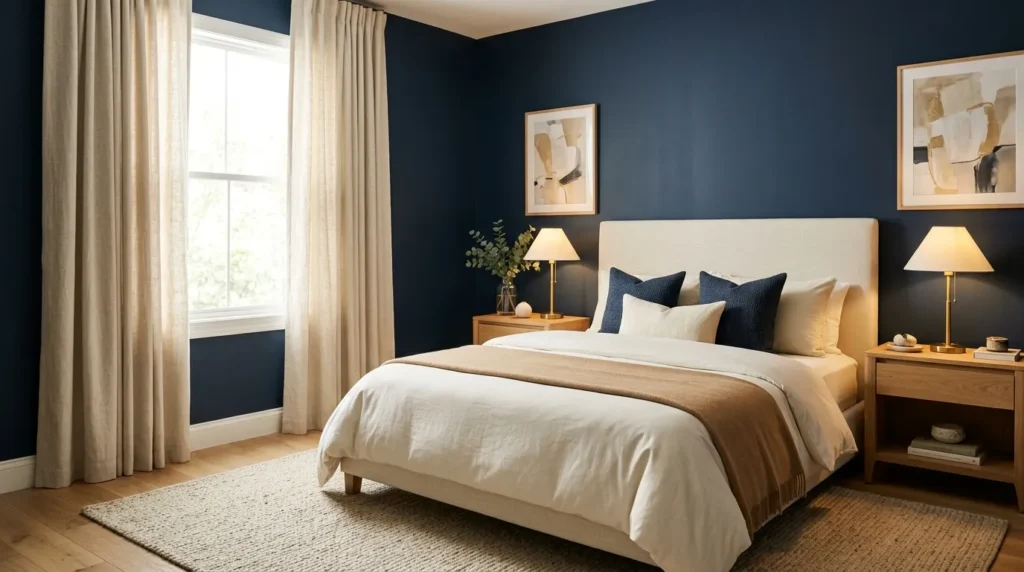
Deep navy creates a darker bedroom without the intensity of black. It has a naturally calming quality and works particularly well with warm whites, camel, tan, cream, and wood. Navy also has enough depth to feel dramatic while remaining relatively timeless. If you’re decorating a bedroom that needs to feel sophisticated but not overly moody, it can be an excellent middle ground. The contrast between navy walls and pale bedding is especially effective because it gives the room a strong visual anchor.
How To Style It
Use deep navy on the walls or behind the bed and pair it with warm white or cream bedding.
Introduce camel or tan through a leather bench, throw, or accent pillow.
Natural wood nightstands keep the room from becoming too formal, while brass lamps add a subtle glow.
Choose curtains that are close to the wall color if you want a cocooning effect, or use ivory curtains to brighten the room.
Add artwork with warm neutrals to connect the different tones.
5. Black Accent Wall
Quick Benefits
- Creates a strong focal point
- Adds drama without overwhelming
- Works in modern bedrooms
- Easy to experiment with
- Highlights the bed
Why It Works
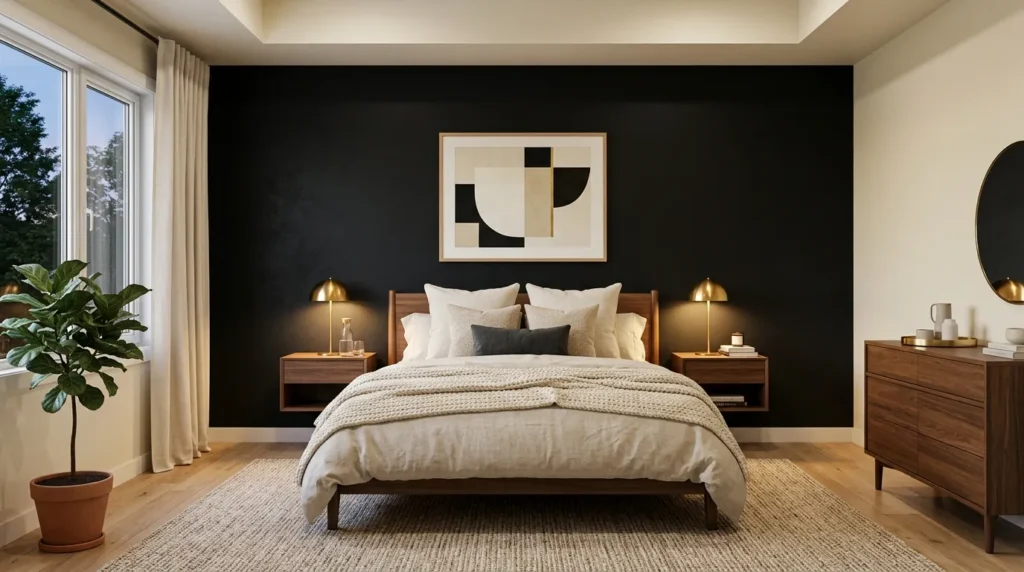
A black accent wall is a simple way to introduce a dramatic color without committing the entire bedroom to it. The wall behind the bed is usually the most natural choice because the bed already acts as the room’s focal point. Black creates a strong backdrop for lighter bedding, artwork, wood furniture, and warm lighting. The key is avoiding too many other high-contrast elements. If you combine black walls with stark white, bright metallics, and lots of sharp patterns, the room can start feeling harsh. Softer textures help balance it.
How To Style It
Paint the wall behind the bed a rich matte or low-sheen black.
Use an upholstered or natural wood headboard to break up the dark surface.
Choose cream, oatmeal, or warm gray bedding rather than bright white for a softer contrast.
Add one large artwork piece instead of many small decorations.
Warm brass, aged bronze, or black lighting can complete the look.
If you’re renting, try removable wallpaper or a large dark textile wall treatment instead of permanent paint.
6. Warm Layered Lighting
Quick Benefits
- Prevents a dark room from feeling flat
- Creates a cozy evening atmosphere
- Adds visual depth
- Makes textures more noticeable
- Improves bedroom functionality
Why It Works
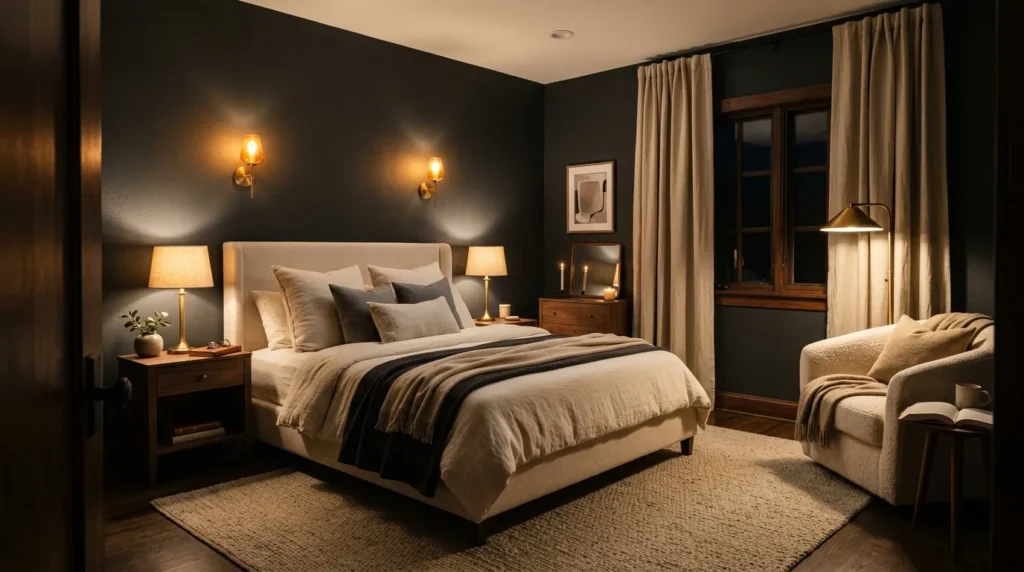
Lighting becomes even more important when your walls and furniture are dark. One ceiling fixture rarely provides the warmth needed to make a moody bedroom feel inviting. Multiple light sources create layers, allowing you to control the atmosphere throughout the evening. Bedside lamps provide practical reading light, while a floor lamp can illuminate a dark corner. Wall sconces add architectural interest without taking up nightstand space. Warm bulbs also emphasize the brown, brass, cream, and wood tones often used in dark bedrooms.
How To Style It
Use at least two or three different light sources rather than relying entirely on overhead lighting.
Place matching lamps on bedside tables for symmetry, or use wall sconces if the nightstands are small.
Add a floor lamp near a reading chair or dresser.
Choose warm-toned bulbs appropriate for your fixtures and use shades that diffuse the light.
If possible, install dimmers so the room can transition from practical brightness to a softer nighttime glow.
Keep electrical cords organized and positioned safely around beds and walking paths.
7. Moody Bedding
Quick Benefits
- Creates instant drama
- Easy to change seasonally
- Adds texture
- Doesn’t require repainting
- Makes the bed a focal point
Why It Works
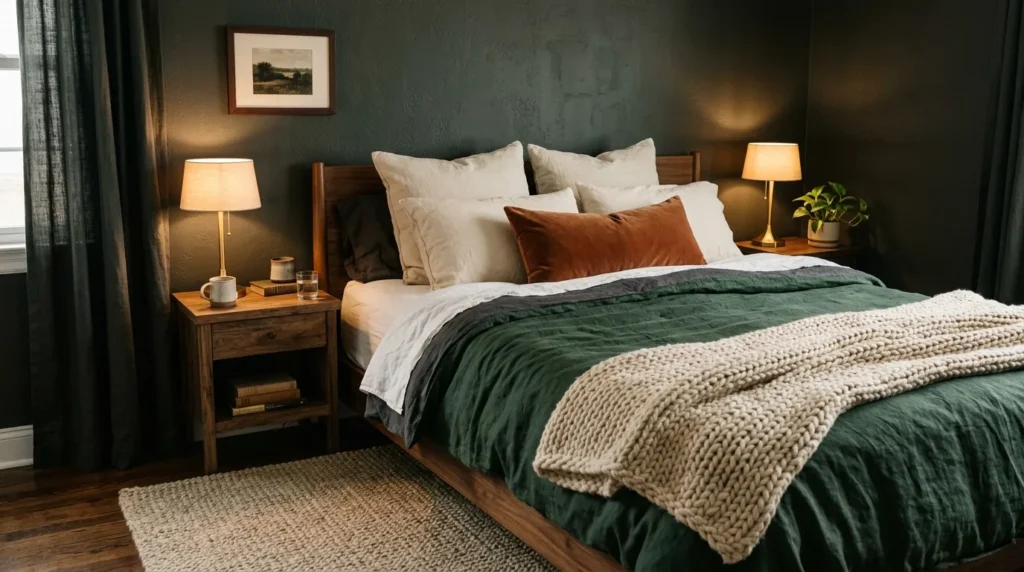
If you’re not ready to commit to dark walls, bedding is one of the easiest ways to create a moody bedroom. Deep charcoal, espresso, navy, forest green, plum, and rust can all create a richer atmosphere. The important part is mixing textures. A dark cotton duvet alone may look flat, while the same color layered with linen, velvet, chunky knits, and woven fabrics feels much more luxurious. The bed should look inviting rather than perfectly staged, so a little relaxed layering is actually an advantage.
How To Style It
Start with a deep duvet or quilt and layer lighter sheets underneath.
Add two or three pillows in related shades rather than using completely different colors.
A velvet lumbar pillow, linen shams, or chunky knit throw can introduce tactile contrast.
Keep the palette connected to the rest of the room. If you have green walls, for example, add cream, olive, and warm brown bedding.
Finish with a soft throw casually folded across the lower third of the bed.
8. Vintage Dark Charm
Quick Benefits
- Adds personality
- Feels timeless
- Works with antique-inspired furniture
- Creates a collected look
- Makes dark colors feel warmer
Why It Works
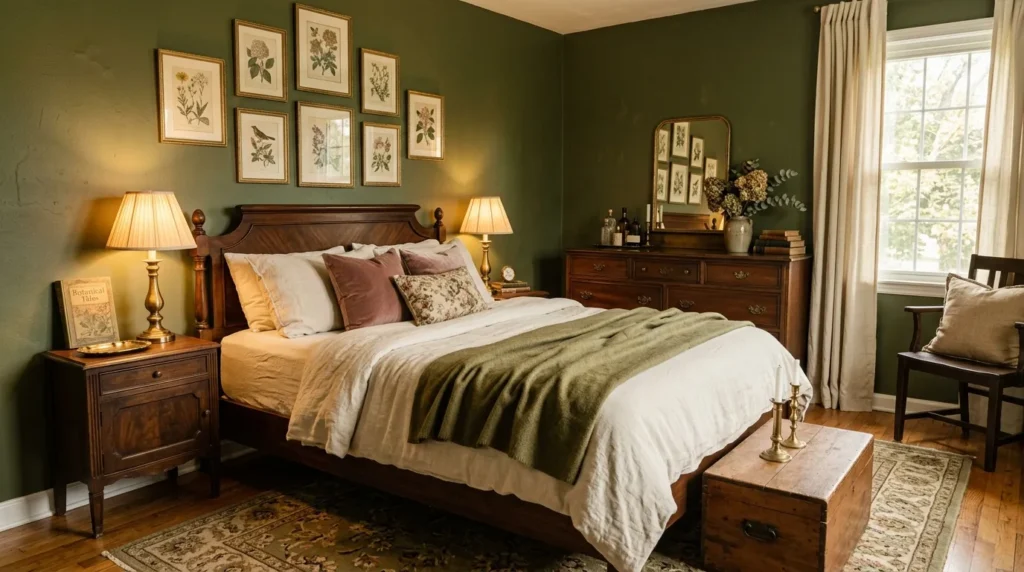
Dark colors and vintage furniture are natural companions. A deep wall color gives traditional furniture a more dramatic setting, while vintage-inspired pieces prevent the room from feeling overly contemporary. Think carved wood, aged brass, traditional artwork, patterned rugs, and old-world silhouettes. The beauty of this approach is that the room doesn’t have to be perfectly matched. A collected bedroom often feels warmer because every piece appears to have its own history and character.
How To Style It
Pair deep green, charcoal, navy, or brown walls with a traditional wood bed or vintage-inspired dresser.
Add an antique-style rug with muted colors rather than a high-contrast modern pattern.
Use brass or bronze hardware and warm table lamps.
Hang botanical prints, landscape artwork, or classic portraits in simple frames.
Mix old-looking details with modern bedding so the room remains comfortable and functional rather than becoming overly themed.
9. Dark Boho Layers
Quick Benefits
- Feels relaxed
- Adds plenty of texture
- Works with natural materials
- Encourages collected styling
- Creates a cozy atmosphere
Why It Works
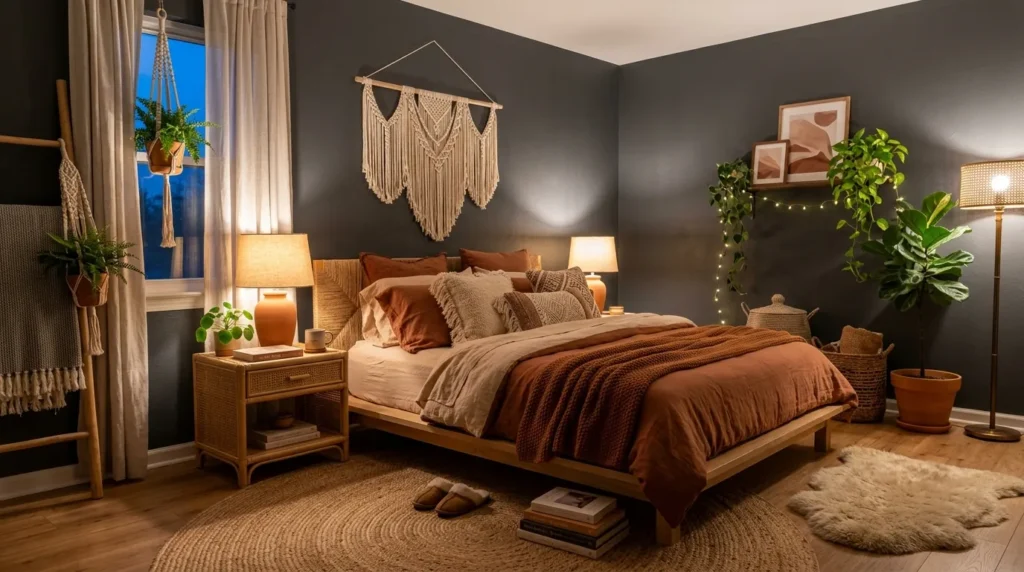
Boho design becomes particularly interesting when its usual light, airy palette is replaced with deeper colors. Charcoal, chocolate brown, forest green, rust, and deep terracotta create a grounded version of bohemian style. Natural materials then prevent the darker palette from feeling too heavy. Woven baskets, rattan, jute, linen, wood, and handmade-looking textiles add texture and visual variation. This style works especially well if you want a bedroom that feels relaxed and personal rather than highly formal.
How To Style It
Use a deep neutral or earthy wall color as the foundation.
Layer the bed with linen, woven blankets, textured pillows, and a patterned throw.
Add a rattan bench, woven pendant, or cane-front nightstand for natural texture.
Use terracotta, rust, cream, and muted green as accent colors.
Finish with plants that suit your room’s natural light and a few handmade-looking accessories.
10. Luxe Hotel Mood
Quick Benefits
- Feels polished
- Creates a sophisticated atmosphere
- Makes the bed the focal point
- Works with dark colors
- Encourages symmetry
Why It Works
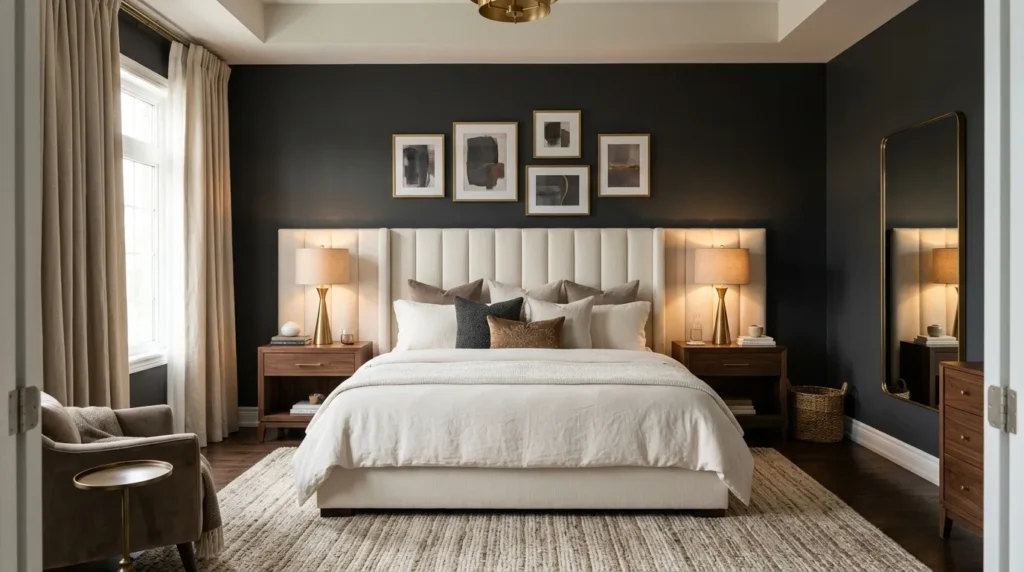
A boutique hotel-inspired bedroom is a great way to make dark colors feel elegant rather than heavy. The look relies on symmetry, restrained color, layered textiles, and thoughtful lighting. Instead of filling the room with decorations, focus on the quality and relationship between the major pieces. A tall upholstered headboard, matching bedside lamps, deep curtains, and crisp layered bedding can create that polished feeling. Dark walls provide the dramatic backdrop while warm neutrals keep the room inviting.
How To Style It
Center the bed on the main wall and use matching nightstands and lamps when possible.
Choose a tall upholstered headboard in taupe, cream, charcoal, or warm gray.
Layer bedding with crisp sheets, a duvet, coverlet, and a few decorative pillows.
Add full-length curtains and a large rug to create a more finished appearance.
Use brass or bronze lighting and keep decorative accessories restrained.
11. Warm Neutral Contrast
Quick Benefits
- Softens dark colors
- Keeps the room inviting
- Creates balance
- Works in many design styles
- Makes the bed feel brighter
Why It Works
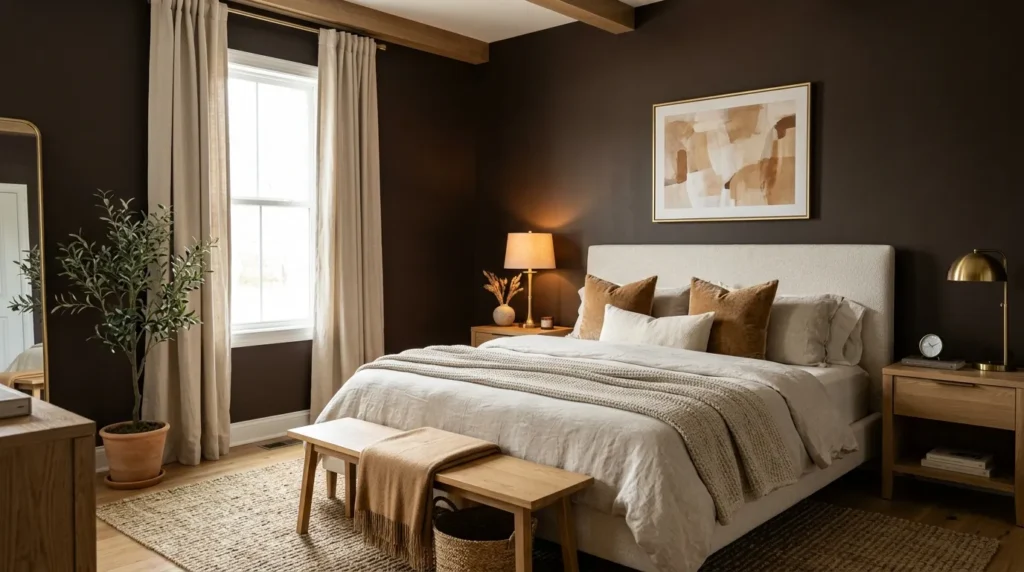
Dark bedrooms don’t need to be dark everywhere. In fact, one of the easiest ways to make a dramatic bedroom feel comfortable is to introduce generous amounts of warm neutral color. Cream, oatmeal, camel, tan, and beige provide visual relief against dark walls and furniture. Unlike bright white, warm neutrals maintain the cozy feeling. This combination is particularly useful if you want a moody room that still feels light enough during the day. The contrast also helps individual furniture pieces and textiles stand out.
How To Style It
Pair deep walls with a cream upholstered bed or light bedding.
Use oatmeal curtains, beige rugs, and camel accents to bridge the dark and light colors.
Natural wood furniture can provide another warm transition.
Keep metallic finishes warm rather than icy. Brass, bronze, and antique gold usually complement the palette beautifully.
Add one or two darker textiles to the bed so the light bedding still feels connected to the room.
Frequently Asked Questions
Are dark colors good for bedrooms?
Yes. Dark colors can create a cozy, intimate atmosphere that works particularly well in bedrooms. Charcoal, navy, forest green, chocolate brown, and deep plum can all be effective. The key is balancing the darker color with warm lighting, contrasting textiles, and natural materials so the room feels layered rather than flat.
How do I make a dark bedroom feel cozy instead of gloomy?
Focus on warm lighting and texture. Add layered lamps, soft bedding, rugs, curtains, natural wood, woven materials, and warm metallic accents. Cream and beige textiles can provide contrast without eliminating the moody atmosphere. Avoid relying on a single overhead light, especially in the evening.
What colors go well with dark bedroom walls?
Warm neutrals such as cream, beige, oatmeal, camel, and taupe pair beautifully with dark walls. Natural wood, brass, bronze, muted sage, dusty rose, rust, and terracotta can also work depending on the wall color. Choose colors with compatible undertones so the room feels cohesive.
Can a small bedroom have dark walls?
Absolutely. Dark walls can make a small bedroom feel intentionally cozy and cocoon-like. Keep the furniture appropriately scaled, use mirrors strategically, and add lighter bedding or curtains if you want contrast. Good lighting is especially important in a small room with dark walls.
What is the best lighting for a dark bedroom?
Layered warm lighting is usually the most inviting. Combine bedside lamps, sconces, floor lamps, and overhead lighting rather than relying on one source. Dimmable fixtures are particularly useful because they let you adjust the atmosphere throughout the evening.
How can I create a dark bedroom without painting?
Use dark bedding, curtains, rugs, artwork, furniture, and an upholstered headboard. A large dark area rug or dramatic bedding can change the mood significantly without altering the walls. Removable wallpaper is another option for renters or anyone who wants a temporary transformation.
How do I make a dark bedroom look luxurious?
Prioritize texture, proportion, and lighting. A tall headboard, layered bedding, full-length curtains, substantial rug, warm metallic accents, and matching bedside lighting can create a polished appearance. Keep the color palette restrained and avoid excessive accessories. Luxury often comes from thoughtful layering rather than simply adding more decor.
Conclusion
A dark bedroom can be one of the most inviting rooms in your home when the darker palette is balanced with warmth, texture, and thoughtful lighting.
You don’t have to paint every wall black to achieve the look. Start with one charcoal accent wall, a deep green palette, navy bedding, rich wood furniture, or even a dramatic rug. Once you see how the darker elements change the atmosphere, you can gradually build from there.
The most important thing is contrast. Pair deep colors with cream bedding, warm wood, woven textures, soft rugs, and gentle lighting. These lighter and tactile elements give the room dimension while preserving that intimate, cozy feeling.
If you love traditional interiors, try dark walls with vintage furniture and brass accents. For a more relaxed space, layer boho textiles, rattan, and earthy colors. If polished interiors appeal to you, borrow the symmetry and restrained palette of a boutique hotel.
And don’t forget the lighting. A dark bedroom comes alive in the evening when bedside lamps, sconces, and warm accent lights create pools of soft illumination.
Start with one change you love and build from there. Whether your final room is dramatic charcoal, deep forest green, rich navy, or warm chocolate brown, the goal is a bedroom that feels like a retreat—comfortable, personal, and inviting enough that you’ll look forward to winding down there every night.