
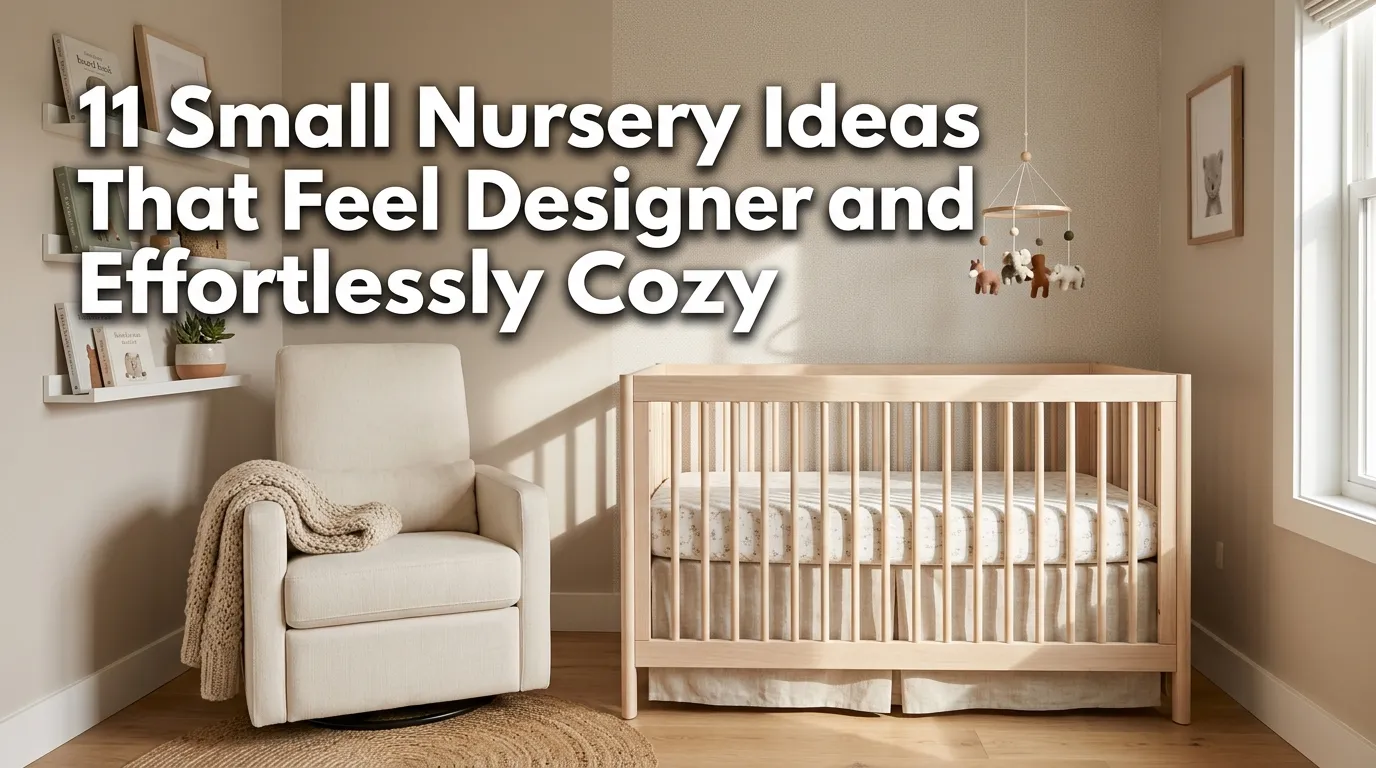
11 Small Nursery Ideas That Feel Designer and Effortlessly Cozy
A small nursery can be one of the sweetest rooms in the house. It doesn’t need to be large to feel thoughtful, comfortable, or beautifully designed. In fact, working with limited square footage often encourages you to make smarter choices about furniture, storage, lighting, and color—and those choices can make the room feel even more intentional.
The challenge is that a nursery has a surprisingly long list of needs. You need a safe sleep space, clothing storage, changing essentials, comfortable seating, lighting, and somewhere to keep the growing collection of books, blankets, and baby supplies. When every square foot matters, oversized furniture and unnecessary accessories can quickly make the room feel cramped.
The good news is that a small footprint doesn’t mean sacrificing style. A soft neutral palette can make the room feel open, while natural wood adds warmth. Wall-mounted storage can free valuable floor space, and a compact dresser can serve several purposes. Even the smallest corner can become a cozy reading or feeding spot with the right chair and lighting.
I’ve found that the most successful small nurseries don’t try to make the room look bigger through decoration alone. Instead, they create visual calm. Furniture has breathing room, storage is thoughtfully planned, and every decorative piece has a reason for being there.
Whether you’re preparing a tiny spare bedroom, converting part of a larger room, or working with an unusually narrow nursery, these ideas will help you create a space that feels polished, practical, and wonderfully cozy.
Table of Contents
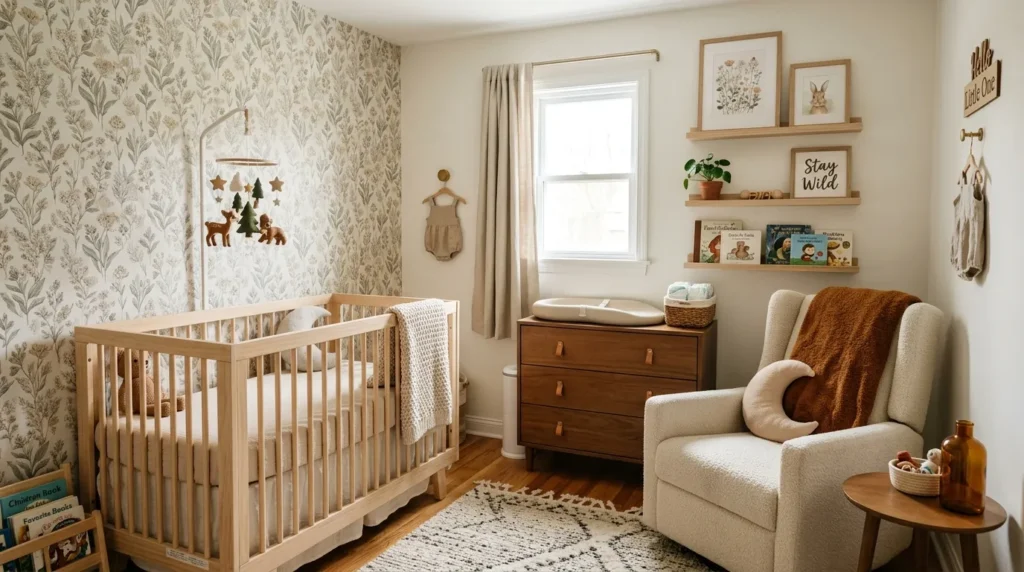
1. Soft Neutral Palette
Use warm, light colors to create an airy foundation without making the nursery feel sterile.
2. Compact Crib Placement
Choose the right crib position to preserve circulation and make the room feel organized.
3. Slim Storage Dresser
Use vertical and narrow storage to keep baby essentials organized without consuming valuable floor space.
4. Wall-Mounted Shelves
Take advantage of unused wall space for books, artwork, and lightweight storage.
5. Cozy Corner Chair
Create a comfortable feeding and reading spot without filling the nursery with bulky seating.
6. Vertical Accent Wall
Draw the eye upward with subtle wallpaper, paneling, or artwork.
7. Layered Soft Lighting
Combine practical and ambient lighting to make the small room feel warm and inviting.
8. Under-Crib Storage
Use overlooked space carefully to organize items you don’t need every day.
9. Oversized Simple Rug
Ground the nursery with one thoughtfully sized rug that adds softness without visual clutter.
10. Mirror Light Reflection
Use a strategically placed mirror to reflect natural light and add visual depth.
11. Minimal Personal Touches
Finish the room with a few meaningful details instead of overcrowding the space.
1. Soft Neutral Palette
Quick Benefits
- Makes the room feel more open
- Creates a calm backdrop
- Works with many decorating styles
- Makes future updates easier
- Highlights natural textures
Why It Works
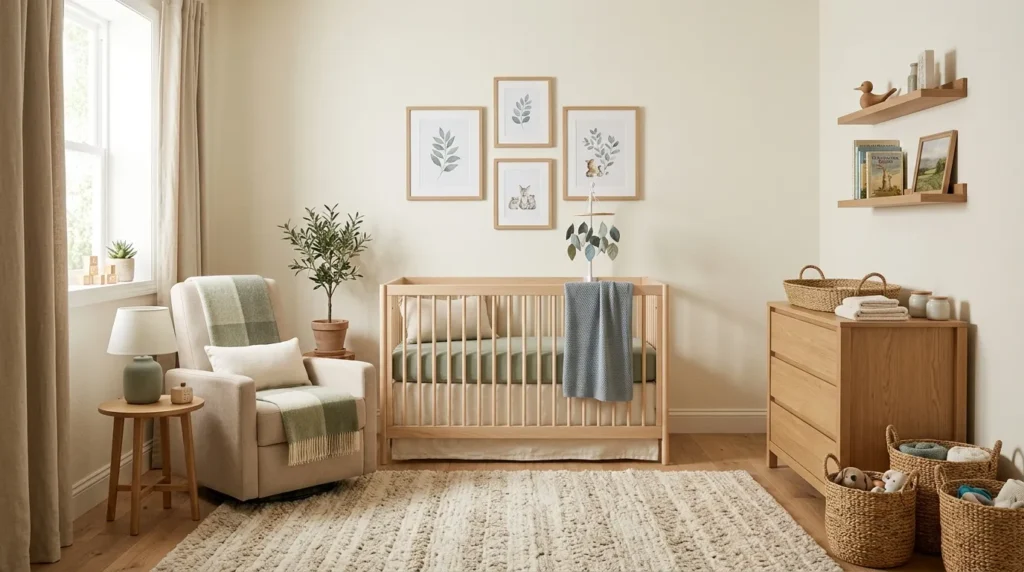
Color can have a major effect on how a small nursery feels. Warm white, ivory, beige, pale greige, and soft taupe create a quiet backdrop that allows the eye to move easily around the room. This doesn’t mean the nursery has to be completely plain. The interest comes from layering slightly different neutral shades and textures. A cream wall beside a beige rug and pale oak furniture can feel much richer than a room where everything is exactly the same color. Light colors are particularly helpful when natural light is limited, but warmth matters. Extremely cool whites can sometimes make a compact room feel stark rather than cozy.
How To Style It
Choose one warm neutral for the walls and bring in two or three complementary shades through furniture, textiles, and accessories.
A pale oak crib looks beautiful against warm white walls, while beige curtains and an ivory rug add softness. Introduce muted sage, dusty blue, or warm tan through a few small accents if you want color.
Keep larger surfaces relatively calm and use texture for visual interest. Woven baskets, linen-look curtains, boucle upholstery, and a knitted throw can make the room feel layered without adding visual clutter.
If the nursery has very little natural light, use warm bulbs in lamps to keep the neutral palette inviting after sunset.
2. Compact Crib Placement
Quick Benefits
- Improves circulation
- Makes furniture easier to arrange
- Creates a clear focal point
- Prevents awkward dead space
- Helps the room feel intentional
Why It Works
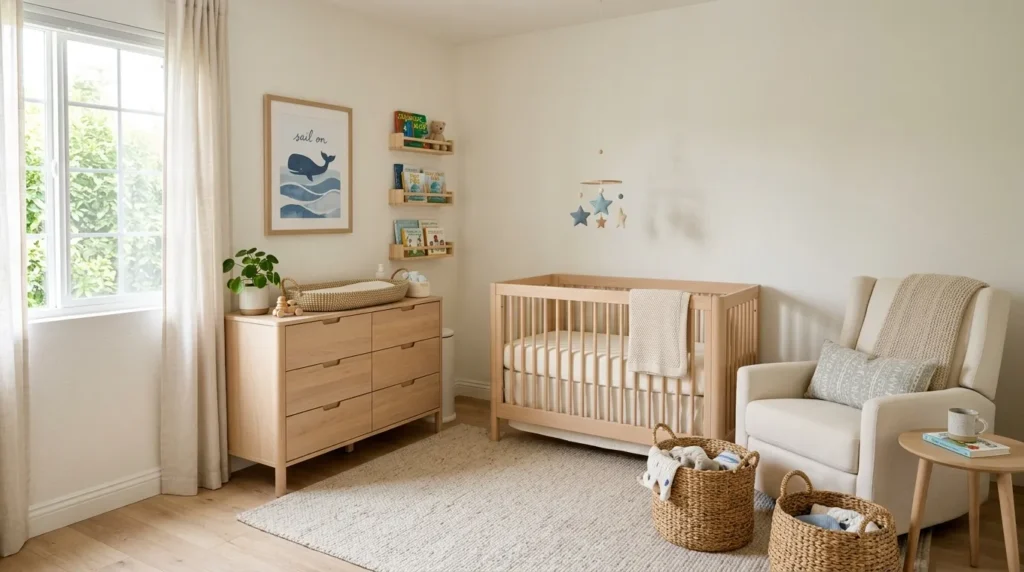
The crib is usually the largest piece of furniture in a nursery, so its position can determine how the entire room functions. In a small nursery, placing it thoughtfully is more important than adding decorative elements. Whenever possible, give the crib its own visual zone while preserving comfortable pathways around it. Centering it on the most appropriate wall can create symmetry, but that isn’t always the best choice in a tiny or unusually shaped room. Sometimes placing it along the longest wall leaves more useful space for storage and seating. The goal is to make movement around the room feel natural rather than forcing furniture into predetermined positions.
How To Style It
Before buying additional furniture, measure the room and map out the crib, door swing, windows, and major walkways.
Place the crib where it doesn’t interfere with doors, windows, heating or cooling equipment, or necessary circulation. Follow current safe-sleep guidance and keep the crib free from loose pillows, blankets, toys, and decorative objects.
Once the crib is positioned, keep the wall above and around it relatively simple. A subtle paint color, removable wallpaper, or properly secured artwork can create a focal point without crowding the sleeping area.
Use the remaining floor space for only the furniture you genuinely need.
3. Slim Storage Dresser
Quick Benefits
- Provides essential clothing storage
- Saves floor space
- Can serve multiple purposes
- Keeps visual clutter hidden
- Works beyond the nursery stage
Why It Works
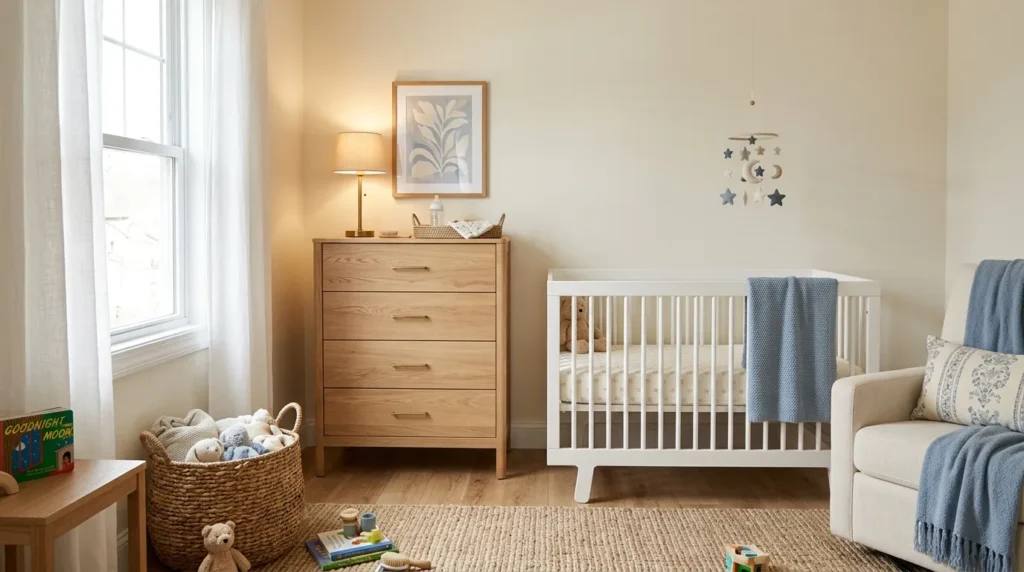
Storage furniture has to work particularly hard in a small nursery. A narrow dresser with good vertical capacity can provide substantial storage without taking up the footprint of a large chest. Drawers are useful for clothing, diapers, linens, and everyday supplies because they keep the room looking tidy even when life gets busy. Choosing a dresser that can remain useful after the nursery years is also a smart investment. A simple wood or neutral-colored piece can later become a child’s clothing dresser, making it more valuable than a highly themed nursery-specific item.
How To Style It
Choose the tallest practical dresser that fits the room rather than automatically choosing the widest option.
Use drawer dividers for small clothing, socks, bibs, and accessories. Keep frequently used items organized in the most accessible drawers.
If the dresser is designed and secured appropriately for use as a changing station, it can serve two functions and eliminate the need for a separate changing table.
Keep the top relatively clear. A small lamp, framed artwork, and one practical tray are often enough. Avoid turning the surface into additional storage.
Anchor furniture appropriately according to the manufacturer’s instructions and current child-safety recommendations.
4. Wall-Mounted Shelves
Quick Benefits
- Uses vertical space
- Keeps the floor open
- Displays books beautifully
- Adds personality
- Works in very small rooms
Why It Works
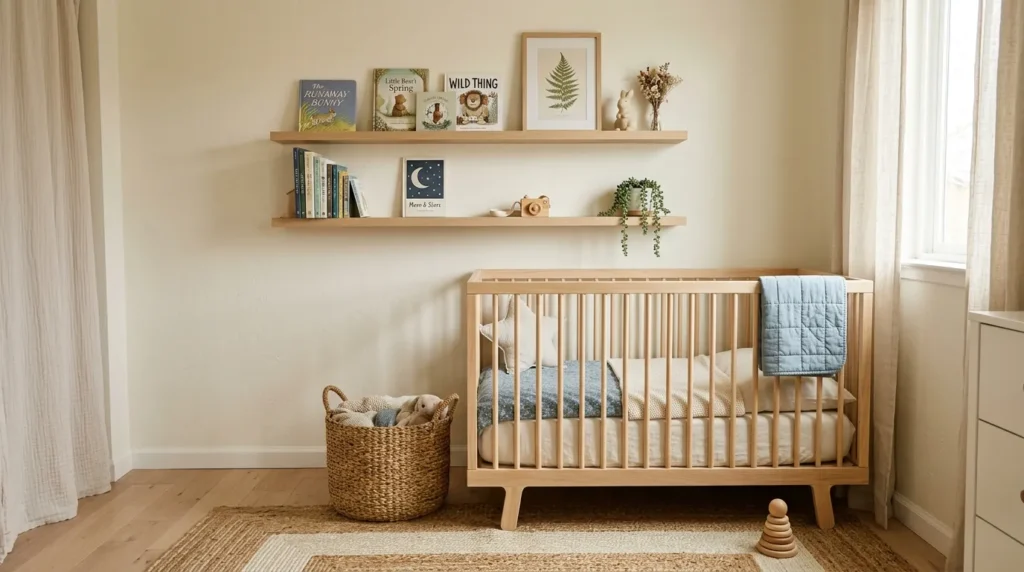
When floor space is limited, walls become valuable real estate. A few carefully positioned shelves can hold books, small decorative objects, and lightweight essentials without consuming the area needed for a dresser or chair. Shelves also provide an opportunity to introduce personality without filling every surface with accessories. The secret is restraint. Too many shelves or too many objects can make a small nursery feel busy. A simple arrangement with generous spacing tends to look more polished and intentional.
How To Style It
Install shelves in a location that doesn’t interfere with doors, furniture, or safe crib placement. Make sure they are properly secured and follow appropriate safety guidance for children’s rooms.
Use one shelf primarily for books and another for a small selection of decorative pieces. Group books by size or color if you prefer a more curated appearance.
Add one small basket or container for practical items if needed, but avoid turning open shelves into overflow storage.
Natural wood shelves pair beautifully with cream walls, while white shelves can blend more seamlessly into the room and visually recede.
5. Cozy Corner Chair
Quick Benefits
- Creates a useful feeding area
- Provides comfortable seating
- Adds softness
- Can support bedtime routines
- Doesn’t need much decoration
Why It Works
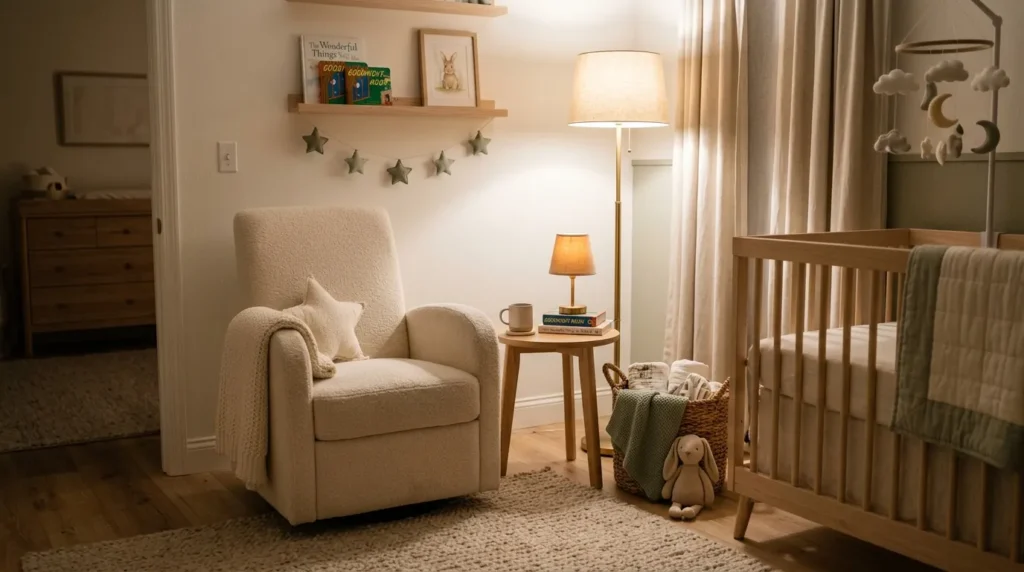
Even in a tiny nursery, a comfortable chair can be worth the space it occupies. Feeding, cuddling, rocking, and eventually reading bedtime stories are all easier when you have a dedicated seat. The trick is choosing a compact chair rather than trying to squeeze a large armchair into the room. A small glider, compact upholstered chair, or streamlined rocker can provide the comfort you need while preserving floor space. Since this piece may become part of daily life, comfort and cleanability should matter just as much as appearance.
How To Style It
Place the chair in the corner with the most natural clearance. Avoid forcing it into a location that blocks drawers or creates a narrow walking path.
Add a small side table for a water bottle, books, or other adult essentials. A slim floor lamp can provide gentle evening illumination.
Choose a neutral upholstery color such as cream, beige, light gray, or muted blue so the chair blends into the room.
A single washable throw can add texture, but keep loose soft objects away from the baby’s sleep area.
6. Vertical Accent Wall
Quick Benefits
- Draws attention upward
- Adds personality without clutter
- Creates a strong focal point
- Works in narrow rooms
- Can visually emphasize ceiling height
Why It Works
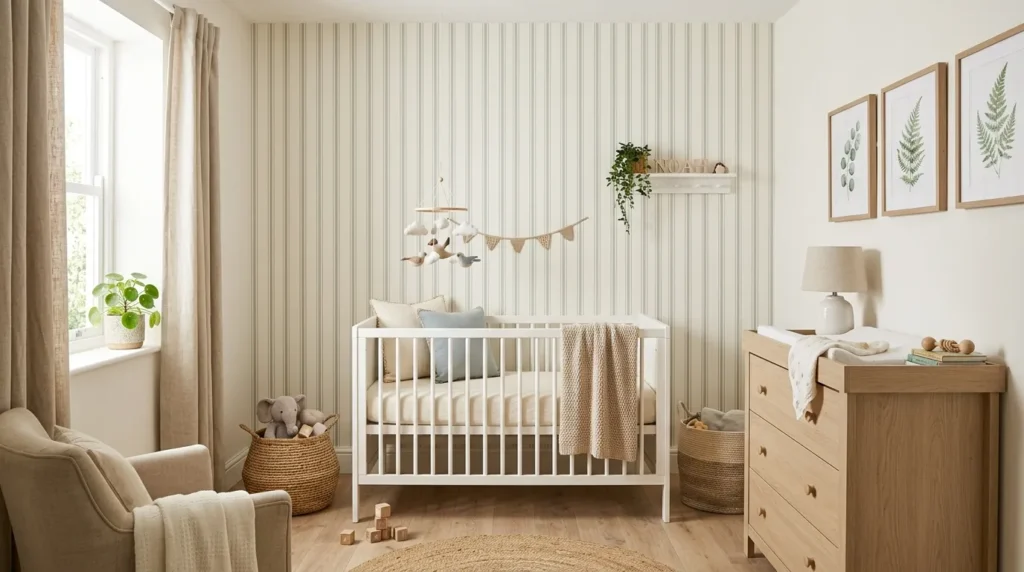
A small nursery doesn’t have to be visually boring. Instead of filling the room with decorations, make one wall do most of the design work. A subtle wallpaper pattern, vertical paneling, painted stripe, or tall arrangement of artwork can naturally draw the eye upward. This creates visual interest while keeping the floor and other walls relatively quiet. In a narrow nursery, vertical details can be especially effective because they emphasize the height of the room rather than its limited width.
How To Style It
Choose the wall behind the crib or the longest uninterrupted wall as your feature surface.
A delicate botanical wallpaper, tiny stars, subtle stripes, or soft geometric pattern can add character without overwhelming the room.
If you prefer paint, consider vertical paneling or a simple two-tone treatment. Keep the colors within the same family for a sophisticated appearance.
Balance the feature wall with simple bedding and furniture. The goal is for the wall to provide personality while the rest of the room provides visual calm.
7. Layered Soft Lighting
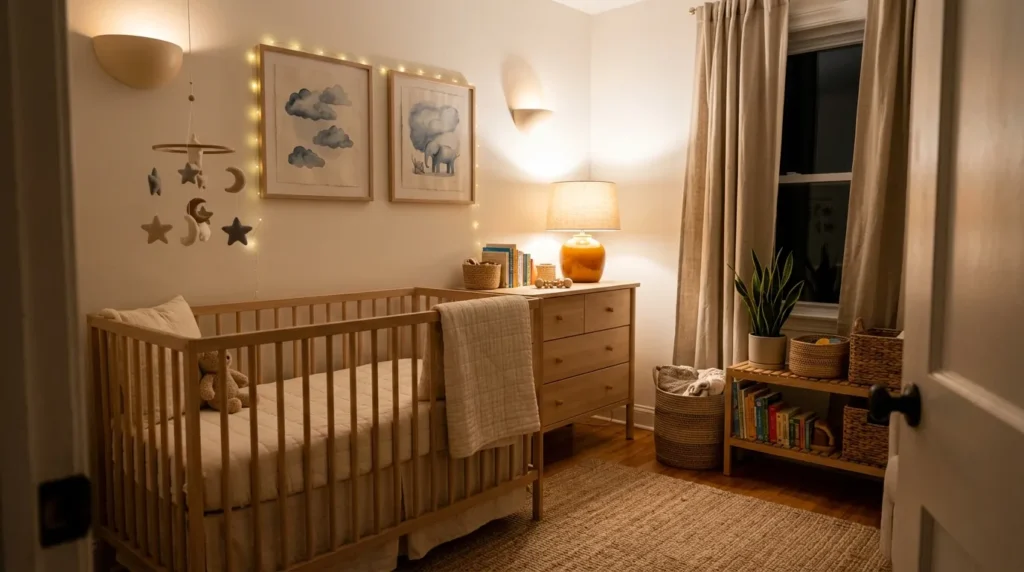
Quick Benefits
- Creates a warm atmosphere
- Supports nighttime routines
- Makes the room feel more polished
- Provides different levels of illumination
- Works without taking floor space
Why It Works
Lighting can make a small nursery feel dramatically different after sunset. One bright ceiling fixture may provide adequate visibility, but it rarely creates the warm atmosphere that makes a nursery feel cozy. Layering a ceiling fixture with a small lamp, dimmable light, or wall-mounted fixture creates several levels of illumination. This is particularly useful during nighttime routines when you don’t want to flood the entire room with bright light. Thoughtful lighting also adds a designer quality because it creates depth and highlights the room’s textures.
How To Style It
Start with the room’s primary overhead lighting, then add one or two lower-level sources.
A small table lamp on the dresser can provide useful task lighting, while a dimmable wall or floor light can create a softer evening glow.
Choose warm-toned bulbs appropriate for the fixture and use shades that diffuse light rather than producing harsh glare.
Keep cords safely managed and away from the crib or areas where a child could eventually reach them.
If the nursery is extremely small, wall-mounted lighting can provide illumination without taking up precious furniture surface or floor space.
8. Under-Crib Storage
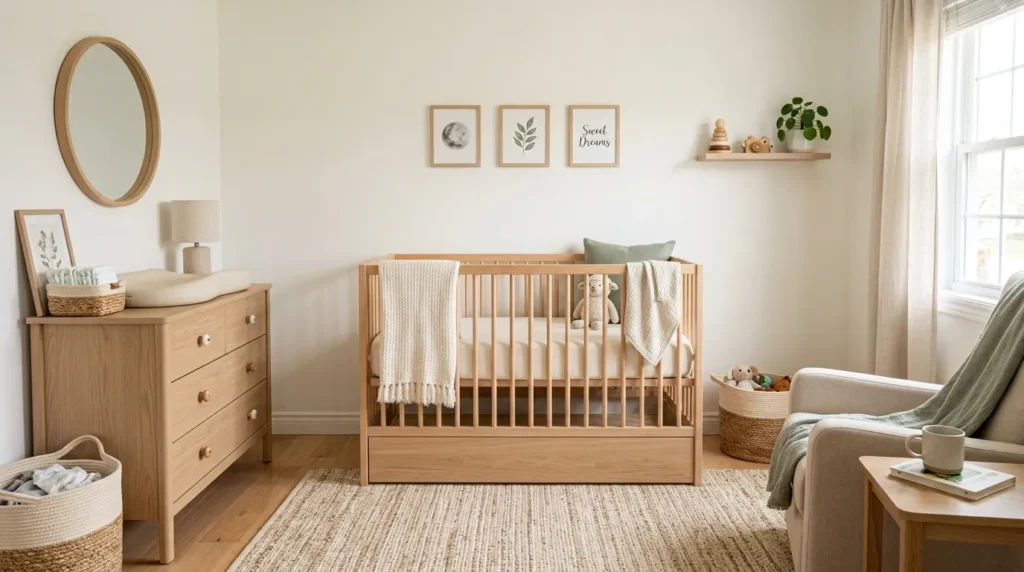
Quick Benefits
- Uses overlooked space
- Helps organize seasonal items
- Reduces closet pressure
- Keeps infrequently used items contained
- Works especially well in small rooms
Why It Works
The area underneath furniture can provide useful storage in a compact nursery, but it should be used thoughtfully. Items such as seasonal clothing, extra linens, or keepsakes don’t need to occupy prime drawer space every day. Under-crib containers can keep these things organized and out of sight. The key is choosing storage that fits safely and doesn’t interfere with the crib’s design or create accessible hazards. Once children become mobile, anything within reach needs to be considered carefully.
How To Style It
Use low-profile containers specifically suited to the space beneath the crib and follow the crib manufacturer’s instructions regarding clearance and storage.
Choose matching fabric bins or lidded containers if the area is visible. Neutral storage keeps the room looking calm.
Label containers so you don’t have to search through several boxes for seasonal clothing or extra linens.
For items you use frequently, prioritize accessible drawers instead. Under-crib storage works best for things you don’t need every day.
As your child grows, reassess whether the storage remains appropriate and safe.
9. Oversized Simple Rug
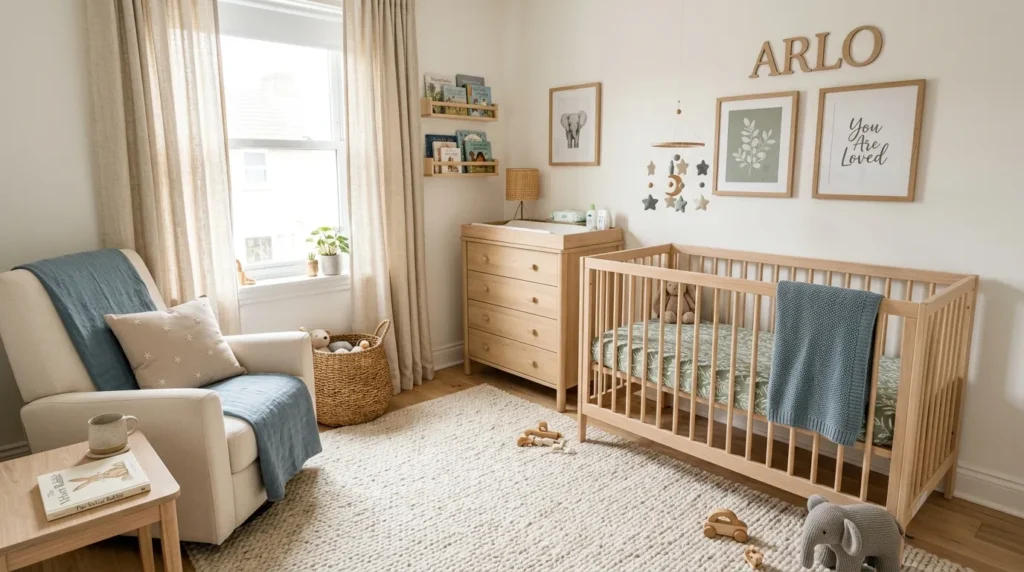
Quick Benefits
- Adds softness
- Defines the nursery
- Makes furniture feel connected
- Adds texture without wall clutter
- Creates a cozy foundation
Why It Works
A rug can visually tie together a small nursery, especially when the furniture is arranged across a compact floor plan. Surprisingly, a slightly larger rug often looks more polished than a tiny rug floating in the center of the room. The larger textile helps define the main furniture grouping and reduces the appearance of disconnected pieces. In a nursery, it also adds softness underfoot and creates a more comfortable environment for adults spending time on the floor. A simple pattern or solid neutral color usually works best in a small room.
How To Style It
Choose a rug large enough to visually connect the crib and major furniture pieces while maintaining clear access to doors and storage.
Cream, beige, soft gray, muted blue, or subtle sage are easy choices. If the walls and furniture are simple, a delicate geometric or botanical pattern can add interest.
Look for a low-pile or washable option that is practical for everyday life. Nursery floors experience plenty of spills and messes, so easy maintenance matters.
Avoid placing thick rugs where they interfere with drawers, doors, or other moving furniture.
10. Mirror Light Reflection
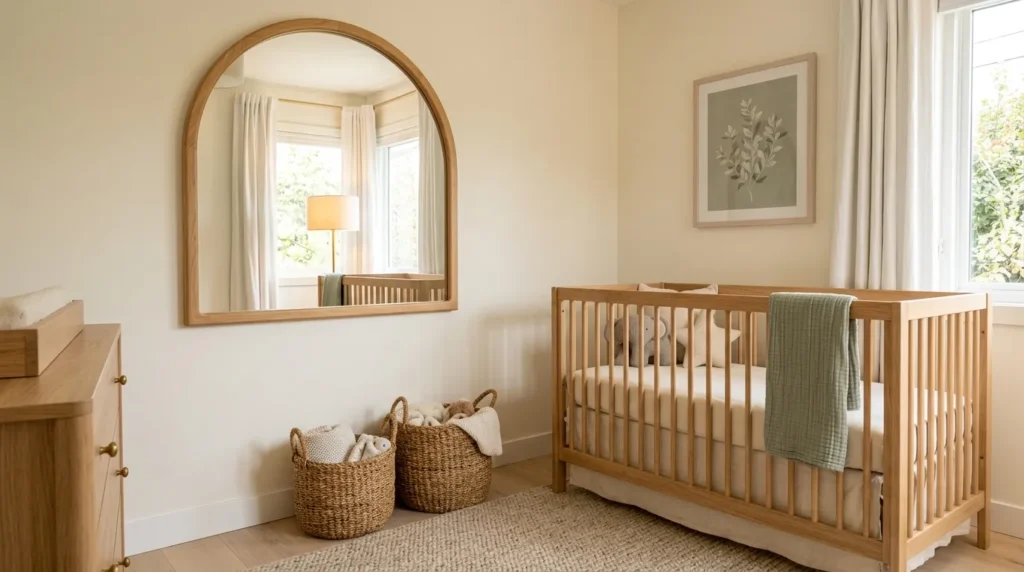
Quick Benefits
- Reflects natural light
- Adds visual depth
- Makes walls more interesting
- Can serve a practical purpose
- Works especially well in dark rooms
Why It Works
A strategically placed mirror can make a small nursery feel brighter and more layered. Rather than simply adding a reflective surface, think about what the mirror will reflect. Positioning it across from a window can bounce daylight into the room, while placing it near a lamp can create a gentle evening glow. Mirrors also give the eye another visual plane, which can help a compact room feel less enclosed. The frame can become part of the design too, whether you choose natural wood, white, brass, or a simple frameless style.
How To Style It
Choose a mirror size appropriate for the wall and position it where it reflects something attractive, such as a window, artwork, or warm lighting.
An arched mirror can soften a room filled with straight furniture lines, while a rectangular mirror can reinforce a clean modern style.
In a small nursery, avoid placing a large mirror where it could create a safety issue or eventually become accessible to a child.
Secure the mirror properly according to its weight and installation requirements. Safety should always take priority over the decorative effect.
11. Minimal Personal Touches
Quick Benefits
- Prevents visual clutter
- Makes the room feel meaningful
- Allows decor to stand out
- Creates a designer-like finish
- Easy to update over time
Why It Works
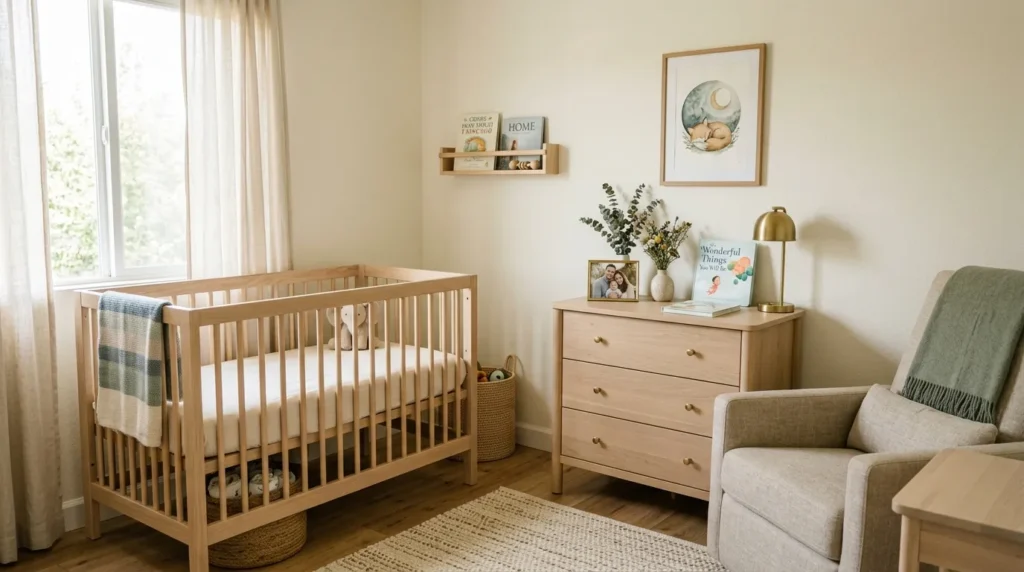
A designer nursery isn’t necessarily the one with the most decorations. Often, it is the room where every visible element feels intentional. In a small space, restraint becomes especially valuable. Instead of filling shelves and walls, choose a few things that genuinely make you happy: a family photograph, meaningful artwork, a handmade blanket, a vintage book, or a beautiful mobile. These pieces create personality without competing with the room’s practical functions. The result feels collected and warm rather than overly styled.
How To Style It
Choose three to five meaningful decorative elements and give each enough breathing room to stand out.
A framed family photograph on the dresser, a small piece of artwork above the chair, and a favorite children’s book collection can be more effective than dozens of tiny accessories.
Repeat one color from the room’s palette in your personal pieces to create cohesion.
Keep decorative objects away from the baby’s sleep space and secure anything that could become reachable as the child develops.
Remember that empty space is part of the design. It allows the things you love most to become the visual highlights.
Frequently Asked Questions
How do you make a small nursery look bigger?
Use a light, warm color palette, keep furniture appropriately scaled, and maintain clear pathways. Wall-mounted storage can preserve valuable floor space, while a well-placed mirror can reflect natural light. Avoid filling every surface with decorations. A small number of larger, intentional pieces generally creates a calmer appearance than many tiny accessories.
What furniture is essential in a small nursery?
The essentials typically include a safe crib, clothing or diaper storage, and comfortable seating if space allows. A dresser can sometimes serve multiple functions, reducing the need for separate furniture. Before adding anything else, consider how often you’ll actually use it and whether it solves a specific need.
What colors are best for a small nursery?
Warm white, ivory, beige, soft gray, pale blue, muted sage, and other light colors can work beautifully. You don’t have to avoid darker colors entirely, though. A deeper accent wall can add personality when balanced with lighter furniture and textiles. The amount of natural light should influence your choice.
Can a small nursery have a rocking chair?
Yes. Choose a compact glider, rocker, or upholstered chair that fits the room without blocking walkways or storage. Measure carefully before buying. A chair with a relatively small footprint can still provide the comfort needed for feeding and nighttime routines.
How can I add storage without making a small nursery feel cluttered?
Use vertical space, closed drawers, and coordinated baskets. Floating shelves can display books while a narrow dresser handles clothing and everyday supplies. Keep open shelving edited rather than filling every available inch. Matching storage containers can also make necessary baby supplies look more visually cohesive.
Should I use a rug in a small nursery?
A rug can make a small nursery feel warmer and more cohesive. Rather than choosing a very small rug, select one that visually connects the major furniture pieces while leaving appropriate clearance around doors and storage. Choose a durable, easy-to-clean material because nursery floors can see plenty of spills and messes.
How do I make a small nursery feel cozy without overcrowding it?
Focus on texture and lighting rather than adding more furniture. Soft curtains, a comfortable rug, layered bedding, warm lamps, natural wood, and a few meaningful accessories can create plenty of coziness. Leave some empty space so the room can breathe. In a small nursery, visual calm is often more effective than additional decoration.
Conclusion
A small nursery can absolutely have that polished, designer-inspired feeling you’re after. The secret isn’t squeezing more into the room. It’s choosing fewer pieces and making each one work beautifully.
Start with the essentials: a safe crib, practical storage, comfortable seating, and good lighting. From there, build a calming palette using warm neutrals, soft blue, sage, natural wood, or another color combination you genuinely love.
If the room is especially compact, think vertically. Wall-mounted shelves, tall storage, thoughtful artwork, and a vertical accent wall can add personality without consuming valuable floor space. A mirror can bring in more visual depth, while a well-sized rug and soft lighting can make the entire room feel warmer.
Don’t forget that nursery design has to work in real life. You’ll be reaching for diapers at night, changing clothes, rocking a baby, organizing tiny socks, and eventually picking toys up from the floor. Storage should be convenient, walkways should remain clear, and furniture should be securely installed.
Most importantly, resist the temptation to fill every empty corner. A little breathing room can make a small nursery feel surprisingly luxurious.
Choose a few pieces you love, layer in soft textures, add meaningful details, and let the room remain simple enough to evolve. The result can be a nursery that feels cozy, practical, beautiful, and completely at home in your space.