

11 Botanical Bedroom Ideas to Bring Nature Indoors
A bedroom inspired by nature has a way of feeling calmer, warmer, and more personal without requiring a complete makeover. Botanical decorating is especially versatile because it can be soft and romantic, modern and minimal, earthy and rustic, or richly layered with vintage charm.
The easiest mistake is assuming a botanical bedroom needs to be filled with plants. While greenery can certainly play a starring role, the look is really about bringing natural shapes, colors, textures, and organic patterns into the room. Botanical wallpaper, leafy artwork, linen bedding, woven accents, natural wood, and carefully chosen plants can all contribute to the feeling.
I’ve noticed that the most successful nature-inspired bedrooms don’t look overly coordinated. Instead, they combine a few repeating elements—perhaps green foliage, warm wood, botanical prints, and natural fabrics—while leaving enough neutral space for the room to breathe.
This approach also makes botanical decorating practical for different lifestyles. Renters can use removable wallpaper, artwork, bedding, and potted plants, while homeowners can experiment with painted walls, built-in shelving, larger planters, or statement wallpaper.
Whether you want a lush bedroom filled with greenery or simply want a subtle connection to the outdoors, these ideas will help you create a space that feels fresh without becoming overly themed.
From leafy walls and plant-filled corners to natural textures and garden-inspired artwork, these botanical bedroom ideas offer plenty of ways to bring nature indoors while keeping the room comfortable and stylish.
Table of Contents
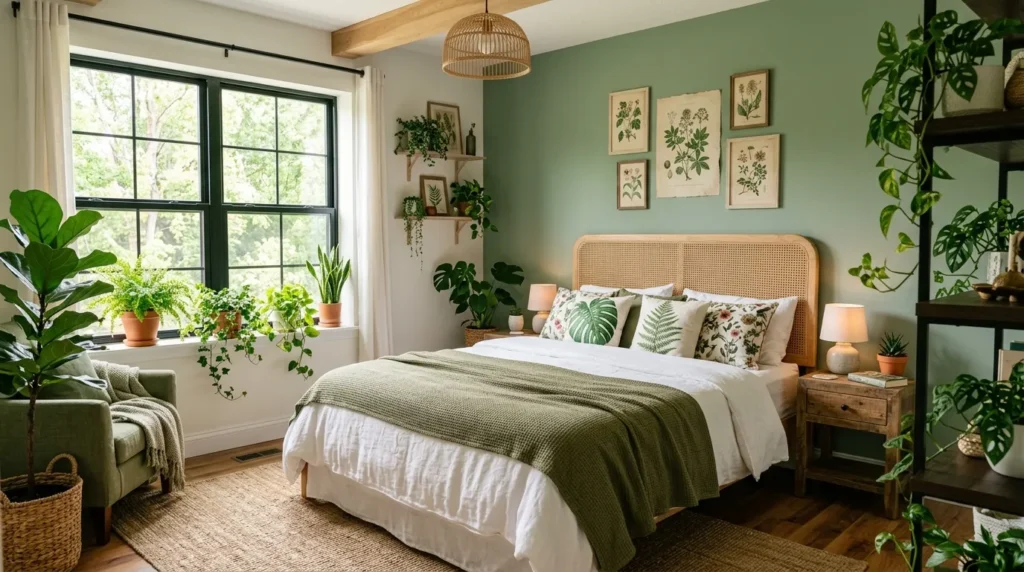
1. Botanical Wallpaper
Create a dramatic nature-inspired backdrop with leafy or floral wallpaper.
2. Layered Greenery
Use plants of different sizes to add life, height, and natural texture.
3. Botanical Artwork
Bring delicate leaves, flowers, and natural illustrations onto your walls.
4. Natural Wood
Warm up the bedroom with wood furniture and organic finishes.
5. Linen Bedding
Use breathable natural fabrics to create a relaxed, earthy atmosphere.
6. Green Accent Wall
Introduce a rich green shade for a simple but impactful transformation.
7. Hanging Plants
Use vertical greenery to make unused wall and ceiling areas more interesting.
8. Woven Textures
Add baskets, rattan, jute, and other tactile natural materials.
9. Garden Inspired Colors
Build a cohesive palette around soft greens, earthy neutrals, and floral tones.
10. Indoor Plant Corner
Create a dedicated greenery display that becomes a focal point.
11. Floral Window Treatments
Frame the windows with botanical patterns and soft natural fabrics.
1. Botanical Wallpaper
Quick Benefits
- Creates an immediate nature-inspired focal point
- Adds personality without requiring many accessories
- Works with both traditional and modern furniture
- Can make a plain bedroom feel more layered
- Offers a strong visual backdrop for Pinterest photos
Why It Works
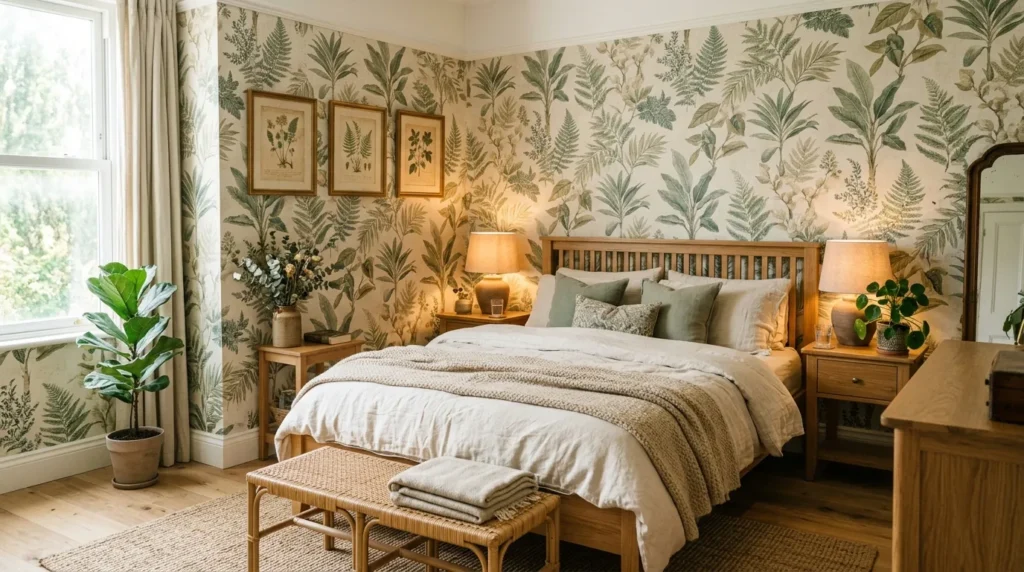
Botanical wallpaper is one of the most effective ways to transform a bedroom because it introduces color, pattern, and organic shapes all at once. Instead of adding individual decorative pieces, the wall itself becomes part of the design.
Large-scale leaves can create a dramatic tropical feeling, while delicate branches and small flowers offer a softer cottage-inspired look. For a more sophisticated bedroom, look for patterns with muted olive, sage, cream, taupe, or charcoal rather than extremely bright colors.
The pattern you choose should also relate to the size of the room. Large motifs can create drama, while smaller patterns may feel more subtle and traditional.
How To Style It
If you’re nervous about covering every wall, use botanical wallpaper behind the bed as an accent wall. This creates a natural focal point while keeping the remaining walls visually quiet.
Pair dramatic wallpaper with solid-colored bedding so the room doesn’t become too busy. Natural wood furniture is especially effective because it reinforces the organic theme.
For renters, removable wallpaper can offer a temporary alternative. Another budget-friendly approach is applying botanical wallpaper to the back of a bookshelf or creating a framed wallpaper panel above the bed.
Choose artwork and accessories that repeat one or two colors from the wallpaper rather than attempting to match every shade.
2. Layered Greenery
Quick Benefits
- Brings genuine natural elements indoors
- Adds texture and movement
- Helps soften furniture edges
- Creates visual depth
- Works with nearly any bedroom style
Why It Works
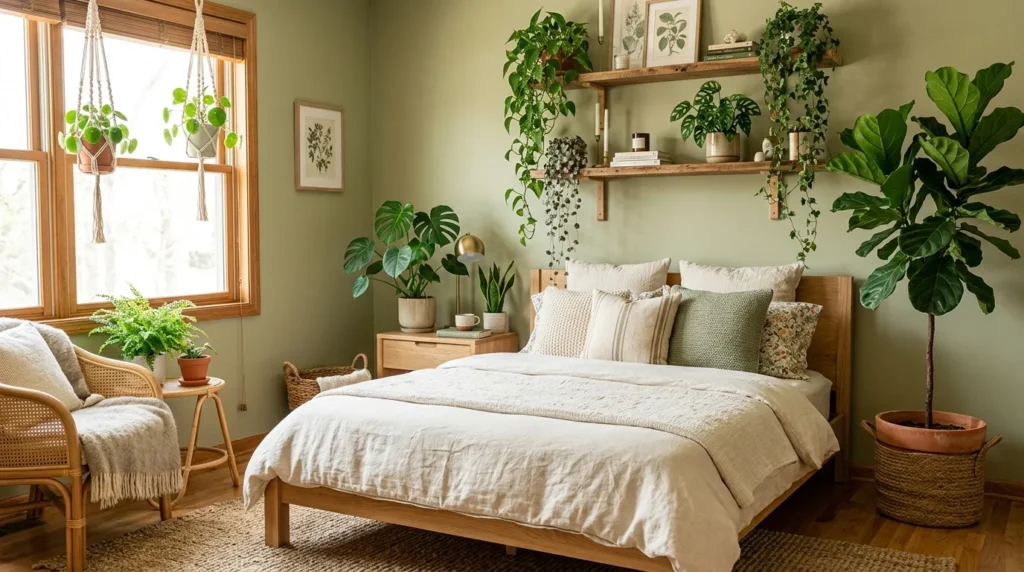
Plants are an obvious choice for a botanical bedroom, but the key to making them look intentional is variety. A single plant on a nightstand can feel decorative, while several plants at different heights can create the impression of a small indoor garden.
Combine tall floor plants with medium-sized tabletop varieties and smaller trailing plants. The differences in height create visual rhythm and prevent the greenery from looking like a collection of identical objects.
You also don’t need a jungle. A few healthy plants placed thoughtfully can have more impact than filling every empty surface.
I’ve found that plants are particularly useful in bedrooms with lots of straight lines. Their organic leaves soften the geometry of beds, dressers, shelves, and windows.
How To Style It
Place a tall plant beside a dresser, in an empty corner, or near a window. Use a medium plant on a nightstand or chest, then add a trailing plant to a shelf.
Choose planters that complement your bedroom rather than competing with the greenery. Terracotta, ceramic, woven baskets, and stone-look planters work beautifully with botanical decor.
Group plants in odd numbers when possible, using different heights and leaf shapes.
Always consider the light requirements of your specific plants before placing them in the bedroom. A beautiful plant is only useful as decor if it can thrive where you put it.
3. Botanical Artwork
Quick Benefits
- Adds nature-inspired character without major changes
- Works especially well for renters
- Can be changed seasonally
- Creates an easy focal point
- Complements both neutral and colorful bedrooms
Why It Works
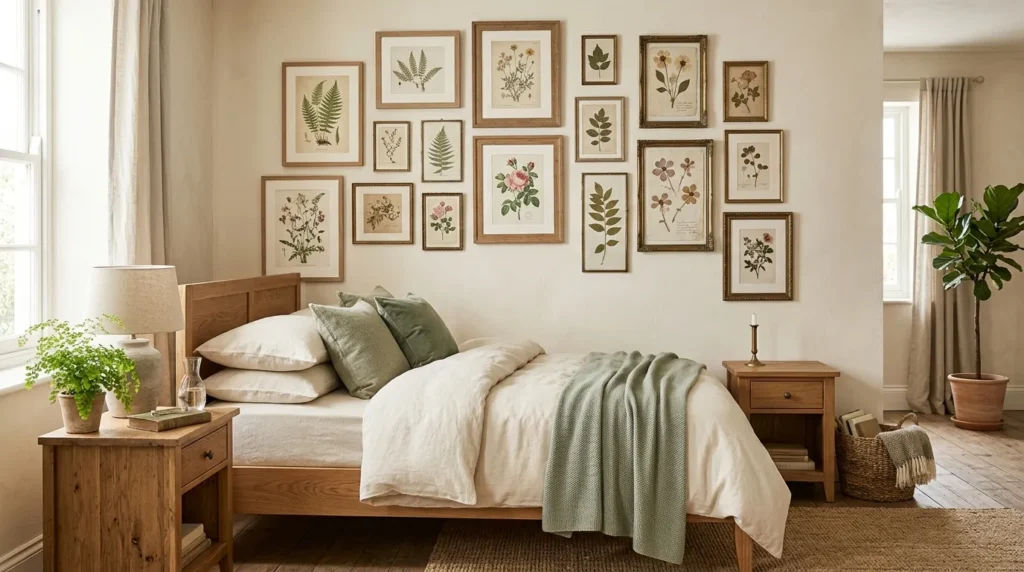
Botanical artwork offers the look of nature without requiring you to maintain living plants. Vintage botanical prints, pressed-flower artwork, watercolor leaves, floral illustrations, and modern abstract foliage can all create a connection to the outdoors.
Artwork is also a flexible way to control how strongly you want the botanical theme to appear. A pair of delicate leaf prints can provide a subtle reference, while a large statement piece can become the main focal point.
Traditional botanical illustrations work particularly well with vintage furniture and warm woods. Modern line drawings or oversized abstract leaves are better suited to contemporary bedrooms.
How To Style It
Hang a large botanical print above the headboard for a simple focal point. Alternatively, create a gallery wall with several related prints.
Use frames that suit your furniture. Natural wood, white oak, black, antique brass, and simple cream frames can all work.
For a collected appearance, vary the sizes slightly rather than using identical frames everywhere.
If your bedroom already has botanical wallpaper, choose artwork with a simpler pattern. The goal is to create layers without overwhelming the room.
You can also place framed botanical prints on a dresser or lean them against a shelf for a relaxed, less permanent arrangement.
4. Natural Wood
Quick Benefits
- Adds warmth to green and neutral palettes
- Introduces organic texture
- Makes the bedroom feel grounded
- Works with modern or traditional styles
- Pairs beautifully with plants
Why It Works
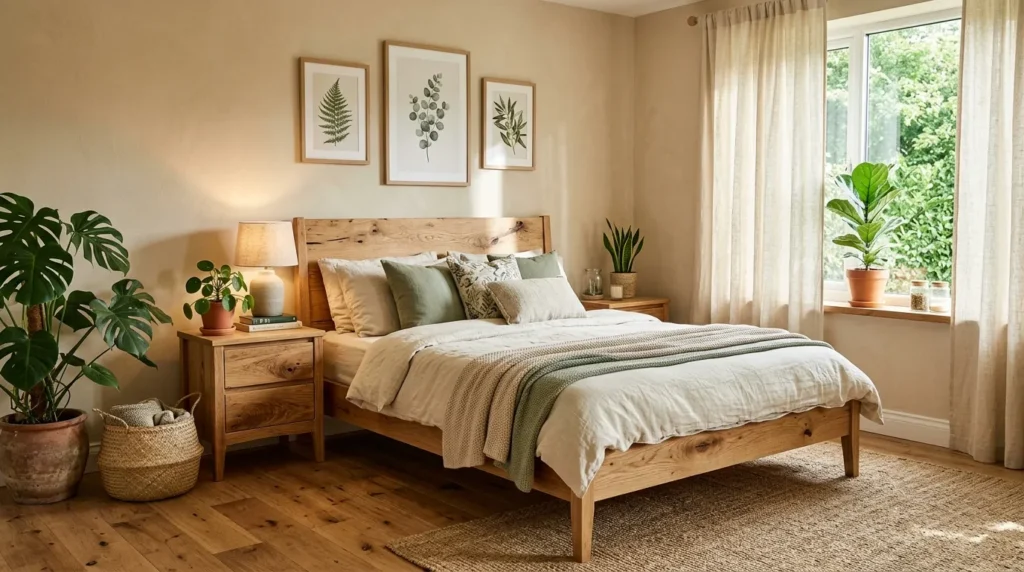
Natural wood is one of the easiest materials to combine with botanical decorating because it visually connects the bedroom to the outdoors. Oak, walnut, pine, bamboo, and reclaimed wood can all contribute different personalities.
Lighter woods create an airy Scandinavian-inspired botanical bedroom, while walnut and darker woods produce a richer, more traditional atmosphere.
Wood also prevents green walls or leafy patterns from feeling too cool. Its natural grain introduces subtle variation that painted furniture simply can’t replicate.
A wooden bed frame can provide the foundation, while smaller pieces such as nightstands, shelves, benches, and picture frames reinforce the material throughout the room.
How To Style It
Choose one dominant wood tone and then introduce smaller amounts of complementary wood.
For a light botanical bedroom, combine pale oak furniture with sage walls, cream bedding, and woven accessories.
For a richer look, use walnut furniture with olive green, warm beige, brass, and botanical artwork.
Don’t worry about matching every wooden piece perfectly. Slight variations can make the room feel more natural and collected.
Avoid placing too many large wooden pieces together if the room is small. Instead, use wood through one substantial piece and several smaller accents.
5. Linen Bedding
Quick Benefits
- Creates a relaxed natural atmosphere
- Adds subtle texture
- Works with many botanical color palettes
- Feels comfortable and casual
- Makes the bedroom look less overly styled
Why It Works
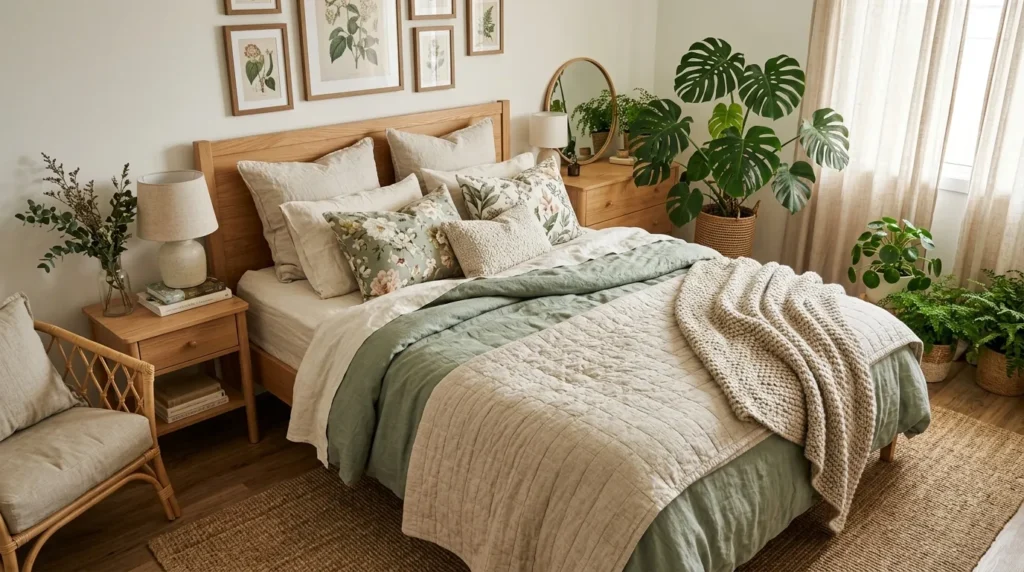
Linen bedding is a natural fit for botanical bedrooms because its slightly rumpled texture reinforces the relaxed quality of nature-inspired decorating.
Instead of looking perfectly crisp, linen has a softness and movement that makes the bed feel inviting. It also works beautifully with earthy colors such as sage, moss, sand, cream, clay, and muted terracotta.
If you prefer a more polished bedroom, pair linen sheets with a structured duvet or quilt. For a relaxed look, embrace the natural wrinkles and layer several lightweight pieces.
The beauty of linen is that it can work with everything from modern minimalist bedrooms to romantic cottage interiors.
How To Style It
Start with cream or warm white linen sheets, then add a duvet or quilt in sage, olive, beige, or muted floral.
Layer a lightweight blanket across the foot of the bed and add pillows in complementary neutral shades.
For more visual interest, mix linen with cotton, woven blankets, or subtle botanical patterns.
Keep patterns restrained if your walls already feature bold foliage. If the walls are neutral, you can introduce a floral or leaf-patterned pillow for a small dose of visual interest.
6. Green Accent Wall
Quick Benefits
- Creates a strong focal point
- Makes a simple bedroom feel more intentional
- Works with many decorating styles
- Can visually connect the room to surrounding nature
- Easier than adding multiple decorative elements
Why It Works
Green is naturally associated with foliage, gardens, and the outdoors, making it an excellent foundation for a botanical bedroom. The right shade can completely change the mood without requiring wallpaper or extensive decoration.
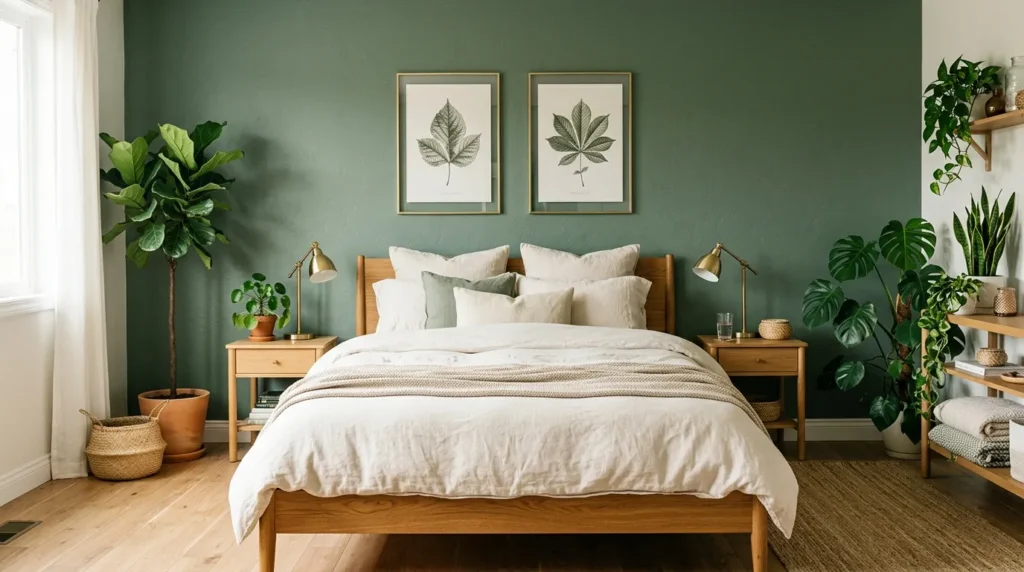
Sage green feels soft and calming, olive provides warmth, forest green creates drama, and muted eucalyptus offers a lighter contemporary look.
The important part is choosing a shade that works with your bedroom’s natural light. A color that looks soft in a sunny showroom may appear much deeper in a north-facing room.
How To Style It
An accent wall behind the bed is usually the easiest place to introduce green. Keep the remaining walls neutral so the color feels intentional.
Pair sage with cream, light wood, beige, and brass for a soft botanical bedroom.
Pair forest or olive green with walnut, ivory, rust, and aged brass for a richer look.
If painting isn’t an option, create the same effect with a large green upholstered headboard, botanical tapestry, removable wallpaper, or oversized artwork.
Repeat the wall color in small amounts throughout the room with pillows, plants, or accessories.
7. Hanging Plants
Quick Benefits
- Uses vertical space efficiently
- Adds movement to the room
- Works well in small bedrooms
- Creates a lush botanical effect
- Draws attention upward
Why It Works
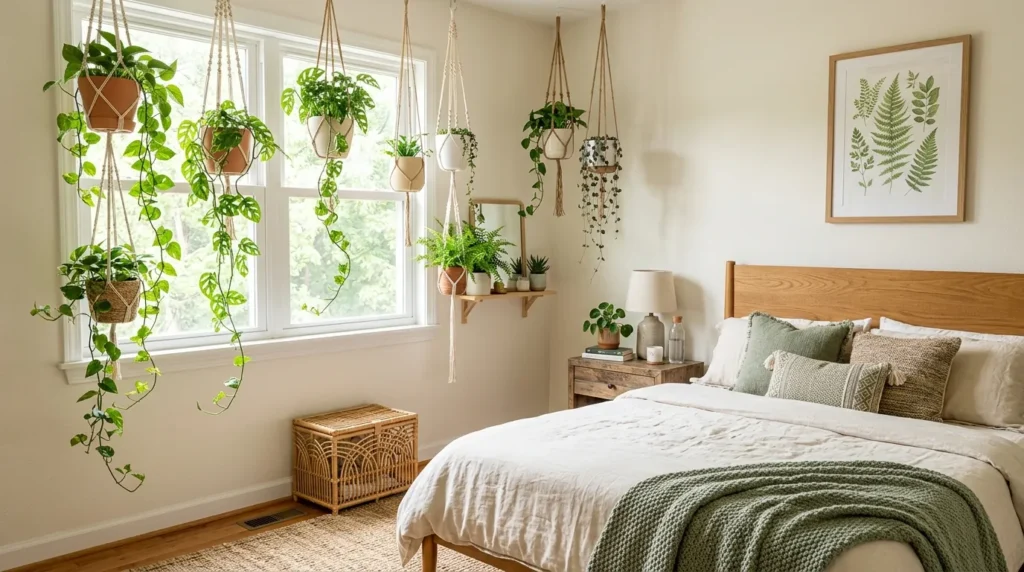
Hanging plants can make a bedroom feel more layered because they introduce greenery at eye level and above. This is especially useful when floor space is limited.
Trailing plants can soften shelves, windows, or empty wall areas while adding a graceful organic shape.
The effect is particularly beautiful when the plants are allowed to grow naturally rather than being trimmed into a perfect shape.
However, placement matters. Hanging plants should never interfere with walkways, ceiling fans, lighting fixtures, or areas where you regularly move around the bedroom.
How To Style It
Use simple ceramic, woven, macramé, or neutral hanging planters that complement the rest of the room.
Hang one plant near a window or create a small group of two or three at slightly different heights.
For a more polished look, use matching planters. For a relaxed bohemian bedroom, mix woven and ceramic containers.
You can also use hanging planters near a reading chair or above a dresser, provided they are securely installed.
If natural plants aren’t practical, high-quality faux trailing greenery can create a similar visual effect with very little maintenance.
8. Woven Textures
Quick Benefits
- Adds warmth without introducing more color
- Creates tactile visual interest
- Complements plants and wood
- Works beautifully in neutral bedrooms
- Helps create a relaxed atmosphere
Why It Works
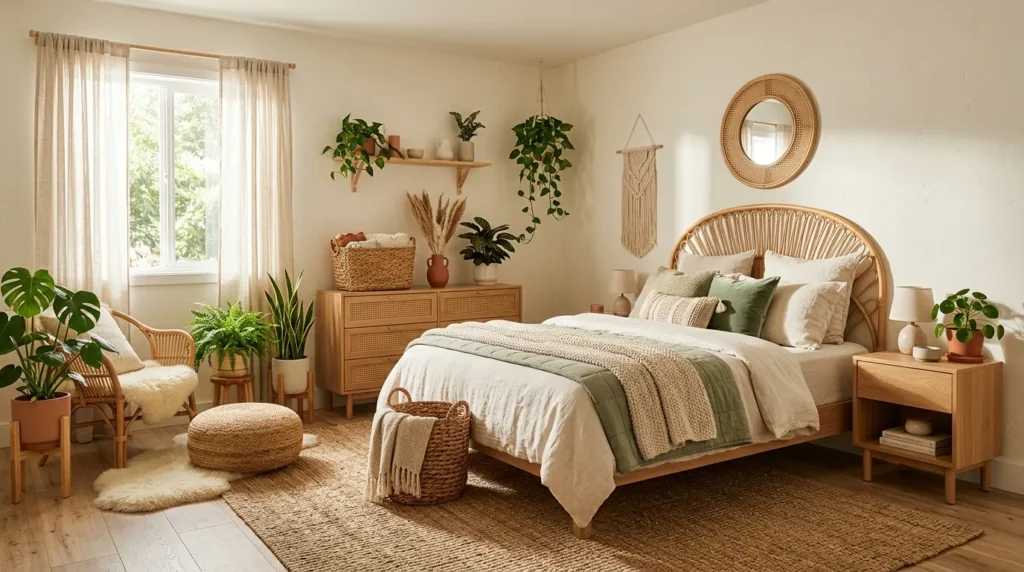
Botanical decorating isn’t only about plants and leaves. Natural textures can create the same connection to the outdoors while giving the room warmth and dimension.
Rattan, wicker, jute, seagrass, cane, and woven cotton all introduce irregular textures that contrast beautifully with smooth furniture.
These materials are particularly useful when you want a botanical bedroom that feels subtle rather than heavily themed. A woven basket beside the bed or a rattan pendant can suggest an organic aesthetic without adding another pattern.
How To Style It
Use woven baskets for blankets, laundry, or plant containers. A jute rug can anchor the bed, while a rattan bench can add seating at the foot of the bed.
A woven pendant light can also create a beautiful focal point and cast interesting shadows when illuminated.
Keep the palette natural—tan, beige, honey, warm brown, and cream are easy to combine with green.
If you already have lots of texture, don’t add every type of woven material. Choose two or three and repeat them throughout the room.
9. Garden Inspired Colors
Quick Benefits
- Creates a cohesive bedroom palette
- Makes botanical patterns easier to combine
- Adds warmth and personality
- Works with both neutral and colorful rooms
- Can be adjusted to suit different design styles
Why It Works
A nature-inspired color palette doesn’t have to be entirely green. Gardens contain countless colors, from soft leaves and warm soil to flowers, stone, bark, and sunlit petals.
This gives you plenty of room to personalize the bedroom.
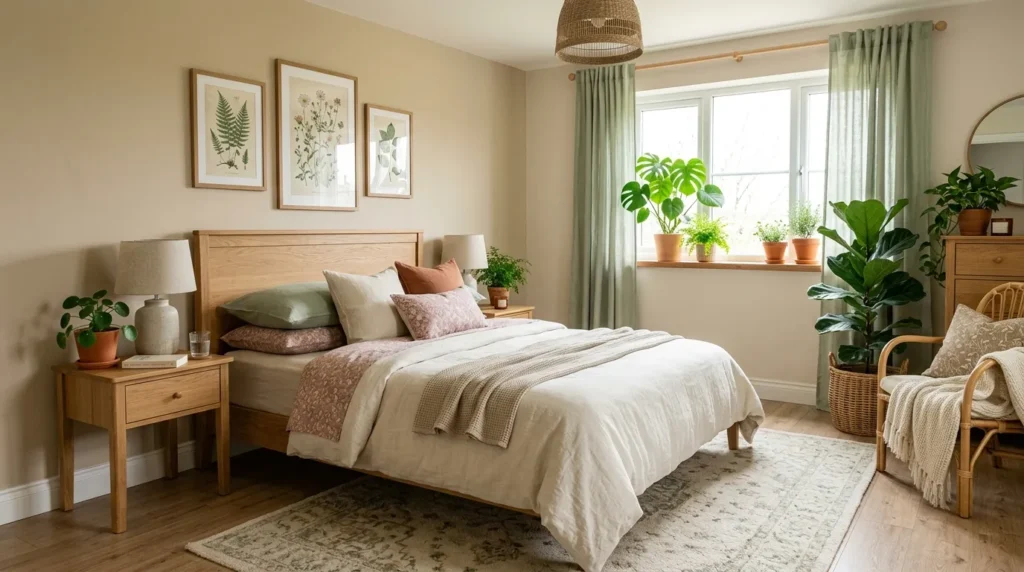
Sage and cream create a soft, understated palette. Olive and terracotta feel earthy and Mediterranean. Forest green and burgundy create a dramatic traditional look. Soft blue, sage, and ivory can produce an airy cottage atmosphere.
The trick is choosing one dominant color, one secondary color, and several neutral supporting tones.
How To Style It
Start with your largest elements, such as walls, bedding, and rugs. Choose your dominant shade here.
Then introduce your secondary color through pillows, artwork, curtains, or a throw blanket.
Use warm neutrals to connect everything together.
For example, a sage bedroom could include cream bedding, natural oak furniture, terracotta ceramics, and small touches of muted floral pink.
Avoid using too many equally strong colors. Nature is colorful, but successful interiors usually need visual hierarchy.
10. Indoor Plant Corner
Quick Benefits
- Creates a natural focal point
- Makes unused corners more useful
- Adds height and greenery
- Can become a relaxing feature
- Works in many bedroom layouts
Why It Works
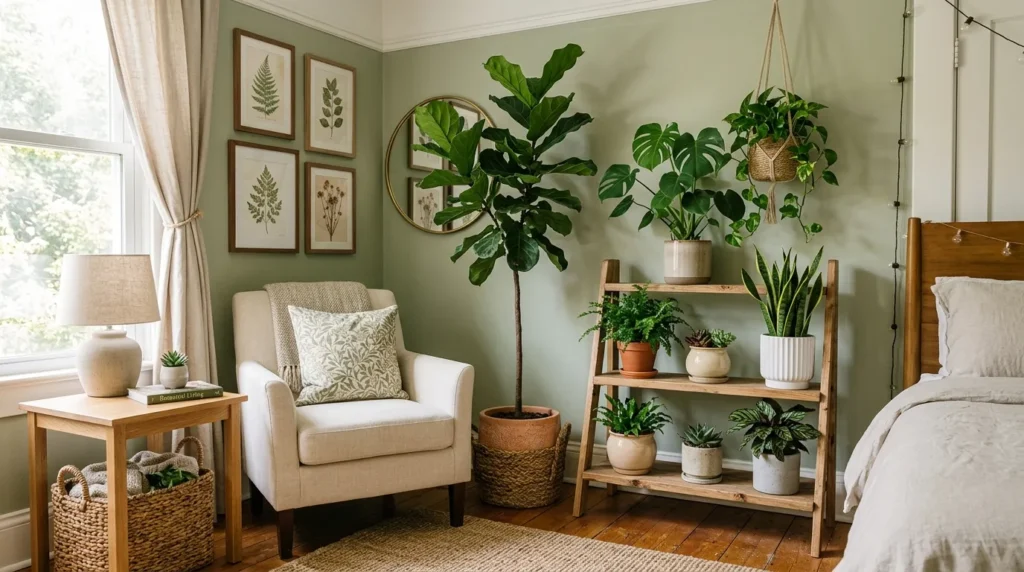
A dedicated plant corner can turn an overlooked part of the bedroom into one of its most attractive features. Instead of scattering plants randomly around the room, grouping them creates a stronger visual statement.
Use different plant heights to create a layered arrangement. A tall floor plant can act as the anchor, while smaller plants sit on a wooden stool or plant stand.
This approach is especially effective beside a dresser, near a window, or in an empty corner next to a reading chair.
How To Style It
Begin with one large plant that suits the light conditions. Add one or two smaller plants in complementary pots.
Wooden plant stands, woven baskets, and ceramic planters can add another layer of texture.
Leave some empty space around the group. Plants need visual breathing room just as furniture does.
For a small bedroom, use a narrow plant stand or vertical shelving instead of spreading plants across the floor.
Remember that bedrooms can have different humidity and light conditions, so select plants according to the environment rather than choosing them solely for appearance.
11. Floral Window Treatments
Quick Benefits
- Adds botanical pattern without covering the walls
- Softens the room
- Creates a romantic focal point
- Provides privacy and light control
- Works especially well with cottage and traditional styles
Why It Works
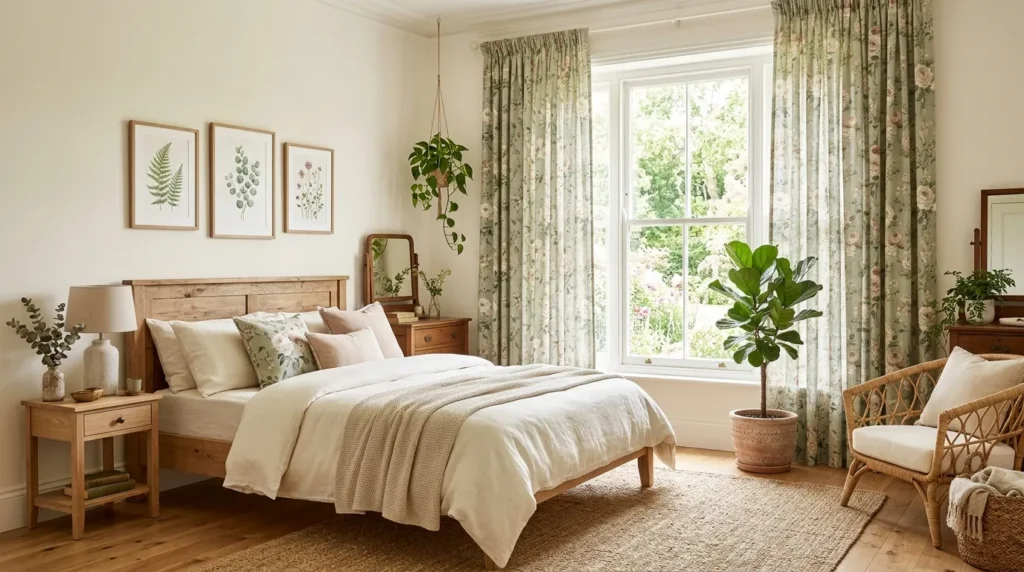
Window treatments offer an often-overlooked opportunity to introduce botanical patterns. Floral curtains can create a beautiful connection between the bedroom and the garden while adding softness to hard architectural lines.
For a subtle look, choose a small-scale floral pattern in muted colors. For a more dramatic bedroom, use oversized leaves or large botanical motifs.
Curtains can also influence the perceived proportions of a room. Full-length panels hung higher than the window can make the ceiling appear taller.
How To Style It
If the bedroom already has patterned wallpaper, choose curtains with a simpler motif or a solid color pulled from the wallpaper.
If your walls are neutral, floral curtains can become the room’s primary botanical statement.
Pair them with solid bedding and natural wood furniture so the pattern remains the star.
For a romantic bedroom, consider soft floral curtains in sage, cream, dusty rose, or muted blue. For a modern room, look for oversized foliage patterns with a restrained color palette.
Creating a Cohesive Botanical Bedroom
The most beautiful nature-inspired bedrooms usually don’t rely on one dramatic feature. Instead, they repeat small references to nature throughout the space.
You might begin with sage green walls, then echo that color in a pillow and a piece of artwork. Natural wood furniture can connect with woven baskets, while linen bedding reinforces the relaxed feeling.
Think about the room as a collection of layers rather than a checklist.
If you already have several plants, you may not need botanical wallpaper. If you have a bold floral duvet, keep the walls and curtains quieter.
This balance prevents the bedroom from feeling visually overwhelming.
Another useful approach is to choose one botanical inspiration before decorating. It could be a favorite garden, a particular plant, a vintage botanical print, or simply the colors you see outside your window.
Use that inspiration to guide the palette and materials.
For a small bedroom, prioritize vertical greenery, light wood, neutral bedding, and one strong botanical element.
For a larger bedroom, you can introduce a dedicated plant corner, statement wallpaper, larger artwork, or a dramatic upholstered headboard.
And if you’re renting, focus on removable wallpaper, artwork, bedding, curtains, plants, rugs, and portable furniture.
You don’t need a greenhouse to bring nature indoors. A few thoughtfully selected details can completely change how a bedroom feels.
Frequently Asked Questions
How do I make my bedroom look botanical without lots of plants?
Use botanical wallpaper, leaf artwork, floral bedding, natural wood, woven textures, and green accents. These elements create a nature-inspired atmosphere even if you only have one or two plants. Botanical prints are particularly useful for renters or anyone who doesn’t have enough natural light for a large plant collection.
What colors work best for a botanical bedroom?
Sage, olive, forest green, cream, beige, terracotta, muted blue, dusty rose, and warm brown all work beautifully. Choose one dominant shade and support it with natural neutrals. This keeps the room cohesive while allowing botanical patterns and greenery to stand out.
Can botanical decor work in a small bedroom?
Absolutely. Use vertical elements such as hanging plants, tall artwork, narrow shelving, and floor-to-ceiling curtains. Keep larger surfaces relatively simple and use one or two botanical focal points rather than covering every wall and surface with patterns.
What furniture works best with botanical bedroom decor?
Natural wood furniture is one of the easiest choices because it complements greenery and organic patterns. Light oak creates an airy look, while walnut and darker woods create a richer atmosphere. Cane, rattan, painted wood, and vintage furniture can also work beautifully.
How can I create a botanical bedroom on a budget?
Start with affordable visual changes such as thrifted botanical artwork, secondhand furniture, inexpensive plants, linen-look bedding, woven baskets, and removable wallpaper. You don’t need to replace everything. Changing the bedding, lighting, artwork, and greenery can make an existing bedroom feel completely different.
What type of plants are best for a bedroom?
The best plant depends on the natural light, temperature, humidity, and care you can provide. Rather than choosing plants solely for appearance, select varieties suited to your specific room conditions. Low-maintenance options can be especially practical for busy households.
How do I keep botanical decor from looking too busy?
Use repetition and restraint. Choose a limited color palette, balance patterned elements with solid fabrics, and leave some surfaces visually quiet. If your wallpaper is bold, keep the bedding simple. If your bedding has a large floral print, use simpler artwork and curtains.
Conclusion
A botanical bedroom doesn’t have to look like a greenhouse to feel connected to nature. The most successful spaces combine greenery with natural materials, organic patterns, earthy colors, and soft textures.
Start with the element that excites you most. Maybe it’s a dramatic botanical wallpaper, a beautiful collection of plants, a sage green wall, or a set of vintage leaf prints. Build outward from that starting point rather than trying to introduce every idea at once.
Natural wood can warm the palette, linen can soften the bed, woven accessories can add texture, and thoughtful lighting can make the entire room feel more inviting.
Most importantly, create a bedroom that feels comfortable enough for everyday life. Leave room for books, blankets, personal photographs, and the little objects that make your space yours.
Nature-inspired decorating works best when it feels effortless. With a few intentional layers, even a simple bedroom can become a calm retreat that feels fresh, organic, and beautifully connected to the outdoors.