10 Boho Living Room Decor Ideas to Elevate Your Space
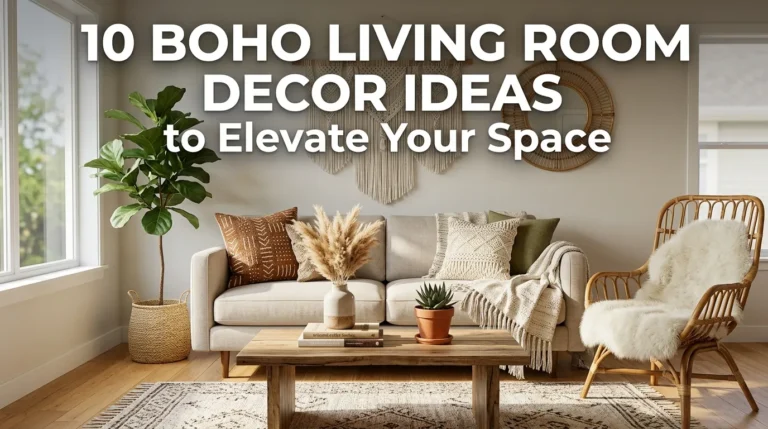
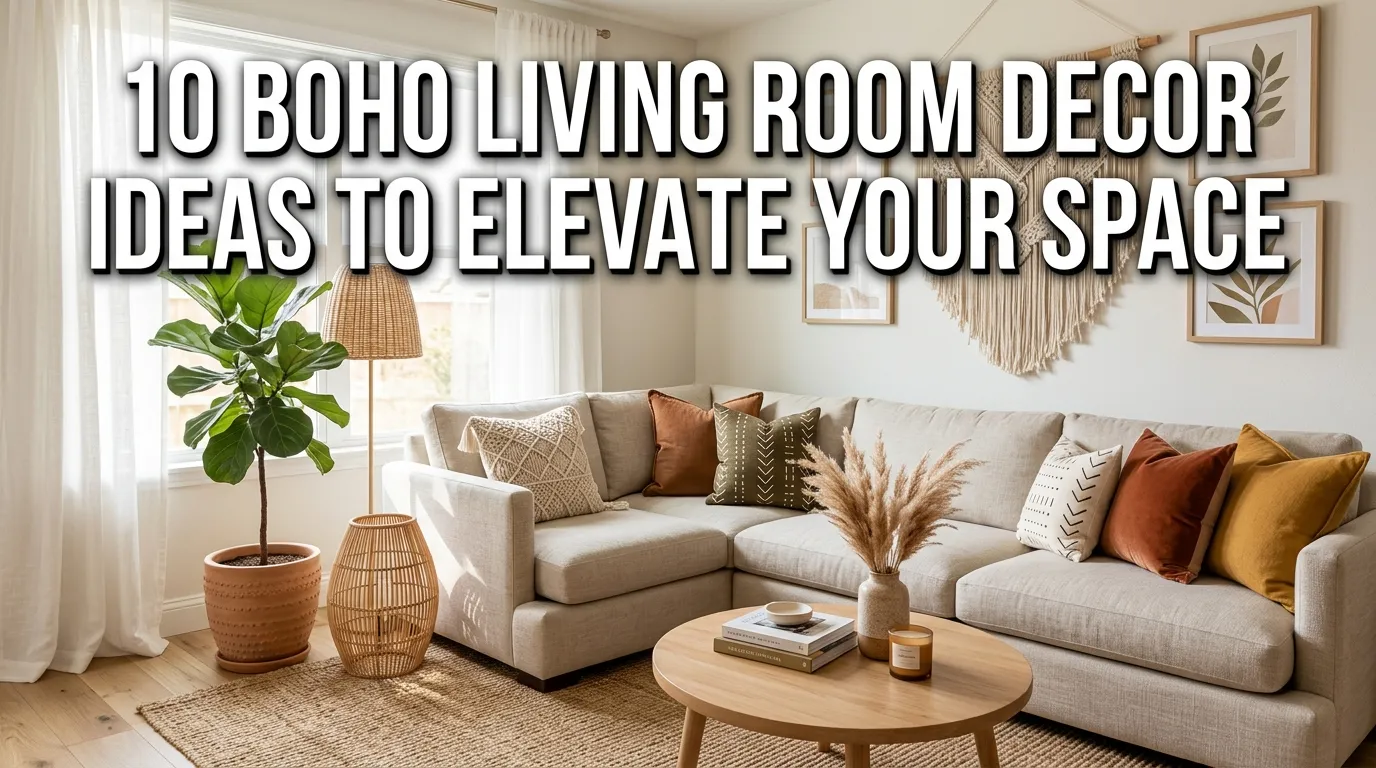
A boho living room should feel collected, comfortable, and effortlessly personal. Instead of looking perfectly matched, the best bohemian spaces combine natural materials, relaxed textiles, earthy colors, vintage-inspired accents, greenery, and furniture with plenty of character.
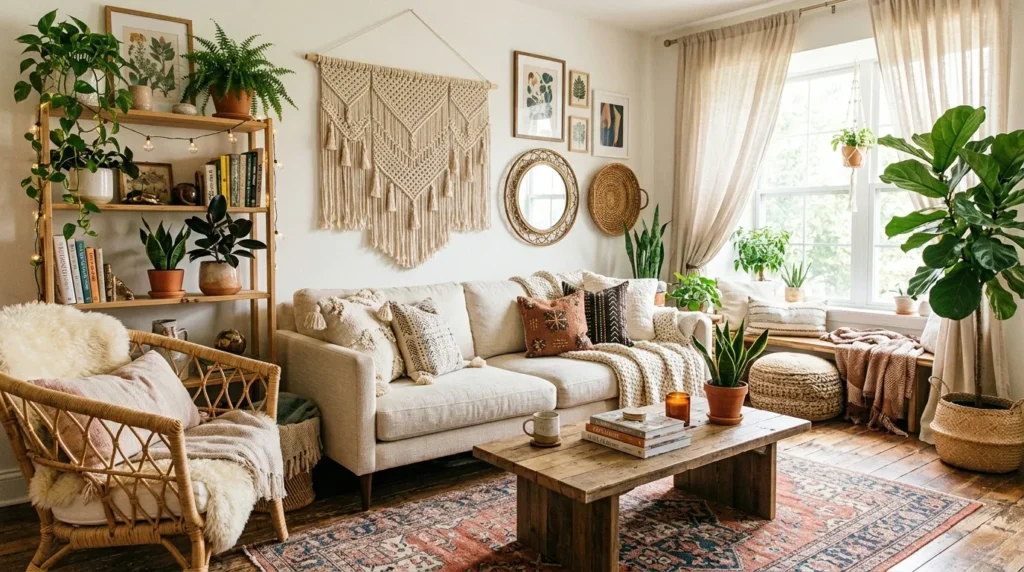
The beauty of boho decorating is that it doesn’t require everything to come from the same collection. In fact, a room often feels more authentic when different textures and styles are allowed to interact. A woven basket beside a modern sofa, a vintage rug beneath a rustic coffee table, or a collection of plants near a rattan chair can create the layered look that makes bohemian interiors so inviting.
The challenge is keeping all those elements from becoming visually overwhelming. Too many patterns, colors, or accessories can quickly turn a relaxed boho room into a cluttered one. The secret is to establish a cohesive base and then add personality gradually.
I’ve noticed that warm neutrals make an especially useful foundation. Cream, sand, camel, terracotta, olive, warm brown, and muted black can work together beautifully while leaving plenty of room for natural textures and decorative details.
Whether you’re refreshing a small apartment, decorating a family room, or creating a more relaxed atmosphere in a larger home, these boho living room ideas offer practical ways to bring the style into your space.
From rattan furniture and layered rugs to earthy palettes, macramé, vintage accents, and lush greenery, these ideas can help you create a living room that feels warm, relaxed, creative, and genuinely lived-in.
Table of Contents
1. Earthy Color Palette
Build a warm foundation with sand, cream, terracotta, olive, camel, and natural brown.
2. Rattan Furniture
Use woven furniture to introduce organic texture and unmistakable bohemian character.
3. Layered Rugs
Combine patterns and textures beneath the seating area for a relaxed collected look.
4. Macramé Details
Add handcrafted texture through wall hangings, cushions, and smaller decorative accents.
5. Lush Greenery
Use plants to bring natural color, movement, and freshness into the living room.
6. Vintage Accents
Mix old and new pieces to create a room with personality and visual history.
7. Woven Lighting
Use rattan, cane, bamboo, and natural fibers to create warm atmospheric illumination.
8. Textured Seating
Layer comfortable upholstery, pillows, and throws to make the room feel inviting.
9. Artisan Decor
Display handmade ceramics, baskets, pottery, and one-of-a-kind accessories.
10. Relaxed Styling
Keep the overall arrangement casual, comfortable, and personal rather than overly polished.
1. Earthy Color Palette
Quick Benefits
- Creates a warm atmosphere
- Complements natural materials
- Makes the room feel grounded
- Works with many decorating styles
- Provides an easy foundation for colorful accents
Why It Works
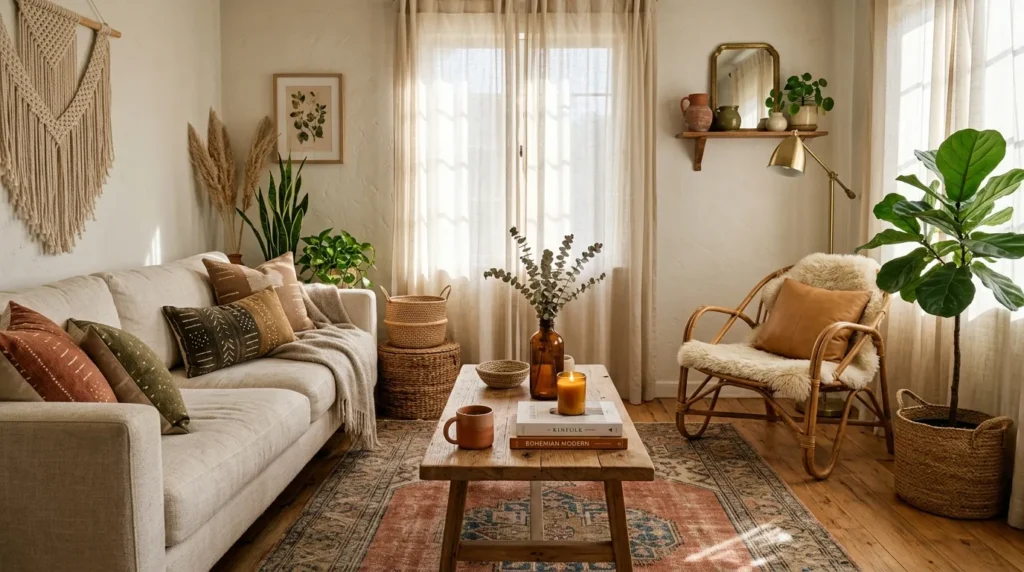
Color is one of the simplest ways to establish a bohemian mood. Instead of relying on a strict palette, boho interiors often combine warm, nature-inspired shades that feel relaxed and slightly imperfect.
Cream, ivory, sand, camel, terracotta, rust, olive, warm brown, muted mustard, and dusty rose can all work beautifully together. The goal isn’t to use every color at once but to create a palette that feels connected to the natural world.
A warm neutral foundation is especially useful because it allows stronger colors to appear as accents rather than overwhelming the entire room.
In my experience, earthy colors also make natural materials look richer. Rattan feels warmer against cream walls, wood looks deeper beside terracotta, and greenery becomes more noticeable against warm beige.
How To Style It
Begin with one dominant neutral, such as warm white, cream, beige, or sand.
Then introduce two or three earthy accent shades through pillows, rugs, artwork, ceramics, and smaller furniture pieces.
For example, pair a cream sofa with a terracotta patterned rug, olive cushions, and medium-toned wood furniture.
If you want a moodier boho room, use chocolate brown or charcoal as a grounding color. If you prefer an airy look, keep the foundation light and use earthy colors sparingly.
Natural materials should do much of the decorating work. Wood, woven fibers, linen, jute, leather, and clay can add richness without requiring lots of additional color.
2. Rattan Furniture
Quick Benefits
- Adds natural texture
- Creates an unmistakable boho feeling
- Keeps furniture visually light
- Works in small and large rooms
- Pairs beautifully with plants
Why It Works
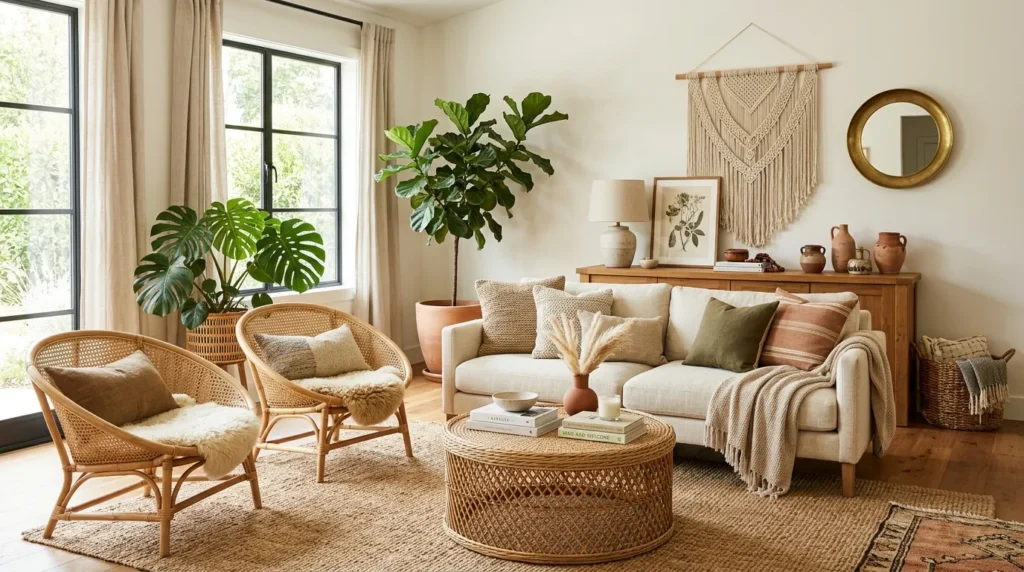
Rattan furniture has a naturally relaxed appearance that fits perfectly into bohemian interiors. Its woven construction adds texture while allowing light to pass through the furniture, which can make a room feel less visually heavy.
A rattan accent chair, coffee table, cabinet, bench, or console can introduce boho character without requiring a complete furniture makeover.
This material also pairs naturally with other organic finishes. Place rattan near wood, jute, linen, ceramic, and greenery and the entire room begins to feel more cohesive.
One of the best things about rattan is that it can bridge different decorating styles. It works with modern sofas, vintage rugs, farmhouse-inspired pieces, and even minimalist architecture.
How To Style It
You don’t need an entire rattan furniture set.
Start with one statement piece, such as a woven accent chair beside the sofa. Add a rattan coffee table or console only if the room needs more texture.
Pair rattan with soft neutral upholstery to keep the space comfortable rather than overly rustic.
Layer a textured throw over the chair and place a small woven basket nearby for practical storage.
For a more sophisticated look, combine natural rattan with black accents, warm wood, cream upholstery, and muted greenery.
Avoid filling every corner with woven furniture. A few carefully chosen pieces usually create a stronger effect.
3. Layered Rugs
Quick Benefits
- Adds visual depth
- Makes the room feel cozy
- Introduces pattern gradually
- Works beautifully with natural fibers
- Creates a collected bohemian atmosphere
Why It Works
Layered rugs are one of the easiest ways to make a boho living room feel relaxed and collected.
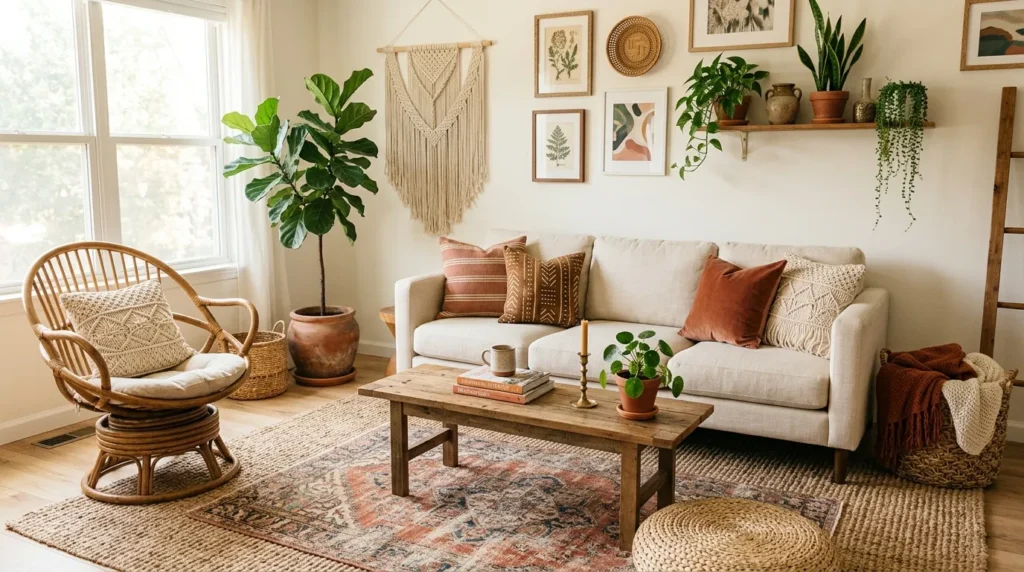
Instead of relying on one rug, place a larger natural-fiber base beneath a smaller patterned or vintage-inspired rug. The combination creates visual depth while allowing you to introduce several textures without adding more furniture.
A large jute rug can provide a neutral foundation, while a smaller faded Persian-inspired rug adds color and pattern.
This approach is particularly effective in larger rooms because a single small rug can feel lost beneath substantial furniture.
The key is allowing the layers to remain visible. The bottom rug should frame the smaller rug rather than disappear completely underneath it.
How To Style It
Begin with a large jute, sisal, or woven rug in a natural beige or sand color.
Then place a smaller vintage, Moroccan-inspired, kilim-style, or patterned rug over the central seating area.
Choose colors that relate to your existing decor. Terracotta, rust, olive, cream, camel, and muted blue are excellent bohemian accents.
Keep the furniture relatively simple if the rugs contain strong patterns.
A cream sofa, wood coffee table, rattan chair, and several textured pillows can provide enough support without competing with the layered floor design.
4. Macramé Details
Quick Benefits
- Adds handcrafted texture
- Softens blank walls
- Creates authentic boho character
- Works well with neutral interiors
- Provides visual interest without bold color
Why It Works
Macramé has long been associated with bohemian decorating because its knotted texture creates a distinctly handmade feeling.
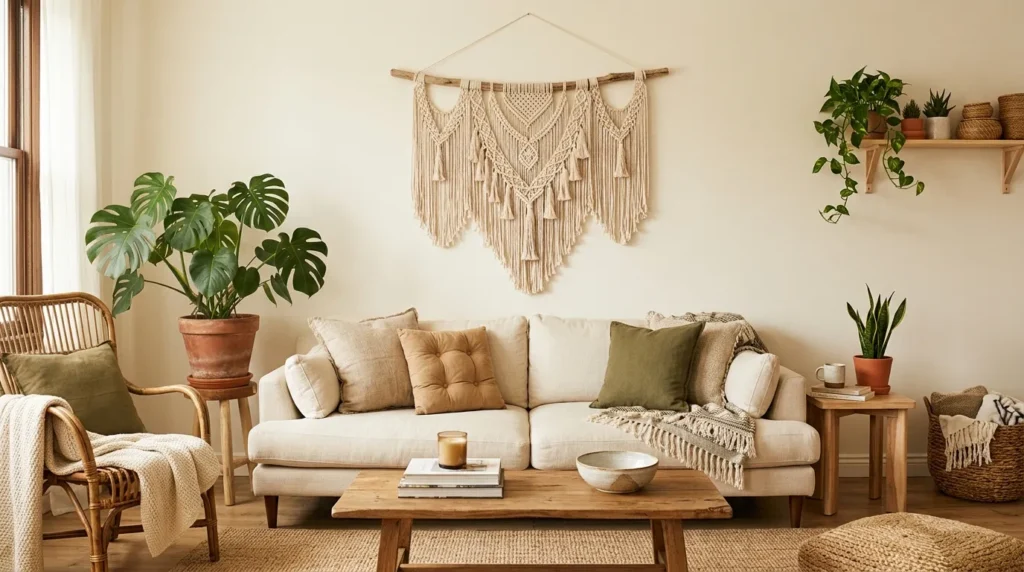
A large wall hanging can become a focal point above the sofa, while smaller macramé details can add subtle texture through plant holders, decorative accents, or cushion designs.
The important thing is avoiding overuse. A single substantial macramé piece often has more impact than several small pieces scattered around the room.
Macramé works particularly well against warm white or beige walls because the texture creates shadow and dimension without introducing a completely different color.
How To Style It
Choose one large macramé wall hanging for the primary living room wall.
Hang it above the sofa, console, or a low cabinet where it can become part of the overall composition.
Pair the natural cream or ivory fibers with wood furniture, woven baskets, terracotta ceramics, and green plants.
If the wall hanging is highly detailed, keep the surrounding artwork minimal.
For renters, a smaller removable wall hanging can introduce the same feeling without requiring a major wall treatment.
You can also use a macramé plant hanger near a sunny window to combine texture with greenery.
5. Lush Greenery
Quick Benefits
- Adds natural color
- Softens furniture lines
- Creates a relaxed atmosphere
- Works with neutral palettes
- Makes the room feel more alive
Why It Works
Plants are almost synonymous with the relaxed bohemian aesthetic. They bring organic shapes, natural color, and visual movement into the living room.
The key isn’t creating an indoor jungle simply because the style is boho. Instead, choose plants that suit your light conditions and lifestyle, then arrange them at different heights.
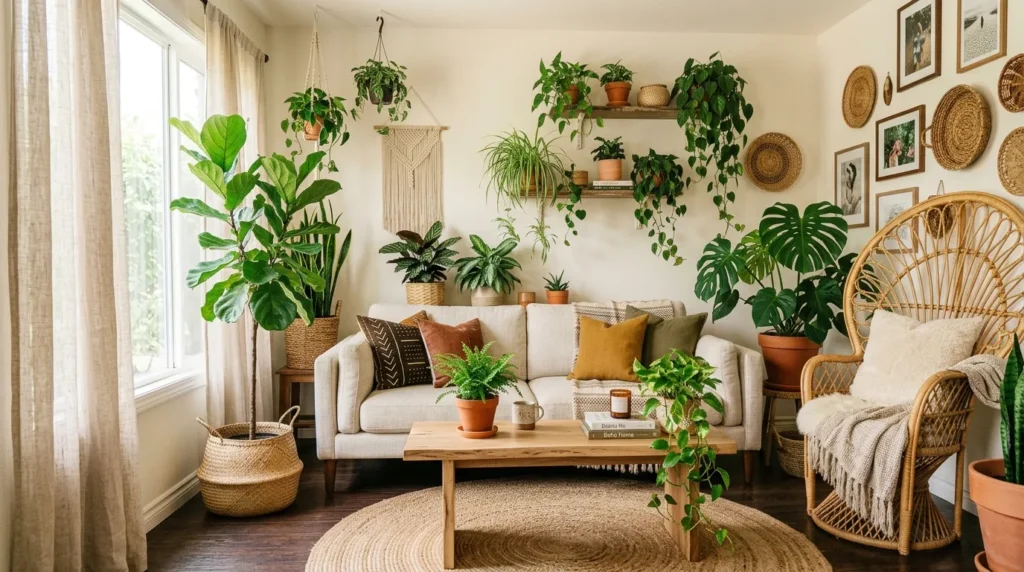
A tall plant can fill an empty corner, while smaller plants can sit on shelves, side tables, or plant stands.
The contrast between green foliage and warm neutral materials is especially effective. Plants look beautiful against cream walls, natural wood, rattan, and woven textiles.
How To Style It
Start with one substantial floor plant in an empty corner. Then add smaller plants throughout the room if conditions allow.
Use baskets, terracotta pots, ceramic planters, or woven containers instead of relying on identical plant pots.
Vary the heights. Place some plants on stands, others on shelves, and one or two directly on the floor.
Choose plants based on the light available in your room rather than appearance alone. A beautiful plant that cannot thrive in your space will quickly become a maintenance problem.
If you have pets or young children, research plant safety before bringing new varieties indoors.
6. Vintage Accents
Quick Benefits
- Adds personality
- Prevents the room from looking too coordinated
- Creates a collected appearance
- Introduces unique details
- Works beautifully with modern furniture
Why It Works
Bohemian interiors often feel special because they don’t look like everything was purchased at the same time.
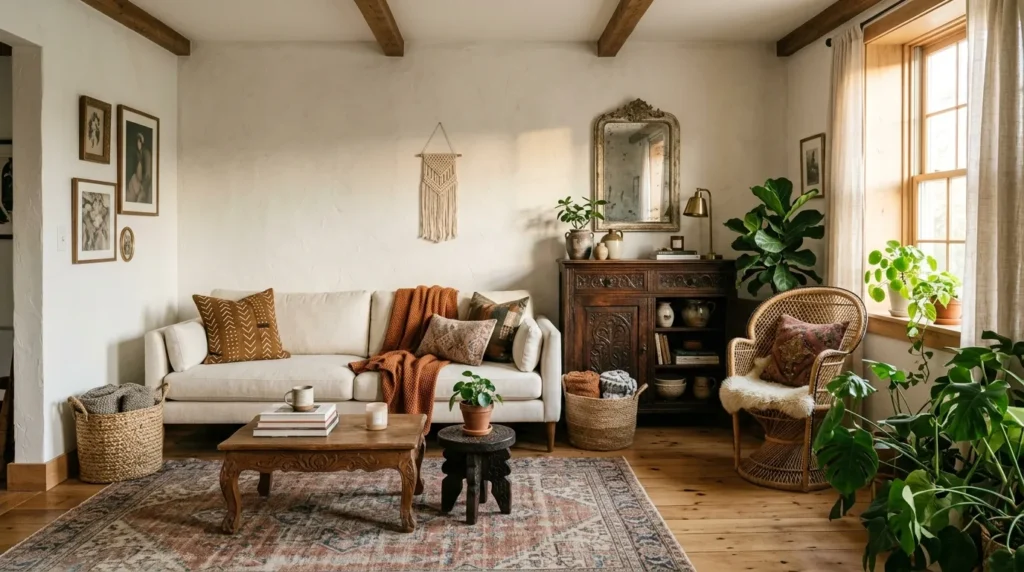
Vintage furniture and accessories introduce variation in finish, shape, and history. A carved wooden stool, aged mirror, antique-inspired cabinet, old pottery piece, or vintage-style artwork can add depth to an otherwise contemporary room.
The goal isn’t to create a museum. Instead, mix a few older-looking pieces into a comfortable modern foundation.
This contrast gives the room personality and prevents it from feeling like a catalog display.
I’ve noticed that one unusual vintage piece can often become the item guests remember because it provides something unexpected.
How To Style It
Start with one meaningful or visually interesting vintage-inspired item.
A small wooden chest can work as a side table. An old-looking mirror can create a focal point. A vintage rug can anchor the entire seating arrangement.
Pair older pieces with contemporary upholstery so the room feels balanced.
If you’re shopping secondhand, pay attention to scale and condition. A beautiful small accessory can disappear in a large room, while an oversized vintage cabinet may overwhelm a small apartment.
Choose pieces because you genuinely like them rather than simply because they look “boho.”
7. Woven Lighting
Quick Benefits
- Creates warm shadows
- Adds natural texture
- Provides a strong decorative feature
- Softens modern interiors
- Works beautifully with earthy palettes
Why It Works
Lighting is one of the most effective ways to reinforce a bohemian atmosphere.
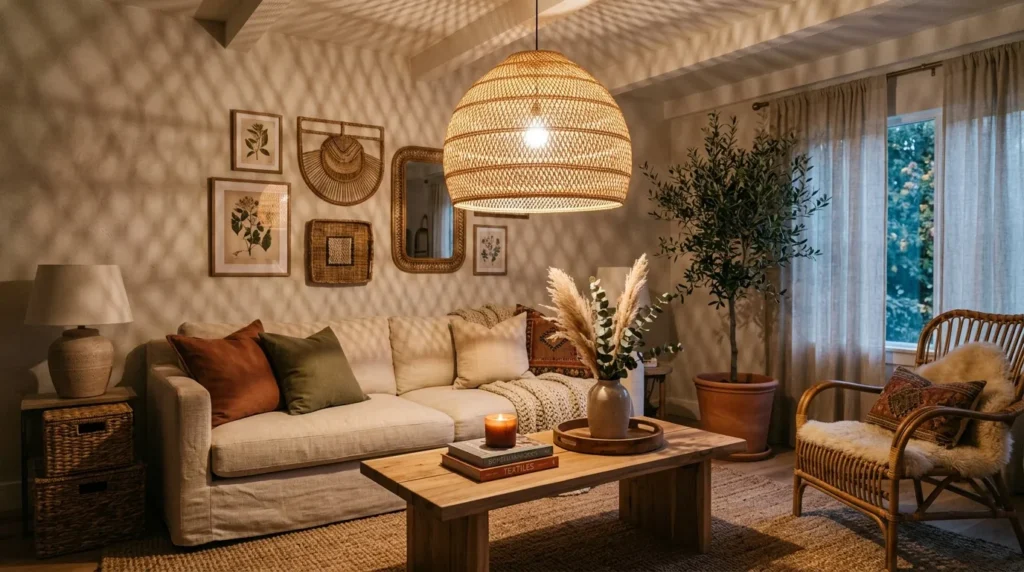
Woven pendants and lamps made from rattan, cane, bamboo, seagrass, or other natural fibers cast interesting shadows when illuminated. This creates an atmospheric effect that feels much warmer than a standard overhead fixture.
The texture of woven lighting also adds another material layer without taking up floor or wall space.
This is particularly useful in minimalist rooms where you want more personality without adding lots of decorative objects.
How To Style It
Choose a large woven pendant above the main seating area if your ceiling height and electrical setup allow.
For smaller rooms, a rattan table lamp or woven floor lamp can provide the same visual effect.
Pair the fixture with warm-toned bulbs to emphasize the natural texture and create a comfortable evening atmosphere.
Repeat the woven material elsewhere through baskets, trays, or a small furniture piece, but don’t match everything exactly.
Black metal hardware can provide contrast, while brass or warm wood can create a softer overall look.
8. Textured Seating
Quick Benefits
- Makes the room feel comfortable
- Adds tactile depth
- Creates a relaxed atmosphere
- Supports layered decorating
- Works with neutral furniture
Why It Works
Comfort is central to bohemian decorating. The living room should feel like somewhere you can actually settle in rather than simply admire.
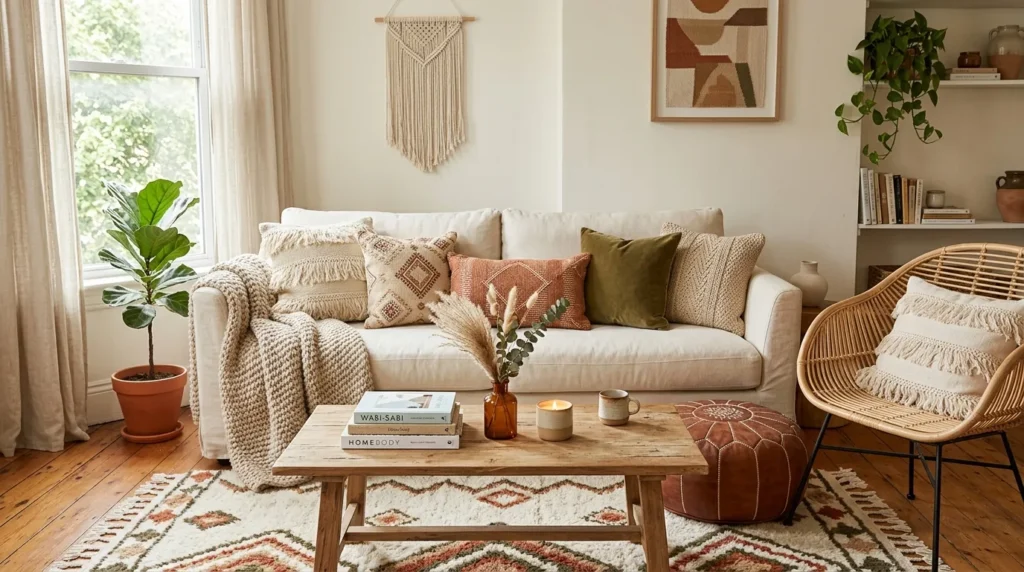
Textured seating creates that feeling through linen, cotton, boucle, velvet, woven upholstery, leather, and layered cushions.
A simple sofa can become much more inviting when surrounded by different textures.
The trick is creating variety without losing cohesion. Too many patterns can make the seating area feel chaotic, while everything in the same fabric can look flat.
How To Style It
Start with a comfortable sofa in cream, beige, camel, warm gray, or another versatile shade.
Add pillows in several textures rather than buying everything in the same fabric. Try linen, woven cotton, velvet, or embroidered textiles.
Place a soft throw over one corner of the sofa rather than arranging everything too perfectly.
A leather pouf or woven ottoman can provide additional informal seating.
For a more layered look, combine a structured sofa with one relaxed accent chair and a low floor cushion or pouf.
9. Artisan Decor
Quick Benefits
- Adds handmade character
- Makes the room feel personal
- Introduces unique textures
- Works with neutral palettes
- Creates attractive styling moments
Why It Works
Artisan-inspired decor gives a boho room the feeling that it has been collected over time.
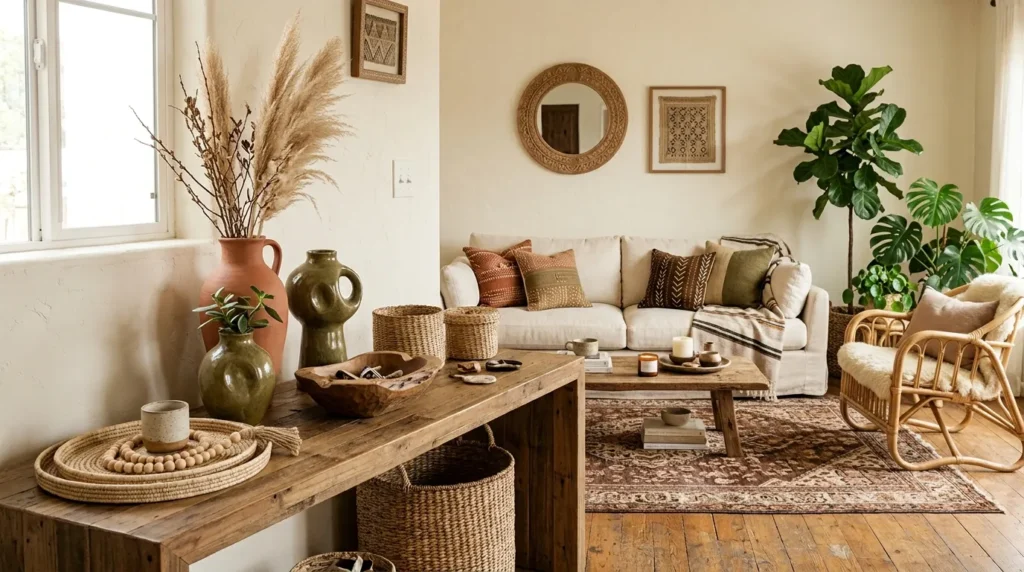
Handmade-looking ceramics, sculptural pottery, woven baskets, carved wood, textured vases, and irregular decorative objects introduce small imperfections that make the room feel authentic.
Unlike mass-produced matching accessories, artisan pieces often have subtle variations in shape, texture, and color.
You don’t need many. A few distinctive objects can be much more effective than a shelf packed with decorations.
How To Style It
Choose a small collection of pieces in complementary materials.
A ceramic vase can sit on a wood console beside a woven basket and a stack of books. A sculptural bowl can anchor the coffee table.
Use trays to organize smaller accessories and leave plenty of empty space around special pieces.
Warm clay, ivory ceramic, natural wood, and woven materials work especially well with earthy boho palettes.
If you collect objects while traveling or have handmade pieces from local artists, incorporate them. Personal meaning is one of the easiest ways to make a bohemian room feel genuinely yours.
10. Relaxed Styling
Quick Benefits
- Creates an effortless atmosphere
- Prevents overdecorating
- Makes the room comfortable
- Allows personality to shine
- Works especially well for everyday homes
Why It Works
The final ingredient in a successful boho living room is restraint.
Bohemian style is naturally layered, but it should still feel breathable. The room needs enough empty space for furniture and decorative objects to stand out.
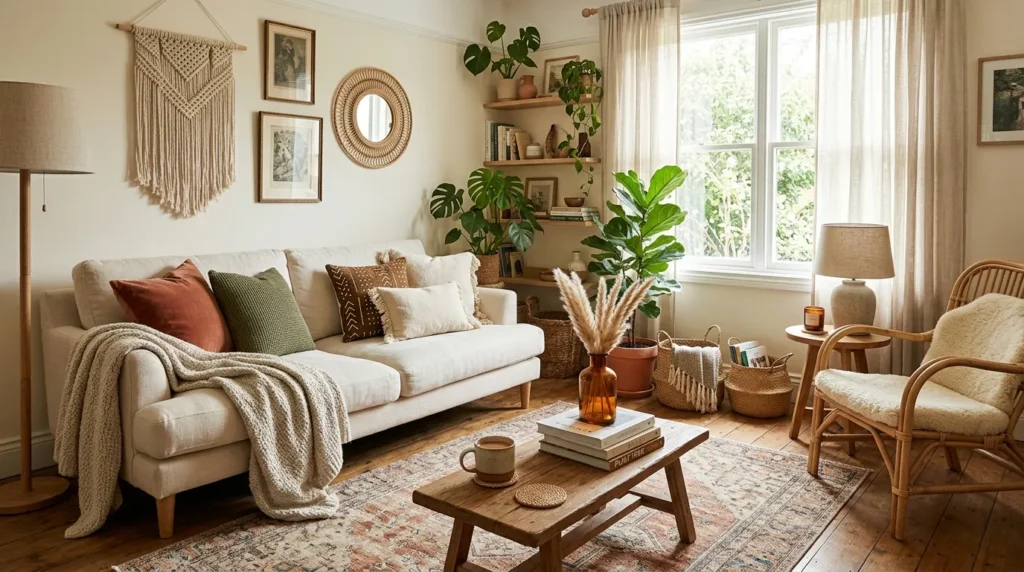
A relaxed arrangement might include a slightly asymmetrical gallery wall, a casually draped throw, books on the coffee table, plants at different heights, and furniture that isn’t perfectly matched.
This doesn’t mean the room should look messy. Instead, aim for an atmosphere that feels naturally collected rather than meticulously staged.
One simple trick I always suggest is styling the room and then removing one or two items. The extra breathing room can make the remaining pieces look more intentional.
How To Style It
Begin with the essentials: sofa, chairs, rug, coffee table, lighting, and storage.
Then add layers gradually.
Place a few books on the coffee table, a plant beside the sofa, artwork above the main seating area, and one or two baskets for practical storage.
Allow some surfaces to remain empty.
Avoid arranging every cushion into perfect symmetry. Slightly casual placement can make the room feel more inviting.
Finally, make sure the layout supports everyday movement. A boho room should be beautiful, but it should also feel easy to live in.
How To Create A Boho Living Room Without Making It Cluttered
Bohemian style is often associated with abundance, but there is a difference between layered and overcrowded.
Start with a simple foundation. Choose the sofa, rug, coffee table, and major lighting before adding accessories.
Then build texture in layers.
Instead of buying ten decorative objects, consider adding one woven basket, one ceramic piece, one plant, and a textured throw.
Use repetition to create cohesion. If you have rattan in the coffee table, repeat that natural texture in a basket or lamp. If terracotta appears in the rug, introduce a small ceramic planter in a similar tone.
Keep pathways clear and make sure decorative objects don’t interfere with everyday use.
The room should feel collected—not crowded.
Best Colors For Boho Living Rooms
A boho palette can be surprisingly flexible.
Warm neutrals such as cream, beige, ivory, sand, and camel create a light foundation.
Terracotta, rust, burnt orange, mustard, and warm brown add earthy depth.
Olive, sage, muted green, and dusty blue provide cooler contrast.
For a dramatic boho room, chocolate brown, charcoal, or deep olive can ground the space.
You don’t need to use all of these colors. Pick one dominant neutral and two or three supporting shades.
A useful approach is to let your rug or artwork introduce the accent colors, then repeat those shades in small quantities throughout the room.
How To Mix Patterns In Boho Decor
Pattern mixing is part of what makes bohemian rooms feel collected.
The easiest way to do it is to vary the scale of the patterns.
For example, combine a large patterned rug with smaller geometric pillows and one subtle stripe.
Keep the colors related even when the patterns differ.
If your rug contains terracotta, cream, and olive, choose pillows that repeat one or two of those colors.
You can also mix patterns through different materials. Embroidery, woven designs, block prints, and subtle geometric textures don’t all need to look identical.
When in doubt, keep one major pattern as the focal point and let the others remain quieter.
Making A Small Boho Living Room Work
A small room can look beautiful with boho styling, but editing becomes even more important.
Choose furniture that fits the scale of the room and avoid filling every corner.
Use a large enough rug to visually connect the seating area rather than several small rugs that divide the floor.
Wall-mounted shelves can provide display space without consuming much floor area.
Baskets are particularly useful because they provide decorative texture while hiding everyday items.
Choose one or two larger plants instead of many tiny ones.
Mirrors can help reflect natural light and create a greater sense of openness.
Keep the largest surfaces relatively light, then use earthy colors and patterns as accents.
FAQ
What makes a living room boho?
A boho living room typically combines natural materials, relaxed textiles, earthy colors, layered patterns, greenery, handmade-looking decor, vintage-inspired pieces, and an informal furniture arrangement. The style is flexible rather than strict. The most successful spaces feel collected and personal rather than perfectly coordinated.
What colors are best for boho living rooms?
Warm neutrals such as cream, beige, ivory, sand, camel, and warm brown provide an excellent foundation. Terracotta, rust, olive, mustard, muted blue, dusty rose, and deep green can then be added as accents. The exact combination depends on whether you prefer a light, earthy, colorful, or moody boho atmosphere.
How do I make a boho living room look modern?
Use a restrained base palette, streamlined furniture, and fewer decorative pieces, then add bohemian texture through rattan, woven materials, natural wood, plants, and one or two patterned textiles. Modern lighting and clean-lined furniture can keep the room contemporary while organic materials provide the relaxed boho character.
Can boho decor work in a small living room?
Yes. Choose appropriately scaled furniture and focus on vertical texture, plants, wall decor, and multifunctional storage. A well-sized rug can visually connect the seating area, while baskets and ottomans can provide practical storage. Avoid using too many small decorative objects because they can make a compact room feel crowded.
What type of furniture works best with boho decor?
Rattan chairs, wood coffee tables, linen sofas, leather seating, woven benches, low-profile furniture, poufs, and vintage-inspired pieces all work well. You don’t need every piece to be bohemian. Mixing contemporary and natural furniture can create a more collected and sophisticated result.
How can I decorate a boho living room on a budget?
Start with affordable high-impact elements such as textiles, plants, baskets, artwork, and secondhand furniture. Thrift stores and vintage markets can be excellent sources for unique pieces. Rearranging existing furniture and layering inexpensive pillows or throws can also change the atmosphere without requiring a major purchase.
How many plants should a boho living room have?
There is no fixed number. Start with one large plant and add smaller varieties only where the room has suitable light and space. Varying plant heights creates more natural visual movement. Choose plants based on your actual growing conditions and maintenance ability rather than adding greenery simply for decoration.
Conclusion
A beautiful boho living room doesn’t need to follow a strict formula. The heart of the style is creating a space that feels relaxed, layered, natural, and personal.
Start with a comfortable foundation and then introduce warmth through earthy colors, natural wood, rattan, woven textiles, plants, vintage accents, and handmade-looking accessories.
If your room already has plenty of furniture, focus on texture instead. Add a woven rug, linen cushions, a macramé wall hanging, or a few carefully chosen plants.
If the space feels too plain, introduce one stronger pattern or vintage piece rather than filling every surface with decor.
And if you’re worried that boho style will make your home feel cluttered, remember that editing is just as important as layering. Give your favorite pieces room to breathe and allow some surfaces to remain intentionally empty.
The best bohemian spaces feel like they evolved naturally over time. They combine things you love rather than following a perfectly matched furniture set.
Start with one or two ideas that fit your current room, then build gradually. With warm colors, natural textures, comfortable seating, greenery, and a few meaningful details, you can create a living room that feels inviting every day and full of personality.