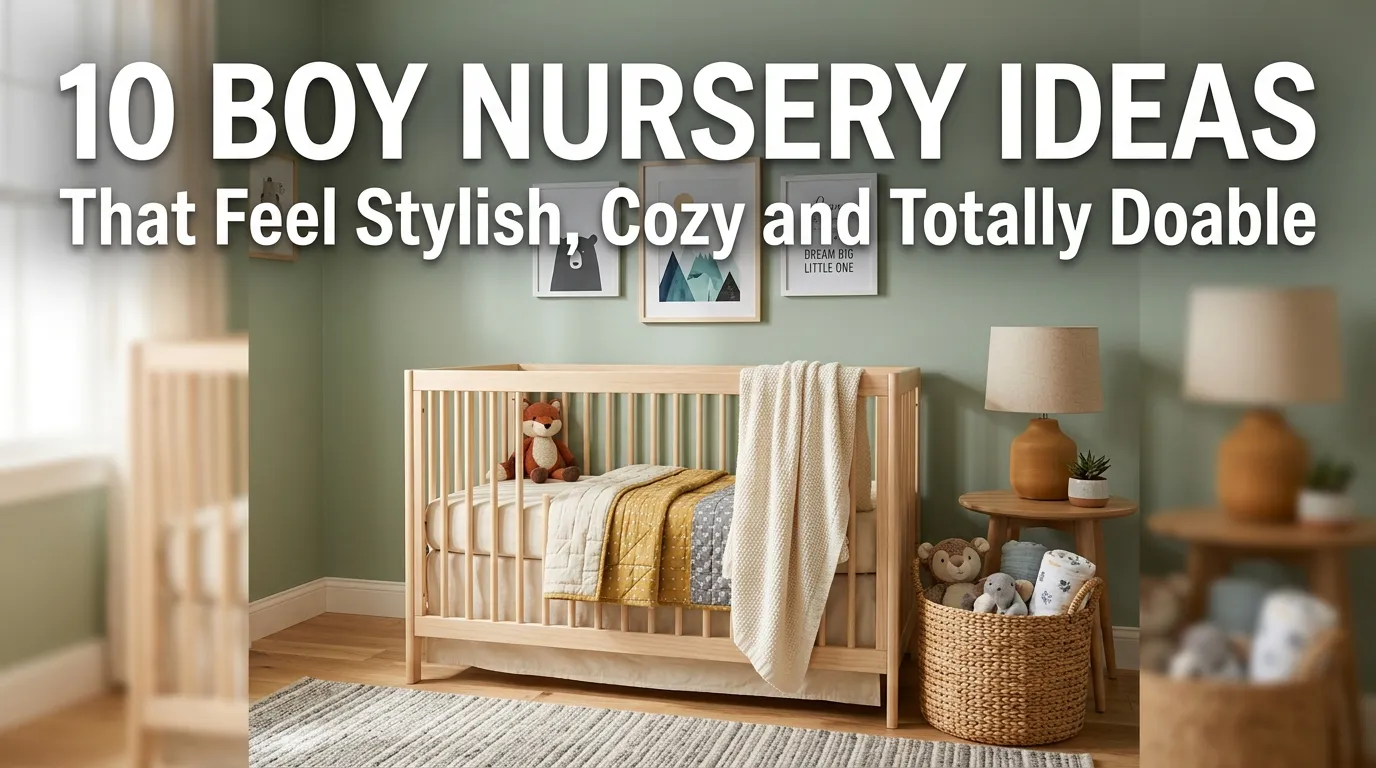
10 Boy Nursery Ideas That Feel Stylish Cozy and Totally Doable
Designing a nursery for a baby boy is such a sweet opportunity to create a room that feels comforting, practical, and personal from the very beginning. And while Pinterest can make nursery design look wonderfully polished, you don’t need a huge budget or a professionally designed room to get that same cozy feeling.
The most inviting nurseries usually come together through simple layers: a comfortable crib, a practical changing area, soft lighting, useful storage, and a few details that give the room personality. You can keep the palette classic with blue and white, bring in earthy greens and warm wood, or create something more modern with charcoal, cream, and natural textures.
I’ve noticed that the rooms that age well tend to avoid going too heavily into one theme. Instead of covering every wall with matching cars, animals, or nautical decorations, choose one subtle inspiration and let the rest of the room stay versatile. That makes it easier to update the space as your little one grows.
The good news is that many of these ideas are completely doable in a regular bedroom, including smaller spaces. A well-placed dresser can double as a changing station, floating shelves can provide storage without taking up floor space, and a comfortable chair can become both a feeding spot and a cozy reading corner later.
Below, you’ll find approachable ways to create a boy nursery that feels warm, stylish, functional, and genuinely lived-in—without making the decorating process unnecessarily complicated.
Table of Contents
1. Soft Blue Palette
Create a calm nursery with layered blue shades balanced by warm neutrals.
2. Natural Wood Nursery
Use warm wood furniture and earthy textures for an inviting timeless look.
3. Woodland Adventure
Bring a subtle forest-inspired feeling into the nursery with nature-themed details.
4. Classic Navy Details
Add sophisticated navy accents without making the room feel too dark.
5. Neutral Little Explorer
Build a flexible nursery around cream, beige, tan, and playful adventure accents.
6. Cozy Reading Corner
Create a comfortable corner that works for nighttime routines and future story time.
7. Modern Blue Stripes
Use simple stripes and clean lines for a timeless, contemporary nursery.
8. Green and Earthy Tones
Combine sage, olive, cream, and natural materials for a soothing atmosphere.
9. Practical Storage
Make everyday baby essentials easy to organize while keeping the room visually calm.
10. Personalized Gallery Wall
Add meaningful artwork and keepsakes that make the nursery feel uniquely yours.
1. Soft Blue Palette
Quick Benefits
- Creates a calm atmosphere
- Easy to coordinate
- Works with different decorating styles
- Can grow with the child
- Looks beautiful with warm neutrals
Why It Works
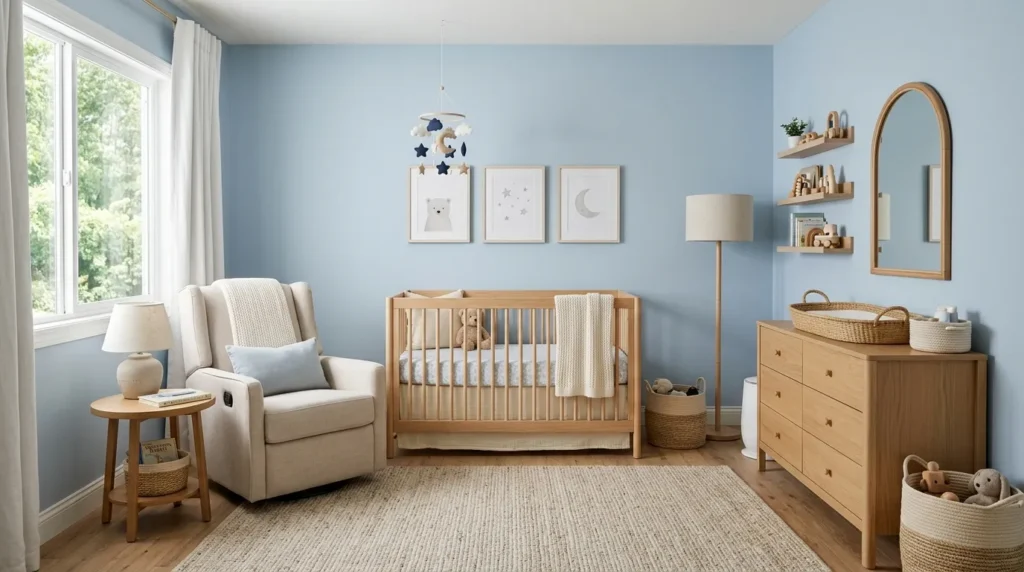
Blue remains a classic nursery color for good reason. Soft blue shades can create a peaceful backdrop without making the room feel overly themed or formal. The trick is layering different tones rather than choosing one exact blue for everything. Powder blue, dusty blue, denim, and muted navy can work together beautifully when balanced with cream, beige, or natural wood. This approach also gives you flexibility as your baby grows. A soft blue wall can easily transition into a toddler bedroom later with different artwork and bedding. The result feels timeless rather than tied to one particular stage.
How To Style It
Start with warm white or pale blue walls and introduce stronger blue tones through the rug, curtains, crib bedding, and artwork.
A natural wood crib can soften the palette, while white furniture creates a cleaner, brighter appearance. Add a comfortable upholstered chair in cream or beige for contrast.
Use blue sparingly in the changing area so the room doesn’t become visually repetitive. A small basket, framed print, or storage bin can be enough.
For a more modern look, add black or charcoal accents in small doses. For a traditional nursery, brass or warm wood details will create a softer feeling.
2. Natural Wood Nursery
Quick Benefits
- Adds warmth
- Feels timeless
- Works with many colors
- Creates a natural atmosphere
- Ages well with the child
Why It Works
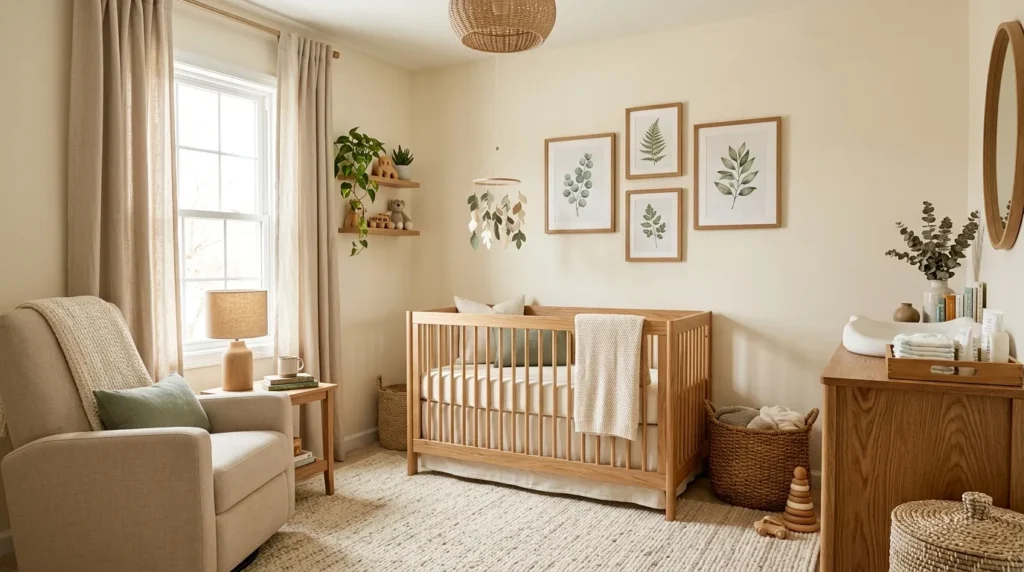
Natural wood is one of the most versatile materials for a nursery because it instantly brings warmth to a room. Pale oak creates an airy Scandinavian-inspired look, while walnut or medium-toned wood feels richer and more traditional. Wood also pairs beautifully with almost any nursery palette, from soft blue and sage to cream and muted terracotta. Rather than matching every furniture piece perfectly, mixing similar wood tones can create a more collected appearance. Natural materials also provide visual contrast against soft textiles, making the nursery feel comfortable instead of overly polished.
How To Style It
Choose one primary wood finish for the crib or dresser and use smaller wooden accessories to repeat the warmth.
Pair the furniture with cream walls, a woven rug, linen-look curtains, and soft cotton bedding. Add a few baskets made from natural fibers for practical storage.
If the room feels too neutral, introduce muted blue, sage, or dusty green through artwork and textiles.
Avoid overcrowding the nursery with wooden accessories. Let the furniture provide most of the natural texture, then use a few carefully selected pieces to complete the look.
3. Woodland Adventure
Quick Benefits
- Adds playful personality
- Works with earthy colors
- Easy to personalize
- Can grow with the child
- Doesn’t require a full theme
Why It Works
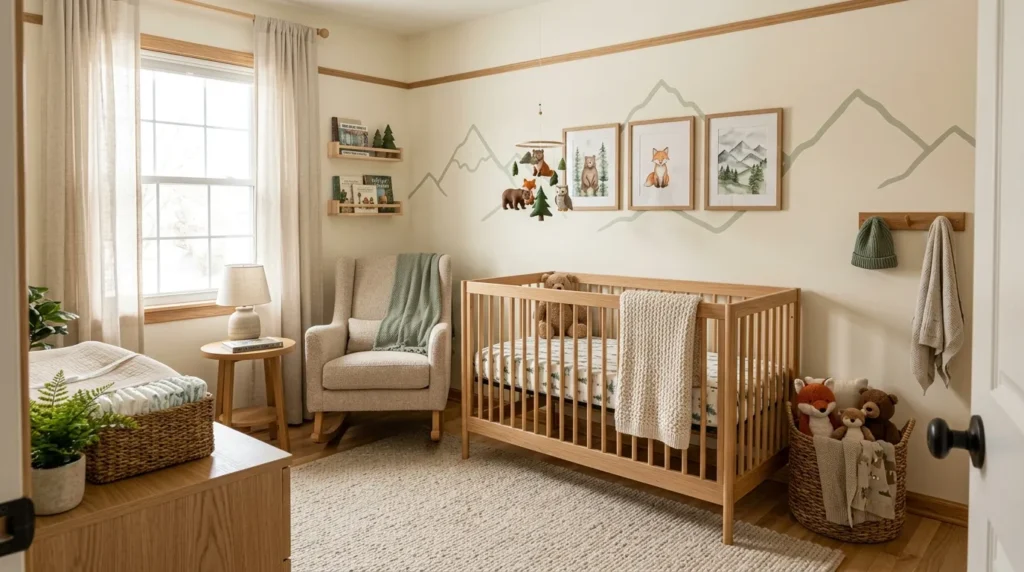
A woodland-inspired nursery can feel playful without becoming overly literal. Instead of turning the entire room into a forest, use a few subtle references such as trees, bears, mountains, mushrooms, foxes, or botanical illustrations. Earthy colors like sage, olive, tan, cream, and warm brown create a cozy backdrop that works particularly well with natural wood furniture. This type of nursery also has plenty of room to evolve. As your child grows, animal artwork can gradually be replaced with adventure maps, nature prints, or books without changing the main furniture.
How To Style It
Keep the walls neutral and introduce the woodland theme through artwork, bedding, a rug, or a small mobile.
A simple mountain print above the crib can become the focal point without overwhelming the space. Add a plush forest animal or two for a playful touch.
Use sage or olive green alongside cream and warm wood. A woven basket filled with blankets can add texture while also serving a practical purpose.
For a more sophisticated nursery, choose watercolor or vintage-style botanical and animal prints rather than brightly colored cartoon graphics.
4. Classic Navy Details
Quick Benefits
- Adds sophistication
- Creates strong contrast
- Works with white and wood
- Easy to update
- Suitable for larger or smaller rooms
Why It Works
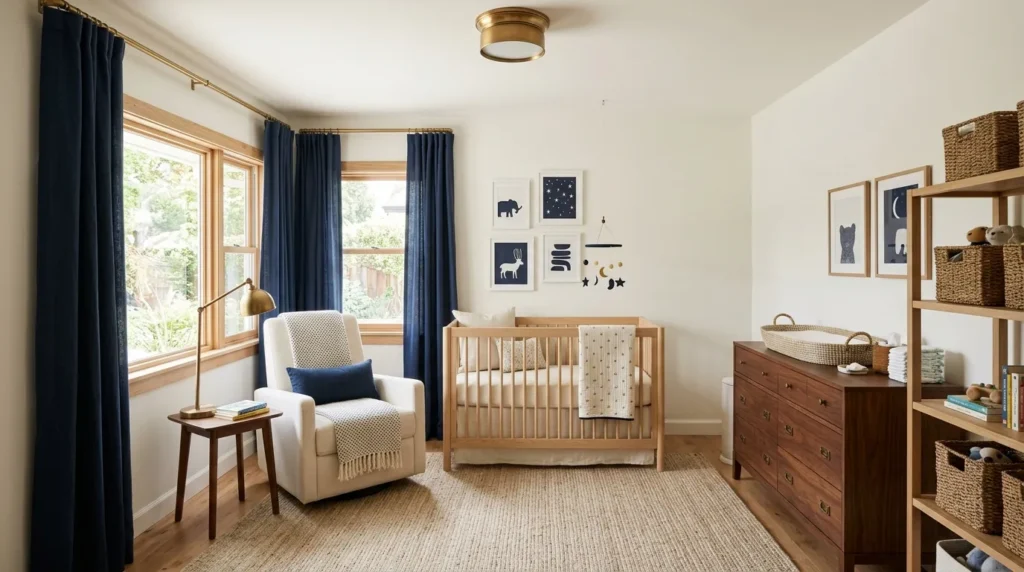
Navy is a wonderful way to introduce deeper color into a boy nursery without making the space feel too intense. Used as an accent rather than the dominant color, it provides contrast and gives lighter elements more definition. Navy looks especially beautiful alongside warm white, pale blue, natural oak, brass, and tan. It can also create a more sophisticated room that transitions naturally into a toddler or young child’s bedroom. The key is to balance the darker shade with plenty of lighter surfaces and soft textiles.
How To Style It
Use navy through curtains, a rug border, crib sheets, artwork, or a small upholstered chair rather than covering every surface.
Pair navy accents with warm white walls and a natural wood crib. Add cream bedding to keep the room light.
A navy-and-white striped rug or subtle nautical print can introduce personality without making the nursery feel overly themed.
If you want a slightly more traditional appearance, add antique brass hardware or a warm wood dresser. For a contemporary look, use matte black accents instead.
5. Neutral Little Explorer
Quick Benefits
- Works for years
- Feels calm and uncluttered
- Easy to accessorize
- Doesn’t rely on a strong theme
- Great for small nurseries
Why It Works
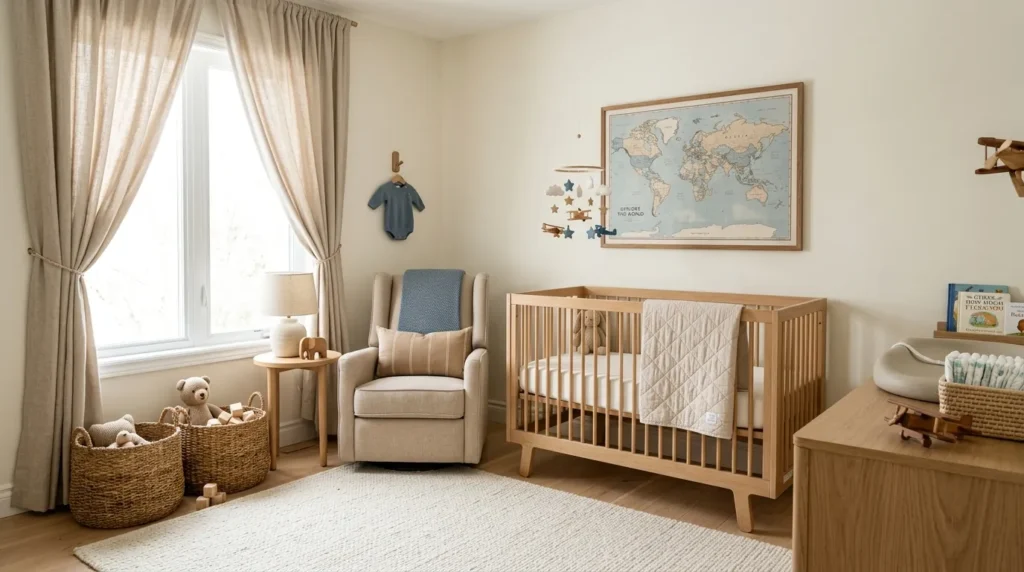
A neutral nursery can still feel playful and full of personality. Cream, beige, taupe, tan, and warm white create a flexible foundation, while adventure-inspired accessories give the room character. Maps, stars, mountains, airplanes, vintage travel prints, or simple camping-inspired artwork can all suggest exploration without making the nursery look like a themed set. Neutral colors are also useful if you want the room to transition easily as your child grows. You can change artwork, bedding, and accessories while leaving the core design intact.
How To Style It
Use warm white walls with beige curtains, a natural wood crib, and a soft neutral rug. Then introduce small explorer-inspired details through artwork and books.
A vintage-style map above a dresser can become the main focal point. Add a small globe or wooden airplane as a decorative accent where it is safely out of reach.
Keep larger furniture simple and prioritize storage. This makes it easy to refresh the room later without starting over.
Add muted blue or sage if you want a little more color while keeping the overall palette calm.
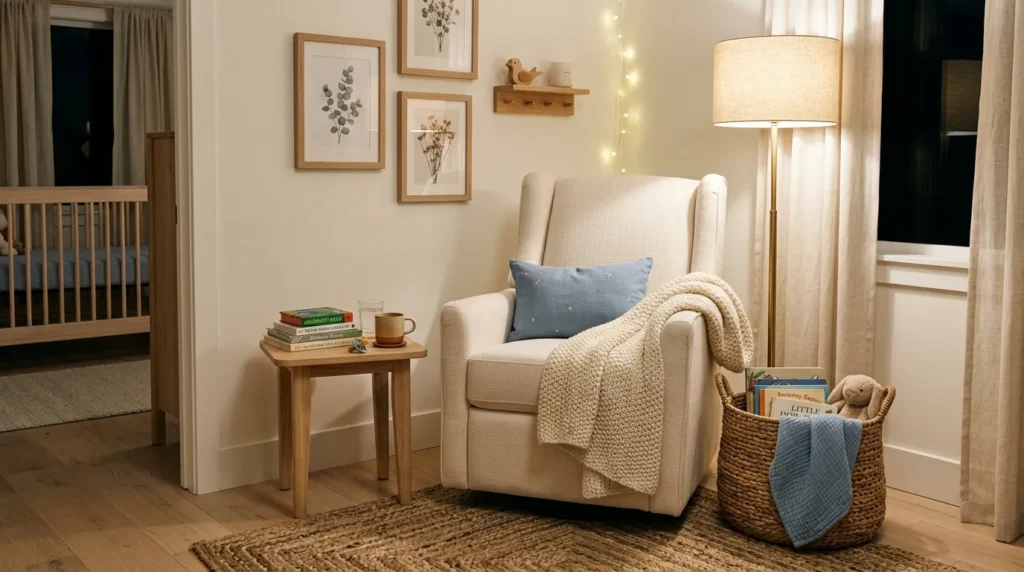
6. Cozy Reading Corner
Quick Benefits
- Creates a relaxing routine
- Provides a comfortable feeding area
- Adds useful seating
- Can transition into story time
- Makes use of an empty corner
Why It Works
A comfortable chair is one of the most useful pieces in a nursery. It can become the place for late-night feeds, quiet cuddles, daytime naps, and eventually bedtime stories. Rather than treating it as an afterthought, make the chair part of the room’s overall design. A plush glider or upholstered armchair can anchor one corner while a small table and lamp make the area functional. This zone can remain useful long after the nursery stage, which makes it worth investing in comfort and quality.
How To Style It
Choose a comfortable chair in cream, beige, soft gray, or muted blue. Place it where you have enough room to move comfortably around it.
Add a small side table for a water bottle, books, or nighttime essentials. A warm floor or table lamp provides gentle illumination without relying on bright overhead lighting.
Keep a soft throw nearby, but avoid loose blankets, pillows, stuffed animals, or other soft items in the baby’s sleep space.
A small basket beside the chair can hold books, burp cloths, or extra blankets while keeping the corner tidy.
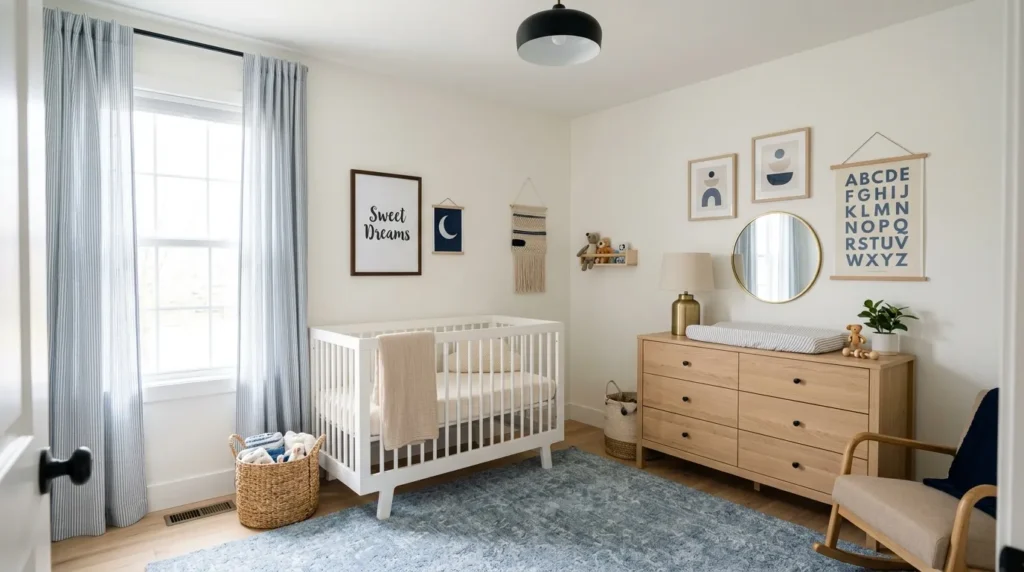
7. Modern Blue Stripes
Quick Benefits
- Feels timeless
- Adds pattern without clutter
- Works with modern furniture
- Easy to coordinate
- Can transition into childhood
Why It Works
Stripes are a smart choice when you want pattern without committing to a strong theme. Blue and white stripes can feel nautical, traditional, coastal, or contemporary depending on the surrounding furniture. The pattern also creates subtle visual movement without overwhelming a small nursery. You don’t need stripes everywhere. One striped rug, curtain panel, crib sheet, or accent pillow can provide enough pattern to make the room feel finished. Combining stripes with solids and natural textures keeps the look balanced.
How To Style It
Choose one primary striped element, such as a rug or window treatment, and keep the remaining textiles relatively simple.
A white crib, natural wood dresser, and cream walls provide an easy foundation. Add pale blue or navy accessories to reinforce the color scheme.
For a modern look, choose clean, narrow stripes. Wider stripes can feel more traditional and playful.
Avoid combining several unrelated patterns. If you want additional visual interest, introduce texture through woven baskets, a chunky rug, or a linen-look curtain instead.
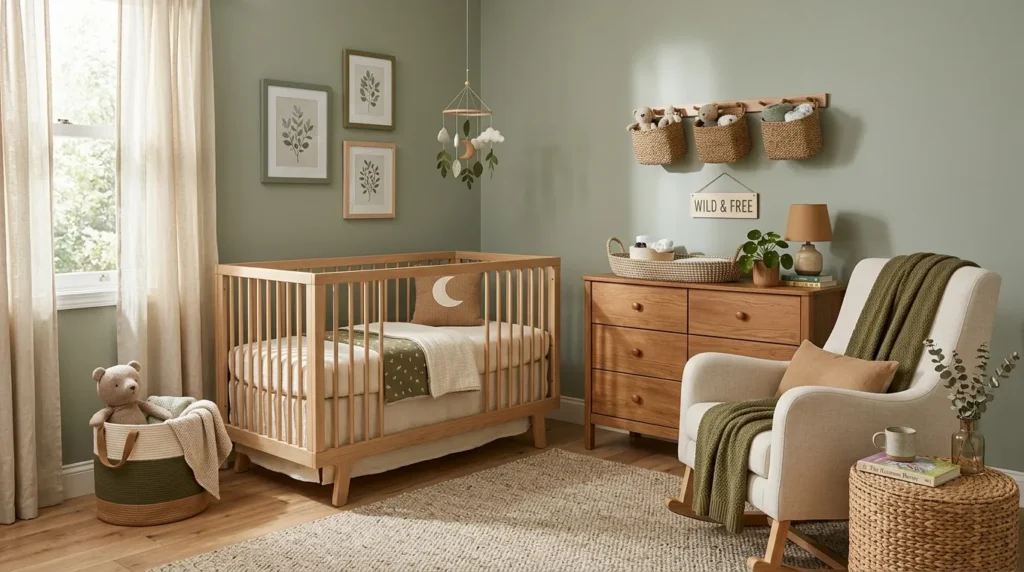
8. Green and Earthy Tones
Quick Benefits
- Creates a calming palette
- Feels connected to nature
- Works beautifully with wood
- Offers a fresh alternative to blue
- Can grow with the child
Why It Works
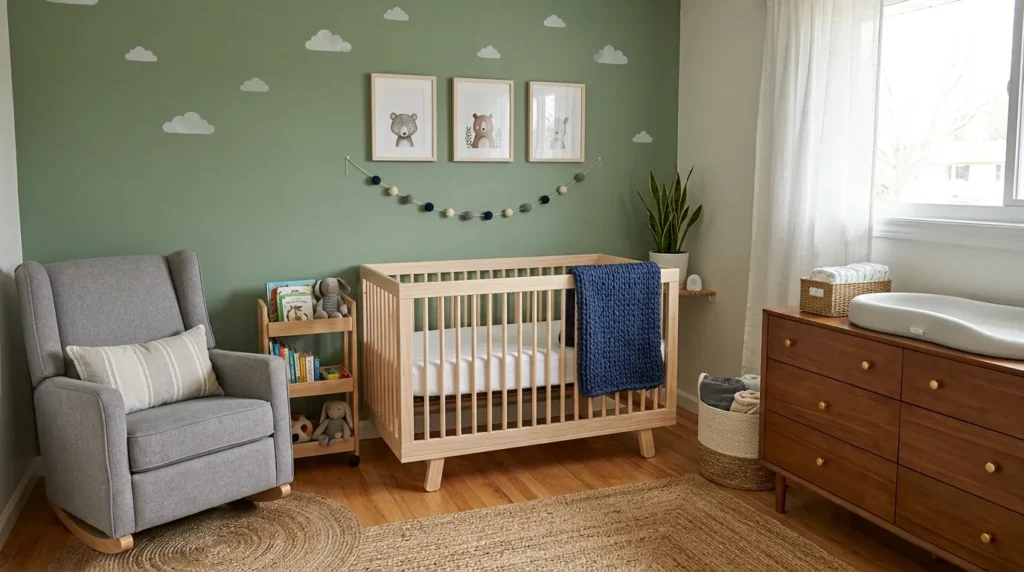
Sage and olive green have become popular nursery colors because they feel calm, natural, and versatile. They pair especially well with cream, tan, warm white, and natural wood. Unlike brighter greens, muted shades don’t dominate the room, making them easy to live with over time. An earthy palette can also create a cozy environment without relying on traditional nursery colors. This makes it a good option if you want something that feels contemporary but still warm and welcoming.
How To Style It
Paint one wall in muted sage or use sage through curtains, bedding, or artwork.
Pair the green with a natural wood crib and cream textiles. Add tan baskets and a neutral rug to reinforce the earthy palette.
Botanical artwork can connect the colors without creating an overly literal nature theme.
For a little more contrast, introduce muted navy or charcoal through small accessories. Keep most larger surfaces light so the room remains bright.
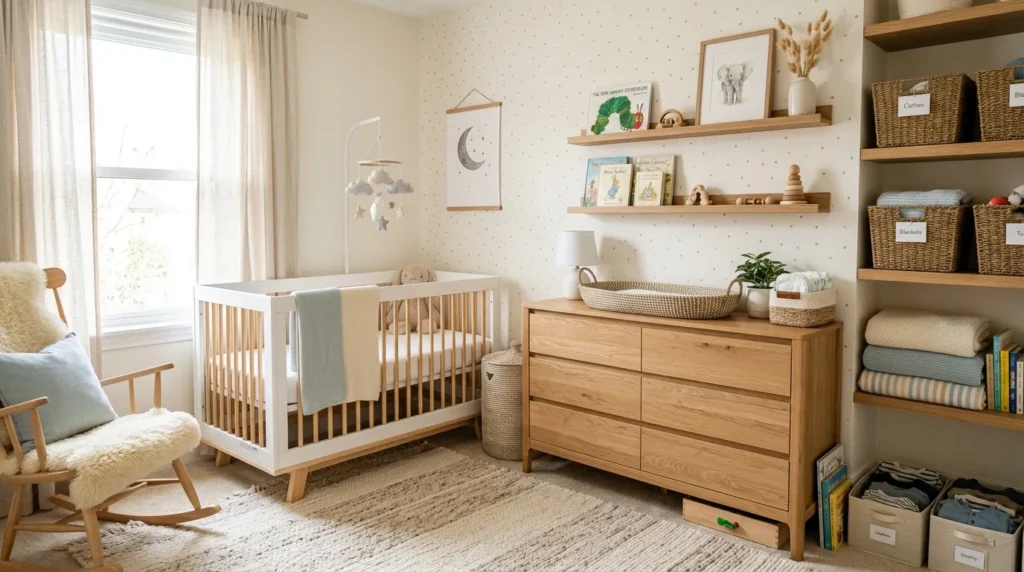
9. Practical Storage
Quick Benefits
- Keeps essentials organized
- Reduces visual clutter
- Makes nighttime routines easier
- Works in small rooms
- Improves everyday functionality
Why It Works
Beautiful nursery design means very little if everyday baby supplies have nowhere to go. Diapers, clothes, blankets, books, wipes, toys, and feeding supplies can quickly take over a room. Thoughtful storage allows the nursery to remain calm while keeping frequently used items within easy reach. Closed drawers are ideal for concealing clutter, while baskets and labeled bins make everyday organization simpler. The goal isn’t to hide everything; it’s to create a logical home for the things you use constantly.
How To Style It
Use a dresser with drawers for clothing and larger essentials, and consider using the top as a changing station if it is designed and secured appropriately for that purpose.
Add baskets to open shelving for blankets and toys. Choose matching or coordinating baskets to create a cleaner visual appearance.
Floating shelves can display books and artwork while using vertical space. Keep anything potentially hazardous or unsuitable for a baby safely out of reach.
Leave some storage space empty for future needs. Babies grow quickly, and the room will need to accommodate different clothing sizes and changing supplies.
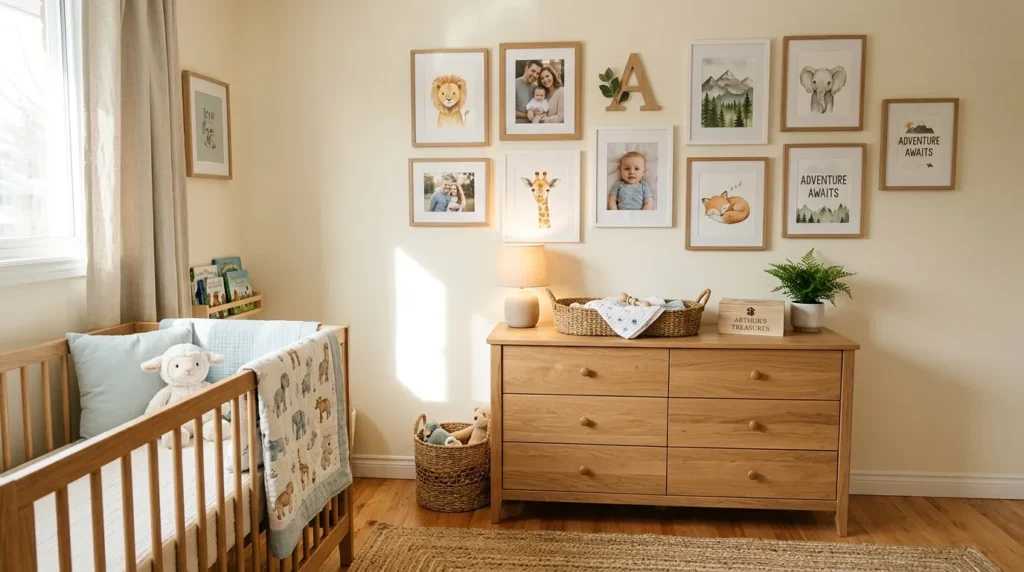
10. Personalized Gallery Wall
Quick Benefits
- Adds personality
- Creates a focal point
- Makes the room feel finished
- Can include sentimental pieces
- Easy to update
Why It Works
A nursery becomes much more meaningful when some of the decor has a story behind it. A gallery wall offers an easy way to combine artwork, family photographs, name initials, illustrations, and keepsakes. The collection doesn’t need to be perfectly coordinated. Repeating one or two colors or using similar frames is usually enough to make everything feel connected. This approach also allows the wall to evolve as your child grows. New artwork and photographs can be added over time, turning the display into a visual record of childhood.
How To Style It
Start with one larger piece and arrange smaller prints around it. Lay everything on the floor first so you can test the spacing before hanging anything.
Choose frames in natural wood, white, black, or a combination of complementary finishes. Keep the palette connected to the nursery.
A name initial, simple animal print, family photograph, or watercolor landscape can become the centerpiece.
Make sure artwork and frames are securely mounted and positioned appropriately. Avoid placing fragile or unsafe objects within the baby’s reach.
Frequently Asked Questions
What colors work best for a boy nursery?
Blue, sage green, navy, cream, beige, gray, and natural wood are all versatile choices. You don’t have to limit the nursery to traditional blue. Earthy greens, warm neutrals, muted terracotta, and soft charcoal can create beautiful alternatives. The best palette is one that feels calming and works with the furniture and natural light already available in the room.
How can I make a boy nursery feel cozy?
Layer soft textures and warm lighting. A plush rug, comfortable chair, cotton bedding, woven baskets, curtains, and warm-toned lamps can instantly make the space feel more inviting. Natural wood furniture also adds warmth. Keep the room organized so the cozy elements don’t become buried under clutter.
How do I decorate a small boy nursery?
Choose furniture that serves more than one purpose and use vertical storage whenever possible. A dresser can provide clothing storage and, when appropriately designed and secured, serve as a changing station. Floating shelves can display books while keeping floor space open. Stick to a light color palette and avoid oversized furniture that makes movement difficult.
What should I put above a crib?
Artwork, a simple wall treatment, or a decorative accent can work, but safety should come first. Avoid placing heavy objects, unsecured shelves, cords, or anything that could fall into the crib. Follow current safe-sleep and furniture-anchoring guidance, and keep the crib area free from loose objects and decorations that could become accessible to the baby.
How can I create a nursery that grows with my baby?
Choose timeless furniture and use removable decor for themes and colors. A neutral crib, dresser, and chair can remain useful for years, while bedding, rugs, artwork, and accessories can change as your child’s interests develop. Avoid overly specific themes if you want the room to transition easily into a toddler or young child’s bedroom.
Is blue still a good choice for a boy nursery?
Absolutely. Blue remains versatile because there are so many shades available. Pale blue creates a light and peaceful atmosphere, while denim and navy offer more contrast. Combining blue with warm white, natural wood, beige, or sage can make the room feel contemporary rather than overly traditional.
Conclusion
A beautiful nursery doesn’t need to be complicated. The most successful rooms combine a comfortable place to sleep, practical storage, soft lighting, cozy textiles, and a few thoughtful details that make the space feel special.
If you love classic decorating, soft blue and white can create a timeless foundation. Natural wood and earthy greens offer a more modern organic feeling, while navy adds sophistication. For something playful, subtle woodland or explorer-inspired details can bring personality without turning the room into an overwhelming theme.
Think about how the nursery will actually be used, too. You’ll want easy access to clothing, diapers, blankets, feeding supplies, and nighttime essentials. A comfortable chair will likely become one of the hardest-working pieces in the room, so prioritize comfort as much as appearance.
And remember that you don’t have to finish everything at once. Start with the essential furniture, establish your color palette, and then layer in artwork, textiles, storage, and personal touches.
The sweetest nurseries often aren’t the most elaborate ones. They’re the spaces that feel calm, comfortable, practical, and full of little details chosen with care.
Start with one idea you love and build from there. With a thoughtful palette, smart storage, cozy textures, and a little personality, you can create a boy nursery that feels stylish today and remains useful for years to come.