11 Purple Bedroom Decor Ideas for Teens Stylish Inspiration
A teen bedroom should feel like a place that belongs completely to the person sleeping there. It needs to be comfortable enough for winding down at night, practical enough for studying and getting ready, and personal enough to reflect changing interests and tastes. Purple is especially fun to work with because it can create so many different moods depending on the shade and what you pair with it.
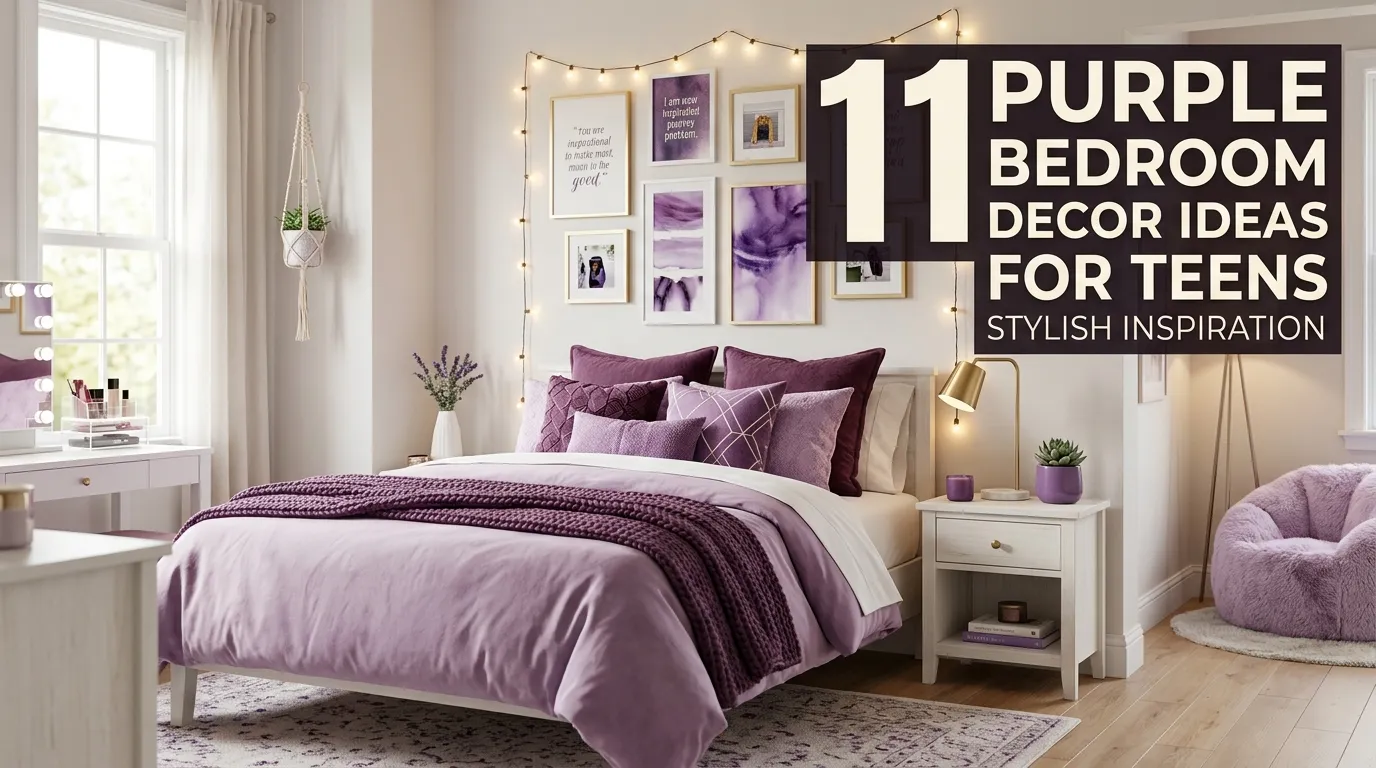
A soft lavender bedroom can feel airy, peaceful, and feminine, while deeper plum or eggplant shades create a dramatic, sophisticated atmosphere. Dusty mauve works beautifully with warm neutrals, and violet can bring a playful pop of color to an otherwise simple room. The trick is avoiding a palette that feels too young or overly themed.
In my experience, the best teen bedrooms use color strategically instead of covering everything in one shade. A purple accent wall, bedding set, upholstered chair, artwork, rug, or curtains can provide enough personality without making the room difficult to update later.
This also makes purple practical for growing teens. As their preferences change, larger pieces can stay neutral while accessories are switched out. A lavender duvet can eventually be replaced with cream bedding, for example, while the same wood furniture and lighting continue working.
Whether you’re designing a small bedroom, updating a shared space, or creating a dedicated study-and-sleep retreat, these ideas offer approachable ways to bring purple into the room while keeping the overall design stylish, functional, and Pinterest-worthy.
Table of Contents
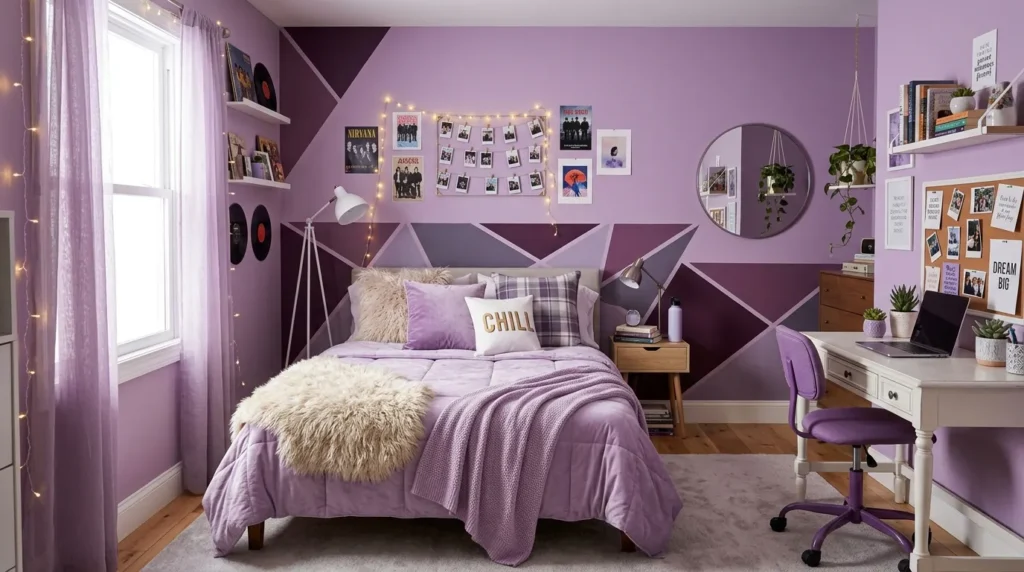
1. Lavender Accent Wall
Create a soft focal point with a calming lavender backdrop behind the bed or desk.
2. Purple Bedding Layers
Use bedding to introduce purple without committing to permanent changes.
3. Plum Statement Wall
Create a sophisticated atmosphere with a deeper, richer purple shade.
4. Purple and White
Balance purple with crisp or warm white for a fresh, timeless bedroom.
5. Mauve Cozy Corner
Use dusty mauve and blush tones to create a softer, mature color palette.
6. Purple Study Zone
Combine stylish decor with a practical workspace designed for homework and hobbies.
7. Purple Gallery Wall
Personalize the room with photos, artwork, prints, and meaningful wall decor.
8. Purple Lighting Glow
Use decorative and functional lighting to make purple tones look beautiful after dark.
9. Purple Textured Accents
Layer rugs, pillows, curtains, and fabrics to make the room feel comfortable and dimensional.
10. Purple and Natural Wood
Ground brighter purple shades with warm wood furniture and earthy accessories.
11. Purple Personalized Decor
Finish the bedroom with details that reflect the teen’s personality and interests.
1. Lavender Accent Wall
Quick Benefits
- Adds color without overwhelming the room
- Creates an instant focal point
- Works with modern and traditional furniture
- Easy to coordinate with neutrals
- Can be updated later
Why It Works
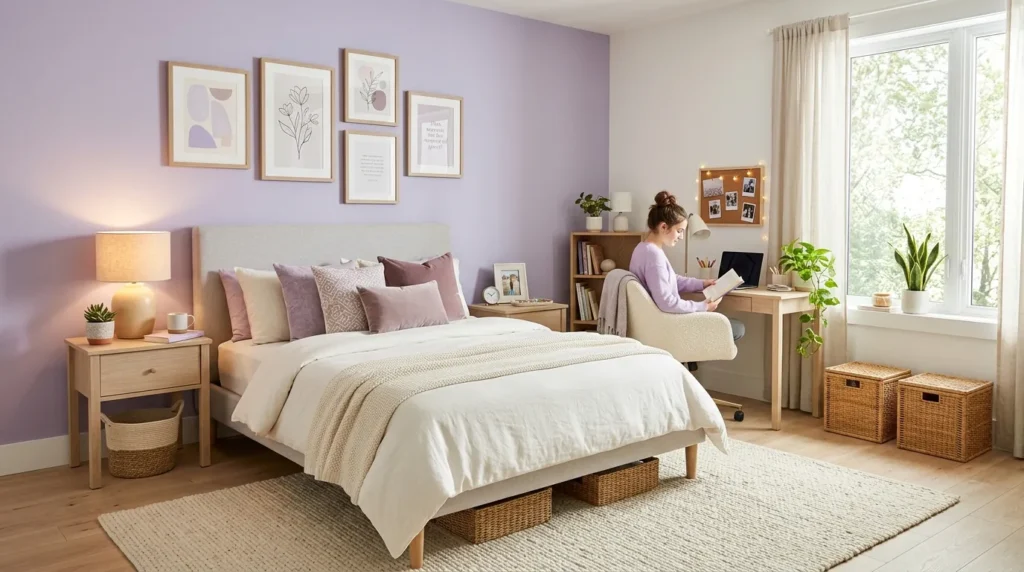
Lavender is one of the easiest purple shades to use in a teen bedroom because it feels colorful without becoming visually overwhelming. Its soft undertone works especially well with white, cream, pale gray, natural wood, and blush accents. Painting only one wall also allows the color to make an impact without committing the entire room to purple. The wall behind the bed is an obvious choice, but a desk wall can work just as well. A softer lavender can make a darker bedroom feel brighter, while a slightly grayer version can create a more sophisticated appearance as the teen gets older.
How To Style It
Paint the wall behind the headboard in a soft lavender and keep the remaining walls warm white or very pale gray. This gives the room a clear focal point while maintaining visual breathing room.
Pair the wall with white or cream bedding and natural wood furniture. Add purple through one or two pillows so the wall doesn’t feel disconnected from the rest of the room.
For a more contemporary look, use black metal accents or simple white furniture. For a softer room, choose pale oak, woven baskets, and blush textiles.
If painting isn’t possible, removable wallpaper or a large fabric wall hanging can provide a similar effect.
2. Purple Bedding Layers
Quick Benefits
- Easy to change
- Adds instant personality
- Works in rental bedrooms
- Allows several purple shades
- Creates a cozy focal point
Why It Works
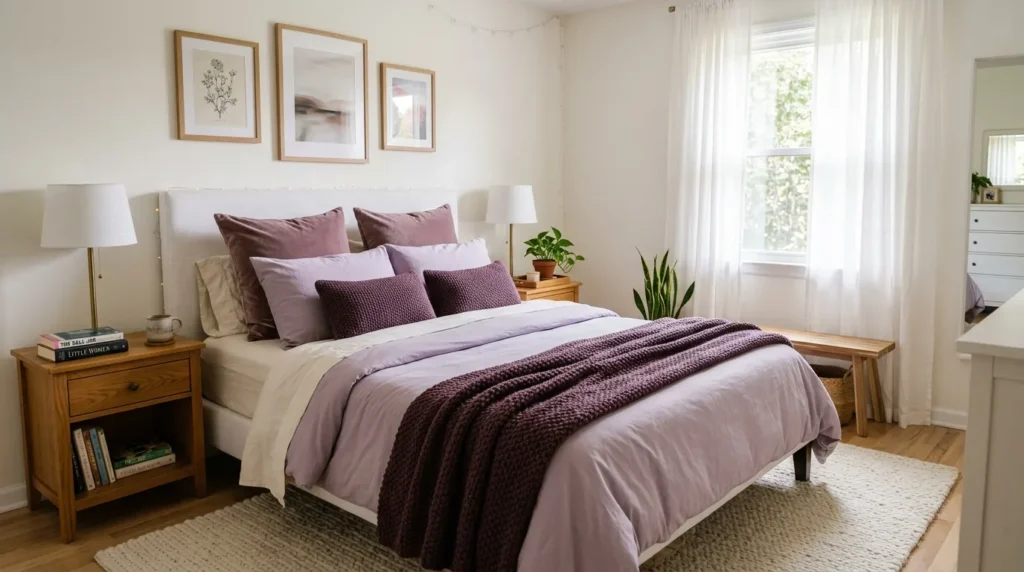
Bedding is one of the simplest ways to experiment with purple because it doesn’t require paint, construction, or a large investment. A lavender duvet can create a light and airy feeling, while plum or grape-colored bedding produces a richer look. Layering several textures also makes the bed feel more inviting. Instead of matching everything perfectly, combine a purple duvet with neutral sheets, a textured throw, and a few pillows in related shades. This creates depth and gives the room a more mature appearance. Since bedding is easy to replace, it also works well for teens whose favorite colors may change over time.
How To Style It
Start with white or cream sheets and add a lavender, mauve, or muted purple duvet. Fold a textured blanket across the bottom of the bed and use two or three decorative pillows to introduce different shades.
Avoid using only one exact purple throughout the room. Combining lavender with dusty mauve, plum, or soft gray creates more visual depth.
If the walls are already purple, keep the bedding mostly neutral and use purple in smaller accents. If the walls are white, the bed can become the primary color statement.
A simple upholstered headboard can make the arrangement feel more finished without requiring an elaborate bed frame.
3. Plum Statement Wall
Quick Benefits
- Creates dramatic impact
- Feels sophisticated
- Works especially well with warm lighting
- Makes light furniture stand out
- Gives the room a cozy atmosphere
Why It Works
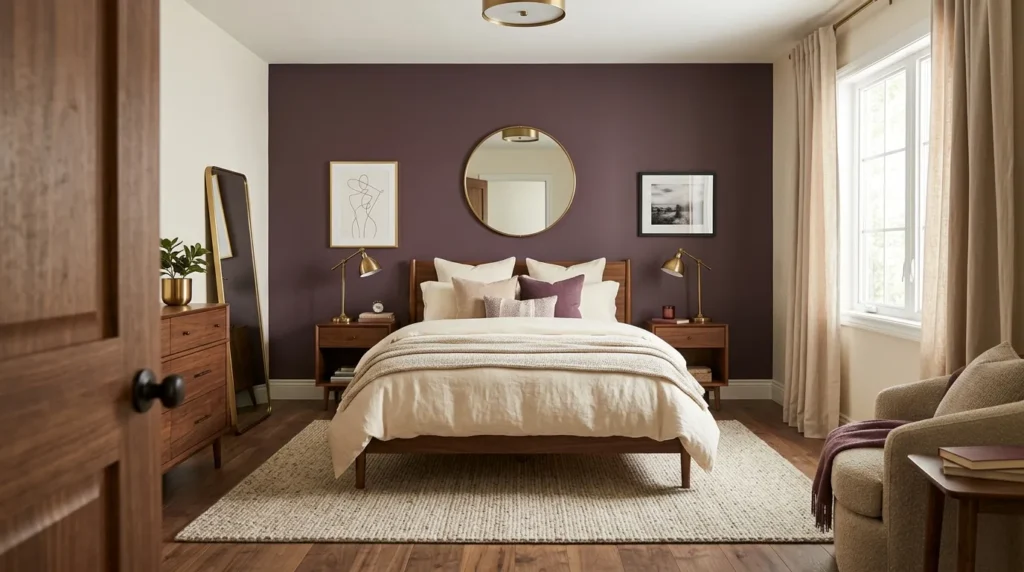
Deep plum is an excellent option for teens who want purple but prefer a more dramatic, grown-up aesthetic. Unlike bright violet, plum has enough depth to work alongside walnut, black, cream, brass, and charcoal. It can make a bedroom feel cozy and enveloping while still retaining plenty of personality. Because darker colors can absorb light, the surrounding palette matters. Pairing plum with lighter bedding, reflective accents, and layered lighting keeps the room from feeling too heavy. The result can look polished enough to grow with the teen rather than needing to be redesigned every few years.
How To Style It
Use plum on the wall behind the bed and keep the remaining walls lighter. Cream or warm white bedding creates a strong contrast, while brass lamps add warmth.
If the room has limited natural light, choose a slightly muted plum rather than an almost-black purple. Test paint samples at different times of day before committing.
Add a large mirror opposite a window or lamp to reflect light. A neutral rug can also visually soften the darker wall.
Keep the furniture simple. Light oak, walnut, cream upholstery, or black pieces can all work depending on the mood you’re aiming for.
4. Purple and White
Quick Benefits
- Feels fresh and bright
- Makes purple stand out
- Easy to update
- Works in small bedrooms
- Creates a clean appearance
Why It Works
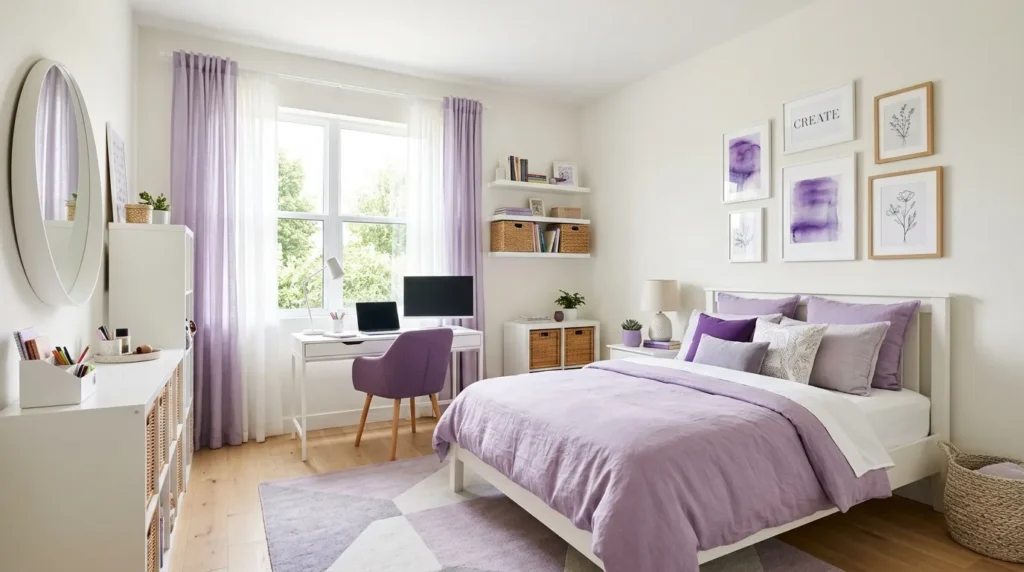
Purple and white are a natural combination for a teen bedroom because white provides visual breathing room while allowing the purple accents to remain the focus. The pairing can be playful, modern, romantic, or sophisticated depending on the specific shades. Lavender with warm white creates a gentle look, while violet with crisp white feels more energetic. If the bedroom is small, this palette can also help maintain an open appearance. The important detail is choosing a warm or cool white that works with the purple. Warm whites tend to pair beautifully with dusty and muted purples, while cleaner whites suit brighter violet shades.
How To Style It
Keep the walls white and use purple through the duvet, curtains, rug, artwork, and a few decorative accessories. This approach gives you maximum flexibility when the room’s style changes.
For a modern bedroom, use simple white furniture and geometric purple accents. For a softer look, introduce ruffled bedding, rounded furniture, or subtle floral patterns.
A purple upholstered chair can become a focal point without requiring a painted wall. Add a white desk and a small lavender lamp for a coordinated study area.
Keep the number of purple shades relatively limited so the room doesn’t feel visually chaotic.
5. Mauve Cozy Corner
Quick Benefits
- Creates a softer purple palette
- Feels warm and mature
- Works with blush and beige
- Adds comfort
- Complements natural textures
Why It Works
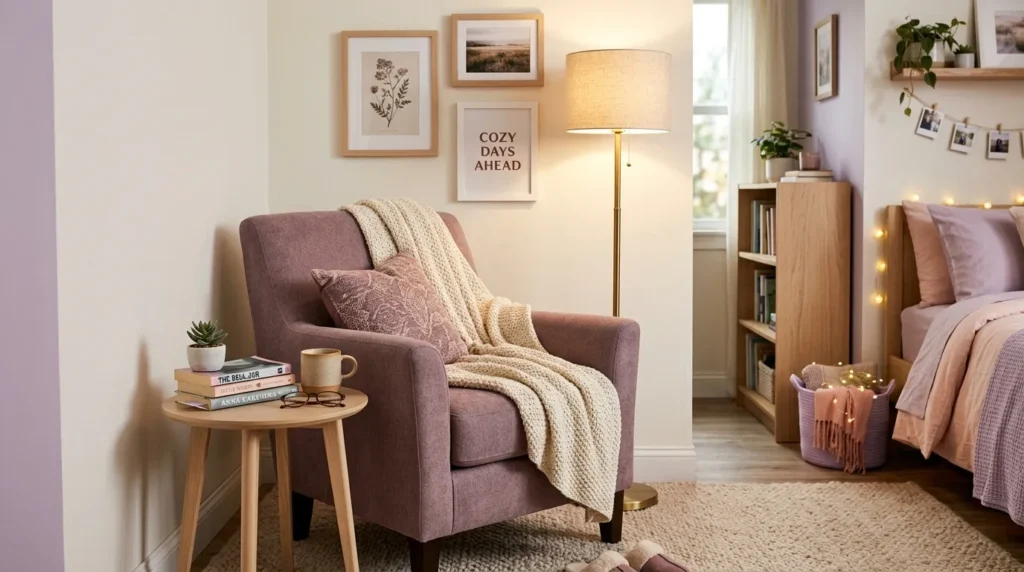
Mauve is a beautiful choice for teens who want purple but prefer something less intense. Its muted pink-purple quality makes it easy to combine with beige, cream, dusty rose, taupe, warm white, and natural wood. Unlike brighter purples, mauve can create a calm atmosphere that works especially well in bedrooms intended for relaxation. It also pairs beautifully with tactile fabrics such as boucle, velvet, linen, and chunky knits. This makes it easy to create a cozy corner for reading, listening to music, or simply hanging out.
How To Style It
Create a small mauve seating area with a comfortable upholstered chair, soft throw, floor cushion, or compact loveseat if the room allows.
Repeat the color through a pillow or rug rather than covering every surface in mauve. Warm white walls and natural wood furniture help keep the palette grounded.
Add a small side table for books, headphones, or a drink. A warm floor lamp can make the corner especially inviting at night.
For a more youthful look, add a few playful art prints. For a more sophisticated appearance, keep the artwork simple and let the textures do most of the decorating.
6. Purple Study Zone
Quick Benefits
- Combines style with functionality
- Creates a dedicated homework area
- Makes better use of bedroom space
- Can support organization
- Adds another place for personal expression
Why It Works
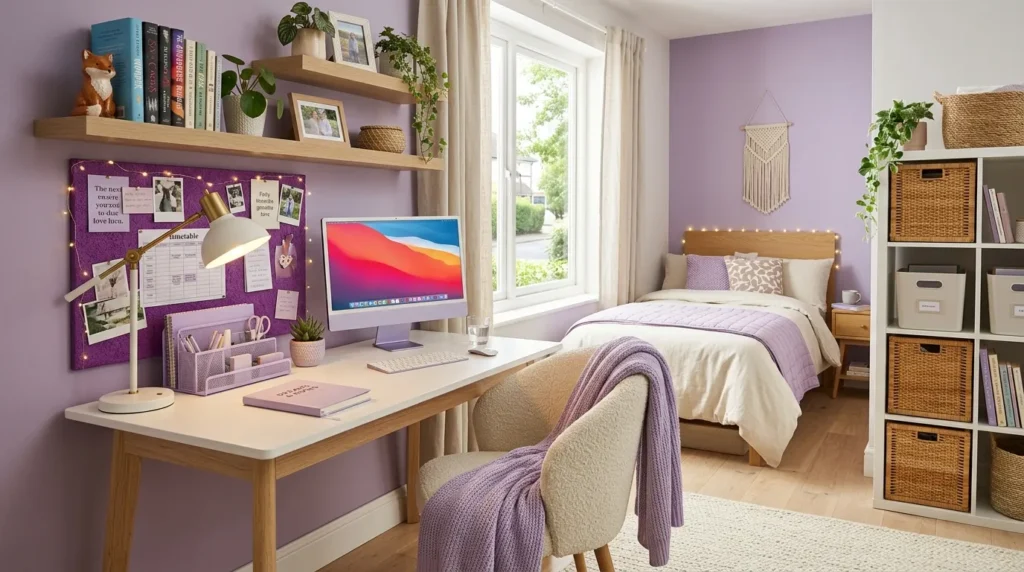
A teen bedroom often needs to do several jobs at once. It needs to function as a sleeping space, study area, dressing zone, and place to relax. A thoughtfully designed desk area can make the room feel more organized while also providing another opportunity to use purple. Instead of decorating the desk with random accessories, create a cohesive mini-zone with useful storage, good lighting, and a few color-coordinated pieces. This makes the workspace feel like part of the bedroom rather than an afterthought.
How To Style It
Choose a desk with enough surface area for homework and everyday use, but don’t make it unnecessarily large. White, light oak, or simple black desks all work well with purple.
Add a comfortable chair and a desk lamp with warm, adjustable light. Use lavender organizers, a purple pinboard, or a small piece of artwork to introduce color.
Vertical storage is particularly useful in smaller rooms. Floating shelves can hold books and decorative objects while keeping the desk surface clear.
Keep cords organized and provide easy access to charging points. Good organization will make the space more enjoyable to use every day.
7. Purple Gallery Wall
Quick Benefits
- Adds personality
- Uses inexpensive decor
- Creates a focal point
- Can evolve over time
- Works with many room styles
Why It Works
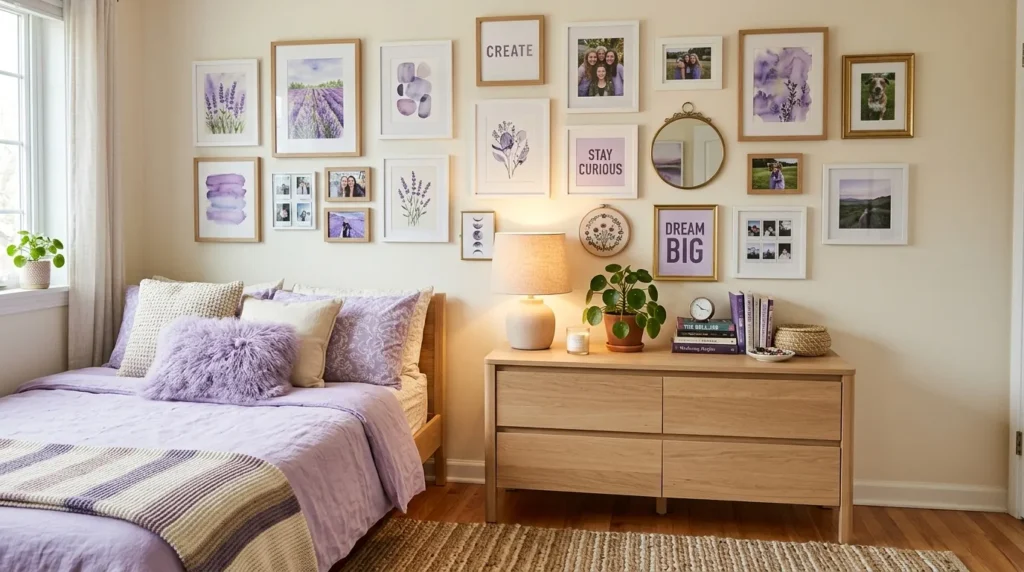
A gallery wall gives teens an easy way to express changing interests without repainting the bedroom. Photos, art prints, posters, typography, illustrations, and meaningful objects can all become part of the arrangement. Purple doesn’t have to dominate every piece. Instead, use it as a recurring accent among neutrals, black, white, pink, or metallic tones. This creates cohesion while leaving room for personal expression. The arrangement can also evolve as interests change, which makes it a practical long-term decorating solution.
How To Style It
Begin with the largest artwork and build outward with smaller frames. Before hanging anything, place the pieces on the floor and experiment with different layouts.
Use a consistent element to connect the collection. This could be purple accents, matching frames, similar mat colors, or a recurring theme.
For a clean modern bedroom, use mostly black, white, and purple prints. For a softer room, incorporate lavender, blush, beige, and floral artwork.
A small mirror can break up the rectangular shapes and reflect light. Keep the arrangement slightly above eye level so it works visually from both the bed and desk.
8. Purple Lighting Glow
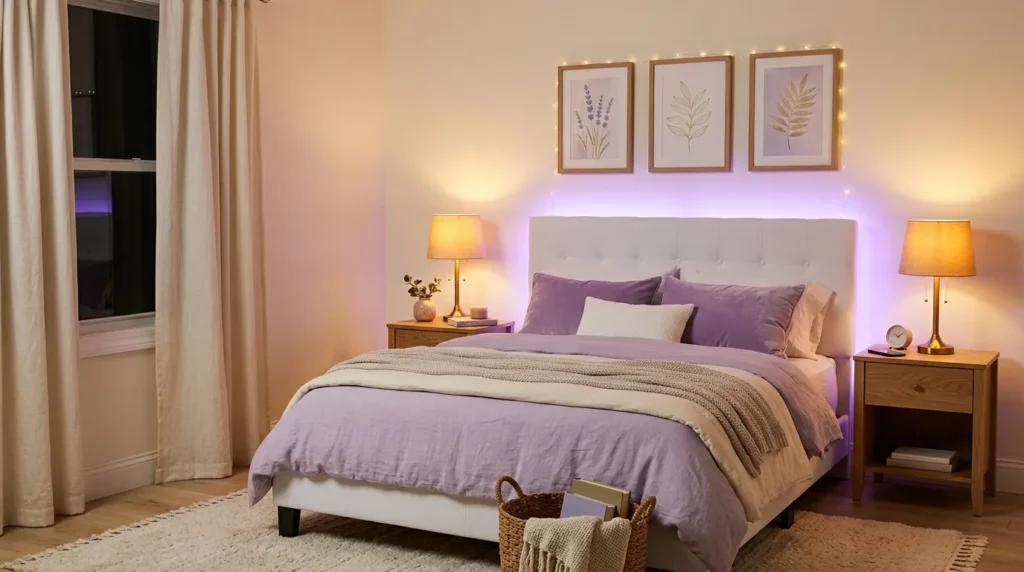
Quick Benefits
- Changes the mood after dark
- Adds color without permanent changes
- Makes the room feel cozy
- Supports layered lighting
- Easy to replace
Why It Works
Lighting can completely change how purple appears in a bedroom. During the day, lavender may look soft and almost neutral, while evening lighting can make it feel richer. Rather than relying on bright colored bulbs everywhere, use warm ambient lighting as the foundation and add controlled decorative lighting as an accent. This produces a room that still feels comfortable and functional while offering a playful nighttime atmosphere. A beautiful table lamp, LED strip behind furniture, illuminated mirror, or subtle string lights can provide the effect without making the room feel like a gaming setup.
How To Style It
Start with a practical bedside or desk lamp using a warm bulb. Then add one decorative light source, such as soft LED lighting behind a headboard or shelf.
If colored lighting is desired, use it as an accent rather than the primary source. Soft purple or lavender illumination can look especially attractive against white or dark walls.
Hide light strips behind furniture so the light itself isn’t visually distracting. This creates a gentle glow rather than a row of visible bulbs.
Choose dimmable lighting whenever possible. It allows the room to shift easily from homework mode to relaxing evening mode.
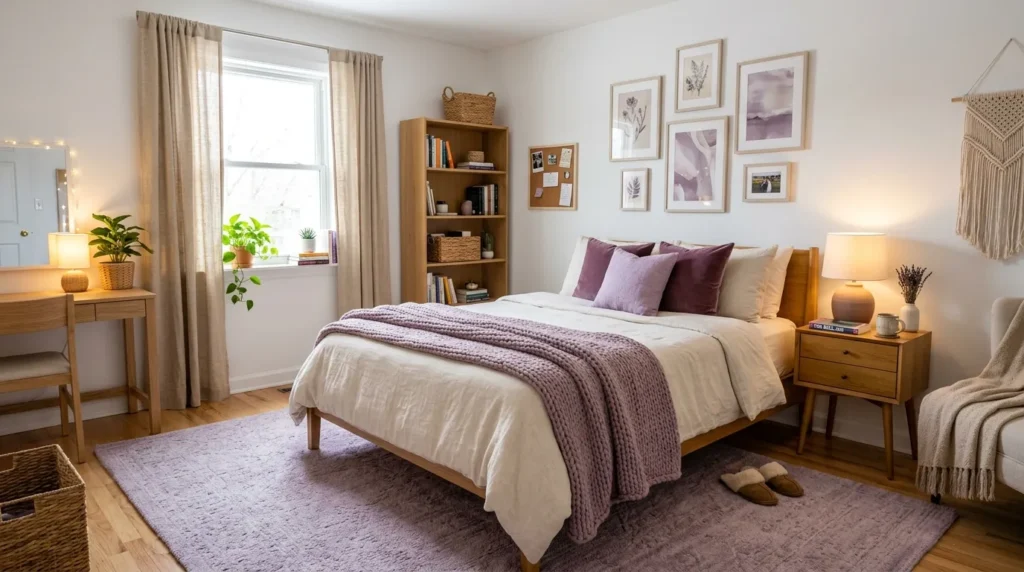
9. Purple Textured Accents
Quick Benefits
- Adds depth
- Makes simple furniture more interesting
- Creates a cozy feeling
- Allows flexible color changes
- Works with neutral walls
Why It Works
A purple bedroom doesn’t need large amounts of paint to feel colorful. Textiles can introduce the shade in layers while making the room more comfortable. A lavender rug, plum throw, velvet pillows, woven curtains, or upholstered bench can create a rich palette without overwhelming the space. Texture is especially important when using one dominant color because it prevents the room from looking flat. Mixing smooth cotton, soft velvet, chunky knits, woven fibers, and plush materials creates visual variety while keeping the palette cohesive.
How To Style It
Start with one larger purple textile, such as a rug or duvet. Then introduce smaller accents in related shades.
For example, pair a lavender rug with a dusty mauve throw and a deep plum pillow. Keep the remaining textiles cream, beige, or white.
If the room already has purple walls, use mostly neutral fabrics and add purple through small removable pieces.
Layer a rug over hardwood or low-pile carpet to add comfort, especially beside the bed. A textured bench or floor cushion can also make the bedroom feel more relaxed.
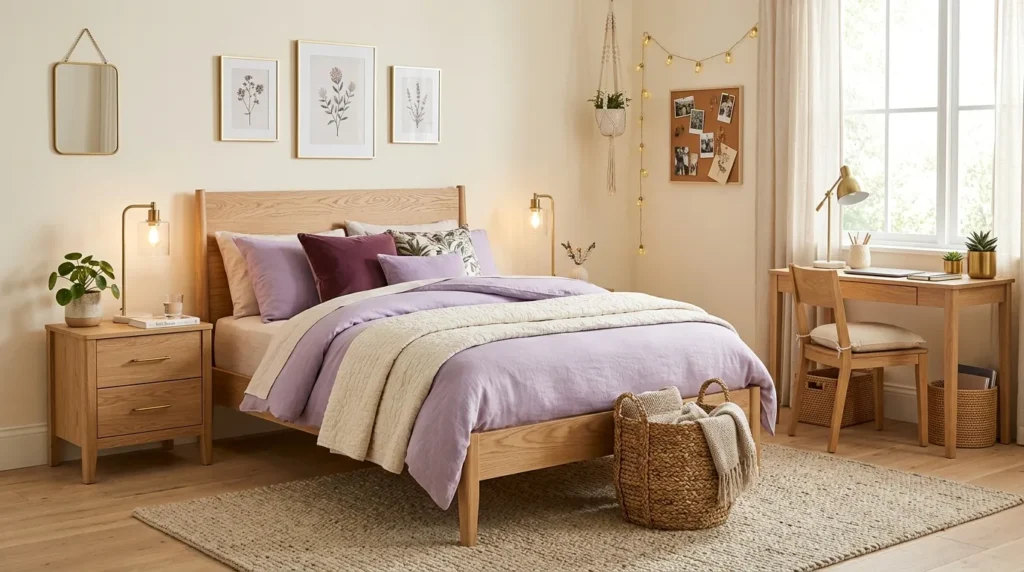
10. Purple and Natural Wood
Quick Benefits
- Grounds brighter colors
- Adds warmth
- Creates a balanced palette
- Works with many purple shades
- Makes the bedroom feel less overly coordinated
Why It Works
Natural wood is one of the easiest ways to balance purple. Its warm, organic undertones soften stronger shades and give the bedroom a more grounded appearance. This is especially helpful when using violet, plum, or saturated lavender. Rather than pairing purple with only white furniture, introduce oak, walnut, maple, or cane details. The combination feels more mature and adds texture to the room. Wood also gives the bedroom flexibility because it works with both contemporary and traditional styles. As the teen’s color preferences change, the furniture can remain useful for years.
How To Style It
Choose a natural wood bed frame or nightstand and let the grain remain visible. Add purple through bedding, artwork, curtains, or an upholstered chair.
For a lighter bedroom, pale oak pairs beautifully with lavender and warm white. Walnut works particularly well with plum, mauve, and deeper purple.
Use woven baskets and natural-fiber rugs to reinforce the earthy quality.
Avoid matching every wood piece exactly. Slight variations can make the room feel more relaxed and collected, as long as the finishes have similar undertones.
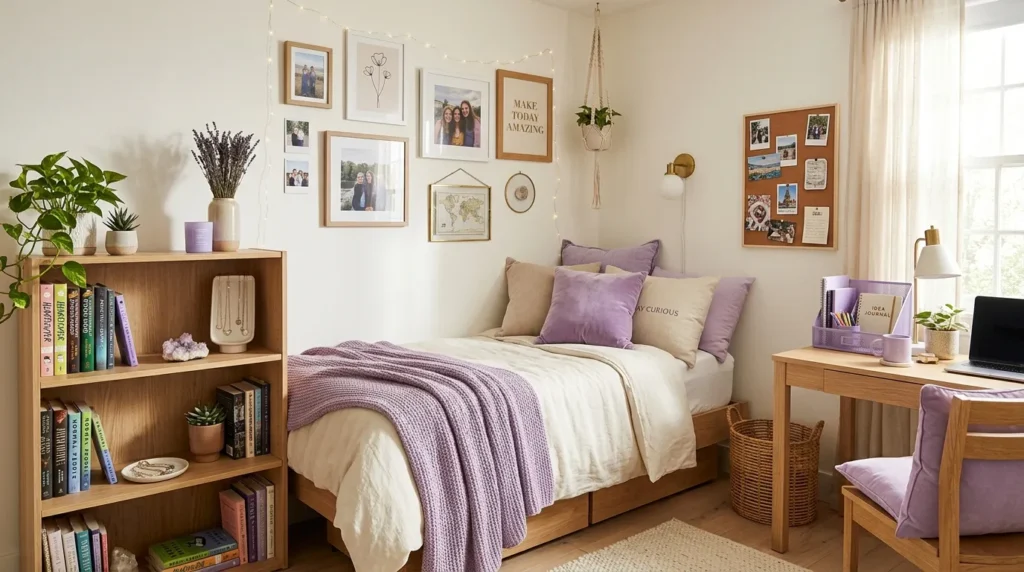
11. Purple Personalized Decor
Quick Benefits
- Makes the room feel unique
- Supports self-expression
- Can be changed easily
- Adds emotional character
- Prevents the bedroom from looking generic
Why It Works
The most important part of a teen bedroom is the person who uses it. Trends can provide inspiration, but personal details are what make a bedroom feel authentic. Photos, favorite books, hobbies, artwork, collections, musical interests, travel memories, and handmade pieces can all become part of the decor. Purple can serve as the connecting thread rather than the entire theme. This approach also makes the bedroom easier to update. Instead of replacing furniture whenever tastes change, you can simply swap artwork, pillows, blankets, and small accessories.
How To Style It
Create a few intentional display areas rather than scattering personal items throughout the room. A floating shelf can hold books, photographs, small plants, and favorite objects.
Use a corkboard or magnetic board above the desk for photos, notes, sketches, and inspiration. Keep the arrangement flexible so it can evolve.
A bedside tray can organize jewelry, hair accessories, or small everyday items. Decorative storage boxes can keep less attractive necessities hidden.
Don’t worry about creating a perfectly styled room. A little individuality is what makes a teen bedroom feel comfortable rather than staged.
Frequently Asked Questions
What shades of purple work best in a teen bedroom?
Lavender, lilac, mauve, dusty purple, plum, and muted violet are all versatile choices. Lavender and lilac create a softer, brighter atmosphere, while plum and deeper purple create a more dramatic look. If the bedroom is small or doesn’t receive much natural light, lighter shades can help maintain an airy appearance. Deeper colors work best when balanced with lighter bedding, mirrors, and layered lighting.
How can I decorate a purple bedroom without making it look childish?
Choose sophisticated materials and combine purple with neutrals and natural textures. White, cream, beige, natural wood, brass, black, and gray can all balance purple beautifully. Instead of using matching purple accessories everywhere, select one main color and repeat it through bedding, artwork, or a rug. Simple furniture and high-quality-looking textures can also help the room grow with the teen.
Is purple a good color for a small bedroom?
Yes. Lighter purples such as lavender and lilac can work particularly well because they add color while maintaining a relatively airy appearance. Keep the ceiling and surrounding walls light, use mirrors to reflect natural light, and avoid filling the room with bulky furniture. Purple bedding or a single accent wall can be enough to establish the color scheme.
What colors go well with purple in a bedroom?
Purple pairs well with white, cream, beige, gray, blush, dusty pink, sage green, natural wood, black, and brass. The best combination depends on the shade of purple. Lavender looks beautiful with warm white and pale wood, while plum works well with cream, walnut, charcoal, and antique brass. Using neutrals as the foundation gives you more flexibility.
How can I make a purple bedroom feel cozy?
Layer different textures rather than relying only on color. Add soft bedding, a plush rug, velvet pillows, knitted throws, curtains, and warm lighting. Natural wood can also make purple feel more grounded. Use several low-level light sources instead of one bright ceiling fixture, especially in the evening.
How do I create a purple study area in a bedroom?
Choose a practical desk with enough room for homework, a comfortable chair, and a good task light. Then add purple through organizers, artwork, a desk mat, or a small lamp. Floating shelves can provide storage without taking up floor space. Keep the desk relatively uncluttered so the area remains functional and easy to use.
Can purple bedroom decor grow with a teenager?
Definitely. The easiest strategy is to keep expensive or large furniture relatively neutral and use purple through removable elements such as bedding, rugs, artwork, curtains, pillows, and accessories. As preferences change, those pieces can be replaced without redesigning the entire room. Natural wood, white, black, or neutral upholstered furniture can work through many different style phases.
Conclusion
Purple can turn a teen bedroom into a space that feels colorful, creative, and completely personal without becoming difficult to live with. The key is choosing the right shade and balancing it with practical furniture, comfortable textures, and enough neutral space for the room to breathe.
If you love soft colors, lavender walls and white bedding can create a light and peaceful retreat. For a more dramatic style, plum walls, velvet textiles, antique brass, and warm lighting can produce a sophisticated atmosphere. Mauve works beautifully for a softer palette, while purple and natural wood create a grounded combination that can easily evolve over time.
You also don’t need a major renovation. Start with bedding, artwork, lighting, or a rug and see how the color feels in the room. Once you’ve found the right direction, add larger changes if needed.
For a teen bedroom, functionality matters just as much as appearance. Make sure there is adequate storage, a comfortable place to study, good lighting, and enough open floor space for everyday use.
Most importantly, leave room for personality. The best bedroom isn’t the one that follows every decorating trend perfectly. It’s the one that reflects the person living there.
Start with one purple element you genuinely love, then build the room around it with colors, textures, and details that make the space feel comfortable, stylish, and uniquely theirs.