10 Small Living Room Decor Ideas for a Stylish and Spacious Feel
Introduction
Decorating a small living room can sometimes feel challenging. Limited square footage often means every furniture choice, color decision, and decorative element has a greater impact on how the space functions and feels. The good news is that a smaller room doesn’t have to feel cramped or cluttered. With thoughtful styling and smart design strategies, even the most compact living room can feel comfortable, inviting, and surprisingly spacious.
One thing I’ve noticed is that many homeowners try to solve small-space challenges by removing personality from the room. They avoid decor, color, or texture because they’re worried the space will feel crowded. In reality, the most successful small living rooms balance functionality with warmth. The goal isn’t to make the room feel empty—it’s to make every element work harder.
Small living rooms are also becoming increasingly common as homeowners embrace apartments, townhomes, smaller houses, and open-concept layouts. That’s why designers focus heavily on furniture scale, storage solutions, lighting, and layout optimization when working with compact spaces.
Whether your style leans modern, farmhouse, cozy, minimalist, traditional, or contemporary, there are countless ways to maximize your living room without sacrificing comfort or style. These decorating ideas are designed to help you create a room that feels larger, brighter, and more welcoming while remaining Pinterest-worthy and practical for everyday living.
Table of Contents
- Light Neutral Palette
- Multi-Functional Furniture
- Vertical Wall Styling
- Floating Shelf Displays
- Cozy Layered Textures
- Statement Mirror Placement
- Smart Corner Seating
- Minimal Coffee Table Styling
- Compact Gallery Wall
- Warm Ambient Lighting
1. Light Neutral Palette
Quick Benefits
- Makes rooms feel larger
- Reflects natural light
- Creates a calm atmosphere
- Timeless design choice
- Easy to decorate around
Why It Works
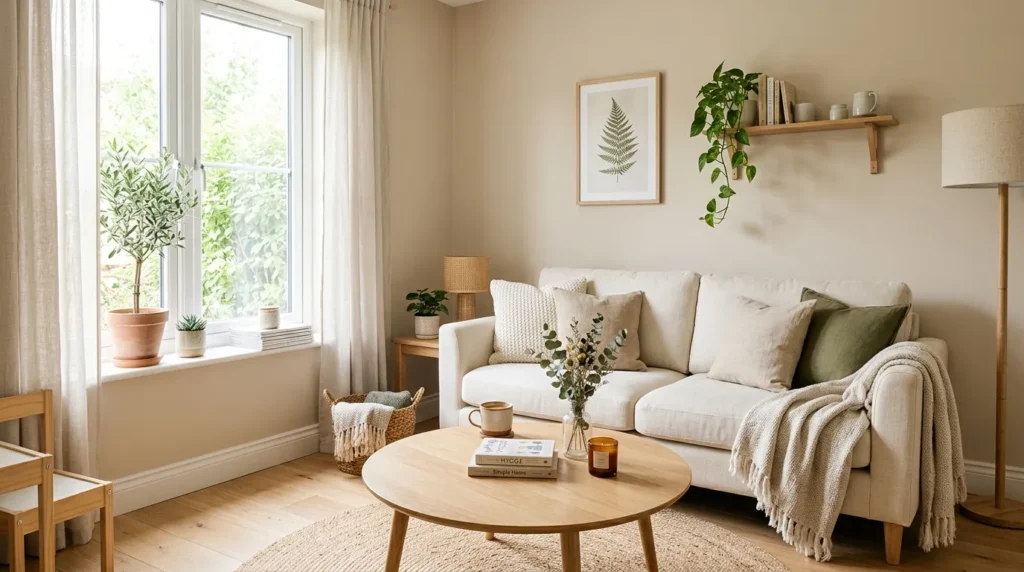
Color plays a major role in how spacious a room feels. Light neutrals such as soft white, warm beige, cream, and pale gray help reflect light throughout the room, creating a brighter and more open appearance. Unlike darker shades that can visually close in a space, lighter colors help blur boundaries and make walls feel farther apart.
I’ve seen small living rooms appear significantly larger simply through strategic color choices. A cohesive palette also reduces visual clutter and creates a more relaxing environment. That’s why many designers recommend starting with neutral foundations and adding personality through decor and accessories.
How To Style It
Use light wall colors, neutral upholstery, and soft textiles to establish a bright foundation. Layer different shades within the same color family to add depth without creating visual noise.
Incorporate natural materials such as wood and woven textures to prevent the room from feeling sterile. A few carefully chosen accent colors can provide interest while maintaining the overall airy aesthetic.
2. Multi-Functional Furniture
Quick Benefits
- Maximizes floor space
- Improves functionality
- Reduces clutter
- Supports storage needs
- Ideal for small homes
Why It Works
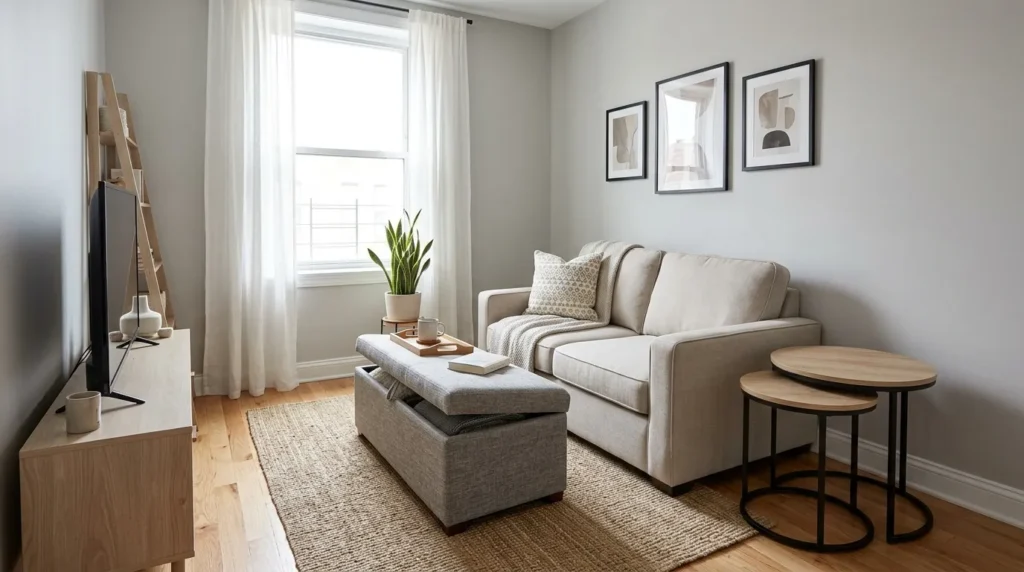
Furniture that serves more than one purpose is one of the smartest solutions for small living rooms. Storage ottomans, nesting tables, sleeper sofas, and benches with hidden compartments help maximize every square foot while minimizing visual clutter.
One thing that works especially well is choosing pieces that eliminate the need for additional furniture. When a single item performs multiple functions, the room feels more open and organized.
How To Style It
Select furniture with built-in storage whenever possible. Choose clean-lined pieces that feel proportional to the room rather than oversized.
Keep the layout open by allowing adequate walking space between furniture items. Functionality should enhance the design rather than dominate it.
3. Vertical Wall Styling
Quick Benefits
- Draws the eye upward
- Maximizes wall space
- Creates visual height
- Adds personality
- Saves floor space
Why It Works
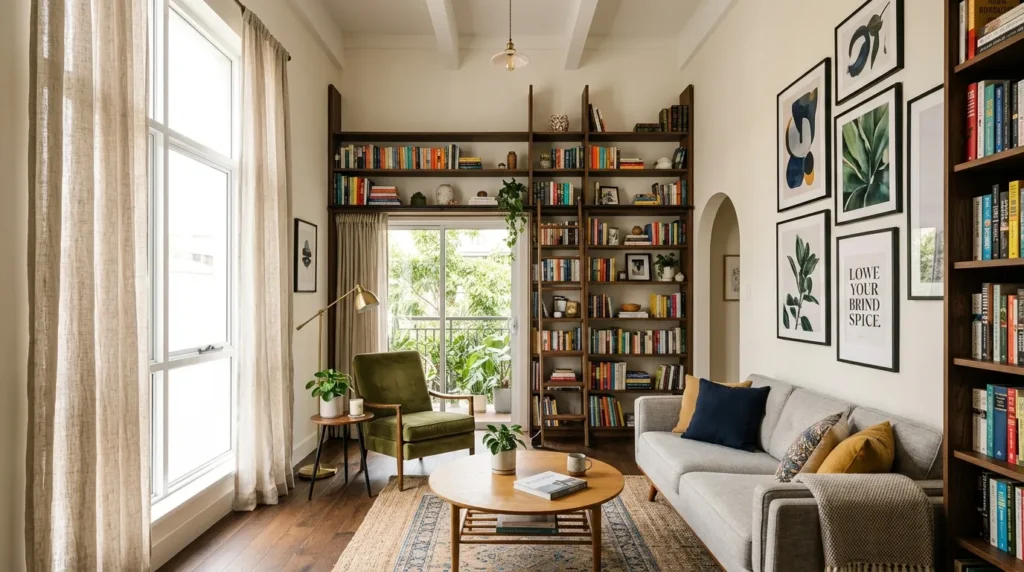
When floor space is limited, walls become valuable design real estate. Vertical styling helps direct attention upward, making ceilings appear taller and rooms feel larger. This technique also allows homeowners to incorporate decor without sacrificing usable square footage.
A mistake many homeowners make is leaving walls underutilized while overcrowding the floor. Vertical design helps balance the room more effectively.
How To Style It
Use tall bookshelves, vertical artwork arrangements, wall sconces, or floor-to-ceiling curtains to emphasize height.
Keep decorative displays organized and cohesive to avoid creating visual clutter.
4. Floating Shelf Displays
Quick Benefits
- Saves floor space
- Provides storage
- Adds decorative interest
- Works in any style
- Easy to customize
Why It Works
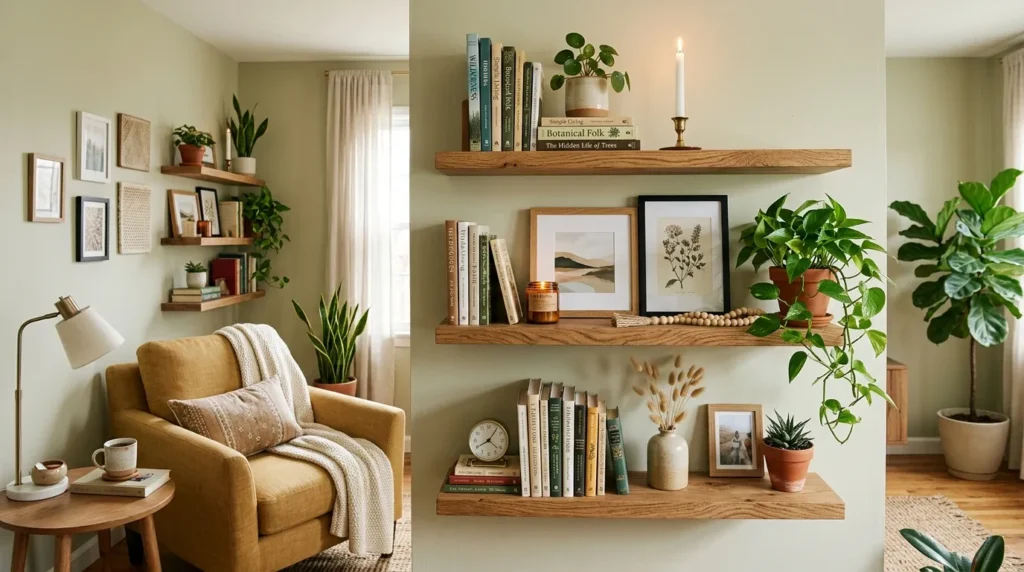
Floating shelves provide storage and display opportunities without the visual weight of large furniture pieces. Their streamlined appearance helps maintain an open feel while offering space for books, plants, and decorative accessories.
I’ve noticed that floating shelves are especially effective in apartments and smaller homes because they combine practicality with style.
How To Style It
Arrange shelves with a mix of functional and decorative items. Incorporate books, framed photos, candles, and small plants while leaving some negative space.
Avoid overcrowding the shelves to maintain a clean and organized appearance.
5. Cozy Layered Textures
Quick Benefits
- Adds warmth
- Creates comfort
- Enhances visual depth
- Easy seasonal updates
- Works with neutral palettes
Why It Works
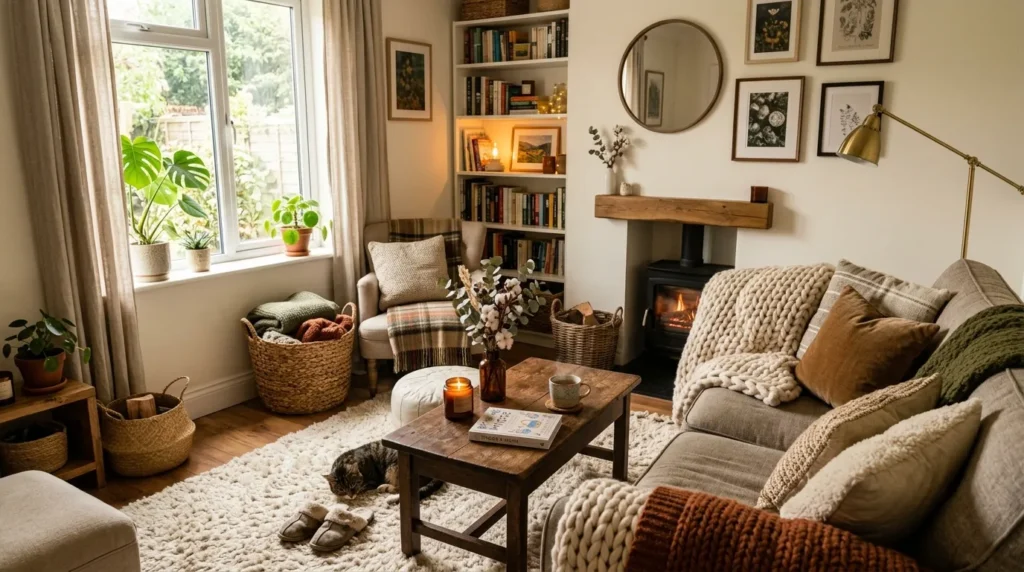
Texture introduces warmth and personality without requiring additional square footage. Layering fabrics such as knit blankets, linen pillows, woven baskets, and plush rugs makes a room feel more inviting while creating visual interest.
Many small rooms benefit from texture because it helps prevent minimalist spaces from feeling cold or unfinished.
How To Style It
Mix materials thoughtfully while maintaining a consistent color palette. Combine soft textiles with natural wood and woven elements for balance.
Layering should feel intentional rather than excessive. Focus on comfort and visual harmony.
6. Statement Mirror Placement
Quick Benefits
- Reflects light
- Creates depth
- Enhances brightness
- Makes rooms feel larger
- Decorative focal point
Why It Works
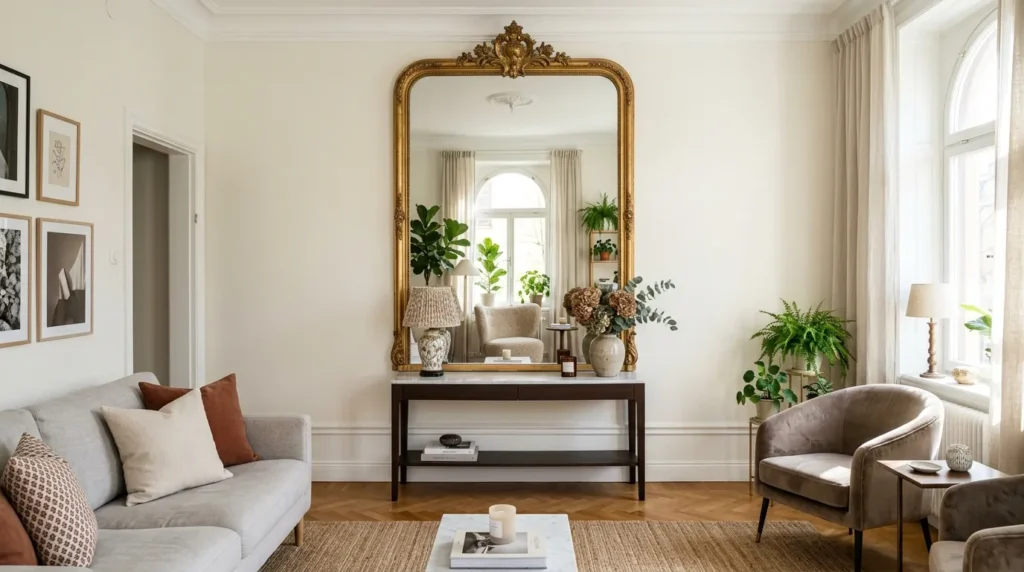
Mirrors are one of the oldest and most effective small-space design tools. By reflecting light and surrounding views, they create the illusion of greater depth and openness.
I’ve seen a single well-placed mirror dramatically improve how a room feels. It adds brightness while visually expanding the available space.
How To Style It
Position mirrors opposite windows whenever possible to maximize natural light reflection. Choose frames that complement the room’s overall style.
Large mirrors often have a greater impact than multiple smaller mirrors in compact spaces.
7. Smart Corner Seating
Quick Benefits
- Utilizes unused space
- Increases seating
- Creates cozy zones
- Improves functionality
- Enhances layout efficiency
Why It Works
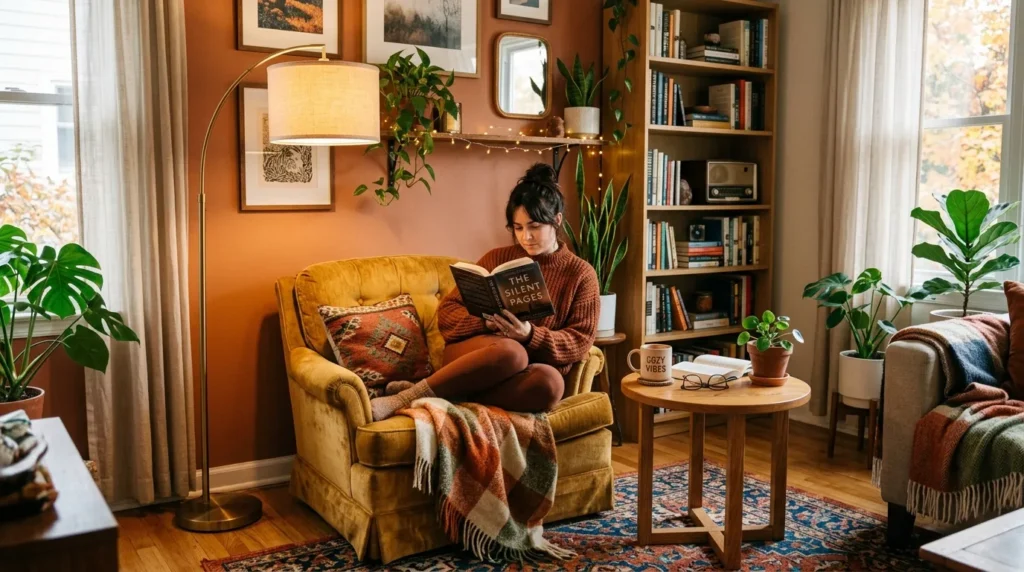
Corners are often overlooked in small living rooms, yet they offer valuable opportunities for additional seating and functionality. Thoughtfully designed corner arrangements can help maximize every inch of available space.
This approach works particularly well in open-concept layouts where defined seating zones improve organization.
How To Style It
Use accent chairs, compact sectionals, or reading nooks to activate unused corners. Add a floor lamp and side table for functionality.
Keep furniture appropriately scaled to avoid overwhelming the room.
8. Minimal Coffee Table Styling
Quick Benefits
- Reduces visual clutter
- Maintains functionality
- Easy to update
- Supports a spacious feel
- Enhances design balance
Why It Works
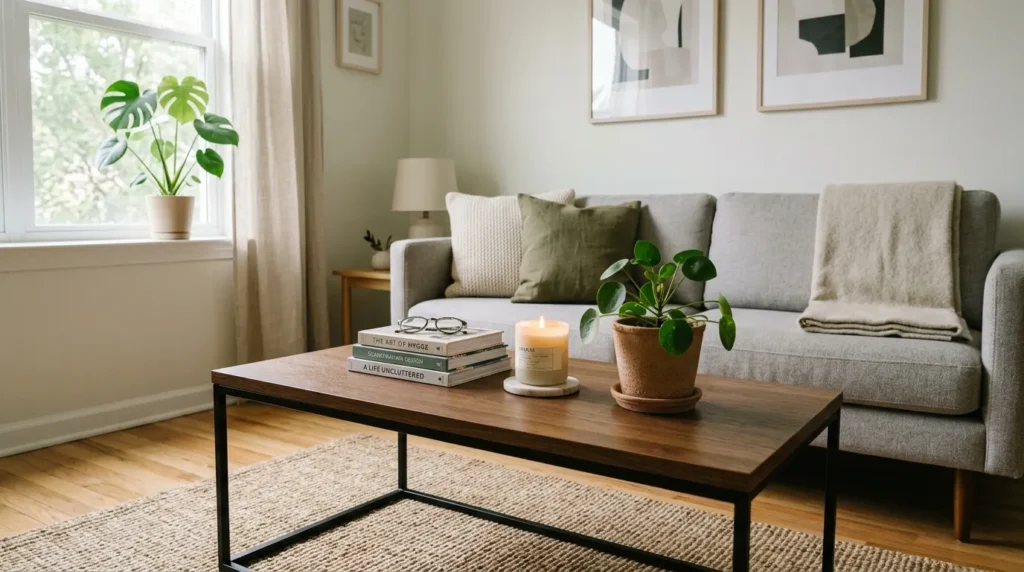
Coffee tables often become clutter magnets in small living rooms. Simplified styling helps maintain a cleaner appearance while ensuring the table remains useful.
One simple trick I always suggest is limiting decorative items to a few carefully selected pieces that contribute to the overall design.
How To Style It
Use a decorative tray, small plant, candle, or stack of books. Keep accessories proportional to the table size.
Leave enough open surface area for practical daily use.
9. Compact Gallery Wall
Quick Benefits
- Adds personality
- Creates a focal point
- Customizable design
- Uses vertical space
- Affordable decor option
Why It Works
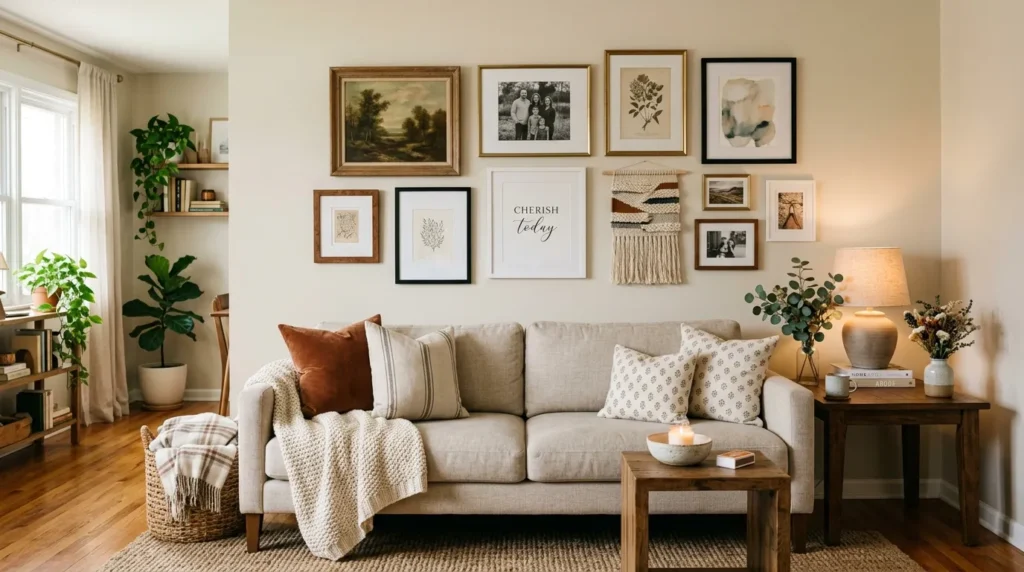
Artwork and personal photos help transform a room into a reflection of the homeowner’s style. A compact gallery wall introduces character without consuming valuable floor space.
Many designers recommend gallery walls because they allow for creativity while maintaining a relatively small footprint.
How To Style It
Choose a cohesive frame style and color palette. Arrange artwork in a balanced layout before hanging to ensure visual harmony.
Keep spacing consistent to create a polished appearance.
10. Warm Ambient Lighting
Quick Benefits
- Creates coziness
- Improves atmosphere
- Supports relaxation
- Enhances evening comfort
- Adds visual depth
Why It Works
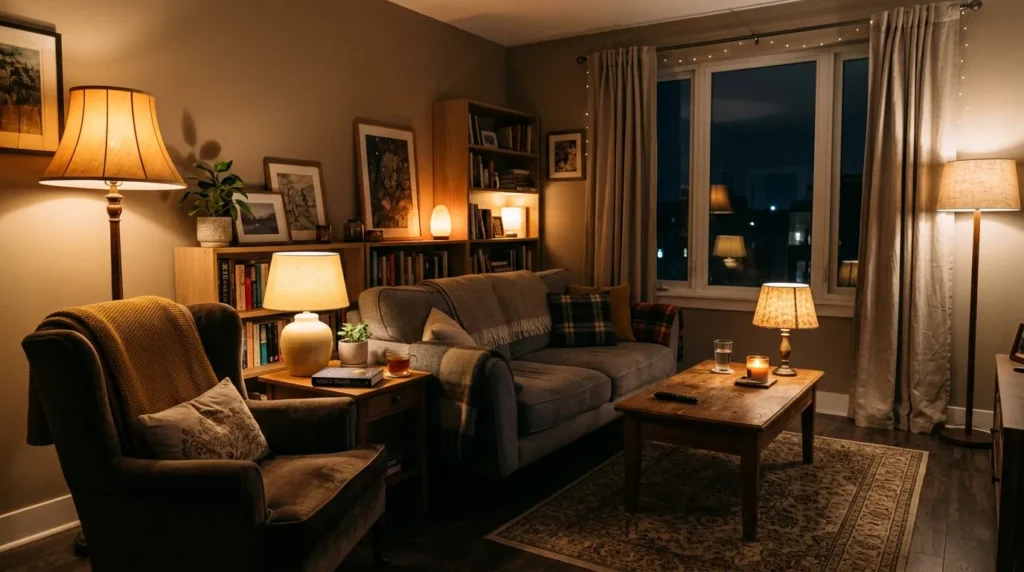
Lighting influences both functionality and mood. Warm layered lighting makes a small living room feel more inviting while reducing reliance on harsh overhead fixtures.
That’s why many designers recommend using multiple light sources rather than a single central fixture.
How To Style It
Combine table lamps, floor lamps, wall sconces, and accent lighting. Choose warm white bulbs to create a comfortable atmosphere.
Position lights at varying heights to create depth and balance throughout the room.
Frequently Asked Questions
How can I make a small living room look bigger?
Use light colors, mirrors, vertical design elements, and appropriately scaled furniture. Keeping clutter to a minimum also helps create a more spacious appearance.
What furniture works best in a small living room?
Multi-functional furniture, compact sectionals, storage ottomans, and streamlined pieces generally work best because they maximize usability without overwhelming the space.
Should small living rooms use dark colors?
While dark colors can work in certain situations, lighter palettes generally make small rooms feel larger and brighter.
Are large rugs suitable for small spaces?
Yes. A properly sized rug can actually make a room feel larger by visually connecting furniture pieces and creating cohesion.
How many decorative items should be used?
Focus on quality over quantity. A few well-chosen accessories often have more impact than numerous small decorations.
What lighting is best for small living rooms?
Layered lighting with warm bulbs creates the most comfortable atmosphere while improving depth and functionality.
Conclusion
A small living room doesn’t have to feel limiting. With thoughtful design choices, strategic furniture selections, and intentional styling, even compact spaces can feel comfortable, functional, and beautiful. The key is focusing on elements that maximize light, enhance organization, and create visual openness while still reflecting your personal style.
Start with one or two ideas that address your biggest challenges and build from there. Over time, these small improvements can dramatically transform how your living room looks and functions, creating a space that feels larger, more inviting, and better suited to everyday life.
Related Articles
- 10 Cozy Living Room Ideas
- 10 Apartment Living Room Decor Ideas
- 10 Small Space Organization Ideas
- 10 Neutral Home Styling Ideas
- 10 Modern Living Room Design Ideas
9.
small-living-room-decor-ideas