
11 Living Room Rug Inspiration Ideas
A rug can completely change the feeling of a living room. It can make a large space feel more connected, soften hard flooring, define a seating area, add color to a neutral room, or simply make the space feel warmer and more comfortable.
Yet choosing the right living room rug isn’t always easy. The wrong size can make furniture look disconnected, while a color or pattern that doesn’t relate to the rest of the room can make the space feel visually busy. Even a beautiful rug can feel underwhelming when it is placed incorrectly.
In my experience, the best rug choices begin with the room rather than the rug itself. Look at your sofa, flooring, wall color, furniture arrangement, natural light, and everyday lifestyle before deciding what belongs underneath your seating area. A family room that gets heavy daily use needs different considerations than a formal sitting room that is mostly used for entertaining.
The good news is that there are plenty of ways to use rugs creatively while still keeping the room polished. You can choose a warm neutral rug for a calming modern space, layer patterns for a collected look, introduce vintage character, or use a bold geometric design as the room’s focal point.
These 11 living room rug inspiration ideas cover a range of decorating styles, from modern and minimalist to cozy, traditional, organic, and eclectic. You’ll also find practical tips for choosing rug size, color, placement, texture, and material so your finished room looks intentional rather than simply decorated.
Table of Contents

1. Warm Neutral Rug
Create a calm foundation with cream, beige, taupe, and soft brown tones.
2. Oversized Area Rug
Use generous proportions to visually connect furniture and make the seating area feel complete.
3. Vintage Pattern
Bring character and history into the room with a beautifully aged or vintage-inspired design.
4. Geometric Contrast
Add contemporary personality through clean geometric shapes and subtle contrast.
5. Natural Fiber
Introduce warmth and organic texture with jute, sisal, wool, or other natural materials.
6. Soft Shag Texture
Create a cozy atmosphere with a plush rug that adds softness beneath the furniture.
7. Layered Rugs
Combine two rugs for extra texture, dimension, and a collected designer-inspired appearance.
8. Bold Color
Use the rug as an intentional source of color in an otherwise restrained living room.
9. Round Rug
Break up rectangular furniture arrangements with a circular rug that creates visual movement.
10. Modern Oriental
Blend traditional-inspired motifs with contemporary furniture for a timeless, collected look.
11. Minimalist Pattern
Add understated visual interest without overwhelming a clean, modern living room.
1. Warm Neutral Rug
Quick Benefits
- Creates a calm visual foundation
- Works with many furniture styles
- Makes the room feel warmer
- Complements neutral interiors
- Easy to update with seasonal accessories
Why It Works
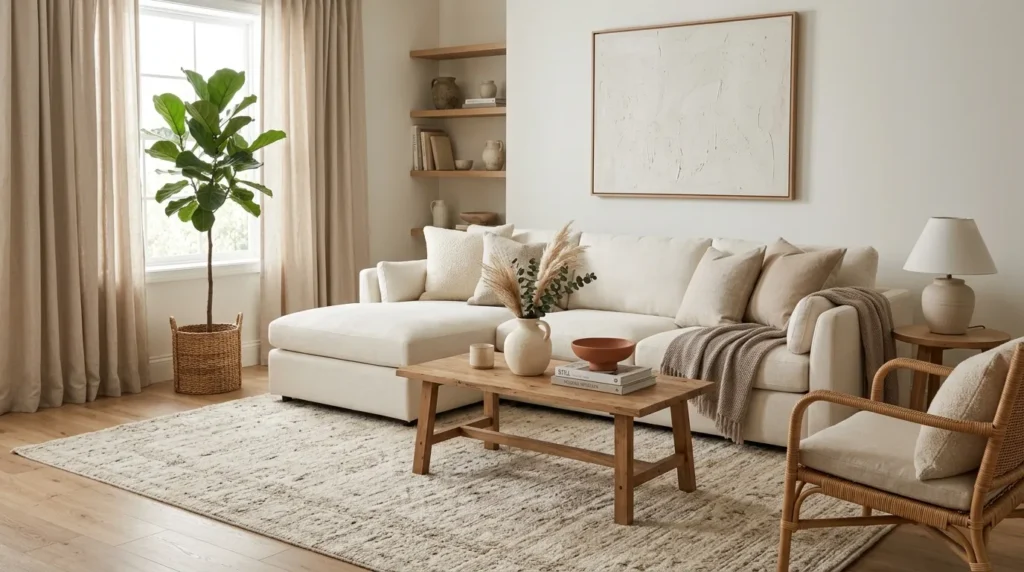
Warm neutral rugs are incredibly versatile because they can connect many different elements without demanding attention. Shades such as ivory, oatmeal, beige, taupe, camel, and soft brown create a relaxed foundation that works especially well with modern, transitional, Scandinavian, and organic interiors.
A neutral rug doesn’t mean a boring rug. Subtle patterns, tonal stripes, faded motifs, and woven textures can create depth while maintaining a peaceful appearance.
One thing that works especially well is choosing a rug with several closely related shades rather than a completely solid color. This gives the eye something to explore and can also help disguise everyday dust and minor marks.
If your living room already contains statement artwork, colorful furniture, or architectural details, a warm neutral rug can provide the visual breathing room those elements need.
How To Style It
Pair a warm neutral rug with cream, beige, or light gray upholstery for a soft monochromatic room. Then introduce contrast through natural wood, black accents, greenery, or darker decorative objects.
For a warmer look, combine the rug with oak, walnut, caramel leather, or woven baskets. Linen curtains and textured pillows can reinforce the relaxed atmosphere.
Make sure the rug is large enough to connect the main seating pieces. Ideally, the front legs of the sofa and chairs should sit on the rug rather than having the rug appear like a small island beneath the coffee table.
If you’re decorating a high-traffic family room, look for a practical weave and a color variation that won’t show every small mark.
2. Oversized Area Rug
Quick Benefits
- Defines the entire seating zone
- Makes furniture feel connected
- Can make a room feel more spacious
- Adds comfort beneath multiple pieces
- Creates a polished designer appearance
Why It Works
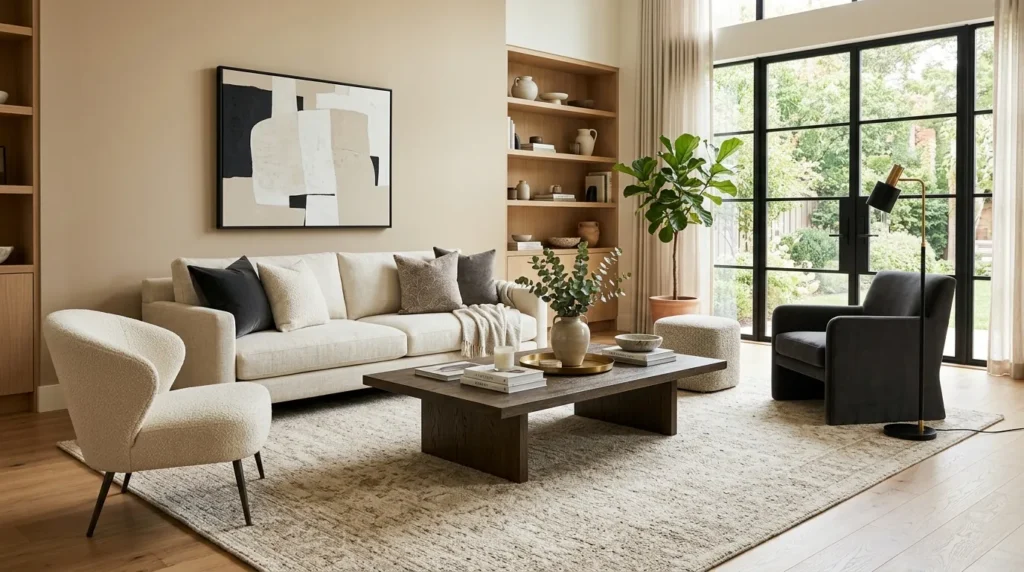
An appropriately sized rug can make one of the biggest visual differences in a living room. When the rug is too small, furniture can appear scattered, and the seating arrangement may lack a clear center.
An oversized rug solves this by visually grouping the major pieces together.
This is particularly helpful in large or open-concept homes where the living area needs to feel like a defined zone. The rug creates an invisible boundary without requiring walls or bulky dividers.
I’ve noticed that many homeowners underestimate rug size because a larger rug can initially feel intimidating. Once the furniture is arranged around it, however, the room often looks more cohesive and intentional.
The goal isn’t simply to cover as much floor as possible. The rug should relate to the dimensions of the furniture grouping and leave an appropriate border of visible flooring around the overall arrangement.
How To Style It
Start by measuring your seating arrangement rather than shopping based solely on room dimensions.
For a larger living room, consider a rug large enough for the sofa and chairs to sit comfortably on it. In an open floor plan, use the rug to define the living room separately from the dining or kitchen area.
Leave enough visible flooring around the perimeter so the rug looks intentionally placed rather than wall-to-wall.
A large neutral rug works beautifully when you want the furniture to remain the focus. If your furniture is simple, a larger patterned rug can become the room’s visual anchor.
Before purchasing, use painter’s tape to outline the proposed rug size on the floor. This simple trick can make it much easier to visualize the final proportions.
3. Vintage Pattern
Quick Benefits
- Adds character and personality
- Softens contemporary furniture
- Creates a collected appearance
- Hides minor everyday wear
- Works across multiple decorating styles
Why It Works
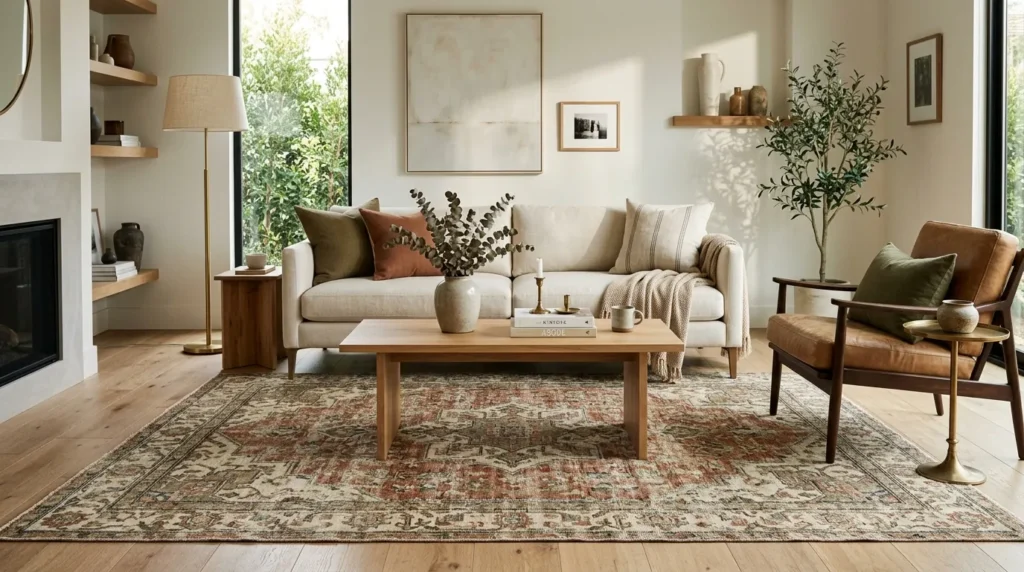
Vintage-inspired rugs bring a sense of history and depth that can be difficult to achieve with brand-new decor. Their faded patterns, muted colors, and slightly imperfect appearance create a room that feels collected rather than overly coordinated.
This style works particularly well in modern living rooms because the contrast between old-world pattern and contemporary furniture can make both elements more interesting.
A vintage rug doesn’t necessarily need to be genuinely antique. Many modern designs recreate the appearance of aged Persian, Turkish, Moroccan, or Oriental-inspired rugs while offering contemporary construction and easier maintenance.
The important thing is choosing a pattern that relates to the room’s palette. A rug can be detailed without becoming overwhelming if its colors are muted.
How To Style It
Pair a vintage-patterned rug with streamlined furniture to create balance. A simple cream sofa, modern coffee table, and contemporary lighting can keep a detailed rug from making the room feel traditional.
Pull one or two colors from the rug into your pillows or artwork, but don’t try to match every shade.
Wood furniture is an especially natural partner for vintage-inspired rugs. Add brass, aged bronze, leather, or ceramic accents for additional character.
If the rug has a strong pattern, keep curtains and larger upholstered pieces relatively simple.
For homes with children or pets, look for practical construction and consider whether the rug can be cleaned appropriately for your household’s needs.
4. Geometric Contrast
Quick Benefits
- Adds contemporary energy
- Creates a strong visual focal point
- Works with simple furniture
- Reinforces modern design
- Adds pattern without excessive decoration
Why It Works
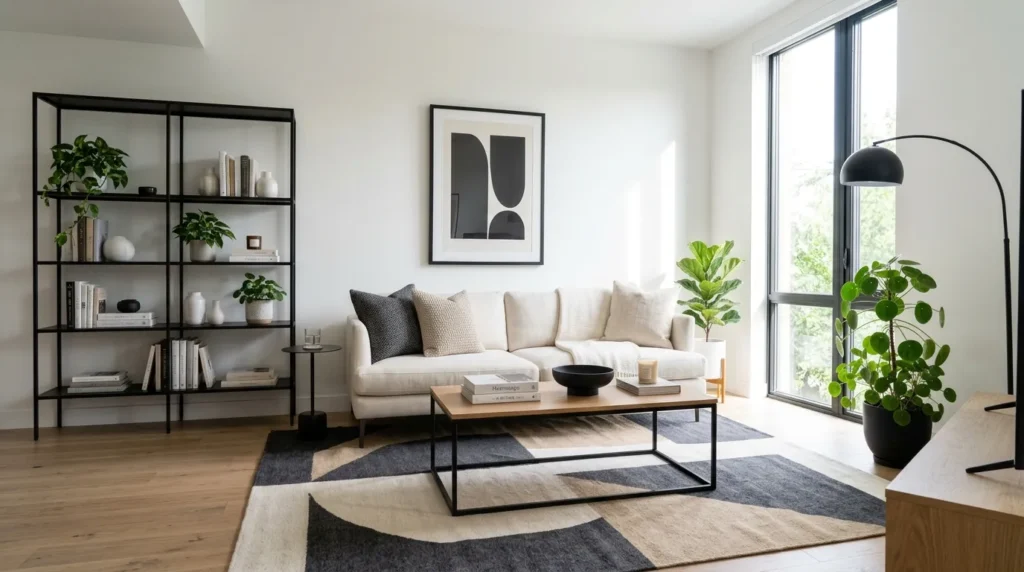
Geometric rugs are a natural fit for modern interiors because their structured patterns echo the clean lines found in contemporary furniture and architecture.
Triangles, grids, diamonds, arches, stripes, and abstract linear forms can all create visual interest beneath a simple seating arrangement.
The trick is managing contrast. A high-contrast black-and-white geometric rug makes a dramatic statement, while a tonal beige-and-cream design provides a much softer effect.
Geometric patterns are especially useful when the room itself feels too plain. Rather than adding several decorative objects, a single patterned rug can introduce movement across a large area of floor.
This makes it an efficient decorating choice for minimalist spaces.
How To Style It
If you choose a bold geometric rug, keep the sofa and larger furniture pieces relatively simple.
For a sophisticated contemporary room, try a charcoal-and-ivory pattern with a cream sofa, black metal accents, and warm wood.
For something softer, choose a tonal geometric pattern in beige, ivory, and taupe.
Pay attention to the direction of the pattern. Strong linear designs can visually lengthen or widen a room depending on their orientation.
Balance the geometry with organic elements such as a rounded coffee table, leafy plant, woven basket, or natural wood furniture. This prevents the room from feeling overly rigid.
5. Natural Fiber
Quick Benefits
- Adds organic texture
- Works with modern and coastal styles
- Creates a relaxed atmosphere
- Complements natural materials
- Offers visual warmth without bold color
Why It Works
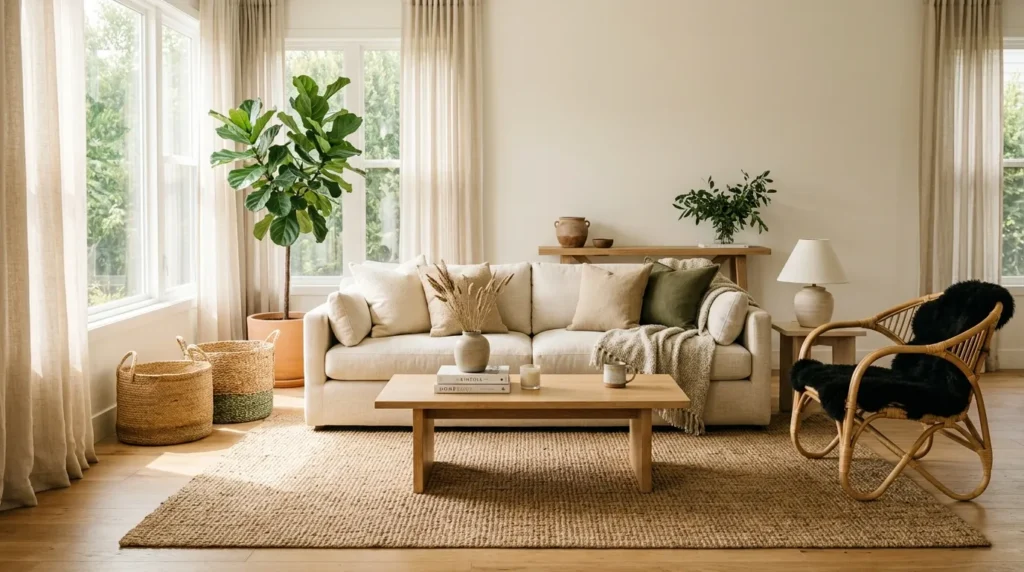
Natural fiber rugs are an excellent option when you want texture to be the star rather than color or pattern. Materials such as jute, sisal, seagrass, and wool can introduce an earthy quality that works beautifully with modern, coastal, farmhouse, organic, and Scandinavian interiors.
Their natural variations make them feel authentic and relaxed.
A natural fiber rug can also balance rooms that contain many smooth surfaces. If you have polished flooring, sleek furniture, glass, or metal, the woven texture provides contrast.
However, not every natural fiber performs identically. Some are rougher underfoot, while others are softer and more suitable for relaxed seating areas.
How To Style It
Pair a natural fiber rug with linen upholstery, light wood, rattan, woven baskets, ceramic pieces, and greenery.
For a modern organic room, combine a simple jute rug with a cream sofa, curved wood coffee table, and sculptural plants.
If you prefer more softness, consider a wool rug with a natural appearance rather than a coarse fiber.
Natural fibers also work beautifully as a base layer beneath another decorative rug. This is an excellent option when you want additional pattern while keeping the room grounded in organic texture.
Always consider cleaning and moisture exposure before choosing a natural fiber rug, especially in homes where spills are common.
6. Soft Shag Texture
Quick Benefits
- Adds immediate softness
- Makes the room feel cozy
- Creates tactile contrast
- Works beautifully in bedrooms and living spaces
- Complements streamlined furniture
Why It Works
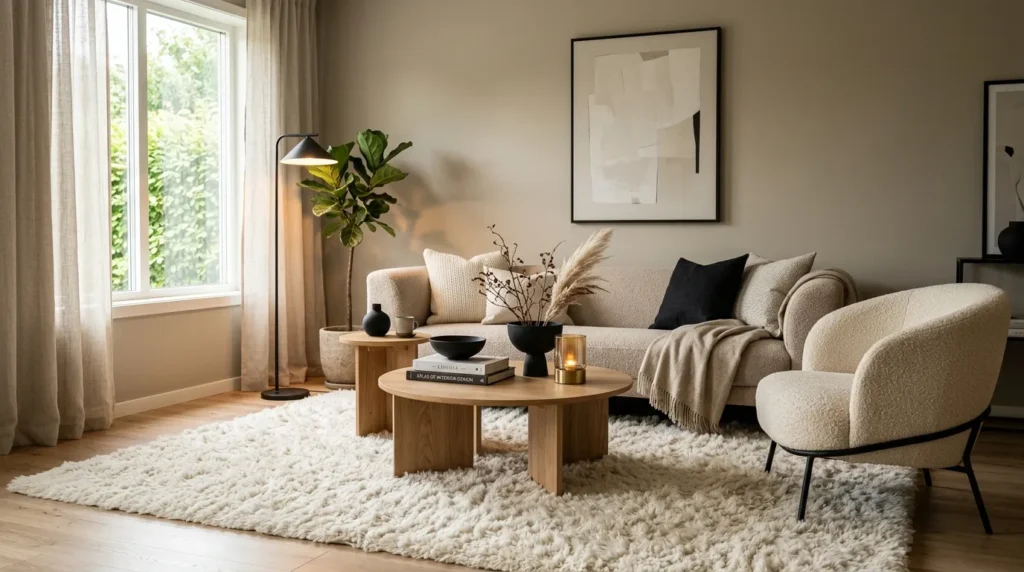
A plush shag rug can instantly make a modern living room feel more comfortable. The softness underfoot creates a relaxed contrast against smooth floors and streamlined furniture.
This style works particularly well in rooms that need more warmth. A minimalist space with leather furniture, concrete, or dark flooring can feel much more inviting when a soft textured rug is introduced.
The important consideration is practicality. A very deep pile can be harder to clean and may not be ideal beneath dining tables or in homes where furniture is frequently moved.
For living rooms, a medium-pile or textured wool design can offer some of the softness without becoming excessively difficult to maintain.
How To Style It
Keep the surrounding furniture relatively streamlined so the texture remains the star.
A cream or ivory shag rug pairs beautifully with a gray, beige, or camel sofa. Add a soft throw, boucle chair, and warm lighting for an especially cozy atmosphere.
If you prefer contrast, use a darker rug beneath lighter furniture.
Avoid combining too many highly textured elements in one small room. If the rug is very plush, keep other major textiles somewhat simpler.
A low-profile coffee table with clean lines can also provide a nice visual contrast against the softness of the rug.
7. Layered Rugs
Quick Benefits
- Adds dimension
- Creates a collected look
- Allows patterns to be introduced gradually
- Helps customize rug size
- Adds texture and visual depth
Why It Works
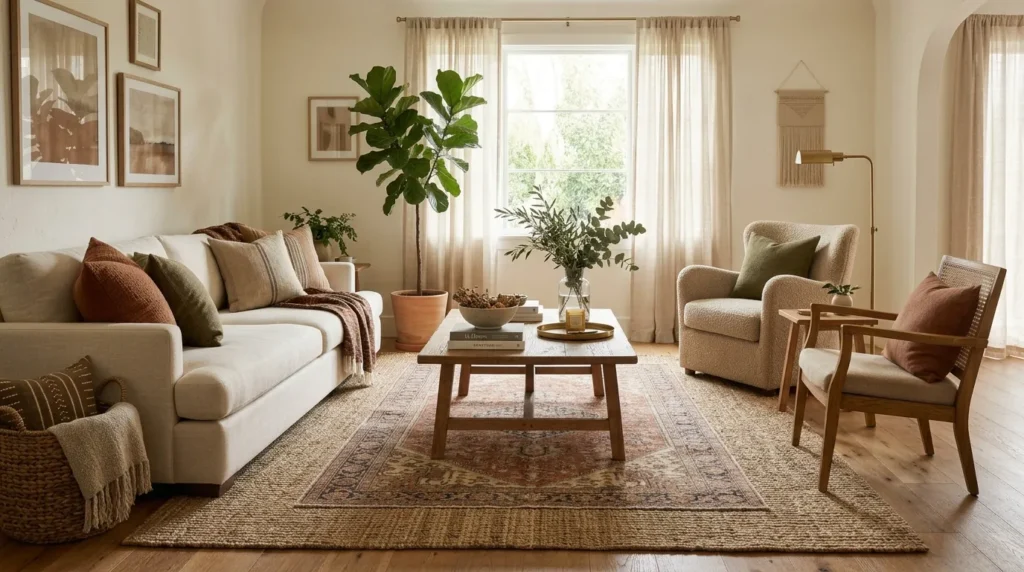
Layering rugs can make a living room feel more relaxed and thoughtfully decorated. It allows you to combine a large foundational rug with a smaller decorative design, creating depth without committing to one oversized patterned rug.
A common combination is a large natural fiber rug underneath a smaller vintage or patterned rug. The bottom layer establishes texture, while the top layer introduces color and personality.
This technique is particularly useful in large rooms where one rug may feel visually lost.
The key is choosing rugs that have enough contrast to be visible but enough harmony to look intentional.
How To Style It
Start with a larger, relatively neutral base rug. Jute, sisal, wool, or a simple woven design can work well.
Then place a smaller patterned rug over the center of the seating area.
Make sure the upper rug is large enough to look purposeful. A tiny rug floating in the middle of a large base can look accidental.
Coordinate the colors without making the rugs identical. For example, a natural beige base could support a faded vintage rug containing muted rust, cream, olive, and brown.
Keep the rest of the room relatively restrained so the layered rugs become a deliberate feature rather than one of many competing patterns.
8. Bold Color
Quick Benefits
- Creates an instant focal point
- Adds personality to neutral rooms
- Can define the decorating palette
- Makes simple furniture more interesting
- Provides an easy way to introduce color
Why It Works
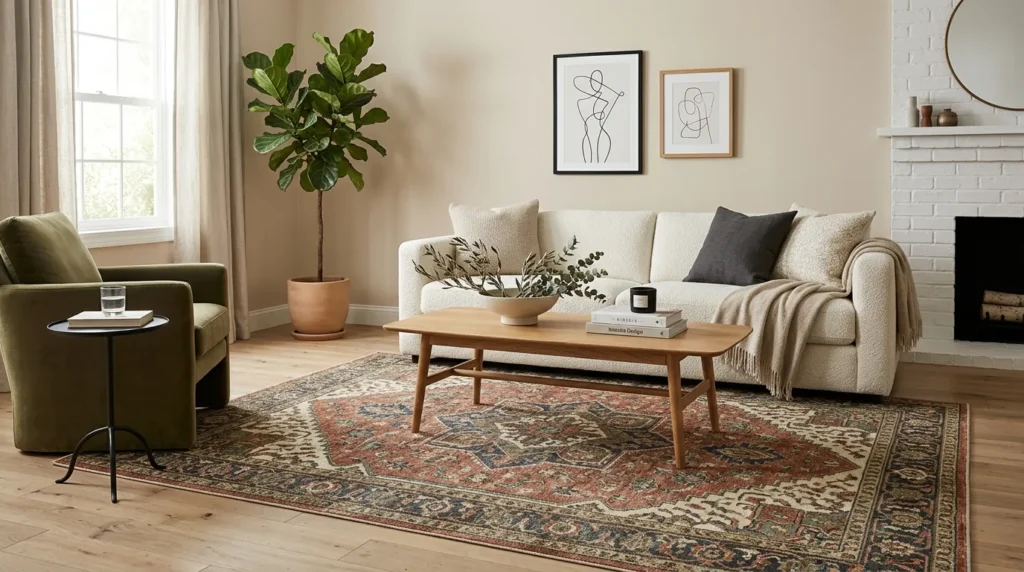
A colorful rug can completely transform a neutral living room without requiring new furniture or wall paint.
Deep blue, muted green, rust, burgundy, terracotta, mustard, or even softer dusty shades can create a strong visual foundation.
The trick is letting the rug guide the rest of the palette rather than trying to make every element equally colorful.
A bold rug is particularly useful when your sofa and walls are neutral. The rug can become the main source of personality while the rest of the room supports it quietly.
I’ve found that slightly muted versions of bold colors tend to feel easier to live with than extremely bright primary shades, especially in rooms designed for everyday relaxation.
How To Style It
Choose one or two colors from the rug and repeat them in smaller quantities throughout the room.
For example, if the rug contains rust and olive, use rust in a pair of cushions and olive in a plant pot or artwork.
Keep the largest furniture pieces relatively neutral so the rug remains the focal point.
Natural wood can help ground colorful rugs, while black or dark bronze accents can add definition.
If your room already contains colorful artwork or patterned upholstery, select a rug with a more restrained pattern so the overall palette doesn’t become overwhelming.
9. Round Rug
Quick Benefits
- Softens rectangular furniture
- Creates visual movement
- Works well in compact seating areas
- Highlights a central focal point
- Adds an unexpected design element
Why It Works
Most living rooms contain a lot of straight lines: rectangular sofas, coffee tables, media consoles, windows, doors, and walls. A round rug can introduce a completely different shape.
This contrast creates visual interest without requiring bold colors or patterns.
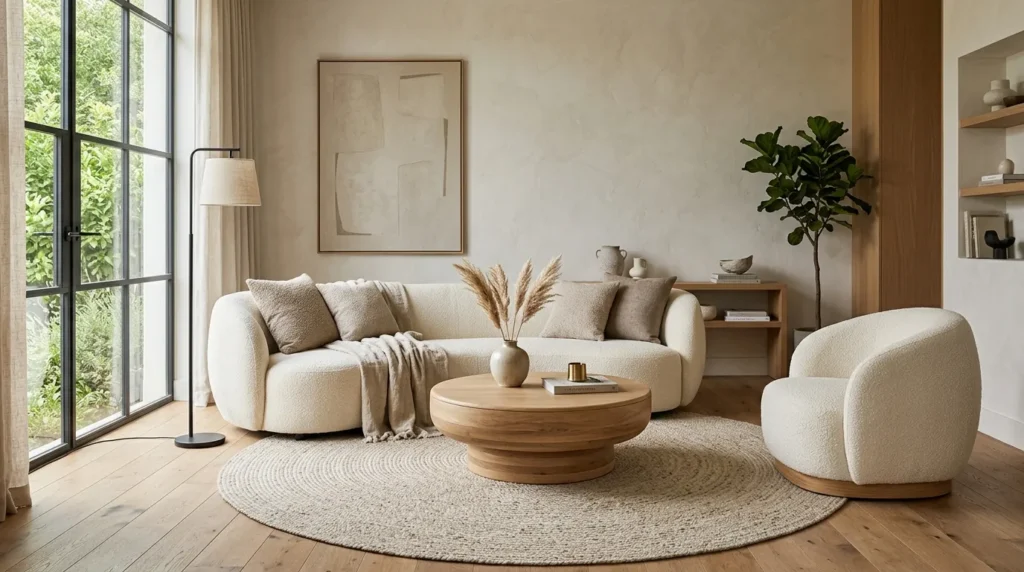
Round rugs can be especially effective beneath a circular coffee table or in a smaller conversation area. They can also help define a reading corner within a larger room.
However, scale matters. A round rug that is too small can feel disconnected from the furniture.
How To Style It
Place a round rug beneath a round coffee table and position seating around it so the arrangement feels connected.
In a larger living room, you can use a round rug beneath a reading chair and side table to create a secondary zone.
Neutral round rugs work well when you want the shape to be the primary feature. Patterned versions can make the effect more dramatic.
If your main furniture is very angular, consider repeating one or two rounded accessories elsewhere in the room. A curved lamp, round mirror, or organic-shaped vase can subtly connect the design.
10. Modern Oriental
Quick Benefits
- Blends traditional and contemporary styles
- Adds sophisticated pattern
- Creates a timeless atmosphere
- Works beautifully with neutral furniture
- Adds depth without excessive accessories
Why It Works
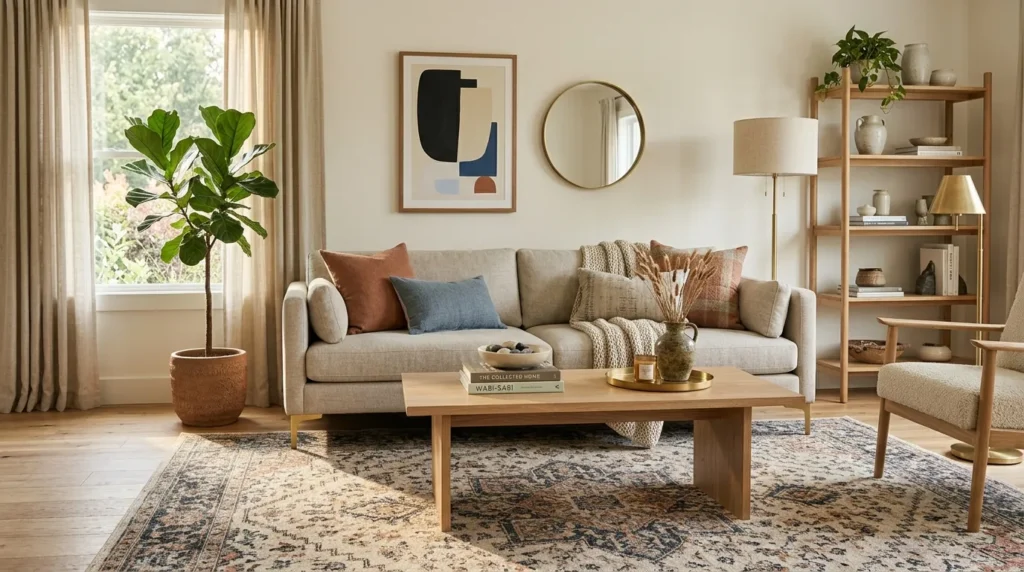
Oriental-inspired rugs can give a modern living room a more layered and collected personality. Their detailed motifs contrast beautifully with contemporary sofas, clean-lined tables, and minimalist lighting.
Rather than choosing a highly saturated traditional design, consider updated versions featuring faded colors, simplified motifs, or a more restrained palette.
Cream, charcoal, muted blue, terracotta, sage, and dusty rose can all work beautifully with contemporary interiors.
This style is ideal for homeowners who don’t want their living room to feel too trendy. Traditional rug patterns have a visual history that can help a modern room feel more timeless.
How To Style It
Let the rug provide most of the pattern and keep surrounding upholstery relatively simple.
A cream or gray sofa can create an excellent backdrop for a detailed rug. Add natural wood, brass, black accents, or leather for additional warmth.
Pull only one or two accent colors from the rug into pillows or artwork.
If you have a small room, consider a rug with a lower-contrast pattern so it doesn’t visually dominate the space.
For larger rooms, a more detailed Oriental-inspired rug can become the central design feature around which the rest of the furniture is arranged.
11. Minimalist Pattern
Quick Benefits
- Adds subtle visual interest
- Keeps modern rooms uncluttered
- Works with neutral furniture
- Creates a polished foundation
- Makes small spaces feel calmer
Why It Works
A minimalist patterned rug is ideal for homeowners who want something more interesting than a solid rug but don’t want a dramatic statement piece.
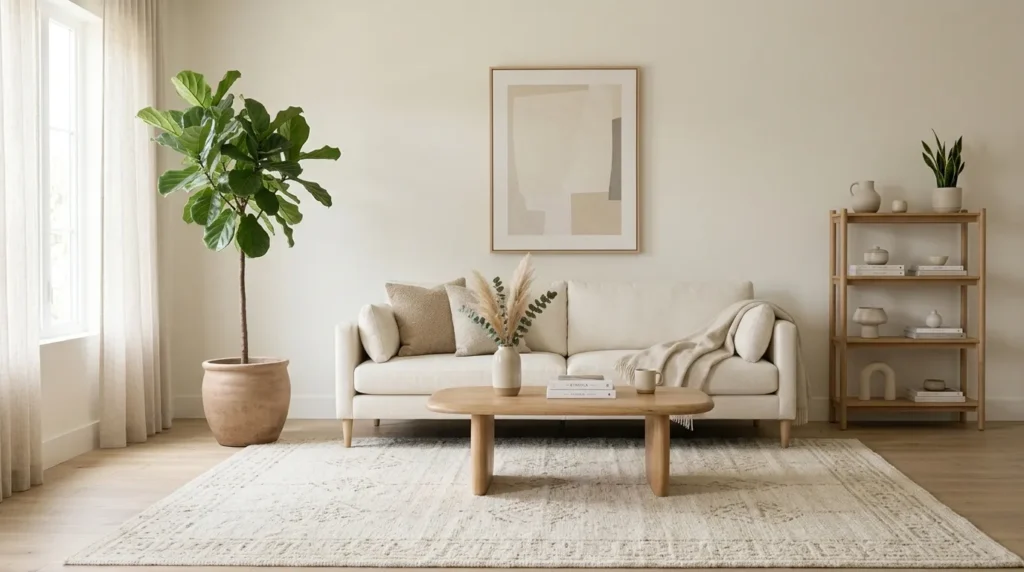
Tonal stripes, soft grids, subtle abstract marks, faint diamonds, and barely-there organic patterns can provide just enough movement to keep the floor from looking flat.
This approach works especially well in modern and Scandinavian interiors where simplicity is important.
The pattern becomes something you notice gradually rather than immediately. It supports the room instead of competing with artwork, furniture, or architectural features.
How To Style It
Choose a rug with two or three closely related shades. Cream and beige, gray and ivory, taupe and oatmeal, or charcoal and soft gray are easy combinations.
Pair the rug with streamlined furniture and a limited number of accessories.
If the rug contains a linear pattern, balance it with a rounded coffee table or curved chair.
For a more organic modern look, choose an abstract pattern inspired by natural shapes rather than a rigid geometric design.
This is also an excellent option for open-concept rooms because it provides subtle definition without visually interrupting the larger space.
How To Choose The Right Living Room Rug Size
Rug size is one of the most important decisions you’ll make.
A common mistake is choosing a rug based on what physically fits rather than what visually connects the furniture.
For many living rooms, a rug should be large enough for at least the front legs of the main seating pieces to rest on it. In larger rooms, having all furniture legs on the rug can create an especially cohesive appearance.
An undersized rug can make an otherwise beautiful room feel disconnected.
Before purchasing, measure the seating arrangement and mark the proposed rug dimensions on the floor with painter’s tape. Walk around the room and see how the proportions feel.
Also consider door swings, walkways, vents, fireplace hearths, and other architectural features.
If you’re uncertain between two sizes, the larger option often creates a more substantial and connected appearance, provided the room has enough visible flooring around it.
How To Match A Rug With Your Sofa
Your rug doesn’t need to match your sofa exactly.
In fact, exact matching can make the room feel too coordinated.
Instead, look for relationships in color, undertone, texture, or pattern.
A cream sofa can work with almost anything from a subtle beige rug to a colorful vintage design. A gray sofa pairs beautifully with warm ivory, charcoal, blue, green, or muted terracotta depending on the room’s overall palette.
If your sofa has a strong pattern, a quieter rug may be the better choice. If your sofa is solid and simple, the rug can carry more visual interest.
Consider the flooring too. A pale rug against pale flooring can create a soft seamless effect, while a contrasting rug can more clearly define the seating zone.
Rug Placement Mistakes To Avoid
Even an excellent rug can look awkward when positioned incorrectly.
Avoid placing a tiny rug directly beneath the coffee table while leaving the sofa and chairs completely disconnected from it.
Don’t push the rug so far under a sofa that almost none of it is visible from the seating area.
Avoid choosing a rug that blocks doors or creates awkward transitions between rooms.
Don’t ignore the scale of the coffee table. A very small rug beneath a substantial table can make the furniture feel disproportionately large.
Finally, remember that rug placement should support movement. Leave comfortable pathways around the seating arrangement and consider how people naturally enter and leave the room.
Choosing The Best Rug Material
Different materials offer different advantages.
Wool
Wool is naturally durable, comfortable, and attractive, making it a popular choice for living rooms.
Cotton
Cotton rugs can feel casual and lightweight and may work well in relaxed spaces.
Jute
Jute provides a warm, organic appearance and works beautifully with natural and coastal decorating styles.
Sisal
Sisal has a textured, durable appearance but can feel relatively firm underfoot.
Synthetic Fibers
Many synthetic rugs are designed for affordability, stain resistance, and easier everyday maintenance.
Blended Materials
Blends can combine desirable qualities from multiple fibers.
Always check the manufacturer’s care instructions and consider your household’s needs before purchasing.
How To Make A Living Room Rug Feel More Expensive
A high-end appearance isn’t necessarily about buying the most expensive rug.
Scale is one of the first things to consider. A properly sized rug instantly makes a room feel more intentional.
Look for subtle texture, restrained color variation, and patterns that don’t appear overly busy.
Natural-looking materials and thoughtfully faded patterns can also create a sophisticated effect.
Most importantly, keep the area around the rug visually organized. Even an inexpensive rug can look beautiful when paired with well-proportioned furniture, good lighting, and uncluttered surfaces.
A simple neutral rug with excellent placement often looks more polished than an expensive rug that is too small for the room.
FAQ
What is the best rug size for a living room?
The ideal size depends on the dimensions of the room and furniture arrangement. In many living rooms, the rug should be large enough for at least the front legs of the sofa and chairs to rest on it. Larger rooms may benefit from placing all major seating furniture on the rug. Always measure the seating zone rather than choosing a size based only on the room itself.
Should a living room rug match the sofa?
A rug doesn’t need to match the sofa exactly. Instead, coordinate complementary colors, undertones, textures, or patterns. A neutral sofa gives you more freedom to choose a patterned or colorful rug, while a patterned sofa generally works best with a simpler rug. The goal is visual harmony rather than identical colors.
Is a neutral rug a good choice for a living room?
Yes. Neutral rugs are highly versatile and can work with modern, traditional, farmhouse, Scandinavian, coastal, and transitional interiors. Cream, beige, taupe, and warm gray can create a calm foundation while subtle texture or tonal patterns keep the rug from looking flat.
Are patterned rugs good for living rooms?
Patterned rugs can be excellent for living rooms because they add personality and visual interest across a large surface. If your furniture is simple and mostly solid-colored, a patterned rug can become the room’s focal point. If you already have patterned upholstery or bold artwork, choose a quieter rug to maintain balance.
What type of rug is best for a high-traffic living room?
Look for durable materials and constructions appropriate for frequent use. Wool and many quality synthetic rugs can be practical choices, depending on the specific product. A moderately patterned rug can also be useful because it may disguise small everyday marks better than a completely solid light-colored rug.
Can you layer rugs in a living room?
Yes. Layering a large neutral or natural-fiber rug beneath a smaller patterned rug can create additional texture and visual depth. Make sure both rugs are large enough for their intended roles and that their colors and patterns complement each other rather than compete.
How far should a rug go under a sofa?
A common approach is to place enough of the rug beneath the sofa that the front legs rest securely on it. In larger rooms, you can place the entire sofa on the rug. The right choice depends on the room’s proportions, furniture arrangement, and desired visual effect.
Conclusion
The right living room rug can do far more than cover the floor. It can define the seating arrangement, introduce texture, soften hard surfaces, establish a color palette, and bring the entire room together.
Whether you prefer a warm neutral design, vintage pattern, natural fiber, bold color, geometric print, or subtle minimalist texture, the most important thing is choosing a rug that works with the way you actually use your living room.
Start with size and placement before worrying about pattern. Then consider the existing sofa, flooring, walls, lighting, and furniture. Once those pieces are understood, choosing color and texture becomes much easier.
If your room feels disconnected, try an oversized rug. If it feels cold, introduce natural fibers or plush texture. If it feels too plain, consider a vintage, geometric, or colorful design. And if you’re working with a smaller space, a carefully chosen round or minimalist rug can create definition without overwhelming the room.
A beautiful living room doesn’t require every element to make a statement. Sometimes the best result comes from one well-chosen rug that quietly connects everything around it.
Choose a size that anchors your furniture, a material that suits your lifestyle, and a style that genuinely reflects your home. The result will be a living room that feels more comfortable, cohesive, and intentionally designed.
Related Articles
- Modern Living Room Decor Ideas
- Cozy Living Room Decorating Ideas
- Neutral Living Room Ideas
- Small Living Room Layout Ideas
- Modern Coffee Table Styling Ideas
Pinterest Image Prompts
1. Warm Neutral Rug
Image Description: A beautiful modern living room featuring a large warm neutral area rug in cream, beige, oatmeal, and soft taupe tones beneath a comfortable ivory sofa and natural wood coffee table. The room includes linen curtains, woven accents, soft cushions, subtle greenery, and warm ceramic decor. Gentle natural daylight fills the space, highlighting layered textures. Photorealistic luxury interior photography, three-quarter eye-level angle, calm sophisticated mood, vertical Pinterest composition.
2. Oversized Area Rug
Image Description: A spacious contemporary living room with a generously sized textured area rug extending beneath a cream sofa, two accent chairs, and a substantial modern coffee table. Warm beige, ivory, light oak, and charcoal accents create a sophisticated palette. Large windows provide soft natural daylight while maintaining a polished editorial atmosphere. Photorealistic high-end interior design photography, wide three-quarter camera angle, balanced furniture arrangement, Pinterest-worthy vertical composition.
3. Vintage Pattern
Image Description: A stylish modern living room centered around a faded vintage-inspired Persian rug featuring muted rust, cream, olive, beige, and dusty blue tones. The rug sits beneath a streamlined cream sofa, natural wood coffee table, leather accent chair, brass lamp, and minimal artwork. Soft afternoon sunlight emphasizes the aged pattern and warm textures. Photorealistic editorial interior photography, eye-level three-quarter perspective, collected sophisticated mood, vertical Pinterest framing.
4. Geometric Contrast
Image Description: A contemporary living room featuring a bold geometric area rug with charcoal, ivory, and warm beige shapes beneath a streamlined cream sofa and modern rectangular coffee table. Black metal accents, light wood furniture, sculptural greenery, and simple artwork complete the space. Bright natural daylight creates crisp but soft shadows. Photorealistic modern interior photography, wide-angle three-quarter view, clean architectural styling, sophisticated contrast, vertical Pinterest composition.
5. Natural Fiber
Image Description: A warm organic modern living room featuring a large woven jute rug beneath a cream linen sofa, light oak coffee table, rattan accent chair, woven baskets, ceramic accessories, and lush green plants. The palette includes ivory, sand, honey wood, beige, and soft olive. Sunlight filters through linen curtains, emphasizing natural textures. Photorealistic editorial home photography, eye-level camera angle, relaxed upscale atmosphere, vertical Pinterest-ready composition.
6. Soft Shag Texture
Image Description: A cozy contemporary living room with a plush ivory shag rug covering the central seating area beneath a streamlined beige sofa, boucle accent chair, rounded coffee table, soft throw pillows, and warm ambient lighting. Natural wood and subtle black accents provide contrast. The room feels soft, inviting, and sophisticated. Photorealistic luxury interior photography, low eye-level three-quarter perspective, tactile textures, warm neutral palette, vertical Pinterest composition.
7. Layered Rugs
Image Description: A sophisticated living room featuring a large neutral woven jute rug layered beneath a smaller faded vintage patterned rug, surrounded by a cream sofa, natural wood coffee table, beige accent chairs, textured cushions, and subtle greenery. Warm ivory, tan, rust, and muted olive create a harmonious palette. Soft daylight emphasizes the layered textures. Photorealistic editorial interior photography, wide three-quarter angle, collected designer-inspired mood, vertical Pinterest format.
8. Bold Color
Image Description: A stylish neutral living room featuring a richly colored area rug with muted rust, deep blue, olive, and warm cream tones beneath a simple ivory sofa and natural wood coffee table. Minimal artwork, neutral cushions, black accents, and sculptural greenery allow the colorful rug to become the focal point. Soft natural daylight illuminates the space. Photorealistic luxury interior photography, eye-level three-quarter camera angle, sophisticated colorful styling, vertical Pinterest composition.
9. Round Rug
Image Description: A modern living room featuring a large round neutral rug beneath a circular sculptural coffee table, curved cream sofa, rounded accent chair, soft beige cushions, natural wood details, and a minimalist floor lamp. The room combines ivory, taupe, warm oak, and subtle charcoal. Gentle daylight emphasizes the curved furniture and open circulation. Photorealistic contemporary interior photography, wide three-quarter perspective, elegant organic-modern mood, vertical Pinterest-worthy framing.
10. Modern Oriental
Image Description: A sophisticated contemporary living room featuring an updated Oriental-inspired rug with faded cream, charcoal, muted blue, and terracotta motifs beneath a streamlined neutral sofa. Natural wood furniture, brass accents, minimalist artwork, linen curtains, and sculptural greenery create a balanced modern setting. Warm afternoon light highlights the detailed rug pattern. Photorealistic high-end interior photography, editorial three-quarter camera angle, timeless collected atmosphere, vertical Pinterest composition.
11. Minimalist Pattern
Image Description: A serene modern living room featuring a large cream and beige area rug with an understated tonal geometric pattern beneath a streamlined ivory sofa and organic-shaped coffee table. The room includes light oak furniture, minimalist artwork, soft linen curtains, sculptural greenery, and subtle ceramic accessories. Natural daylight creates a peaceful atmosphere. Photorealistic editorial interior photography, eye-level wide angle, restrained neutral palette, clean minimalist styling, vertical Pinterest composition.