10 Small Backyard Decor Ideas to Transform Tiny Spaces
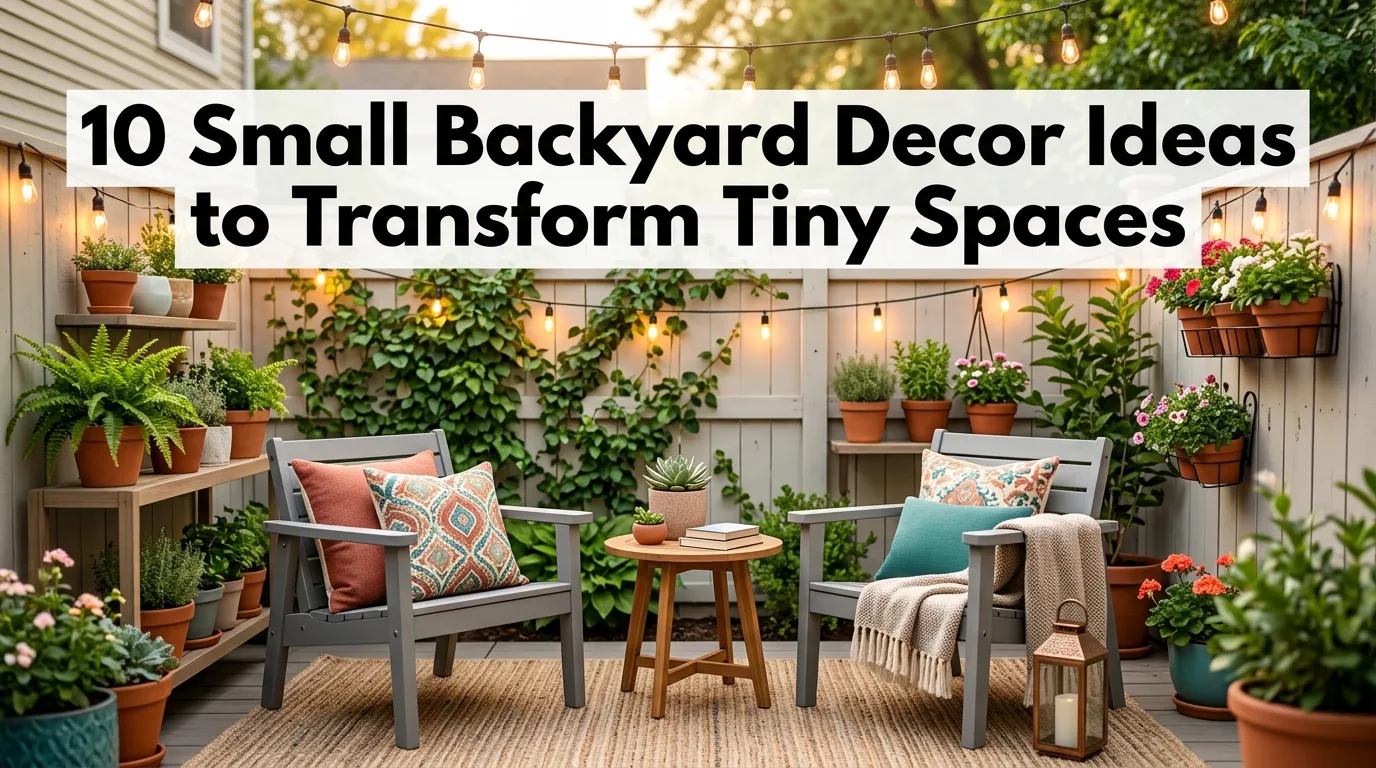
A small backyard can be surprisingly versatile. Even when you don’t have enough room for a sprawling lawn, oversized furniture, or multiple entertaining zones, the right decorating choices can turn a compact outdoor area into a place that feels comfortable, stylish, and genuinely useful.
The biggest mistake many homeowners make with a tiny backyard is treating it like a smaller version of a large yard. Filling every available corner with furniture and accessories can actually make the space feel tighter. Instead, small outdoor spaces benefit from thoughtful proportions, vertical decorating, multifunctional pieces, and a clear visual direction.
In my experience, the most successful small backyards focus on how the space will actually be used. If you love morning coffee, prioritize a cozy seating nook. If you enjoy hosting friends, choose flexible seating and a compact dining setup. If privacy is your biggest concern, use plants, screens, or trellises to create a more enclosed atmosphere without sacrificing valuable floor space.
You also don’t need to complete the entire makeover at once. A small outdoor rug, a few planters, better lighting, or a compact bistro set can make a noticeable difference before you invest in larger pieces.
These small backyard decorating ideas are designed for homeowners and renters who want maximum style without overcrowding their outdoor space. You’ll find practical ways to make a tiny yard feel more spacious, comfortable, layered, and inviting while keeping the overall look polished.
Save your favorite ideas as you go, then choose the ones that make the most sense for your backyard, lifestyle, and budget.
Table of Contents
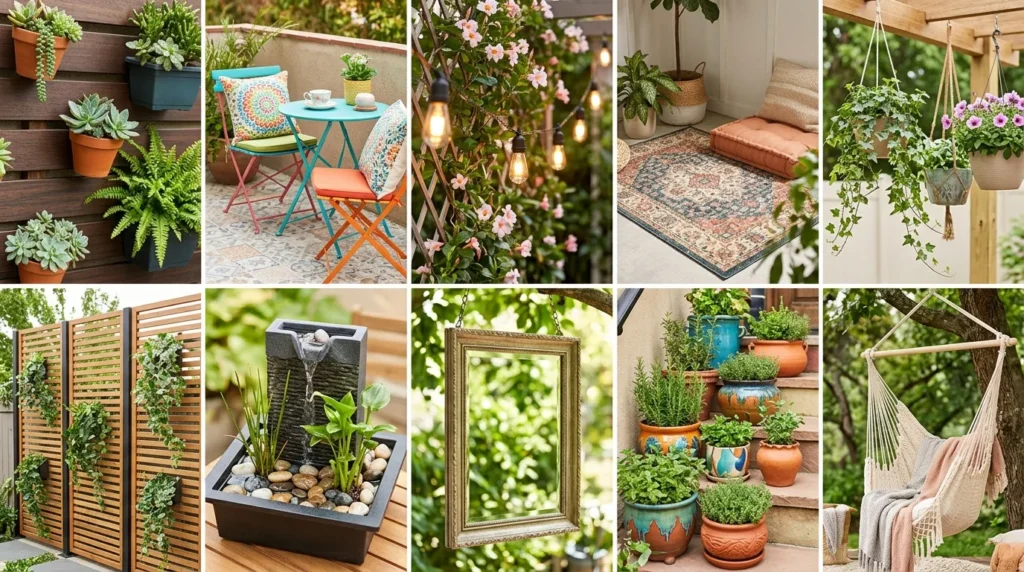
1. Compact Seating
Create a comfortable outdoor lounge without allowing furniture to dominate the yard.
2. Vertical Gardens
Move plants upward to add greenery while preserving valuable floor space.
3. Bistro Dining
Use a small café-style table and chairs to create an attractive dining nook.
4. Outdoor Rug
Define the seating area with a weather-resistant rug that adds softness and structure.
5. Foldable Furniture
Choose flexible pieces that can be moved, folded, or stored when extra space is needed.
6. Privacy Screens
Create a more intimate atmosphere with stylish screens, fencing, or layered greenery.
7. String Lighting
Use warm outdoor lighting to make a tiny backyard feel magical after sunset.
8. Raised Planters
Add flowers, herbs, and greenery while keeping the ground-level layout open.
9. Multiuse Corners
Give awkward corners a specific purpose instead of leaving them unused.
10. Cozy Fire Pit
Create a natural gathering point with a compact fire feature suited to the space.
1. Compact Seating
Quick Benefits
- Saves valuable floor space
- Creates an instant outdoor living area
- Makes the backyard more functional
- Works for renters and homeowners
- Can be rearranged as needed
Why It Works
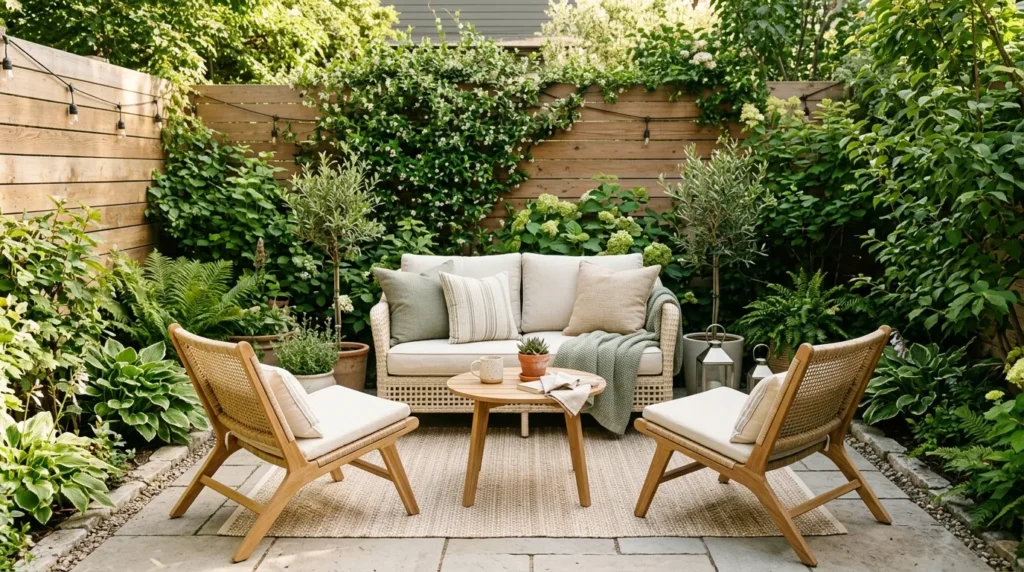
Furniture is usually the first thing that makes a small backyard feel crowded, so choosing pieces based on scale can make an enormous difference. Instead of trying to squeeze a full outdoor sectional into a tiny yard, consider a compact loveseat, two lounge chairs, or a built-in bench.
The goal is to create enough seating for comfortable everyday use while maintaining clear walking paths around it. Slim frames and raised legs can also help the area feel visually lighter.
I’ve noticed that small yards often look better when the seating arrangement is intentionally simple. One attractive conversation area usually feels more spacious than several scattered chairs. Keeping the furniture proportional to the yard gives you room for greenery, lighting, and a few decorative accents without creating visual clutter.
How To Style It
Start by measuring the available area before shopping for furniture. Don’t just measure the furniture footprint; leave enough clearance for people to comfortably walk around it.
A small outdoor loveseat can work beautifully against a wall or fence. Add two compact chairs if the layout allows, then place a small round or nesting coffee table in the middle.
For especially narrow yards, consider a built-in bench along one side. Add weather-resistant seat cushions to make it comfortable while keeping the footprint minimal.
Choose a restrained color palette such as cream, taupe, charcoal, natural wood, or muted green. These shades tend to blend naturally with landscaping and won’t visually overwhelm a small space.
If you need occasional extra seating, use lightweight stools or garden seats that can double as side tables. This gives you flexibility without permanently filling the backyard.
2. Vertical Gardens
Quick Benefits
- Uses walls and fences efficiently
- Adds greenery without crowding the ground
- Creates height and visual interest
- Can improve privacy
- Works particularly well in narrow yards
Why It Works
When floor space is limited, look up. Vertical gardening allows you to bring plants, flowers, and herbs into the backyard without consuming the same amount of ground space as traditional garden beds.
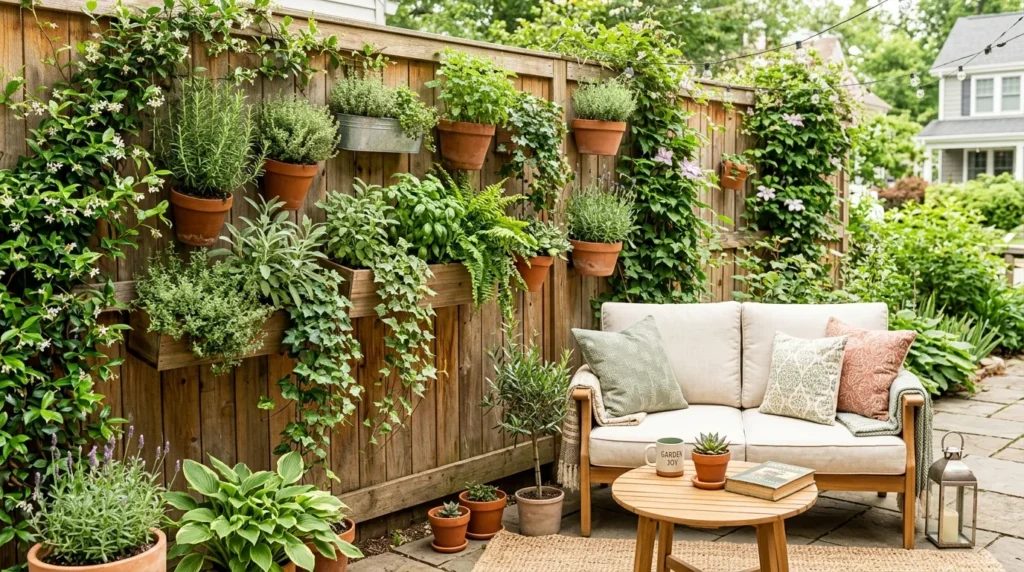
A plain fence can become a decorative backdrop with climbing plants, wall-mounted planters, or a simple trellis. This also creates an opportunity to introduce texture and color at eye level instead of placing everything along the ground.
Vertical greenery can make a compact backyard feel more immersive. Rather than seeing the boundaries immediately, your eye is drawn toward layers of foliage and flowers.
For renters, freestanding trellises and portable vertical planters can offer a similar effect without permanently altering the property.
How To Style It
Choose one wall or fence as the primary vertical gardening zone rather than trying to cover every surface.
A wooden trellis with climbing greenery can create a warm natural backdrop. For a more contemporary look, use matching wall planters arranged in a simple grid.
Consider a mixture of plant heights and textures. Trailing plants can soften the edges of shelves or planters, while upright plants create structure.
If you enjoy cooking, turn a sunny wall into a small herb garden with labeled containers. Basil, rosemary, thyme, mint, and other suitable herbs can make the area both decorative and useful.
Make sure the plants you select match the amount of sunlight and climate conditions in your location. Keeping the plants healthy will always make the design look better than simply adding more containers.
3. Bistro Dining
Quick Benefits
- Creates a dining zone without a large table
- Perfect for morning coffee
- Works in very small yards
- Adds European-inspired charm
- Can be moved when necessary
Why It Works
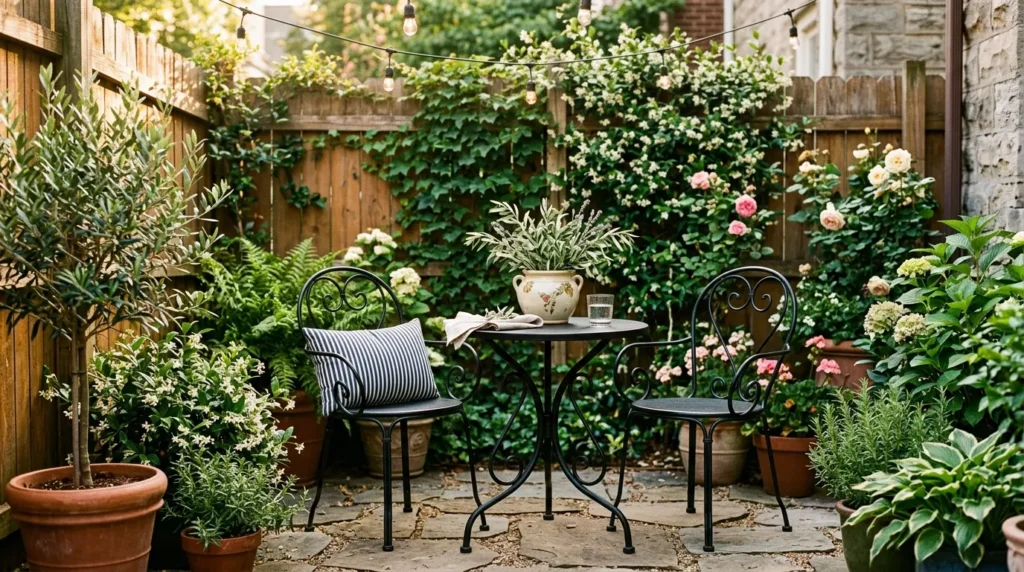
A large dining table can quickly consume most of a tiny backyard, but that doesn’t mean you have to give up outdoor meals. A compact bistro set can provide a dedicated place for breakfast, coffee, casual lunches, or evening drinks without overwhelming the space.
Round café-style tables are especially useful because their curved shape can make movement around them easier. They also introduce a softer visual element when the rest of the backyard contains straight fence lines and rectangular furniture.
A small dining setup can become one of the most charming areas in the entire yard. With the right lighting, plants, and textiles, even a two-person table can feel like a destination rather than an afterthought.
How To Style It
Look for a bistro table that comfortably fits two to four people while leaving enough room to pull out the chairs.
Black metal creates a classic modern look, while natural wood offers a softer organic feel. White or cream furniture can brighten a darker backyard.
Place the table near a kitchen door if possible. This makes carrying food and drinks outside much easier.
Add two comfortable cushions and a small centerpiece. A potted herb, small flowering plant, or simple ceramic vase can provide enough decoration without taking over the tabletop.
For evening use, hang a strand of warm string lights overhead or position a small outdoor lantern nearby.
If space is extremely limited, select a folding bistro set that can be stored against the wall when you need more open floor space.
4. Outdoor Rug
Quick Benefits
- Defines a small seating zone
- Adds softness underfoot
- Introduces color and texture
- Makes furniture feel more connected
- Helps the backyard feel like an outdoor room
Why It Works
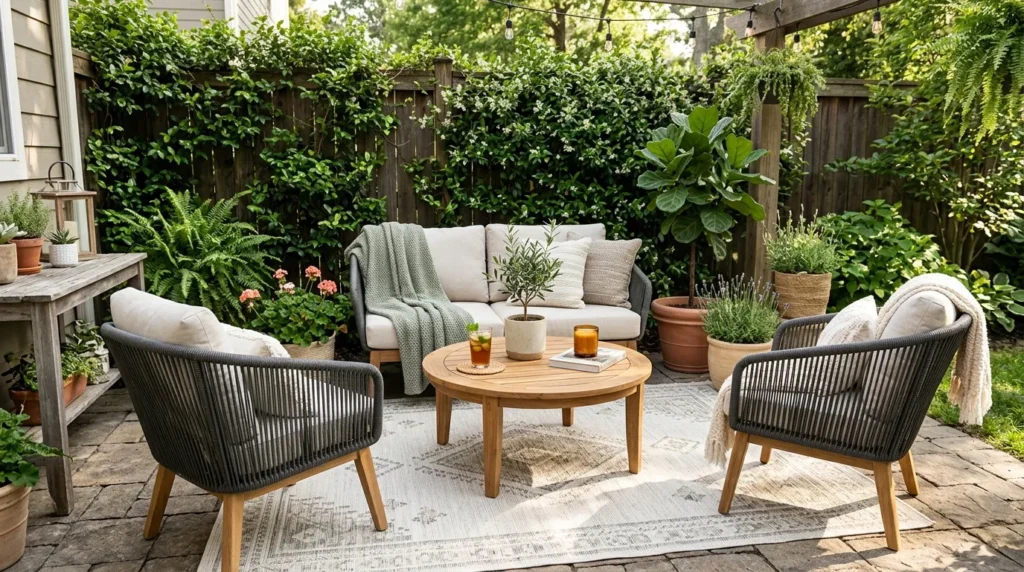
An outdoor rug may seem like a decorative extra, but it can have a surprisingly strong effect on a small backyard. Because compact spaces don’t always have obvious architectural divisions, a rug can visually establish where one activity area begins and ends.
This is particularly useful when your backyard combines seating, dining, and gardening in a limited footprint.
A rug also introduces a soft layer between hard surfaces such as concrete, brick, stone, and decking. That contrast makes the space feel more comfortable and finished.
For a small backyard, choosing the right size matters. A rug that is too tiny can make the furniture arrangement feel disconnected. A properly proportioned rug can make even modest furniture look more intentional.
How To Style It
Choose an outdoor-rated rug made from a material appropriate for exterior use and your local conditions.
For a modern backyard, try a simple stripe, subtle geometric pattern, or solid neutral. If your furniture is plain, you can use the rug to introduce a little more personality.
Place the rug beneath the main seating arrangement so the furniture feels anchored. Ideally, the front legs of the primary chairs or sofa should sit on the rug.
If you’re decorating a very narrow backyard, a runner-style outdoor rug can visually emphasize the length of the space.
Stick with colors that complement your existing exterior. Warm beige, ivory, gray, muted green, and terracotta can all work beautifully with natural landscaping.
5. Foldable Furniture
Quick Benefits
- Maximizes flexibility
- Makes storage easier
- Creates open space when needed
- Works well for renters
- Ideal for multifunctional yards
Why It Works
Tiny backyards often need to perform several jobs. One afternoon you might want an open area for children or pets, while the next evening you may want a place to entertain guests.
Foldable furniture gives you that flexibility.
Instead of dedicating permanent floor space to chairs and tables, you can fold and move selected pieces when the yard needs to serve a different purpose. This is particularly useful for renters or homeowners with extremely compact patios and yards.
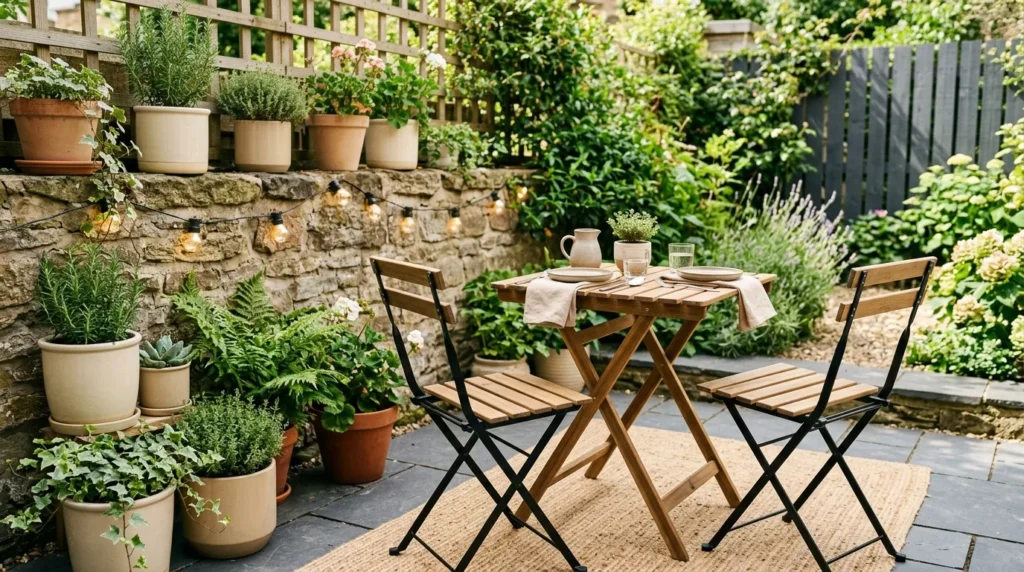
The best folding furniture doesn’t have to look temporary. Modern outdoor collections include attractive folding chairs, tables, loungers, and serving pieces that can blend seamlessly with more permanent furnishings.
How To Style It
Choose a consistent finish so your foldable furniture looks like part of the overall design rather than emergency seating.
Wood folding chairs can create a warm, casual appearance, while black metal options often feel more contemporary.
Keep two or four folding chairs stored nearby so they are easy to bring out when guests arrive. A narrow storage bench can provide a place to keep them while also serving as seating.
A folding dining table can be particularly useful if you want to eat outdoors but don’t need a permanent table.
You can also use nesting tables instead of a single large coffee table. Separate them when you need more surfaces and stack them together when you want additional open space.
The goal is to make the backyard adaptable rather than permanently crowded.
6. Privacy Screens
Quick Benefits
- Creates a cozy enclosed feeling
- Improves visual privacy
- Adds architectural interest
- Can support climbing plants
- Helps define a seating area
Why It Works
A tiny backyard can feel uncomfortable when it is completely exposed to neighboring homes. Privacy screens help solve that problem while also making the space feel more intentionally designed.
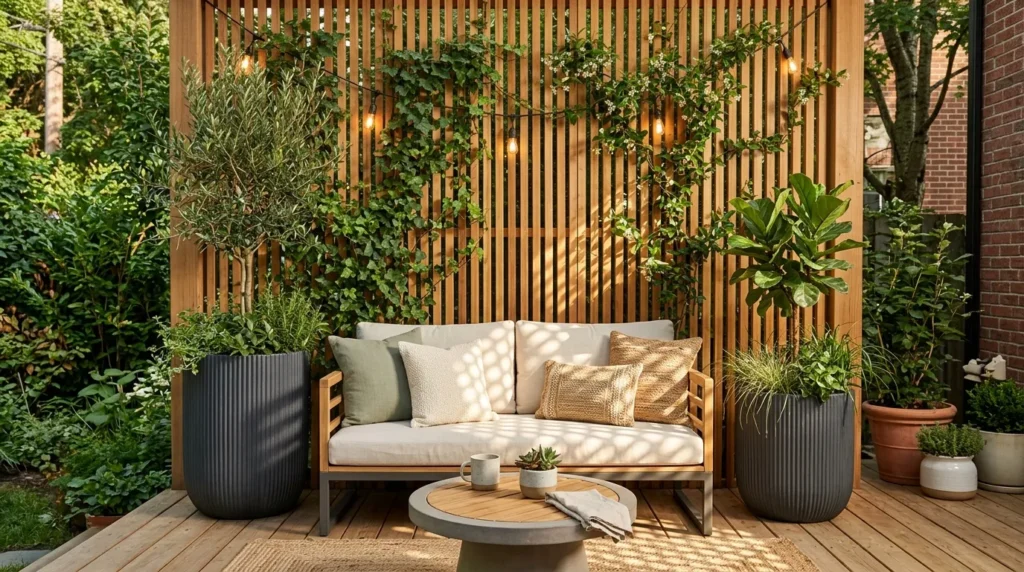
A screen doesn’t have to mean a tall solid wall. Slatted wood panels, decorative metal screens, trellises, bamboo-style fencing, and strategically placed plants can create separation while still allowing light and air to move through.
This is especially helpful for a seating area. Once the seating feels visually enclosed, the backyard can take on the character of a private outdoor room.
Privacy features can also hide unattractive views, utility areas, or neighboring structures.
How To Style It
Choose a privacy solution that complements the existing fence and architecture. A natural wood slat screen can warm up a contemporary yard, while a black metal screen can create a sharper modern look.
Use the screen as a backdrop for a loveseat or bistro set. Add climbing greenery to soften the structure over time.
If you need only partial privacy, don’t automatically cover the entire boundary. A strategically placed screen may be enough to block the specific sightline that bothers you.
Tall planters can also provide temporary or movable privacy. Group several containers together to create a natural screen without permanent construction.
For any permanent structure, check local property rules and applicable homeowner or rental restrictions before installation.
7. String Lighting
Quick Benefits
- Adds warmth after dark
- Makes a small yard feel magical
- Creates visual height
- Works with many decor styles
- Provides affordable atmosphere
Why It Works
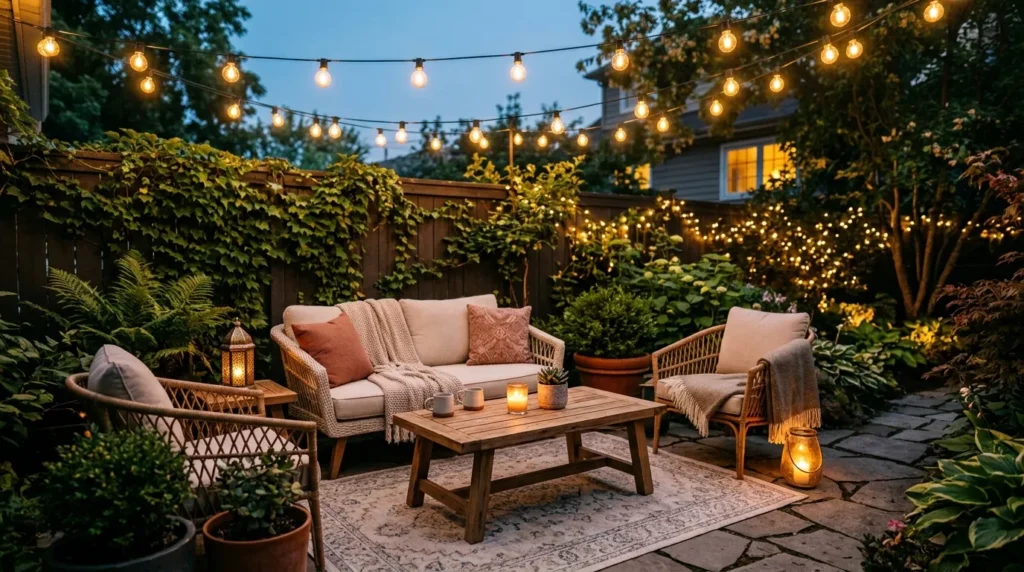
Lighting is one of the easiest ways to change the personality of a small backyard after sunset. String lights add a warm glow overhead, drawing the eye upward and making the space feel more layered.
They’re particularly effective in compact yards because they don’t take up floor space. You can create an illuminated ceiling above a seating area while keeping the ground open.
Warm lighting can also make neutral furniture and greenery look richer in the evening. Instead of relying on one bright outdoor fixture, multiple small points of light create a softer and more welcoming atmosphere.
The installation doesn’t need to be complicated. Even a simple line of lights along a fence or overhead structure can create a noticeable transformation.
How To Style It
For a polished look, hang string lights in clean, evenly spaced lines rather than allowing them to droop randomly.
If you have a pergola, attach them along the beams. For a backyard without overhead structures, suitable posts or a properly installed support system can create the necessary framework.
You can also wrap a small section of lights around a tree trunk or place them along a privacy screen.
Combine string lights with lanterns or low pathway lighting for more depth.
Avoid making the entire yard equally bright. Concentrate illumination around the areas you actually use, such as a dining table or seating nook.
Always follow the manufacturer’s installation and outdoor-use instructions, especially when using electrical lighting.
8. Raised Planters
Quick Benefits
- Adds greenery without large garden beds
- Creates visual height
- Makes gardening easier to organize
- Can grow herbs and flowers
- Defines outdoor zones
Why It Works
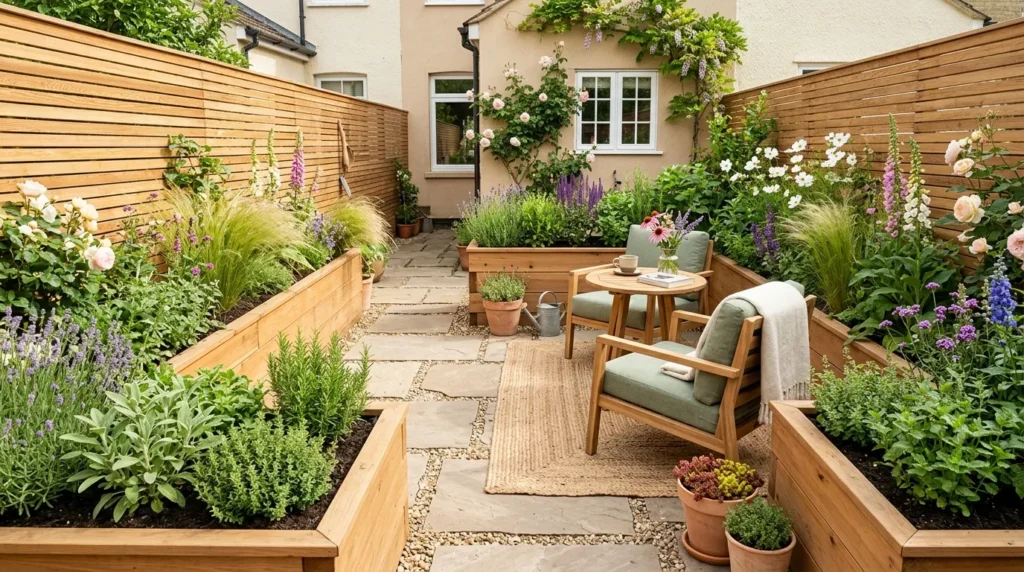
Raised planters are ideal when a small backyard needs greenery but doesn’t have enough room for traditional planting beds. They allow you to bring plants closer to eye level while keeping the surrounding ground open.
They can also create subtle boundaries. A row of planters can separate a seating area from a walkway without requiring a permanent wall.
Another benefit is organization. Instead of scattering small pots everywhere, several larger raised containers can create a more intentional composition.
For gardeners, raised beds may also provide a practical way to grow herbs, vegetables, or seasonal flowers while maintaining a tidy outdoor appearance.
How To Style It
Use planters that coordinate with the primary materials in your backyard. Natural wood works well with cottage and organic styles, while concrete-look or metal planters can complement contemporary spaces.
Choose a mix of heights when possible. Tall planters at the back can provide structure, while shorter containers in front create a layered effect.
For a compact cooking garden, place herbs in raised containers near the kitchen entrance.
For decorative planting, combine grasses, flowering plants, and foliage rather than filling every container with the same species.
Avoid placing too many containers in the center of the yard. Keeping planters along boundaries and corners usually preserves more usable floor space.
9. Multiuse Corners
Quick Benefits
- Makes awkward areas useful
- Maximizes every square foot
- Creates specialized zones
- Adds personality
- Reduces wasted space
Why It Works
Small backyards don’t have the luxury of unused corners. A narrow strip beside the fence, an empty corner near the house, or the area beneath a tree can become valuable when you give it a specific purpose.
The trick is matching the furniture or feature to the dimensions of the corner rather than forcing a large item into it.
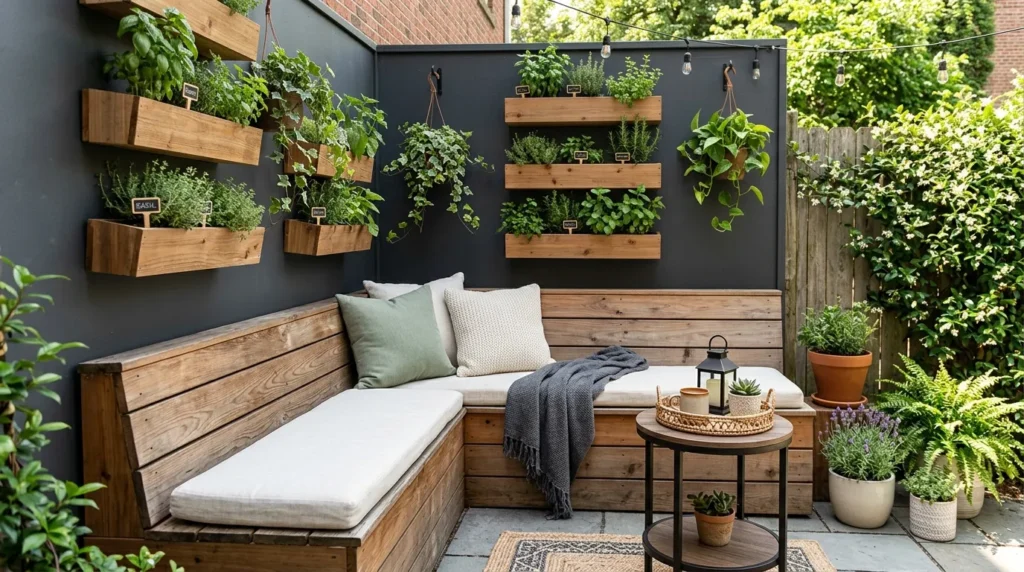
One corner might become a reading nook. Another could hold a vertical herb garden. A small bench can turn an otherwise empty wall into useful seating.
These mini zones also make a tiny backyard feel more interesting because the eye discovers different functions throughout the space.
How To Style It
First, identify the corners that currently feel wasted. Measure them and think about what activity would actually make sense there.
A narrow bench beneath a wall can create a quiet seating nook. Add two cushions and a small side table.
A sunny corner could become an herb garden with tiered planters.
If you have an unattractive utility corner, use a decorative screen to conceal it while creating a backdrop for greenery.
For an especially small backyard, choose multifunctional furniture. A storage bench can hold gardening supplies while providing seating. A small stool can function as both a plant stand and occasional seat.
Keep each corner visually connected through repeated colors and materials so the backyard still feels like one cohesive space.
10. Cozy Fire Pit
Quick Benefits
- Creates a natural focal point
- Makes evenings more inviting
- Encourages conversation
- Adds warmth and ambiance
- Can extend outdoor enjoyment into cooler weather
Why It Works
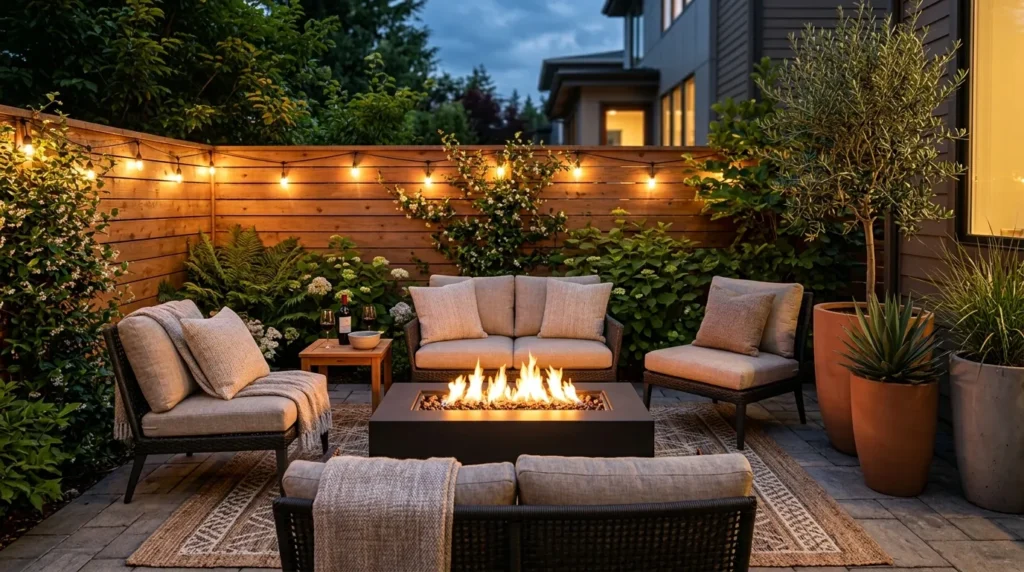
A compact fire feature can give a small backyard a strong sense of purpose. Rather than simply filling the center with furniture, it creates a natural point around which people can gather.
For small spaces, proportion is particularly important. An oversized fire pit can quickly make the backyard feel cramped, while a compact option can provide atmosphere without taking over.
The surrounding seating should leave enough room for comfortable movement. In some layouts, a small tabletop fire feature may be more appropriate than a traditional fire pit.
Always consider local regulations, manufacturer requirements, ventilation, clearances, and the placement of combustible materials before using any outdoor fire feature.
How To Style It
Place the fire feature where it can become the visual center of the seating area without blocking the main walkway.
For a modern backyard, pair it with low-profile lounge chairs in neutral upholstery. Natural wood and black metal can add warmth and contrast.
Keep the surrounding accessories restrained. A few cushions, one outdoor rug, and several planters are generally enough.
If you have a particularly narrow yard, choose a compact fire table or suitable portable option rather than trying to build a large permanent feature.
Consider how the area will look after sunset. Warm lighting around the perimeter can complement the fire while providing practical illumination for movement.
Always use the fire feature according to its specific safety instructions and applicable local requirements.
Frequently Asked Questions
How do you make a small backyard look bigger?
Keep the furniture proportional, maintain clear walking paths, and avoid filling every corner with decorations. Using vertical greenery, consistent colors, appropriately sized rugs, and layered lighting can also create a stronger sense of depth. Another useful trick is to keep the center of the yard relatively open while placing furniture and plants along the edges.
What should I put in a very small backyard?
Start with the function you care about most. A compact loveseat can create a lounge, while a bistro set works for outdoor dining. Add one or two larger planters, practical lighting, and a small outdoor rug. Multifunctional furniture is especially useful because the same piece can serve several purposes without requiring additional floor space.
How can I decorate a small backyard cheaply?
Start with low-cost changes that have a large visual impact. Outdoor cushions, string lights, potted plants, a small rug, and a fresh arrangement of existing furniture can transform the atmosphere without requiring major construction. Shopping your home for baskets, trays, stools, and decorative objects can also help you style the space without buying everything new.
What colors make a small backyard look bigger?
Light and natural colors such as warm white, beige, soft gray, pale green, and natural wood can make a compact outdoor area feel visually calmer and more open. You don’t have to avoid darker colors completely. Using charcoal or black as an accent on furniture, planters, or lighting can create contrast without overwhelming the space.
How do I add privacy to a tiny backyard?
Try a slatted screen, trellis, tall planter, climbing plants, or a combination of these features. You don’t necessarily need to cover the entire boundary. Focus on the specific sightlines that create the most discomfort. This targeted approach can provide privacy while keeping the backyard open and allowing plenty of natural light.
How do I make a small backyard cozy at night?
Use several sources of warm, gentle illumination rather than one harsh light. String lights, lanterns, wall fixtures, and small accent lights can create depth. Add comfortable cushions, an outdoor rug, and greenery to make the space feel inviting. If permitted and safely installed, a compact fire feature can also become a natural evening focal point.
Can a small backyard have both seating and plants?
Absolutely. The key is using the vertical space and perimeter strategically. Place seating in one defined zone and use raised or vertical planters along walls and fences. Choose compact furniture and avoid scattering small pots throughout the center of the yard. This keeps the main floor area open while still allowing plenty of greenery.
Conclusion
Decorating a tiny backyard is really an exercise in making every choice count. You don’t need a huge lawn, oversized furniture, or an elaborate outdoor kitchen to create a beautiful place to spend time.
Start by deciding what you want the backyard to do for you. Maybe it’s a peaceful spot for morning coffee, a little entertaining area for summer evenings, or simply a green escape where you can unwind after a long day. Once you know the primary purpose, choosing furniture and accessories becomes much easier.
Compact seating, vertical gardens, bistro tables, outdoor rugs, foldable furniture, privacy screens, string lights, raised planters, multifunctional corners, and a properly sized fire feature can all make a small outdoor area feel considerably more useful.
In my experience, the best small spaces aren’t the ones packed with clever products. They’re the ones where every piece has a reason to be there. A bench provides seating. A planter adds greenery and privacy. A rug defines the lounge. Lighting creates atmosphere. That combination of beauty and function is what makes a backyard feel finished.
Don’t try to change everything in one weekend. Start with one area that bothers you most, improve it, and then build outward. A few intentional changes can turn even the smallest backyard into an outdoor space you’ll genuinely want to use.