10 Natural Jacuzzi Outdoor Ideas That Blend a Spa Into Nature
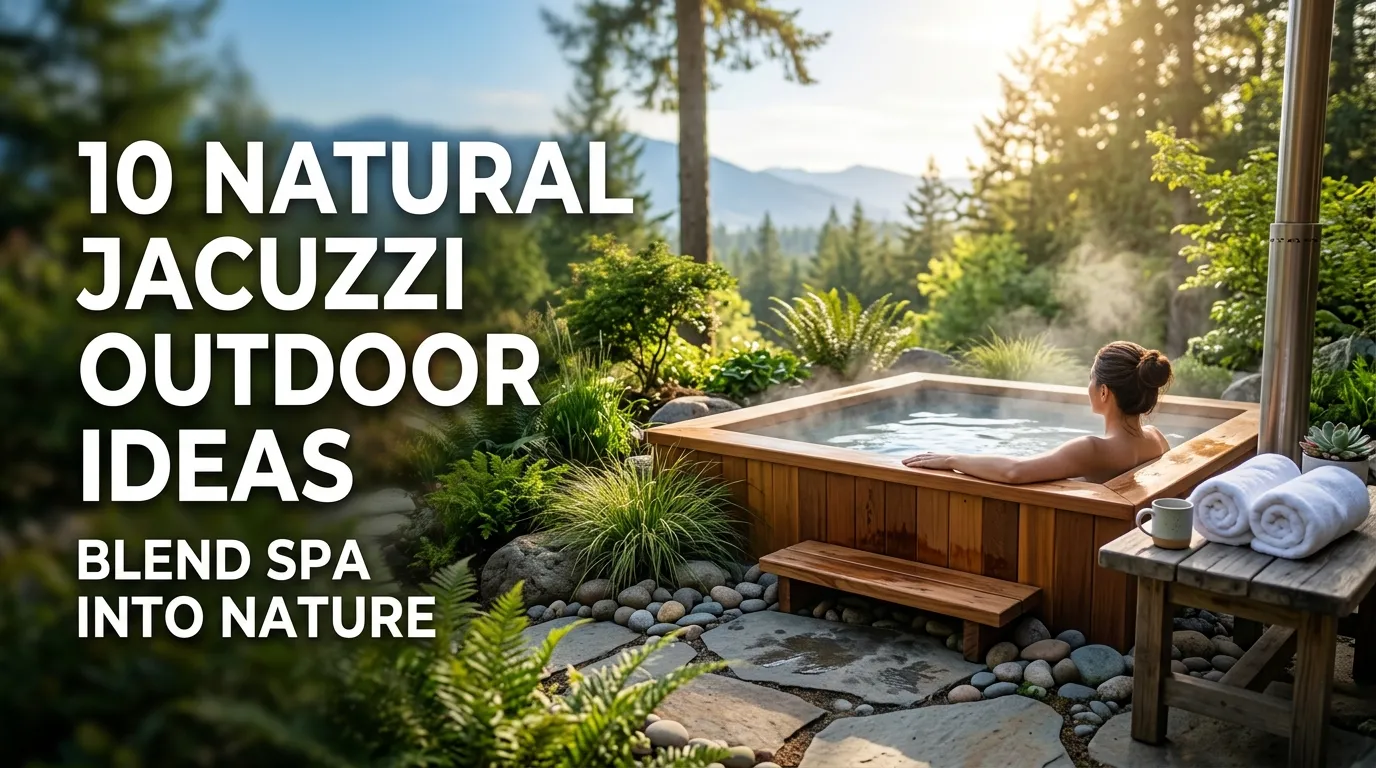
A backyard jacuzzi can feel wonderfully luxurious without looking like a separate structure dropped into the landscape. When natural materials, thoughtful planting, and organic shapes are used together, the spa can become part of the garden rather than competing with it.
That approach is especially appealing if you love the idea of having a private retreat at home but don’t want a backyard filled with hard surfaces and manufactured-looking features. Natural stone, warm wood, gravel, lush greenery, ornamental grasses, and soft outdoor fabrics can transform even a simple jacuzzi into a peaceful destination.
The most beautiful natural spa spaces usually begin with the landscape rather than the jacuzzi itself. Think about what is already growing in the yard, where the sunlight falls, which views are worth preserving, and where you naturally feel relaxed. Then build the spa environment around those qualities.
In my experience, one of the easiest ways to make an outdoor jacuzzi feel connected to nature is to repeat materials already found elsewhere in the garden. If you have stone pathways, bring similar stone around the spa. If your property has mature trees, use their canopy to create shade and privacy. If your landscaping has warm wood elements, repeat that warmth through a privacy screen, bench, or pergola.
You also don’t need an enormous backyard. A small jacuzzi surrounded by carefully selected plants can feel more intimate and inviting than a large, over-designed outdoor space.
These ideas focus on creating a backyard spa that feels organic, comfortable, and visually connected to the landscape. From stone terraces and garden screens to woodland-inspired planting and natural seating, each approach can help turn an ordinary jacuzzi area into a relaxing outdoor escape.
Table of Contents
1. Stone Garden Retreat
Surround the jacuzzi with natural stone and layered planting for a spa that feels rooted in the landscape.
2. Woodland Spa Corner
Use mature trees, shade-loving plants, and warm textures to create a secluded woodland-inspired retreat.
3. Gravel Spa Patio
Create a relaxed foundation with natural gravel, stone edging, and organic landscaping.
4. Garden Privacy Screen
Combine wood, greenery, and natural materials to make the spa feel secluded without closing it in.
5. Tropical Green Oasis
Surround the jacuzzi with lush foliage for a vacation-inspired backyard escape.
6. Rustic Wood Surround
Use natural wood to soften the spa and create a warm connection with the surrounding garden.
7. Natural Stone Steps
Create an organic pathway that guides guests through the garden toward the jacuzzi.
8. Meadow Planting
Use grasses and informal planting to make the spa feel like part of a natural landscape.
9. Covered Garden Spa
Create a sheltered outdoor retreat with wood, greenery, and natural textures.
10. Organic Spa Sanctuary
Bring stone, plants, water, wood, and soft lighting together into one cohesive natural retreat.
1. Stone Garden Retreat
Quick Benefits
- Blends beautifully with landscaping
- Adds natural texture
- Creates a permanent spa foundation
- Works with many home styles
- Feels peaceful and established
Why It Works
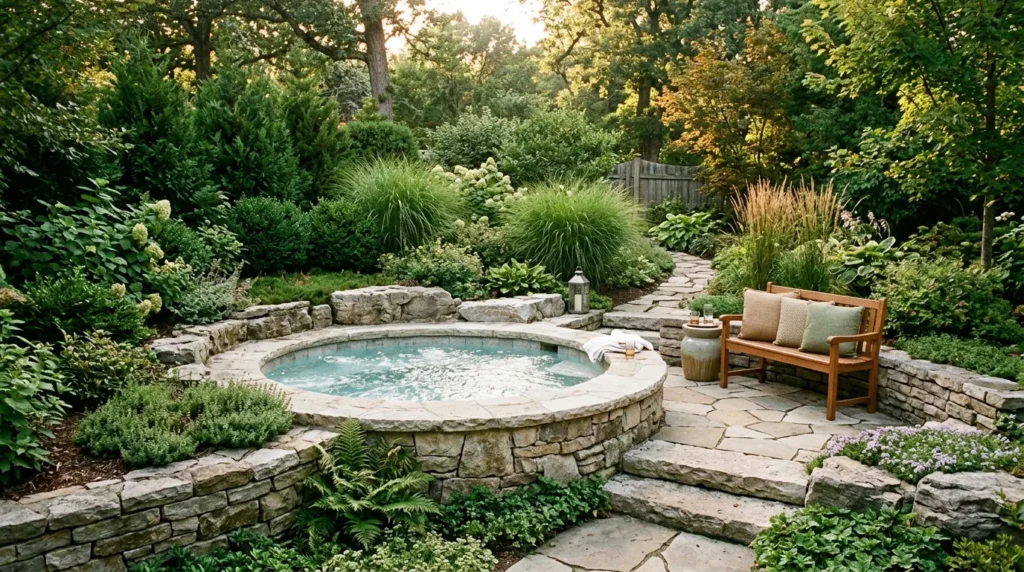
Natural stone is one of the easiest materials to use when you want a jacuzzi to feel connected to the outdoors. Unlike highly polished surfaces, stone has variation in color, texture, and shape that immediately makes the space feel more organic.
A stone surround can visually connect the spa to existing pathways, retaining walls, garden borders, or other hardscape elements. Instead of treating the jacuzzi as the main object, the stone helps integrate it into the larger landscape.
The key is choosing stone that feels appropriate for the property. A pale limestone can create a soft Mediterranean atmosphere, while irregular fieldstone can produce a more rustic garden feeling.
I’ve noticed that natural-looking outdoor spaces often become more relaxing when there is some visual imperfection. Slight variations in stone size and texture can make the space feel less manufactured and more like a natural extension of the garden.
How To Style It
Start with a level, properly prepared base suitable for the jacuzzi, then build the visual surround with natural stone or another appropriate outdoor paving material.
Choose one dominant stone and repeat it around the spa rather than mixing many different varieties. Leave enough space around the jacuzzi for comfortable access and maintenance.
Surround the outer edges with layered greenery. Low groundcover can soften the stone closest to the spa, while taller grasses or shrubs can frame the background.
Add a simple wooden bench or two neutral lounge chairs if space allows. Keep accessories minimal so the stone, plants, and water remain the focus.
For evening use, place low-level landscape lights among the planting rather than directly around every edge of the jacuzzi.
2. Woodland Spa Corner
Quick Benefits
- Creates natural shade
- Provides privacy
- Feels secluded and peaceful
- Uses mature landscaping
- Perfect for quiet relaxation
Why It Works
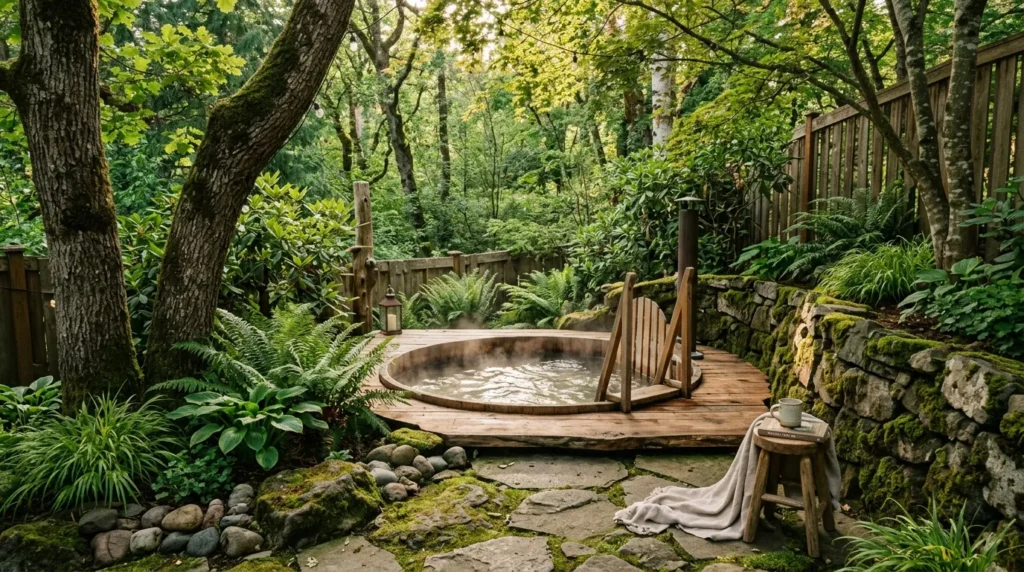
If your backyard already has mature trees, use them as the foundation for your spa retreat rather than clearing the area to create a perfectly manicured patio.
A woodland-inspired jacuzzi can feel remarkably private because tree canopies naturally soften views from neighboring properties. The combination of filtered sunlight, layered greenery, textured bark, and warm wood creates a setting that feels removed from everyday life.
This approach works particularly well for homeowners who prefer gardens that look relaxed rather than formal. Instead of creating sharp borders around the spa, you can allow planting to flow naturally around the space.
The result is less like a traditional backyard amenity and more like a hidden garden retreat.
How To Style It
Position the jacuzzi where existing trees can provide shade and privacy, while making sure the location remains suitable for installation, access, drainage, and maintenance.
Use natural stone or muted outdoor paving around the spa. Avoid overly bright or glossy materials that compete with the trees.
Add woodland-friendly planting around the perimeter, such as shade-tolerant greenery suited to your local conditions. Layer different heights to create depth.
A simple wooden stool, bench, or small side table can provide practical storage for towels without disturbing the natural appearance.
For nighttime atmosphere, use warm, low-level lighting aimed toward tree trunks and planting. The soft illumination can make the garden feel magical without overwhelming the darkness.
3. Gravel Spa Patio
Quick Benefits
- Creates a relaxed garden atmosphere
- Relatively simple visually
- Works in many backyard sizes
- Complements natural stone
- Adds texture without heavy construction
Why It Works
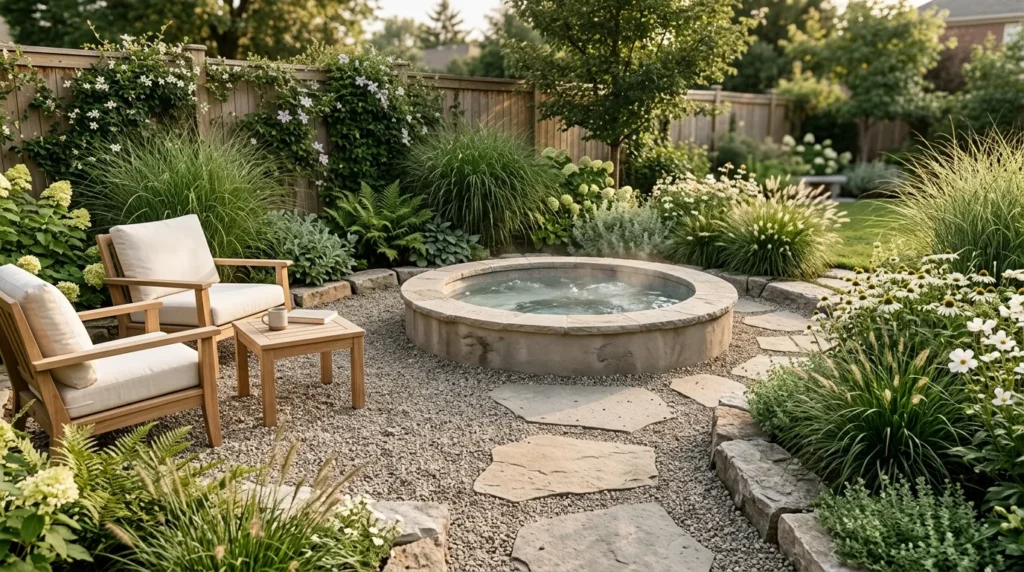
Gravel creates an immediate connection to informal garden design. Its loose texture contrasts beautifully with the smooth surface of the jacuzzi while keeping the overall space casual and natural.
It can also make a small spa area feel less like a conventional patio. Instead of covering the entire backyard in concrete, you can create a defined hard surface for the jacuzzi and allow gravel and planting to transition into the rest of the garden.
The important consideration is that the actual spa foundation must be appropriate for the equipment. Gravel can surround the spa visually, but it should not replace a properly engineered, level support base when one is required.
How To Style It
Use compacted decorative gravel around a properly constructed jacuzzi base. Choose a stone color that works with the surrounding landscape.
Large stepping stones can create a practical walking path through the gravel while adding visual rhythm.
Add natural stone edging where you want to separate the gravel from lawn or planting beds. Keep the edges slightly relaxed rather than creating overly formal geometric borders.
For furniture, choose weather-resistant wood or woven seating with neutral cushions. A large planter filled with grasses can anchor one corner.
Keep the color palette simple: natural stone, warm beige, soft gray, green foliage, and weathered wood.
4. Garden Privacy Screen
Quick Benefits
- Adds seclusion
- Blends privacy with landscaping
- Uses vertical space
- Softens the jacuzzi visually
- Can work in small yards
Why It Works
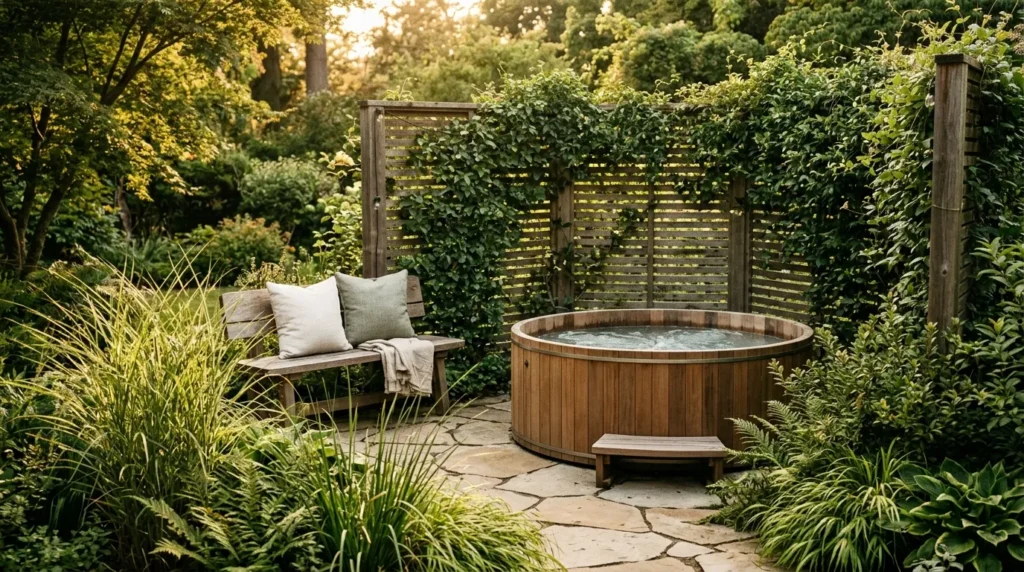
Privacy is essential for creating a relaxing jacuzzi experience, but tall solid fences aren’t always the most attractive solution. A garden privacy screen combines structure with natural elements so the boundary feels softer.
Wood slats, trellis panels, natural stone, and carefully selected plants can all be used to block direct views while allowing sunlight and air to move through.
This approach also gives you an opportunity to create a beautiful backdrop for the spa. Rather than looking at a plain fence while soaking, you see texture, foliage, and layered greenery.
A privacy screen can be particularly useful in suburban neighborhoods where neighboring homes are close together.
How To Style It
Choose a natural wood screen in cedar or another suitable outdoor material, or use a simple trellis that can support appropriate climbing plants.
Keep the structure understated. The plants should eventually become part of the visual composition rather than being treated as decoration added afterward.
Place tall shrubs or ornamental grasses along the bottom to soften the transition.
Avoid overcrowding the spa with plants. Leave enough breathing room around access areas.
If using climbing plants, select varieties appropriate for your climate and structure. Some aggressive vines can become difficult to control, so thoughtful plant selection matters.
Add warm outdoor lighting behind or beside the greenery for a subtle evening glow.
5. Tropical Green Oasis
Quick Benefits
- Creates a vacation atmosphere
- Adds lush visual texture
- Enhances privacy
- Makes the spa feel secluded
- Works especially well in warm climates
Why It Works
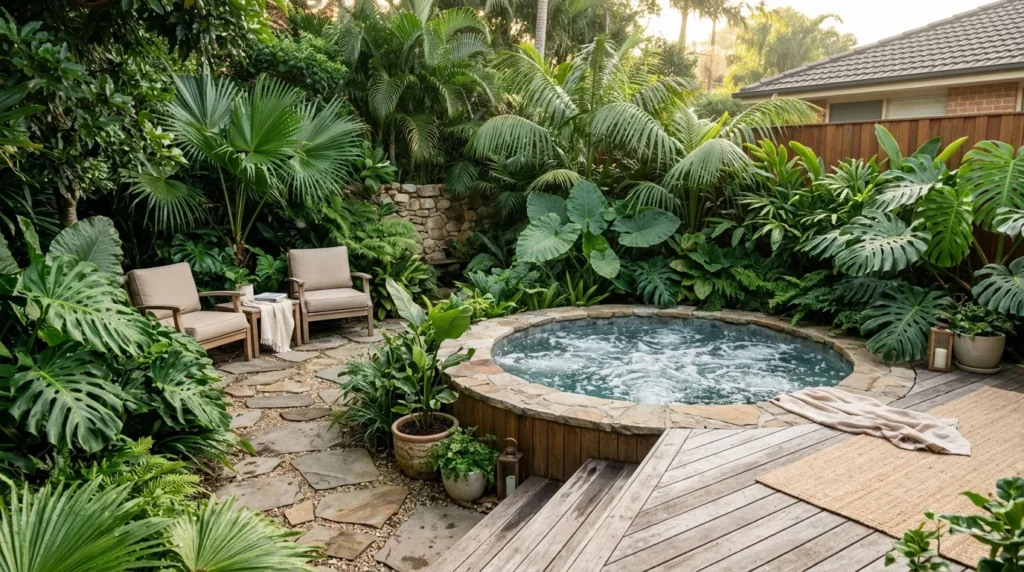
A lush tropical planting scheme can make an ordinary backyard feel like a private resort. Dense foliage creates a sense of enclosure while different leaf shapes and shades of green provide plenty of visual interest without requiring bright decorative colors.
This idea works particularly well around a jacuzzi because the lush planting naturally supports the feeling of escape. The water becomes the center of a small garden oasis.
You don’t necessarily need a tropical climate to capture the feeling. The same design principle can be adapted using hardy plants that create bold foliage and layered greenery appropriate to your region.
The goal is to create abundance while maintaining enough open space for comfortable movement.
How To Style It
Use a layered planting approach. Place taller foliage at the back, medium-height plants around the sides, and low-growing greenery near the spa.
Choose plants based on your climate, sun exposure, soil, and water requirements rather than simply copying a tropical garden from another region.
Natural stone around the jacuzzi works beautifully with lush planting. Add warm wood through a small bench, privacy screen, or pergola.
Use neutral cushions and simple accessories so the greenery becomes the dominant visual feature.
If your climate supports it, palms or large-leaf plants can provide strong architectural shapes. In cooler areas, choose local plants with similarly bold silhouettes.
6. Rustic Wood Surround
Quick Benefits
- Adds warmth
- Softens the spa’s appearance
- Works with natural landscapes
- Creates a cozy retreat
- Easy to coordinate with outdoor furniture
Why It Works
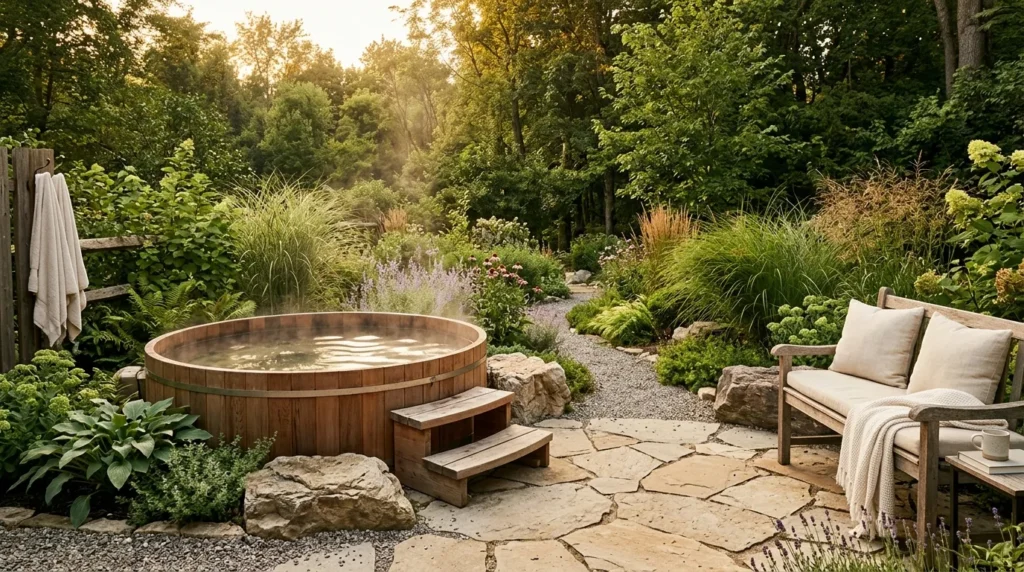
Wood introduces warmth that can make a jacuzzi feel much more inviting. Against a backdrop of greenery, it creates a natural transition between the manufactured spa and the surrounding landscape.
A wood surround can also visually reduce the appearance of a large spa cabinet. Instead of seeing the equipment as a separate box, the eye reads the wood as part of a larger outdoor structure.
This is especially effective for rustic, cottage, farmhouse, cabin, and natural-modern homes.
The key is choosing durable outdoor materials and maintaining adequate access for the spa’s equipment. Beauty should never make routine maintenance difficult.
How To Style It
Use properly rated outdoor wood or another durable wood-look material designed for the environment.
A horizontal slatted surround can emphasize a contemporary natural style, while wider boards create a more rustic appearance.
Pair the wood with irregular stone, gravel, or planted borders rather than glossy concrete.
Add a simple wooden bench nearby with cream or beige cushions. A woven basket can hold towels, while a few stone planters can provide additional texture.
Keep the wood tone natural or lightly finished. Extremely orange or highly glossy finishes can make the space feel less organic.
7. Natural Stone Steps
Quick Benefits
- Creates a beautiful garden entrance
- Connects the spa to the landscape
- Adds natural texture
- Works with slopes
- Creates a sense of discovery
Why It Works
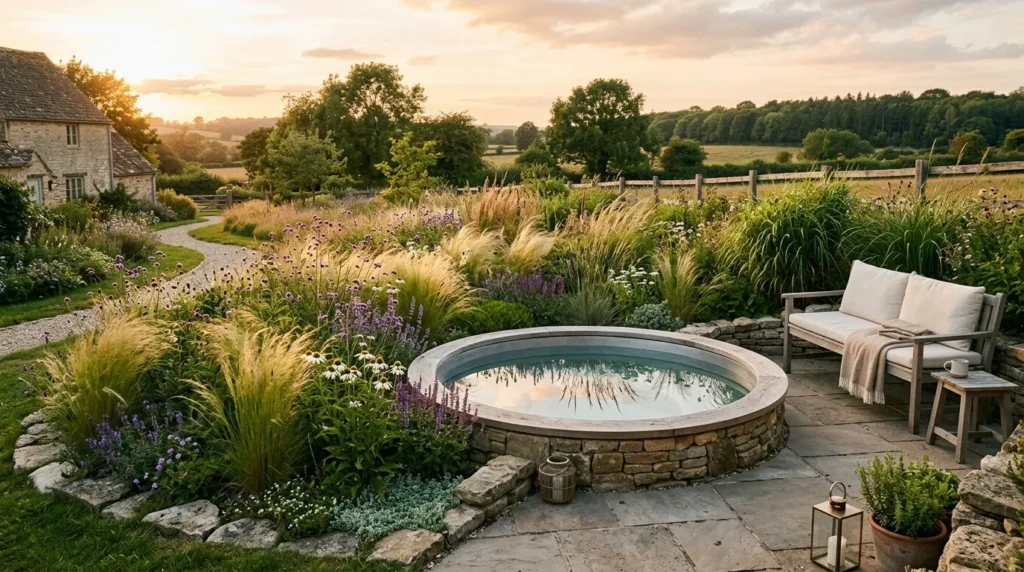
The journey to the jacuzzi can be just as important as the spa itself. A natural stone pathway encourages you to move through the garden before reaching the retreat, creating a subtle sense of separation from the rest of the home.
This works particularly well in larger yards or properties with gentle slopes. Instead of placing the jacuzzi immediately beside the house, you can create a destination deeper into the landscape.
Irregular stone steps feel particularly natural because they echo the shapes and textures found outdoors. The pathway doesn’t need to look perfectly symmetrical.
For safety, however, steps should always be stable, properly installed, and appropriate for the terrain.
How To Style It
Use large, durable natural stone slabs with enough surface area for comfortable footing.
Allow low-growing plants or groundcover to soften the edges where appropriate, but keep the walking surface clear.
Continue the same stone into the jacuzzi surround so the path feels connected to the destination.
Use simple lantern-style or low-level landscape lighting to make the path easier to navigate after dark.
If the path passes through planting beds, let the greenery become slightly informal. A few taller grasses or shrubs can partially frame the walkway and make the jacuzzi feel like a hidden discovery at the end.
8. Meadow Planting
Quick Benefits
- Creates a relaxed landscape
- Adds movement and texture
- Requires less formal styling
- Softens hard surfaces
- Feels connected to nature
Why It Works
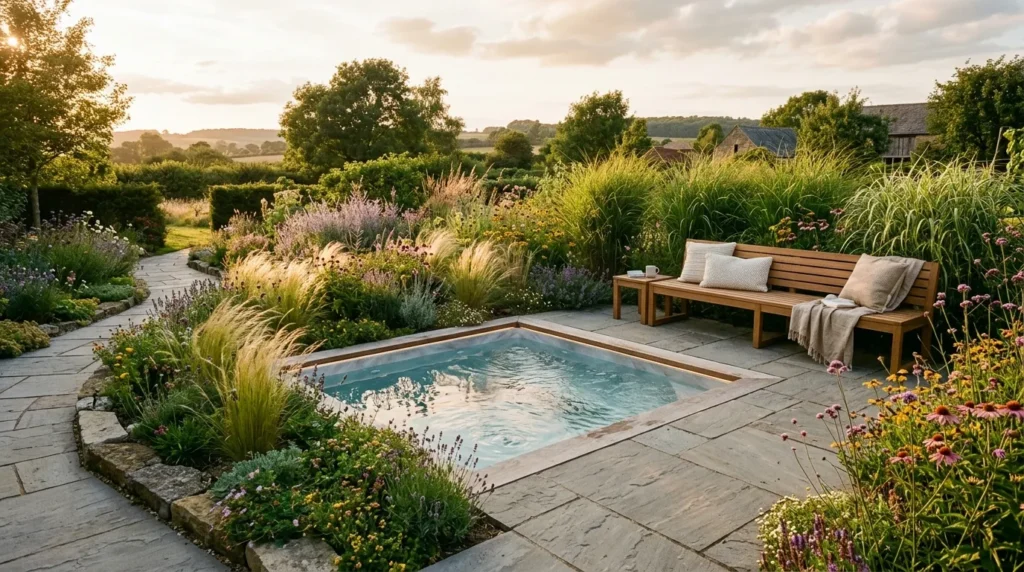
A meadow-inspired planting scheme is ideal if you want the jacuzzi to feel surrounded by nature rather than formal landscaping.
Ornamental grasses move gently in the breeze, while flowering plants add seasonal color and wildlife interest where appropriate. The informal arrangement creates a softer transition between the spa and the wider garden.
This style is particularly appealing because it doesn’t require everything to be perfectly symmetrical. A slightly relaxed planting arrangement can make the space feel established and natural.
Instead of treating the plants as a decorative border around the jacuzzi, think of them as part of a larger landscape that happens to contain a spa.
How To Style It
Use a mix of ornamental grasses, flowering perennials, and other plants suited to your local growing conditions.
Keep taller plants toward the back and lower varieties closer to paths and seating areas. This preserves visibility while still creating a lush feeling.
Use stone or gravel around the immediate spa area so water and foot traffic don’t damage delicate plants.
Choose outdoor furniture in natural wood, woven textures, or muted neutral finishes.
Avoid overly formal hedges or symmetrical planting if you want a true meadow-inspired appearance. Let different heights and textures create the visual interest.
9. Covered Garden Spa
Quick Benefits
- Provides shade and shelter
- Creates a private retreat
- Adds architectural structure
- Works in many seasons
- Makes the spa feel like an outdoor room
Why It Works
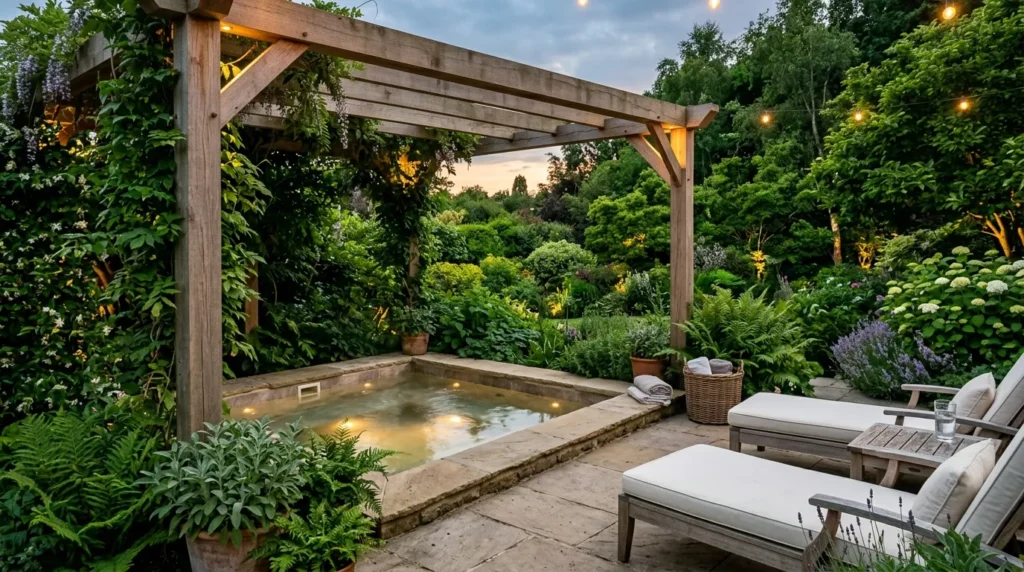
A covered garden spa can create the feeling of a small outdoor sanctuary without completely separating the jacuzzi from nature.
A simple pergola or pavilion provides overhead structure while keeping the sides open to greenery, fresh air, and garden views. This balance is especially appealing because it provides some protection without making the spa feel enclosed.
Natural wood works particularly well because it visually connects the structure to surrounding trees and plants.
The covered area also gives you more control over the atmosphere. Lighting, privacy screens, curtains, and climbing plants can all be incorporated gradually.
How To Style It
Choose a simple wood pergola with clean proportions. Avoid overly ornate structures if the goal is a natural-modern retreat.
Allow selected climbing plants to grow along one or two sides where appropriate. This can soften the structure over time.
Use stone flooring beneath the jacuzzi and a natural wood bench nearby. Neutral outdoor cushions keep the space comfortable without distracting from the landscape.
Add warm lighting along the beams or within nearby planting.
Keep at least one major side open toward the best garden view. That visual connection to nature is what makes the covered space feel like a retreat rather than an enclosed room.
10. Organic Spa Sanctuary
Quick Benefits
- Combines multiple natural elements
- Creates a complete retreat
- Feels cohesive and peaceful
- Works with many landscape styles
- Encourages outdoor relaxation
Why It Works
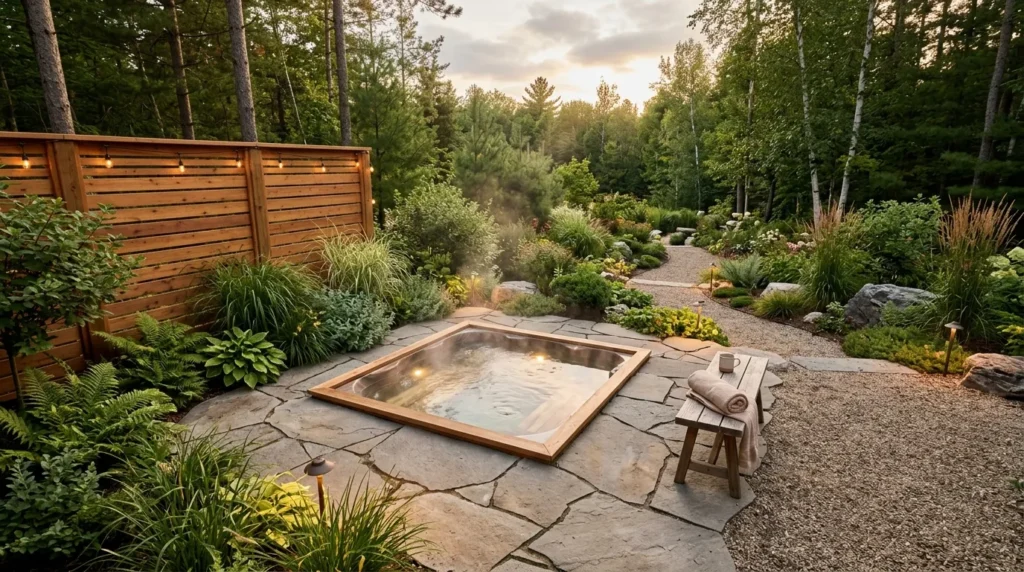
If you want the jacuzzi to feel completely integrated into nature, combine several of the ideas above into one carefully edited environment.
Imagine a natural stone patio surrounded by layered greenery, a warm wood privacy screen, a few sculptural plants, soft outdoor seating, and subtle lighting. Nothing needs to be dramatic individually. Together, the materials create a sense of place.
The most important principle is repetition. Use the same stone in the pathway and spa surround. Repeat the wood tone in the bench and privacy screen. Echo the same plants around different areas of the garden.
This makes the entire space feel intentional while still maintaining a relaxed character.
A natural spa sanctuary should feel visually quiet. You want to notice the movement of leaves, the texture of stone, and the reflection of water rather than a collection of decorations.
How To Style It
Start with a restrained material palette: natural stone, warm wood, gravel, greenery, and neutral outdoor textiles.
Create a defined area around the jacuzzi using stone or another suitable outdoor surface. Then let the surrounding planting transition naturally into the wider garden.
Add a simple bench or lounge chair positioned to take advantage of the best view.
Use large planters sparingly and choose organic shapes or natural finishes.
For evening use, place warm lighting beneath trees, along paths, and near seating rather than surrounding the jacuzzi with bright fixtures.
Finally, keep everyday clutter out of sight. A discreet storage box for towels and accessories can help preserve the peaceful appearance.
FAQ
How can I make my jacuzzi blend into the landscape?
Use materials and colors already present in your garden. Natural stone, wood, gravel, greenery, and neutral outdoor fabrics can visually connect the spa to the surrounding landscape. Instead of placing the jacuzzi in the middle of an isolated paved area, frame it with planting and repeat materials from nearby paths, walls, or garden structures.
What plants work well around an outdoor jacuzzi?
The best plants depend on your climate, sunlight, soil, and water conditions. Ornamental grasses, evergreen shrubs, low groundcovers, and climate-appropriate flowering plants can all work well. Choose plants that tolerate the conditions around the spa and avoid varieties that drop excessive debris directly into the water or create difficult maintenance issues.
How do I create privacy naturally around a jacuzzi?
Layered landscaping is one of the most attractive approaches. Combine evergreen shrubs, ornamental grasses, small trees, trellises, and natural wood screens to block important sightlines. You don’t necessarily need to create a solid wall around the entire spa. Blocking the most exposed views can provide privacy while keeping the retreat connected to the garden.
Can a jacuzzi be installed on gravel?
Gravel can be used as part of the surrounding landscape, but the jacuzzi itself needs a properly prepared, stable, level support surface appropriate for the specific spa. Always follow the manufacturer’s installation requirements and local construction guidance. The surrounding gravel can then provide a natural transition between the spa foundation and garden.
How can I make a small backyard jacuzzi feel natural?
Focus on vertical planting and a limited material palette. A compact stone surround, wood privacy screen, tall grasses, and a few carefully selected plants can create a strong connection to nature without taking up much floor space. Keeping the design uncluttered will also make the small retreat feel more spacious.
How do I make an outdoor jacuzzi feel more relaxing?
Privacy, comfortable seating, natural materials, shade, and gentle lighting can make a major difference. Keep unnecessary accessories out of the area and create a clear visual connection to greenery or a pleasant garden view. The goal is to make the space feel calm and easy to use rather than overly decorated.
Conclusion
A natural jacuzzi retreat is really about creating a relationship between the spa and the landscape around it. Instead of treating the jacuzzi as the entire design, use stone, wood, greenery, gravel, water, and soft lighting to make it feel like it belongs there.
You don’t need to completely redesign your backyard to achieve the look. Start with the surroundings immediately around the jacuzzi. A natural stone platform can provide the foundation, while a few layers of plants can soften the edges. Add a wood privacy screen if you need seclusion, or use existing trees to create shade and enclosure.
For a larger project, a garden pathway, covered pergola, or meadow-style planting can turn the jacuzzi into a true destination. Smaller yards can achieve the same feeling with vertical greenery, natural materials, and thoughtful lighting.
The most important thing is to avoid making every element compete for attention. Nature already provides beautiful textures, movement, and color. Your job is to frame those qualities rather than overpower them.
Choose materials that age gracefully, plants that suit your environment, and furniture that feels comfortable enough to use regularly. With those foundations in place, your jacuzzi can become much more than a place to soak. It can become a quiet backyard sanctuary where the garden, water, and home come together naturally.