

11 Botanical Green Bedroom Decor Ideas to Refresh Your Space
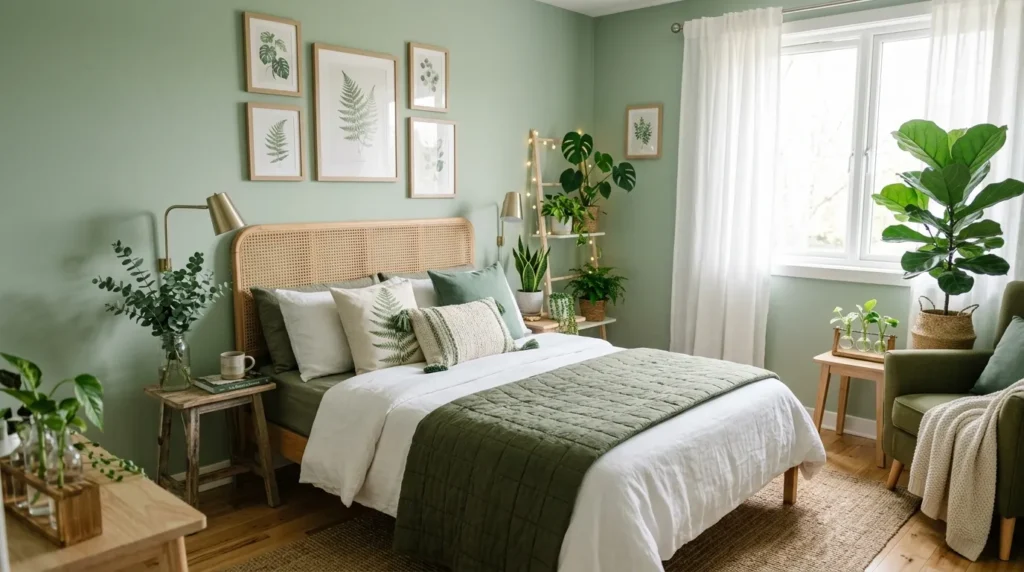
There’s something naturally calming about a bedroom filled with botanical green. Whether you love soft sage, rich olive, eucalyptus, deep forest green, or fresh leafy accents, green can bring a sense of nature into the room while making the space feel warm and inviting.
The best botanical green bedrooms don’t necessarily look like indoor gardens. Instead, they combine greenery with thoughtful color, natural materials, soft textiles, and carefully chosen botanical patterns. A leafy duvet, green accent wall, rattan nightstand, potted plant, or framed botanical print can each create a different effect.
If your bedroom currently feels plain, adding green can be a surprisingly easy way to give it more personality. You don’t have to repaint the entire room or replace your furniture. Sometimes changing the bedding, introducing a few plants, or adding botanical artwork is enough to create a noticeable transformation.
I’ve noticed that green is particularly versatile because it can feel fresh and airy when paired with white and cream, earthy when combined with wood and terracotta, or dramatic when layered with charcoal and deep brown.
The ideas below are designed to help you create a botanical-inspired bedroom that still feels comfortable and practical for everyday living. You’ll find options for minimalist rooms, cozy spaces, modern bedrooms, cottage-inspired interiors, and renters who want temporary ways to introduce color.
Whether you want a subtle touch of greenery or a full nature-inspired retreat, these ideas can help you create a bedroom that feels peaceful, layered, and connected to the outdoors.
Table of Contents
1. Sage Green Walls
Create a soft botanical foundation with a calming muted green backdrop.
2. Leafy Bedding
Bring botanical patterns directly into the sleeping area with nature-inspired textiles.
3. Indoor Plant Collection
Use living greenery to introduce natural color and organic shapes.
4. Botanical Wall Art
Decorate blank walls with leafy prints, vintage illustrations, and plant photography.
5. Green Velvet Headboard
Add richness and sophistication with a luxurious green upholstered focal point.
6. Natural Wood Accents
Balance botanical green with warm wood for an earthy, organic atmosphere.
7. Green Gallery Wall
Combine botanical artwork and green-toned pieces for a personalized display.
8. Olive Green Layers
Create a grounded look by layering olive across bedding and accessories.
9. Hanging Plants
Use vertical greenery to add movement and make walls feel more alive.
10. Botanical Wallpaper
Create a dramatic nature-inspired focal wall with leafy patterns.
11. Green And Cream
Pair botanical green with soft neutrals for a fresh, timeless bedroom.
1. Sage Green Walls
Quick Benefits
- Creates a soothing backdrop
- Works with natural materials
- Makes botanical decor feel cohesive
- Complements light and dark furniture
- Offers a subtle alternative to beige
Why It Works
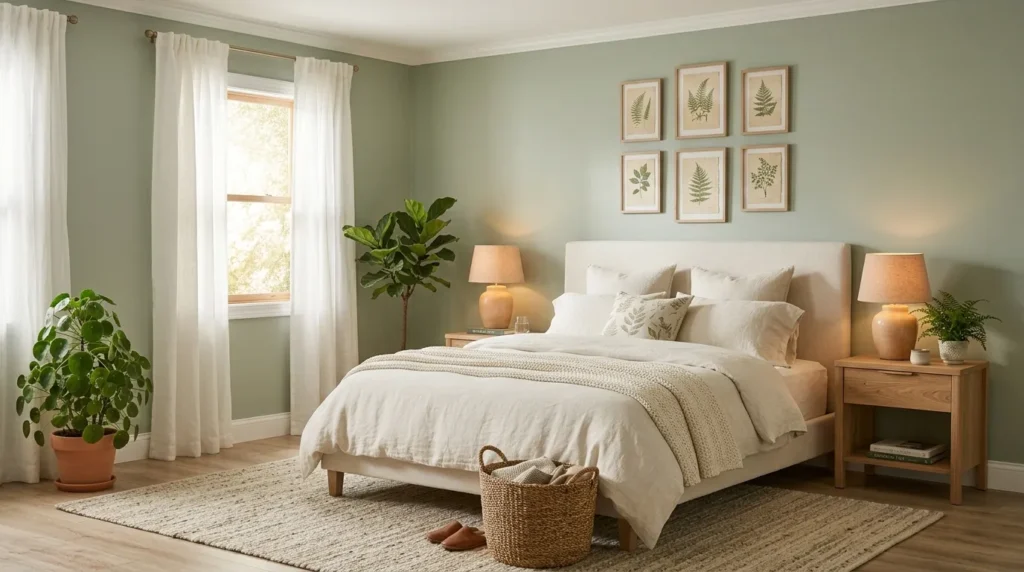
Sage green is one of the easiest botanical shades to introduce into a bedroom because it feels colorful without being overly intense. Its muted quality works particularly well with natural wood, cream bedding, woven textures, and leafy plants.
Unlike brighter greens, sage tends to create a quieter visual backdrop, making it suitable for bedrooms where relaxation is the priority.
It also works across several decorating styles. In a modern bedroom, sage can feel sophisticated and understated. With vintage furniture, it can create a charming cottage atmosphere. Combined with rattan and linen, it becomes distinctly organic.
A soft green wall can also help connect living plants with the rest of the room, making greenery feel like an intentional part of the design rather than a collection of separate accessories.
How To Style It
Paint the main bedroom walls in a soft sage or muted eucalyptus shade and keep the trim relatively simple.
Pair the walls with cream, ivory, or warm white bedding.
Add natural wood nightstands, woven baskets, and a textured neutral rug to reinforce the organic feeling.
For contrast, introduce small amounts of charcoal, aged brass, or dark brown through lighting and hardware.
If you don’t want to paint, try removable wallpaper or introduce the same color through curtains, bedding, and artwork.
2. Leafy Bedding
Quick Benefits
- Adds botanical character instantly
- Easy to change seasonally
- Introduces pattern without remodeling
- Works in neutral bedrooms
- Creates a natural focal point
Why It Works
Bedding occupies a large visual area, so it can completely change the atmosphere of a bedroom.
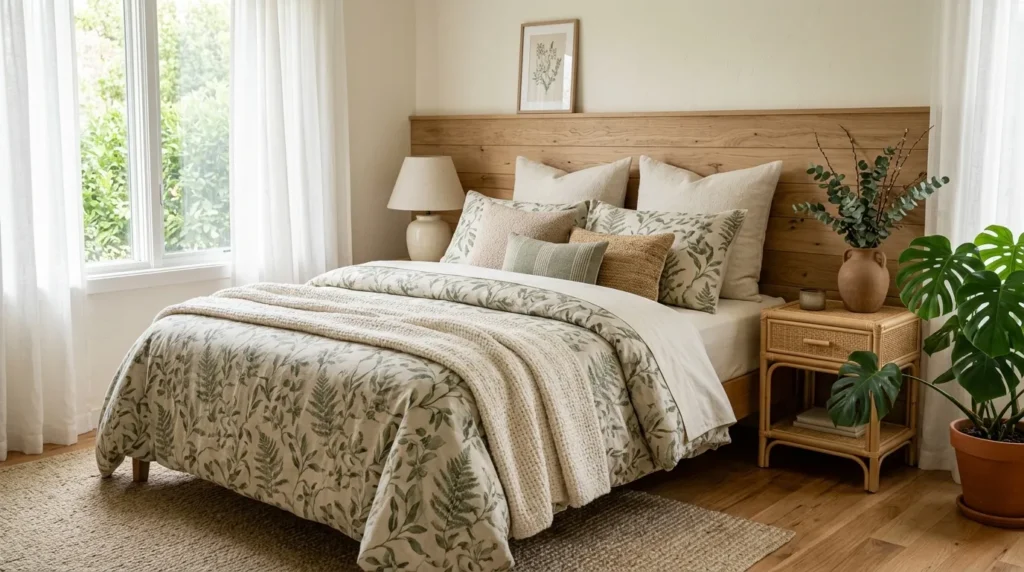
A leafy duvet cover or botanical comforter can introduce green without requiring a permanent commitment. This makes it particularly useful for renters or anyone who likes to refresh their bedroom throughout the year.
The pattern doesn’t need to be highly realistic. Stylized leaves, delicate branches, tropical foliage, eucalyptus, and vintage botanical motifs can all create the desired feeling.
The key is choosing a pattern that works with the room’s scale. A large bedroom can handle a larger botanical print, while a smaller room may benefit from a more delicate design.
How To Style It
Start with botanical bedding in sage, olive, forest green, or muted eucalyptus.
Layer it with solid cream or white sheets to give the pattern some breathing room.
Add two or three coordinating pillows rather than matching every textile.
A woven throw at the foot of the bed can introduce another natural texture.
Keep the walls relatively quiet if the bedding has a bold leafy pattern. Alternatively, use subtle botanical bedding if the walls already contain strong artwork or wallpaper.
3. Indoor Plant Collection
Quick Benefits
- Adds authentic natural color
- Creates organic shapes
- Makes the room feel fresh
- Provides visual variety
- Works with almost any decor style
Why It Works
Nothing creates a botanical atmosphere quite like real plants.
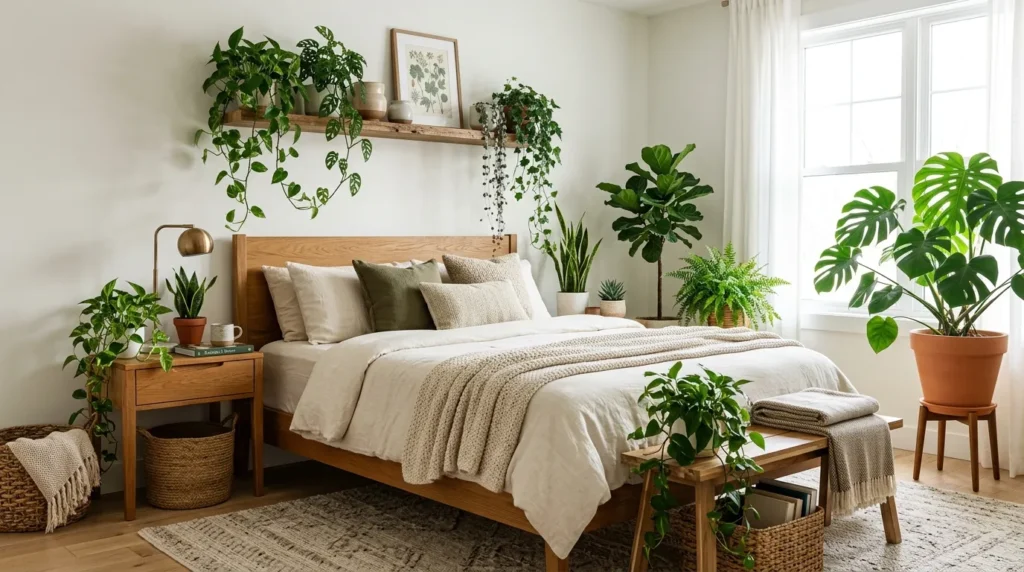
Living greenery adds movement and natural variation that printed patterns can’t completely replicate. Leaves create different silhouettes, shadows, and textures throughout the room.
The important thing is selecting plants according to the light and conditions available in your bedroom. A beautiful plant that doesn’t receive enough light can become difficult to maintain.
Plants can also help fill awkward corners without adding bulky furniture.
How To Style It
Begin with one larger plant near a window or empty corner.
Then add smaller plants to a dresser, nightstand, shelf, or plant stand where appropriate.
Use a mixture of terracotta pots, ceramic planters, and woven baskets instead of identical containers.
Vary the heights to create a natural arrangement.
If you have pets, check plant safety before bringing new varieties into the room.
Keep some empty space around the plants so the room feels intentional rather than overcrowded.
4. Botanical Wall Art
Quick Benefits
- Decorates empty walls
- Adds green without major changes
- Works with many styles
- Creates an attractive focal point
- Can be changed easily
Why It Works
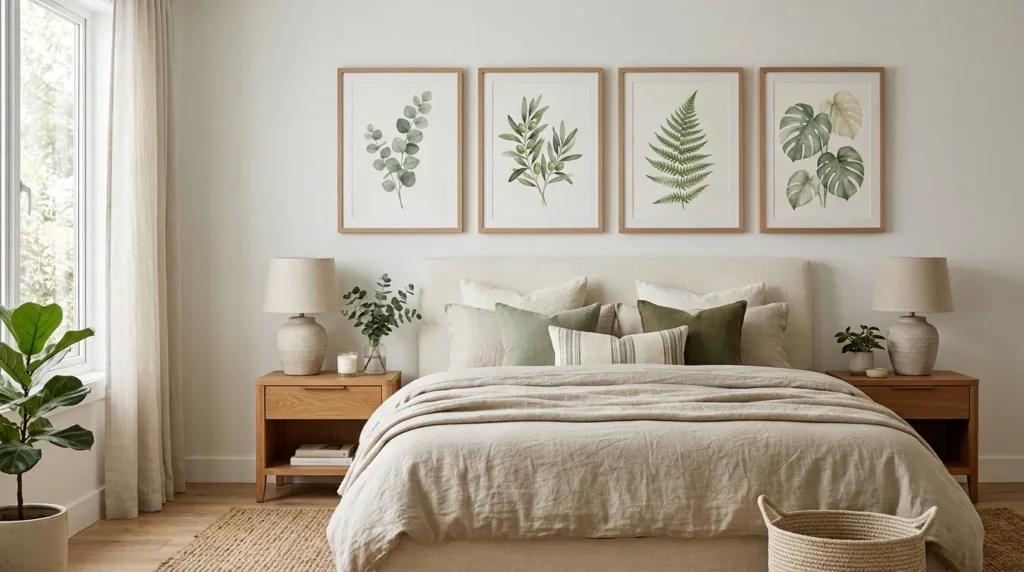
Botanical artwork is an easy way to introduce nature into a bedroom without adding more physical objects.
Framed leaf illustrations, vintage plant studies, pressed botanical designs, watercolor foliage, and botanical photography can all provide different interpretations of the same theme.
Artwork is particularly useful when you want green to appear in a room where repainting isn’t practical.
It also allows you to control exactly how much green you introduce. A single subtle print may be enough for a minimalist room, while a large gallery wall can create a stronger botanical statement.
How To Style It
Choose artwork that repeats one or two green shades already present in your room.
Above the bed, consider one large horizontal botanical print or a pair of coordinated pieces.
For a dresser wall, create a small gallery arrangement using botanical illustrations and natural wood frames.
Pair the artwork with cream bedding and simple furniture if you want the artwork to become the focal point.
Black frames create a more modern effect, while natural wood frames feel softer and more organic.
5. Green Velvet Headboard
Quick Benefits
- Adds rich texture
- Creates a strong focal point
- Makes green feel sophisticated
- Works with neutral bedding
- Adds softness to modern rooms
Why It Works
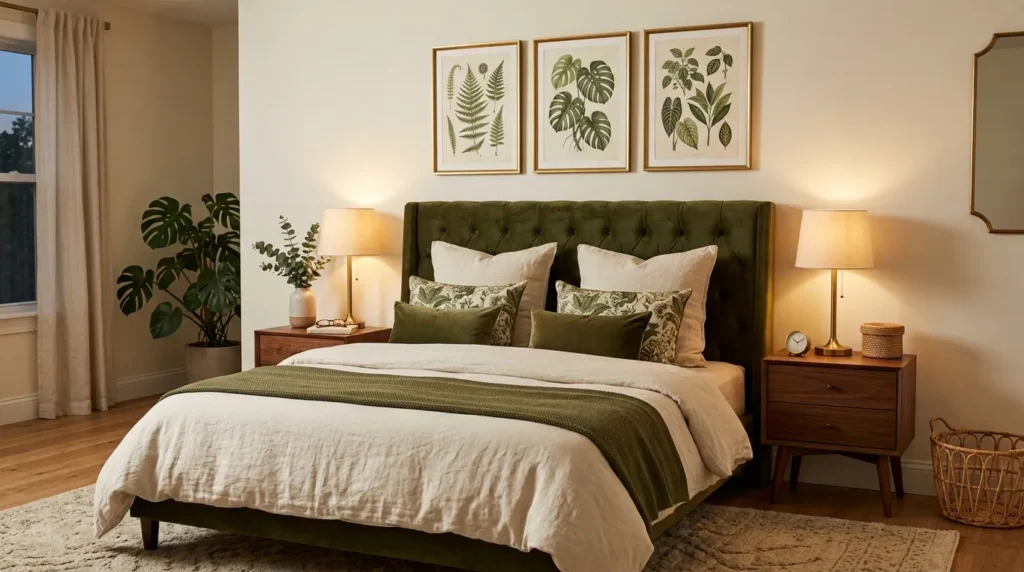
A green upholstered headboard can completely transform a bedroom because it combines color, scale, and texture in one piece.
Velvet is especially effective because its surface changes subtly with the light, creating depth within the green color.
Deep forest, emerald, moss, and olive velvet can make a room feel luxurious, while muted sage velvet creates a softer appearance.
The headboard also provides a natural anchor for bedding and artwork.
How To Style It
Choose a green velvet headboard in a shade that relates to the rest of the room.
Pair deeper greens with cream bedding, warm wood, brass lighting, and neutral rugs.
For sage upholstery, use ivory, beige, light oak, and soft botanical accents.
Keep the bedding relatively simple so the headboard remains the primary focal point.
Add one or two textured cushions to soften the arrangement without creating unnecessary pattern competition.
6. Natural Wood Accents
Quick Benefits
- Adds warmth
- Balances cool green tones
- Reinforces the natural theme
- Works across decorating styles
- Creates visual texture
Why It Works
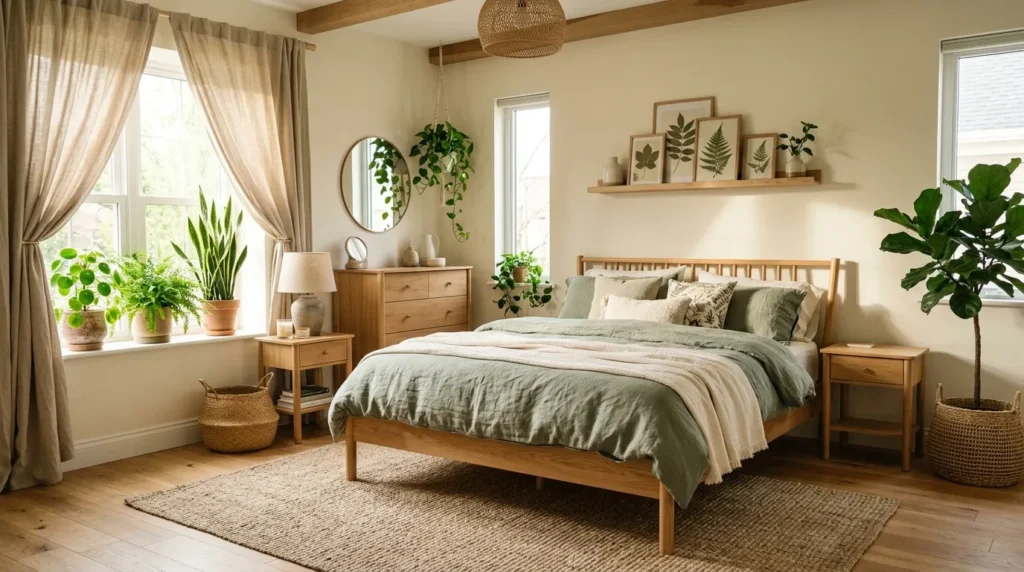
Green and natural wood are a natural pairing because both are associated with the outdoors.
Wood prevents green from feeling too cool or overly decorative. It also introduces texture through visible grain and variations in tone.
Light oak creates an airy Scandinavian-inspired look, while walnut or darker wood can make a green bedroom feel richer and more traditional.
You don’t need wooden furniture everywhere. A few carefully chosen pieces can create enough repetition to make the palette feel intentional.
How To Style It
Pair green bedding or walls with a warm wood bed frame or nightstands.
Add a small wooden bench at the foot of the bed if space allows.
Woven baskets can reinforce the connection between wood and botanical textures.
If your furniture is already dark, introduce lighter wood through smaller accessories or shelving.
Keep the wood tones reasonably compatible rather than combining too many dramatically different finishes.
7. Green Gallery Wall
Quick Benefits
- Creates a personalized focal point
- Adds visual depth
- Works with botanical themes
- Can incorporate multiple colors
- Makes large walls feel finished
Why It Works
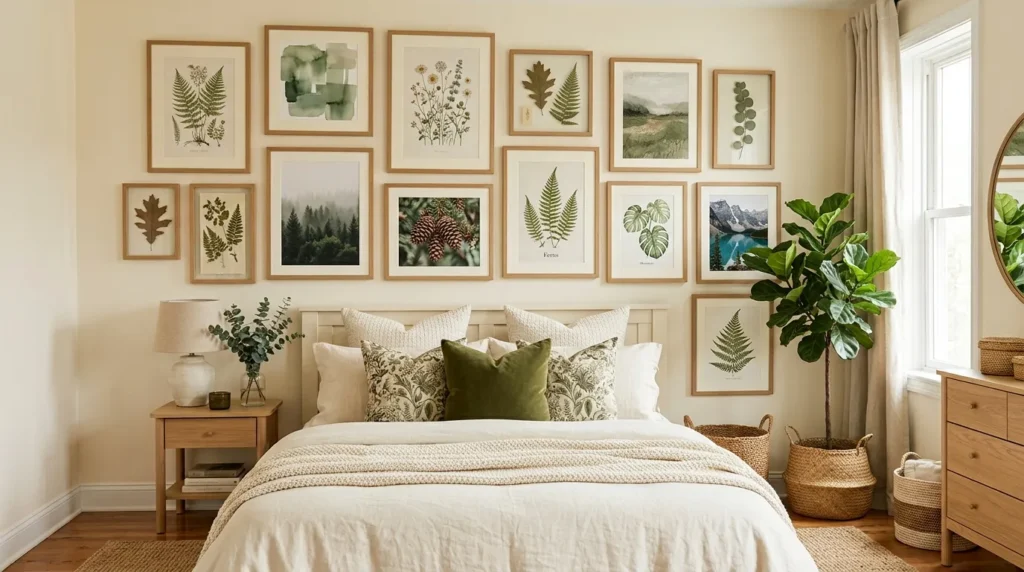
A gallery wall gives you the opportunity to build a botanical story instead of relying on a single image.
You might combine leafy illustrations, pressed flowers, botanical photography, nature sketches, abstract green artwork, and small vintage-style prints.
The result can feel collected and personal rather than overly coordinated.
A green gallery wall is especially effective in bedrooms with plain walls and simple furniture because it provides the visual interest without requiring additional bulky decor.
How To Style It
Choose a common thread before you begin.
You could use green and cream artwork, natural wood frames, black frames, or botanical imagery throughout.
Lay everything out on the floor first.
Try to create a balanced composition with varying artwork sizes.
Leave consistent spacing between pieces for a polished look.
If the bedroom is already pattern-heavy, use simpler botanical artwork and more negative space.
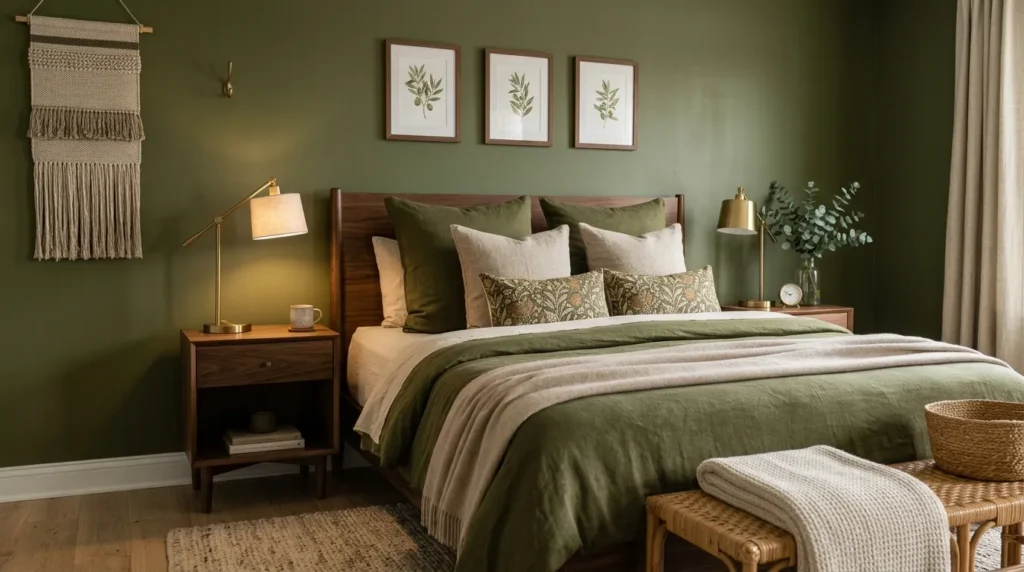
8. Olive Green Layers
Quick Benefits
- Creates an earthy atmosphere
- Adds depth without bright color
- Works beautifully with beige
- Complements wood and brass
- Feels sophisticated
Why It Works
Olive green is a particularly versatile botanical shade because it sits between green, brown, and yellow.
It can feel earthy and sophisticated rather than obviously colorful.
Olive works beautifully with beige, cream, camel, warm white, walnut, brass, terracotta, and natural fibers.
Layering the color instead of using one large block of olive creates a more sophisticated effect. Small variations in shade add dimension while maintaining a cohesive palette.
How To Style It
Use olive through the duvet, cushions, curtains, or an upholstered bench.
Combine it with cream bedding and warm beige walls.
Add walnut or medium-toned wood furniture for depth.
Brushed brass lighting can provide a subtle luxurious contrast.
If you want a lighter room, use olive sparingly and let cream dominate.
For a moodier bedroom, increase the amount of olive and add charcoal or deep brown accents.
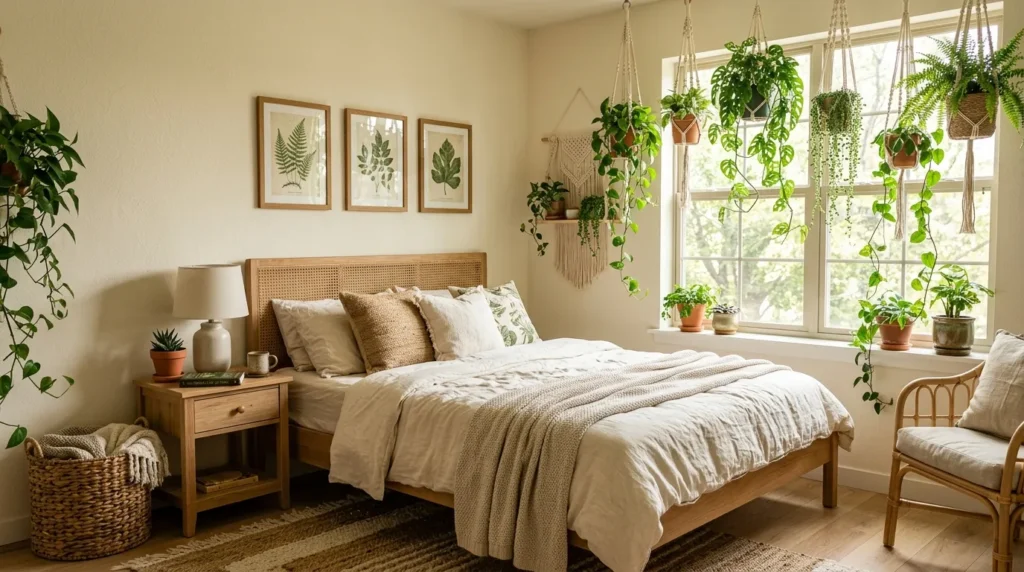
9. Hanging Plants
Quick Benefits
- Uses vertical space
- Adds movement
- Keeps floor space open
- Creates a relaxed atmosphere
- Adds greenery at different heights
Why It Works
Hanging plants are useful when you want more greenery but don’t have much floor space.
They draw the eye upward and introduce trailing shapes that soften hard architectural lines.
A hanging plant near a window can become a beautiful decorative feature, while a small collection can create a more lush atmosphere.
This approach works particularly well in boho, organic modern, Scandinavian, and eclectic bedrooms.
How To Style It
Hang plants from appropriate ceiling hardware or use wall-mounted plant holders where suitable.
Place them where their light requirements can be met.
Use woven, ceramic, or simple neutral planters to coordinate with the room.
Avoid hanging plants directly above areas where falling leaves or water could create problems.
One or two well-positioned plants are often enough in a small bedroom.
Combine them with floor plants and botanical artwork for a layered effect.
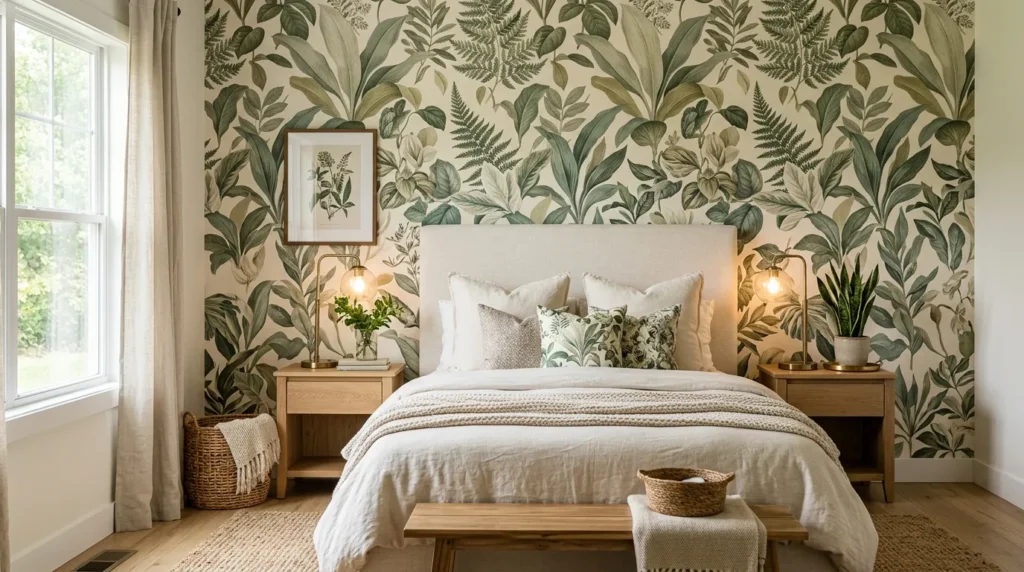
10. Botanical Wallpaper
Quick Benefits
- Creates an instant focal wall
- Introduces pattern and color
- Makes the room feel designed
- Works beautifully behind a bed
- Offers many style directions
Why It Works
Botanical wallpaper can create the most immersive version of a nature-inspired bedroom.
Large leaves can produce a dramatic tropical atmosphere, while delicate branches and small-scale foliage create a softer cottage feeling.
Wallpaper also allows you to combine multiple colors within one design, giving you a ready-made palette for bedding, furniture, and accessories.
Because it occupies a large surface area, however, botanical wallpaper needs balance.
How To Style It
Use botanical wallpaper on the wall behind the bed for a defined focal point.
Choose bedding in one or two colors pulled directly from the wallpaper.
Keep furniture relatively simple so the pattern can stand out.
Natural wood, cream upholstery, and woven textures work especially well.
If you’re decorating a rental, removable wallpaper can offer a temporary alternative where appropriate.
For a subtle effect, choose a low-contrast pattern that is close in tone to the wall color.
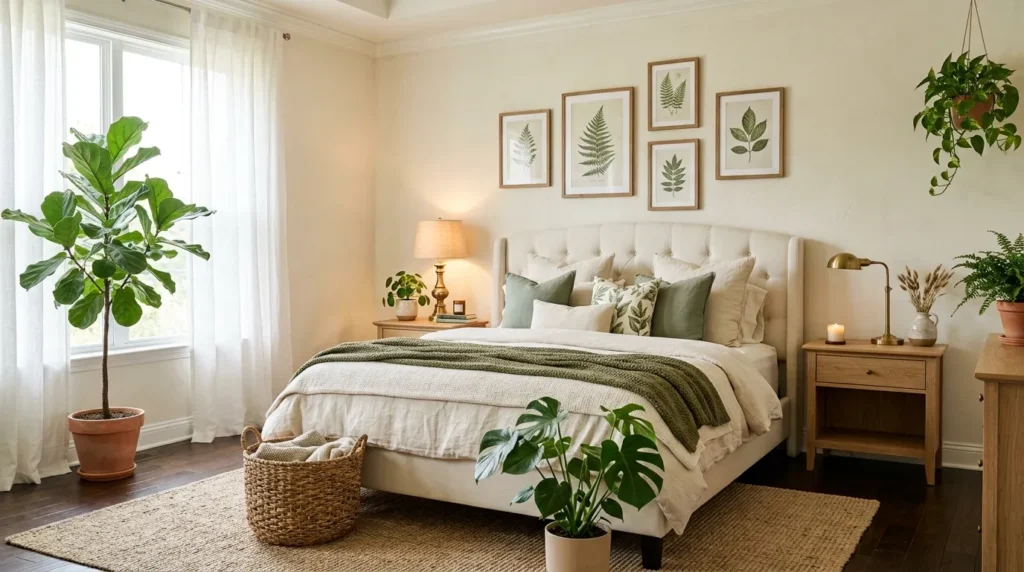
11. Green And Cream
Quick Benefits
- Creates a fresh atmosphere
- Keeps green from feeling overwhelming
- Works in modern and traditional rooms
- Makes natural materials stand out
- Provides an easy-to-use palette
Why It Works
Green and cream are one of the easiest combinations for creating a botanical bedroom that feels both fresh and timeless.
Cream softens green and provides visual breathing room, while green prevents an all-neutral room from feeling bland.
The combination works with almost any decorating direction. Add rattan and linen for an organic look, brass and velvet for something more elegant, or simple wood furniture for a relaxed modern bedroom.
It also makes seasonal updates easy because you can change smaller accessories without rebuilding the entire room.
How To Style It
Use cream as the dominant color through walls, bedding, curtains, or rugs.
Then introduce green through the headboard, pillows, artwork, plants, or accent furniture.
Choose one main green shade and repeat it in several locations.
Natural wood can bridge the two colors.
For a polished finish, add a small amount of black or brass through lamps, hardware, or picture frames.
How To Create A Botanical Green Bedroom
Creating a botanical bedroom doesn’t mean every surface needs leaves.
Start with a simple color story.
Choose one primary green, such as sage, olive, eucalyptus, moss, or forest green. Then select a warm neutral such as cream, ivory, beige, or natural wood to balance it.
Next, decide where you want the strongest green element.
It could be the walls, bedding, headboard, wallpaper, or artwork.
Once that focal point is established, repeat the green in smaller quantities around the room.
For example, if you choose sage walls, use sage cushions or artwork rather than introducing five different greens.
Then add natural materials such as wood, rattan, linen, jute, and ceramic.
This combination creates the botanical feeling without relying entirely on plant motifs.
Best Green Shades For Bedrooms
Not every green creates the same mood.
Sage green feels soft, muted, and calming.
Eucalyptus green creates a fresh, slightly gray-toned appearance.
Olive green feels earthy and sophisticated.
Moss green provides a warmer, organic effect.
Forest green creates depth and drama.
Emerald green feels richer and more luxurious.
Muted mint creates a brighter, fresher appearance.
For a restful bedroom, softer greens are generally easier to live with across large surfaces. Deeper greens can be beautiful as accent colors, especially on upholstery, artwork, or smaller walls.
How To Mix Green With Natural Materials
Green becomes especially convincing as a botanical color when it is paired with organic materials.
Try:
- Green + light oak
- Sage + linen
- Olive + walnut
- Forest green + brass
- Eucalyptus + rattan
- Moss + terracotta
- Green + jute
- Emerald + cream velvet
Natural materials provide texture and prevent the room from feeling too color-focused.
A green bedroom with smooth painted surfaces and synthetic finishes can feel very different from a green bedroom layered with linen, wood grain, woven baskets, ceramic pottery, and natural rugs.
How To Keep A Green Bedroom From Feeling Too Dark
Deep green can create a beautiful cocoon-like bedroom, but too much of it can reduce the sense of brightness.
If you love dark green, balance it with lighter surfaces.
Use cream bedding, light curtains, pale rugs, and warm lamps.
Mirrors can help reflect available light.
Choose furniture finishes carefully. Light oak can brighten a deep green room, while dark walnut creates a moodier effect.
Also consider the direction and amount of natural light your bedroom receives before choosing a very dark wall color.
If the room receives limited daylight, try using green on one accent wall rather than all four walls.
FAQ
What colors go well with botanical green in a bedroom?
Botanical green pairs beautifully with cream, ivory, beige, warm white, natural wood, terracotta, brass, camel, and soft brown. Depending on the shade, you can also add dusty pink, muted blue, charcoal, or black. Warm neutrals are particularly useful because they balance green while keeping the bedroom comfortable and inviting.
Is green a good color for a bedroom?
Yes. Green is extremely versatile and can create many different moods depending on its depth and undertone. Soft sage and eucalyptus can create a calm, airy feeling, while olive and forest green provide a richer atmosphere. Pairing green with appropriate lighting and neutral tones can help create a comfortable bedroom environment.
How do I make my bedroom look botanical?
Start with one or two botanical elements rather than decorating everything with plant patterns. Add real plants, leafy artwork, botanical bedding, natural wood, woven textures, and a nature-inspired color palette. Repeating green and organic materials throughout the room can create a cohesive botanical look without making the space feel overly themed.
What shade of green is best for a relaxing bedroom?
Soft sage, muted eucalyptus, and gentle olive are excellent choices for a relaxing bedroom because they are relatively subdued. If you prefer a darker, cocoon-like atmosphere, moss or forest green can also work. Always test paint samples in the actual room because lighting can significantly change how a green shade appears.
Can I create a botanical bedroom without painting the walls?
Absolutely. Use green bedding, curtains, artwork, plants, cushions, rugs, or an upholstered headboard instead. Botanical wallpaper can also create a strong effect, and removable wallpaper may be an option for some rental spaces. This approach lets you introduce green gradually and change the look more easily.
What colors should I avoid with green bedroom decor?
There aren’t strict colors you must avoid. However, combining too many saturated colors can make a botanical bedroom feel visually busy. If your green is strong, balance it with quieter neutrals. If you want to use another bold color, repeat it thoughtfully rather than introducing several unrelated shades.
How many plants should I put in a botanical bedroom?
There is no ideal number. Start with the amount of greenery your available light, floor space, and maintenance routine can realistically support. One large plant can make a statement, while several smaller plants can create a layered look. Choose plants according to their growing requirements rather than decoration alone.
Conclusion
A botanical green bedroom can be as subtle or dramatic as you want it to be.
You might start with soft sage walls, cream bedding, and a few leafy plants for a light and peaceful retreat. Or you could choose an olive velvet headboard, dark botanical wallpaper, warm wood furniture, and deeper green accents for a richer, more dramatic atmosphere.
The most successful rooms usually don’t rely on green alone. Natural wood, linen, rattan, woven materials, ceramic pieces, and soft neutral colors give the space texture and balance.
If you’re decorating on a budget, start with the easiest changes. New bedding, botanical artwork, plants, or a few green cushions can completely change the feeling of the room without replacing major furniture.
If you’re ready for a bigger transformation, consider a green accent wall, upholstered headboard, or botanical wallpaper.
Most importantly, choose a green that works with your room’s natural light and the atmosphere you want to create. Then repeat that color thoughtfully rather than scattering too many unrelated shades throughout the space.
Start small, layer gradually, and let the natural textures do some of the decorating work. With the right balance of greenery, color, and warmth, your bedroom can become a peaceful retreat that feels fresh, personal, and connected to nature.