
10 Modern Living Room Decor Ideas to Elevate Your Space
A modern living room should feel polished without feeling overly decorated. It is the room where you relax after a long day, welcome friends, watch movies, read, and often spend the most time with family. That means the best modern living room isn’t simply beautiful in photographs—it needs to feel comfortable, functional, and easy to live with.
The challenge is finding the right balance. Too many decorative pieces can make a modern room feel cluttered, while an overly minimal approach can leave it looking cold or unfinished. The secret is creating layers with thoughtful furniture, warm textures, intentional lighting, natural materials, and a color palette that works with the architecture of your home.
In my experience, you don’t need to completely renovate a living room to give it a modern designer-inspired appearance. Sometimes changing the scale of your rug, adding a substantial coffee table, replacing dated lighting, or introducing a few carefully chosen textures can make the entire room feel different.
Whether you’re decorating a new home, refreshing a rental, or simply tired of a living room that doesn’t feel quite finished, these ideas offer practical ways to create a space that feels current while still having personality.
From warm neutral palettes and statement lighting to layered textiles and streamlined furniture, these modern living room decor ideas are designed to help you build a room that looks beautiful in everyday life—not just in a perfectly staged photograph.
Table of Contents
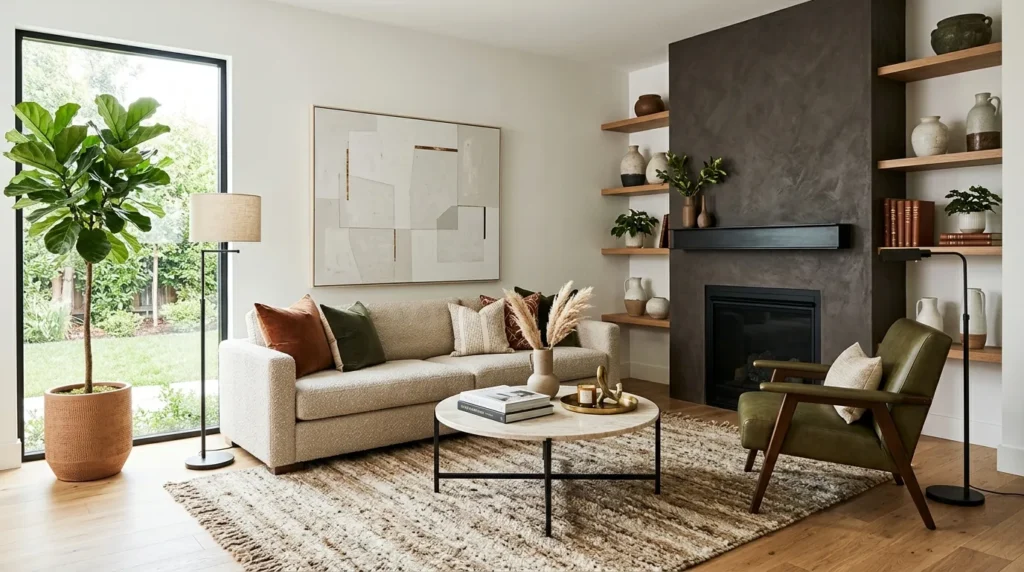
1. Warm Neutral Palette
Use creamy neutrals and natural shades to create a modern room that feels welcoming rather than stark.
2. Sculptural Furniture
Introduce furniture with interesting silhouettes while keeping the overall room visually calm.
3. Statement Lighting
Use a dramatic light fixture to add personality and establish a strong focal point.
4. Layered Textures
Combine fabrics, wood, stone, and woven materials to give a modern room warmth and depth.
5. Oversized Artwork
Use one substantial artwork piece instead of many small decorations for a polished appearance.
6. Natural Wood Accents
Bring warmth into contemporary spaces with wood furniture, shelving, and architectural details.
7. Curved Shapes
Soften straight architectural lines with rounded sofas, chairs, tables, and accessories.
8. Modern Gallery Wall
Create a curated collection of artwork that feels intentional instead of visually busy.
9. Minimalist Styling
Edit accessories carefully so the room feels sophisticated, spacious, and easy to maintain.
10. Layered Lighting
Combine multiple light sources to make the living room comfortable and atmospheric throughout the day.
1. Warm Neutral Palette
Quick Benefits
- Creates a calm and inviting atmosphere
- Makes modern furniture feel softer
- Works with many home styles
- Provides a timeless decorating foundation
- Makes it easier to change accessories seasonally
Why It Works
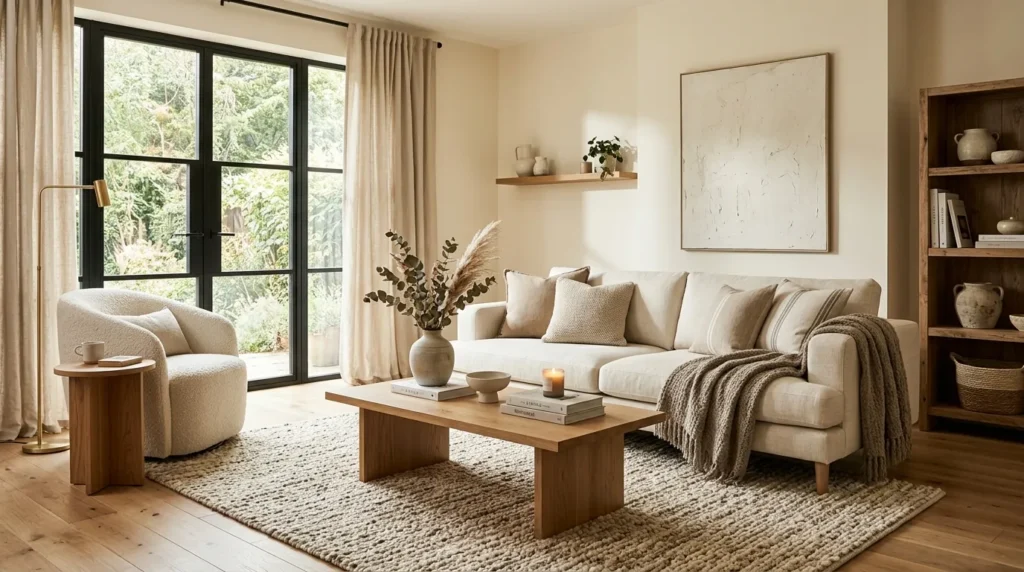
Warm neutrals are one of the easiest ways to create a modern living room that feels sophisticated without becoming cold. Instead of relying on stark white and cool gray, this approach uses shades such as cream, ivory, oatmeal, beige, taupe, warm greige, and soft brown.
The beauty is in the layering. A cream sofa against a slightly darker wall can feel much richer when paired with a textured beige rug and warm wood coffee table.
A common mistake many homeowners make is assuming that a neutral room needs to use one shade throughout. In reality, modern neutral interiors often look more interesting when several closely related tones create subtle contrast.
This palette is particularly useful if you like changing your decor because larger pieces can remain timeless while pillows, throws, artwork, and accessories provide seasonal updates.
How To Style It
Begin with one dominant neutral for the sofa or largest upholstered piece. Then add two or three complementary shades through the rug, curtains, accent chairs, and accessories.
For example, pair a warm ivory sofa with a taupe rug, medium oak coffee table, and beige linen curtains. Add a few darker accents through black picture frames, bronze lighting, or charcoal cushions.
Texture is especially important when working with neutrals. Bouclé, linen, wool, cotton, leather, and woven fibers prevent the room from looking flat.
If your walls are already white, introduce warmth through wood, natural fibers, and creamy textiles rather than immediately repainting. A few carefully chosen changes can be enough to shift the entire atmosphere.
2. Sculptural Furniture
Quick Benefits
- Creates an instant focal point
- Adds personality without clutter
- Gives the room a designer-inspired appearance
- Works well with simple color palettes
- Makes everyday furniture more visually interesting
Why It Works
Modern design doesn’t have to mean straight lines everywhere. One of the easiest ways to make a living room feel contemporary is to choose furniture with an interesting silhouette.
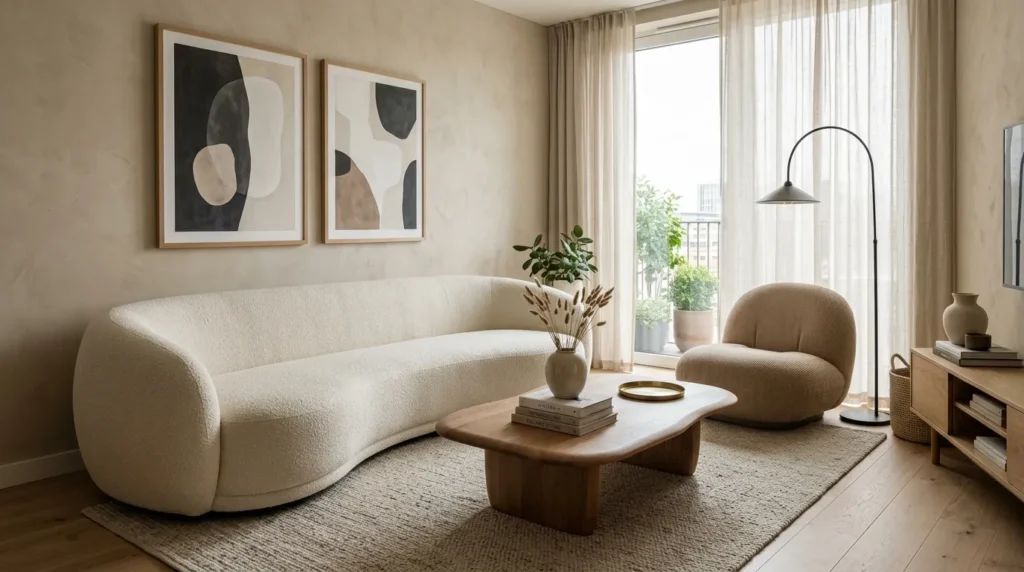
A softly curved sofa, sculptural lounge chair, chunky coffee table, or organically shaped side table can become the visual feature of the room while the rest of the furnishings remain relatively restrained.
The key is choosing one or two distinctive pieces rather than filling the room with unusual shapes. When everything competes for attention, the effect becomes chaotic rather than sophisticated.
I’ve noticed that sculptural furniture works especially well in neutral rooms because the shape itself becomes the decoration. You don’t necessarily need bold colors or elaborate patterns when the furniture has enough character.
How To Style It
Choose one hero piece first. This could be a curved sofa, rounded accent chair, pedestal coffee table, or sculptural console.
Then keep surrounding pieces simple. For example, pair a rounded cream sofa with a rectangular rug and a simple stone coffee table. The contrast between curved and straight shapes creates visual balance.
Avoid pushing every piece of furniture against the walls. When space allows, float the sofa and chairs around a central coffee table to create a more conversational arrangement.
For smaller rooms, a sculptural side table or rounded chair can provide the same effect without consuming too much floor space.
Use upholstery in timeless shades such as cream, camel, taupe, olive, or charcoal if you want the furniture to remain versatile for years.
3. Statement Lighting
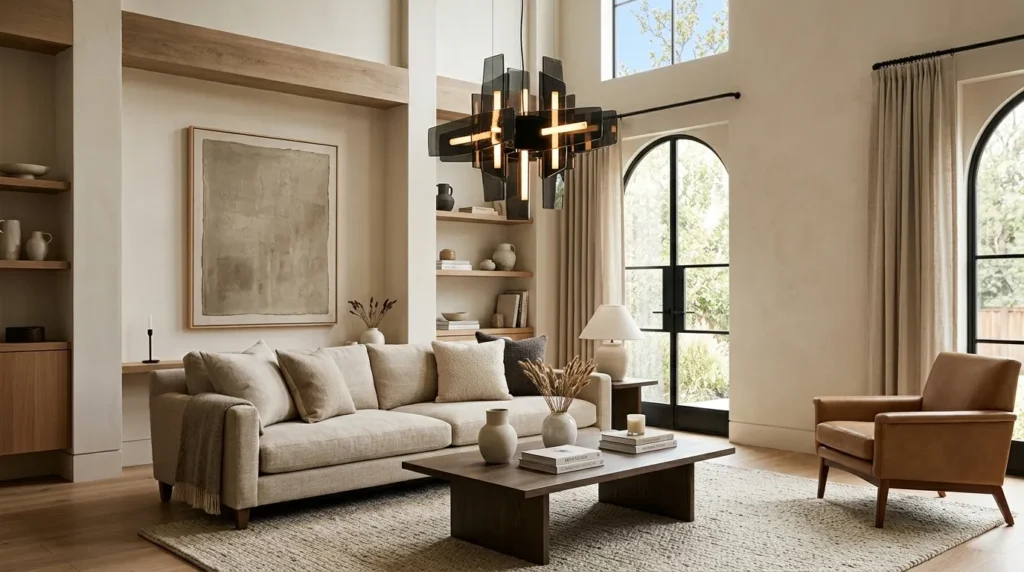
Quick Benefits
- Creates a strong visual focal point
- Adds personality without occupying floor space
- Improves the room’s atmosphere
- Can emphasize ceiling height
- Makes simple furniture feel more intentional
Why It Works
Lighting is often treated as a practical necessity, but in a modern living room it can function almost like artwork.
A large pendant, sculptural chandelier, oversized floor lamp, or distinctive wall light can immediately change the personality of the space. This is especially helpful if your furniture is relatively simple and your walls are neutral.
The best statement lighting isn’t necessarily the largest fixture you can find. Scale matters. A fixture should feel proportional to the room and the furniture beneath it.
A beautiful light can also help establish a visual center. In an open-concept home, positioning a statement fixture over the seating arrangement can visually define the living room without requiring a physical wall.
How To Style It
Start by considering the room’s ceiling height and overall proportions. A dramatic pendant can work beautifully in a room with a tall ceiling, while a flush-mount or semi-flush fixture may be more practical in a lower space.
Look for materials that reinforce your decorating style. Brushed brass adds warmth, black metal creates contrast, while natural fibers can soften a contemporary interior.
Don’t rely on the ceiling fixture alone. Add a floor lamp beside a reading chair and table lamps near seating or shelving.
Choose warm-toned bulbs for living areas so the room feels comfortable rather than overly bright. Dimmers are particularly useful because they allow you to shift from daytime brightness to relaxed evening lighting.
4. Layered Textures
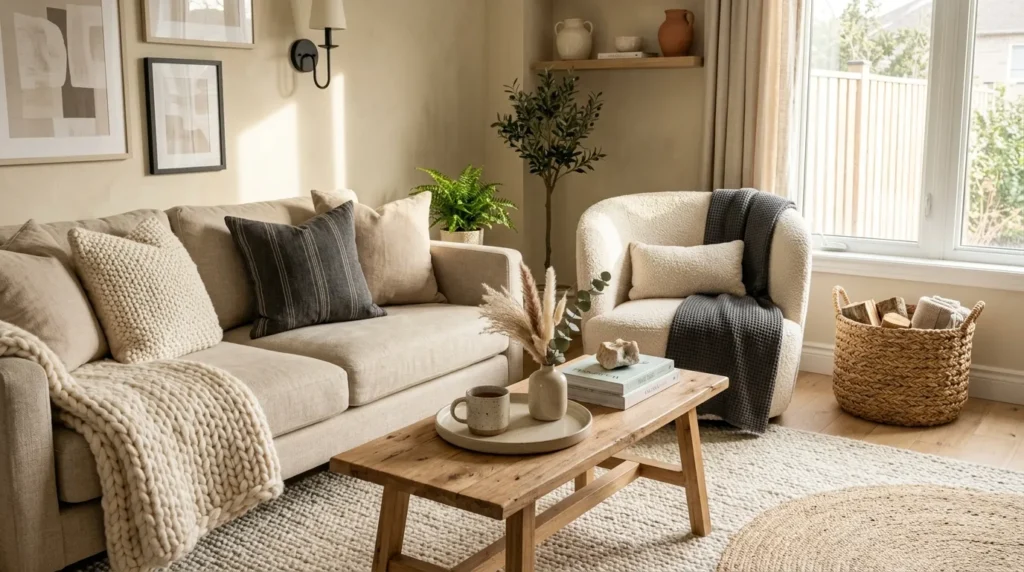
Quick Benefits
- Prevents neutral rooms from feeling flat
- Makes modern spaces more comfortable
- Adds visual depth
- Creates a cozy atmosphere
- Allows simple colors to feel more sophisticated
Why It Works
Modern rooms can sometimes look unfinished when they rely too heavily on smooth surfaces. Texture is what gives a clean room warmth and personality.
Think about how different materials interact: a soft wool rug beneath a streamlined sofa, a rough stone coffee table beside a smooth ceramic vase, or linen curtains framing a wall with a matte finish.
You don’t need dozens of decorative objects to create this effect. A handful of contrasting materials can provide plenty of visual interest.
Layering texture is also one of the best ways to make a neutral living room feel cozy without abandoning a modern aesthetic. Instead of adding lots of color, you can create richness through tactile differences.
How To Style It
Begin with the largest surfaces. A textured area rug can immediately soften a room with hard flooring.
Next, introduce upholstery with visible texture such as linen, boucle, cotton, velvet, or woven fabric. Add a chunky throw to the sofa and a few pillows in fabrics that contrast slightly with the upholstery.
Wood, stone, glass, ceramic, and metal can provide additional variation.
Try to repeat materials at least twice so they feel connected. For example, if you use walnut on the coffee table, repeat a similar wood tone on a side table or shelving.
Keep patterns restrained if you’re aiming for a sophisticated modern look. Texture should provide the interest rather than an excessive number of competing prints.
5. Oversized Artwork
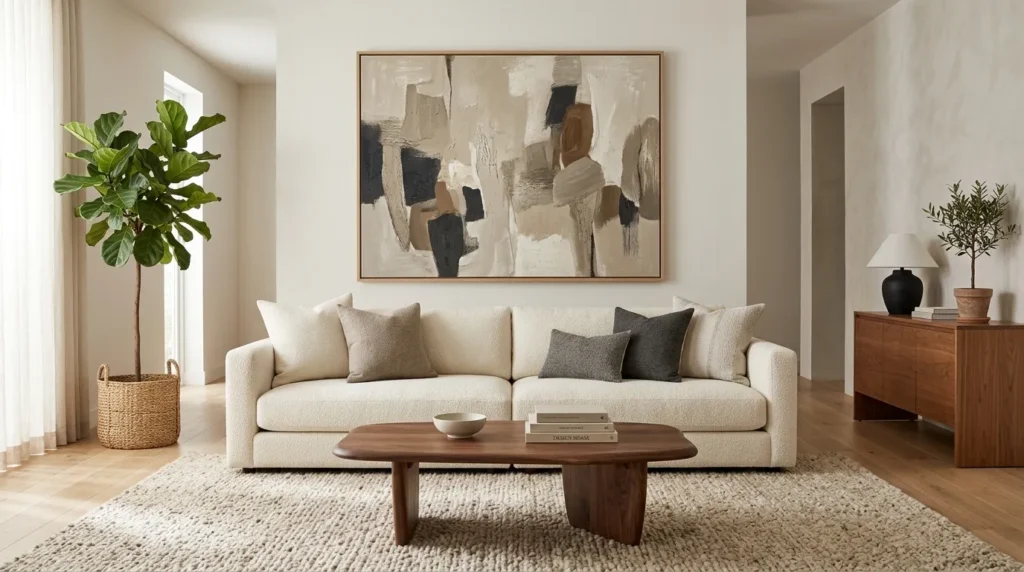
Quick Benefits
- Creates a dramatic focal point
- Makes a blank wall feel intentional
- Reduces the need for many small accessories
- Adds personality to neutral interiors
- Can visually anchor furniture
Why It Works
One large artwork piece can often have more impact than a wall covered with small decorations.
Oversized art works particularly well in modern living rooms because it reinforces the clean, confident quality of the design. Rather than filling every empty space, you’re deliberately allowing one piece to command attention.
This approach is also useful when decorating a rental or a room where you don’t want to make major structural changes. A large framed print or canvas can instantly give a wall more presence.
The artwork doesn’t have to be expensive. What matters most is the scale, color relationship, and way it connects with the rest of the room.
How To Style It
Choose artwork that echoes at least one color already present in the room. A beige and charcoal abstract piece might connect a cream sofa, taupe rug, and black accents.
Scale is critical. Artwork that is too small above a large sofa can make the wall feel awkwardly empty.
As a general visual guideline, the artwork should relate proportionally to the furniture beneath it rather than looking like a small isolated object.
You can lean a large framed piece against a wall for a relaxed editorial look if the layout allows, or hang it above the sofa at a comfortable viewing height.
Avoid placing too many competing decorative objects directly around the artwork. Give the piece enough breathing room to remain the focal point.
6. Natural Wood Accents
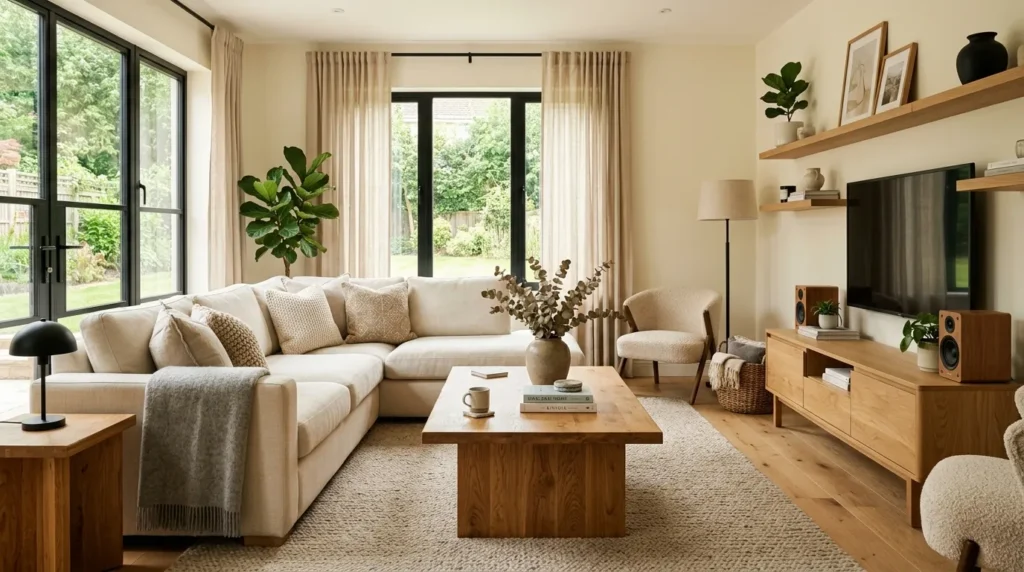
Quick Benefits
- Adds warmth to contemporary spaces
- Creates contrast with white and gray
- Introduces organic character
- Works across many modern styles
- Makes minimalist rooms feel more welcoming
Why It Works
Natural wood is one of the most effective materials for softening a modern living room. Contemporary furniture can sometimes feel visually cool, especially when the palette contains white, gray, black, or polished metal.
Wood introduces variation through its grain, tone, and organic imperfections.
You don’t need a fully wood-paneled room to get the effect. A coffee table, console, shelving unit, media cabinet, or pair of side tables can be enough.
Light oak creates an airy Scandinavian-inspired feeling, walnut offers a richer and more sophisticated appearance, while medium-toned woods can bridge warm and cool palettes.
The important thing is consistency. Randomly mixing too many wood colors can make the room feel disconnected.
How To Style It
Choose one dominant wood tone and repeat it throughout the room.
For example, pair a light oak coffee table with a matching media console and one or two smaller wood accessories. Let other furniture remain neutral so the wood becomes part of the visual foundation.
If your room already has hardwood floors, don’t feel obligated to match every piece exactly. Slight variation can look natural as long as the undertones work together.
Combine wood with soft textiles, stone, ceramic, and greenery for balance.
A large wood console beneath artwork can also create an attractive horizontal line and provide useful storage without making the room feel crowded.
7. Curved Shapes
Quick Benefits
- Softens hard architectural lines
- Makes seating feel more inviting
- Adds contemporary character
- Improves visual flow
- Works beautifully with minimalist palettes
Why It Works
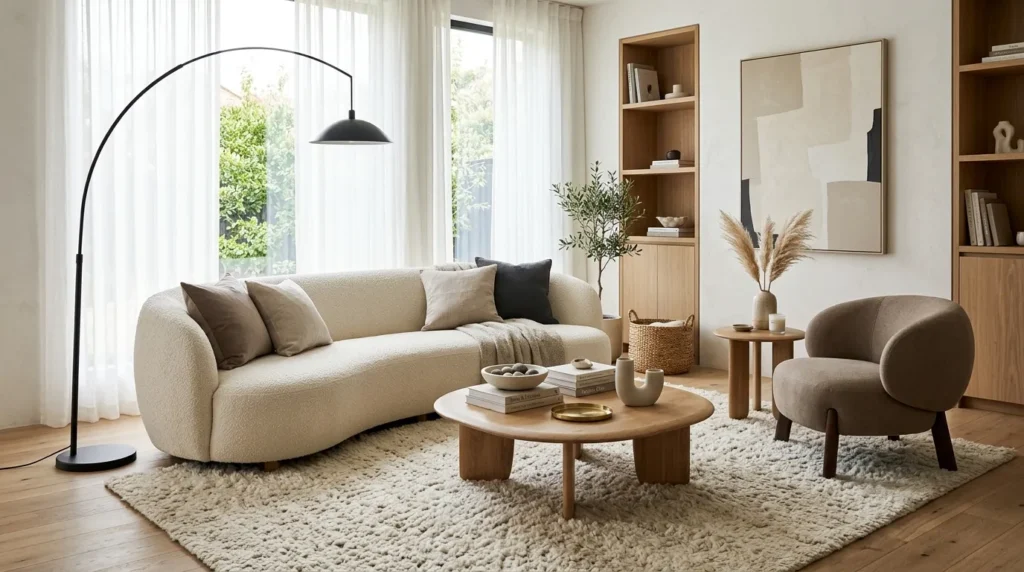
Curves have become increasingly popular in modern interiors because they create a softer alternative to the rigid lines traditionally associated with contemporary design.
A curved sofa can make a large room feel more intimate. A round coffee table can improve movement around the seating area. A curved floor lamp or arched mirror can add subtle architectural interest without overwhelming the space.
The beauty of curved furniture is that it doesn’t require a dramatic color change. The shape itself provides enough visual interest.
This can be especially useful in family living rooms where you want the space to feel sophisticated but still comfortable and approachable.
How To Style It
Start with one curved element rather than redesigning the entire room.
If you have a rectangular sofa, introduce a round coffee table. If your seating is already curved, balance it with a rectangular rug or linear console.
Leave enough circulation space around curved furniture so the shapes remain visible and useful.
Rounded furniture looks particularly beautiful in tactile upholstery such as boucle, linen, or velvet.
For accessories, consider circular trays, rounded ceramic vessels, arched mirrors, or organic-shaped artwork. Repeat curves subtly rather than turning the room into a collection of identical rounded objects.
8. Modern Gallery Wall
Quick Benefits
- Adds personality to neutral rooms
- Makes a large wall feel complete
- Allows you to display meaningful pieces
- Creates an artistic focal point
- Can evolve over time
Why It Works
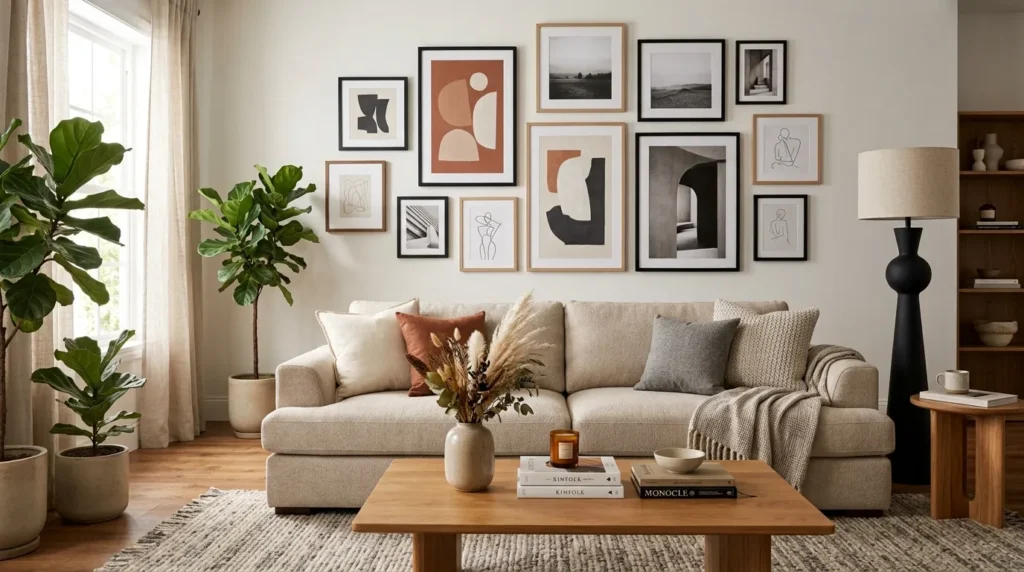
A gallery wall can absolutely work in a modern living room when it is thoughtfully edited.
The secret is creating visual consistency. Your artwork doesn’t need to match perfectly, but the collection should have a relationship through color, framing, subject matter, or overall mood.
A modern gallery wall can include abstract artwork, photography, line drawings, typography, or personal pieces.
This is an opportunity to make the room feel like your own rather than copying a showroom.
A gallery wall also works well in homes where one oversized artwork piece feels too formal. Several medium-sized pieces can create a more collected and personal atmosphere.
How To Style It
Choose the wall first and measure the available space. Lay the artwork on the floor before hanging it so you can experiment with arrangements.
For a contemporary appearance, use frames in a limited palette such as black, natural wood, or warm metallic.
Keep the spacing relatively consistent. You can create a structured grid for a cleaner look or use an organic arrangement for a more relaxed feel.
If the room already has many colors, keep the artwork palette restrained. Conversely, a mostly neutral living room can handle more expressive artwork.
Leave enough breathing room around the entire composition so it reads as one intentional display rather than scattered pieces.
9. Minimalist Styling
Quick Benefits
- Creates a calm atmosphere
- Makes rooms feel more spacious
- Reduces visual clutter
- Highlights architectural features
- Makes cleaning and maintenance easier
Why It Works
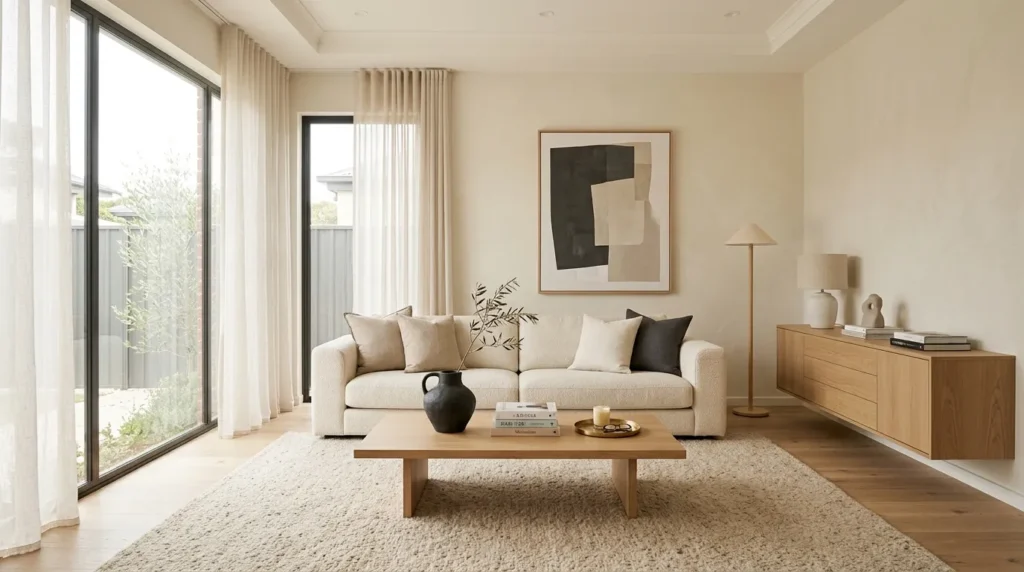
Minimalism is not about owning as little as possible. In a living room, it is more about making deliberate choices.
Every item should have a reason to be there. A beautiful vase, meaningful artwork, useful tray, sculptural lamp, or stack of favorite books can add personality without creating clutter.
This approach is particularly effective in smaller living rooms because excessive accessories can make the space feel crowded quickly.
I’ve noticed that rooms often look more expensive when there is enough empty space around the things that matter. Instead of decorating every shelf and table, choose a few pieces and give them room to breathe.
How To Style It
Start by clearing the room and returning only the essentials. Then evaluate each decorative item based on whether it is useful, meaningful, or genuinely contributes to the design.
Use trays to group small objects together. This makes coffee tables and consoles look organized rather than scattered.
Keep shelves partially empty. A combination of books, ceramics, artwork, and greenery is usually more attractive than filling every available inch.
Choose storage furniture that can hide everyday clutter. Closed cabinets, baskets, ottomans, and streamlined media consoles can keep the room looking calm even when the space is actively used.
Remember that minimalism still needs comfort. Don’t remove every soft pillow, throw, or personal object simply for the sake of a sparse appearance.
10. Layered Lighting
Quick Benefits
- Creates a warmer atmosphere
- Makes the room more functional
- Adds depth after dark
- Supports different activities
- Highlights decor and architectural features
Why It Works
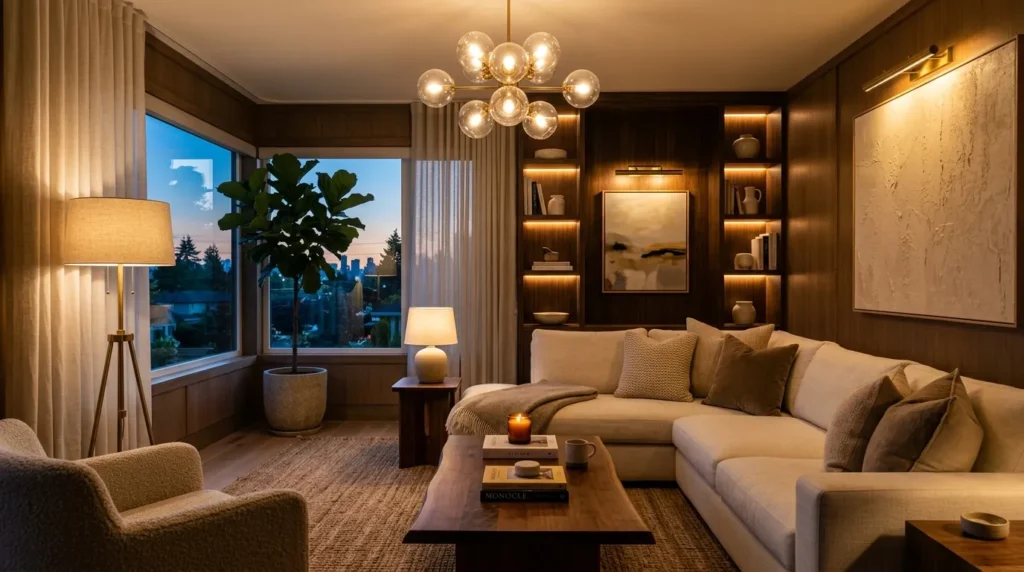
A modern living room needs more than one source of light. Layered lighting allows you to create different moods for different moments.
During the day, natural light may do most of the work. In the evening, however, relying on one ceiling fixture can make the room feel flat and overly bright.
Instead, combine ambient, task, and accent lighting. A ceiling fixture provides general illumination, floor lamps support reading or conversation, and table or accent lamps create softer pools of light.
This approach also makes decorative elements more noticeable. Artwork, shelving, plants, and architectural details can all look different when illuminated thoughtfully.
The result is a living room that feels comfortable rather than simply well-lit.
How To Style It
Begin with the primary ceiling fixture, then add at least two additional lighting layers.
Place a floor lamp beside a reading chair or sofa. Add a table lamp to a console or side table. If you have shelves, consider subtle integrated lighting.
Use warm bulbs appropriate for residential living spaces and choose dimmable fixtures whenever possible.
Avoid positioning every light at the same height. A combination of overhead, eye-level, and low-level lighting creates much more visual depth.
At night, turn off unnecessary bright overhead lighting and let smaller lamps provide most of the illumination. This simple habit can make even an ordinary living room feel considerably more relaxing.
How To Choose A Modern Living Room Color Palette
Before buying new furniture, determine which colors already exist in the room.
Look at the flooring, walls, cabinetry, fireplace, architectural trim, and large furniture pieces. These permanent or expensive elements should influence your palette.
A modern room doesn’t have to be white, gray, or black. Warm beige, muted sage, dusty blue, terracotta, caramel, soft olive, and chocolate brown can all work beautifully in contemporary spaces.
One useful strategy is the 60-30-10 approach: use a dominant color across the largest surfaces, a secondary color through furniture and textiles, and a smaller accent color through artwork and accessories.
The proportions don’t have to be mathematically exact. The purpose is simply to prevent every color from competing equally for attention.
If you’re unsure, start with a neutral foundation and introduce color gradually through removable pieces such as pillows, throws, artwork, and decorative objects.
How To Arrange Modern Living Room Furniture
Furniture arrangement matters just as much as furniture selection.
Start with the room’s focal point. This might be a fireplace, television, large window, artwork, or architectural feature.
Then position the largest seating piece in relation to that focal point. Add chairs or a loveseat to create conversation rather than simply lining everything against the walls.
A coffee table should be accessible from the main seating positions without blocking circulation.
Leave enough space for people to walk naturally through the room. A beautiful arrangement becomes frustrating if everyone has to squeeze between furniture.
In larger open-concept rooms, use a rug to visually define the living area. The rug should be large enough to connect the major furniture pieces rather than looking like a small island underneath the coffee table.
For smaller spaces, consider furniture with exposed legs, compact silhouettes, nesting tables, or pieces that serve multiple purposes.
Modern Living Room Decor Mistakes To Avoid
Even beautiful decorating ideas can become less effective when they’re taken too far.
One common mistake is choosing furniture that is too small for the room. Several tiny pieces can create more visual clutter than one substantial sofa and a properly scaled coffee table.
Another issue is matching everything too closely. A complete furniture set can make the room feel predictable. Mixing complementary materials and silhouettes usually creates more personality.
Don’t underestimate the importance of curtains. Hanging them too low or using panels that are too short can make a room feel visually compressed. When appropriate, mounting curtain hardware higher and extending panels toward the floor can create a more finished appearance.
Avoid filling every empty surface. Negative space is an important part of modern design.
Finally, don’t sacrifice comfort for appearance. A living room is meant to be used. Choose seating that supports the way you actually relax and entertain.
Making Modern Decor Feel Cozy
Modern does not have to mean cold.
The easiest way to soften a contemporary living room is through texture and lighting.
Start with a comfortable rug. Add soft cushions in varying fabrics and a throw that can be used during cooler evenings.
Wood furniture can introduce warmth, while plants provide organic shapes and natural color.
Lighting should become softer as the evening progresses. Several small lamps often create a much more intimate atmosphere than one bright ceiling fixture.
You can also introduce personal details through books, artwork, travel finds, family photographs, or handmade ceramics.
The goal isn’t to make the room perfectly styled at all times. A successful modern living room should look good when it is tidy but still feel comfortable when someone leaves a blanket on the sofa or a book on the coffee table.
FAQ
What makes a living room look modern?
A modern living room typically combines clean lines, intentional furniture placement, a restrained color palette, practical storage, natural materials, and thoughtful lighting. Modern spaces can also include curves, vintage accents, bold artwork, or warm textures. The defining characteristic is usually a sense of balance and purpose rather than a specific color or furniture style.
How can I make my living room look modern on a budget?
Start with changes that have a large visual impact. Rearrange the furniture, update throw pillows, add a large rug, improve lighting, replace dated artwork, or introduce a few natural wood accessories. Decluttering can also make a significant difference without costing anything. Focus your budget on one substantial item rather than purchasing many inexpensive decorations.
What colors work best in a modern living room?
Warm neutrals such as cream, beige, taupe, greige, and soft brown are versatile choices. You can add muted green, navy, terracotta, charcoal, dusty blue, or another accent color for contrast. The best palette is one that complements your existing flooring, walls, architecture, and larger furniture pieces.
How do I make a modern living room feel cozy?
Use layers of texture, warm lighting, comfortable upholstery, natural wood, rugs, curtains, greenery, and personal accessories. Avoid relying exclusively on hard surfaces and cool colors. A modern room can remain clean and sophisticated while still incorporating plenty of tactile materials and comfortable seating.
Should a modern living room have a coffee table?
A coffee table isn’t essential, but it can anchor the seating arrangement and provide useful surface space. Choose a size and shape appropriate for the room. Round tables can improve circulation in smaller spaces, while larger rectangular or organic-shaped tables can work well in spacious seating arrangements.
How do I decorate a modern living room wall?
Consider oversized artwork, a curated gallery wall, floating shelves, a large mirror, textured wall treatment, or a simple console arrangement. The best choice depends on the wall’s size and the furniture beneath it. Avoid using many tiny decorative pieces when one larger element could create a stronger focal point.
How many decorative items should I put in a modern living room?
There is no fixed number. Instead, focus on visual balance. Group smaller accessories together on trays, leave some shelves and surfaces empty, and allow artwork or statement pieces enough space to stand out. If the room starts feeling crowded, remove a few items rather than adding more storage or decoration.
Conclusion
A modern living room doesn’t need to look like a showroom to feel beautifully designed. The most inviting spaces combine clean lines with comfort, thoughtful organization, natural materials, and personal details.
Start by deciding how you want the room to feel. If you prefer a calm atmosphere, build around warm neutrals and layered textures. If you want something more dramatic, introduce sculptural furniture, dark accents, or oversized artwork. If your room feels cold, natural wood, soft textiles, greenery, and warmer lighting can quickly change the mood.
You also don’t need to tackle everything at once. Sometimes one substantial change—a properly sized rug, a beautiful light fixture, a more functional furniture arrangement, or a large piece of artwork—can completely shift the balance of a room.
The most important thing is to design around real life. Leave comfortable walking paths, choose furniture that supports how you spend time at home, and create storage for everyday clutter. Then add the decorative details that make the room feel like yours.
Start with one or two ideas from this list and build gradually. With a thoughtful mix of texture, shape, lighting, color, and natural materials, you can create a modern living room that feels polished today and comfortable enough to enjoy for years.