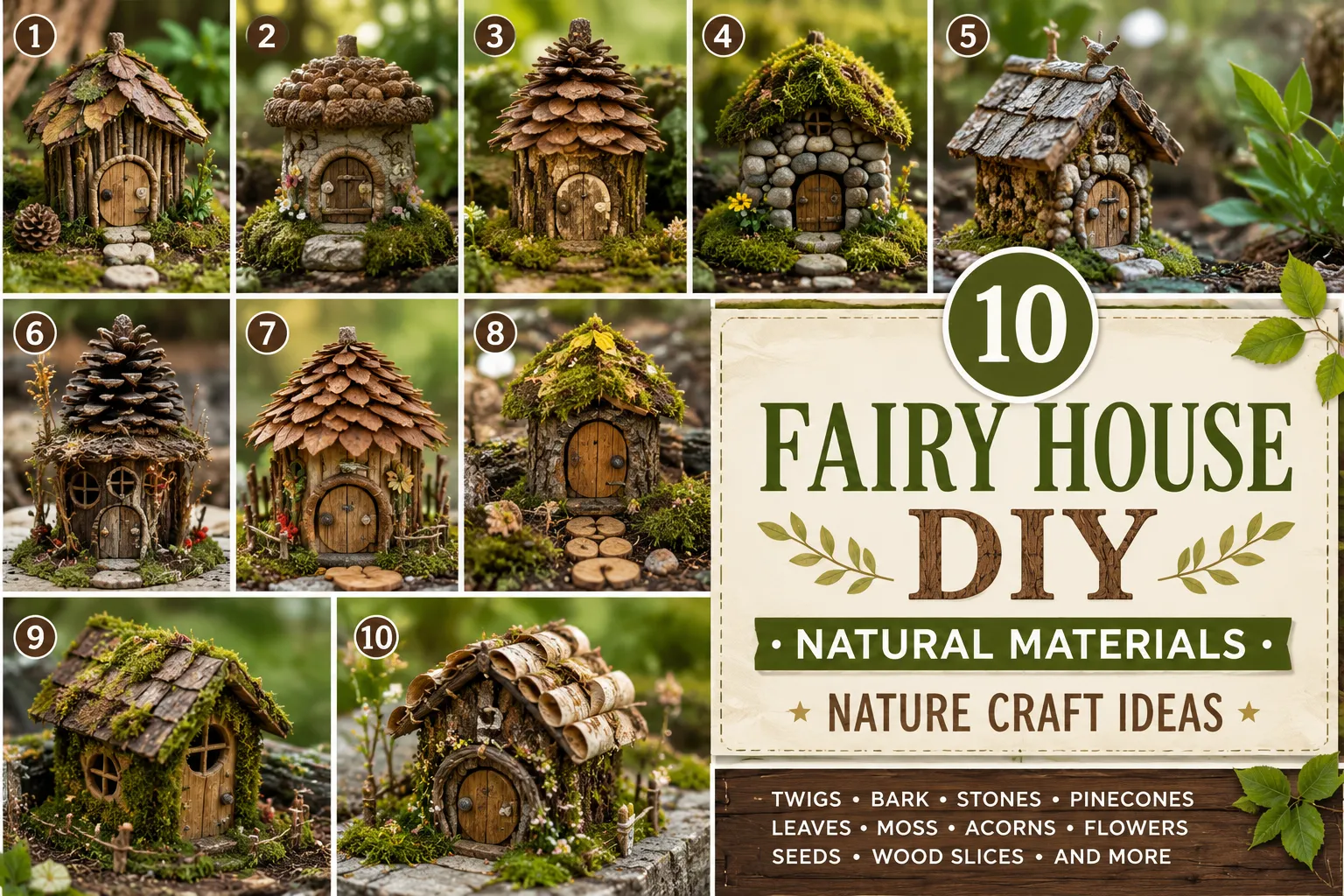
10 Fairy House DIY Natural Materials Nature Craft Ideas
There’s something magical about creating tiny fairy houses from materials found in nature. Whether tucked beneath a garden shrub, displayed on a porch, or used as a creative family project, fairy houses inspire imagination while encouraging a deeper appreciation for the natural world. Unlike store-bought decorations, handmade fairy houses have a unique charm because each one is crafted from materials gathered outdoors, making every creation completely one of a kind.
One thing I’ve noticed is that fairy house projects appeal to all ages. Children love the imaginative storytelling aspect, while adults often enjoy the creativity, craftsmanship, and relaxing nature of working with natural materials. Building miniature homes from twigs, bark, pinecones, stones, acorns, and moss creates an opportunity to slow down and connect with nature in a meaningful way.
Another reason these projects remain so popular is their affordability. Most materials can be collected from your own yard, a local park, or a nature walk. Instead of purchasing expensive craft supplies, you’re transforming everyday natural elements into enchanting miniature structures filled with character and charm.
Whether you’re designing a whimsical fairy garden, looking for a family-friendly outdoor activity, or simply want to add a touch of magic to your landscape, these fairy house ideas offer creative inspiration using simple materials from nature. Each project celebrates creativity while showcasing the beauty of the natural world.
Table of Contents
- Twig Cottage Hideaway
Create a charming miniature cabin from gathered branches. - Moss Covered Retreat
Design a lush fairy home inspired by forest floors. - Pinecone Woodland House
Transform pinecones into magical tiny dwellings. - Bark Roof Cottage
Use tree bark for authentic rustic character. - Stone Garden Fairy Home
Build a durable and charming miniature structure. - Acorn Village Design
Create whimsical fairy homes using woodland treasures. - Mushroom Inspired Cottage
Bring storybook charm into your fairy garden. - Driftwood Fairy Retreat
Craft a coastal-inspired nature house. - Tree Stump Fairy Home
Transform natural stumps into magical destinations. - Enchanted Forest Village
Combine multiple materials for a fairy community.
1. Twig Cottage Hideaway
Quick Benefits
- Uses readily available materials
- Easy for beginners
- Encourages creativity
- Creates rustic charm
- Works in any fairy garden
Why It Works
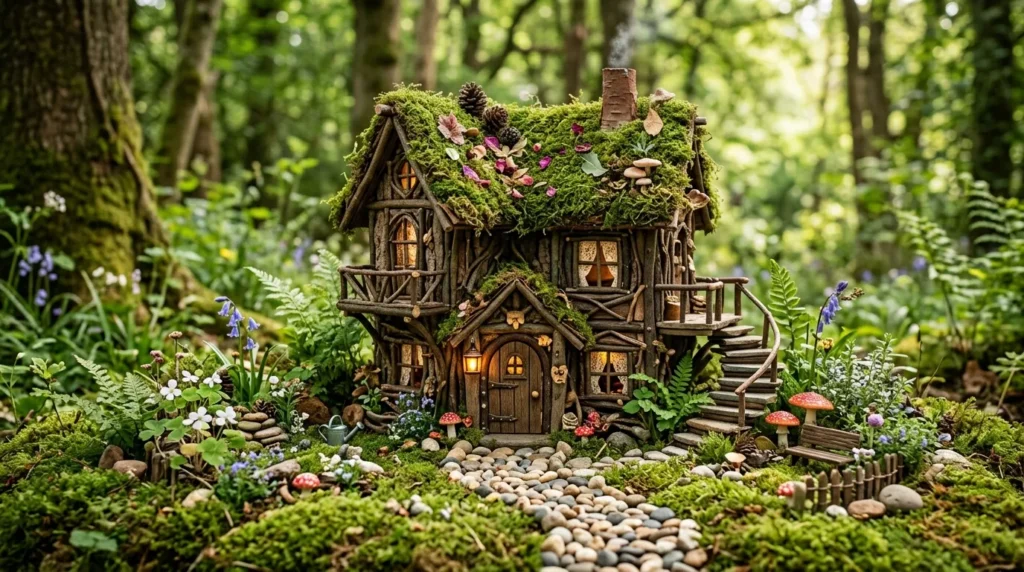
Twigs naturally resemble logs and beams, making them one of the easiest materials for fairy house construction. Their varied shapes and textures add character while creating an authentic woodland appearance. Because twigs are lightweight and abundant, they allow crafters to experiment freely without worrying about cost.
I’ve seen simple twig structures become some of the most charming fairy houses because the imperfections add personality and realism. The natural texture immediately creates a cozy cottage appearance that feels right at home in a garden setting.
How To Style It
Collect twigs of similar thickness and cut them to size if necessary. Arrange them horizontally or vertically to form walls and secure them with outdoor-safe craft glue. Add a bark roof, moss accents, and tiny stone pathways to complete the look.
Position the finished house among plants or beneath shrubs for a naturally magical setting.
2. Moss Covered Retreat
Quick Benefits
- Creates a lush appearance
- Blends into gardens beautifully
- Adds texture
- Supports woodland themes
- Feels whimsical and magical
Why It Works
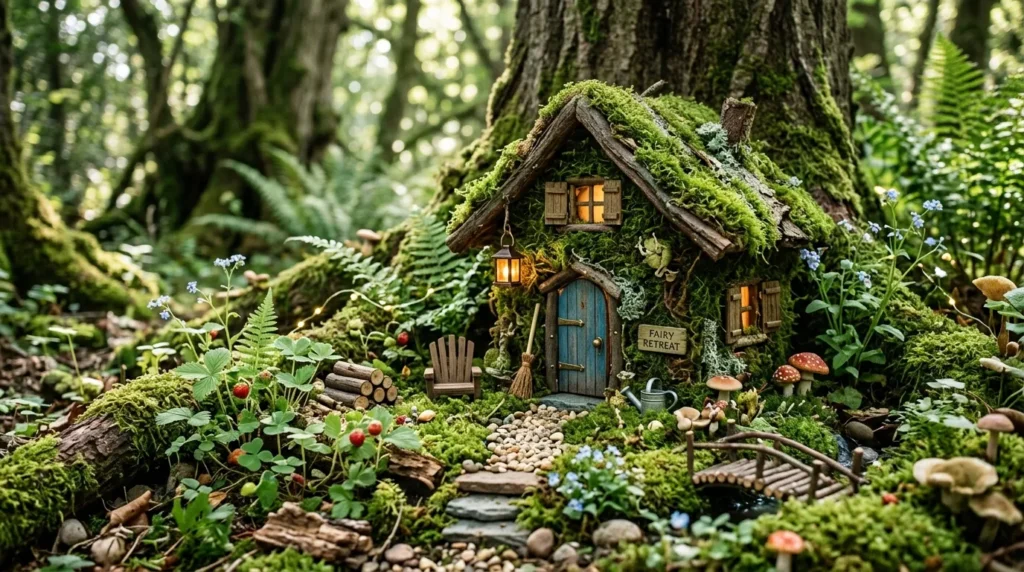
Moss instantly creates the feeling of an enchanted forest. Its soft texture and rich green color help fairy houses appear as though they’ve existed in nature for years. Moss also complements many other natural materials, making it highly versatile.
Many fairy garden enthusiasts use moss because it softens hard edges and creates a magical atmosphere that feels straight out of a storybook.
How To Style It
Cover roofs, walls, or surrounding landscapes with preserved or living moss. Pair moss with twigs, bark, and small stones to create depth and realism.
Use varying shades of green for a more natural appearance.
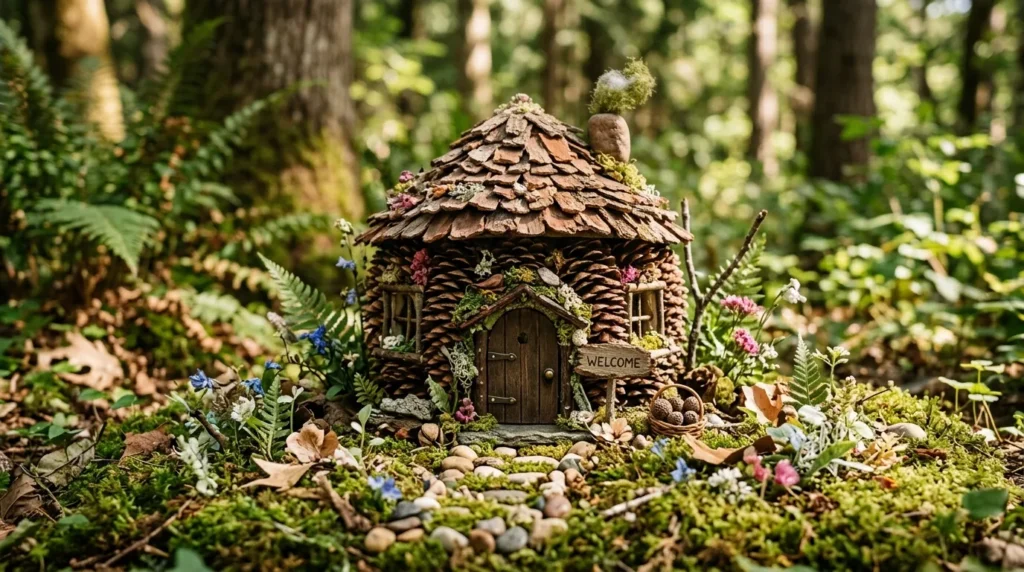
3. Pinecone Woodland House
Quick Benefits
- Simple construction
- Highly decorative
- Uses natural textures
- Kid-friendly project
- Creates unique designs
Why It Works
Pinecones provide instant architectural interest thanks to their layered scales and natural structure. Their organic shapes make them ideal for whimsical fairy homes that feel both rustic and imaginative.
One thing that works especially well is using the pinecone itself as the main structure rather than simply as decoration.
How To Style It
Stand larger pinecones upright and add miniature doors, windows, and pathways. Decorate with moss, acorn caps, and tiny flowers to enhance the woodland appearance.
Group multiple pinecone houses together to create a fairy village.
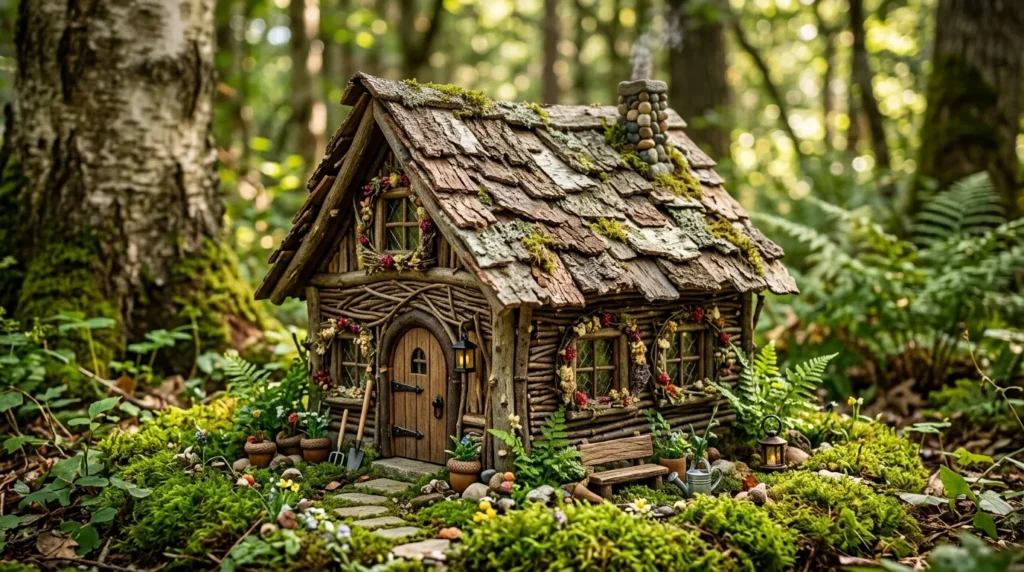
4. Bark Roof Cottage
Quick Benefits
- Creates realistic roofing
- Adds rustic character
- Uses natural materials
- Supports woodland themes
- Enhances authenticity
Why It Works
Tree bark naturally resembles shingles and roofing materials, making it perfect for fairy house construction. The texture and color variations contribute authenticity while helping structures blend into natural surroundings.
I’ve noticed that bark roofs often become the most eye-catching feature of a fairy house because they look surprisingly realistic.
How To Style It
Use bark pieces as roofing over twig walls or stone structures. Layer bark sections slightly to mimic traditional roofing techniques.
Pair with moss and natural wood accents for added charm.
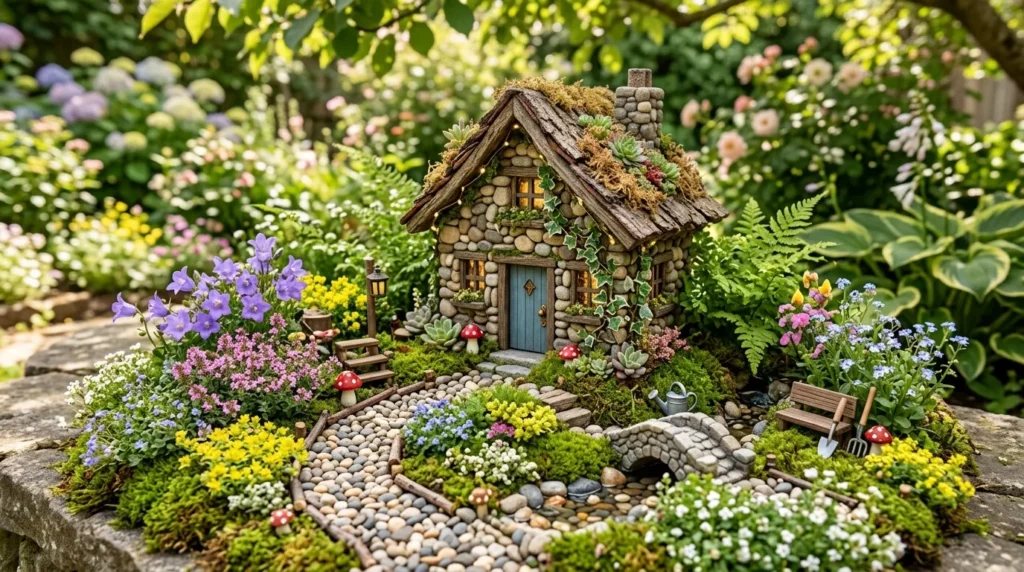
5. Stone Garden Fairy Home
Quick Benefits
- Durable design
- Creates timeless charm
- Supports outdoor display
- Adds texture
- Blends with landscaping
Why It Works
Stones provide stability and permanence while creating a miniature version of traditional masonry architecture. Their natural colors and textures complement gardens beautifully and help fairy houses withstand outdoor conditions.
Many homeowners appreciate stone fairy houses because they require minimal maintenance while remaining visually appealing.
How To Style It
Use small flat stones to construct walls and pathways. Incorporate moss between stones for an aged appearance. Add bark roofing or wooden doors to soften the overall design.
Position stone houses among flower beds or rock gardens.
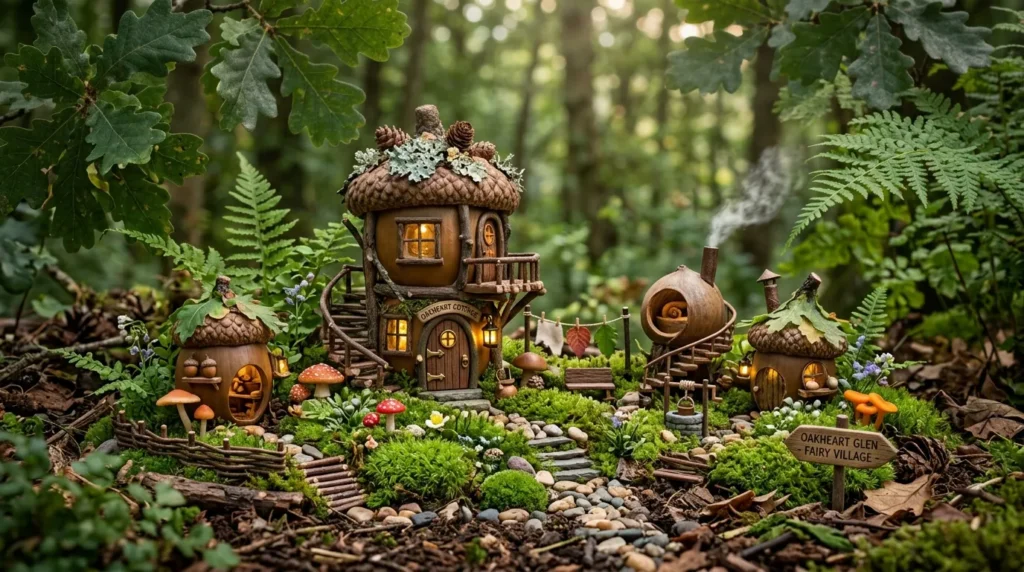
6. Acorn Village Design
Quick Benefits
- Affordable materials
- Creates whimsical charm
- Supports storytelling
- Easy to customize
- Perfect for children
Why It Works
Acorns naturally resemble tiny houses when paired with creative details. Their compact size encourages imaginative design and works especially well for creating miniature fairy villages.
A mistake many crafters make is overlooking small natural materials. Acorns often become some of the most charming elements in fairy garden displays.
How To Style It
Use acorn caps as roofs and acorn bodies as house structures. Add painted doors, tiny windows, and pebble pathways. Arrange several houses together to create a complete village.
Incorporate moss and small plants to enhance scale.
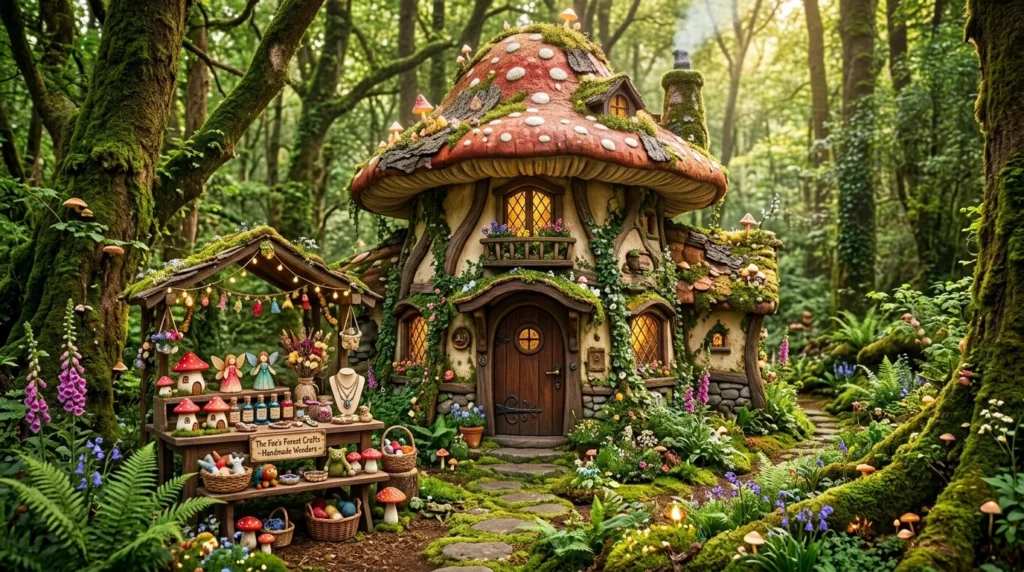
7. Mushroom Inspired Cottage
Quick Benefits
- Storybook appearance
- Highly whimsical
- Encourages creativity
- Adds visual interest
- Supports fantasy themes
Why It Works
Mushroom-inspired fairy houses instantly evoke magical forest imagery. Their rounded shapes and whimsical proportions make them popular among both children and adults.
That’s why many fairy garden designs include at least one mushroom-inspired structure as a focal point.
How To Style It
Use wood slices, clay accents, natural materials, and painted details to create mushroom shapes. Surround the cottage with moss, stones, and miniature plants.
Keep colors soft and nature-inspired for a cohesive look.
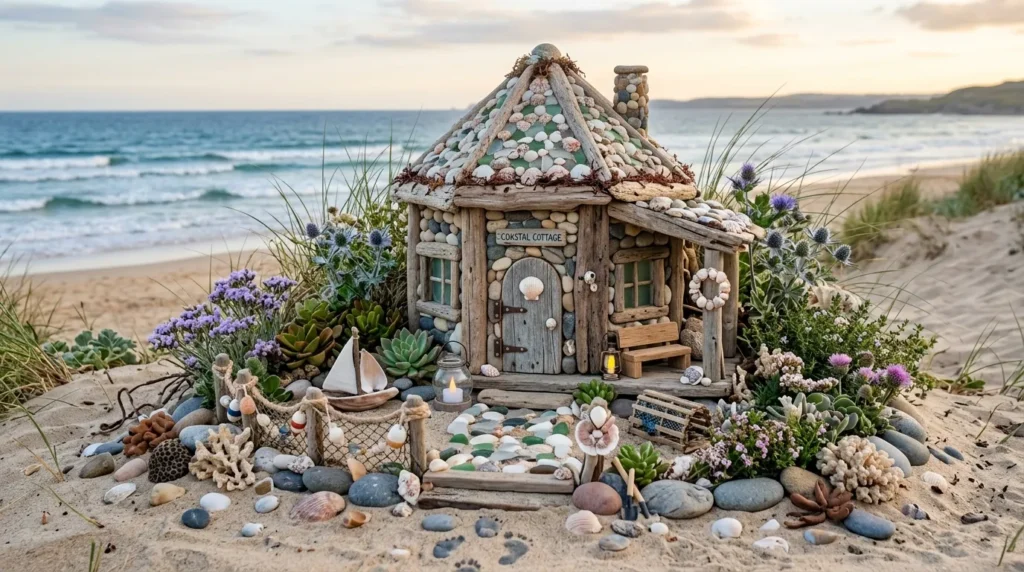
8. Driftwood Fairy Retreat
Quick Benefits
- Coastal-inspired style
- Unique textures
- Sustainable materials
- Lightweight construction
- Natural beauty
Why It Works
Driftwood’s weathered appearance creates instant character. The smooth textures and sculptural shapes often inspire creative architectural designs that feel naturally artistic.
I’ve seen driftwood fairy houses become standout pieces because no two pieces of driftwood are ever exactly alike.
How To Style It
Arrange driftwood pieces to create walls, roofs, and decorative accents. Pair with shells, pebbles, and sand-colored materials for a coastal fairy garden theme.
Allow the natural shape of the wood to guide the design.
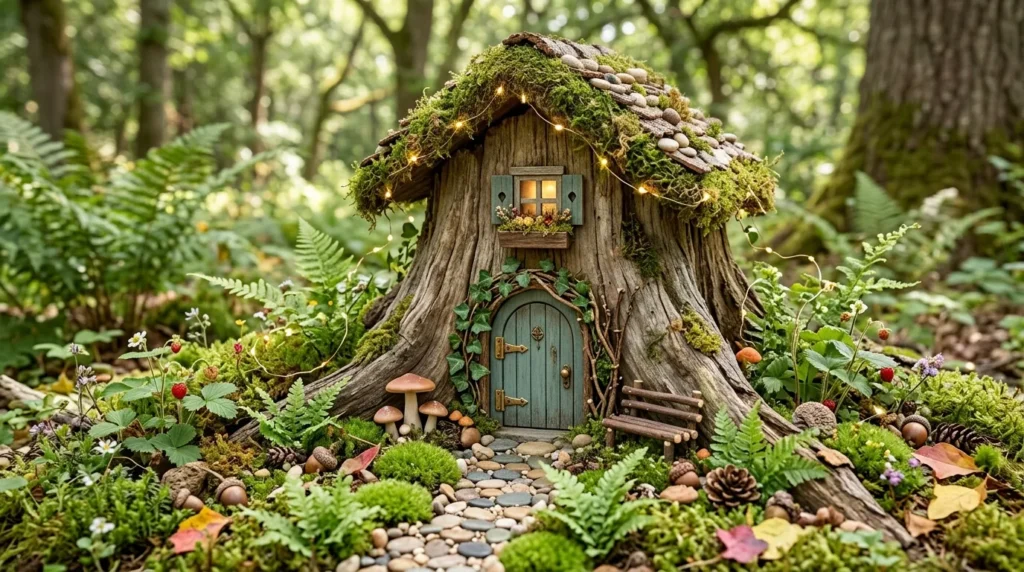
9. Tree Stump Fairy Home
Quick Benefits
- Uses existing landscape features
- Creates realistic designs
- Encourages outdoor creativity
- Supports fairy garden themes
- Adds lasting charm
Why It Works
Tree stumps naturally resemble fairy house foundations and provide a built-in structure for decorating. Their weathered surfaces create authenticity while blending seamlessly into garden environments.
If you’re anything like me, transforming an ordinary stump into something magical feels especially rewarding.
How To Style It
Add miniature doors, windows, pathways, and moss directly onto the stump. Incorporate surrounding plants and decorative stones to create a complete fairy setting.
Use natural materials whenever possible to maintain realism.
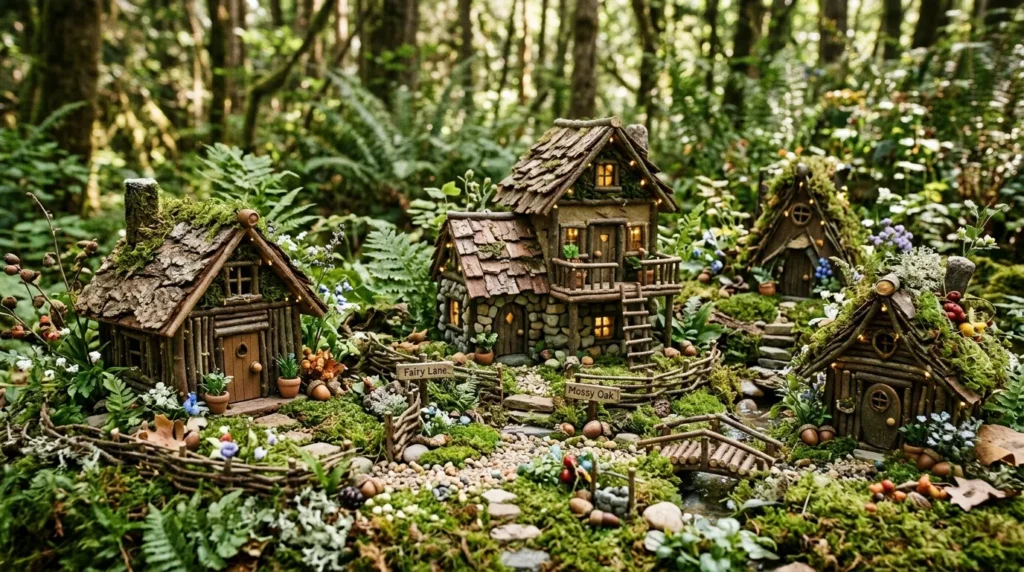
10. Enchanted Forest Village
Quick Benefits
- Encourages creativity
- Uses multiple materials
- Creates impressive displays
- Supports storytelling
- Enhances garden appeal
Why It Works
Combining various fairy house styles into a miniature village creates an immersive display full of personality. Different materials contribute visual variety while allowing each structure to have its own character.
The layered approach often feels more magical because it suggests an entire fairy community rather than a single dwelling.
How To Style It
Combine twig houses, acorn cottages, stone homes, and bark structures within one display. Connect buildings using pebble pathways, moss landscapes, and miniature gardens.
Create different zones and levels to add depth and realism.
Frequently Asked Questions
What materials are best for fairy houses?
Twigs, bark, moss, stones, pinecones, acorns, driftwood, leaves, and small branches are among the most popular natural materials for fairy house construction.
Can fairy houses stay outside year-round?
Some materials can remain outdoors, but weather exposure may shorten their lifespan. Periodic maintenance helps preserve appearance and structure.
Are fairy house projects suitable for children?
Yes. Many designs are family-friendly and encourage creativity, imagination, and outdoor exploration.
Do I need special tools?
Most projects require only basic craft supplies such as glue, scissors, and occasionally small hand tools depending on complexity.
Where should I place a fairy house?
Fairy houses look beautiful beneath shrubs, among flower beds, within fairy gardens, near trees, or on porches and patios.
Can I use collected materials from nature?
Yes, but always collect responsibly and follow local guidelines when gathering natural materials from parks or public spaces.
Conclusion
Fairy houses crafted from natural materials offer a wonderful combination of creativity, imagination, and outdoor inspiration. Whether you build a simple twig cottage or an elaborate enchanted village, these projects encourage a deeper connection with nature while creating beautiful decorative displays.
The beauty of nature-based crafting lies in its simplicity. Materials such as twigs, bark, stones, pinecones, and moss provide endless opportunities for creativity while remaining affordable and environmentally friendly. Every fairy house becomes unique because no two natural materials are exactly alike.
Start with a simple design and allow your imagination to guide the process. Over time, you can expand your fairy garden, experiment with new materials, and create magical miniature worlds that bring charm and wonder to your outdoor spaces.
Related Articles
- Fairy Garden Ideas for Small Spaces
- DIY Cottage Garden Decor Ideas
- Nature Craft Projects for Adults
- Whimsical Backyard Garden Inspiration
- Creative Outdoor DIY Projects