
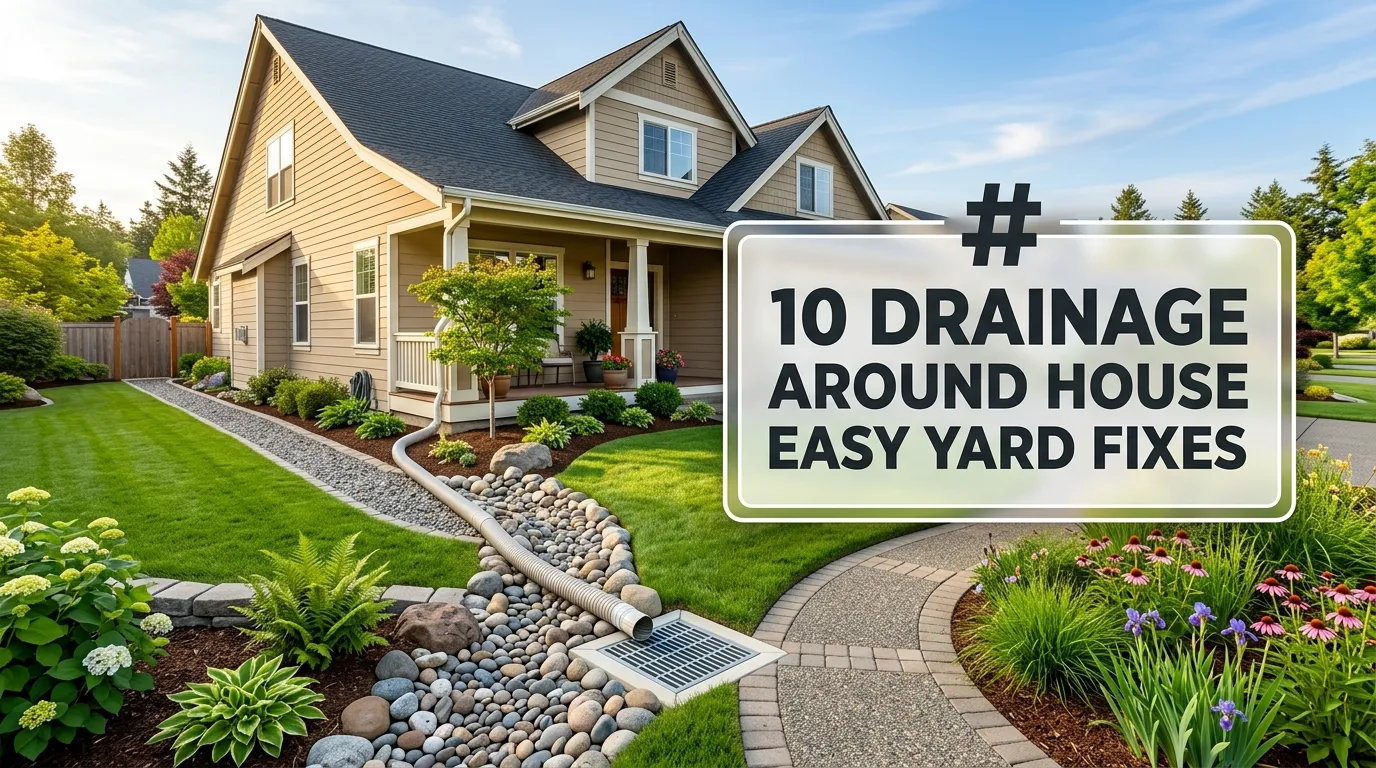
10 Drainage Around House Easy Yard Fix Ideas
Water drainage problems around a house can quickly turn into expensive issues if left unaddressed. Standing water, muddy patches, foundation moisture, erosion, and soggy landscaping are all signs that water isn’t moving away from the home properly. The good news is that many drainage problems can be improved with relatively simple yard solutions that don’t require a complete landscape overhaul.
One thing I’ve noticed is that homeowners often focus on the visible symptoms of drainage issues rather than the source. Adding more soil to a muddy area or replacing damaged grass may temporarily improve the appearance, but the problem usually returns if water flow isn’t corrected. That’s why understanding how water moves through your yard is so important before making changes.
The best drainage solutions work by directing water away from the home’s foundation while preserving the beauty and usability of the yard. Whether you’re dealing with pooling water after rain, soggy side yards, or runoff from gutters, there are practical fixes that can make a significant difference. Many of these solutions can also improve curb appeal and create a more attractive landscape.
If you’re looking for ways to keep your yard drier and protect your home from water-related damage, these drainage ideas provide simple and effective approaches that work for a variety of property types and budgets.
Table of Contents
- Extend Downspouts
Move roof runoff farther from the foundation. - Create Gentle Grading
Encourage water to flow away naturally. - Install Gravel Drain Paths
Improve drainage in problem areas. - Build A Dry Creek Bed
Manage runoff while enhancing landscaping. - Add Rain Garden Zones
Use plants to absorb excess water. - Use Permeable Walkways
Reduce water accumulation around hardscapes. - Improve Side Yard Drainage
Address common water collection areas. - Install French Drains
Redirect underground water efficiently. - Add Decorative River Rock
Enhance drainage while improving appearance. - Upgrade Gutter Systems
Improve overall water management.
1. Extend Downspouts
Quick Benefits
- Reduces foundation moisture
- Prevents pooling water
- Easy installation
- Affordable solution
- Improves drainage immediately
Why It Works
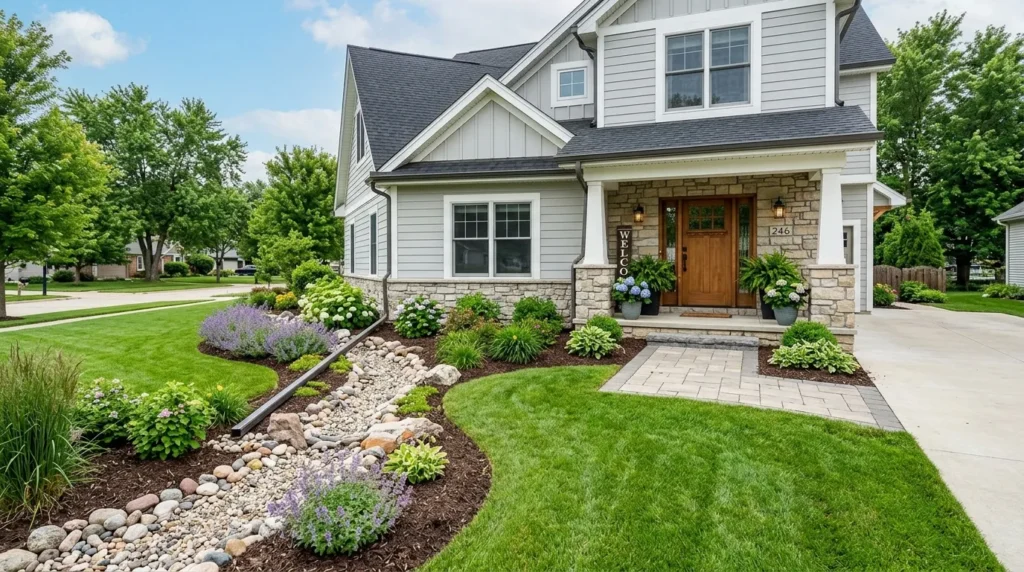
Many drainage issues begin with roof runoff collecting too close to the house. When downspouts discharge water directly beside the foundation, large amounts of water accumulate in concentrated areas. Over time, this can contribute to foundation concerns, basement moisture, and erosion.
I’ve seen homeowners solve significant drainage problems simply by extending downspouts farther into the yard. It’s one of the easiest and most cost-effective improvements available.
How To Style It
Use downspout extensions that direct water at least several feet away from the home. Decorative splash blocks, underground drainage pipes, or gravel channels can help guide water discreetly.
Blend visible components into landscaping for a cleaner appearance.
2. Create Gentle Grading
Quick Benefits
- Encourages natural water flow
- Protects foundations
- Reduces standing water
- Improves landscape performance
- Long-term solution
Why It Works
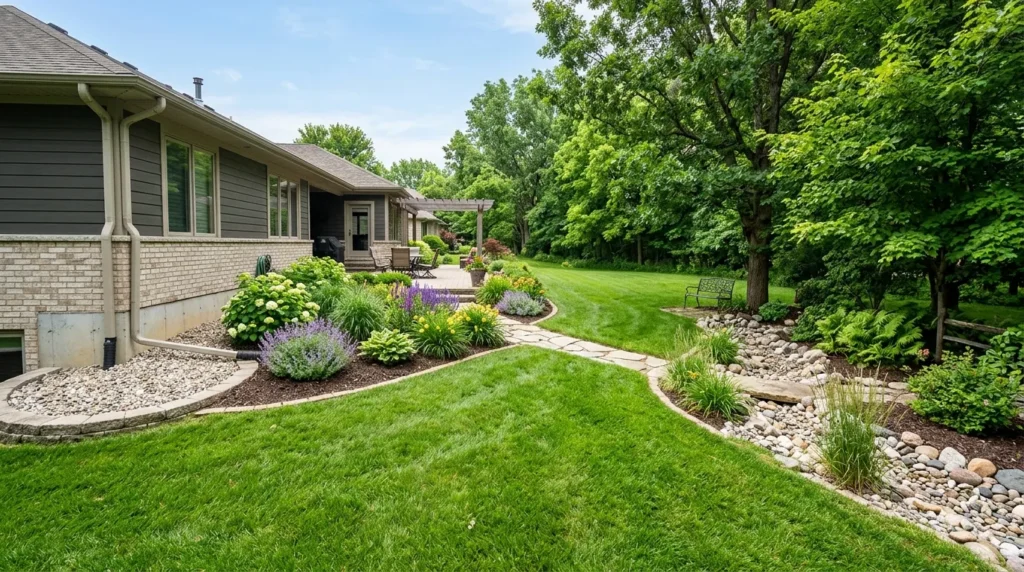
Proper grading ensures that water naturally moves away from the house rather than toward it. Even small grading adjustments can significantly improve drainage performance. The goal is to create a gentle slope that directs runoff away from structures.
A mistake many homeowners make is allowing landscaping projects to gradually create low spots near the foundation where water collects.
How To Style It
Add soil where necessary to create a subtle slope away from the home. Cover graded areas with mulch, ground cover plants, or grass to prevent erosion.
Maintain smooth transitions to preserve a natural appearance.
3. Install Gravel Drain Paths
Quick Benefits
- Improves water infiltration
- Reduces muddy areas
- Affordable installation
- Low maintenance
- Attractive appearance
Why It Works
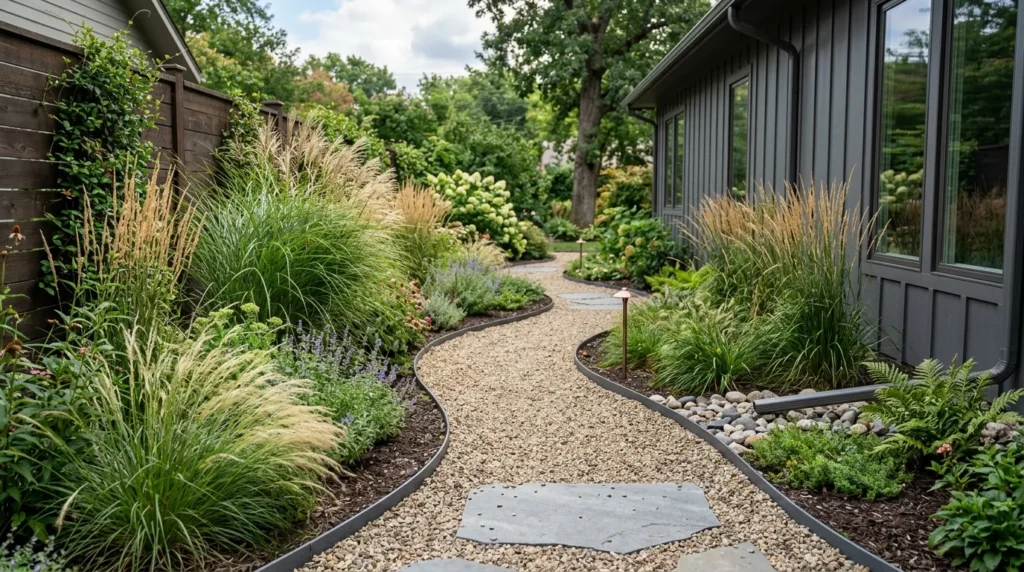
Gravel pathways allow water to pass through rather than pool on the surface. This makes them particularly useful in side yards and areas where drainage issues repeatedly occur. Gravel also helps stabilize soil and reduce erosion.
Many designers incorporate gravel because it serves both practical and decorative purposes.
How To Style It
Use landscape fabric beneath gravel to minimize weeds. Define edges with stone, brick, or metal edging for a finished appearance. Pair gravel paths with low-maintenance plantings.
Choose colors that complement your home’s exterior.
4. Build A Dry Creek Bed
Quick Benefits
- Directs runoff effectively
- Enhances landscaping
- Reduces erosion
- Creates visual interest
- Supports natural drainage
Why It Works
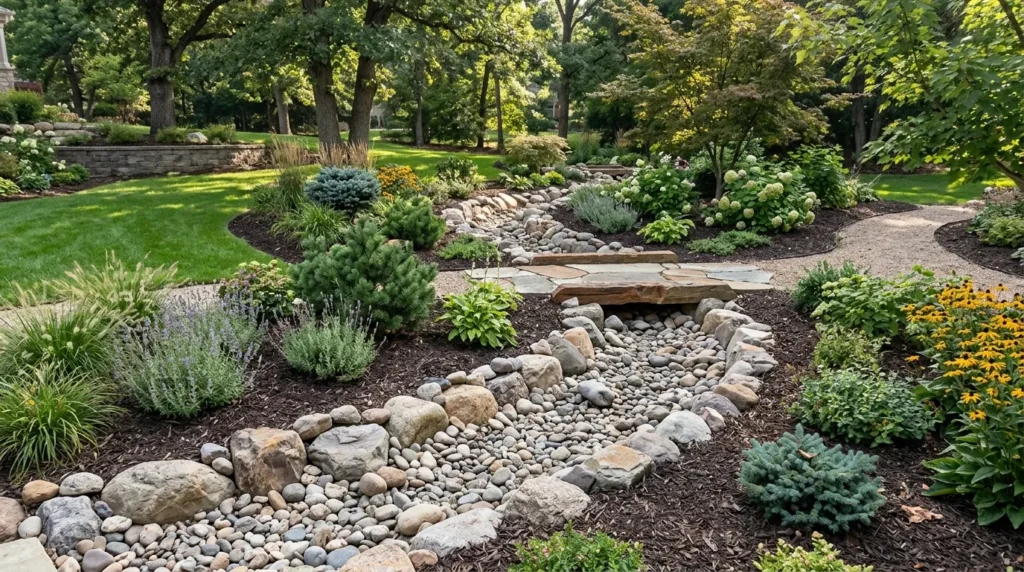
Dry creek beds mimic natural water channels by directing runoff through landscaped areas. They provide a decorative solution for managing water while adding texture and movement to the yard.
One thing that works especially well is incorporating a dry creek bed where water already tends to flow naturally.
How To Style It
Use a mix of river rocks, larger stones, and drought-tolerant plants. Design gentle curves to create a natural appearance. Vary stone sizes for visual realism.
Position the creek bed to guide water toward appropriate drainage areas.
5. Add Rain Garden Zones
Quick Benefits
- Absorbs excess water
- Supports pollinators
- Improves landscaping
- Reduces runoff
- Adds beauty
Why It Works
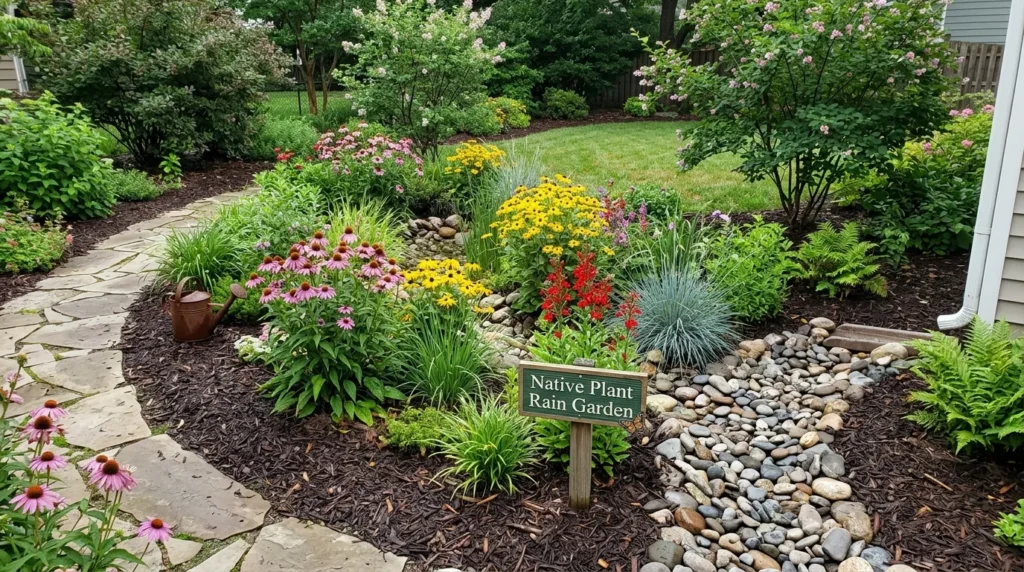
Rain gardens are designed to temporarily collect and absorb water from roofs, driveways, and yards. They use water-tolerant plants to manage runoff naturally while creating attractive landscape features.
I’ve noticed that rain gardens often become favorite landscape elements because they combine function with beauty.
How To Style It
Choose native plants suited to periodic moisture. Position the garden where water naturally collects. Incorporate mulch and decorative stone for visual appeal.
Select a variety of heights and bloom times for year-round interest.
6. Use Permeable Walkways
Quick Benefits
- Improves drainage
- Reduces runoff
- Supports sustainability
- Enhances curb appeal
- Low maintenance
Why It Works
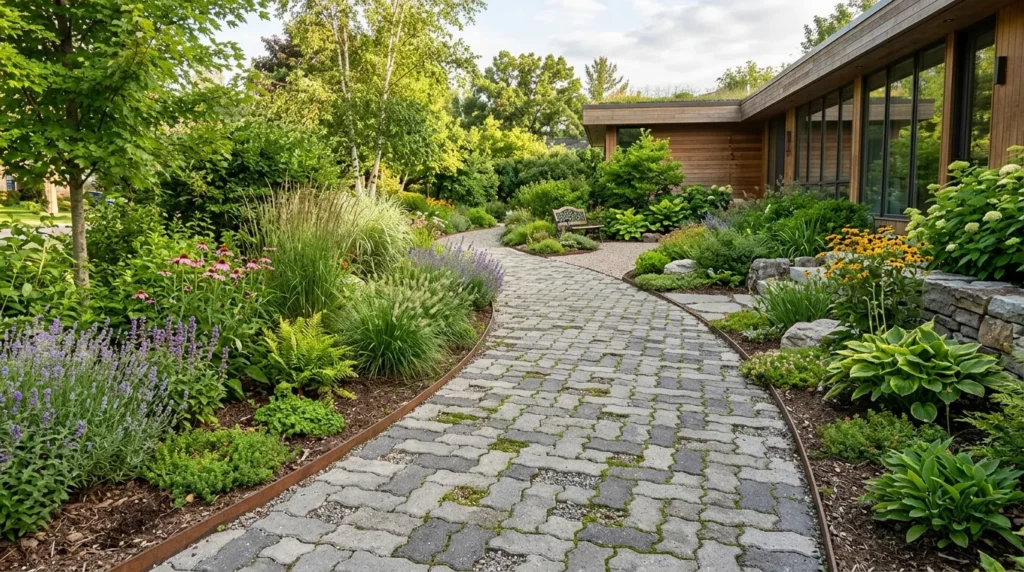
Traditional hard surfaces often contribute to drainage issues because they prevent water from soaking into the ground. Permeable walkways allow rainfall to infiltrate the soil, reducing surface runoff and pooling.
That’s why many modern landscape designs incorporate permeable materials whenever possible.
How To Style It
Use permeable pavers, gravel, or spaced stepping stones. Pair walkways with attractive landscaping and proper edging.
Maintain clear pathways while maximizing water infiltration.
7. Improve Side Yard Drainage
Quick Benefits
- Addresses common problem areas
- Prevents standing water
- Improves accessibility
- Enhances landscaping
- Protects foundations
Why It Works
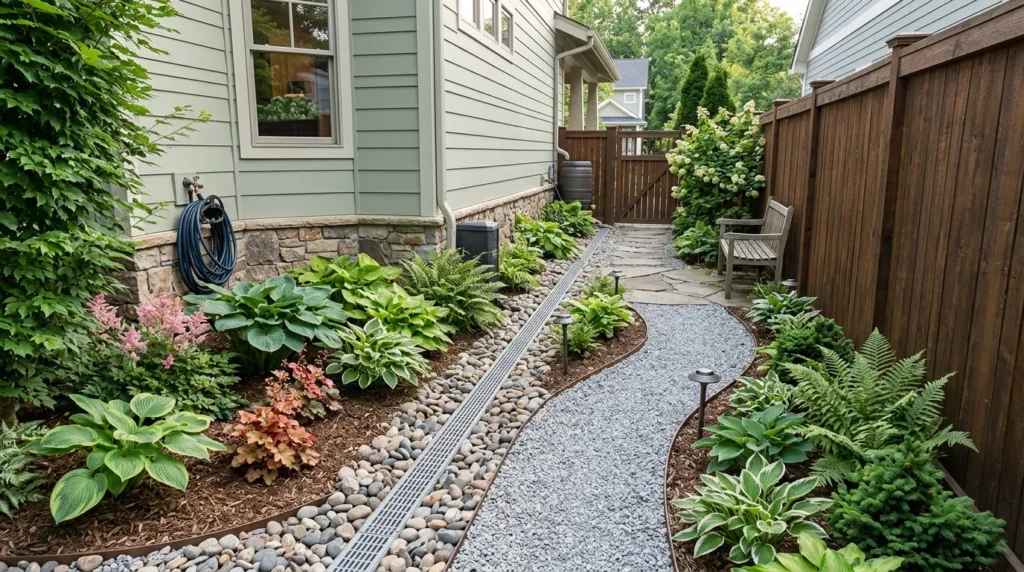
Side yards frequently experience drainage problems because they are narrow, shaded, and often overlooked. Water can become trapped between structures and fences, leading to persistent moisture issues.
I’ve seen significant improvements when homeowners specifically target side yard drainage rather than focusing solely on more visible areas.
How To Style It
Combine gravel, drainage channels, and strategic grading. Add shade-tolerant plants that thrive in these conditions. Ensure water has a clear path away from the home.
Keep maintenance requirements manageable.
8. Install French Drains
Quick Benefits
- Handles serious drainage issues
- Redirects underground water
- Protects foundations
- Long-lasting solution
- Improves yard usability
Why It Works
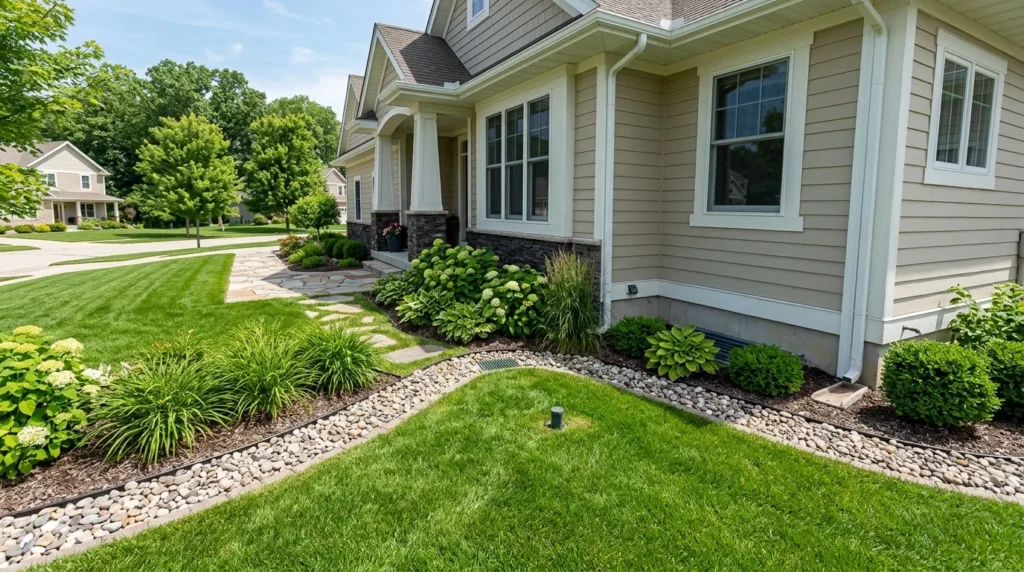
French drains collect and redirect water through underground perforated pipes surrounded by gravel. They are particularly effective for properties with recurring drainage problems or consistently saturated soil.
While more involved than some solutions, they can dramatically improve water management.
How To Style It
Integrate French drains beneath landscaping, lawns, or gravel areas. Cover visible sections with decorative materials that blend into the yard.
Consult professionals when addressing complex drainage challenges.
9. Add Decorative River Rock
Quick Benefits
- Improves drainage
- Adds texture
- Reduces erosion
- Low maintenance
- Enhances curb appeal
Why It Works
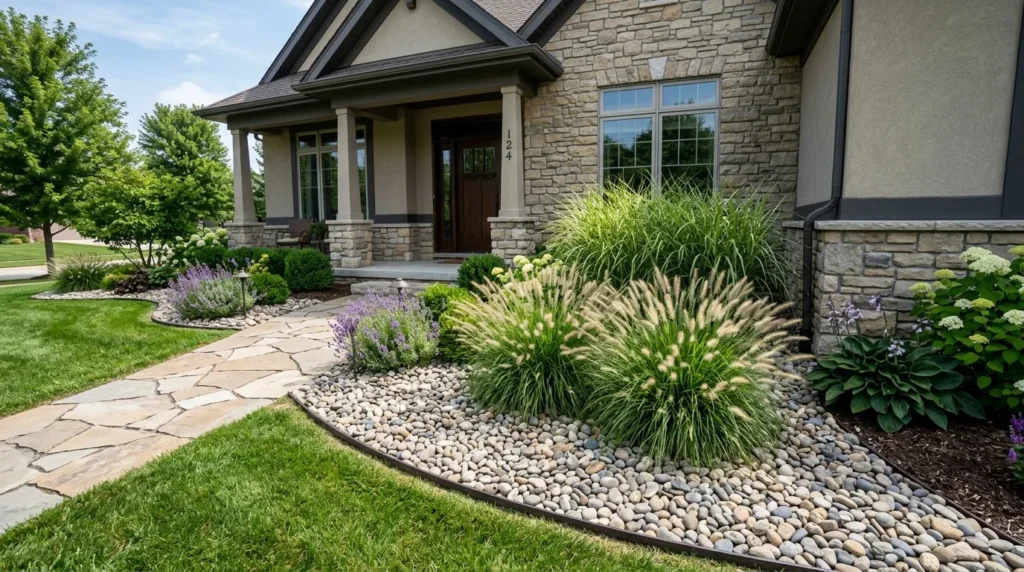
River rock allows water to flow through while helping stabilize soil. It works especially well around downspouts, drainage paths, and foundation plantings where excess water is common.
Many homeowners appreciate how river rock combines functionality with visual appeal.
How To Style It
Use river rock in varying sizes for a natural appearance. Pair with ornamental grasses, shrubs, and mulch for a polished landscape design.
Coordinate stone colors with the home’s exterior finishes.
10. Upgrade Gutter Systems
Quick Benefits
- Improves water management
- Protects foundations
- Reduces erosion
- Supports drainage solutions
- Prevents overflow issues
Why It Works
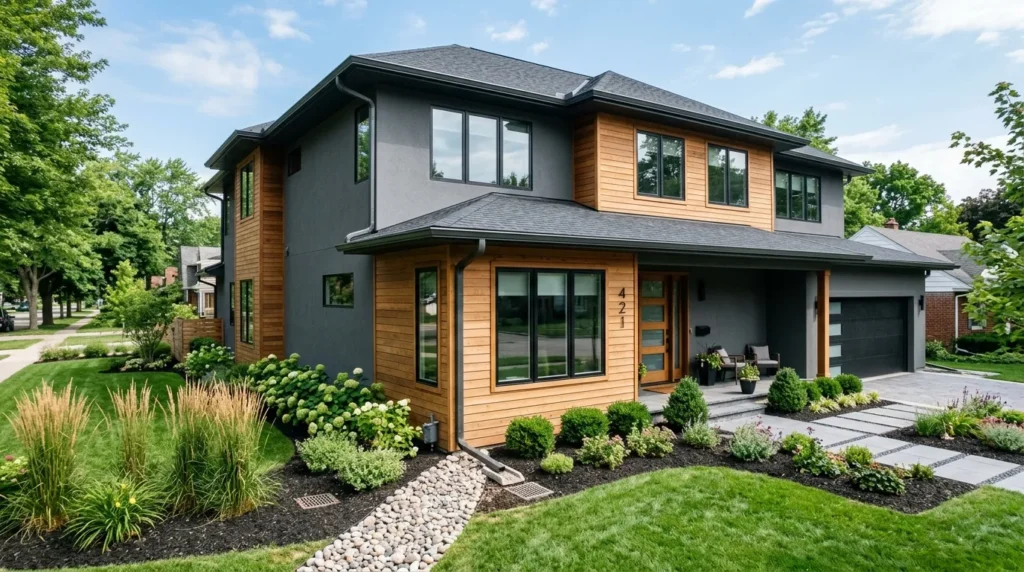
Gutters play a major role in controlling how water leaves the roof. Damaged, undersized, or clogged gutters often contribute directly to drainage problems around the house.
If you’re anything like me, you’d rather prevent problems before they reach the yard. Proper gutter performance is one of the best ways to accomplish that.
How To Style It
Regularly clean gutters and inspect for damage. Consider larger gutters, gutter guards, or additional downspouts where necessary. Coordinate gutter colors with the home’s exterior.
Ensure water is directed toward appropriate drainage areas.
Frequently Asked Questions
What causes water to collect around a house?
Common causes include poor grading, clogged gutters, short downspouts, compacted soil, and inadequate drainage systems that prevent water from moving away efficiently.
Is standing water near a foundation a problem?
Yes. Persistent standing water can contribute to foundation moisture, erosion, basement issues, and long-term structural concerns.
What is the easiest drainage fix?
Extending downspouts is often one of the simplest and most effective ways to improve drainage around a home.
How do I know if I need a French drain?
If water consistently pools in the same area despite simpler solutions, a French drain may provide a more effective long-term remedy.
Can landscaping help with drainage?
Absolutely. Proper plant selection, rain gardens, grading, and decorative drainage features can significantly improve water management.
Do gravel and river rock improve drainage?
Yes. Both materials allow water to infiltrate while reducing erosion and minimizing muddy conditions.
Conclusion
Drainage problems around a house should never be ignored, but they don’t always require expensive construction projects to solve. Simple improvements such as extending downspouts, adjusting grading, adding gravel pathways, and upgrading gutters can dramatically improve how water moves through your property.
The key is identifying where water originates and where it naturally wants to go. Once you understand the flow pattern, you can choose solutions that guide water away from the foundation while enhancing the beauty and functionality of the yard.
Start with the easiest fixes first and monitor results after heavy rainfall. In many cases, a few thoughtful improvements can create a drier, healthier landscape while helping protect your home for years to come.
Related Articles
- Side Yard Landscaping Ideas
- Gravel Walkway Design Inspiration
- Backyard Drainage Solutions
- Foundation Landscaping Tips
- Low Maintenance Garden Ideas