

10 Dark Botanical Bedroom Ideas to Transform Your Space
A bedroom can feel completely different when you combine moody colors with the organic beauty of botanical decor. Dark botanical style has a particularly inviting quality: deep greens, charcoal, earthy browns, dramatic florals, and leafy patterns create a cocoon-like backdrop, while plants and natural textures keep the room feeling alive.
The look doesn’t have to be gothic or overly dramatic, either. You can take the idea in a softer direction with moss green walls, faded floral bedding, warm ivory linens, and natural wood. Or, if you love a more atmospheric bedroom, bring in charcoal, black accents, antique brass, and oversized botanical prints.
The key is contrast. Dark colors create depth, but lighter textiles and natural materials keep the room comfortable. I’ve noticed that bedrooms with this aesthetic tend to look best when the botanical elements feel layered rather than perfectly matched. A leafy plant beside a vintage frame, a floral duvet against a dark wall, or a woven basket near a walnut dresser can make the room feel collected and personal.
You also don’t need to redesign everything at once. A dramatic duvet cover, botanical wallpaper, new artwork, or pair of curtains can completely shift the mood without replacing your furniture.
These ideas will help you build a dark botanical bedroom that feels cozy, sophisticated, and connected to nature—whether you’re decorating a spacious primary bedroom, a small guest room, or a rental.
Table of Contents
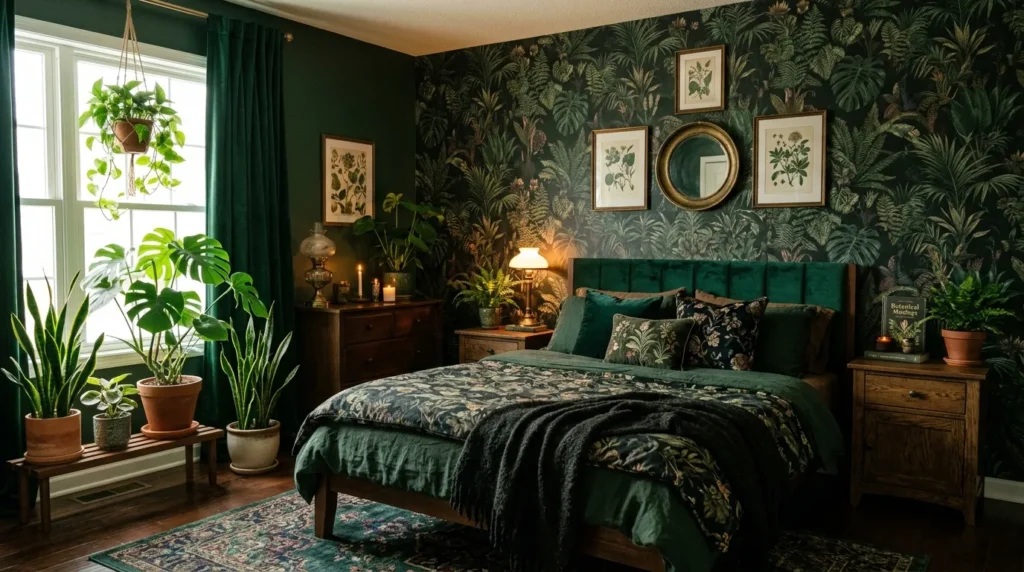
1. Deep Green Walls
Create a dramatic botanical foundation with rich green paint.
2. Botanical Wallpaper
Use leafy patterns to create an immersive feature wall.
3. Dark Floral Bedding
Bring dramatic flowers and foliage onto the bed.
4. Natural Wood Furniture
Warm up deeper colors with organic wood tones.
5. Layered Greenery
Add living plants for texture and movement.
6. Moody Botanical Art
Create personality with nature-inspired artwork.
7. Velvet Accent Pieces
Introduce luxurious texture through small details.
8. Warm Brass Lighting
Balance dark colors with a soft metallic glow.
9. Earthy Neutral Layers
Keep the room cozy with cream and natural tones.
10. Dramatic Window Treatments
Finish the space with rich, flowing fabrics.
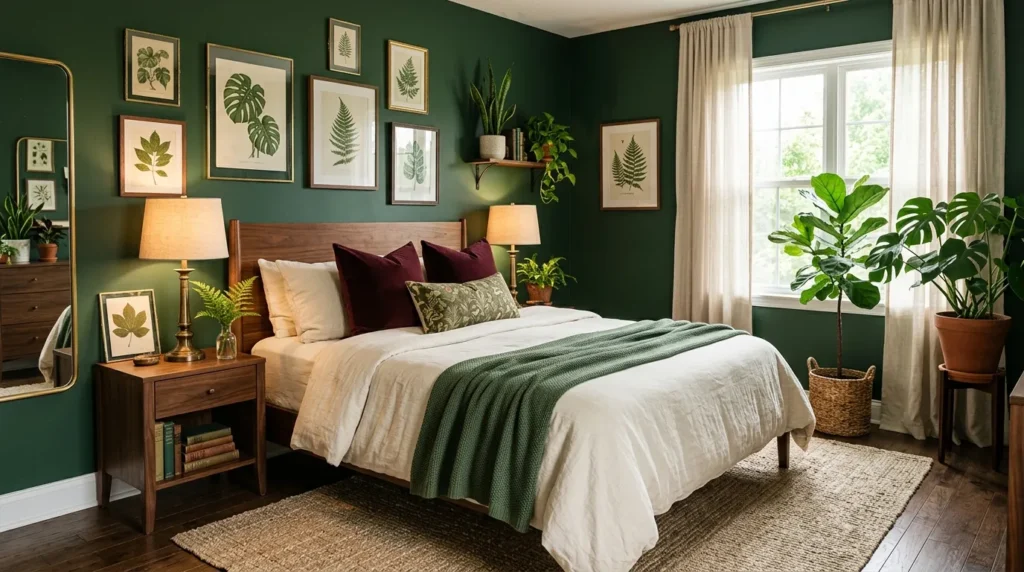
1. Deep Green Walls
Quick Benefits
- Creates an enveloping atmosphere
- Makes botanical elements stand out
- Works with warm and cool accents
- Adds depth without complicated decor
- Complements natural wood beautifully
Why It Works
Deep green is one of the easiest colors to use when creating a dark botanical bedroom because it already feels connected to nature. Shades such as forest green, moss, olive, and deep eucalyptus can make the walls feel dramatic while remaining softer than pure black.
The color also provides a beautiful backdrop for plants, botanical artwork, cream bedding, and warm wood furniture. In rooms with good natural light, deeper green can feel sophisticated rather than heavy.
If your bedroom receives limited sunlight, consider a slightly lighter or grayer green. Test paint samples at different times of day because green can shift considerably under warm artificial lighting.
How To Style It
Paint all four walls for a cozy, enveloping effect, or use deep green behind the bed as an accent.
Pair the walls with warm ivory bedding and walnut or oak furniture.
Introduce darker green through pillows and throws rather than trying to match the wall color exactly.
Add botanical prints in natural wood or antique brass frames.
For a modern look, choose simple furniture silhouettes. For a more traditional bedroom, consider carved wood pieces and vintage-inspired lighting.
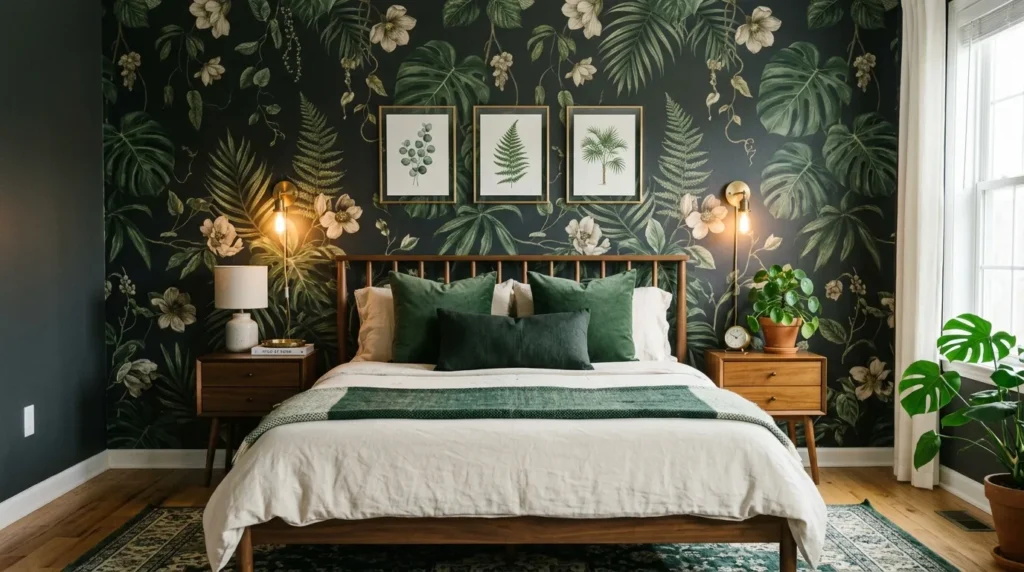
2. Botanical Wallpaper
Quick Benefits
- Creates an instant focal point
- Adds pattern and personality
- Makes the botanical theme obvious
- Works beautifully behind a bed
- Can be renter-friendly
Why It Works
Dark botanical wallpaper can make a bedroom feel like a lush garden after sunset. Large leaves, ferns, vines, palms, and dramatic flowers create movement across the wall while darker backgrounds provide the moody atmosphere.
This is particularly useful if you want a strong visual transformation without introducing lots of furniture or accessories.
A large-scale print tends to feel more sophisticated than many tiny patterns competing across the wall.
How To Style It
Choose wallpaper featuring deep green foliage against charcoal, navy, brown, or black.
Install it behind the headboard to create a natural focal point.
Pull one or two colors from the pattern into the bedding.
If the wallpaper includes muted burgundy flowers, repeat that shade in one or two pillows.
Keep nearby furniture relatively simple.
For a rental, removable wallpaper can create a similar effect without permanently changing the walls.
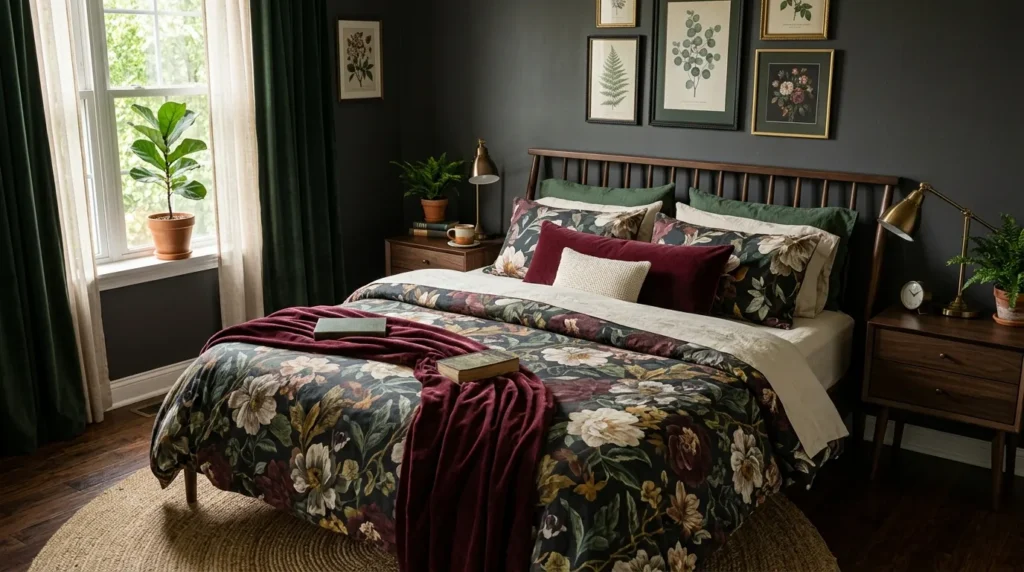
3. Dark Floral Bedding
Quick Benefits
- Makes the bed the focal point
- Adds dramatic pattern
- Introduces botanical color
- Easy to change
- Works with neutral walls
Why It Works
If painting or wallpapering isn’t practical, dark floral bedding is probably the easiest way to experiment with this aesthetic.
A duvet featuring oversized flowers, leaves, vines, or vintage botanical illustrations can establish the entire mood of the room.
The trick is to avoid making every textile patterned. Pair the floral duvet with solid pillows, a neutral sheet set, and one or two textured throws.
That balance allows the pattern to feel intentional rather than overwhelming.
How To Style It
Start with cream or white sheets.
Layer a dark floral duvet or quilt over the bed.
Add solid forest green, charcoal, or burgundy pillows.
Finish with a knitted or linen throw.
Use a neutral rug underneath the bed to soften the darker palette.
If your floral bedding is very bold, keep your curtains and artwork relatively quiet.
For a softer look, choose faded botanical prints rather than high-contrast black-and-red florals.
4. Natural Wood Furniture
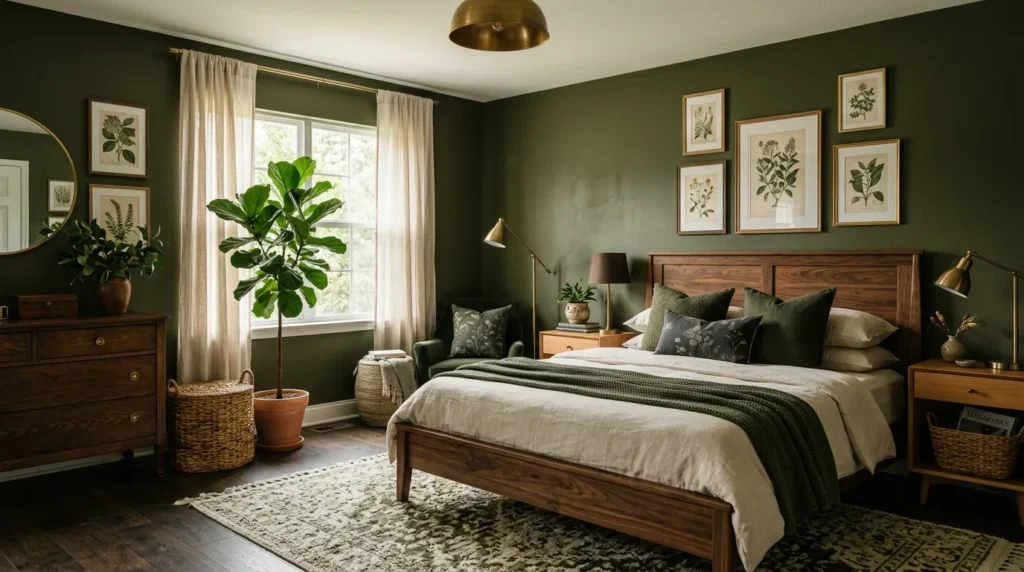
Quick Benefits
- Adds warmth
- Complements botanical colors
- Creates organic texture
- Prevents dark rooms from feeling flat
- Works with multiple styles
Why It Works
Dark botanical decor needs warmth, and natural wood is one of the best ways to introduce it.
Walnut, oak, teak, mahogany, and reclaimed wood can all work depending on the mood you’re creating.
Wood also reinforces the natural theme without adding another color that competes with the botanical palette.
A bedroom filled with dark painted surfaces can sometimes feel visually flat. Wood grain provides subtle variation and gives the eye something tactile to notice.
How To Style It
Use a walnut or medium-toned wood bed as the foundation.
Add matching or complementary nightstands.
For a lighter room, choose oak with deep green walls and cream bedding.
For a more dramatic space, choose walnut or dark-stained wood.
Add small wood details through picture frames, trays, stools, and plant stands.
Don’t worry about every wood tone being identical. A mix of related natural finishes can make the bedroom feel more collected.
5. Layered Greenery
Quick Benefits
- Brings nature indoors
- Adds movement
- Softens dark colors
- Creates visual texture
- Makes the room feel alive
Why It Works
Plants are an obvious but powerful part of botanical bedroom decor.
The contrast between rich wall colors and fresh foliage makes both elements more noticeable.
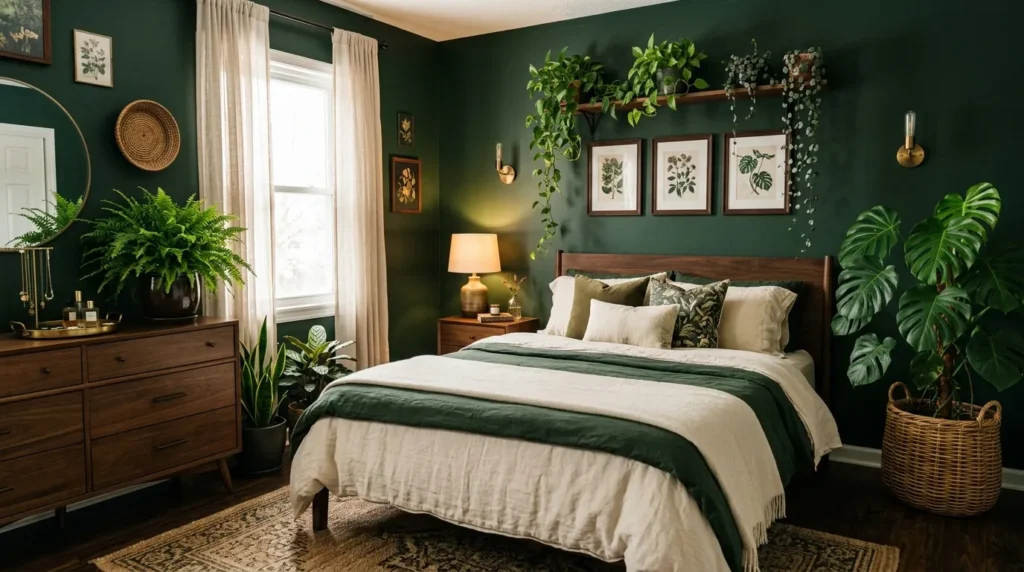
Rather than filling every surface with plants, use different heights and shapes. A trailing plant can soften a shelf, a small fern can decorate a nightstand, and a taller plant can occupy an empty corner.
This creates a more natural composition.
If your bedroom doesn’t receive much natural light, choose plants suited to your conditions or use realistic faux greenery.
How To Style It
Place a trailing plant on a high shelf.
Add a leafy plant beside the dresser.
Use a tall plant in a woven basket to fill an empty corner.
Choose dark ceramic or terracotta pots for an earthy appearance.
Keep plants away from areas where they interfere with walking paths or bedside functionality.
For extra visual interest, mix broad leaves with delicate foliage.
6. Moody Botanical Art
Quick Benefits
- Adds personality
- Creates focal points
- Reinforces the nature theme
- Works with neutral furniture
- Easy to update
Why It Works
Artwork can bring the entire color palette together.
Botanical illustrations, pressed-flower prints, moody landscapes, fern drawings, vintage plant studies, and oversized floral paintings all work beautifully.
The artwork doesn’t have to match your bedding exactly. Instead, look for pieces that repeat the same general family of colors.
This creates cohesion without making the room feel overly coordinated.
How To Style It
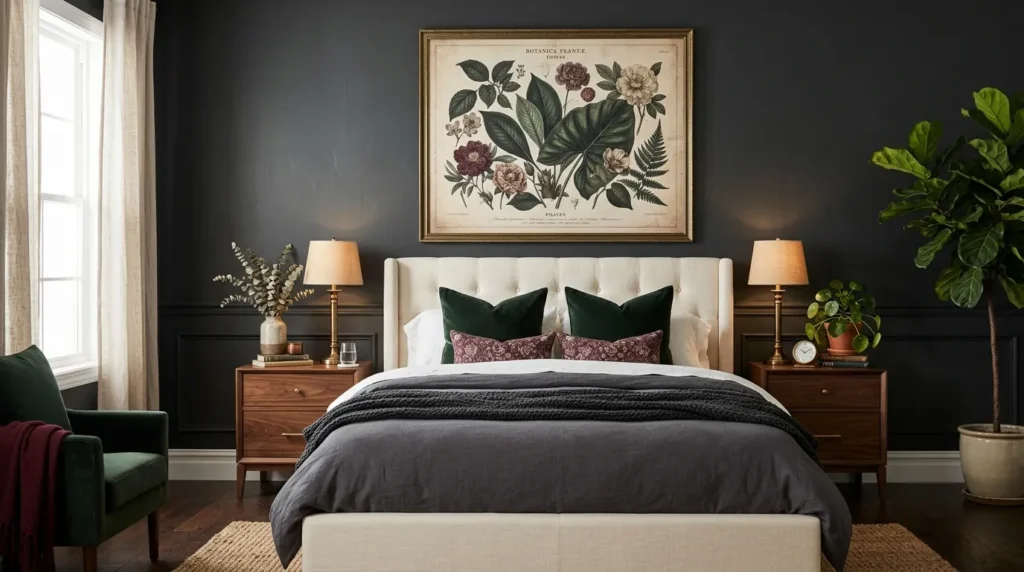
Hang one large botanical piece above the bed.
Alternatively, create a gallery wall using several smaller prints.
Mix botanical illustrations with abstract artwork or vintage landscapes.
Use dark wood, black, or aged brass frames.
For a modern bedroom, choose oversized artwork with a simple frame.
For a vintage-inspired space, combine mismatched antique-style frames.
Keep the surrounding accessories minimal so the artwork has room to stand out.
7. Velvet Accent Pieces
Quick Benefits
- Adds luxurious texture
- Enhances a moody palette
- Makes the room feel cozy
- Introduces subtle color
- Works with modern or vintage styles
Why It Works
Velvet is particularly effective in dark bedrooms because it catches light differently across its surface.
A forest green velvet pillow can look rich in daylight and dramatically deeper at night. Burgundy and navy have a similar effect.
You don’t need much velvet to get the benefit. One bench, accent chair, headboard, or collection of pillows can be enough.
How To Style It
Choose one primary velvet element.
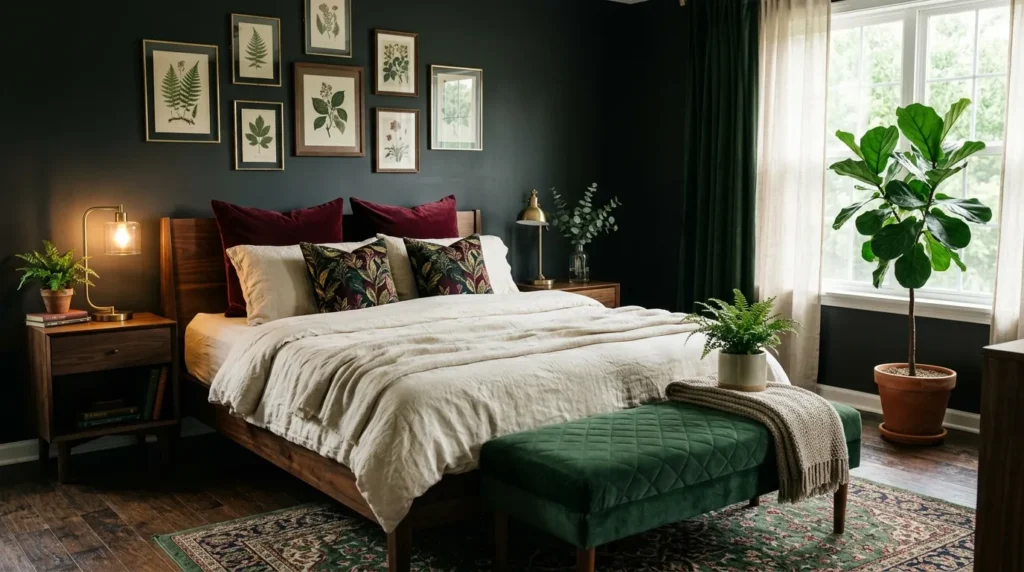
A forest green velvet bench works beautifully at the foot of an upholstered bed.
Alternatively, add two burgundy velvet pillows to a neutral bed.
Pair velvet with linen, cotton, and wool so the bedroom doesn’t feel overly formal.
For a contemporary room, use clean silhouettes.
For a vintage bedroom, look for curved furniture or tufted details.
8. Warm Brass Lighting
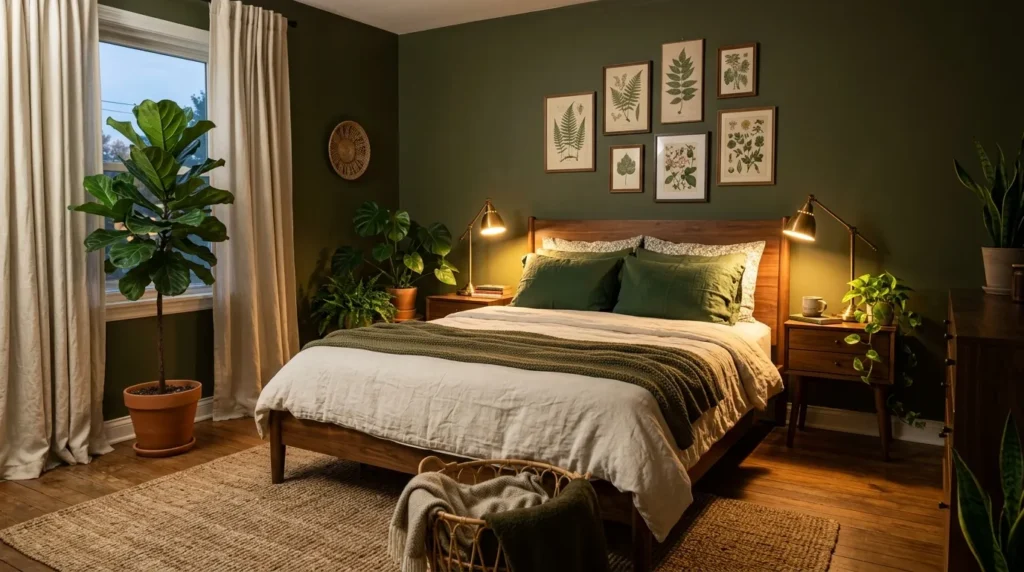
Quick Benefits
- Adds warmth
- Creates atmospheric light
- Complements deep colors
- Looks elegant against green
- Provides functional bedside lighting
Why It Works
Lighting becomes especially important when using deep colors.
Warm brass fixtures can introduce a subtle golden glow that keeps the room from feeling cold.
Rather than relying on one ceiling light, layer several light sources throughout the bedroom.
Bedside lamps provide practical reading light, while a floor lamp or wall sconce can illuminate darker corners.
How To Style It
Choose brass bedside lamps with warm bulbs.
Add a brass pendant or chandelier if the room’s proportions allow it.
Repeat the finish in drawer hardware or a mirror frame.
Choose brushed or aged brass for a softer appearance.
Avoid excessively cool bulbs because they can make green and brown tones look harsh.
A warm, diffused light is much more flattering to a dark botanical palette.
9. Earthy Neutral Layers
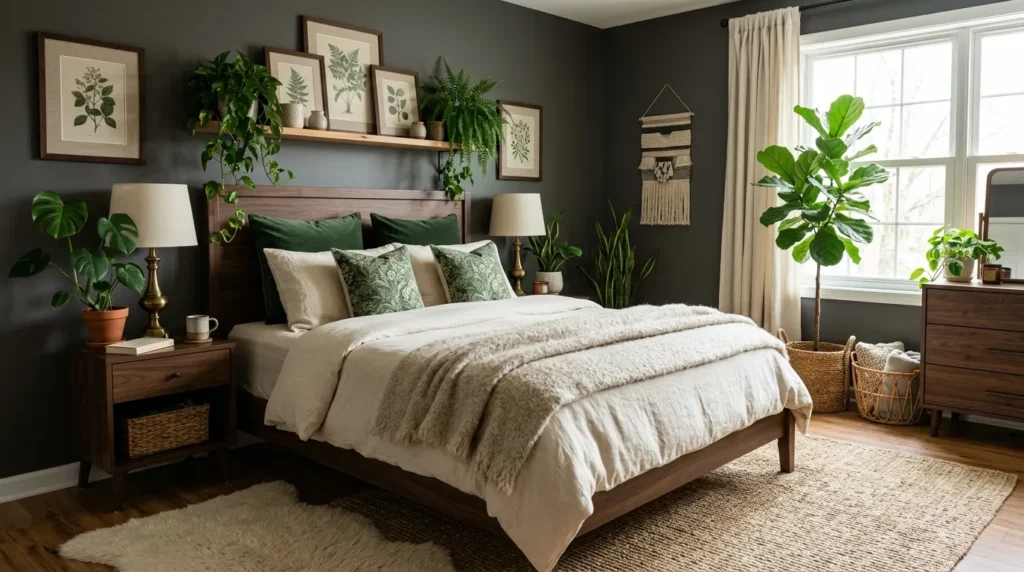
Quick Benefits
- Balances darker colors
- Keeps the room inviting
- Adds brightness
- Highlights texture
- Makes seasonal changes easier
Why It Works
Dark botanical bedrooms need breathing room.
Cream, ivory, oatmeal, beige, and warm taupe can prevent the room from becoming visually overwhelming.
These shades also make darker green and charcoal appear richer by comparison.
Natural neutral textiles are especially effective because they introduce softness without taking away from the moody character.
Think of neutrals as the quiet background that allows the dramatic botanical elements to shine.
How To Style It
Use warm ivory sheets and a cream duvet.
Add an oatmeal throw across the foot of the bed.
Place a beige or natural wool rug beneath the bed.
Choose linen curtains if your walls are especially dark.
Use woven baskets and natural fiber accessories for additional texture.
If the bedroom already has lots of dark furniture, increase the amount of cream and beige to maintain balance.
10. Dramatic Window Treatments
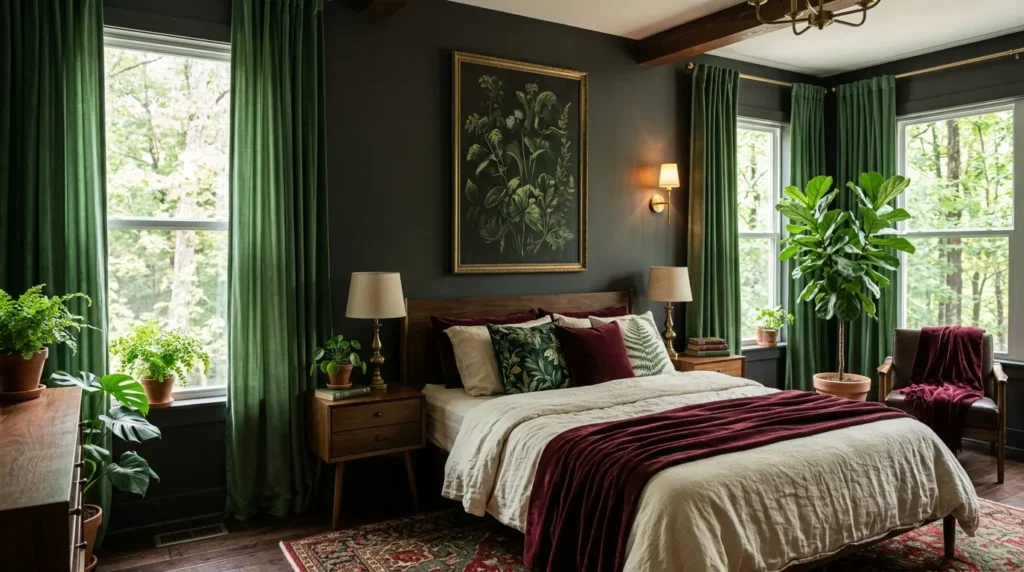
Quick Benefits
- Adds softness
- Creates visual height
- Frames natural light
- Enhances the moody atmosphere
- Adds privacy
Why It Works
Window treatments are often overlooked, but they can make a dark bedroom feel much more finished.
Full-length curtains introduce a large vertical element and can visually emphasize ceiling height.
For a botanical room, you can choose a subtle floral pattern, rich forest green, charcoal, or warm brown.
The important thing is to coordinate the curtains with the rest of the palette without repeating every pattern.
How To Style It
Hang curtains as high as practical to create a taller appearance.
Choose floor-length panels that lightly touch or break near the floor.
Use solid forest green curtains if the walls are patterned.
Choose cream or oatmeal linen if the bedroom already has dark walls and floral bedding.
For a more dramatic room, use charcoal or deep brown velvet-style curtains.
Keep the curtain hardware simple if the fabric is heavily patterned.
How to Make Dark Botanical Decor Feel Modern
Dark botanical doesn’t have to mean old-fashioned.
The easiest way to modernize it is to simplify the furniture.
Choose a streamlined bed, clean-lined nightstands, and simple lighting.
Then allow the botanical elements to provide the personality.
A deep green wall with a simple walnut bed and oversized botanical artwork can look contemporary while still feeling atmospheric.
You can also limit the palette to three main colors.
For example:
Forest green + warm ivory + walnut
or
Charcoal + sage + brass
or
Deep olive + cream + black
This restrained approach keeps the room sophisticated.
Small Dark Botanical Bedroom Ideas
A small bedroom can actually benefit from a darker palette because it can create a cozy, enveloping feeling.
However, balance is important.
Choose one major dark element rather than making every surface dark.
A botanical accent wall paired with cream bedding can be enough.
Use mirrors to reflect light.
Choose furniture with exposed legs.
Keep pathways clear.
Use vertical curtains to emphasize height.
Add plants near windows or in corners rather than placing them on every available surface.
A few large-scale elements often work better than lots of tiny decorations.
Dark Botanical Bedroom on a Budget
You don’t need to replace your furniture to create this look.
Start with textiles.
A dark floral duvet cover, velvet pillows, and a textured throw can immediately change the room.
Next, add artwork.
Thrift stores and vintage markets can be excellent sources for botanical-style frames and artwork.
Plants are another affordable way to reinforce the theme.
Finally, consider lighting.
A warm table lamp can make an existing bedroom feel dramatically different at night.
If you want to make a bigger change, paint one wall rather than the entire room.
This lets you experiment with the aesthetic while keeping the project manageable.
Frequently Asked Questions
What colors work best for a dark botanical bedroom?
Deep forest green, olive, charcoal, black, chocolate brown, burgundy, navy, and muted plum all work well. Balance these colors with warm ivory, cream, beige, and natural wood to keep the bedroom comfortable.
Is dark green a good bedroom color?
Yes. Deep green can create a cozy, nature-inspired atmosphere, particularly when balanced with warm lighting and lighter textiles. Test paint samples in your actual room because natural and artificial light can significantly change how green appears.
How do you make a dark botanical bedroom cozy?
Layer soft textiles such as linen, cotton, wool, and velvet. Add warm lighting, natural wood furniture, cream bedding, rugs, and greenery. These elements soften the darker palette and create a comfortable atmosphere.
Can dark botanical decor work in a modern bedroom?
Absolutely. Pair deep green or charcoal with clean-lined furniture, simple artwork, natural wood, and restrained accessories. Use botanical patterns selectively rather than covering every surface.
What bedding goes with dark green walls?
Cream, ivory, beige, muted blue, charcoal, and floral bedding can all work. For a bright contrast, choose warm ivory. For a more dramatic look, use dark botanical or floral bedding.
How many plants should I use in a botanical bedroom?
There isn’t a fixed number. Focus on variety and placement rather than quantity. A trailing plant on a shelf, a medium plant near the window, and one taller plant in a corner can create plenty of botanical impact.
Does a dark bedroom make a small room look smaller?
It can, but it isn’t always a disadvantage. Dark colors can make a small bedroom feel intimate and cozy. To maintain openness, use lighter bedding, mirrors, uncluttered furniture, and adequate layered lighting.
Conclusion
A dark botanical bedroom is all about creating contrast between mood and nature.
Deep green walls, charcoal accents, dramatic floral patterns, and rich wood can establish the moody foundation, while plants, warm neutrals, natural textures, and soft lighting keep the room welcoming.
You don’t need to commit to a complete makeover. Start with one dramatic change, such as a forest green wall, botanical wallpaper, or dark floral bedding. Then layer in smaller details like greenery, artwork, velvet pillows, and warm brass lighting.
Pay attention to balance as you decorate. If one area becomes particularly dark or patterned, give the eye somewhere quieter to rest with cream bedding, simple furniture, or a neutral rug.
Most importantly, make the space personal. Mix modern pieces with vintage finds, choose botanical artwork you genuinely love, and use textures that make the room comfortable for everyday life.
The result can be far more than a dramatic bedroom. With the right balance, it becomes a cozy retreat that feels connected to nature, rich in character, and distinctly your own.