
11 Botanical Interior Design Bedroom Ideas to Refresh Your Space
A bedroom inspired by nature can instantly make a home feel calmer, warmer, and more inviting. Botanical interior design is especially appealing because it isn’t limited to one decorating style. You can create a soft cottage-inspired bedroom with delicate floral prints, a modern retreat with sculptural greenery, or a richly layered space filled with natural wood, vintage artwork, and lush plants.
The beauty of botanical decorating is that you don’t need to turn your bedroom into an indoor jungle. Nature can appear through subtle details such as leafy artwork, green walls, organic textures, botanical fabrics, or a single statement plant. When these elements are layered thoughtfully, the result feels intentional rather than overly themed.
I’ve noticed that the most successful botanical bedrooms usually begin with a restrained color palette. Greens, warm whites, earthy browns, muted blues, and gentle floral shades provide a natural foundation, while wood, linen, rattan, and woven materials add depth.
This approach is also practical for different homes and budgets. Renters can rely on removable wallpaper, artwork, bedding, plants, and portable furniture, while homeowners can explore painted accent walls, built-in shelving, statement wallpaper, or custom cabinetry.
Whether your bedroom feels plain, outdated, overly neutral, or simply disconnected from nature, a few carefully chosen changes can make a remarkable difference.
These botanical bedroom ideas will help you bring organic beauty indoors while creating a comfortable space that feels fresh, personal, and easy to live with every day.
Table of Contents
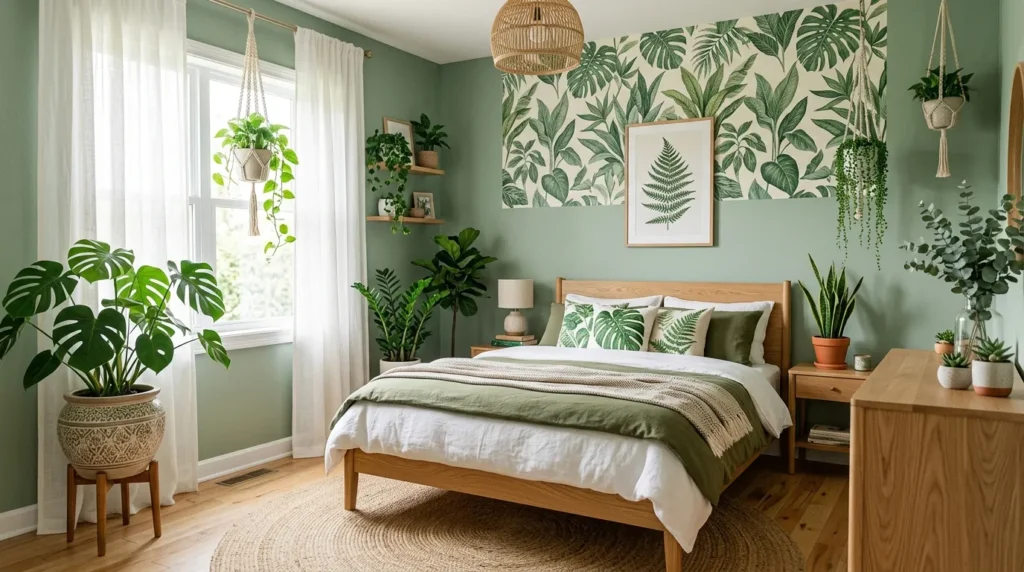
1. Leafy Statement Wallpaper
Turn one wall into a dramatic botanical focal point with leafy patterns.
2. Layered Greenery
Use plants of different heights and shapes to create a natural indoor garden.
3. Earthy Green Walls
Build a calming foundation with sage, olive, moss, or forest green.
4. Botanical Gallery Wall
Decorate with botanical prints, pressed flowers, landscapes, and natural artwork.
5. Natural Wood Furniture
Bring warmth and organic character into the bedroom with beautiful wood tones.
6. Linen Layered Bedding
Use breathable, textured fabrics to create a relaxed nature-inspired bed.
7. Woven Accent Pieces
Introduce rattan, cane, jute, and wicker for tactile natural texture.
8. Indoor Plant Corner
Turn an unused bedroom corner into a lush, styled greenery display.
9. Floral Accent Textiles
Add botanical patterns through curtains, pillows, throws, and rugs.
10. Organic Lighting
Use warm lighting and natural materials to create a softer atmosphere.
11. Nature Inspired Palette
Combine greens, neutrals, woods, and subtle floral tones into a cohesive scheme.
1. Leafy Statement Wallpaper
Quick Benefits
- Creates an immediate visual focal point
- Adds pattern without excessive accessories
- Works beautifully behind the bed
- Can make a plain bedroom feel more finished
- Offers strong visual impact for Pinterest
Why It Works
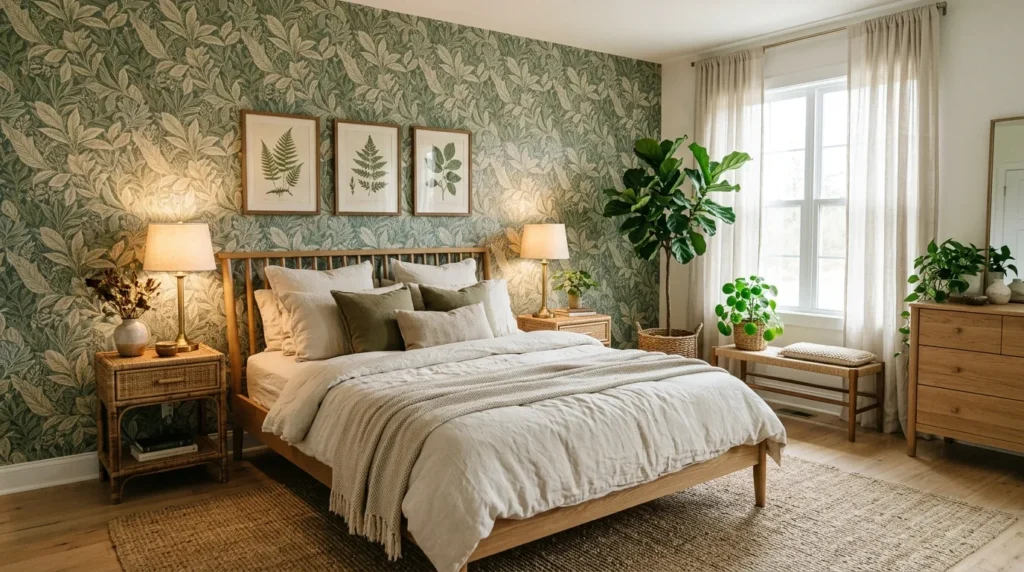
Botanical wallpaper can completely change the character of a bedroom because it introduces color, pattern, and organic movement across a large surface. Instead of adding dozens of decorative pieces, you can let the wall itself become the main expression of the design.
Large tropical leaves create a bold and contemporary feeling, while delicate branches, ferns, and small floral motifs feel softer and more traditional. Muted greens and warm neutrals are particularly versatile because they pair easily with wood and natural fabrics.
The scale of the pattern should also relate to the size of the room. Large patterns can make a statement in spacious bedrooms, while smaller motifs often feel more comfortable in compact spaces.
How To Style It
The wall behind the bed is usually the easiest place to use botanical wallpaper. Keep the remaining walls relatively quiet so the pattern remains the star.
If the wallpaper features deep green leaves, pair it with cream bedding, warm wood furniture, and simple brass lighting. If the wallpaper is light and delicate, you can introduce additional botanical patterns through pillows or curtains.
For renters, removable wallpaper is a practical option. You can also create a framed wallpaper panel behind the bed for a temporary statement.
Avoid matching every accessory to the wallpaper. Instead, pull one or two colors from the pattern and repeat them naturally throughout the room.
2. Layered Greenery
Quick Benefits
- Adds genuine natural character
- Creates height and visual movement
- Softens furniture lines
- Introduces texture
- Works across many decorating styles
Why It Works
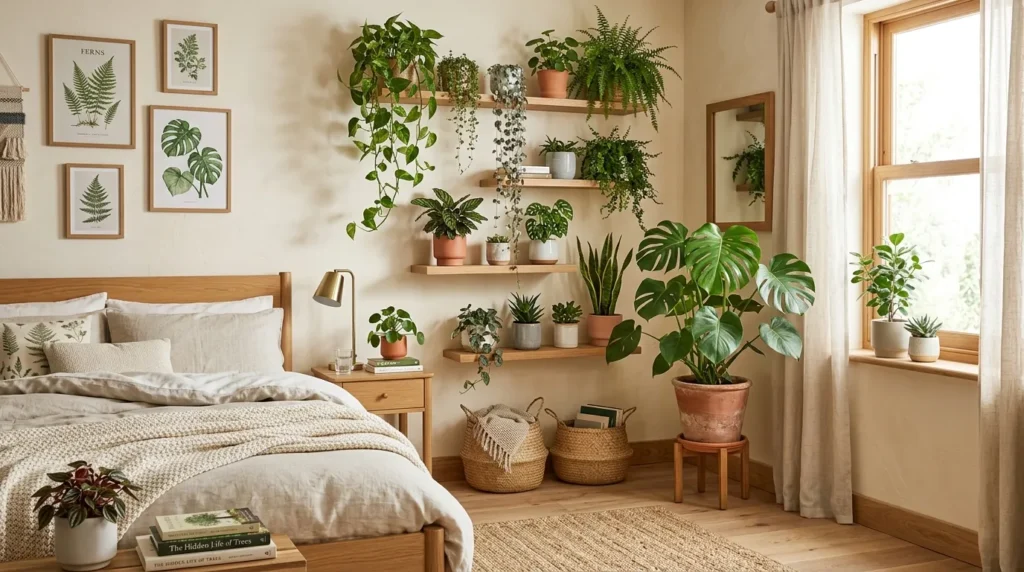
Plants are one of the simplest ways to bring botanical design into a bedroom because they add living texture and natural variation. A room filled with straight furniture edges immediately feels softer when organic leaves and branches are introduced.
Rather than placing identical plants throughout the room, combine different shapes and heights. A tall floor plant can anchor a corner, while smaller plants can decorate a dresser or nightstand.
Trailing plants add another dimension because their leaves naturally cascade downward, creating movement against shelves or walls.
You don’t need a huge collection. A few healthy plants placed thoughtfully can create a stronger effect than filling every available surface.
How To Style It
Start with one substantial plant in an empty corner beside the dresser, bed, or window. Add a smaller plant to a nightstand or shelf.
Use planters that complement your overall interior. Terracotta and woven baskets create a relaxed earthy appearance, while ceramic planters feel cleaner and more contemporary.
Vary the heights of your plants using stools, plant stands, shelves, and floor placement.
Always consider the actual light conditions before selecting plants. A bedroom with filtered northern light requires different plant choices than a bright, sunny room.
If maintenance is a concern, use a few realistic faux plants rather than overcrowding the room with unhealthy living plants.
3. Earthy Green Walls
Quick Benefits
- Creates a calming foundation
- Makes natural materials stand out
- Works with modern and traditional furniture
- Visually connects the bedroom to nature
- Can transform the room with one change
Why It Works
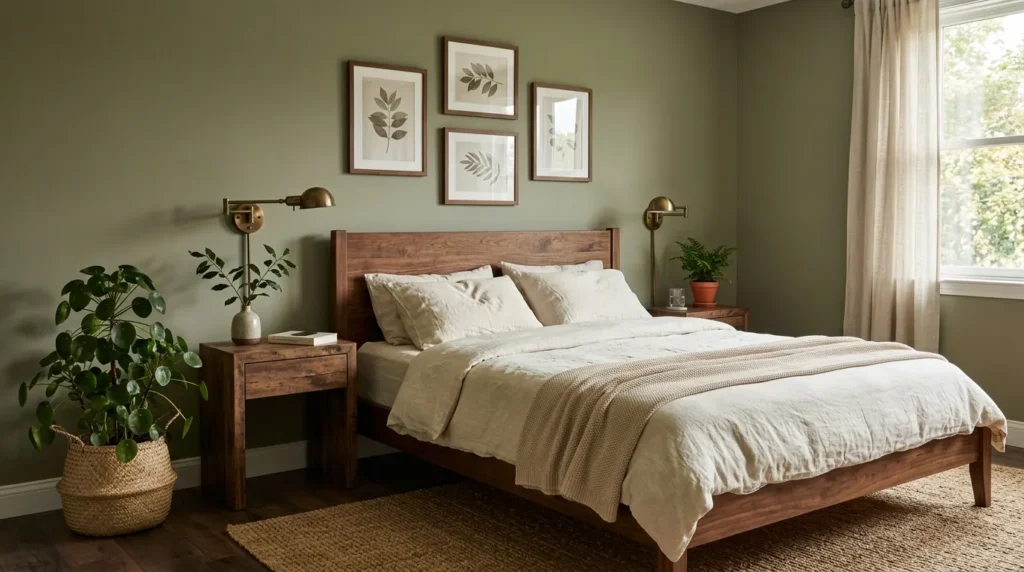
Green is one of the most versatile colors for a botanical bedroom because it naturally reflects the shades found outdoors. The right green can make the room feel calm, grounded, sophisticated, or dramatic depending on its depth.
Sage creates a soft and airy atmosphere, olive adds warmth, moss feels earthy, and forest green brings drama.
The finish matters as well. A soft matte or low-sheen finish tends to feel more sophisticated than a highly reflective surface.
Natural light should guide your selection. A deep green may look beautiful in a bright bedroom but feel considerably darker in a room with limited daylight.
How To Style It
Use green on the wall behind the bed if you want an accent wall, or paint all four walls for a more enveloping atmosphere.
Pair sage with ivory, pale oak, beige, and woven textures.
Pair olive or forest green with walnut, cream, brass, and muted terracotta for a richer look.
Repeat the wall color subtly through artwork, pillows, or plants rather than trying to match everything exactly.
If painting isn’t possible, introduce green through an upholstered headboard, oversized artwork, removable wallpaper, or a large textile.
4. Botanical Gallery Wall
Quick Benefits
- Adds personality to empty walls
- Works without permanent renovations
- Can combine multiple natural motifs
- Creates a beautiful focal point
- Easy to customize over time
Why It Works
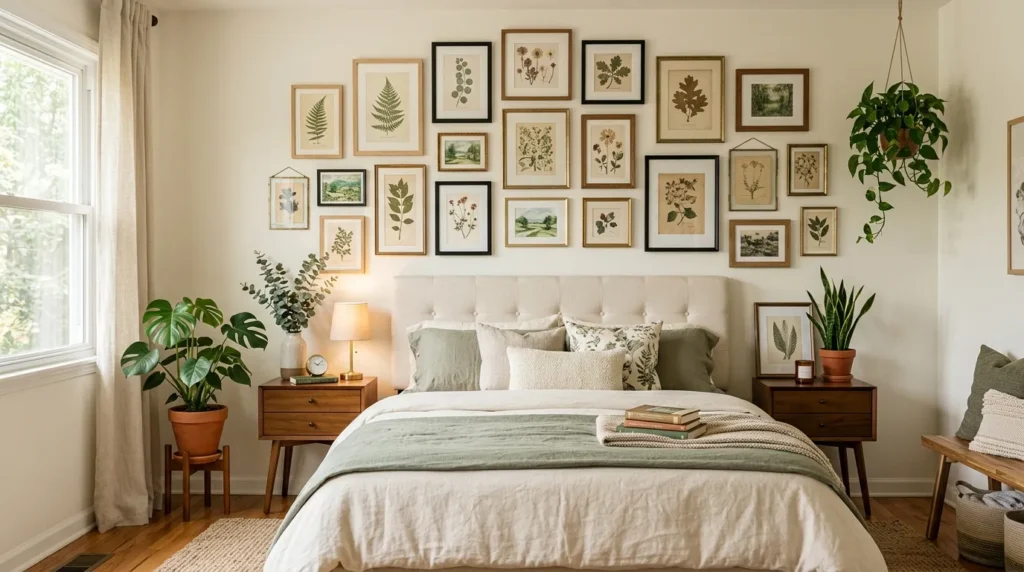
Botanical artwork can create the feeling of nature without requiring a large plant collection. Vintage botanical illustrations, pressed flowers, leaf studies, landscapes, mushrooms, herbs, and floral watercolors all contribute to the aesthetic.
A gallery wall also allows you to tell a visual story. Rather than buying a perfectly coordinated set, mix artwork that shares a similar color palette.
Natural wood frames create a warm organic feeling, while black or aged brass frames can make the room feel more sophisticated.
This approach works especially well when your walls are neutral and you want to add personality without introducing a large amount of color.
How To Style It
Place the gallery wall above the bed, dresser, or a small writing desk.
Begin with your largest artwork and arrange smaller pieces around it. Mix vertical and horizontal frames while maintaining enough breathing room between them.
You can combine botanical prints with small landscapes, abstract organic shapes, or vintage photographs.
If the room already has bold wallpaper, simplify the artwork. A single large botanical print may be more effective than another busy gallery wall.
For renters, lean framed pieces against shelves or dressers to avoid unnecessary wall damage.
5. Natural Wood Furniture
Quick Benefits
- Adds warmth to green interiors
- Reinforces the connection to nature
- Provides visual contrast
- Works with almost any botanical palette
- Adds texture through visible wood grain
Why It Works
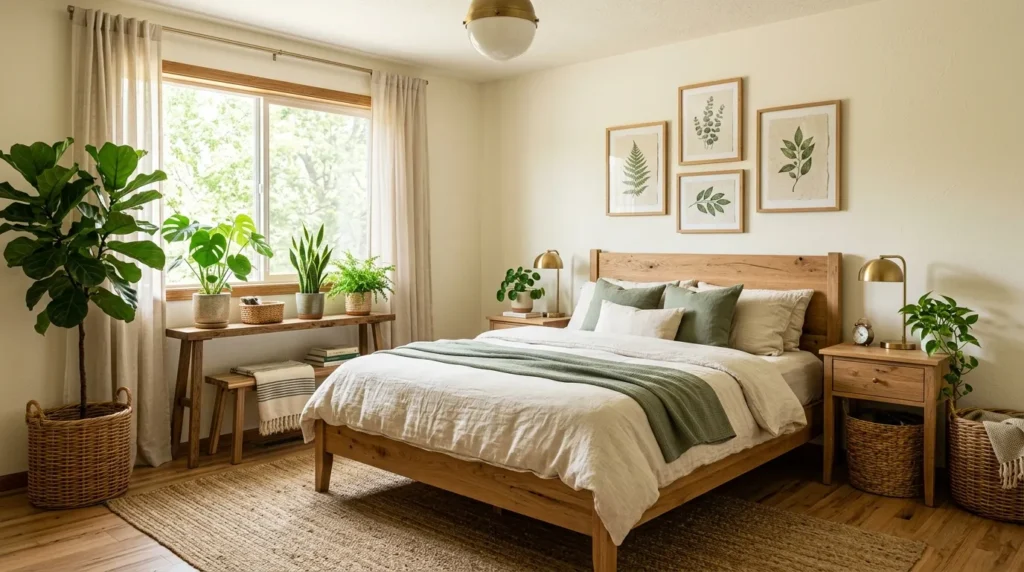
Natural wood is one of the strongest materials for botanical interior design because it brings an unmistakably organic quality into the room.
Light oak, ash, pine, walnut, teak, and reclaimed wood each create a slightly different atmosphere. Pale woods keep the room airy and contemporary, while walnut and darker woods create warmth and traditional character.
Wood also pairs naturally with plants. Green leaves against warm wood grain create a simple combination that rarely feels dated.
You don’t need matching furniture throughout the bedroom. A slightly varied collection of wooden pieces can actually make the space feel more collected.
How To Style It
Choose one dominant wooden element, such as the bed frame, dresser, or nightstands. Repeat smaller amounts of the same material through shelves, frames, stools, or trays.
For a modern botanical room, pair light oak with sage, ivory, and simple black accents.
For a traditional room, combine walnut with olive green, cream, brass, and vintage artwork.
If your existing furniture is painted, introduce natural wood through a bench, floating shelf, picture frame, or plant stand.
Allow the grain to remain visible whenever possible. Natural imperfections make the room feel less manufactured.
6. Linen Layered Bedding
Quick Benefits
- Adds natural texture
- Creates a relaxed atmosphere
- Works beautifully with green shades
- Makes the bed look inviting
- Can easily be changed seasonally
Why It Works
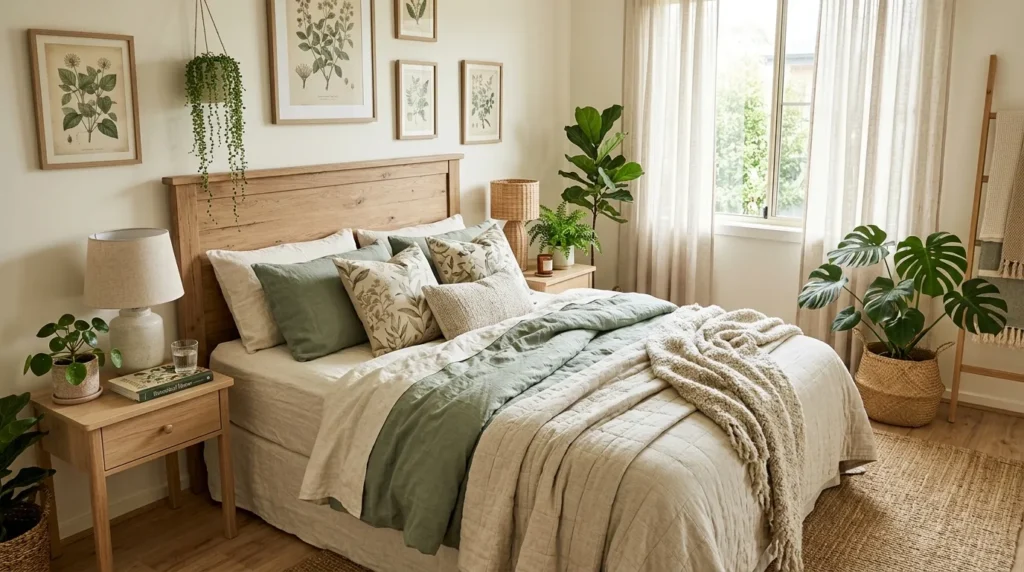
A botanical bedroom benefits from fabrics that feel natural rather than overly polished. Linen is particularly effective because its relaxed texture creates a connection to the casual beauty of nature.
Cream, oatmeal, sage, muted blue, terracotta, and soft beige linen can all work beautifully with botanical decor.
Layering different textures makes the bed look comfortable rather than staged. A linen duvet can be paired with a cotton quilt, woven blanket, or knitted throw.
The slight irregularity of linen also works well with natural wood and botanical patterns because the entire room shares a relaxed visual language.
How To Style It
Start with cream or warm white sheets. Add a linen duvet in sage, beige, olive, or another earthy shade.
Fold a textured blanket across the foot of the bed and add pillows in complementary colors.
If the walls feature bold botanical wallpaper, keep the bedding relatively simple. If your walls are neutral, introduce a subtle floral or leaf pattern through one accent pillow.
Use materials that feel comfortable in your climate. Breathable fabrics are especially useful for warm bedrooms, while heavier quilts and throws can be layered during colder months.
7. Woven Accent Pieces
Quick Benefits
- Adds tactile depth
- Creates an organic feeling
- Works with neutral color palettes
- Complements plants beautifully
- Helps soften modern furniture
Why It Works
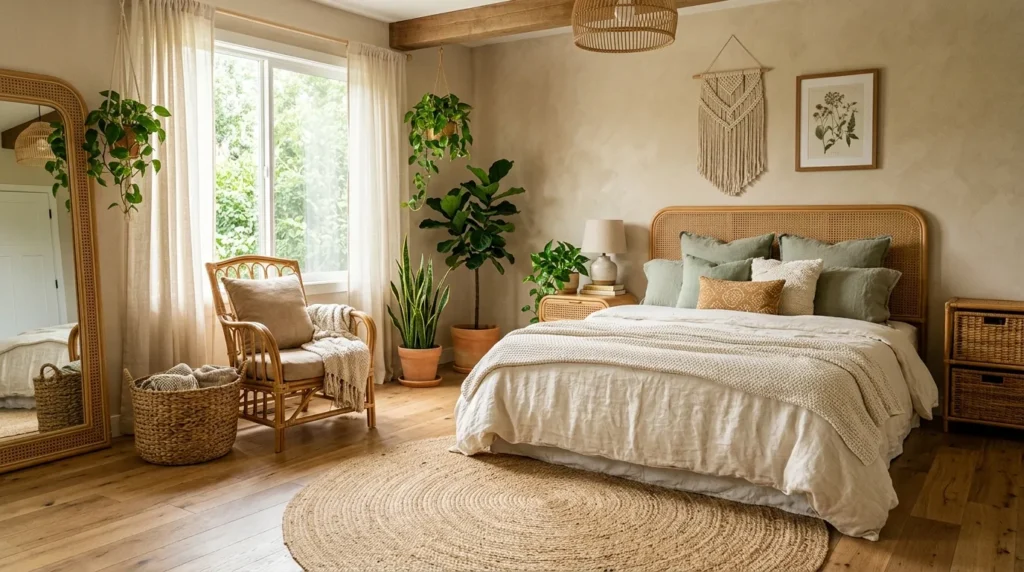
Woven materials are a simple way to reinforce a botanical aesthetic without adding more plants or patterns. Rattan, cane, wicker, jute, seagrass, and woven cotton all introduce irregular texture that resembles natural materials found outdoors.
These pieces are especially useful when the bedroom is already fairly minimal. A woven basket or rattan bench can make a simple room feel warmer without cluttering the space.
Woven textures also pair beautifully with green, cream, natural wood, and warm beige.
How To Style It
Use a large woven basket beside the bed for blankets or laundry. A rattan bench at the foot of the bed can provide seating while introducing texture.
A jute or natural-fiber rug can anchor the furniture and create a softer surface beneath your feet.
For lighting, consider a woven pendant or lampshade. When illuminated, the material can cast subtle patterns across nearby surfaces.
Don’t use every woven material available. Choose two or three and repeat them in small ways throughout the room.
8. Indoor Plant Corner
Quick Benefits
- Turns unused space into a focal point
- Adds height and greenery
- Creates a small indoor garden
- Works well beside windows
- Makes the bedroom feel more intentional
Why It Works
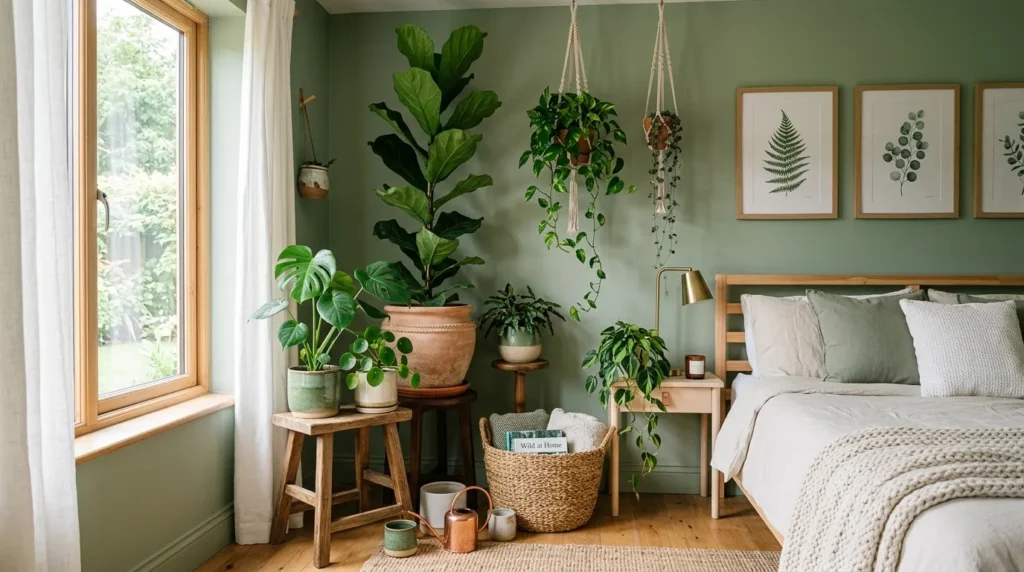
An indoor plant corner is particularly effective when your bedroom has an awkward or unused area. Instead of leaving the corner empty, turn it into a small collection of greenery.
Grouping plants together creates a stronger visual statement than scattering them randomly. Different leaf shapes and heights make the display feel layered and natural.
This arrangement also creates a natural transition between the floor, furniture, and walls.
How To Style It
Start with a tall plant that suits the available light. Add one or two smaller plants on wooden stands or a small stool.
Use ceramic, terracotta, woven, or stone-look planters to introduce additional texture.
A narrow vertical plant stand can work particularly well in small bedrooms because it provides height without consuming much floor space.
Leave a little empty space around the grouping. Plants should feel like an intentional feature rather than clutter.
If the corner receives very little natural light, consider moving the plants closer to a suitable window or choosing varieties that tolerate lower-light conditions.
9. Floral Accent Textiles
Quick Benefits
- Adds botanical pattern without wallpaper
- Easy to change
- Softens the bedroom
- Creates visual interest
- Works with many decorating styles
Why It Works
Textiles are one of the easiest ways to introduce botanical motifs because they can be changed whenever your taste evolves.
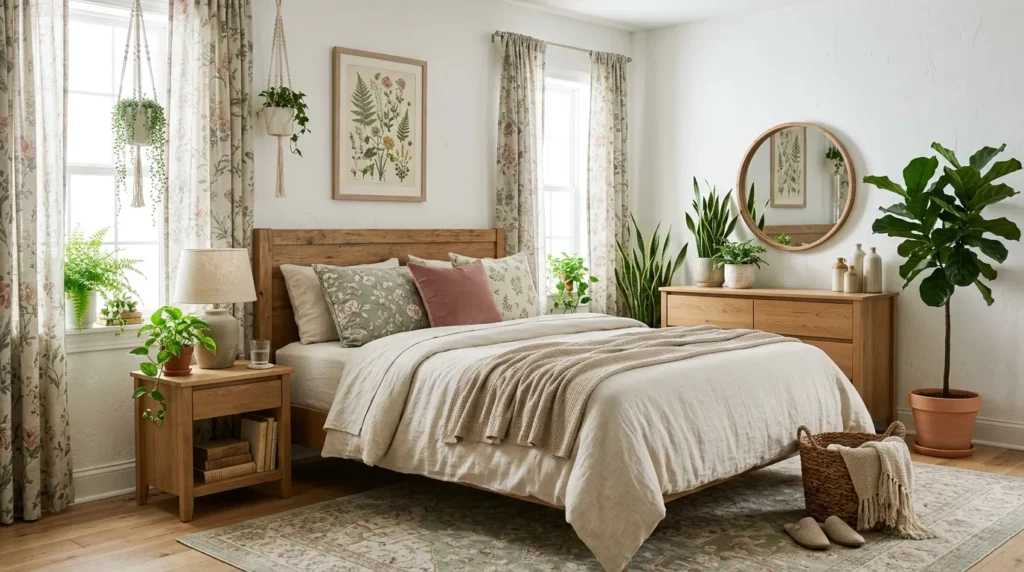
Floral curtains, leaf-patterned pillows, botanical throws, and nature-inspired rugs can all contribute to the look without making permanent changes.
The key is to avoid using every botanical pattern at once. One strong textile can become the focal point while the rest of the room provides visual breathing room.
For example, a floral duvet can work beautifully with solid curtains and simple artwork.
How To Style It
Choose one dominant botanical textile. If it’s a floral duvet, keep the curtains relatively simple.
If your bedding is neutral, use botanical curtains or an accent rug to introduce pattern.
Repeat one color from the pattern in another small accessory. This creates cohesion without making everything match.
For a romantic bedroom, choose delicate flowers and muted colors. For a modern room, look for oversized leaves or abstract botanical motifs.
Natural fabrics such as cotton and linen generally complement this style better than highly shiny synthetic materials.
10. Organic Lighting
Quick Benefits
- Creates a warmer evening atmosphere
- Highlights natural materials
- Adds decorative texture
- Softens green walls
- Makes the bedroom more relaxing
Why It Works
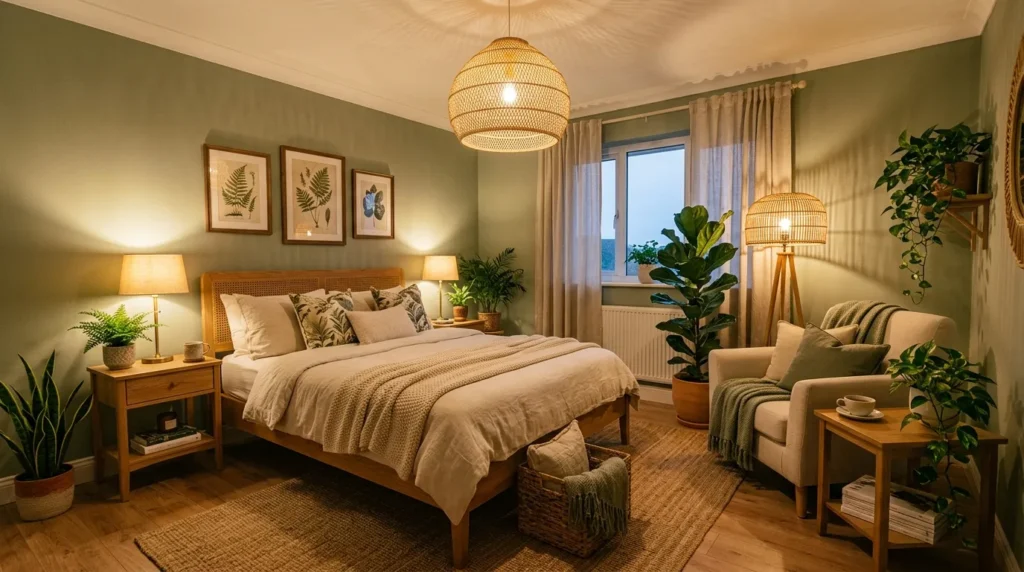
Lighting can dramatically change the appearance of botanical colors and textures. Warm light makes wood, green paint, woven materials, and cream fabrics feel richer and more inviting.
Instead of relying on one overhead fixture, layer several sources throughout the room.
Bedside lamps provide practical reading light, while a floor lamp can illuminate a darker corner. A pendant or ceiling fixture can provide overall illumination without dominating the design.
Natural materials such as rattan, linen, ceramic, and aged brass can make lighting fixtures feel like part of the botanical story.
How To Style It
Place warm table lamps on your nightstands whenever possible. Choose fabric, ceramic, or woven shades that diffuse the light.
A rattan pendant can become a beautiful statement above the center of the room.
For a reading corner, use a floor lamp with an adjustable shade so the light is practical as well as decorative.
Avoid cool-toned bulbs if you’re trying to create a cozy botanical atmosphere. Warm lighting generally complements earthy greens and natural materials better.
Use several smaller sources rather than making one bright ceiling fixture responsible for the entire room.
11. Nature Inspired Palette
Quick Benefits
- Creates a cohesive visual foundation
- Makes mixing patterns easier
- Works with many interior styles
- Helps coordinate furniture and accessories
- Creates a naturally calming atmosphere
Why It Works
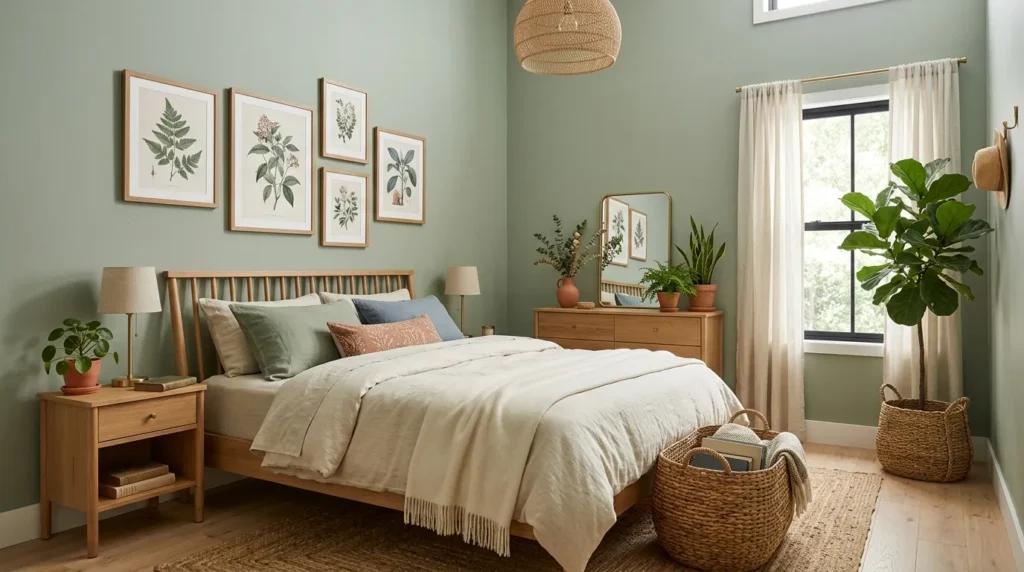
A well-planned color palette makes botanical decorating much easier. Nature provides an almost endless range of colors, but your bedroom doesn’t need all of them.
Start with a dominant shade inspired by the outdoors, such as sage, olive, moss, forest green, warm beige, or soft blue. Then add natural neutrals and one or two subtle accent colors.
Cream, warm white, brown, taupe, and natural wood can connect stronger shades and keep the room from feeling busy.
Muted terracotta, dusty rose, pale yellow, or soft blue can provide small moments of contrast.
The goal is not to reproduce nature literally. Instead, use natural colors as inspiration for a balanced interior.
How To Style It
Choose your dominant color for the largest surfaces—walls, bedding, or rugs.
Then introduce supporting colors through curtains, pillows, artwork, plants, and accessories.
For a soft botanical bedroom, combine sage, cream, pale oak, and dusty blue.
For a richer interior, combine olive, walnut, ivory, terracotta, and aged brass.
For a modern bedroom, use muted green, warm white, light wood, black accents, and plenty of open space.
Keep the strongest colors concentrated in a few areas so the eye has places to rest.
Creating a Cohesive Botanical Bedroom
The most successful botanical bedrooms don’t simply contain plants. They create a consistent visual connection to nature through color, texture, materials, and pattern.
Start with the room’s largest surfaces. Decide whether your walls, bedding, or furniture will establish the strongest botanical statement.
If you choose bold wallpaper, keep the rest of the room relatively restrained. If your walls are neutral, you can introduce more personality through bedding, artwork, plants, and curtains.
Natural materials are particularly helpful because they connect separate elements. A wooden bed can relate to a rattan basket, which can relate to a woven pendant and a jute rug.
Color repetition is equally important. If you use sage green on the wall, repeat it subtly in a pillow or artwork. If your botanical print includes dusty pink, use that color sparingly elsewhere.
The goal is not perfect matching. It is visual continuity.
For small bedrooms, prioritize vertical greenery, light colors, multifunctional furniture, and fewer statement pieces.
For larger bedrooms, consider creating zones, such as a reading corner, plant display, or small desk surrounded by botanical artwork.
If you’re decorating a rental, focus on reversible updates such as removable wallpaper, textiles, plants, artwork, rugs, and portable lighting.
Most importantly, choose elements that support how you actually use your bedroom. A beautiful botanical room should still provide comfortable sleeping, useful storage, practical lighting, and enough clear space to move around.
When nature-inspired beauty and everyday functionality work together, the result feels much more personal and lasting.
Frequently Asked Questions
What is botanical interior design for a bedroom?
Botanical interior design uses nature-inspired colors, plants, organic shapes, natural materials, and leaf or floral patterns to create a connection with the outdoors. In a bedroom, this might include green walls, botanical artwork, natural wood furniture, linen bedding, woven accessories, and indoor plants.
What colors work best for a botanical bedroom?
Sage, olive, moss, forest green, cream, beige, warm brown, muted blue, terracotta, and soft floral shades all work well. Start with one dominant color and support it with natural neutrals to keep the bedroom cohesive.
Can botanical bedroom decor work in a small room?
Yes. Use vertical plants, narrow shelving, hanging greenery, light-colored bedding, and one strong botanical focal point. Avoid filling every surface with plants and accessories. Keeping some open space will make the room feel more comfortable.
How can I create a botanical bedroom without using wallpaper?
Use plants, botanical artwork, green paint, floral bedding, natural wood, woven textures, and patterned curtains instead. These elements can create a strong botanical identity without making permanent changes to the walls.
What furniture looks best with botanical decor?
Natural wood furniture is one of the easiest choices. Oak creates a lighter appearance, while walnut and darker woods add warmth. Rattan, cane, vintage furniture, and simple upholstered pieces can also complement botanical interiors.
How many plants should I have in a botanical bedroom?
There isn’t a fixed number. A few thoughtfully placed plants can be enough. Focus on varying their heights and leaf shapes rather than filling the room. Always choose plants based on the actual light and environmental conditions in your bedroom.
How do I keep botanical decor from looking cluttered?
Use a limited color palette and choose one or two major botanical patterns. Balance plants and decorative objects with empty space. If you have bold wallpaper, use simpler bedding and artwork. If your bedding is heavily patterned, keep the walls and curtains quieter.
Conclusion
Botanical interior design can transform an ordinary bedroom into a space that feels calmer, warmer, and more connected to nature. The beauty of the style is its flexibility. You can make it dramatic with deep green walls and oversized foliage, light and airy with sage and cream, or warm and traditional with walnut furniture and vintage botanical artwork.
You don’t need to make every element botanical. In fact, the most sophisticated rooms usually combine natural details with plenty of neutral space.
Start with one feature that will have the greatest impact for your room. A statement wall, beautiful wooden bed, layered linen bedding, or collection of plants can provide the foundation.
Then build slowly with artwork, woven textures, soft lighting, and nature-inspired colors.
If you’re working with a small budget, focus on portable changes first. Plants, textiles, artwork, rugs, baskets, and lighting can dramatically change the atmosphere without requiring a renovation.
Most importantly, let your bedroom remain functional. Choose plants that suit your environment, fabrics that feel comfortable, lighting that supports your evening routine, and furniture that works for your storage needs.
The result should feel less like a themed room and more like a natural extension of your home.