
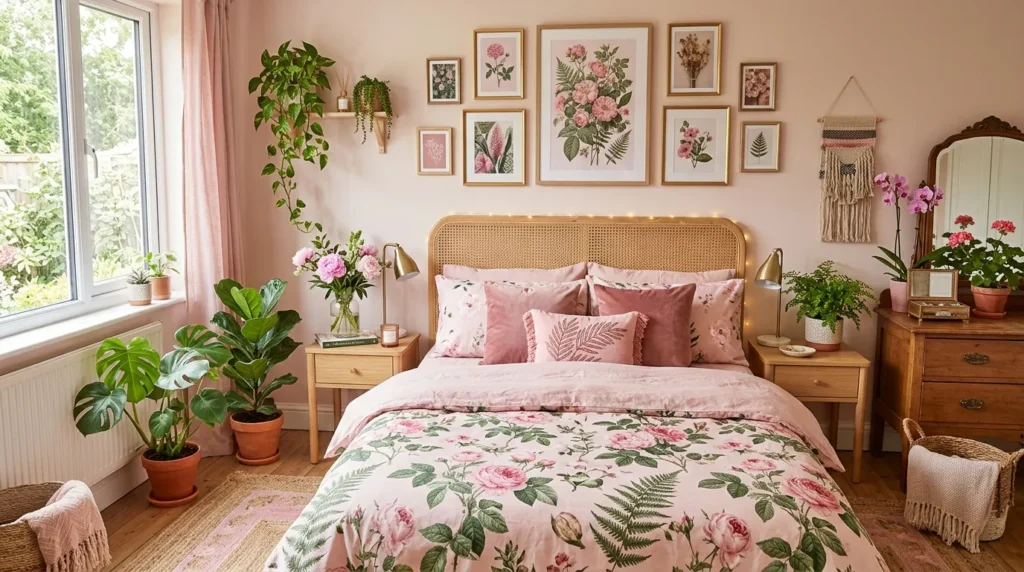
10 Pink Botanical Bedroom Decor Ideas to Bloom Your Space
Pink and botanical decor make a surprisingly beautiful combination. The softness of pink balances the organic energy of leaves, branches, and flowers, creating a bedroom that feels romantic without becoming overly sweet. Depending on the shades and materials you choose, the look can feel elegant, modern, vintage, cottage-inspired, or wonderfully cozy.
The secret is finding the right balance between floral beauty and everyday comfort. A bedroom covered in bright pink and busy floral patterns can quickly feel overwhelming, while a carefully layered palette of blush, dusty rose, sage, cream, and natural wood can feel sophisticated and timeless.
In my experience, the most successful pink botanical bedrooms don’t treat pink as the only star. Instead, they use it as a warm accent that works alongside greenery, natural textures, botanical artwork, and soft neutral foundations.
You can bring this look into almost any bedroom, too. Renters can use bedding, artwork, curtains, rugs, and removable wallpaper, while homeowners can experiment with painted walls, upholstered headboards, built-in shelving, or statement wallpaper.
Whether you prefer barely-there blush or a richer dusty rose, these ideas will help you create a bedroom that feels fresh, feminine, cozy, and connected to nature.
From romantic floral walls to leafy green accents and natural wood furniture, these decorating ideas show how to make pink botanicals feel stylish rather than overly themed.
Table of Contents
1. Blush Botanical Wallpaper
Create a romantic focal wall with soft pink foliage and floral patterns.
2. Pink Linen Bedding
Layer blush and rose-colored textiles for a soft, relaxed bedroom.
3. Sage Green Accents
Balance pink with natural green tones for a sophisticated botanical palette.
4. Floral Gallery Wall
Decorate with botanical artwork to create a collected, artistic feeling.
5. Natural Wood Furniture
Warm up pink decor with organic wood tones and natural finishes.
6. Pink Upholstered Headboard
Make the bed the centerpiece with a soft pink fabric headboard.
7. Botanical Curtains
Bring floral and leafy patterns to the windows with elegant fabric panels.
8. Layered Plant Displays
Combine real greenery with pink accessories for a lush bedroom atmosphere.
9. Woven Natural Textures
Use rattan, jute, cane, and baskets to ground softer pink shades.
10. Romantic Botanical Lighting
Complete the room with warm lighting and delicate nature-inspired details.
1. Blush Botanical Wallpaper
Quick Benefits
- Creates an instant focal point
- Adds both color and pattern
- Works beautifully behind the bed
- Makes a plain room feel more personalized
- Can create a romantic botanical atmosphere without many accessories
Why It Works
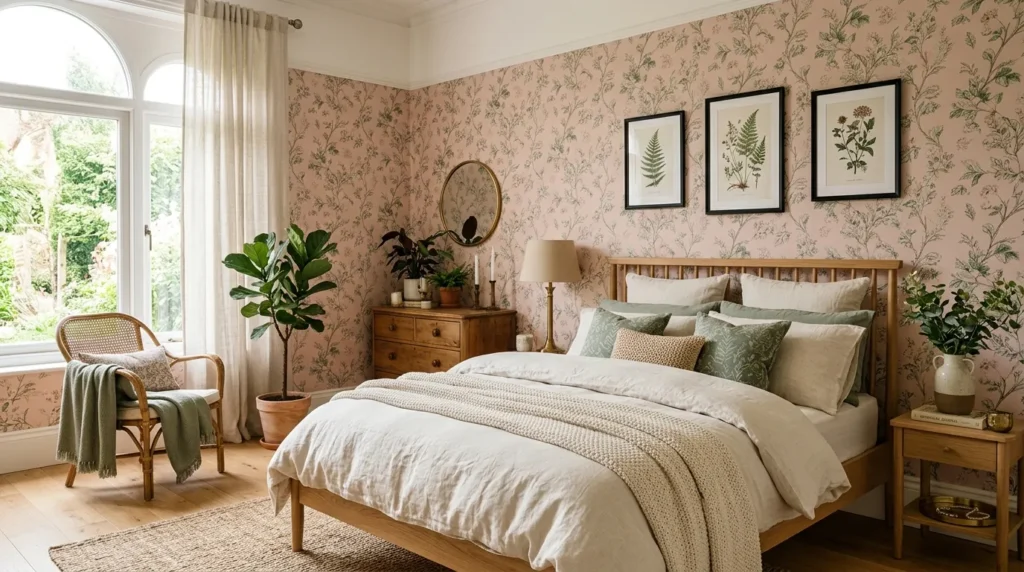
Wallpaper is one of the easiest ways to establish a decorating direction because it combines several visual elements at once. A blush background covered with delicate leaves, climbing vines, or soft floral illustrations immediately introduces both the pink and botanical themes.
For a sophisticated bedroom, look for muted shades rather than highly saturated pink. Dusty rose, blush, antique pink, and soft mauve tend to feel more grown-up and easier to decorate around.
The scale of the botanical pattern also matters. Large leaves create a dramatic statement, while small flowers and delicate branches can make the room feel more traditional and romantic.
How To Style It
Use botanical wallpaper behind the bed to create a natural focal wall while keeping the other walls neutral. Cream, warm white, beige, and very soft gray are excellent supporting colors.
Choose solid bedding if the wallpaper has a strong pattern. If the wallpaper is delicate and understated, you can introduce a small floral pillow or botanical throw.
Natural wood furniture works particularly well because it prevents the pink from feeling too polished or sugary.
For renters, removable wallpaper or framed wallpaper panels can create a similar effect without permanently changing the walls.
Keep artwork simple when using statement wallpaper. One or two botanical prints are usually enough.
2. Pink Linen Bedding
Quick Benefits
- Adds softness without overwhelming the room
- Creates a relaxed, romantic atmosphere
- Works with both modern and vintage furniture
- Easy to change seasonally
- Introduces subtle texture
Why It Works
Bedding is one of the simplest ways to bring pink into a bedroom because you can experiment with color without committing to a permanent change.
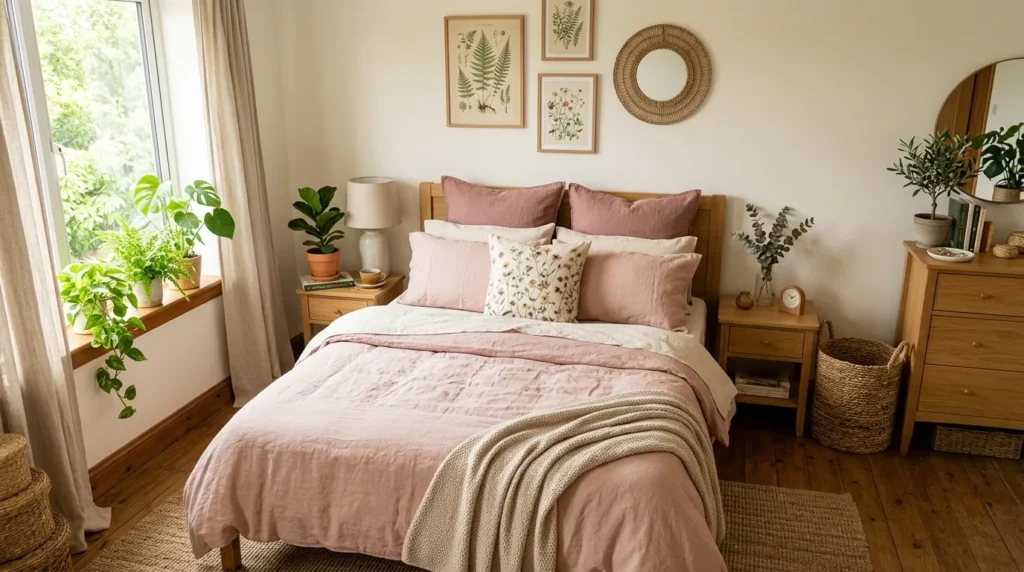
Linen is especially beautiful because its naturally relaxed texture keeps pink from looking overly formal. Blush, dusty rose, muted coral, and warm pink all pair beautifully with cream and natural beige.
Layering several shades can create more depth than choosing one matching bedding set. A blush duvet, cream sheets, dusty rose pillows, and a soft beige throw can feel sophisticated and inviting.
The slightly rumpled texture of linen also works beautifully with botanical decorating because it echoes the relaxed, organic feeling of nature.
How To Style It
Start with cream or ivory sheets as your foundation. Add a pink duvet cover, quilt, or comforter, then layer one or two accent blankets at the foot of the bed.
Use pillows in several related shades rather than choosing identical pinks throughout the bed.
A muted floral pillow can introduce the botanical theme without making the bedding too busy.
For a more contemporary bedroom, keep the pink pale and combine it with white, oak, and sage. For a romantic look, introduce dusty rose, brass, vintage artwork, and soft floral patterns.
The goal is to create layers that look comfortable enough for everyday use.
3. Sage Green Accents
Quick Benefits
- Balances pink beautifully
- Reinforces the botanical theme
- Adds an earthy quality
- Works with warm and cool pinks
- Creates a sophisticated color palette
Why It Works
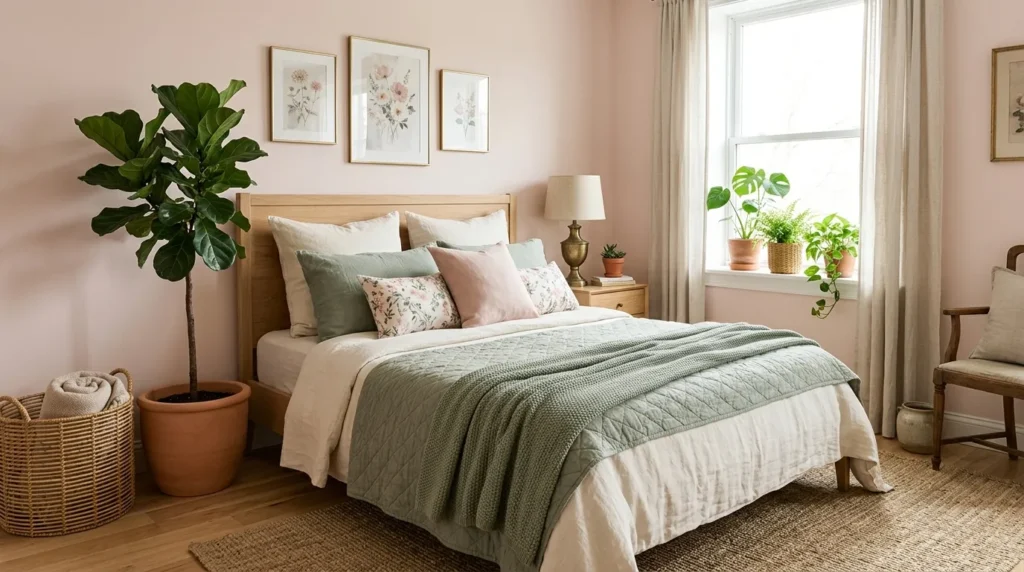
Green and pink are naturally connected through flowers and foliage, which makes them an effortless combination for a botanical bedroom. Sage is particularly useful because it has a muted quality that prevents the room from becoming too colorful.
The combination of blush pink and sage green feels soft and calming, while dusty rose with olive can create a richer, more traditional atmosphere.
You can also use deeper forest green if you want stronger contrast. The darker green provides visual weight and can make pale pink accents feel more sophisticated.
How To Style It
Use sage green through pillows, curtains, artwork, a rug, or a painted accent wall.
If the walls are pink, keep the green relatively restrained. A few carefully placed accents will create balance without competing with the wallpaper or paint.
For a neutral bedroom, use sage bedding with blush pillows and botanical artwork.
Natural wood and cream should act as connecting colors between the two shades.
If you’re decorating a small room, keep the dominant colors light. Blush, sage, ivory, and pale oak can create a bright and airy atmosphere while still feeling botanical.
4. Floral Gallery Wall
Quick Benefits
- Adds personality without major renovations
- Creates a strong decorative focal point
- Works with neutral walls
- Can combine pink and green naturally
- Allows inexpensive artwork to look collected
Why It Works
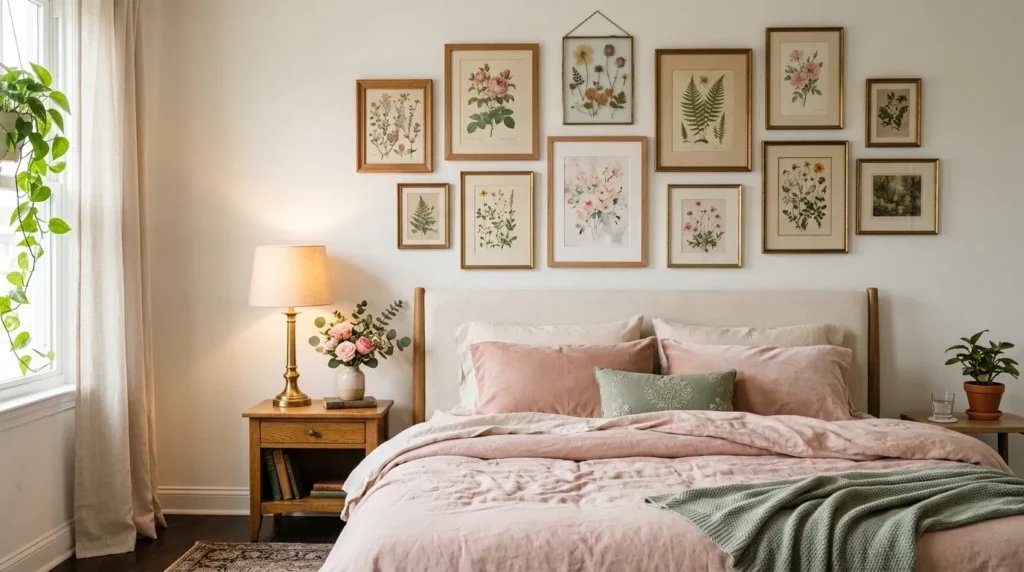
A gallery wall gives you an opportunity to bring botanical patterns into the bedroom without committing to floral wallpaper.
Pressed-flower prints, watercolor blooms, vintage botanical illustrations, leaf studies, and soft floral paintings can all work together.
The best gallery walls usually have some variation. Instead of buying ten identical frames, combine several sizes and shapes while keeping the overall palette coordinated.
Pink flowers against cream backgrounds can subtly introduce color, while green leaves reinforce the botanical theme.
How To Style It
Hang the gallery wall above the bed, dresser, or reading chair. Start with your largest piece and build outward with smaller artwork.
Use frames in natural wood, white, brass, or soft black. If your bedroom already has a lot of pink, natural wood or cream frames can keep the display grounded.
Mix botanical artwork with one or two abstract or landscape pieces to make the collection feel more personal.
For a rental, lean framed artwork against a dresser or shelf instead of mounting everything to the wall.
Keep some empty space between the artwork and other decorative elements so the room doesn’t feel crowded.
5. Natural Wood Furniture
Quick Benefits
- Grounds soft pink tones
- Adds warmth and organic character
- Works with botanical patterns
- Creates contrast against painted walls
- Makes the bedroom feel less overly feminine
Why It Works
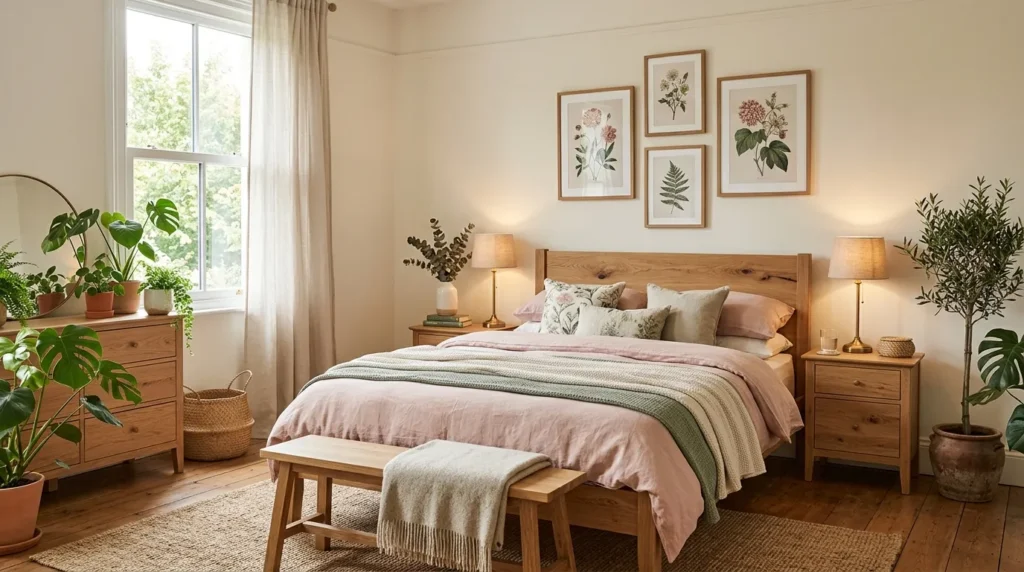
Natural wood is an excellent counterbalance to pink because it introduces warmth and texture. Pale oak creates a light Scandinavian-inspired look, while walnut and darker woods create a richer and more traditional bedroom.
Wood also naturally complements botanical elements. The grain and earthy tones reinforce the connection to nature without adding another strong color.
If your bedroom already contains several pink fabrics, wooden furniture can prevent the room from feeling too soft or visually one-dimensional.
How To Style It
Choose one substantial wood element, such as a bed frame, dresser, or nightstand, then repeat the material through smaller accents.
Pair light oak with blush, ivory, sage, and woven accessories for an airy room.
Pair walnut with dusty rose, olive, cream, and brass for a more sophisticated atmosphere.
Don’t worry about every piece matching exactly. Slightly varied wood tones can make the room feel more collected.
If your existing furniture is painted white, you can introduce natural wood through a bench, floating shelf, picture frames, or bedside table.
6. Pink Upholstered Headboard
Quick Benefits
- Creates a beautiful bed focal point
- Adds softness and comfort
- Introduces pink without painting the walls
- Works with botanical artwork
- Can make the bedroom feel more luxurious
Why It Works
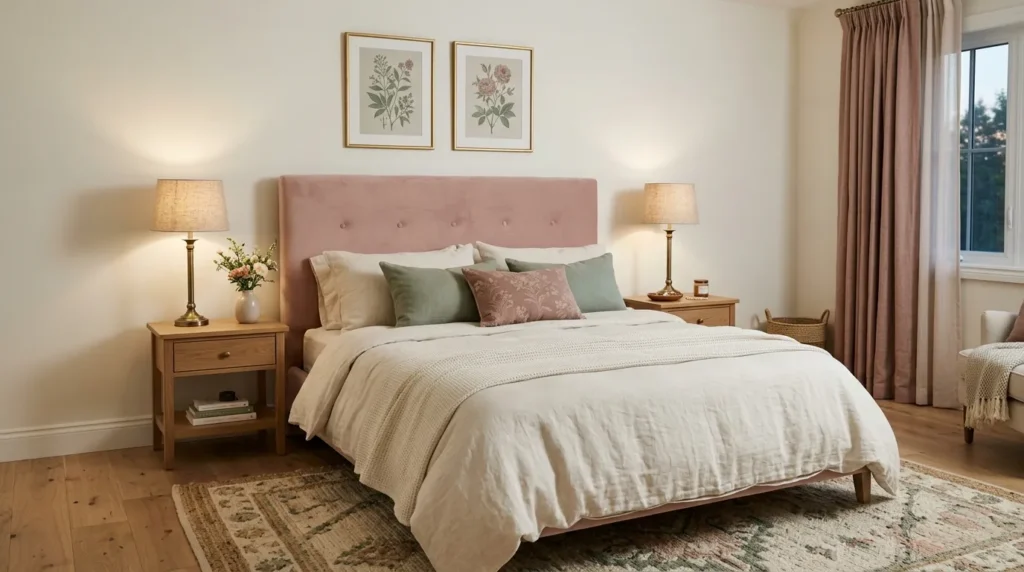
An upholstered headboard is an easy way to make the bed feel substantial and inviting. Pink upholstery can become the centerpiece of a botanical bedroom while keeping the surrounding walls neutral.
Blush velvet creates a luxurious look, while linen or cotton upholstery feels more relaxed and natural.
A curved headboard can introduce a romantic silhouette, while a simple rectangular shape feels more modern.
The right shade of pink should relate to the rest of the room. Dusty rose, blush, and muted mauve are particularly versatile.
How To Style It
Place the upholstered bed against a neutral wall and use botanical artwork above or beside it.
Layer cream bedding over the pink headboard, then add sage pillows and a muted floral throw.
If the headboard is already visually strong, avoid pairing it with extremely busy wallpaper.
For a luxurious bedroom, add brass bedside lamps, velvet cushions, and soft curtains.
For a casual botanical bedroom, choose linen upholstery, woven accessories, natural wood, and relaxed bedding.
The headboard should remain the focal point rather than competing with every other element.
7. Botanical Curtains
Quick Benefits
- Adds softness around windows
- Introduces floral pattern without wallpaper
- Can make windows appear taller
- Creates privacy and light control
- Adds another layer of color and texture
Why It Works
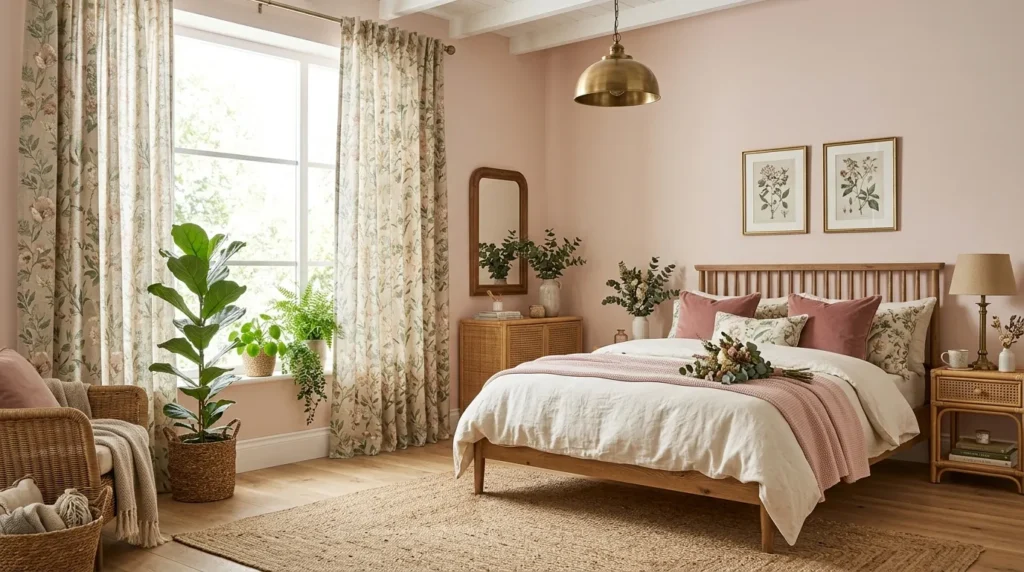
Curtains are a practical way to bring botanical patterns into a bedroom. They can create a garden-inspired feeling while remaining easy to change if your decorating style evolves.
A small-scale floral print in blush, sage, cream, and beige can create a gentle cottage-inspired atmosphere. Larger botanical leaves can feel more contemporary and dramatic.
Curtains also soften the harder lines of furniture and walls, making the bedroom feel more comfortable.
How To Style It
Hang curtain rods several inches above the window frame whenever possible and allow the panels to reach the floor.
If your bedding is already patterned, choose curtains with a simpler botanical motif or use solid sage or blush curtains.
If the walls are neutral, you can afford to make the curtains more decorative.
Layering sheer white or cream curtains underneath floral panels can create softness while allowing you to control privacy and natural light.
Choose fabric with enough weight to hang beautifully without appearing stiff.
8. Layered Plant Displays
Quick Benefits
- Adds authentic greenery
- Creates visual movement
- Balances pink decor with natural color
- Adds texture
- Makes the room feel fresh and organic
Why It Works
Living plants make a pink bedroom feel more connected to nature and help balance the softness of the color palette.
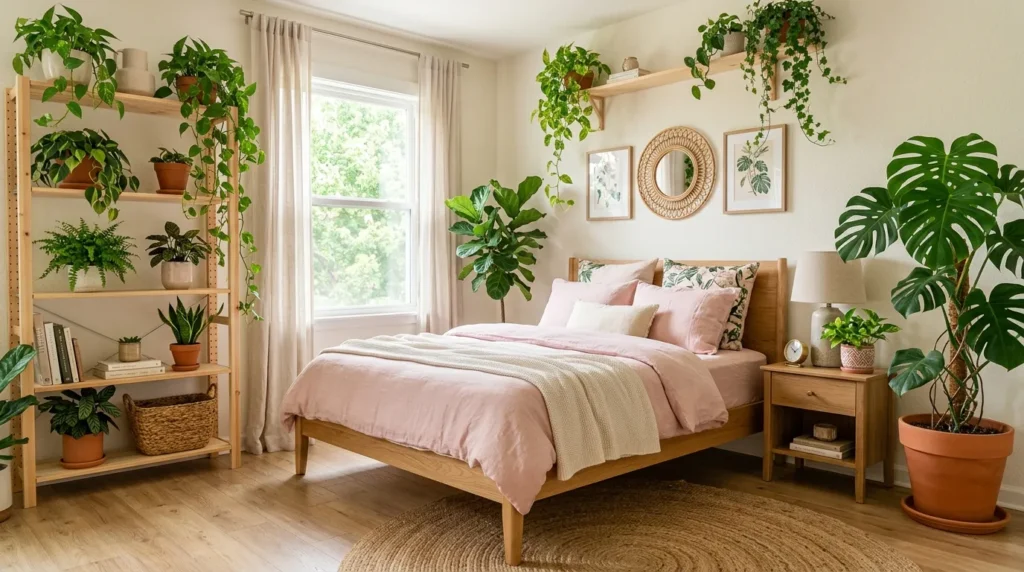
The most attractive displays usually combine plants with different leaf shapes and heights. A tall leafy plant can anchor an empty corner, while smaller plants can sit on a dresser or shelf.
Green foliage also acts as a natural contrast against pink walls and textiles. The combination can feel surprisingly sophisticated when the shades are muted.
You don’t need dozens of plants. A few healthy specimens placed thoughtfully can create plenty of impact.
How To Style It
Use a tall plant beside a dresser or near a window. Add a smaller plant to a bedside table and perhaps a trailing variety to a shelf.
Choose planters in terracotta, cream ceramic, natural stone, or woven baskets.
Keep the containers simple if the bedroom already has floral patterns.
When selecting plants, consider the actual lighting conditions and care requirements. A beautiful display won’t remain beautiful if the plants aren’t suited to the room.
If natural plants aren’t practical, high-quality faux greenery can still provide the visual effect.
9. Woven Natural Textures
Quick Benefits
- Grounds romantic pink shades
- Adds organic texture
- Creates warmth without more color
- Works with plants and wood
- Keeps the bedroom relaxed
Why It Works
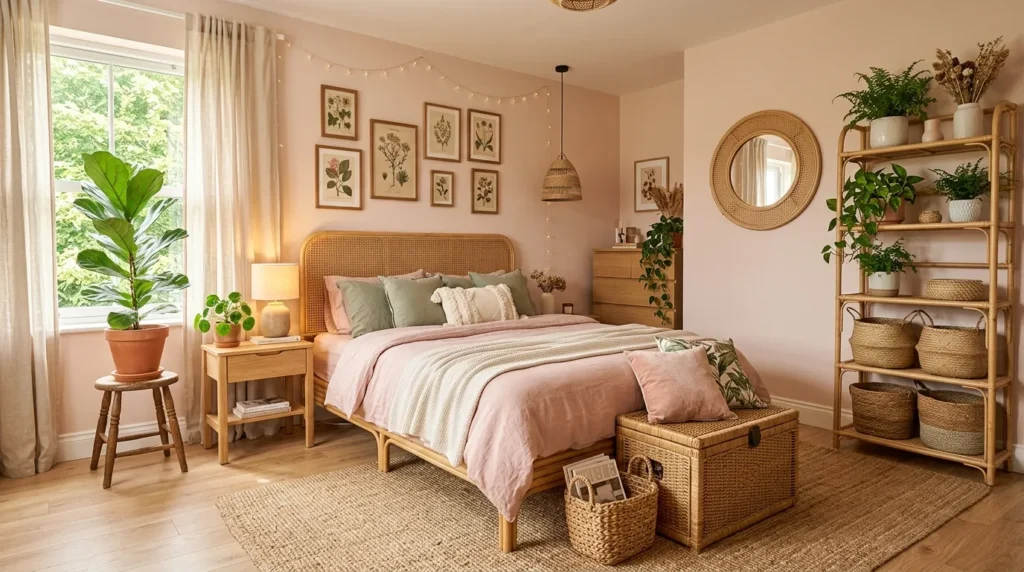
Woven materials give pink botanical bedrooms a natural foundation. Rattan, cane, jute, seagrass, wicker, and woven cotton introduce earthy texture that balances softer colors.
This is particularly helpful if your bedroom includes pink wallpaper, bedding, or upholstered furniture. Natural textures prevent the palette from feeling too sweet.
A rattan nightstand or woven basket can add more personality than another pink accessory.
How To Style It
Add a woven basket beside the bed for extra blankets. A jute or natural-fiber rug can ground the room, while a rattan bench can provide useful seating at the foot of the bed.
Woven pendant lights are another beautiful option because they create texture both during the day and through shadows when illuminated at night.
Keep the natural materials within a similar warm color family so the room feels cohesive.
For a more modern look, combine woven textures with clean-lined furniture and simple botanical artwork.
10. Romantic Botanical Lighting
Quick Benefits
- Creates a softer evening atmosphere
- Highlights pink and green tones
- Adds decorative character
- Makes the bedroom feel more intimate
- Completes the botanical aesthetic
Why It Works
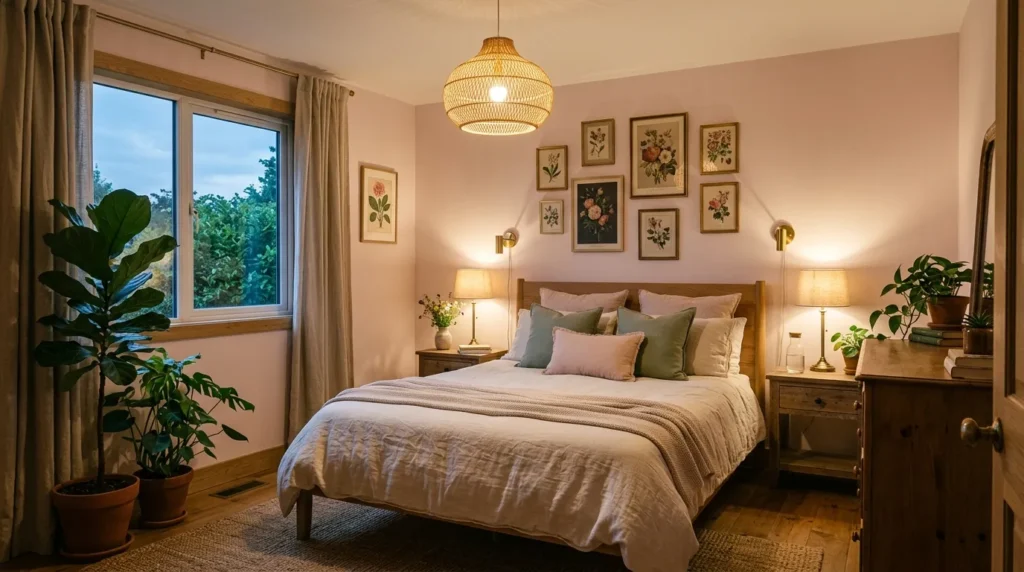
Lighting has a huge influence on how pink appears. Cool white lighting can make blush shades look flat or slightly gray, while warm lighting brings out their softer, richer qualities.
Multiple light sources are particularly effective in a botanical bedroom. Bedside lamps, wall sconces, floor lamps, and small accent lights create layers rather than illuminating everything evenly.
Traditional brass fixtures can complement romantic pink beautifully, while natural woven pendants can reinforce the botanical theme.
How To Style It
Place warm bedside lamps on both sides of the bed when possible. Cream or fabric shades will diffuse the light and create a softer atmosphere.
Choose aged brass, antique bronze, or warm black fixtures depending on the furniture.
A botanical pendant can become a statement feature, especially if it has a woven or organic silhouette.
For an especially cozy bedroom, add a small lamp to a reading corner or dresser.
Avoid relying entirely on a bright overhead fixture. Several smaller sources create a much more inviting atmosphere.
Bringing the Look Together
A pink botanical bedroom works best when the colors and textures feel connected rather than individually chosen.
Start with one primary pink shade. Blush is excellent for a light and airy bedroom, dusty rose feels more sophisticated, and muted mauve creates a slightly moodier atmosphere.
Then introduce green through plants, artwork, bedding, or accessories. Sage is the easiest pairing because it is soft enough to work with almost any pink.
Natural materials should provide the grounding layer. Think wood, linen, rattan, jute, ceramic, and woven textiles.
If you choose a strong floral wallpaper, keep the bedding relatively simple. If the walls are neutral, you can let a floral duvet or botanical curtains become the statement.
The same principle applies to accessories. A few meaningful decorative pieces will usually look more sophisticated than filling every surface with pink flowers.
For a small bedroom, focus on vertical elements, light colors, mirrors, and fewer large pieces.
For a larger bedroom, you can introduce a dedicated plant corner, upholstered bench, statement lighting, or a larger botanical gallery wall.
If you’re decorating a rental, start with temporary changes such as bedding, artwork, rugs, curtains, plants, and removable wallpaper.
The beauty of this style is that it can evolve. You can gradually add pieces as you discover colors, plants, and patterns that genuinely appeal to you.
Frequently Asked Questions
What shades of pink work best with botanical bedroom decor?
Blush, dusty rose, muted mauve, antique pink, and soft coral are especially versatile. These shades work beautifully with sage, olive, cream, beige, natural wood, and muted floral colors. Brighter pink can work too, but it is usually easier to balance when used in smaller accessories.
What colors go well with pink and botanical decor?
Sage green is one of the easiest choices because it naturally connects pink with foliage. Cream, beige, warm white, terracotta, olive, natural wood, and muted blue can also complement the palette. Choose one dominant shade and use the others as supporting colors.
How can I make a pink bedroom look sophisticated?
Use muted pink shades rather than extremely bright colors and balance them with natural materials. Wood furniture, linen bedding, botanical artwork, sage green, woven textures, and warm brass can all make pink feel more refined.
Can I create a pink botanical bedroom without wallpaper?
Absolutely. Use pink bedding, an upholstered headboard, botanical artwork, floral curtains, plants, rugs, and decorative pillows instead. These elements allow you to create the same visual theme without making a permanent wall change.
What type of plants look best in a pink bedroom?
Plants with interesting green foliage provide a beautiful contrast against pink. Choose varieties based on your room’s available light and your ability to care for them. The goal is healthy greenery rather than selecting plants solely for their appearance.
How do I balance floral patterns without making the room too busy?
Use one major floral or botanical pattern and keep surrounding pieces simpler. For example, if you have floral wallpaper, choose solid bedding. If the bedding is floral, use simple curtains and understated artwork.
Conclusion
Pink botanical decor can make a bedroom feel beautifully connected to nature while still maintaining a soft and sophisticated atmosphere. The combination works because pink introduces warmth and romance, while greenery, natural wood, and organic textures keep the room grounded.
You don’t need to completely redesign the space to achieve the look. Start with something simple, such as blush linen bedding, a few leafy plants, botanical artwork, or a sage green accent.
From there, layer in natural textures, wooden furniture, woven accessories, and warm lighting. If you want more drama, consider botanical wallpaper or a pink upholstered headboard.
The most important thing is balance. Let one or two elements make a statement while keeping the rest of the room comfortable and visually calm.
Whether your style leans modern, vintage, cottage-inspired, or romantic, pink and botanical elements can be adapted to suit your home.
Start with the colors and textures you genuinely love, add greenery gradually, and let your bedroom bloom into a space that feels personal, cozy, and effortlessly beautiful.