
11 Earthy Living Room Decor Ideas for a Cozy Natural Vibe
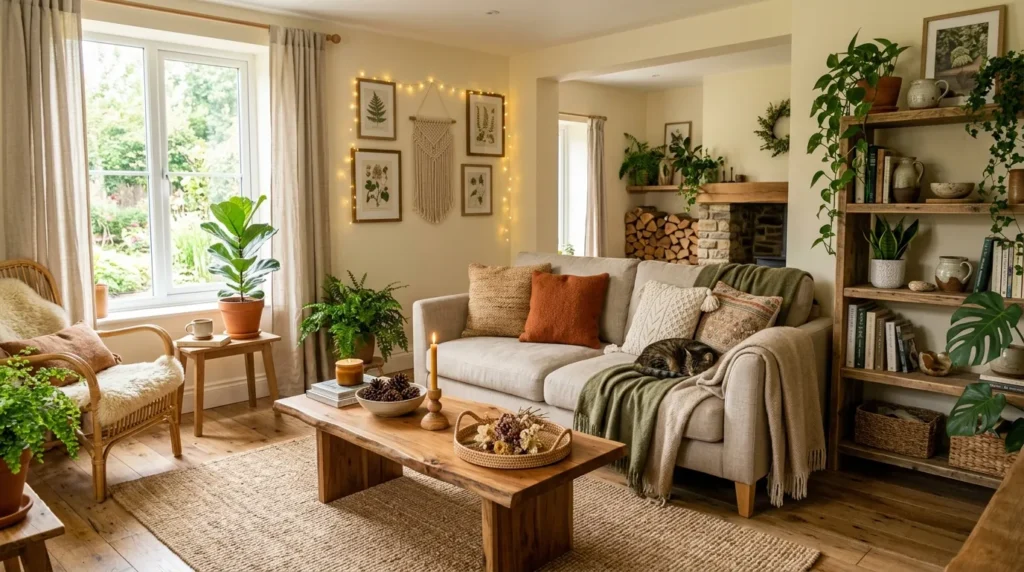
An earthy living room has a way of making a home feel instantly more grounded. Instead of relying on trendy colors or perfectly coordinated furniture, this decorating style brings together warm neutrals, natural materials, organic shapes, and layers of texture to create a space that feels comfortable and lived-in.
The best part is that an earthy palette doesn’t have to mean beige everywhere.
You can combine warm taupe with olive green, terracotta with cream, or chocolate brown with soft ivory. Add natural wood, linen, rattan, stone, woven fibers, and plenty of greenery, and suddenly the room has depth without needing lots of decoration.
I’ve noticed that earthy rooms tend to feel especially inviting when the materials are allowed to do some of the visual work. A chunky woven rug, a weathered wood coffee table, a linen sofa, or a ceramic vase can make a bigger impact than a shelf filled with small accessories.
This style is also wonderfully flexible. It can lean modern and minimalist, rustic and cozy, organic and contemporary, or even slightly bohemian depending on the pieces you choose.
If your living room currently feels cold, overly neutral, or unfinished, you don’t necessarily need to replace everything. A few intentional changes—warmer textiles, natural wood accents, earthy artwork, or a better mix of lighting—can completely shift the atmosphere.
These ideas will help you create a living room that feels relaxed, warm, timeless, and connected to the natural world.
Table of Contents
1. Warm Neutral Palette
Build the room around naturally soothing earthy colors.
2. Natural Wood Furniture
Add warmth and organic character through wood.
3. Linen Upholstery
Create a relaxed look with breathable natural fabric.
4. Woven Area Rugs
Ground the seating area with tactile texture.
5. Terracotta Accents
Introduce warmth through earthy clay-inspired shades.
6. Organic Greenery
Bring natural movement and freshness indoors.
7. Stone Coffee Tables
Add grounded texture with stone-inspired surfaces.
8. Layered Throw Pillows
Build comfort with subtle color and texture.
9. Earthy Wall Art
Create personality with nature-inspired artwork.
10. Rattan Details
Bring lightweight woven texture into the room.
11. Warm Ambient Lighting
Finish the space with a soft, inviting glow.
1. Warm Neutral Palette
Quick Benefits
- Creates a calming foundation
- Makes furniture easier to coordinate
- Works across decorating styles
- Keeps the room feeling timeless
- Provides flexibility for seasonal changes
Why It Works
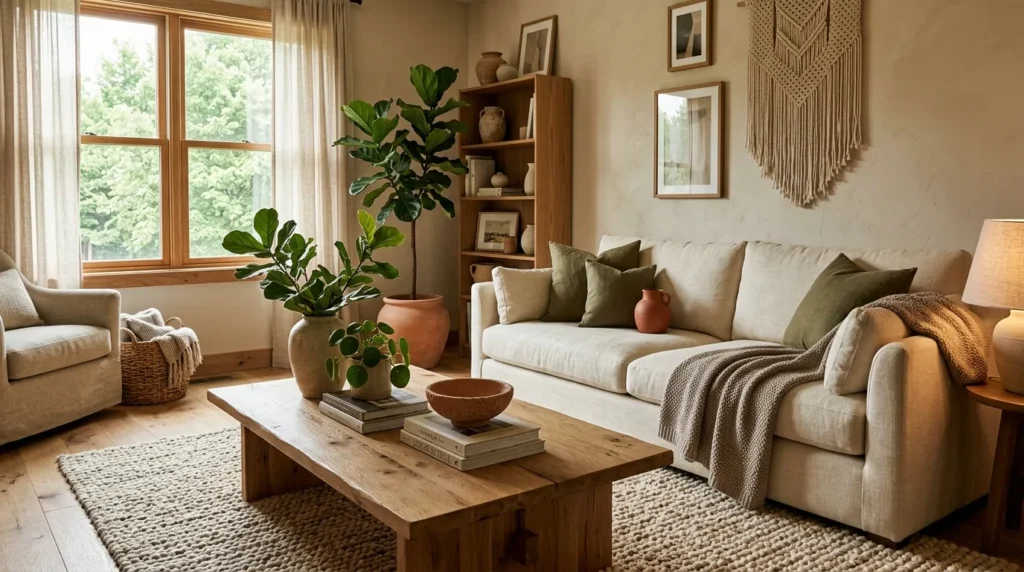
An earthy living room usually begins with a warm neutral foundation rather than a stark white one. Shades such as warm ivory, sand, beige, taupe, camel, mushroom, and soft brown create a backdrop that feels connected to natural materials.
The important distinction is undertone. A warm beige can make a room feel cozy, while a cool gray-beige may create a completely different atmosphere.
You also don’t need to use one neutral throughout the entire room. Layering slightly different shades creates depth while keeping the overall palette cohesive.
How To Style It
Start with warm ivory or beige walls.
Choose a sofa in oatmeal, cream, taupe, or camel.
Add darker brown through wood furniture or accent chairs.
Introduce olive, terracotta, or muted rust in small doses.
Use natural textiles to keep the neutral palette from feeling flat.
If the room gets lots of sunlight, slightly deeper beige and taupe can add warmth without looking heavy.
2. Natural Wood Furniture
Quick Benefits
- Adds warmth
- Introduces organic texture
- Works with neutral colors
- Makes the room feel grounded
- Complements modern and rustic interiors
Why It Works
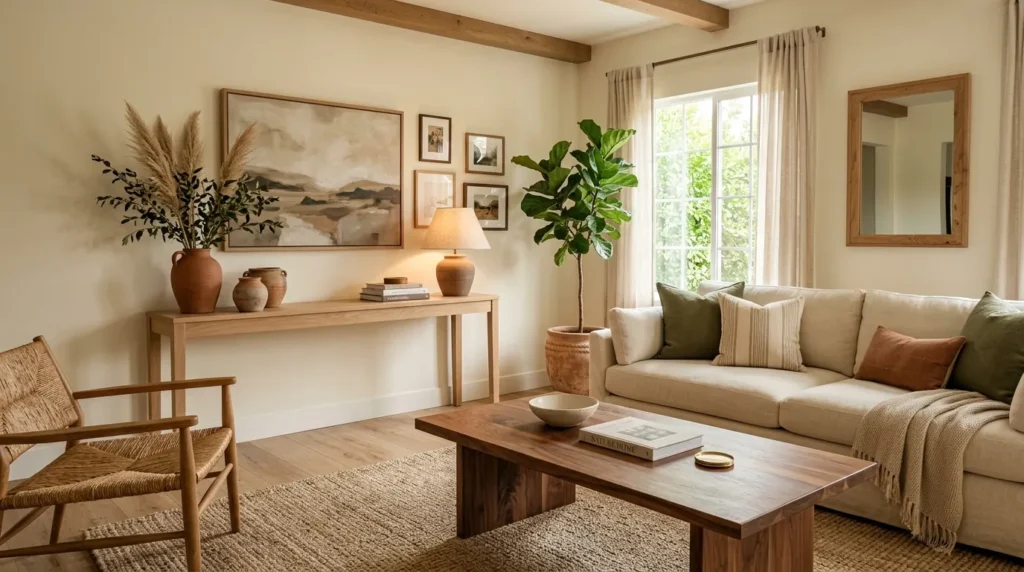
Natural wood is one of the easiest ways to make an earthy living room feel authentic.
Unlike painted furniture, wood brings visible grain and subtle variation into the room. Those imperfections create visual interest while reinforcing the connection to nature.
Light oak creates an airy Scandinavian-inspired look. Walnut adds sophistication. Reclaimed or weathered wood creates a more rustic feeling.
Mixing wood tones can also work beautifully as long as the overall undertones complement each other.
How To Style It
Choose a wooden coffee table as the main focal piece.
Add a console or side table in a complementary wood finish.
Pair light oak with cream upholstery for a relaxed modern room.
Use walnut with camel leather or taupe textiles for a richer look.
Bring smaller wood accents through picture frames, bowls, stools, or decorative trays.
Avoid matching every wooden piece exactly. A collected combination often feels more natural.
3. Linen Upholstery
Quick Benefits
- Adds relaxed texture
- Looks naturally sophisticated
- Works with earthy colors
- Feels comfortable and casual
- Creates visual softness
Why It Works
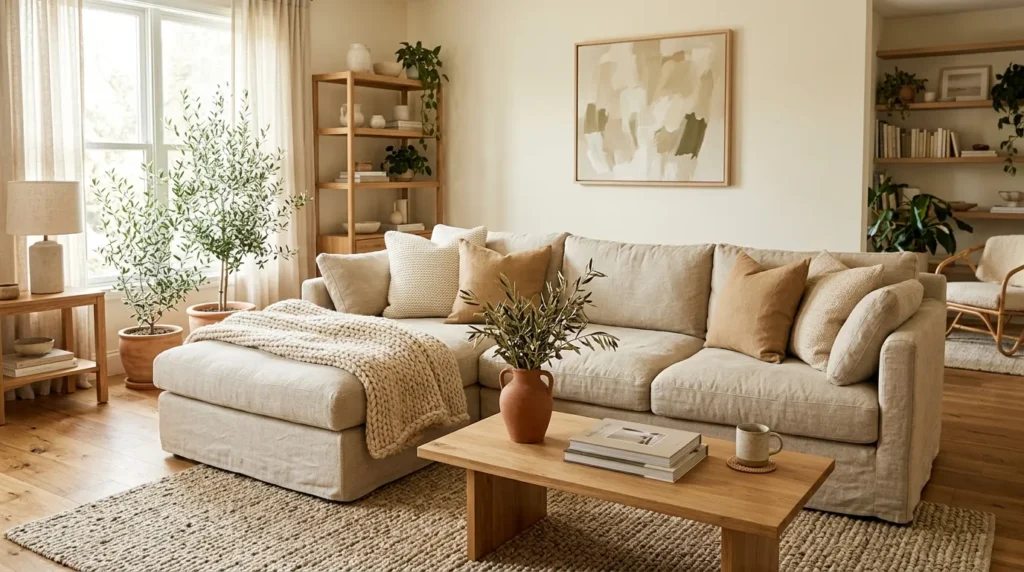
Linen has a slightly imperfect texture that works beautifully with earthy decorating.
Its natural wrinkles and visible weave keep neutral upholstery from looking flat or overly formal.
A linen sofa can serve as a calm foundation for the entire room, allowing you to introduce stronger earthy accents through pillows, artwork, rugs, and wood.
If you’re worried about maintaining a pristine appearance, a textured performance fabric with a linen-like appearance can offer a similar visual effect.
How To Style It
Choose a cream, oatmeal, beige, or warm taupe sofa.
Layer it with cotton or linen pillows.
Add a chunky knit throw over one arm.
Pair the sofa with natural wood and woven accessories.
For a more luxurious look, combine linen upholstery with leather accents and aged brass.
For a casual home, allow the textiles to remain slightly relaxed rather than perfectly arranged.
4. Woven Area Rugs
Quick Benefits
- Defines the seating area
- Adds warmth underfoot
- Introduces organic texture
- Softens hard surfaces
- Makes furniture feel connected
Why It Works
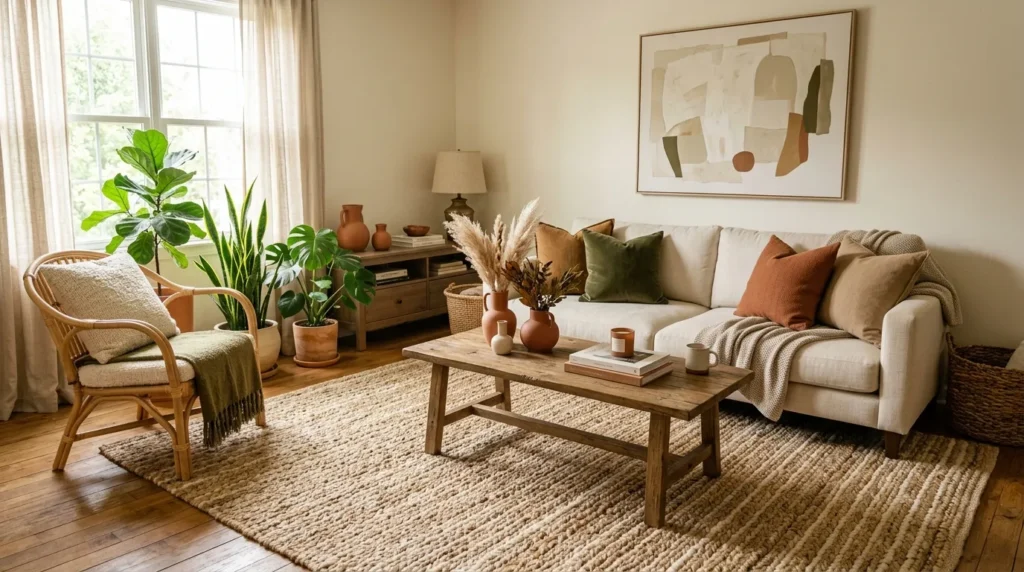
A rug can visually anchor an entire living room.
Natural-looking materials such as jute, wool, cotton, and woven fibers work particularly well with earthy interiors because they introduce texture without requiring bold patterns.
The right rug can also make a seating arrangement feel much more intentional.
In most living rooms, the rug should be large enough for at least the front legs of the main seating pieces to sit on it.
How To Style It
Choose a neutral woven rug in ivory, beige, tan, or natural brown.
Layer a smaller patterned rug over a larger jute base if you want more visual depth.
Use a subtle geometric pattern if the furniture is mostly solid.
Choose a plush wool rug if comfort is your priority.
Keep the rug large enough to visually connect the sofa, coffee table, and chairs.
5. Terracotta Accents
Quick Benefits
- Adds warmth
- Creates color contrast
- Works with natural materials
- Complements beige beautifully
- Introduces an earthy focal point
Why It Works
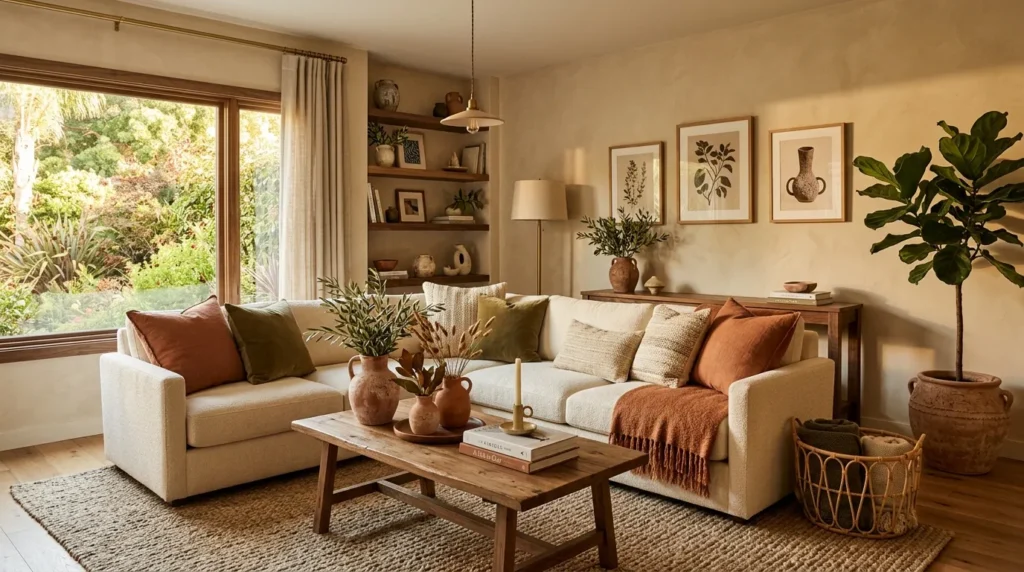
Terracotta is a natural fit for an earthy living room because it resembles clay, sun-baked earth, and warm mineral tones.
You don’t need a lot of it.
A terracotta vase, throw pillow, ceramic lamp, or piece of artwork can add enough color to prevent an otherwise neutral room from feeling bland.
It also pairs beautifully with olive green, cream, tan, walnut, and natural stone.
How To Style It
Start with one or two terracotta accents.
Place a terracotta ceramic vase on the coffee table.
Add a muted rust or clay-colored pillow to the sofa.
Repeat the tone subtly in artwork.
For a softer look, choose dusty terracotta rather than bright orange.
Pair it with cream, beige, olive, and medium-toned wood.
6. Organic Greenery
Quick Benefits
- Adds freshness
- Introduces natural color
- Creates movement
- Softens furniture edges
- Makes the room feel alive
Why It Works
Plants are an easy way to make earthy decor feel genuinely connected to nature.
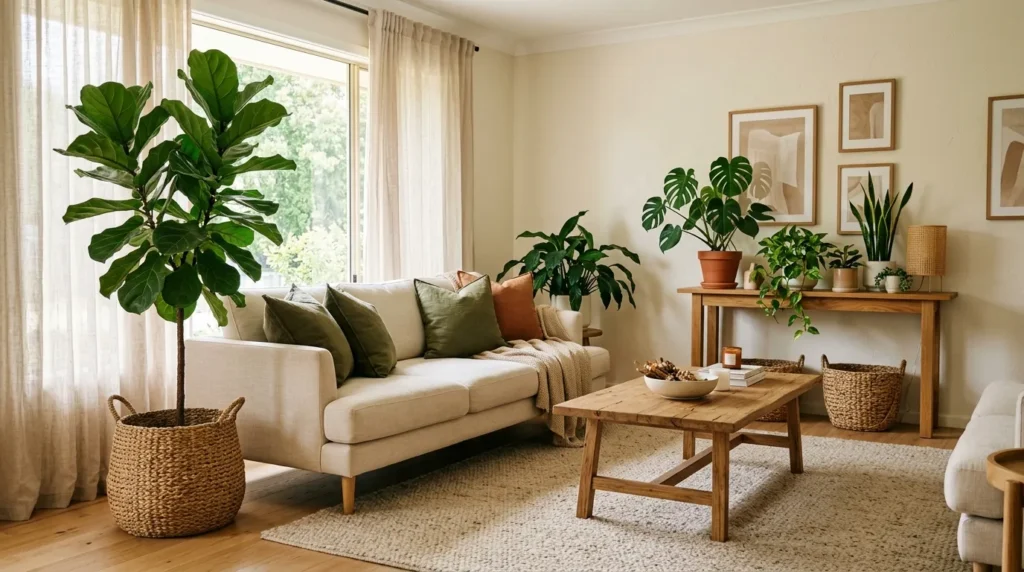
Green foliage creates contrast against warm neutrals and natural wood while adding height and movement.
The key is to vary plant size and placement instead of putting a plant on every surface.
A tall plant can fill an empty corner, while a smaller plant can bring life to a shelf or coffee table.
How To Style It
Place a large leafy plant beside the sofa.
Add a smaller plant to a console or side table.
Use woven baskets as planters.
Choose ceramic pots in cream, terracotta, or charcoal.
Mix broad leaves with finer foliage for variety.
If natural light is limited, select plants suited to your room’s conditions rather than choosing purely based on appearance.
7. Stone Coffee Tables
Quick Benefits
- Adds natural character
- Creates a strong focal point
- Balances soft textiles
- Works with modern interiors
- Introduces mineral texture
Why It Works
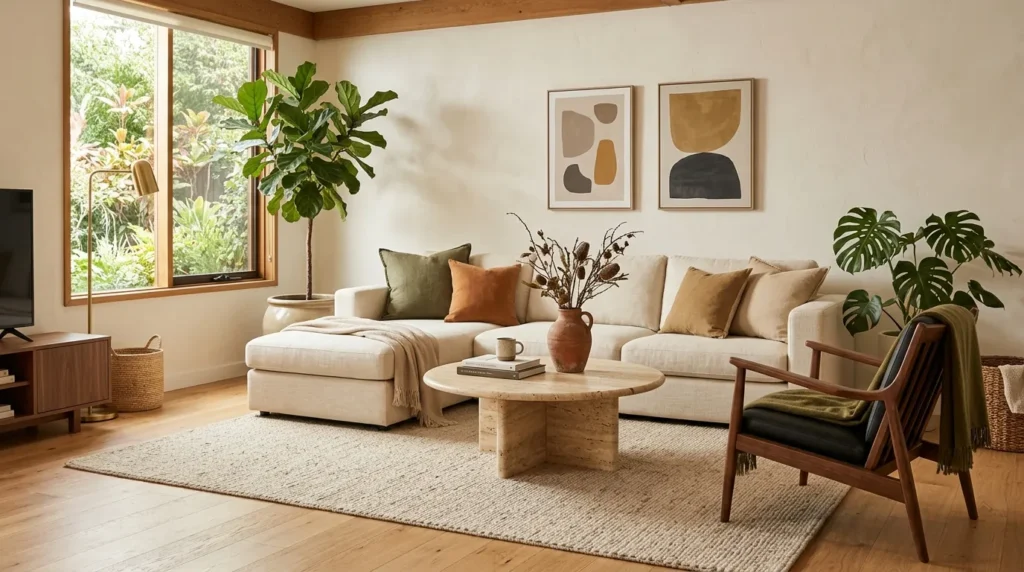
Stone brings another layer of nature into the living room.
Travertine, limestone, marble, concrete, and stone-look materials can all contribute to an earthy aesthetic.
The slightly irregular appearance of natural stone works especially well alongside linen, wood, wool, and woven fibers.
A stone coffee table can also provide a visual counterpoint to a soft upholstered sofa.
How To Style It
Choose a rounded stone or travertine coffee table for an organic-modern room.
Pair it with a cream linen sofa and natural wool rug.
Add a simple ceramic bowl or wooden tray on top.
Avoid covering the entire surface with accessories.
Leave some of the stone visible so its natural texture remains part of the design.
For homes where natural stone isn’t practical, a quality stone-look finish can provide a similar visual effect.
8. Layered Throw Pillows
Quick Benefits
- Adds comfort
- Introduces subtle color
- Creates texture
- Makes seating feel inviting
- Easy to change seasonally
Why It Works
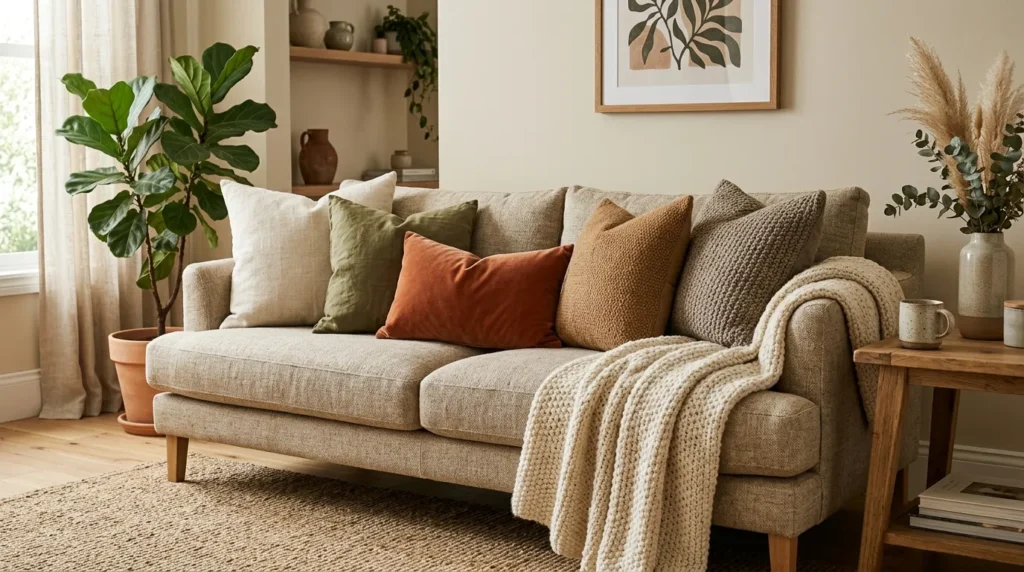
Pillows are an easy way to layer earthy colors without committing to permanent changes.
Instead of buying a matching set, combine several related tones and materials.
Think cream linen, olive cotton, rust velvet, camel woven fabric, and textured taupe.
The slight variation makes the sofa look relaxed and collected.
How To Style It
Start with two larger neutral pillows.
Add one or two smaller accent pillows in olive, terracotta, or brown.
Mix textures rather than relying only on color.
Include one woven or nubby pillow for tactile contrast.
For a more minimalist room, use fewer pillows and larger sizes.
Change accent colors seasonally while keeping your neutral foundation.
9. Earthy Wall Art
Quick Benefits
- Adds personality
- Creates visual interest
- Connects the color palette
- Makes walls feel finished
- Works with minimalist rooms
Why It Works
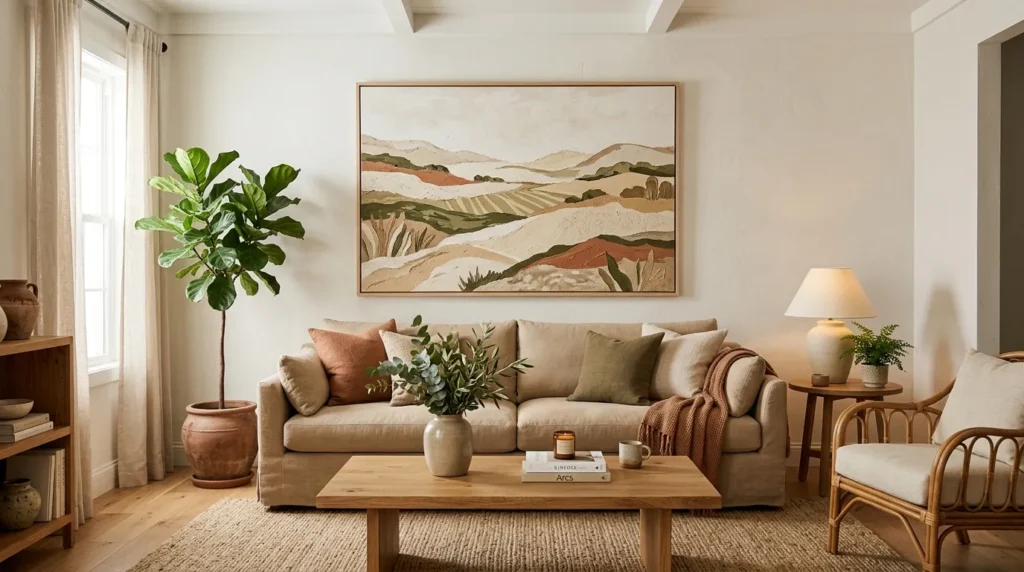
Wall art can pull together the different colors and materials in an earthy living room.
Nature photography, abstract landscapes, botanical prints, clay-inspired artwork, line drawings, and muted landscapes all work well.
The best pieces don’t necessarily have to show nature literally. An abstract painting with sand, olive, rust, cream, and brown tones can create the same visual connection.
How To Style It
Choose one oversized artwork above the sofa for a clean look.
Alternatively, create a gallery wall using landscapes, botanical illustrations, and abstract pieces.
Use natural wood frames for warmth.
Choose black frames if you want a slightly more contemporary appearance.
Keep the palette coordinated without requiring every piece to match exactly.
10. Rattan Details
Quick Benefits
- Adds lightweight texture
- Complements wood
- Creates a relaxed atmosphere
- Works with neutral colors
- Introduces craftsmanship
Why It Works
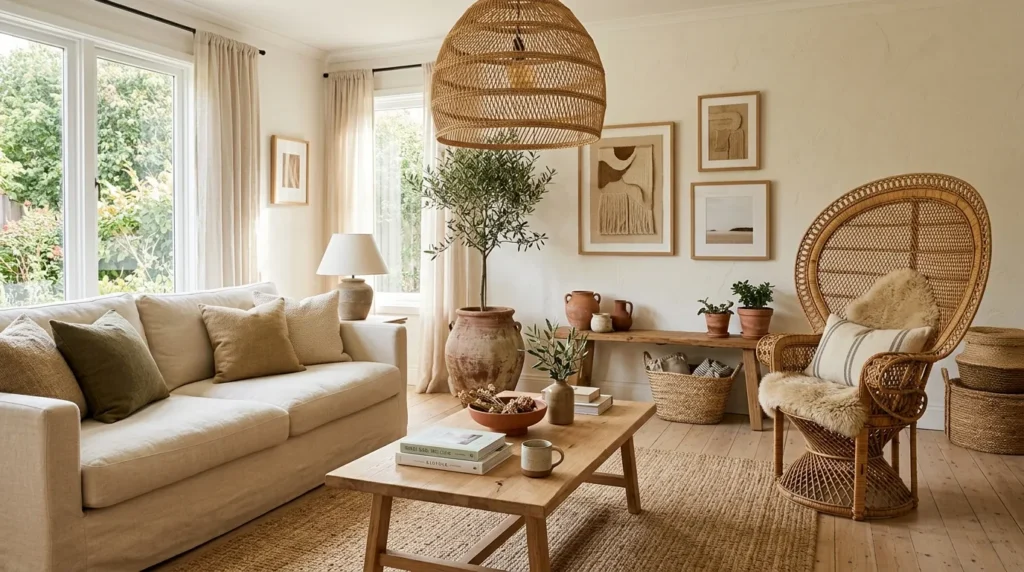
Rattan adds an instantly natural quality to a living room.
Its woven surface creates shadows and texture that look beautiful beside linen upholstery and smooth wood.
It also keeps earthy decor from becoming visually heavy.
You can use rattan in large pieces or small accessories depending on the size of your room.
How To Style It
Try a rattan accent chair beside the sofa.
Add woven baskets for blankets and magazines.
Use a rattan pendant light as a focal point.
Introduce smaller woven trays or decorative objects.
Pair rattan with cream, tan, olive, and warm wood.
For a modern room, choose simple geometric rattan pieces rather than heavily ornate designs.
11. Warm Ambient Lighting
Quick Benefits
- Creates a cozy atmosphere
- Highlights natural textures
- Makes neutral colors richer
- Adds evening comfort
- Creates layered illumination
Why It Works
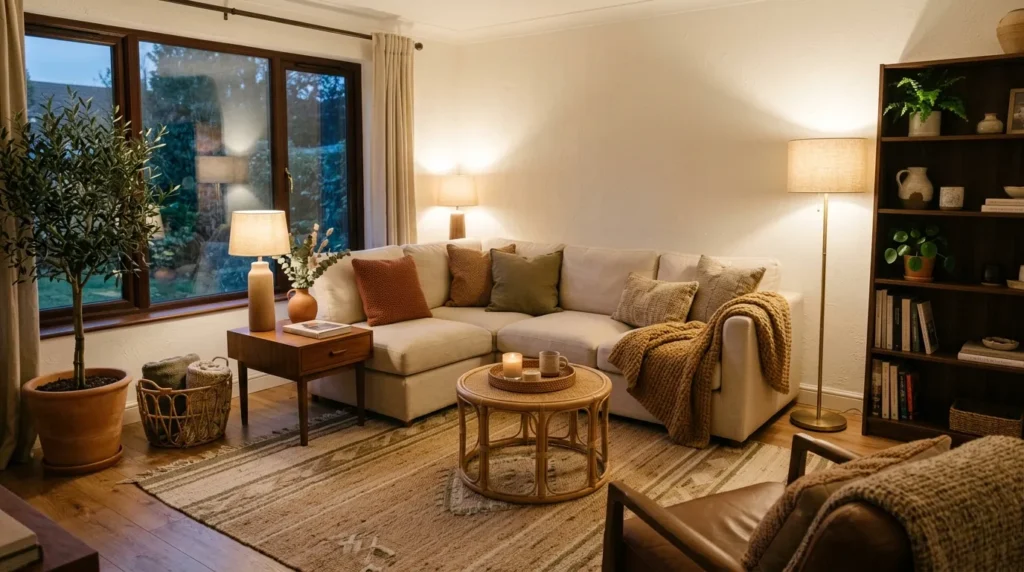
Even the most beautiful earthy palette can feel flat under harsh overhead lighting.
Warm, layered lighting is what makes the materials come alive in the evening.
Linen becomes softer, wood appears richer, and woven textures become more noticeable.
Rather than relying on one central fixture, use several smaller light sources at different heights.
How To Style It
Place a table lamp on a console or side table.
Add a floor lamp beside a reading chair.
Use a warm pendant or chandelier for general illumination.
Choose lamps with linen, paper, ceramic, or woven shades.
Use warm-toned bulbs appropriate for your fixtures.
Keep the lighting distributed around the room so no single area feels overly bright while another disappears into shadow.
How to Choose an Earthy Living Room Color Palette
The easiest approach is to begin with a warm neutral.
Think:
- Warm white
- Cream
- Sand
- Beige
- Taupe
- Mushroom
Then introduce one or two nature-inspired accent colors.
Olive + cream + walnut creates a sophisticated organic look.
Terracotta + beige + oak feels warm and relaxed.
Chocolate brown + ivory + olive creates a richer atmosphere.
Camel + cream + muted rust feels cozy and welcoming.
Don’t feel pressured to use every earthy color in the same room. A restrained palette often looks more sophisticated.
Making an Earthy Living Room Feel Modern
Earthy decorating can sometimes lean rustic if every piece has a heavily distressed finish.
To make the look more contemporary, combine organic materials with clean silhouettes.
Try a streamlined cream sofa with a sculptural stone coffee table.
Add a simple oak console.
Use oversized abstract artwork.
Choose a large woven rug instead of several small patterned rugs.
Keep decorative accessories intentional rather than filling every surface.
The result feels natural without looking dated.
Earthy Living Room Ideas for Small Spaces
Small living rooms benefit from earthy colors because the palette is naturally cohesive.
Use warm neutrals as the foundation.
Choose furniture with visible legs to create visual openness.
A round coffee table can improve circulation.
Use one large rug rather than several small ones.
Add a mirror to reflect natural light.
Keep larger pieces neutral and use earthy colors through pillows, artwork, plants, and accessories.
A small room doesn’t need fewer textures. It simply needs fewer competing focal points.
Creating an Earthy Look on a Budget
You don’t need to replace your entire living room.
Start with textiles.
A new rug, pillow covers, and throw can dramatically change the color palette.
Next, introduce natural materials.
A woven basket, wooden tray, ceramic vase, or secondhand wood table can add texture without requiring a major investment.
Plants can also make a significant difference.
Finally, reconsider your lighting. A warm table lamp can completely change how your existing furniture looks in the evening.
Shopping your own home can help, too. Move baskets, wood pieces, ceramics, and textiles between rooms and experiment with different combinations before buying anything new.
Frequently Asked Questions
What colors make a living room feel earthy?
Warm neutrals such as cream, beige, taupe, sand, camel, and brown form an excellent foundation. Add olive green, terracotta, rust, muted mustard, or warm clay tones for additional depth.
What materials work best in an earthy living room?
Natural wood, linen, cotton, wool, jute, rattan, stone, ceramic, and leather all work beautifully. Combining several materials is more important than choosing one specific material.
How do I make a beige living room look more earthy?
Add natural wood, woven rugs, greenery, terracotta ceramics, linen textiles, and warm lighting. Vary the shades of beige rather than using one identical tone throughout the room.
Can earthy decor work in a modern home?
Yes. Pair natural materials with clean-lined furniture, simple artwork, sculptural lighting, and a restrained color palette. This creates an organic-modern aesthetic rather than a traditional rustic look.
What colors go well with brown furniture?
Cream, ivory, beige, olive green, muted blue, terracotta, rust, and soft taupe can all complement brown furniture. The best choice depends on whether you want the room to feel light and airy or rich and dramatic.
How can I make my living room feel cozy without clutter?
Focus on texture instead of quantity. Use a comfortable rug, layered pillows, a throw, natural wood, warm lighting, and one or two meaningful decorative pieces. This creates warmth without filling every surface.
Are plants necessary for earthy decor?
No, but they can strengthen the natural feeling. If plants aren’t practical, use botanical artwork, dried arrangements, woven materials, wood, stone, and earthy colors to achieve a similar connection to nature.
Conclusion
An earthy living room doesn’t need to look rustic, overly neutral, or heavily decorated.
The most inviting spaces combine warmth, texture, and natural materials in a way that feels effortless. Start with a comfortable neutral foundation, then introduce wood, woven fibers, stone, greenery, and a few earthy accent colors.
Remember that texture is just as important as color. Linen, wool, jute, rattan, ceramic, and wood can create layers even when your palette remains relatively simple.
If your current living room feels cold, start small. Add a woven rug, switch to warmer lighting, bring in a plant, or introduce a terracotta accent. You may be surprised by how much difference a few thoughtful changes make.
And don’t worry about creating a perfectly styled room. The charm of earthy decorating comes from natural variation and relaxed imperfection.
Choose pieces you genuinely enjoy, mix materials, allow some negative space, and build the room gradually.
The result will be a living room that feels warm, grounded, comfortable, and welcoming—exactly the kind of space where you can settle in at the end of the day.