

10 Vintage Botanical Bedroom Ideas for Timeless Charm
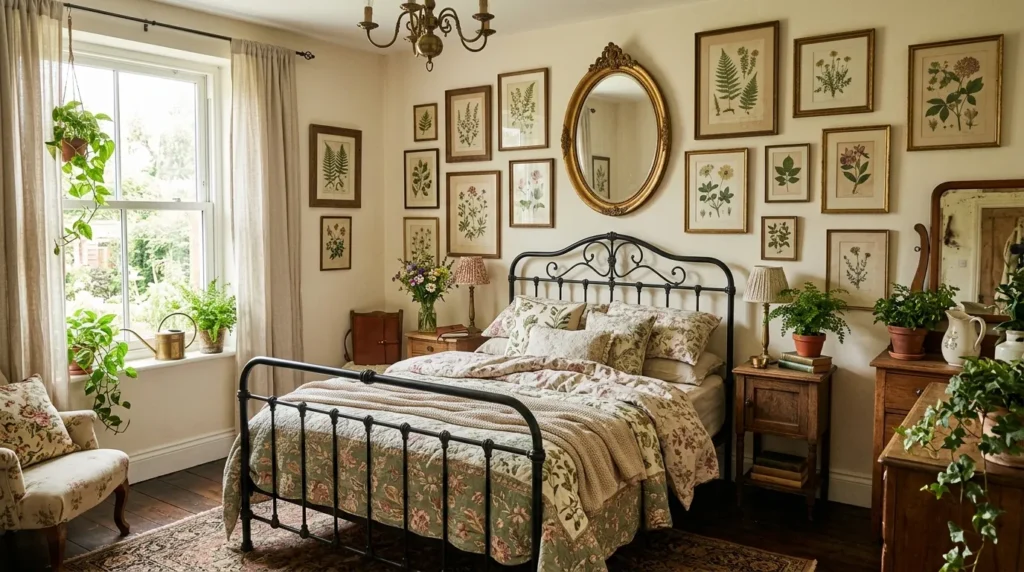
A bedroom with botanical prints can feel beautiful almost instantly, but there is something especially inviting about giving those leafy patterns a vintage character. Instead of looking overly polished or theme-heavy, a vintage botanical bedroom feels collected, comfortable, and slightly nostalgic—the kind of room where an old botanical print, weathered wood nightstand, and soft linen bedding look as though they have always belonged together.
The appeal is partly in the balance. Botanical decor brings nature indoors, while vintage-inspired furniture, aged finishes, muted colors, and traditional textiles keep the room from feeling too contemporary. You can make the look dramatic with deep olive walls and antique-style furniture, or keep it light with creamy bedding, faded green prints, and natural wood.
In my experience, the easiest way to create this style is to avoid buying everything from the same collection. A room becomes much more believable when different elements have slightly different textures and finishes. Think of a botanical bedroom as a layered space rather than a themed one.
You also don’t need a large bedroom to achieve the look. A renter-friendly botanical print, vintage-inspired mirror, thrifted nightstand, or framed pressed-leaf artwork can completely change the atmosphere without requiring a major renovation.
Below, you’ll find practical ways to bring this timeless style into your bedroom, including color palettes, furniture choices, bedding combinations, wall treatments, lighting, artwork, and small decorative details. Whether you love English cottage style, romantic vintage interiors, dark academia influences, or simply want a calmer bedroom with more personality, these ideas can help you build a space that feels warm and lived-in.
Table of Contents
1. Faded Botanical Wallpaper
Create a softly layered backdrop with botanical wallpaper in muted vintage-inspired colors.
2. Antique Wood Furniture
Bring warmth and character into the room with naturally aged or antique-style wood pieces.
3. Botanical Linen Bedding
Combine leafy patterns with relaxed natural fabrics for an inviting, collected bed.
4. Olive Green Walls
Use a muted green palette to create a cozy connection with the outdoors.
5. Vintage Gallery Wall
Build personality with botanical prints, landscapes, mirrors, and collected artwork.
6. Romantic Brass Lighting
Add warmth and an aged finish with brass lamps, sconces, and vintage-inspired fixtures.
7. Floral Window Layers
Soften the bedroom with layered curtains that complement botanical patterns without competing with them.
8. Woven Natural Textures
Balance printed walls and fabrics with rattan, wicker, jute, linen, and natural wood.
9. Botanical Reading Nook
Turn an unused corner into a peaceful retreat with a comfortable chair and vintage accents.
10. Collected Vintage Details
Finish the room with small objects that make the space feel personal, nostalgic, and naturally assembled.
1. Faded Botanical Wallpaper
Quick Benefits
- Creates an instant focal point
- Adds vintage character without bulky furniture
- Introduces color in a controlled way
- Works beautifully behind a bed
- Makes a bedroom feel more layered
Why It Works
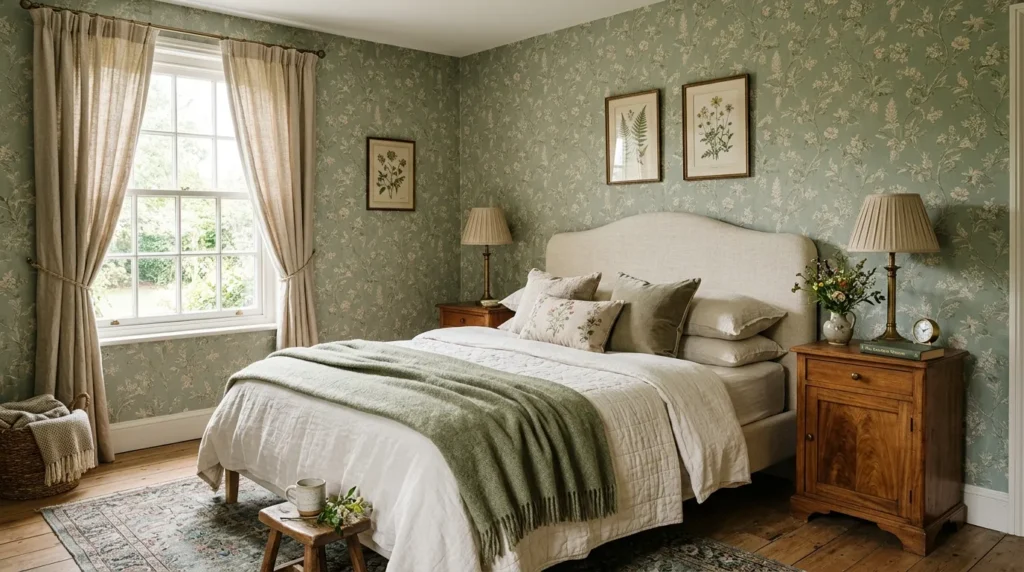
Botanical wallpaper is one of the most effective ways to establish a vintage-inspired bedroom because it gives the room visual character from the moment you walk in. Look for patterns featuring delicate leaves, trailing vines, ferns, wildflowers, or hand-painted branches rather than oversized tropical motifs. Faded greens, dusty blues, warm cream, muted brown, and soft sage tend to feel especially timeless. The slightly aged appearance of these colors prevents the pattern from looking too crisp or modern. Another reason this approach works is that wallpaper can act as both artwork and architecture. Instead of filling every wall with accessories, the pattern itself becomes the decorative foundation.
How To Style It
For the strongest effect, consider placing botanical wallpaper behind the headboard and keeping the remaining walls quieter. A cream upholstered headboard can soften a busier print, while a dark wood bed creates a richer, more traditional appearance. If you’re working with a small room, choose a smaller-scale pattern with plenty of negative space rather than a dense print that can visually shrink the room.
Renters can achieve a similar look with removable wallpaper panels. Pair the wallpaper with simple linen bedding, aged brass hardware, and one or two pieces of natural wood furniture. Avoid matching every accessory to the wallpaper. Instead, pull one or two colors from the print into pillows, throws, or artwork so the room feels coordinated without becoming overly decorated.
2. Antique Wood Furniture
Quick Benefits
- Adds warmth and authenticity
- Provides visual contrast against botanical patterns
- Makes the bedroom feel collected
- Works with many color palettes
- Ages beautifully over time
Why It Works
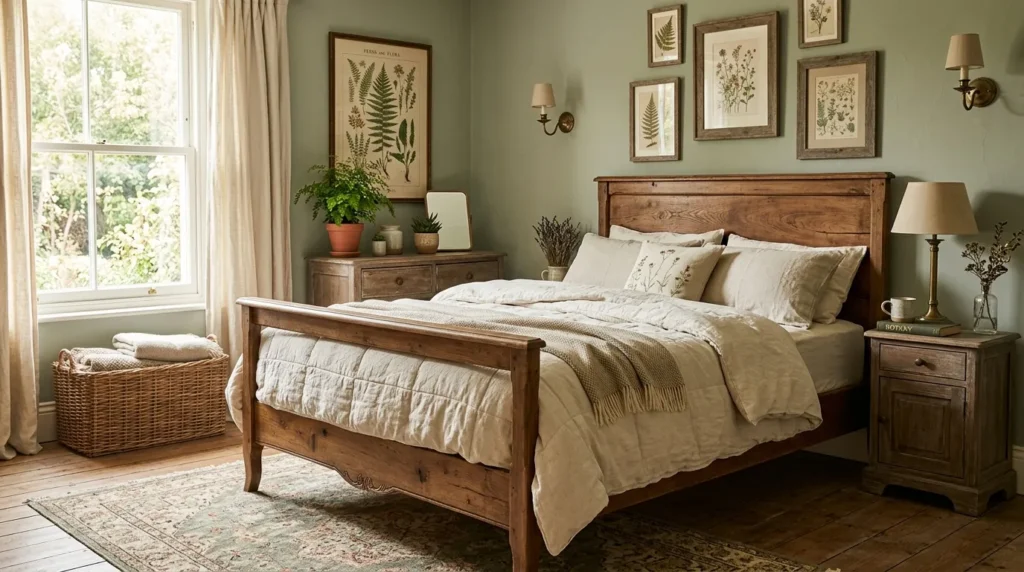
Vintage botanical patterns can sometimes make a bedroom feel delicate, so substantial wood furniture gives the space grounding. An antique dresser, carved nightstand, wooden bench, or traditional bed frame can introduce the depth that keeps botanical decor from looking overly sweet. Wood also brings an organic quality that naturally complements leaves and flowers. In my experience, furniture with visible grain, small imperfections, or a slightly aged finish often looks more convincing than pieces designed to appear perfectly vintage. You don’t necessarily need genuine antiques, either. The goal is character, not provenance. A well-made secondhand dresser or vintage-inspired wooden nightstand can create much of the same atmosphere.
How To Style It
Choose one or two larger wood pieces rather than filling the entire room with dark furniture. A walnut or medium-oak dresser works beautifully with sage, cream, olive, and dusty blue. If the room already has dark floors, consider lighter wood furniture to maintain balance.
A vintage nightstand looks particularly attractive beside a botanical bed because its smaller scale allows the print to remain the star. Add a ceramic lamp, a small stack of books, and perhaps a little bud vase rather than covering every surface.
For a more relaxed American cottage feeling, mix wood tones carefully. They don’t have to match exactly, but keeping them within a similar warmth level will make the room feel intentional. A worn wooden bench at the foot of the bed can also provide practical seating while reinforcing the vintage character.
3. Botanical Linen Bedding
Quick Benefits
- Makes the bed feel inviting
- Adds natural texture
- Softens stronger botanical patterns
- Creates a relaxed vintage atmosphere
- Easy to change seasonally
Why It Works
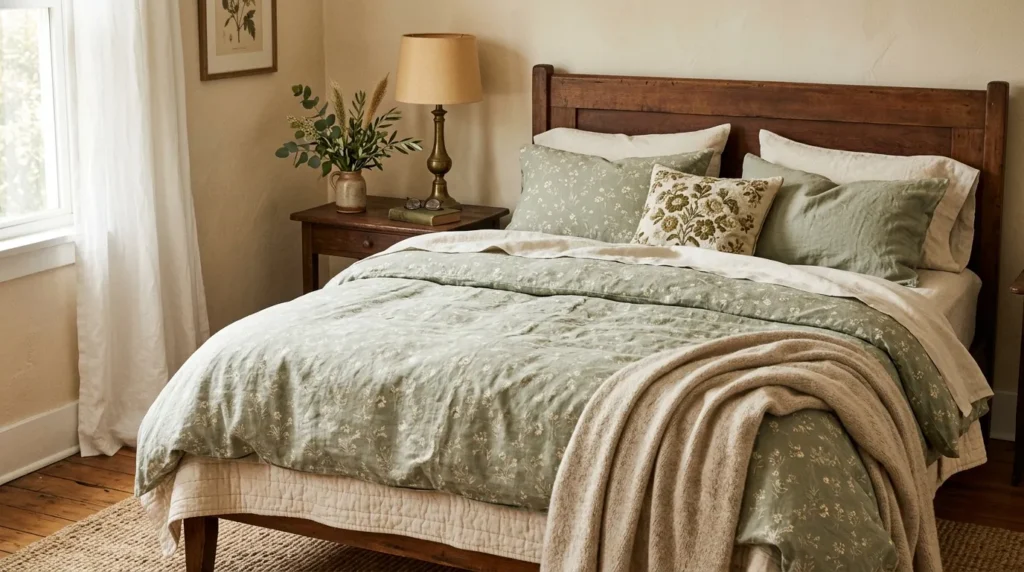
Bedding is where you can make the room feel comfortable rather than simply decorative. Linen is particularly effective because its slightly rumpled texture complements the imperfect beauty associated with vintage interiors. Instead of choosing several competing floral patterns, start with one botanical print and surround it with quiet solids. Cream, oatmeal, soft sage, faded blue, and warm white all work beautifully. A botanical duvet cover can become the main pattern, while plain linen sheets and a textured quilt provide visual breathing room. This layered approach is useful because vintage rooms rarely look perfectly coordinated. They feel collected over time, with different fabrics contributing to the overall atmosphere.
How To Style It
Start with neutral sheets in ivory, cream, or natural flax. Add a botanical duvet or quilt, then fold a lightweight vintage-inspired blanket across the bottom third of the bed. Finish with a mixture of pillows rather than arranging every pillow identically.
For a more traditional bedroom, try a small-scale botanical print on the duvet with a quilted coverlet layered underneath. If your walls already feature botanical wallpaper, use mostly solid bedding and introduce the plant motif through one lumbar pillow or folded throw.
Natural fibers are especially helpful here. Linen, cotton, wool, and lightly textured quilts give the bed depth. If you prefer a polished appearance, iron the pillowcases while leaving the duvet slightly relaxed. That small contrast can make the bedroom feel comfortable without appearing messy.
4. Olive Green Walls
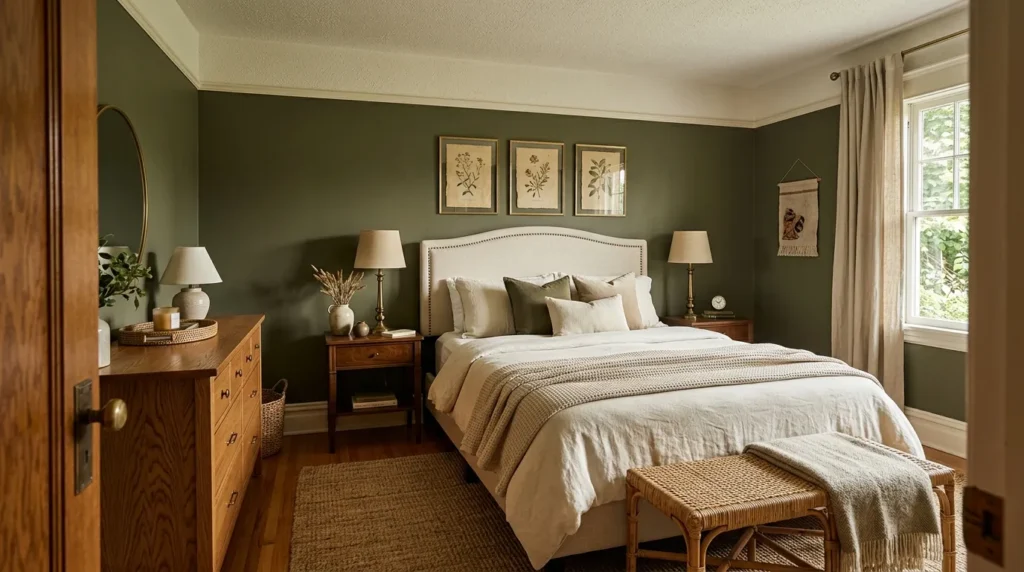
Quick Benefits
- Creates a nature-inspired atmosphere
- Works well with antique furniture
- Makes cream textiles stand out
- Adds depth without feeling harsh
- Complements botanical artwork
Why It Works
Muted green is almost made for botanical bedrooms. Rather than using a bright leafy green, consider olive, moss, eucalyptus, sage, or a gray-green shade. These colors have enough earthiness to feel sophisticated while still creating a visual connection to plants and nature. A deeper green can make a large bedroom feel intimate, while a lighter sage can keep a smaller room airy. Green walls are also surprisingly versatile. They work with brass, aged bronze, natural wood, cream, tan, and even dusty rose accents. The key is choosing a shade with a slightly muted quality rather than a highly saturated green.
How To Style It
If you’re painting the walls, sample the color in both daylight and evening light. Green can change considerably depending on the room’s exposure and artificial lighting. Once the walls are established, keep the larger furniture pieces relatively simple.
A cream upholstered bed against an olive wall creates an elegant contrast. Add medium-toned wood nightstands, warm brass lamps, and ivory bedding for a balanced palette. If you want more pattern, introduce botanical artwork rather than another large patterned textile.
For a particularly cozy effect, paint the trim in a warm white rather than a stark blue-white. This small choice can make the green feel softer and more traditionally styled. In a rental, sage or olive removable wallpaper can provide a similar visual effect without permanent changes.
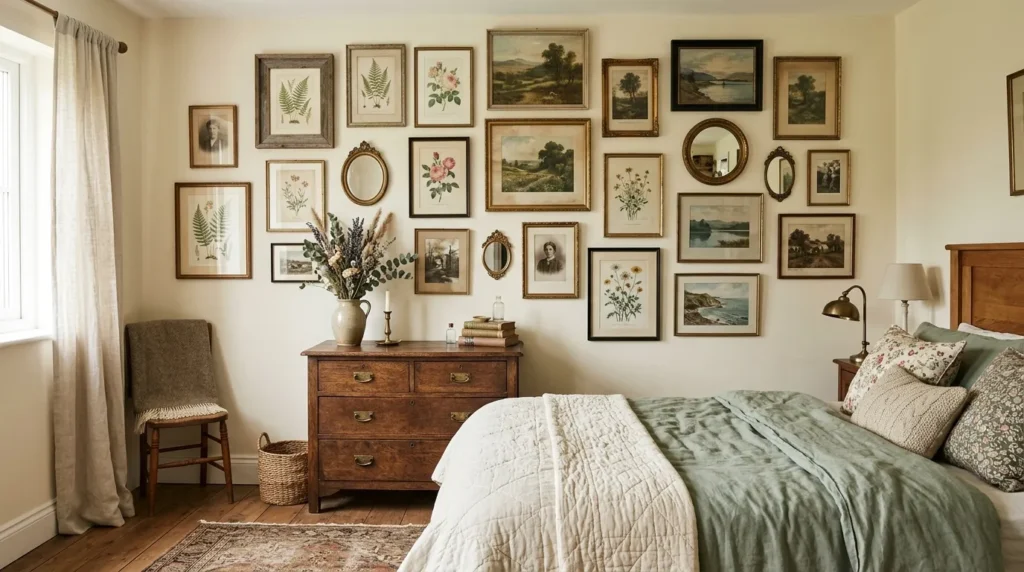
5. Vintage Gallery Wall
Quick Benefits
- Adds personality to blank walls
- Creates an instant focal point
- Makes botanical themes feel collected
- Works with thrifted artwork
- Can be changed over time
Why It Works
A gallery wall gives a bedroom the feeling of having evolved naturally rather than being decorated all at once. Botanical prints are an obvious starting point, but mixing them with landscapes, small portraits, vintage maps, architectural sketches, or simple mirrors makes the arrangement much more interesting. The secret is repetition without perfect matching. Repeating a color such as olive, cream, brown, or muted blue can visually connect different artworks. Frames can vary slightly as well. A combination of aged wood, antique brass, and simple black frames often feels more authentic than ten identical frames.
How To Style It
Begin with your largest artwork and position it approximately above the dresser, beside the bed, or on the wall opposite the bed. Then build outward with smaller pieces. Before putting holes in the wall, lay the frames on the floor and experiment with several arrangements.
For a softer bedroom, choose botanical illustrations with generous cream backgrounds. For a moodier room, combine darker plant studies with old landscapes and sepia-toned artwork.
You can also add a small mirror to break up the rectangular shapes. Keep spacing reasonably consistent, but don’t worry if every frame isn’t perfectly aligned. A collected gallery wall should have some personality. If you are decorating on a budget, look for printable vintage-style botanical art and place it in inexpensive thrifted frames.
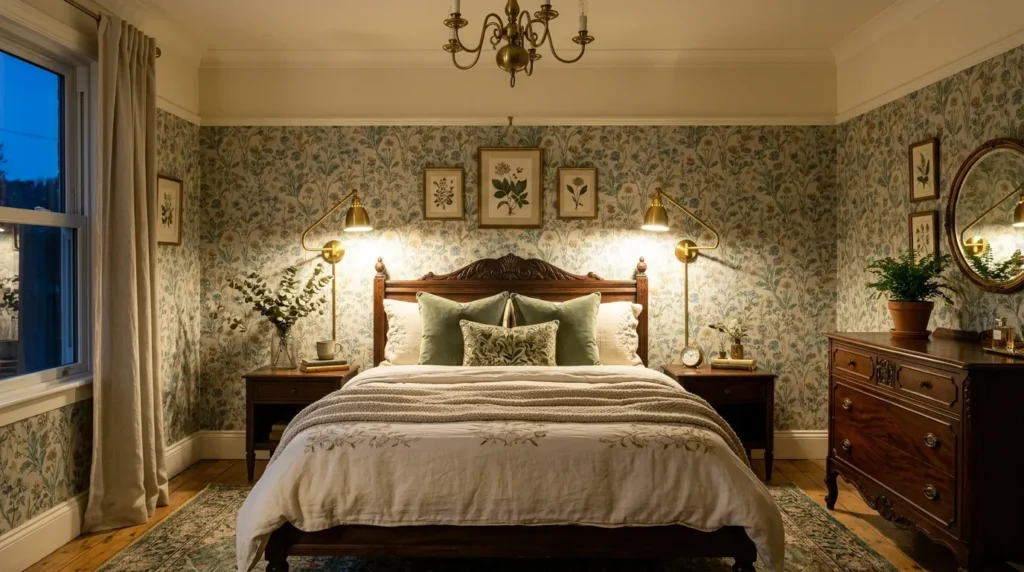
6. Romantic Brass Lighting
Quick Benefits
- Adds warm evening light
- Complements vintage furniture
- Introduces a subtle metallic accent
- Creates a cozy atmosphere
- Works in traditional and cottage bedrooms
Why It Works
Lighting has an enormous influence on how a bedroom feels after sunset. A botanical room that looks fresh and airy during the day can become wonderfully intimate with warm bedside lighting. Brass works particularly well because its golden undertone complements wood, cream textiles, green walls, and aged finishes. Look for lamps and sconces with traditional silhouettes rather than highly polished contemporary designs. Pleated shades, linen shades, glass globes, and simple ceramic bases can all work. The goal isn’t to make the lighting look antique everywhere, but to introduce a few warmer materials that support the vintage character.
How To Style It
Place matching brass lamps on either side of the bed if you prefer a symmetrical, traditional look. For a more collected room, use two complementary but slightly different lamps.
Warm white bulbs are generally more comfortable in a bedroom than very cool lighting. Consider layering your light sources with bedside lamps, a ceiling fixture, and a small accent lamp on a dresser.
If you have room for wall sconces, install them at a comfortable reading height and keep the shades proportional to the headboard. A brass chandelier can make a larger bedroom feel especially romantic, but it should still leave enough visual space for the botanical elements.
One simple trick I always suggest is using lighting as a bridge between old and new. A vintage-style brass fixture paired with modern electrical components gives you the atmosphere you want without sacrificing everyday convenience.
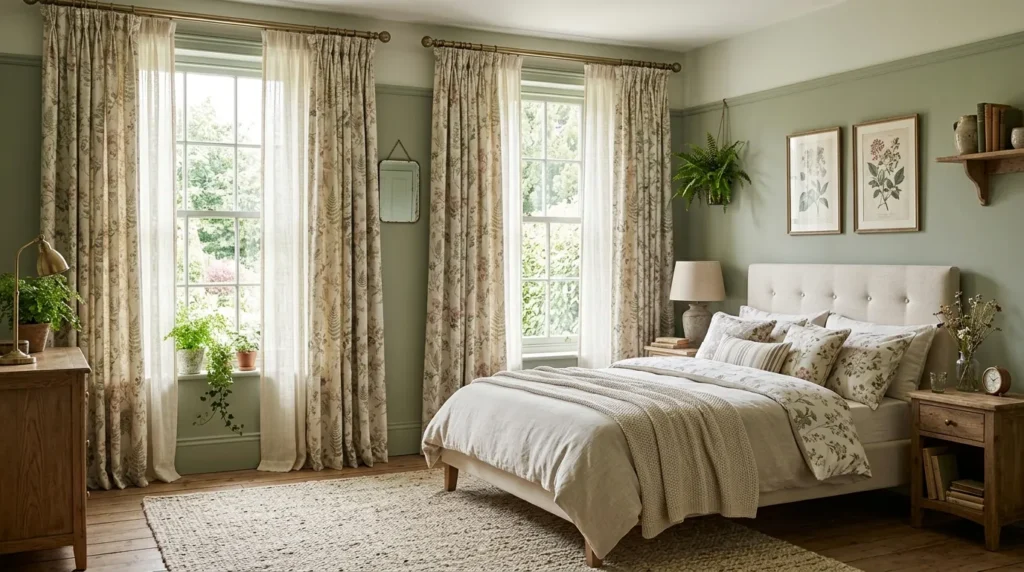
7. Floral Window Layers
Quick Benefits
- Softens hard architectural lines
- Adds privacy
- Creates a finished appearance
- Brings additional texture into the room
- Complements botanical colors
Why It Works
Windows are often overlooked when decorating a bedroom, yet the right curtains can dramatically change the mood. In a vintage botanical space, layered window treatments can add the softness that balances wood furniture and patterned walls. Linen, cotton, gauze, and light floral fabrics all work beautifully. If the walls already have a strong print, neutral curtains may be the better choice. If your walls are plain, a subtle floral or botanical curtain can introduce pattern without overwhelming the room. The most important consideration is scale. Large, busy curtains paired with large botanical wallpaper can make the bedroom feel visually crowded.
How To Style It
For a timeless look, start with simple ivory or natural linen curtains and hang them slightly wider and higher than the window itself. This makes the window feel larger and allows the fabric to frame the room rather than block it.
If you want more pattern, choose a faded floral fabric that shares one color with your bedding or wallpaper. A small botanical print can look especially charming in a cottage-style bedroom.
Layer sheer curtains underneath heavier panels when privacy and light control are important. Blackout lining can also be added behind decorative curtains without changing their appearance. Keep curtain hardware understated, perhaps using aged brass or dark wood, so the window treatment supports the rest of the room rather than becoming the main focal point.
8. Woven Natural Textures
Quick Benefits
- Prevents the room from feeling overly formal
- Adds tactile interest
- Complements botanical motifs
- Brings warmth to neutral palettes
- Works especially well in rentals
Why It Works
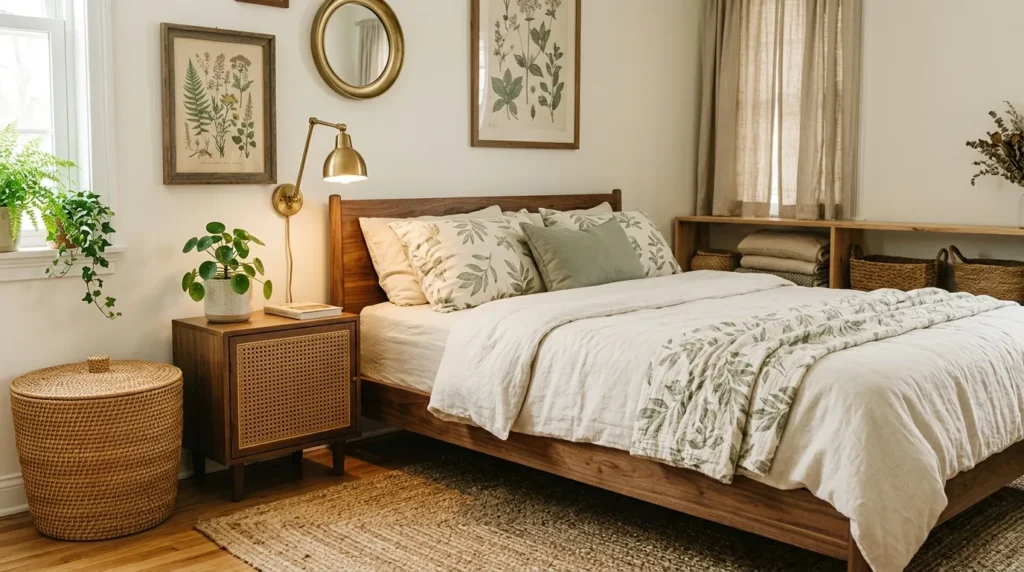
A room filled with botanical prints and vintage furniture needs texture to keep the design from becoming visually flat. Woven materials provide that contrast naturally. Rattan baskets, cane furniture, jute rugs, woven shades, seagrass storage, and textured linen can make the bedroom feel more relaxed. This is particularly useful if you’re combining traditional elements with modern convenience. Natural materials soften the transition. Instead of creating a strict historical reproduction, you get a bedroom that feels inspired by the past while remaining comfortable for modern life.
How To Style It
Start at the floor with a natural-fiber rug or a vintage-style rug featuring muted botanical colors. If you have hardwood flooring, a woven runner beside the bed can provide warmth without covering the entire surface.
Add a rattan basket near the dresser for extra blankets or laundry. A cane-front nightstand can introduce another layer of texture without competing with a wooden bed.
Keep woven accents purposeful. Three or four well-placed pieces will usually have more impact than covering every surface with baskets and wicker. Pair rougher textures with softer materials such as linen bedding, cotton quilts, and velvet accent pillows.
For smaller bedrooms, woven storage is particularly practical because it can keep everyday items hidden while still contributing to the overall aesthetic.
9. Botanical Reading Nook
Quick Benefits
- Makes unused corners functional
- Adds another cozy destination
- Reinforces the nature-inspired theme
- Creates visual balance
- Encourages relaxation
Why It Works
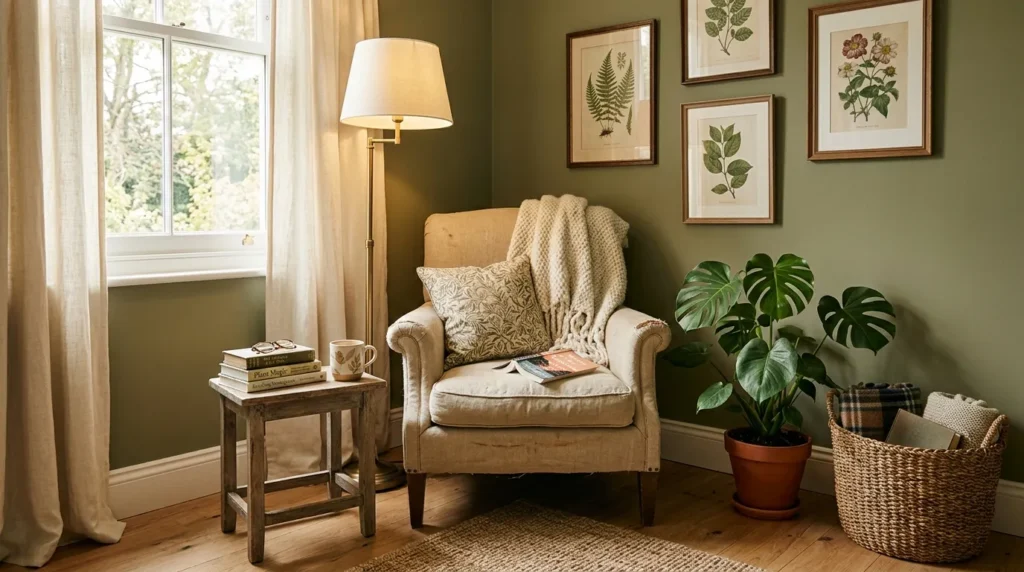
A beautiful bedroom doesn’t have to revolve entirely around the bed. If you have an empty corner, turning it into a small reading nook can make the room feel more intentional and lived-in. A botanical bedroom is particularly suited to this because plants, books, natural textures, and comfortable seating naturally complement the theme. The nook doesn’t need to be large. A vintage armchair, small side table, floor lamp, and a handful of books can be enough. This type of secondary zone also gives you another opportunity to introduce vintage details without putting them all around the bed.
How To Style It
Look for a comfortable chair in linen, velvet, leather, or a faded floral fabric. Position it near a window if natural light is available, but avoid blocking the main walking path.
Place a small wooden side table next to the chair and add a warm table lamp or floor lamp for evening reading. A woven basket underneath can hold blankets or magazines.
If you have a larger bedroom, place a narrow vintage bench beneath a window instead. Add a cushion and a small stack of books for a simple alternative.
A potted plant can complete the corner, but don’t feel obligated to create an indoor jungle. One leafy plant in a ceramic or terracotta pot is often enough to connect the nook to the botanical theme.
10. Collected Vintage Details
Quick Benefits
- Makes the bedroom feel personal
- Adds nostalgic character
- Prevents a staged appearance
- Allows inexpensive decorating
- Makes the style easier to customize
Why It Works
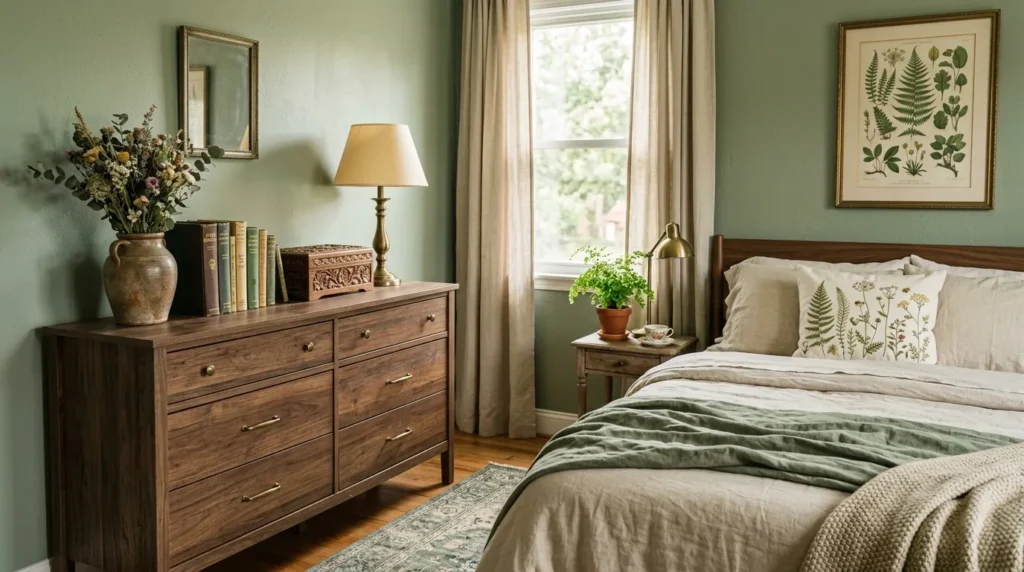
The smallest details are often what make a vintage-inspired bedroom feel convincing. A ceramic vase, old book, framed pressed leaf, embroidered pillow, antique clock, carved box, or secondhand mirror can give the room a sense of history. These objects don’t need to be valuable. What matters is how they contribute to the story of the room. One mistake many homeowners make is trying to create vintage style by purchasing only new products designed to look old. Mixing genuine secondhand pieces with modern essentials usually feels much more natural. The result is comfortable, personal, and adaptable rather than looking like a showroom designed around one theme.
How To Style It
Start with objects you genuinely like instead of shopping for everything at once. A thrifted vase can sit on a dresser beside a modern lamp. A stack of vintage books can soften a nightstand. A framed botanical illustration can lean casually against a wall instead of being perfectly centered.
Use repetition to create cohesion. If your room contains warm brass, repeat that finish in two or three places. If sage green appears in the wallpaper, echo it in a pillow or small ceramic piece.
Keep surfaces breathable. Vintage accessories can quickly become clutter when every available space is filled. Leave some open areas so the room can breathe.
The best finishing detail is often something functional: a beautiful tray for jewelry, a basket for extra blankets, or a small stool that can double as seating. When decorative choices also serve everyday purposes, the room feels both beautiful and genuinely lived in.
Frequently Asked Questions
What colors work best in a vintage botanical bedroom?
Muted, nature-inspired colors are especially effective, including sage, olive, moss, faded blue, warm cream, taupe, brown, dusty rose, and soft beige. These shades complement botanical patterns without making the bedroom feel overly colorful. If you prefer a darker atmosphere, deep olive or forest green can create a dramatic backdrop, while cream bedding and warm wood furniture keep the space balanced.
How can I create a botanical bedroom on a budget?
Start with one high-impact element instead of replacing the entire room. Removable wallpaper, thrifted artwork, secondhand furniture, botanical bedding, or inexpensive woven baskets can make a noticeable difference. Shopping vintage and secondhand stores is particularly useful because small accessories often provide more character than expensive new decor. Reusing furniture you already own can also keep the project affordable.
Can vintage botanical decor work in a small bedroom?
Absolutely. In a small bedroom, focus on a limited palette and avoid using several large patterns at once. A small-scale botanical print, light bedding, a mirror, and one or two wood accents can create the desired atmosphere without making the room feel crowded. Keep furniture proportional to the space and choose pieces that provide storage whenever possible.
What bedding looks best with botanical wallpaper?
Solid linen or cotton bedding is usually the safest choice when the wallpaper has a noticeable pattern. Cream, ivory, oatmeal, sage, and muted blue are versatile options. If the wallpaper is subtle, you can add a botanical quilt or floral accent pillows. The goal is to create layers without having every textile compete for attention.
How do I make vintage decor look modern?
Balance vintage pieces with clean-lined essentials. For example, pair an antique dresser with simple linen bedding, a streamlined upholstered headboard, or contemporary bedside lighting. Keeping the room uncluttered also helps. Vintage style doesn’t require every object to look old; a thoughtful combination of old, new, natural, and practical pieces often feels more sophisticated.
What type of lighting suits a botanical bedroom?
Warm, soft lighting generally works best. Brass table lamps, linen shades, glass pendants, traditional sconces, and warm-toned floor lamps can all complement botanical decor. Layering several light sources is more effective than relying on one bright ceiling fixture. Bedside lamps are especially useful because they create a relaxing atmosphere while providing practical reading light.
Are botanical prints still suitable for a timeless bedroom?
Yes. Botanical motifs have a naturally enduring quality because they are based on leaves, flowers, branches, and other organic forms. To keep the look timeless, choose muted colors, classic furniture silhouettes, and quality natural fabrics instead of relying on highly trendy colors or oversized contemporary patterns. This allows the room to evolve without requiring a complete redesign.
Conclusion
Creating a vintage botanical bedroom is less about following a strict decorating formula and more about combining nature-inspired patterns with warmth, texture, and pieces that feel personal. The most successful rooms usually have a little contrast: patterned wallpaper beside quiet linen, aged wood next to fresh white bedding, polished brass alongside woven textures, or traditional artwork paired with modern conveniences.
You don’t need to redesign the entire bedroom to get started. Choose one focal point first. That might be botanical wallpaper behind the bed, an olive-painted accent wall, a vintage dresser, or a beautifully patterned duvet. From there, build layers slowly and allow the room to develop.
If you’re decorating on a budget, don’t underestimate thrift stores, antique markets, secondhand furniture listings, and artwork you can reframe. A few meaningful pieces can have far more impact than a room filled with perfectly coordinated accessories.
Most importantly, make the bedroom comfortable enough for everyday life. Add practical storage, soft lighting, inviting bedding, and seating where space allows. The goal is a room that looks beautiful in a Pinterest image but feels even better when you actually live in it.
Start with one or two ideas and gradually build a bedroom that combines timeless botanical beauty with the comfort and personality of your own home.