11 Sage Green Boho Bedroom Ideas for Serene Style
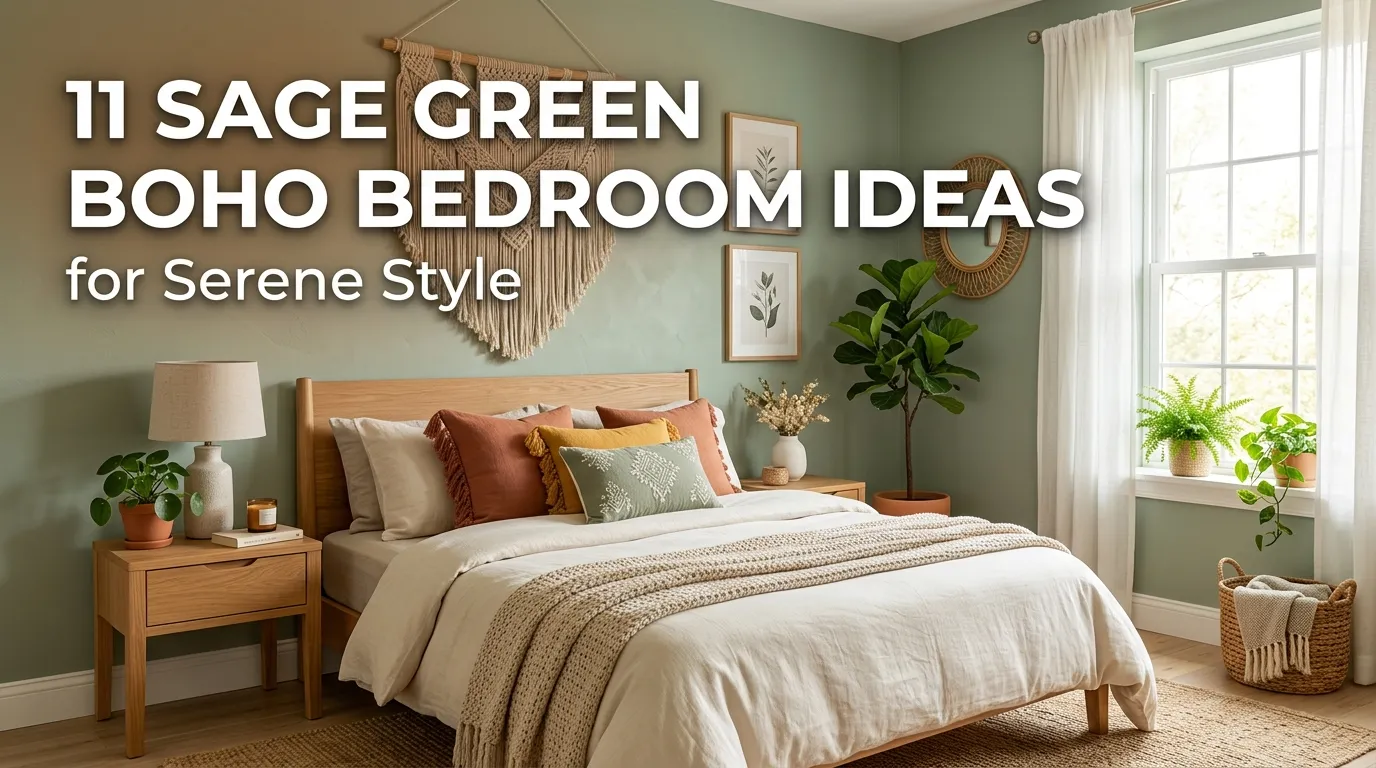
A sage green boho bedroom has a way of making a space feel relaxed without looking unfinished. The muted green brings a soft connection to nature, while bohemian textures add warmth, personality, and that comfortably collected feeling that makes a bedroom inviting.
The beauty of this style is that it doesn’t require a complete room makeover. You can create the look with a few thoughtful changes: linen bedding, woven baskets, a rattan headboard, handmade-looking ceramics, macramé, warm wood, or a couple of leafy plants. Sage green acts as the thread that connects these different textures.
I’ve noticed that the most successful boho bedrooms aren’t necessarily filled with accessories. They usually have a simple foundation and then rely on texture to create interest. A rumpled duvet, woven pendant, patterned rug, and natural wood nightstand can often do more than a room packed with small decorations.
Sage also gives you plenty of flexibility. Pair it with cream and beige for an airy bedroom, terracotta for warmth, walnut for depth, or dusty rose for a softer romantic touch. You can even use deeper olive tones if you prefer a moodier bohemian retreat.
Whether you’re decorating a small apartment bedroom, guest room, rental, or primary suite, these ideas can help you bring together the relaxed spirit of boho decor with the calming qualities of sage green.
The goal isn’t to create a perfectly styled showroom. It’s to create a bedroom that feels natural, comfortable, layered, and genuinely lived in.
Table of Contents
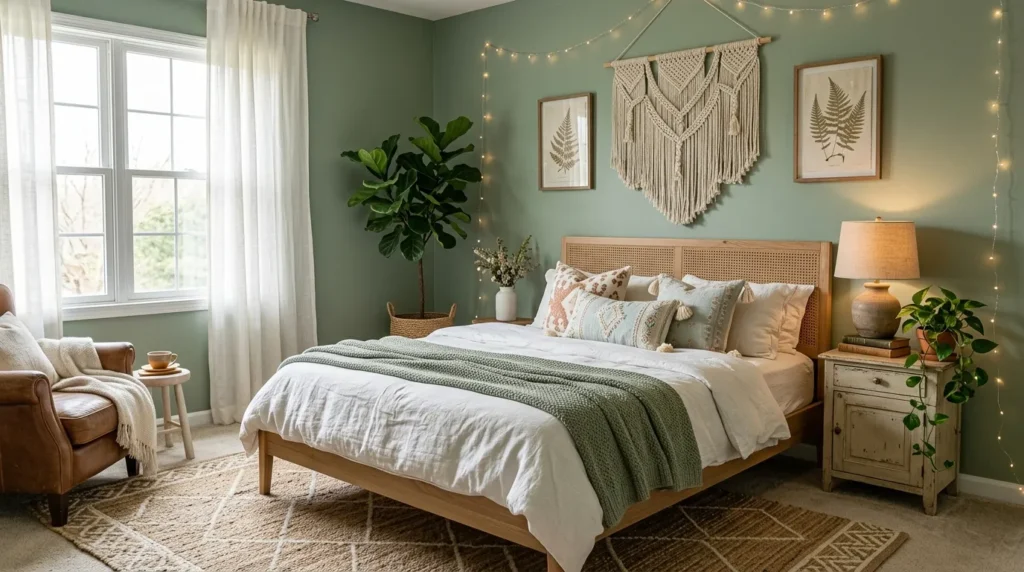
1. Sage Linen Bedding
Use relaxed linen layers to create a soft, natural foundation.
2. Rattan Headboard
Bring warm woven texture to the main focal point.
3. Woven Pendant Lights
Add handmade character with natural overhead lighting.
4. Layered Neutral Rugs
Ground the room with soft patterns and tactile materials.
5. Terracotta Accents
Warm sage green with earthy clay-inspired colors.
6. Macramé Wall Decor
Add handcrafted texture without overwhelming the walls.
7. Indoor Greenery
Use plants to strengthen the natural boho atmosphere.
8. Warm Wood Furniture
Balance muted green with organic wood tones.
9. Patterned Textiles
Mix subtle prints for an authentic collected look.
10. Earthy Gallery Wall
Create personality with nature-inspired artwork.
11. Cozy Boho Layers
Combine all the elements for a relaxed finishing look.
1. Sage Linen Bedding
Quick Benefits
- Creates a relaxed foundation
- Adds natural texture
- Works with neutral walls
- Easy to refresh
- Fits small and large bedrooms
Why It Works
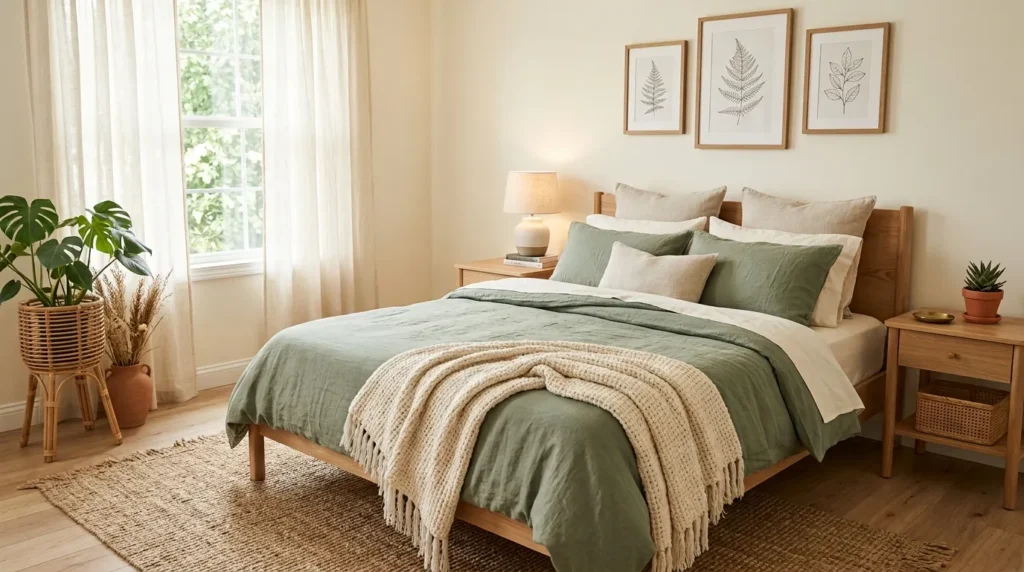
Linen is practically made for relaxed bohemian bedrooms. Its slightly rumpled texture makes the bed feel comfortable rather than overly formal, while sage green gives the bedding a calm, earthy quality.
Instead of trying to make every layer perfectly coordinated, use slightly different tones and textures. A sage duvet can sit beautifully against cream sheets, beige pillows, and a warm taupe throw.
This approach creates depth without relying on strong patterns.
Linen also works particularly well with natural materials such as rattan, jute, wood, and ceramic. Together, these materials create the tactile quality that makes boho interiors feel inviting.
How To Style It
Start with cream or ivory linen sheets.
Add a sage green duvet or quilt as the main layer.
Use two or three pillows in beige, oatmeal, or muted terracotta.
Finish with a chunky woven throw at the foot of the bed.
Don’t worry about perfectly smoothing the duvet. A naturally relaxed finish is part of the look.
For a richer bedroom, choose olive or moss green instead of pale sage.
2. Rattan Headboard
Quick Benefits
- Creates a natural focal point
- Adds lightweight texture
- Complements sage beautifully
- Works in small bedrooms
- Supports a relaxed aesthetic
Why It Works
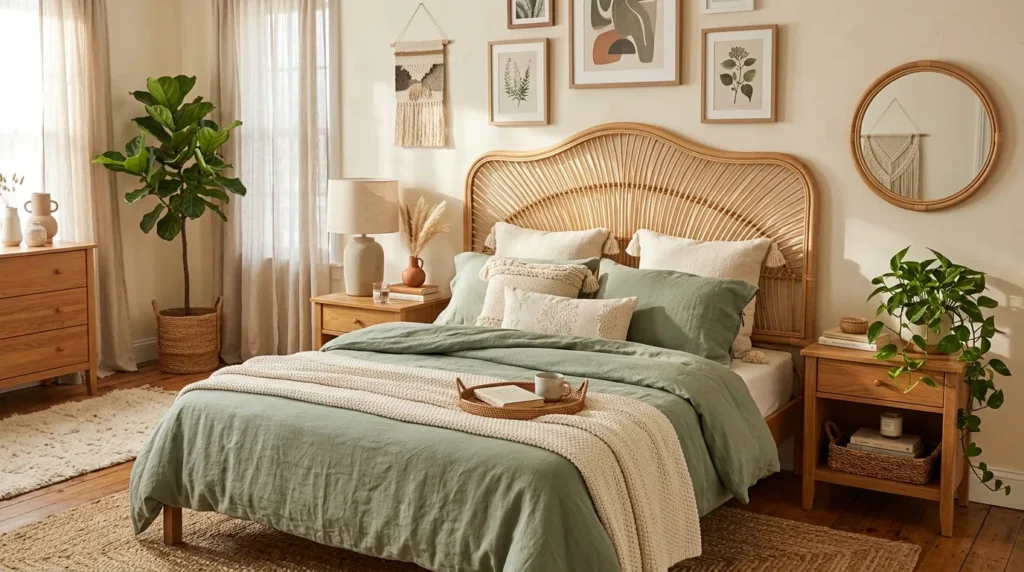
A rattan headboard instantly gives a bedroom a more organic character.
The warm honey tones of natural rattan contrast beautifully with muted sage, creating a palette that feels connected to nature.
Rattan is also visually lighter than many upholstered or solid wood headboards, which makes it useful in smaller bedrooms where you want texture without making the bed feel bulky.
Its woven construction adds subtle pattern without competing with other bohemian textiles.
How To Style It
Place a natural rattan headboard behind a bed dressed in sage and cream linens.
Add warm wood nightstands on either side if space allows.
Use woven baskets and a jute rug to repeat the natural texture.
Keep the wall behind the headboard relatively simple.
A small botanical print or hanging plant can add just enough decoration without hiding the rattan.
3. Woven Pendant Lights
Quick Benefits
- Adds sculptural texture
- Creates warm atmosphere
- Saves bedside surface space
- Enhances boho style
- Works as a focal point
Why It Works
Lighting can dramatically influence the atmosphere of a bedroom, and woven pendants are especially effective in bohemian interiors.
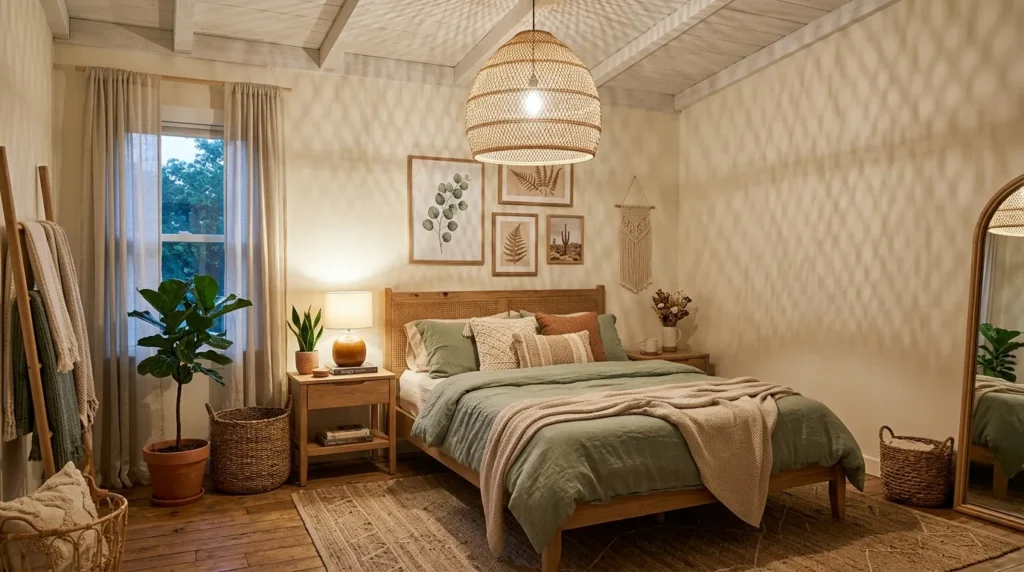
Rattan, cane, seagrass, and other woven materials filter light through their natural structures, creating interesting shadows across the walls.
They also introduce texture at eye level without requiring additional furniture.
This makes them particularly helpful in small bedrooms where every surface matters.
How To Style It
Hang one large woven pendant above the center of the room or use matching pendants on either side of the bed.
Choose warm-toned bulbs to create a comfortable evening atmosphere.
Pair the pendant with sage bedding, cream walls, and natural wood.
If the room already has several strong textures, select a simple woven shade rather than an elaborate design.
Make sure hanging fixtures are appropriately installed and positioned safely away from areas where they could be bumped.
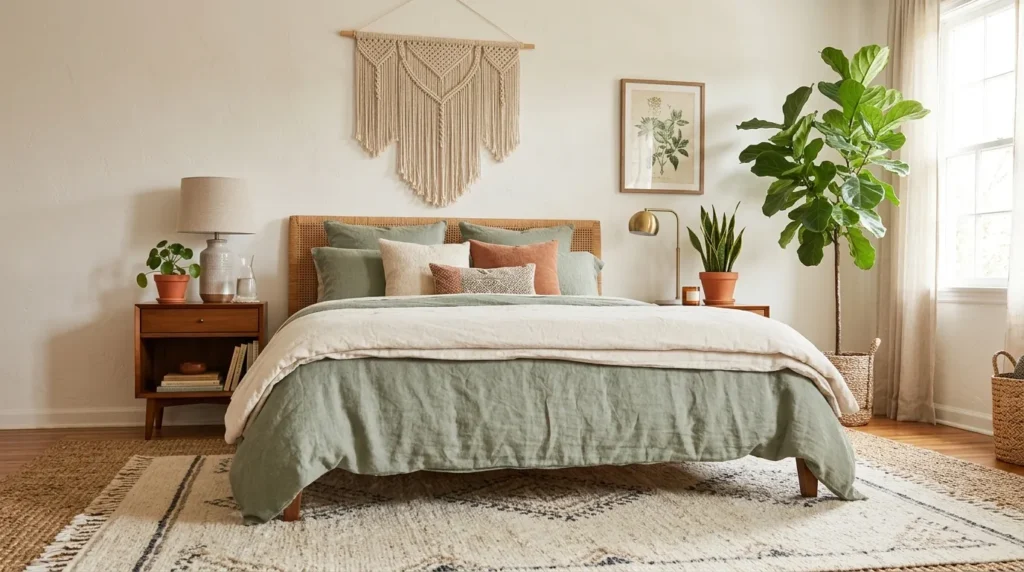
4. Layered Neutral Rugs
Quick Benefits
- Adds softness underfoot
- Defines the sleeping area
- Introduces texture
- Balances sage green
- Creates a cozy foundation
Why It Works
A bedroom can feel dramatically more comfortable with the right rug.
Boho style benefits from rugs that have visible texture, subtle patterns, or slightly imperfect-looking designs.
Neutral shades such as cream, beige, taupe, and natural fiber tones allow sage green to remain the primary color without competing for attention.
Layering rugs can also create a collected look, particularly when combining a larger neutral foundation rug with a smaller patterned piece.
How To Style It
Choose a large neutral rug that extends beyond the sides of the bed.
For additional bohemian character, layer a smaller patterned rug toward the foot of the bed.
Look for subtle geometric, tribal-inspired, or faded botanical patterns.
Jute and wool can create contrasting textures.
Keep the rug colors within the same earthy palette so the bedroom doesn’t become visually chaotic.
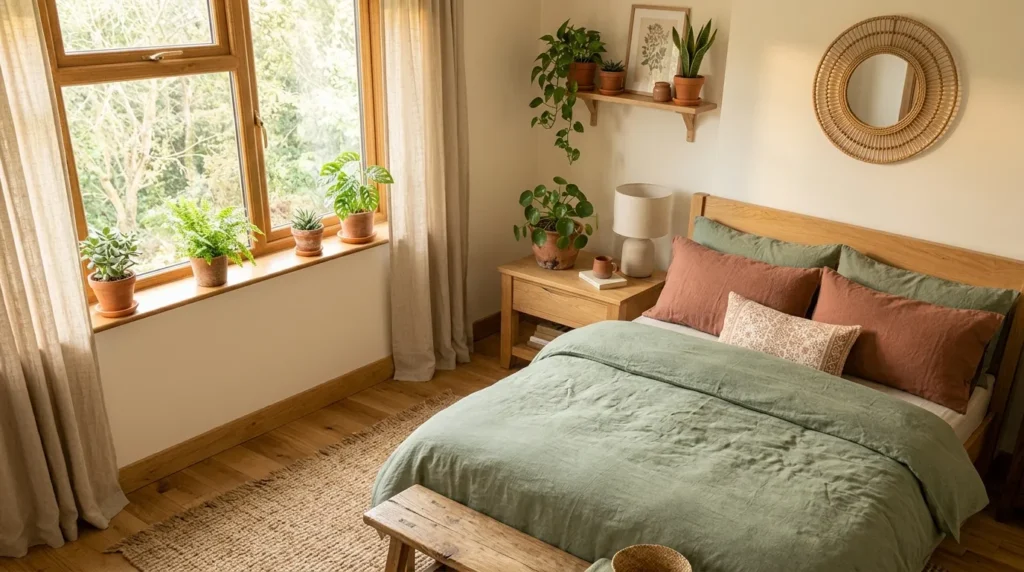
5. Terracotta Accents
Quick Benefits
- Warms sage green
- Adds earthy contrast
- Creates visual depth
- Works with natural materials
- Makes the palette feel richer
Why It Works
Sage green can occasionally feel cool, especially when paired with white or gray.
Terracotta introduces the warmth needed to make the room feel grounded.
The combination resembles natural landscapes: muted green foliage against warm clay and sun-baked earth.
You don’t need a lot of terracotta. Small amounts can have a strong visual impact.
How To Style It
Introduce terracotta through a ceramic vase, throw pillow, artwork, planter, or small decorative bowl.
Pair it with cream and sage rather than adding several other saturated colors.
Warm wood furniture will reinforce the palette.
If terracotta feels too strong, choose muted clay, cinnamon, or dusty rust instead.
These softer variations maintain warmth without overwhelming the sage.
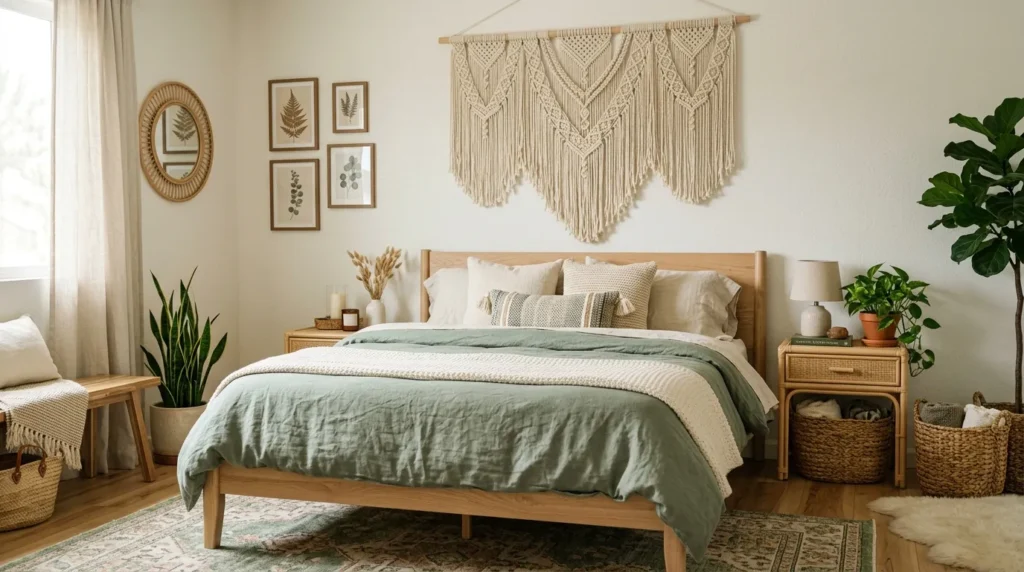
6. Macramé Wall Decor
Quick Benefits
- Adds handcrafted texture
- Softens blank walls
- Fits classic boho style
- Works with sage backgrounds
- Requires little furniture
Why It Works
Macramé is a familiar bohemian element because its woven construction introduces texture without relying on color.
Against sage green, natural cream or ivory macramé creates a beautiful tonal contrast.
It can also soften the harder lines of modern furniture and painted walls.
The key is using it intentionally rather than covering every wall with textile decor.
How To Style It
Hang one medium-to-large macramé piece above the bed or on a nearby accent wall.
Choose natural ivory or cream fibers.
Pair it with sage bedding and warm wood furniture.
Add a woven basket or rattan accessory nearby to repeat the texture.
If your bedding already has a strong pattern, keep the macramé design relatively simple.
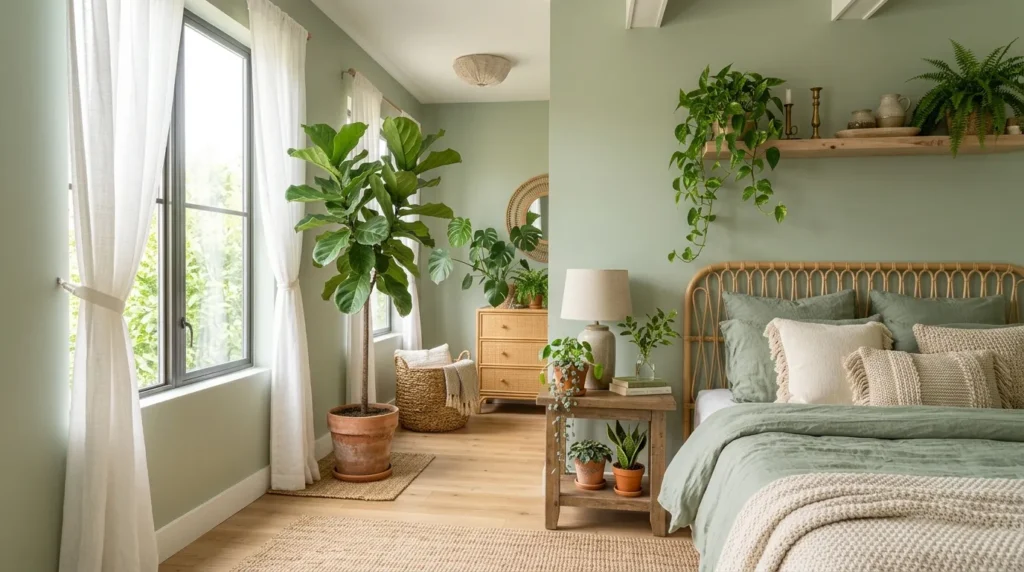
7. Indoor Greenery
Quick Benefits
- Reinforces the natural palette
- Adds organic shapes
- Brings visual movement
- Fills empty corners
- Complements boho textures
Why It Works
Plants are one of the easiest ways to strengthen the connection between sage green and bohemian decor.
The leaves introduce organic shapes that contrast with furniture and architectural lines.
Different plant heights also help create layers throughout the room.
You don’t need a jungle. A few well-positioned plants can have more impact than dozens of small pots.
How To Style It
Place one taller plant beside a window or in an empty corner.
Add a smaller plant to a dresser or shelf where appropriate.
Use terracotta, woven, or handmade-looking ceramic planters.
Choose plants according to the light available in your bedroom.
If you have pets, check whether the plants you choose are safe for them.
Keep enough open space around the greenery so the room still feels breathable.
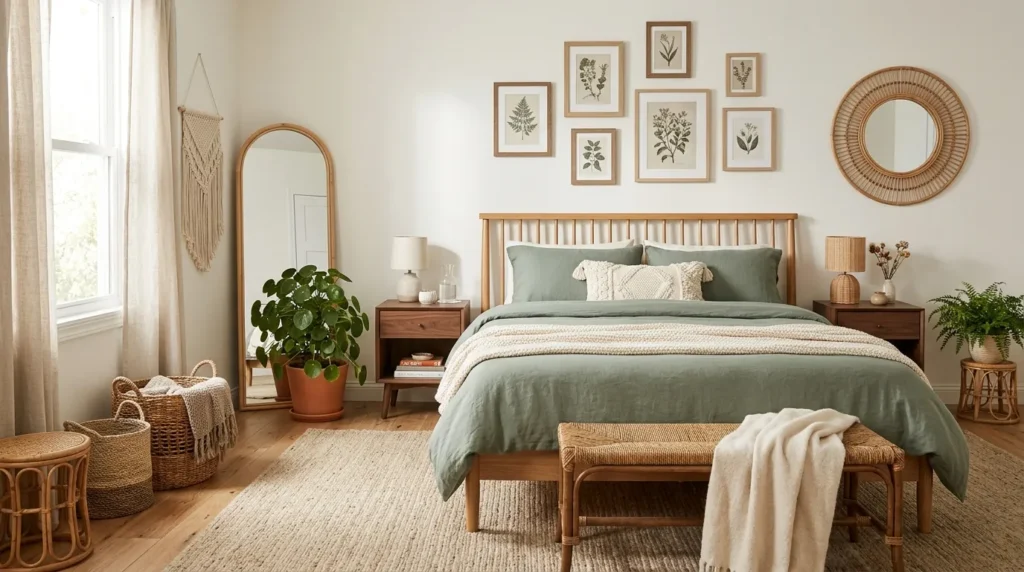
8. Warm Wood Furniture
Quick Benefits
- Adds warmth
- Balances sage
- Provides natural texture
- Works with boho decor
- Makes the room feel grounded
Why It Works
Warm wood and sage green create one of the most natural combinations for a bohemian bedroom.
Wood adds visible grain, warmth, and variation that can keep muted green from looking too flat.
Light oak creates an airy appearance, while walnut and darker wood produce a richer, more intimate mood.
You can use wood as the primary furniture finish or introduce it through smaller pieces.
How To Style It
Choose a natural wood bed frame, nightstand, dresser, or bench.
Pair light wood with pale sage for a bright bedroom.
Use walnut with deeper sage or olive if you want a moodier atmosphere.
Avoid making every furniture piece identical.
A slightly collected mix of compatible wood tones often feels more authentically bohemian.
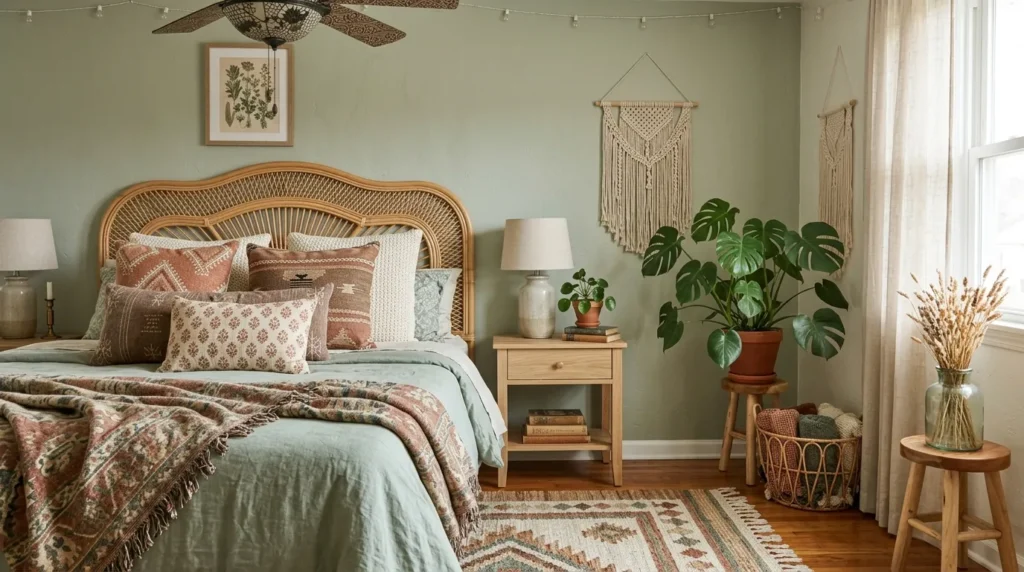
9. Patterned Textiles
Quick Benefits
- Adds personality
- Creates visual depth
- Prevents a flat palette
- Supports eclectic styling
- Makes the room feel collected
Why It Works
Boho bedrooms rarely rely entirely on solid colors.
Subtle patterns bring personality and help the room feel layered.
Look for faded geometric motifs, small botanical prints, woven stripes, or vintage-inspired patterns.
The goal isn’t to match everything. Instead, choose patterns that share a few colors with the rest of the room.
How To Style It
Start with one patterned pillow or throw.
Repeat a related pattern in a small rug or accent cushion.
Keep the largest textile, such as the duvet, relatively simple if you’re using several smaller patterns.
Sage, cream, beige, terracotta, and muted brown provide a natural foundation.
Vary the scale of patterns so they don’t compete.
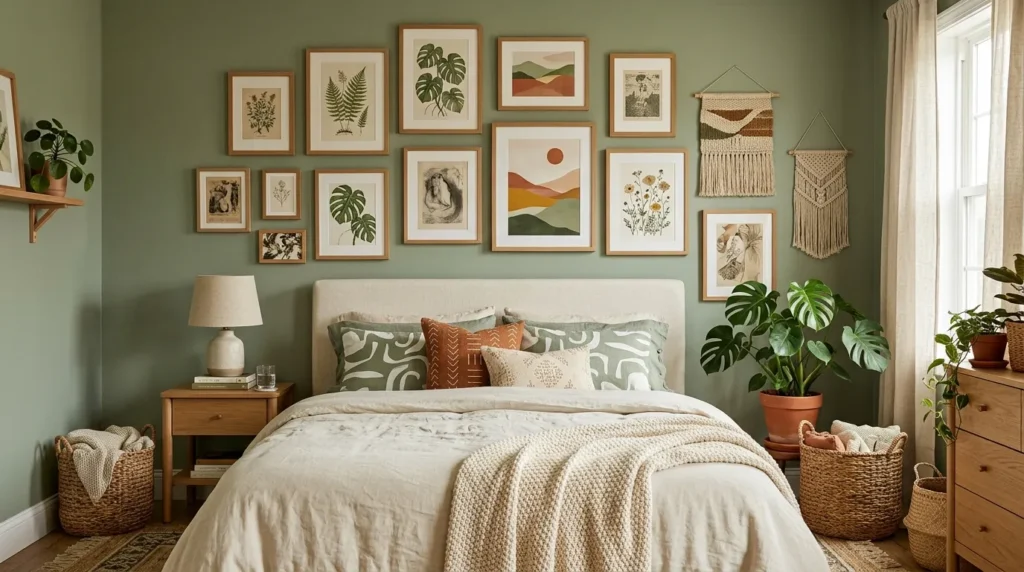
10. Earthy Gallery Wall
Quick Benefits
- Adds personality
- Makes blank walls interesting
- Supports natural themes
- Creates a collected appearance
- Works with many boho styles
Why It Works
Artwork is an opportunity to make the bedroom feel personal rather than simply styled around a trend.
A boho gallery wall might include botanical illustrations, abstract landscapes, vintage-inspired prints, woven pieces, line drawings, or photographs of natural scenery.
Using earthy colors connects everything back to the sage palette.
Natural imperfections and varied frames can make the arrangement feel collected over time.
How To Style It
Choose artwork containing sage, cream, beige, terracotta, brown, or muted black.
Mix several sizes.
Use natural wood frames for a softer appearance.
Include one or two pieces with handmade-looking texture.
Arrange the artwork on the floor first to find a composition you like.
Leave enough negative space between pieces so the wall doesn’t become overwhelming.
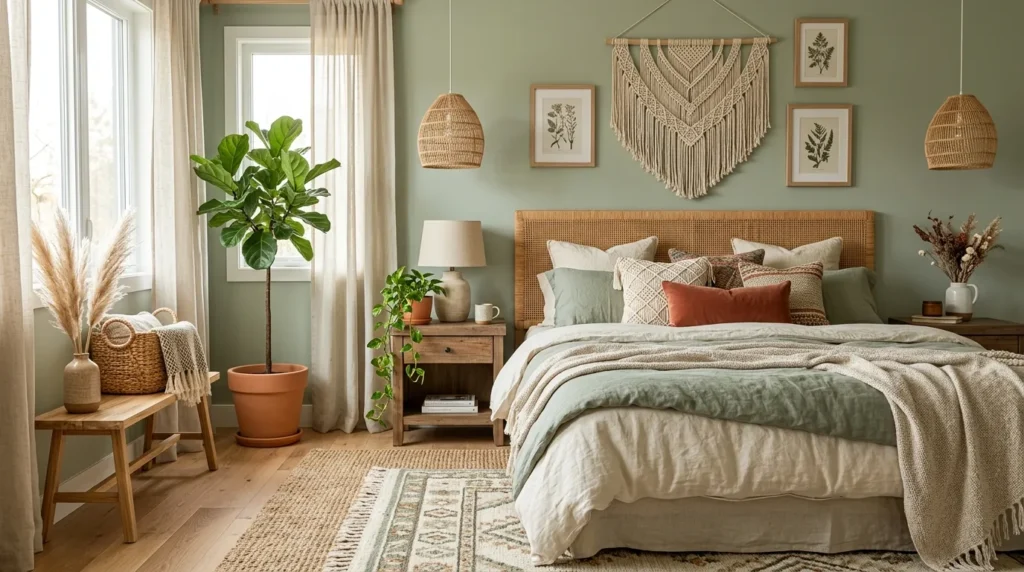
11. Cozy Boho Layers
Quick Benefits
- Combines the entire look
- Creates a welcoming atmosphere
- Adds tactile comfort
- Makes the bedroom feel personalized
- Works across decorating styles
Why It Works
The most inviting boho bedrooms aren’t built around one accessory. They’re created through layers.
Sage provides the color foundation, while linen, wool, rattan, wood, ceramic, plants, and woven materials create the texture.
The result should feel comfortable rather than overly styled.
This is where you can bring together the elements that best reflect your personality without needing to use every bohemian accessory available.
How To Style It
Start with sage bedding and a neutral rug.
Add a rattan headboard or warm wood furniture.
Introduce a woven pendant and one macramé wall hanging.
Place a few plants around the room.
Use terracotta or dusty rust as a small accent color.
Finish with a soft throw, textured cushions, and a few meaningful decorative pieces.
Leave some surfaces intentionally clear.
How To Build A Serene Sage Boho Bedroom
The easiest way to create this style is to work from large elements to small details.
Start with the walls and flooring.
Warm white, cream, beige, or very soft sage can provide the foundation.
Next, choose the bed.
A natural wood or rattan frame is an easy starting point.
Then layer the bedding with sage, ivory, oatmeal, and perhaps a little terracotta.
After the large elements are established, introduce texture.
Think linen, jute, rattan, cotton, wool, ceramic, and woven fibers.
Finally, add personality through plants, artwork, books, baskets, and small objects that actually mean something to you.
This approach prevents the room from looking like every item came from the same store.
Best Colors With Sage Green Boho Decor
Sage green is extremely flexible.
For a light and airy room, combine it with:
- Cream
- Ivory
- Warm white
- Pale beige
- Light oak
For an earthy bedroom, use:
- Terracotta
- Clay
- Rust
- Camel
- Warm brown
For a moody bedroom, try:
- Olive
- Walnut
- Charcoal
- Deep brown
For a softer romantic look, add:
- Dusty rose
- Blush
- Muted mauve
The key is keeping the additional colors relatively muted.
How To Make A Small Boho Bedroom Feel Bigger
Boho decor can become visually heavy if too many accessories are packed into a small room.
Start by keeping the main palette light.
Use pale sage, cream, and natural wood.
Choose furniture with visible legs rather than large solid pieces.
A rattan headboard can provide texture without making the bed look overly heavy.
Use wall-mounted lighting to free up nightstand space.
Vertical plants can draw attention upward.
Finally, avoid filling every empty corner.
A little breathing room is essential.
FAQ
Is sage green good for a boho bedroom?
Yes. Sage green works particularly well with bohemian decor because it naturally complements warm wood, rattan, linen, woven textiles, terracotta, and indoor plants. Its muted quality also helps balance the layered textures commonly found in boho bedrooms.
What colors go with sage green in a boho bedroom?
Cream, beige, ivory, warm white, terracotta, rust, camel, brown, dusty rose, and natural wood all work beautifully with sage. For a more dramatic room, combine sage with olive, walnut, or charcoal.
How do I make a sage green bedroom look boho?
Focus on texture rather than adding lots of decorations. Combine sage bedding with rattan, linen, natural wood, woven baskets, plants, jute rugs, macramé, and handmade-looking ceramics. A few meaningful accessories can give the room personality without creating clutter.
What shade of sage green is best for a bedroom?
Soft, muted sage is generally easy to use on large surfaces because it has a calm appearance. If you want a deeper, moodier room, choose a darker sage or olive. Always test paint samples in your actual bedroom because natural and artificial lighting can change how green appears.
Can sage green and terracotta work together?
Absolutely. Sage and terracotta create a warm earthy combination inspired by natural landscapes. Use terracotta in small amounts through pottery, cushions, rugs, artwork, or throws. Muted clay and dusty rust can provide a softer alternative to brighter orange tones.
How many plants should I use in a boho bedroom?
There is no fixed number. One larger plant can make a strong statement, while several smaller plants can create more layers. Choose based on available light, room size, and how much maintenance you’re comfortable with. Avoid adding plants simply to fill every empty space.
Can I create a boho bedroom on a budget?
Yes. Start with smaller changes such as sage bedding, woven baskets, thrifted wood furniture, secondhand artwork, inexpensive plants, and textured throws. You don’t need to replace everything at once. Layering affordable natural-looking materials can create much of the desired atmosphere.
Conclusion
A sage green boho bedroom doesn’t have to be complicated.
The most effective spaces usually start with a calm foundation and build character through texture. Sage bedding, warm wood, rattan, woven lighting, natural rugs, plants, and earthy accessories can work together to create a bedroom that feels relaxed without becoming cluttered.
If you’re working with a small budget, begin with the bed. New sage linen-style bedding, a woven throw, and a couple of textured cushions can immediately shift the atmosphere.
Then add natural materials gradually.
A rattan headboard, woven pendant, macramé wall hanging, or wooden nightstand can become the next layer.
Remember that boho style is ultimately about creating a space that feels personal and comfortable. Don’t feel obligated to include every popular trend. Choose the textures, colors, plants, and artwork that genuinely make you happy.
Start with sage as your anchor, add warm neutrals, introduce natural materials, and finish with a few meaningful details. The result can be a serene bedroom that feels earthy, cozy, and beautifully lived in.