

10 Pink and Sage Green Bedroom Ideas to Inspire Your Space
Pink and sage green make an unexpectedly beautiful bedroom combination. One brings softness and warmth, while the other adds a calm, earthy quality that keeps the room from feeling overly sweet. Together, they create a palette that can feel romantic, modern, relaxed, or even slightly vintage depending on the shades and materials you choose.
The trick is finding the right balance. A dusty blush paired with muted sage feels completely different from bubblegum pink and bright green. For a bedroom, softer versions are usually easier to live with because they create a restful backdrop while still giving the space personality.
If your bedroom feels too neutral, adding pink and sage can be a simple way to introduce color without committing to an overly bold design. You can bring the palette in through bedding, paint, artwork, curtains, an upholstered headboard, or even a few small accessories.
I’ve found that this combination works especially well when natural materials are included. Light oak, rattan, linen, woven baskets, ceramic lamps, and natural rugs give the colors an organic foundation and help the room feel layered rather than overly coordinated.
You also don’t need to use both colors equally. Sage can dominate while pink appears in small accents, or pink can become the focal color with sage providing balance.
Below are ten ways to use the combination, from subtle neutral bedrooms with tiny hints of blush to richer spaces where both colors take center stage. Whether you’re decorating a primary bedroom, guest room, apartment, or cozy retreat, these ideas can help you create a space that feels inviting, personal, and beautifully balanced.
Table of Contents
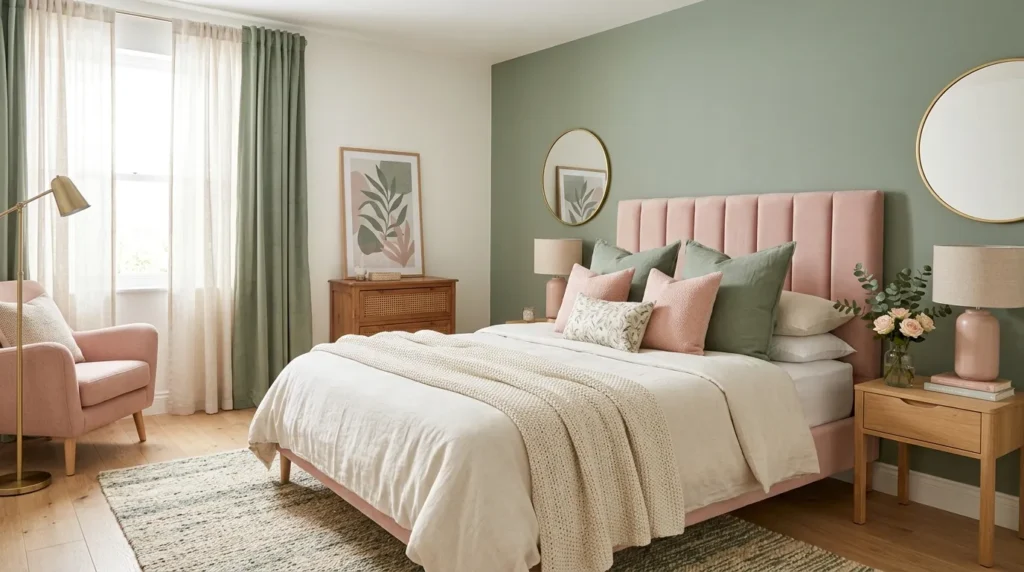
1. Blush And Sage Bedding
Layer soft pink and sage textiles for an easy bedroom refresh.
2. Sage Green Walls
Use sage as a calming backdrop for warm pink accents.
3. Pink Upholstered Headboard
Make blush or dusty pink the bedroom’s soft focal point.
4. Botanical Pink Prints
Combine floral artwork with green tones for a natural look.
5. Rose And Rattan
Pair warm pink shades with woven textures and natural materials.
6. Pink Accent Wall
Create a romantic focal point while keeping sage accessories balanced.
7. Sage And Blush Gallery
Build a coordinated art display using both colors.
8. Pink And Green Layers
Use multiple shades and textures to create depth.
9. Vintage Cottage Palette
Give the combination a charming, collected character.
10. Modern Soft Contrast
Create a contemporary bedroom with restrained pink and sage accents.
1. Blush And Sage Bedding
Quick Benefits
- Easy to update
- Adds color without painting
- Creates a soft focal point
- Works with neutral walls
- Perfect for renters
Why It Works
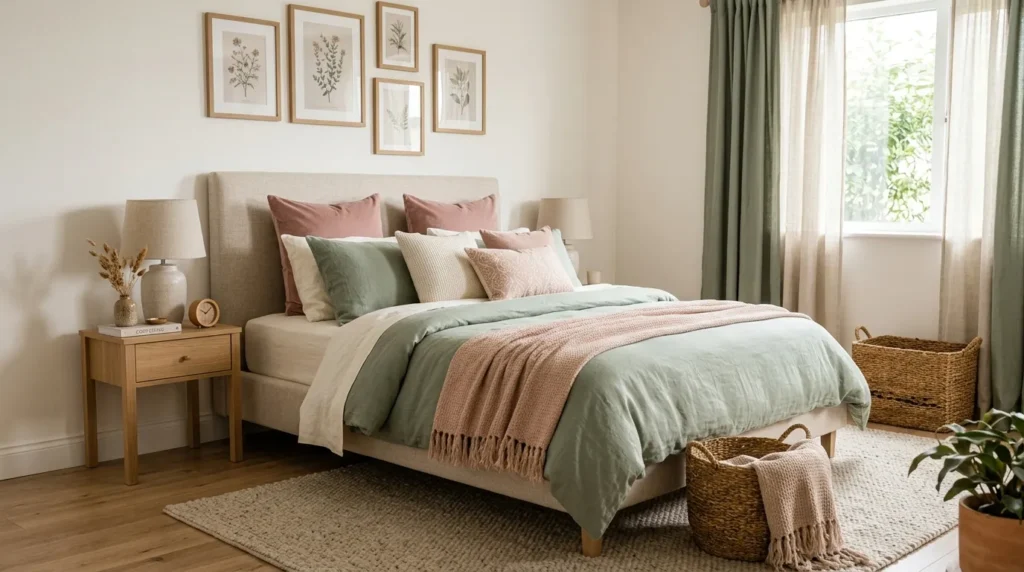
Bedding is one of the easiest ways to experiment with pink and sage because it covers a large visual area without making a permanent change. A muted sage duvet paired with blush pillows immediately introduces the color combination while allowing cream or white walls to remain neutral.
This approach works particularly well if you’re unsure how much color you want. You can change individual layers later without redesigning the room.
The key is avoiding perfectly matched shades. Slight variations in pink and green usually create more depth and make the bed feel naturally layered.
Linen, cotton, velvet, and knitted textures can also prevent the palette from looking flat.
How To Style It
Start with ivory or warm white sheets.
Add a sage duvet or quilt as the main layer, then introduce dusty pink through two or three pillows.
A blush throw at the foot of the bed can connect the colors.
Use natural wood nightstands and a beige rug to soften the palette.
For a more elegant bedroom, introduce small brass details through bedside lamps.
For a relaxed look, choose linen bedding and slightly rumpled textures.
2. Sage Green Walls
Quick Benefits
- Creates a calm foundation
- Works with many pink shades
- Makes the room feel grounded
- Complements natural materials
- Suitable for modern and traditional styles
Why It Works
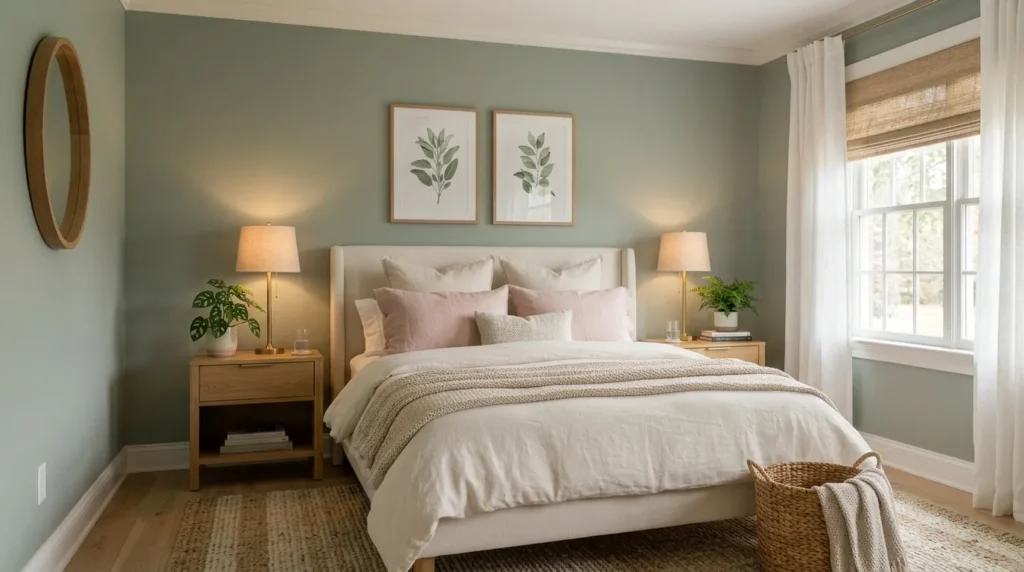
Sage green is an excellent background color because it is muted enough to let pink accents stand out without creating an overly colorful room.
The gray undertones often found in sage help soften the overall palette, while the green connection to nature keeps the bedroom feeling grounded.
This combination is particularly beautiful with warm white trim and cream textiles.
Sage walls also provide a natural backdrop for floral artwork, light wood furniture, brass fixtures, and woven accessories.
If you’re working with a small bedroom, choose a lighter sage to maintain an airy feeling.
How To Style It
Paint the walls a soft sage and keep the ceiling and trim warm white.
Use blush or dusty pink through bedding, curtains, cushions, or artwork.
Light oak furniture works beautifully against sage.
Add a cream or beige rug to create visual warmth.
For a slightly moodier room, use deeper sage and introduce muted rose or terracotta pink rather than a bright pink.
3. Pink Upholstered Headboard
Quick Benefits
- Creates an instant focal point
- Adds softness
- Makes the bed feel luxurious
- Works with sage accents
- Introduces color without painting
Why It Works
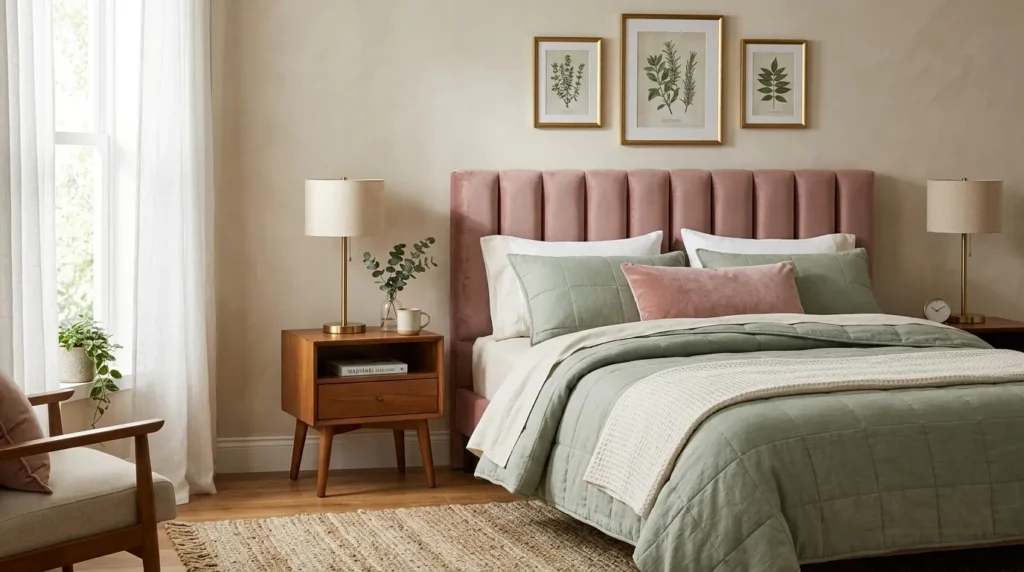
A pink upholstered headboard can make the bedroom feel warm and inviting without requiring pink walls.
Blush velvet is especially effective because its texture gives the color subtle variations as the light changes.
When paired with sage bedding or cushions, the result feels sophisticated rather than overly feminine.
The headboard also gives the room a strong visual anchor, which can be particularly useful when the surrounding furniture is simple.
How To Style It
Choose dusty rose, blush, muted mauve, or soft pink upholstery.
Pair it with sage green bedding and cream sheets.
Add natural wood nightstands and simple ceramic lamps.
For a polished finish, introduce brass hardware or lighting.
Keep the artwork relatively understated so the headboard remains the primary focal point.
If the room is small, choose a headboard with a clean silhouette rather than a heavily detailed design.
4. Botanical Pink Prints
Quick Benefits
- Combines both colors naturally
- Adds visual interest
- Works with neutral bedrooms
- Creates a nature-inspired atmosphere
- Easy to change
Why It Works
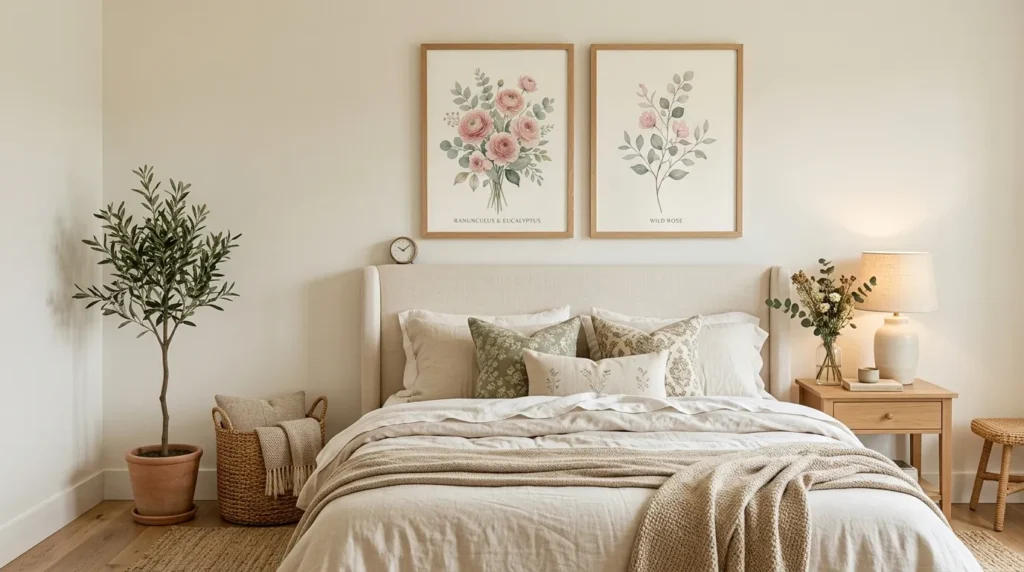
Botanical artwork provides a natural way to connect pink and sage.
Instead of using solid blocks of both colors, floral and botanical illustrations can blend blush petals, muted green leaves, cream backgrounds, and earthy details within one piece.
This creates a more cohesive palette and gives you additional colors to use throughout the room.
Vintage floral studies, watercolor flowers, pressed botanical art, and modern floral prints can all work.
How To Style It
Choose artwork containing muted pink flowers and sage or olive foliage.
Display one large piece above the bed or create a small gallery wall.
Use natural wood or thin gold frames.
Repeat the pink and green shades through cushions or a throw.
Keep the wall behind the artwork relatively neutral if the prints are detailed.
A cream wall can make the artwork feel especially light and airy.
5. Rose And Rattan
Quick Benefits
- Adds natural texture
- Softens pink
- Creates an organic look
- Works with warm neutrals
- Perfect for relaxed bedrooms
Why It Works
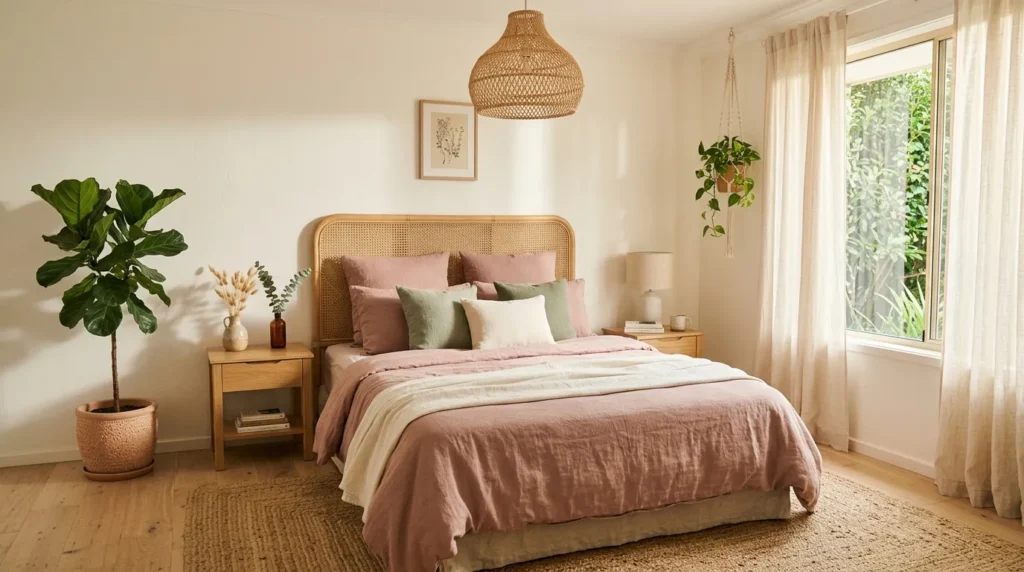
Rattan and other woven materials give pink and sage a natural foundation.
Without texture, pastel colors can sometimes feel overly polished or flat. Woven furniture, baskets, lampshades, and headboards add visual depth and create a more relaxed atmosphere.
The combination of dusty rose, sage, cream, and rattan works especially well in boho, organic modern, cottage, and relaxed coastal-inspired bedrooms.
How To Style It
Use a rattan headboard or woven pendant light as a starting point.
Add sage bedding with blush cushions.
Choose a natural jute or woven rug.
Use cream linen curtains and light wood furniture.
Bring in one or two plants to reinforce the green connection.
Keep the pink muted rather than bright if you want the room to feel earthy and sophisticated.
6. Pink Accent Wall
Quick Benefits
- Creates a romantic focal point
- Makes a noticeable impact
- Works with neutral furniture
- Allows sage to remain an accent
- Can visually frame the bed
Why It Works
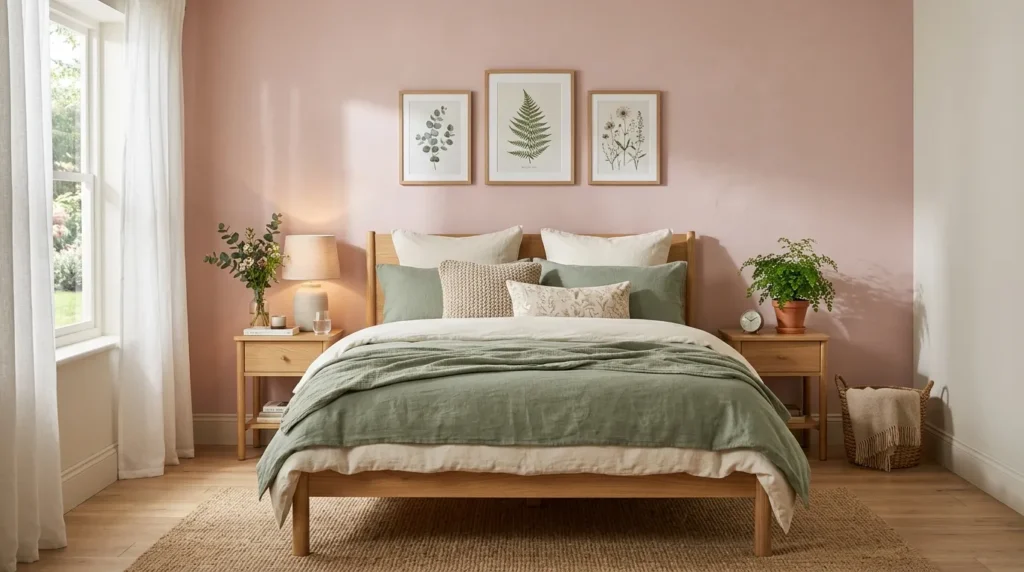
A soft pink accent wall can make the bedroom feel warmer and more personal without turning the entire room pink.
This works especially well behind the bed because the wall naturally serves as a focal point.
Dusty blush, muted rose, warm nude pink, and clay-inspired pink can all work beautifully.
The surrounding sage elements then provide contrast and prevent the room from feeling too monochromatic.
How To Style It
Choose a subdued pink rather than a highly saturated shade.
Keep the headboard simple or use a natural wood frame against the painted wall.
Bring sage into the room through bedding, pillows, curtains, or plants.
Cream and beige can occupy the larger supporting areas.
Add natural wood to keep the combination grounded.
If the bedroom receives limited natural light, test the pink at different times of day before committing to the entire wall.
7. Sage And Blush Gallery
Quick Benefits
- Personalizes the bedroom
- Fills blank walls
- Connects multiple colors
- Works with many decorating styles
- Easy to build gradually
Why It Works
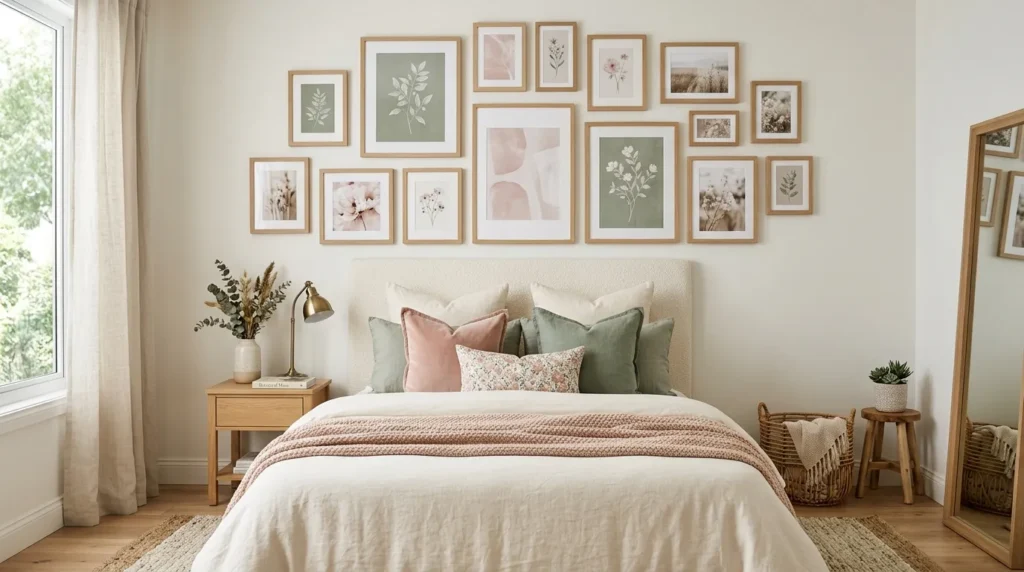
A gallery wall allows you to introduce pink and sage in small, controlled amounts.
You don’t need every artwork piece to contain both colors. A blush abstract print can sit beside a sage botanical illustration, while a neutral nature photograph provides breathing room.
This variation creates a more collected appearance.
It is particularly useful when the bedroom already has neutral furniture and you want the wall art to become the main source of color.
How To Style It
Choose three to seven pieces depending on wall size.
Look for a mix of botanical illustrations, abstract art, floral prints, and neutral artwork.
Use consistent frames to make the different pieces feel connected.
Natural wood works for a relaxed room, while black or brass frames create more definition.
Arrange the pieces on the floor first and adjust the composition before hanging them.
8. Pink And Green Layers
Quick Benefits
- Creates visual depth
- Prevents flat color blocks
- Makes the room feel curated
- Allows subtle experimentation
- Works across different styles
Why It Works
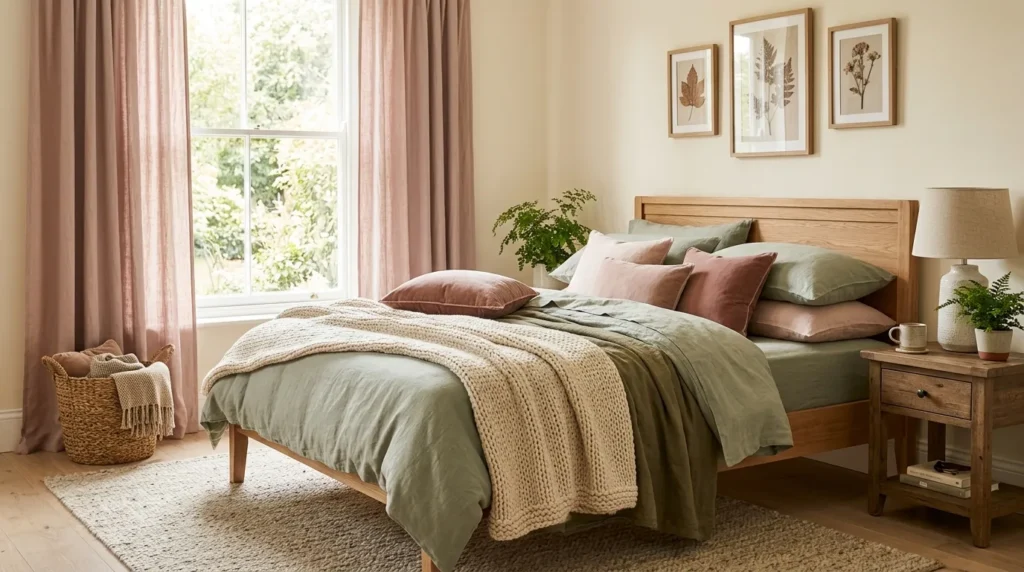
Using several related shades is often more effective than choosing one exact pink and one exact green.
For example, sage can sit alongside olive, while blush can be complemented by dusty rose.
These subtle variations make the bedroom feel layered rather than color-matched.
Texture is equally important. A velvet cushion, linen duvet, knitted throw, and woven basket can all reflect the palette differently.
How To Style It
Choose one dominant color and one supporting color.
For example, use sage as the primary shade through bedding and curtains, then bring pink into pillows and artwork.
Add cream to create breathing room.
Use wood and woven textures for warmth.
Avoid introducing too many additional strong colors.
If you want more contrast, use a small amount of charcoal or warm brown through furniture and lighting.
9. Vintage Cottage Palette
Quick Benefits
- Creates timeless charm
- Works with floral patterns
- Adds personality
- Allows mismatched furniture
- Feels warm and collected
Why It Works
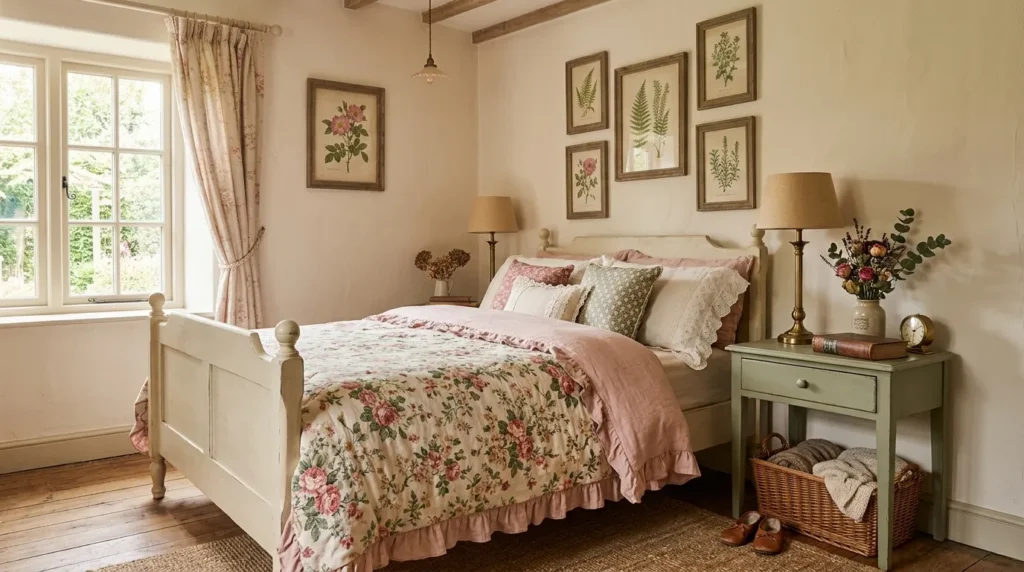
Pink and sage have a natural connection to traditional cottage interiors.
Muted florals, aged wood, vintage-inspired furniture, soft linens, and antique-style artwork can make the palette feel as though it has developed naturally over time.
This style doesn’t require everything to match.
In fact, slight variation in furniture finishes and textiles often makes the room more interesting.
How To Style It
Choose faded rose and soft sage rather than highly saturated colors.
Add floral bedding or curtains with a small-scale pattern.
Use a painted wood nightstand or vintage-style dresser.
Layer lace-inspired, linen, or textured textiles.
Add botanical prints in slightly aged frames.
A small brass lamp or vintage-style mirror can complete the look without making the room feel overly themed.
10. Modern Soft Contrast
Quick Benefits
- Feels contemporary
- Keeps the palette sophisticated
- Works in small bedrooms
- Uses color strategically
- Avoids an overly traditional appearance
Why It Works
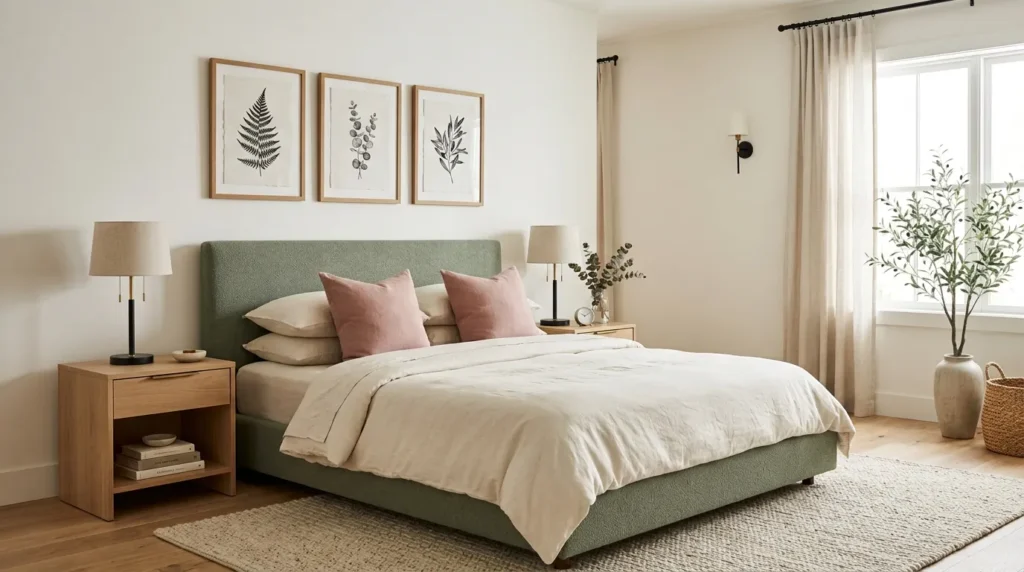
Pink and sage can look remarkably modern when the shapes and materials are simple.
Instead of floral patterns everywhere, use solid-color textiles, clean-lined furniture, and one or two carefully chosen art pieces.
The result is softer than a typical monochromatic modern bedroom but still feels intentional and streamlined.
This approach is especially useful if you like color but don’t want your bedroom to look overly decorative.
How To Style It
Use warm white walls as the primary backdrop.
Choose a simple sage upholstered bed or sage bedding.
Introduce dusty pink through one accent chair, lumbar pillow, artwork, or throw.
Keep furniture streamlined with light or medium wood finishes.
Choose simple black, brass, or ceramic lighting.
Finish with a neutral textured rug to connect the entire palette.
How To Balance Pink And Sage Green
The easiest way to avoid a mismatched bedroom is to decide which color will dominate.
A 60/30/10 approach can be useful:
- 60% neutral foundation
- 30% sage green
- 10% pink accents
For example, cream walls and bedding can provide the foundation, sage can appear through curtains and a duvet, and pink can be reserved for cushions and artwork.
You can reverse the proportions if you prefer pink to be more prominent.
The important thing is giving both colors a purpose.
Rather than placing pink and green randomly around the room, repeat them in at least two or three locations.
This creates visual continuity.
Best Pink Shades With Sage Green
Not every pink works equally well with sage.
Dusty rose creates a sophisticated, slightly vintage feeling.
Blush pink feels soft and airy.
Muted mauve adds a little more depth.
Clay pink creates a warm earthy effect.
Pale pink keeps the bedroom delicate and bright.
For a modern bedroom, dusty rose and muted blush are especially versatile.
For a cottage-inspired space, faded rose and soft floral pink can work beautifully.
Avoid relying on very bright bubblegum pink unless you’re intentionally creating a playful room.
Best Materials For This Color Combination
Materials can make the same color palette feel completely different.
For an organic bedroom, try:
- Linen
- Rattan
- Light oak
- Jute
- Cotton
- Ceramic
- Woven baskets
For a more luxurious look, use:
- Velvet
- Brushed brass
- Upholstered furniture
- Marble accents
- Plush rugs
- Satin details
For a modern bedroom, combine:
- Clean-lined wood
- Matte finishes
- Simple cotton bedding
- Black metal
- Minimal artwork
The colors stay the same, but the materials change the personality of the room.
FAQ
Is pink and sage green a good bedroom color combination?
Yes. Pink and sage green complement each other because pink introduces warmth while sage provides an earthy, muted counterpoint. Softer versions such as blush, dusty rose, and muted sage are particularly easy to use in bedrooms because they create color without feeling overly intense.
What color goes best with pink and sage green?
Cream, ivory, warm white, beige, light wood, and natural brown are excellent supporting colors. These neutrals create breathing room between pink and green and help the palette feel sophisticated. Brass and black can also work as small accent colors.
Should pink or sage green be the main color?
Either can work. If you want a calm, nature-inspired room, make sage the dominant color and use pink as an accent. If you prefer a softer, more romantic bedroom, make blush or dusty rose the main accent and use sage for balance.
Can pink and sage green work in a modern bedroom?
Absolutely. Use solid-color textiles, clean-lined furniture, minimal botanical artwork, and restrained accessories. Avoid excessive floral patterns if you want a contemporary appearance. Warm white walls, sage bedding, dusty pink accents, and light wood can create a particularly polished combination.
What bedding goes with sage green walls?
Cream, ivory, white, blush, dusty rose, beige, and subtle botanical patterns can all work beautifully with sage walls. If the walls are strongly colored, choose simpler bedding. Layering different neutral textures can keep the room interesting without adding too much pattern.
How can I use pink in a sage green bedroom without making it too feminine?
Use pink sparingly and choose muted shades such as dusty rose, clay pink, or blush. Introduce it through one or two cushions, artwork, a throw, or a small accent chair. Balance it with natural wood, black accents, woven textures, and neutral bedding.
Does sage green work with floral bedroom decor?
Yes. Sage naturally complements floral patterns because it echoes the foliage found in flowers and botanical prints. Choose floral patterns containing muted pinks, creams, greens, and earthy tones for the most cohesive result.
Conclusion
Pink and sage green offer a beautiful way to bring color into a bedroom without sacrificing a calm, comfortable atmosphere.
The combination can be romantic, earthy, modern, vintage, or relaxed depending on the shades, patterns, furniture, and materials you choose. Soft sage walls with blush accents can create a peaceful retreat, while a pink upholstered headboard and deeper green bedding can make the room feel richer and more layered.
If you’re decorating on a budget, start with bedding, cushions, artwork, or curtains. These smaller changes can help you test the palette before making a larger commitment.
For a bigger transformation, consider a sage accent wall, pink headboard, botanical wallpaper, or a curated gallery wall.
The most important thing is balance. Let one color lead, use the other as a supporting accent, and bring in warm neutrals and natural textures to connect everything.
Start with one or two changes and build gradually. When pink, sage, cream, and natural materials are layered thoughtfully, the result can feel both fresh and timeless—a bedroom you’ll genuinely enjoy spending time in.