

10 Botanical Wall Art Bedroom Decor Ideas to Refresh Your Space
A bedroom can feel completely different with one thoughtful change, and wall art is often one of the easiest places to start. If your room feels plain, unfinished, or simply needs a softer natural touch, botanical artwork can bring color, texture, and personality without requiring a major renovation.
Botanical wall art works especially well in bedrooms because it naturally supports a calm, organic atmosphere. Think pressed-leaf prints, oversized botanical illustrations, vintage flower studies, leafy photography, watercolor branches, and gallery walls inspired by nature. These pieces can work with modern, farmhouse, cottage, boho, Scandinavian, traditional, and even minimalist interiors.
The key is choosing artwork that complements the existing room instead of treating the wall as a completely separate design project. Your bedding, wall color, furniture finishes, lighting, and textiles can all help determine which botanical style will feel most cohesive.
I’ve noticed that botanical art is particularly effective when the surrounding decor stays relatively simple. A large leafy print above the bed can become the focal point without competing with a heavily patterned comforter or busy collection of accessories.
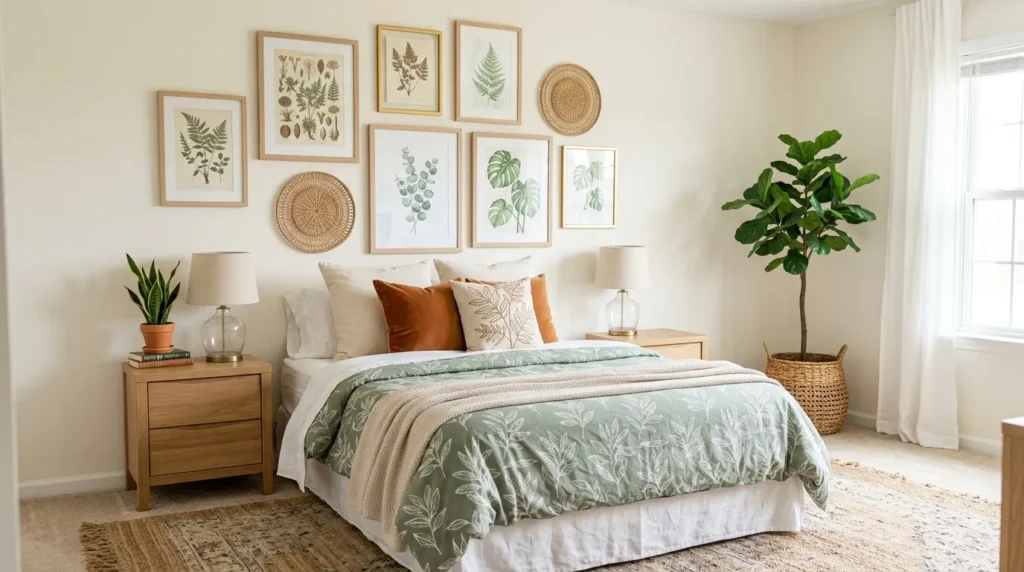
You also don’t need a huge budget to create the look. A collection of affordable prints in coordinated frames can have just as much impact as one expensive original piece when the scale and arrangement are right.
Whether you’re decorating a primary bedroom, guest room, apartment bedroom, or cozy retreat, these ideas can help you use botanical wall art intentionally. From oversized greenery prints to delicate vintage illustrations, you’ll find plenty of ways to bring a fresh, nature-inspired feeling to your walls.
Table of Contents
1. Oversized Leaf Prints
Create a dramatic focal point with large-scale botanical artwork.
2. Vintage Botanical Gallery
Combine classic plant illustrations for a collected bedroom wall.
3. Pressed Flower Art
Bring delicate natural texture to the room with pressed botanical designs.
4. Greenery Above Bed
Use leafy artwork to create a calming focal point over the headboard.
5. Botanical Gallery Wall
Mix several nature-inspired pieces into one cohesive arrangement.
6. Watercolor Botanicals
Add softness and subtle color with hand-painted botanical imagery.
7. Black Frame Contrast
Use dark frames to give delicate botanical artwork a polished appearance.
8. Neutral Botanical Prints
Keep the palette quiet with understated nature-inspired artwork.
9. Botanical Photography
Use realistic plant photography for a sophisticated contemporary look.
10. Botanical Accent Wall
Turn an entire bedroom wall into a lush nature-inspired feature.
1. Oversized Leaf Prints
Quick Benefits
- Creates an instant focal point
- Makes a blank wall feel intentional
- Works well above a bed
- Adds natural color
- Can make a room feel more sophisticated
Why It Works
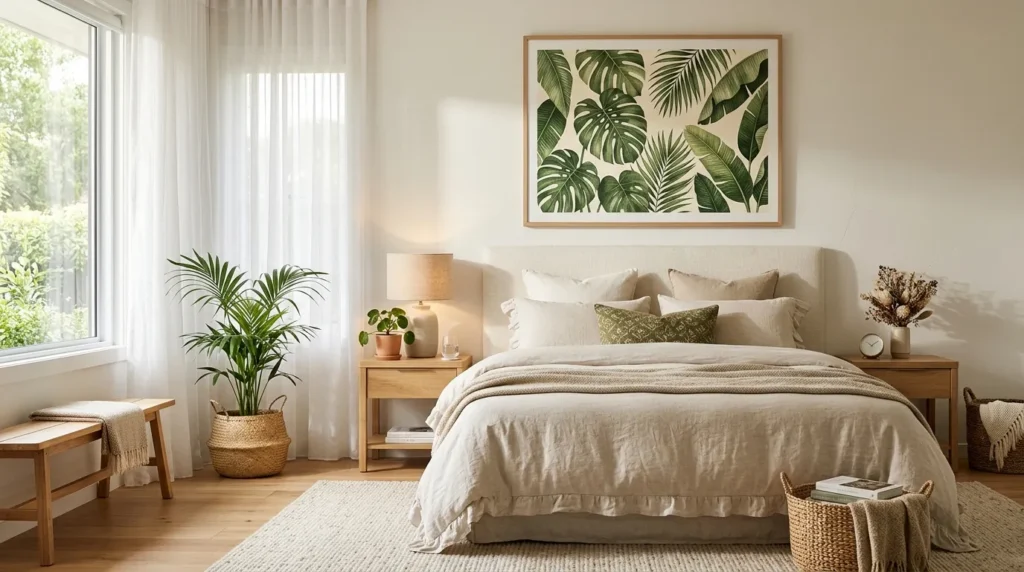
Oversized botanical prints make a strong visual statement without requiring lots of separate decorative objects. Large leaves, palms, ferns, eucalyptus branches, and tropical foliage can bring an organic feeling into the bedroom while keeping the overall design relatively simple.
Scale is particularly important here. A small piece of artwork can look lost above a large headboard, while one oversized print can visually anchor the entire wall.
This approach works beautifully in rooms where the furniture is already fairly minimal. The artwork becomes the decorative feature while the rest of the room provides a quiet supporting backdrop.
In my experience, large botanical artwork also works well when the bedroom has neutral bedding because the greenery provides just enough color to keep the room from feeling flat.
How To Style It
Choose one large botanical print or a two-panel diptych with plenty of visual presence.
Place it above the headboard, making sure the artwork is appropriately scaled to the bed rather than the entire wall.
For a modern bedroom, choose crisp green foliage against a light background and pair it with a simple black or natural wood frame.
For a softer room, look for muted sage, olive, eucalyptus, or dusty green tones.
Keep bedding relatively restrained so the artwork remains the focal point.
2. Vintage Botanical Gallery
Quick Benefits
- Adds timeless character
- Works with traditional interiors
- Creates a collected appearance
- Introduces subtle color
- Can be built gradually
Why It Works
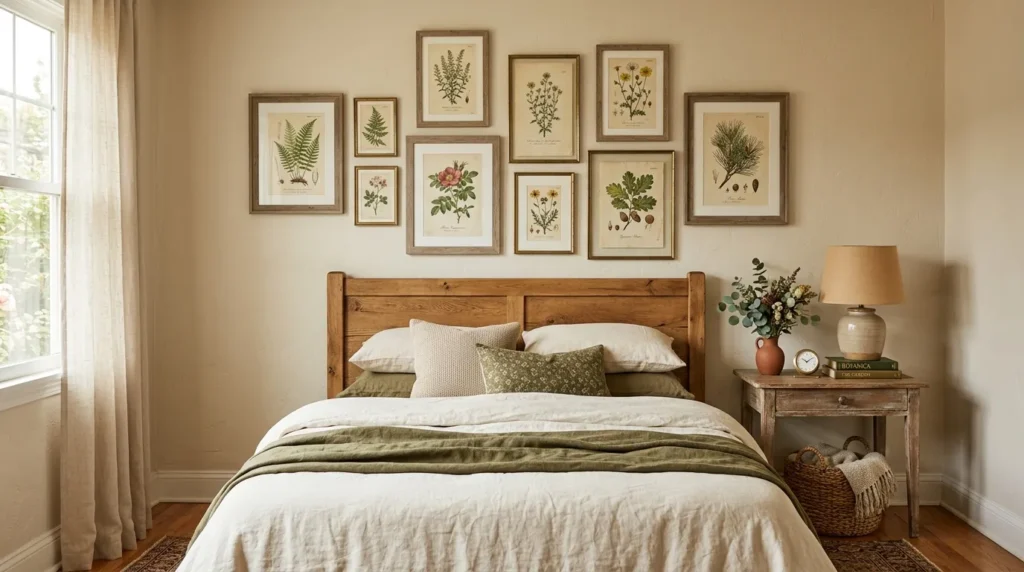
Vintage botanical illustrations have an understated charm that can make a bedroom feel collected rather than newly decorated.
Classic botanical plates often feature detailed leaves, flowers, herbs, or scientific plant studies. Their slightly aged appearance works particularly well with warm woods, antique-inspired furniture, linen bedding, and muted colors.
A gallery arrangement also gives you flexibility. You can start with three or four prints and expand the collection later.
The trick is maintaining some connection between the pieces. They don’t need identical frames, but repeating a color, subject, or frame finish helps create cohesion.
This style is especially attractive for cottage, farmhouse, traditional, English-inspired, and vintage bedrooms.
How To Style It
Look for botanical prints with cream or softly aged backgrounds rather than bright white paper if you want a vintage appearance.
Use natural wood, thin black, antique brass, or warm gold frames.
Arrange the artwork symmetrically above a dresser or in a balanced grid above the bed.
Keep the surrounding decor simple.
A linen duvet, woven basket, antique-style bedside table, and warm lamp can reinforce the old-world botanical feeling without making the bedroom look themed.
3. Pressed Flower Art
Quick Benefits
- Adds delicate texture
- Creates a handmade feeling
- Works beautifully in feminine bedrooms
- Introduces natural details
- Pairs well with neutral decor
Why It Works
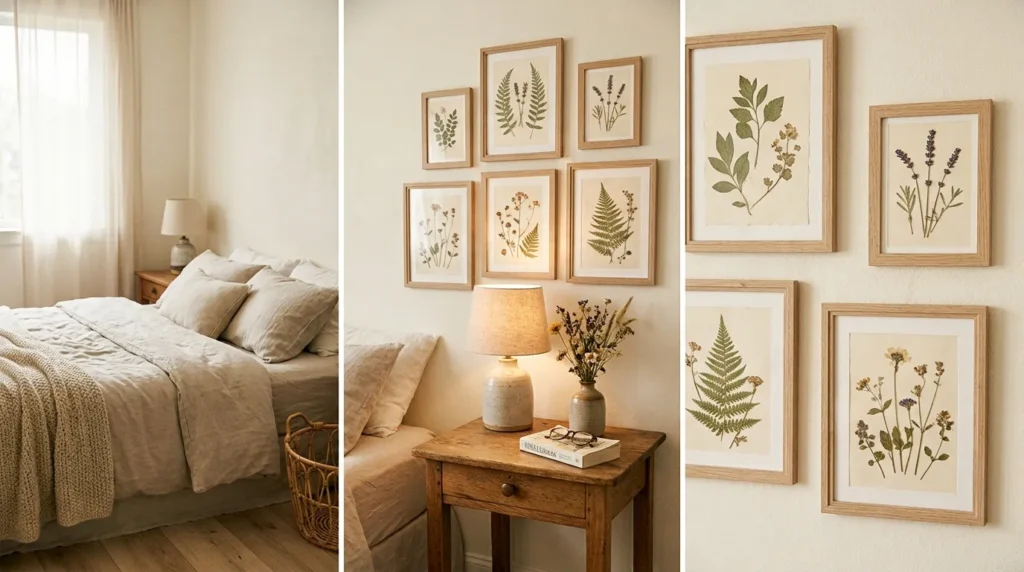
Pressed botanical artwork has a wonderfully delicate quality. Instead of looking like a typical printed poster, it can create the impression that small pieces of nature have been carefully preserved and displayed.
This makes pressed-flower-inspired art particularly useful when you want your bedroom to feel personal and gentle.
The subtle shapes can also work in smaller spaces where large artwork might feel overwhelming.
Pressed botanical pieces are especially attractive when displayed in simple frames that allow plenty of negative space around the plant material.
How To Style It
Choose a small collection of pressed leaves, flowers, ferns, or grasses.
Use matching frames for a clean contemporary arrangement or slightly different natural wood frames for a more collected look.
Hang the pieces above a nightstand, dresser, or small reading corner.
Pair them with soft linen bedding, cream walls, woven textures, and warm wood.
If you’re using real pressed botanicals, keep them away from excessive humidity and direct sunlight to help preserve their appearance.
4. Greenery Above Bed
Quick Benefits
- Creates a natural focal point
- Frames the headboard
- Adds soothing color
- Works with many bedroom styles
- Makes the bed feel more finished
Why It Works
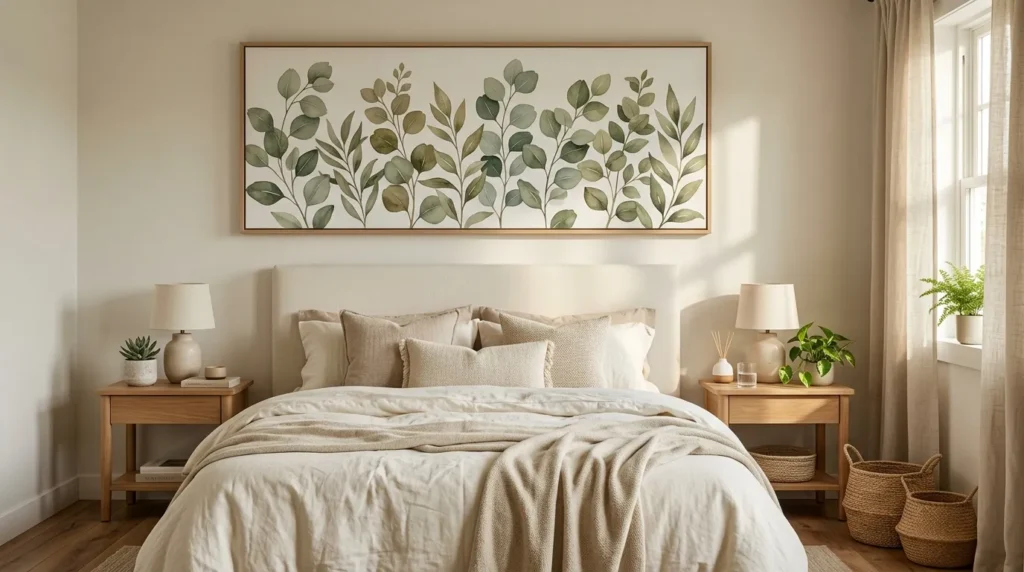
The wall above the bed naturally attracts attention, making it one of the best locations for botanical artwork.
Greenery-inspired art can visually connect the bed with other natural elements in the room, such as plants, wood furniture, woven baskets, or linen textiles.
It also provides a softer alternative to highly geometric or abstract artwork.
The key is choosing artwork that works with the headboard rather than competing with it.
A tall leafy print can emphasize height, while a wide botanical piece can visually connect two nightstands.
How To Style It
For a king or queen bed, choose artwork with enough width to visually relate to the headboard.
A large horizontal print works well above a wide bed.
If the headboard is tall, avoid placing artwork so high that the composition becomes disconnected.
Choose colors that repeat somewhere else in the room.
For example, olive leaves in the artwork can be echoed through a cushion or small plant.
Keep the bedding simple if the artwork contains intricate foliage.
5. Botanical Gallery Wall
Quick Benefits
- Creates a personalized display
- Allows multiple botanical styles
- Works on large blank walls
- Adds visual depth
- Can be customized over time
Why It Works
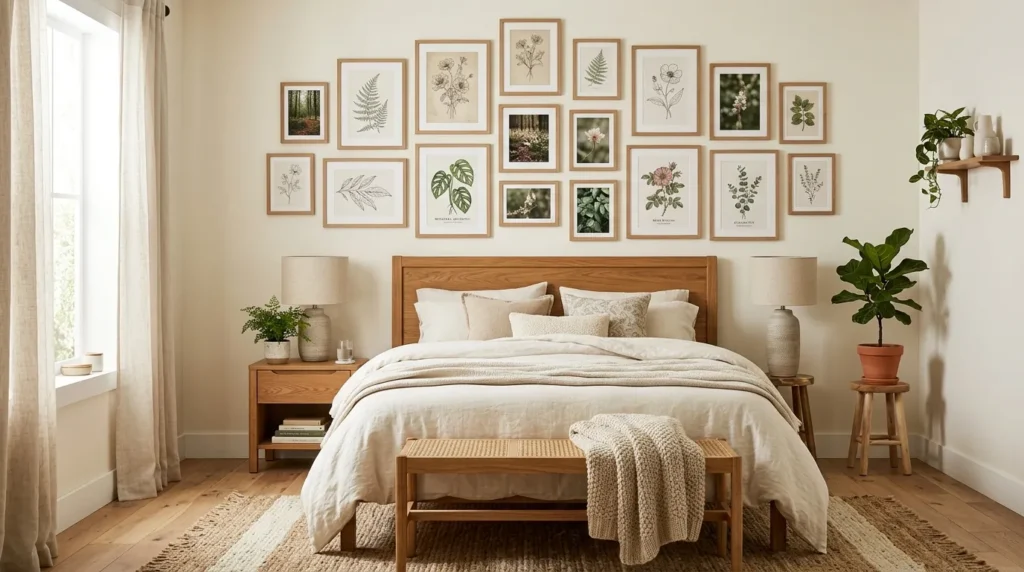
A botanical gallery wall gives you more freedom than a single artwork because you can combine different shapes, plant species, colors, and frame styles.
The collection can feel curated rather than repetitive when each piece contributes something slightly different.
You might combine leaf illustrations with flower sketches, botanical photography, pressed-flower designs, and small nature-inspired typography.
The secret is creating a visual relationship among the pieces.
How To Style It
Start by choosing a common thread.
This could be green and cream artwork, natural wood frames, vintage botanical illustrations, or a particular plant theme.
Lay the pieces on the floor before hanging them.
A grid creates a more polished appearance, while an organic arrangement feels relaxed and collected.
Keep the spacing relatively consistent.
Above a dresser, align the gallery with the furniture below. On a large wall, allow the arrangement to expand horizontally rather than creating a narrow vertical cluster.
6. Watercolor Botanicals
Quick Benefits
- Adds softness
- Introduces gentle color
- Works well with romantic bedrooms
- Creates an artistic focal point
- Complements light textiles
Why It Works
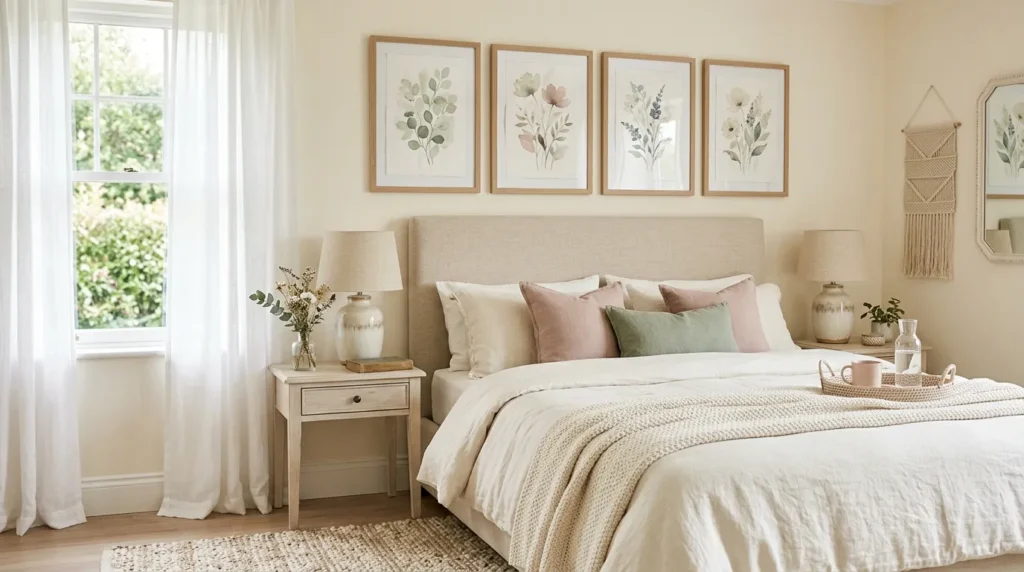
Watercolor botanical artwork has softer edges than photographic or graphic prints, making it especially suitable for bedrooms designed around relaxation.
The transparent layers of watercolor can create subtle variations in green, blush, blue, lavender, yellow, and cream without overwhelming the room.
This makes the style especially useful when your bedroom already contains delicate textiles or muted colors.
Watercolor botanicals can work with cottage, modern organic, transitional, Scandinavian, and romantic decorating styles.
How To Style It
Choose artwork with colors that already appear in your bedroom.
For example, soft sage artwork can complement sage bedding, while muted blush flowers can echo a throw pillow.
Use simple white, natural wood, or thin gold frames.
Avoid combining too many highly colorful accessories with watercolor art.
Instead, allow the artwork to provide the color and keep the surrounding decor calm.
A pair of matching botanical watercolors above bedside tables can also create a balanced and symmetrical look.
7. Black Frame Contrast
Quick Benefits
- Adds definition
- Makes botanical artwork stand out
- Creates a modern appearance
- Works with green foliage beautifully
- Connects with black bedroom accents
Why It Works
Botanical art can sometimes look very soft, especially when paired with light walls and neutral bedding.
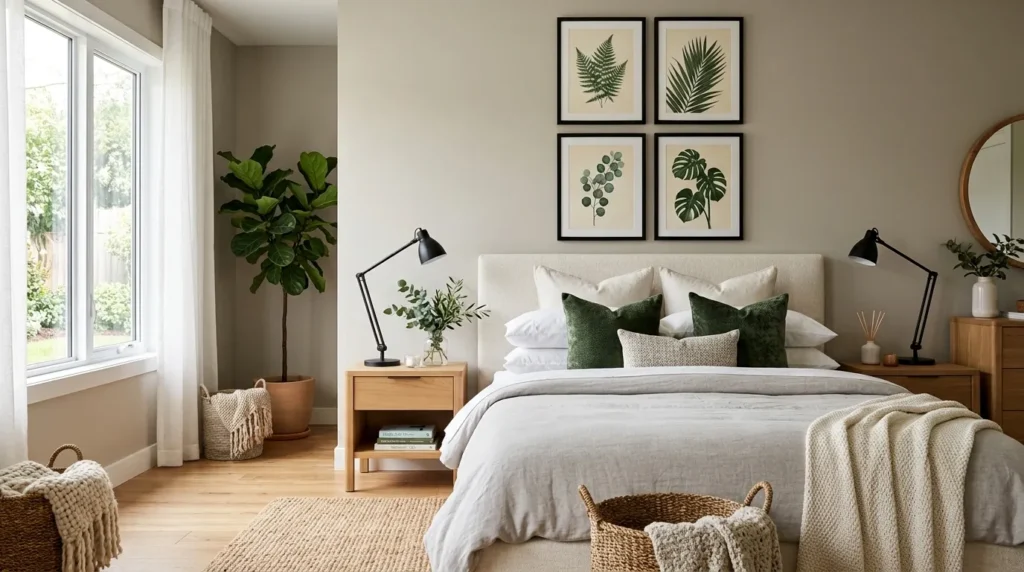
Black frames provide contrast and give delicate foliage a more structured appearance.
This is an easy way to make botanical decor feel contemporary rather than overly traditional.
Black framing also creates a useful visual connection if your room already has black lighting, hardware, curtain rods, or furniture details.
How To Style It
Choose thin black frames for a sleek appearance.
Use them around green leaf prints, botanical line drawings, or neutral plant photography.
Pair the artwork with cream bedding, light wood, warm beige textiles, and small black accents.
Don’t feel obligated to add black everywhere.
A few repeated touches are enough to establish continuity.
For a gallery wall, matching black frames can make several different botanical prints feel like one cohesive collection.
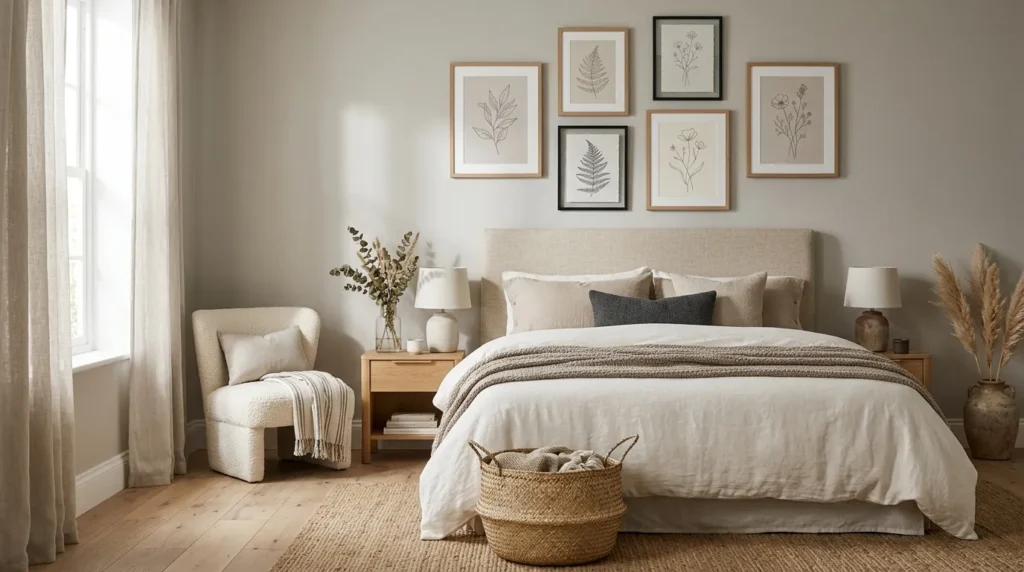
8. Neutral Botanical Prints
Quick Benefits
- Keeps the room calm
- Works with minimalist decor
- Adds texture without strong color
- Creates a sophisticated appearance
- Complements neutral bedding
Why It Works
Not every botanical bedroom needs bright green artwork.
Neutral botanical prints can feature beige leaves, charcoal line drawings, soft taupe branches, ivory flowers, or monochromatic plant silhouettes.
This approach is ideal if you prefer a calm bedroom and don’t want wall art to become the dominant feature.
It also works particularly well in modern organic bedrooms where natural textures and subtle variations in tone are more important than bold color.
How To Style It
Choose artwork that stays within your existing bedroom palette.
Cream walls can work beautifully with taupe and charcoal botanical line art.
For beige walls, consider ivory artwork with darker natural frames.
Pair the prints with linen bedding, wood furniture, woven baskets, and soft lighting.
Use texture elsewhere to prevent the room from feeling too flat.
A chunky throw, woven bench, boucle chair, or natural fiber rug can add dimension while keeping the palette understated.
9. Botanical Photography
Quick Benefits
- Creates a sophisticated appearance
- Adds realistic natural detail
- Works with modern bedrooms
- Provides strong visual impact
- Offers many color options
Why It Works
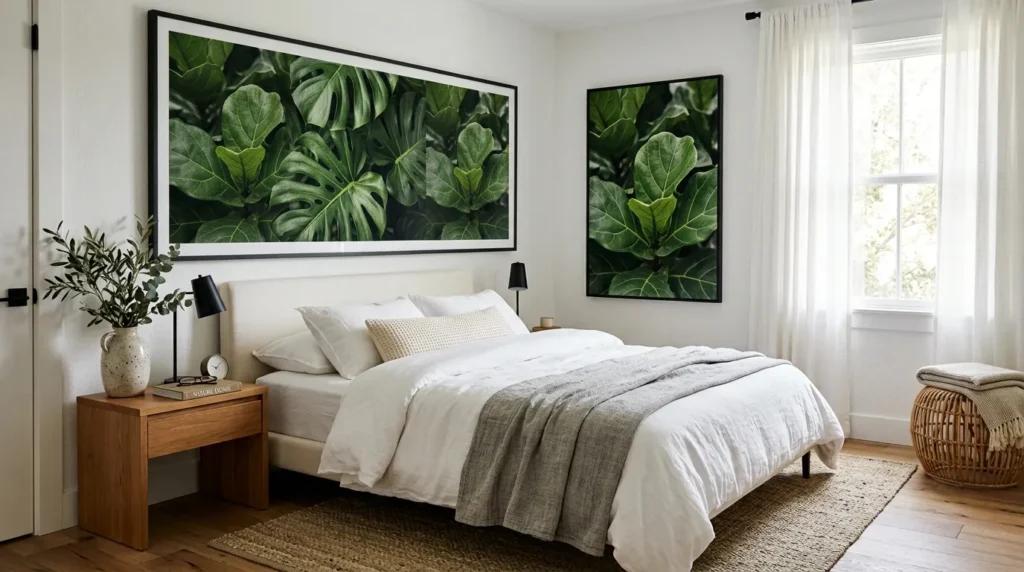
Botanical photography gives you a more realistic interpretation of nature than traditional illustrations.
Close-up images of tropical leaves, eucalyptus, ferns, flowers, palms, or delicate branches can create striking artwork without requiring bright colors.
Black-and-white botanical photography can also provide a sophisticated option for contemporary bedrooms.
The key is selecting imagery that feels intentional rather than generic.
Look for photographs with interesting lighting, composition, texture, and negative space.
How To Style It
Choose one large photograph for a minimalist room or create a pair of coordinated images above the bed.
Black-and-white photography pairs beautifully with modern furniture and crisp white bedding.
Color photography can introduce muted green, olive, rust, or earthy tones.
Use simple frames so the photograph remains the focus.
If the bedroom already contains several patterns, choose photography with a relatively simple composition.
10. Botanical Accent Wall
Quick Benefits
- Creates a dramatic focal point
- Adds personality to the bedroom
- Works as an alternative to multiple frames
- Introduces pattern and nature together
- Can visually transform a plain wall
Why It Works
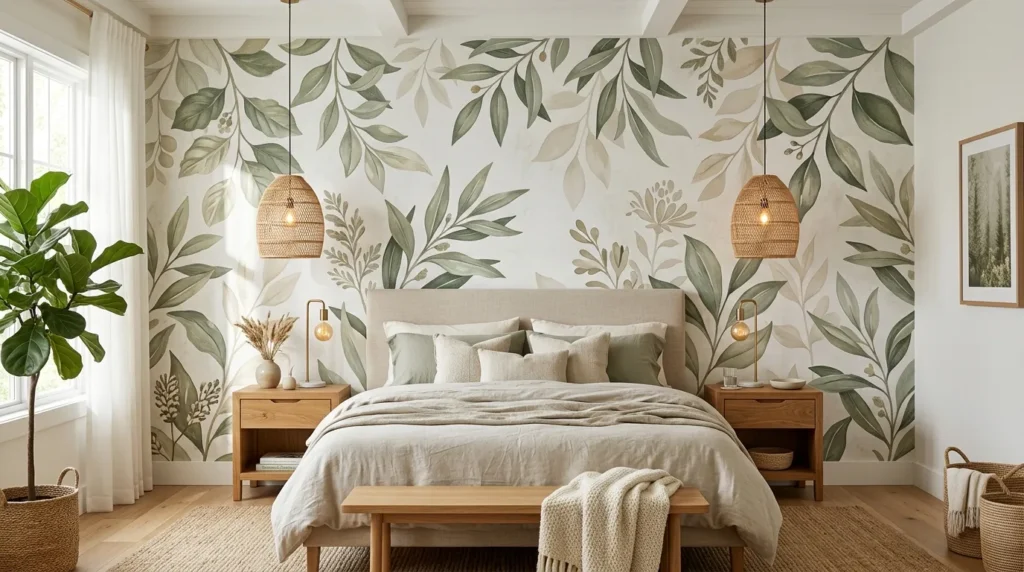
If you want botanical decor to make a bigger statement, consider turning the entire wall into a nature-inspired feature.
Botanical wallpaper, oversized leaf murals, or repeated floral patterns can create an immersive effect that makes the bedroom feel intentionally designed.
This approach works particularly well behind the bed because the wall naturally serves as the room’s main focal point.
However, large botanical patterns can become overwhelming if every other element is equally bold.
Balance is essential.
How To Style It
Choose a botanical wallpaper with colors that work with your existing furniture and bedding.
If the pattern is large and dramatic, keep the bedding relatively simple.
Natural wood, cream upholstery, woven materials, and warm lighting can soften a bold botanical wall.
For renters, removable wallpaper can provide a temporary alternative where permitted.
If you prefer a subtle effect, choose a small-scale botanical pattern in a tone close to the wall color.
How To Choose Botanical Wall Art For Your Bedroom
Start by looking at the room you already have.
Pay attention to your wall color, bedding, flooring, headboard, curtains, and furniture finishes.
If your bedroom is mostly neutral, you have more freedom to introduce green, olive, terracotta, or muted floral colors.
If your bedding already has a strong pattern, simpler botanical artwork may work better.
Scale is equally important.
A tiny print can disappear above a king-size bed, while an enormous artwork can overwhelm a narrow wall.
As a general design principle, artwork should relate visually to the furniture beneath it.
Before buying, measure the wall and use painter’s tape to outline the approximate artwork dimensions. This simple step can prevent expensive sizing mistakes.
Best Botanical Colors For A Bedroom
Green is the obvious choice, but botanical artwork doesn’t have to be bright.
Soft sage creates a peaceful appearance.
Olive feels earthy and sophisticated.
Eucalyptus green works beautifully with modern organic interiors.
Muted forest green can create a moodier bedroom.
Terracotta and dusty rose can add warmth to floral artwork.
Black-and-white botanical prints provide a modern alternative.
For the most cohesive look, repeat one or two artwork colors elsewhere in the room through pillows, throws, rugs, or small decorative objects.
How To Arrange Botanical Artwork Above A Bed
The wall above the bed is one of the most popular places for botanical artwork, but proportion matters.
A single large horizontal piece can create a clean focal point.
Two coordinated prints can provide symmetry.
Three or more pieces can create a gallery effect.
For a relaxed bedroom, you can also create an asymmetrical arrangement, but make sure the overall composition still balances visually with the bed.
Leave enough breathing room between the headboard and artwork.
You don’t want the artwork to feel disconnected from the bed, but it shouldn’t appear crowded either.
How To Make Botanical Art Feel Expensive
You don’t necessarily need expensive artwork to create an elevated bedroom.
Focus on presentation.
Choose high-quality-looking frames with consistent finishes.
Use mats around smaller prints to give them more presence.
Choose artwork with restrained colors and strong composition.
Avoid filling every wall.
A few well-proportioned pieces usually feel more sophisticated than a room covered in unrelated prints.
Natural wood, black, brass, and simple white frames are especially versatile.
Finally, repeat the artwork’s colors subtly through the bedding or accessories so the entire room feels intentionally designed.
FAQ
What type of botanical art works best in a bedroom?
Leaf illustrations, vintage botanical prints, watercolor flowers, pressed botanical designs, nature photography, and simple line drawings can all work beautifully. The best choice depends on the bedroom’s style and color palette. For a calm room, choose muted greens and neutrals. For a more dramatic space, consider oversized foliage or a darker botanical print.
Should botanical art go above the bed?
Yes. The wall above the bed is one of the most effective locations because it naturally serves as a focal point. Choose artwork that is appropriately scaled to the bed and headboard. A wide horizontal piece, coordinated pair, or balanced gallery arrangement can work particularly well.
What colors go with botanical wall art?
Botanical artwork commonly works with cream, beige, white, sage, olive, terracotta, brown, charcoal, dusty blue, and muted blush. Choose colors that already appear in your bedroom whenever possible. Repeating one or two shades from the artwork in your bedding or accessories can create a cohesive appearance.
Can botanical wall art work in a modern bedroom?
Absolutely. Choose clean botanical photography, minimalist line drawings, oversized leaf prints, or simple framed illustrations. Use streamlined frames and keep the surrounding decor restrained. Black frames, neutral bedding, modern lighting, and natural wood can create a sophisticated contemporary botanical look.
How many botanical prints should I hang together?
There isn’t a fixed number. One oversized piece can create a strong focal point, while three to five coordinated pieces can form a gallery wall. The important factors are scale, spacing, and visual consistency. Matching frames or repeating colors can make different botanical images feel connected.
How do I make botanical art look cohesive?
Choose a consistent color palette, frame finish, subject matter, or artistic style. You don’t need every piece to match exactly. For example, several different leaf illustrations can look cohesive when they share cream backgrounds and natural wood frames.
Is botanical wallpaper too much for a bedroom?
Not necessarily. A botanical accent wall can be beautiful when the rest of the room is relatively restrained. Choose bedding and furniture in complementary neutral colors and let the wallpaper serve as the main focal point. If you’re concerned about intensity, choose a smaller-scale pattern or a low-contrast design.
Conclusion
Botanical wall art is one of those decorating details that can completely change the personality of a bedroom without requiring new furniture or a major renovation.
Whether you prefer oversized leafy prints, delicate pressed flowers, vintage botanical illustrations, soft watercolors, realistic photography, or a dramatic botanical accent wall, the possibilities are surprisingly versatile.
The most important thing is choosing artwork that relates to the room around it. Consider your bedding, wall color, furniture finishes, and existing accents before making a selection. Then pay close attention to scale and placement, especially when decorating the wall above the bed.
If you’re working with a neutral bedroom, botanical art can introduce just enough green and natural character to keep the space from feeling flat. If your bedroom already has plenty of color, understated botanical prints can provide texture without adding visual chaos.
You don’t need to redesign the entire room at once. Start with one meaningful piece and build around it.
A carefully chosen botanical print, a simple frame, a few natural textures, and soft lighting may be all it takes to give your bedroom the fresh, peaceful atmosphere you’ve been wanting.