11 23 Modern Jacuzzi Outdoor Ideas With Sleek Clean Lines
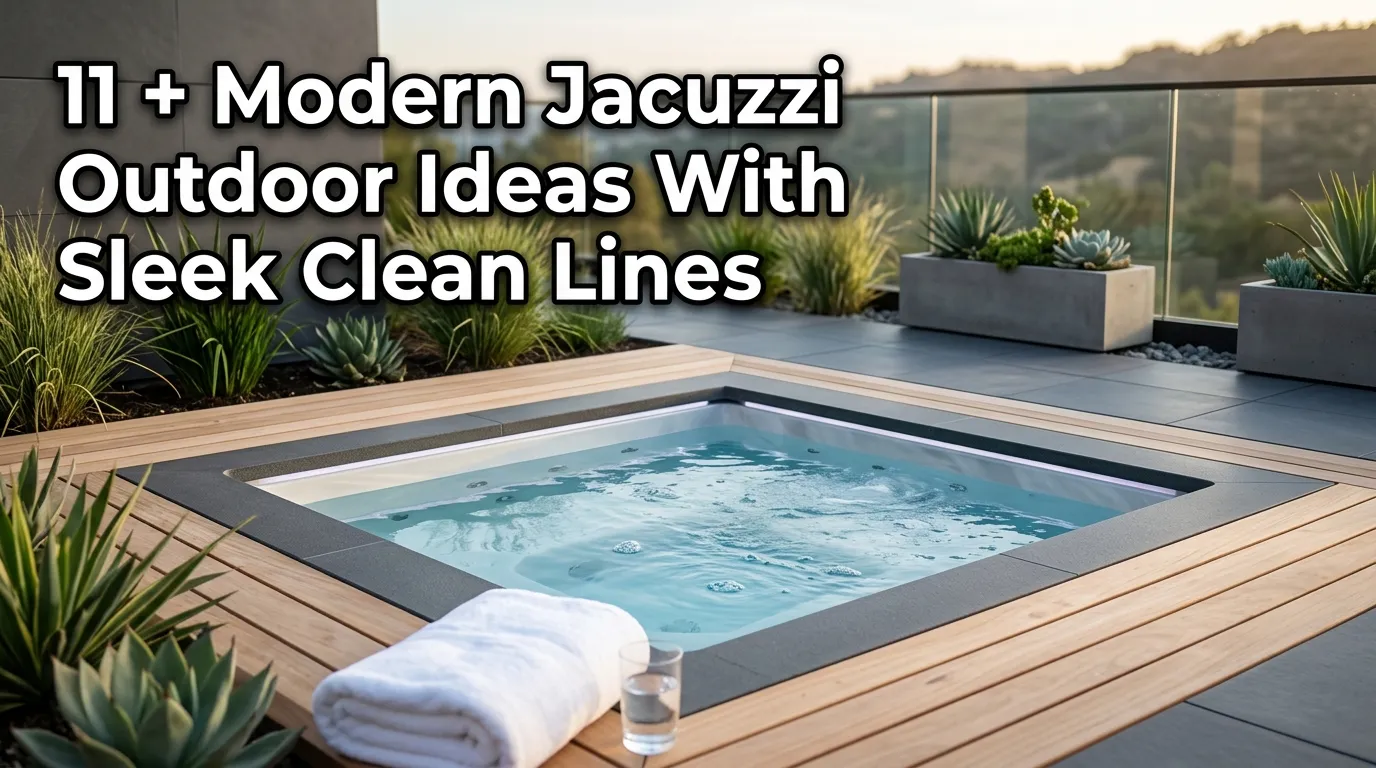
A backyard jacuzzi can be much more than a place to unwind at the end of a long day. With the right design choices, it can become the visual centerpiece of an outdoor living space—something that feels intentional, polished, and connected to the architecture of your home.
The challenge is creating that modern look without making the area feel cold or overly commercial. Sleek outdoor spaces often rely on clean silhouettes, restrained colors, natural textures, thoughtful lighting, and just enough greenery to soften hard surfaces. When those elements are balanced well, even a relatively simple jacuzzi can look like it belongs in a high-end outdoor retreat.
I’ve noticed that the most successful modern jacuzzi spaces don’t necessarily have the most expensive finishes. Instead, they have a clear design direction. A simple square or rectangular tub can look remarkably sophisticated when it’s surrounded by large-format tile, warm wood, architectural plants, comfortable seating, and carefully positioned lighting.
This guide explores 11 23 modern jacuzzi outdoor ideas with sleek clean lines designed around different backyard layouts and decorating styles. You’ll find ideas for compact patios, spacious entertaining areas, minimalist yards, privacy-focused retreats, and luxury-inspired outdoor spaces.
Whether you’re planning a complete backyard renovation or simply want to refresh the area around an existing jacuzzi, these ideas can help you create a space that feels relaxing during the day and beautifully atmospheric after sunset.
Table of Contents
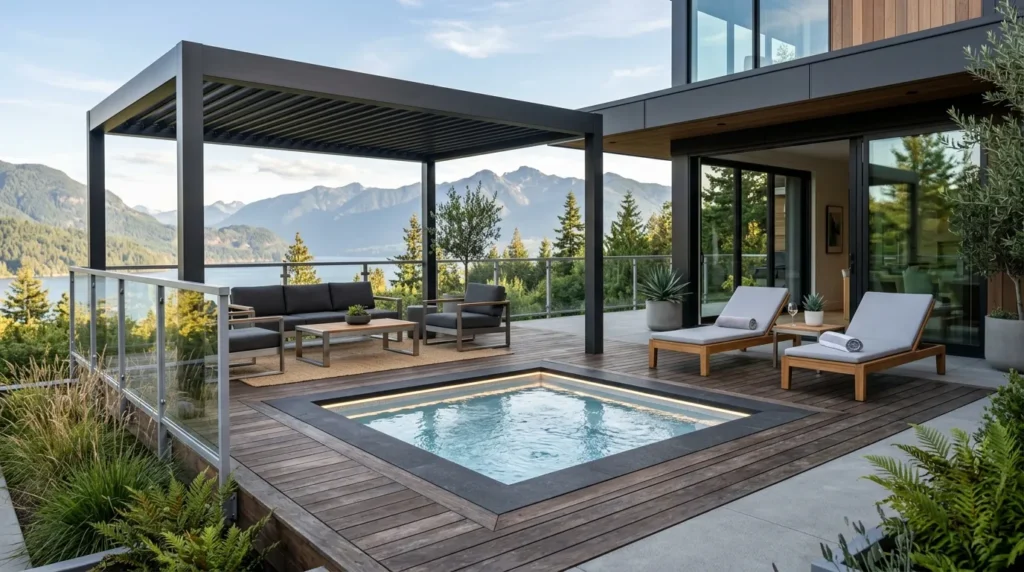
1. Floating Wood Deck
A streamlined wood platform creates a warm foundation around a modern jacuzzi.
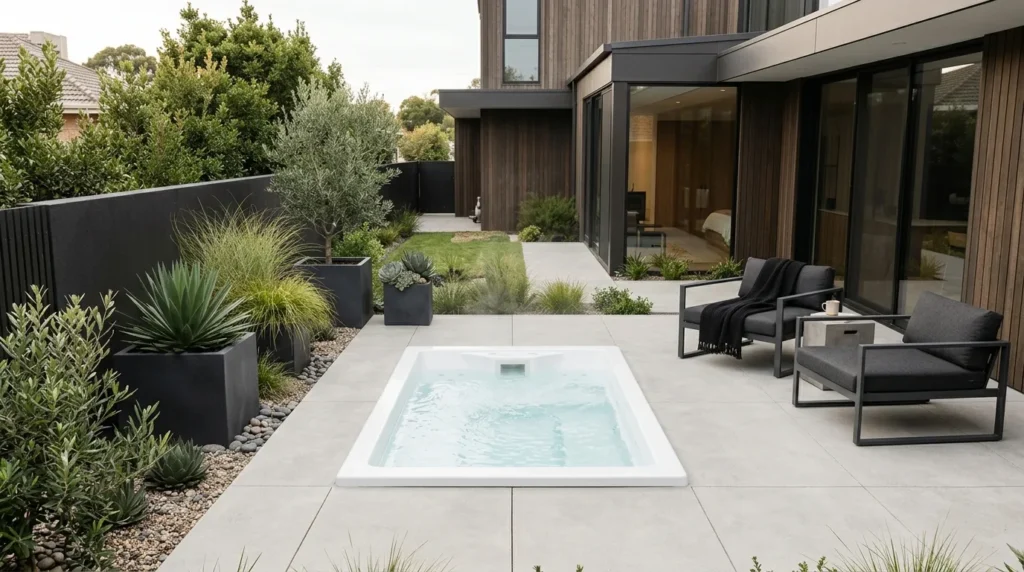
2. Concrete Spa Surround
Smooth concrete delivers a minimalist architectural look with very little visual clutter.
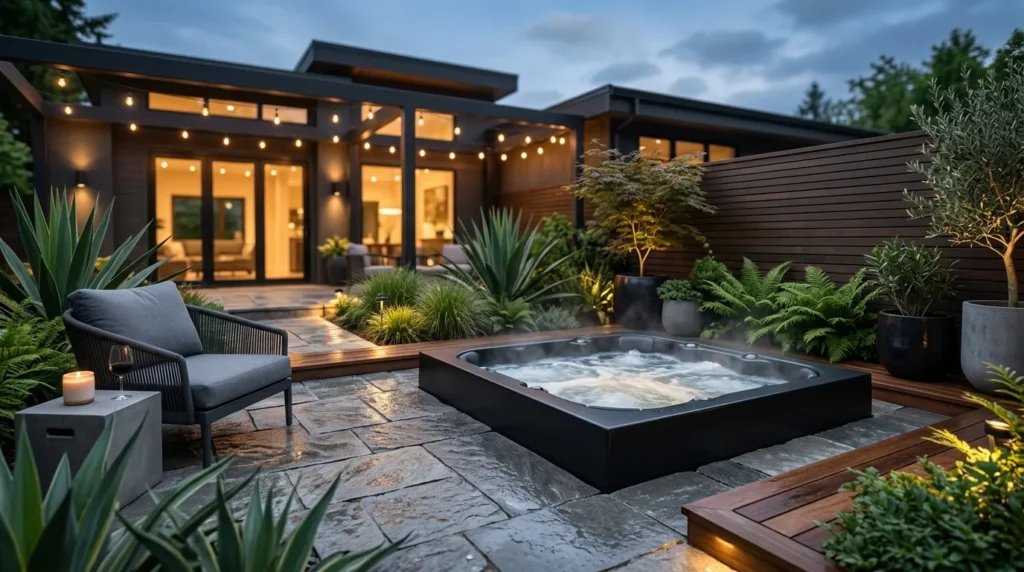
3. Black And Stone
Dark finishes paired with natural stone create dramatic modern contrast.
4. Glass Privacy Screen
Transparent or semi-transparent screening adds privacy without closing in the space.
5. Linear Water Feature
A narrow water feature introduces movement while maintaining a clean contemporary aesthetic.
6. Built-In Lounge
Integrated seating turns the jacuzzi area into a complete outdoor relaxation zone.
7. Warm Wood Slats
Vertical wood screens add warmth, texture, and architectural interest.
8. Minimal Greenery
Carefully selected plants soften modern materials without overwhelming the design.
9. Covered Spa Retreat
A streamlined overhead structure makes the jacuzzi more comfortable and visually defined.
10. Ambient Evening Lighting
Layered lighting transforms a simple jacuzzi into an inviting nighttime retreat.
11. Luxury Minimalist Layout
A restrained palette and carefully edited furnishings create a sophisticated resort-inspired finish.
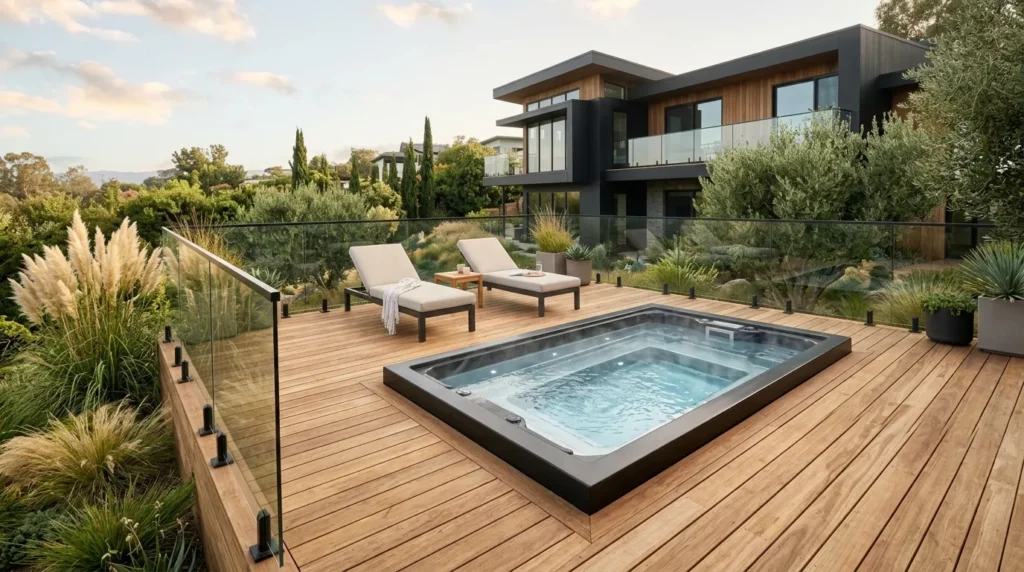
1. Floating Wood Deck
Quick Benefits
- Creates a defined jacuzzi zone
- Adds warmth to modern materials
- Works beautifully with rectangular tubs
- Helps organize an open backyard
- Provides a comfortable transition from house to spa
Why It Works
A floating-style wood deck is one of the easiest ways to make a jacuzzi feel intentionally designed rather than simply placed in the backyard. The clean horizontal lines of the decking complement the geometric shape of a contemporary spa while introducing natural warmth that keeps the space from feeling too stark.
The visual effect is especially attractive when the deck extends slightly beyond the jacuzzi on every side. That extra space creates a subtle platform effect and gives you room for towels, small stools, planters, or a lounge chair.
In my experience, wood works particularly well when the rest of the yard contains concrete, stone, or dark-colored finishes. The contrast creates visual balance without requiring a lot of decoration.
For homeowners who want a modern resort feeling, consider wide decking boards with minimal visible hardware and a simple matte finish.
How To Style It
Choose a weather-resistant decking material appropriate for your climate. Natural cedar, teak, and properly treated hardwood can create a beautiful appearance, while modern composite decking offers easier maintenance.
Keep the furniture simple. A pair of low-profile lounge chairs, a narrow side table, and oversized neutral towels can be enough.
For a polished look, continue the deck lines beyond the jacuzzi rather than stopping exactly at its edges. Add one or two large planters at the corners instead of scattering small pots throughout the area.
A warm gray, honey, or medium natural wood tone works especially well with black, white, or charcoal jacuzzi finishes. Finish the space with subtle ground-level lighting underneath the deck for an understated evening glow.
2. Concrete Spa Surround
Quick Benefits
- Creates a crisp architectural appearance
- Complements minimalist homes
- Requires little decorative clutter
- Works well in contemporary backyards
- Provides a seamless visual foundation
Why It Works
Concrete is ideal for homeowners who love modern architecture and want the jacuzzi area to feel like an extension of the home’s structure. Its smooth, uninterrupted surface provides a calm backdrop for the spa while emphasizing strong geometric forms.
Instead of trying to make concrete disappear, this design approach embraces it as a primary material. A pale gray slab around a white jacuzzi can feel airy and sophisticated, while charcoal concrete creates a moodier, more dramatic environment.
The key is balancing the hardness of concrete with softer elements. Without greenery, wood, fabric, or warm lighting, an entirely concrete backyard can feel somewhat severe. Even one comfortable outdoor chair or a large planter can make a noticeable difference.
This approach is particularly effective for patios where the jacuzzi sits close to a contemporary home’s exterior walls.
How To Style It
Use large-format concrete pavers or a poured concrete surface with clean expansion lines. Avoid too many competing patterns because the strength of this look comes from visual simplicity.
Pair the concrete with a jacuzzi in white, black, or soft gray. For seating, select low-profile pieces in beige, taupe, or charcoal outdoor fabric.
A narrow wooden bench can introduce warmth without disrupting the minimalist character. You could also add a large architectural planter containing an olive tree, ornamental grass, or another climate-appropriate plant.
For a more luxurious finish, use concealed drainage and carefully planned transitions between the concrete, planting beds, and jacuzzi platform. The cleaner those transitions look, the more sophisticated the finished space will feel.
3. Black And Stone
Quick Benefits
- Creates dramatic visual contrast
- Feels sophisticated and contemporary
- Works well after dark
- Adds a luxury-resort atmosphere
- Pairs beautifully with natural materials
Why It Works
Black finishes can instantly give an outdoor jacuzzi area a more sophisticated personality. When combined with natural stone, the result is dramatic without feeling artificial.
The trick is using black selectively. A completely black environment can become visually heavy, especially in smaller yards. Instead, think of black as an architectural accent: a dark jacuzzi, black-framed furniture, charcoal pavers, or a dark privacy wall.
Natural stone then provides the organic counterpoint. Its subtle variations in color and texture prevent the design from appearing flat.
I’ve seen this combination work especially well around contemporary homes with black window frames or dark exterior accents. Repeating the same dark tone outdoors creates continuity between the architecture and landscaping.
At night, the combination becomes even more attractive because warm lighting reflects beautifully against dark surfaces.
How To Style It
Start with one dominant black element, such as the jacuzzi shell or surrounding pavers. Then introduce natural stone in lighter shades of gray, beige, or warm taupe.
Choose stone with a relatively subtle pattern. Highly variegated stone can compete with the clean lines you’re trying to establish.
Add warm wood through a small bench or privacy screen. For greenery, select plants with strong architectural forms rather than overly colorful flowers.
Use warm-white outdoor lighting instead of harsh cool-white bulbs. A few strategically positioned fixtures around stone walls or plants can create depth while keeping the jacuzzi itself as the focal point.
4. Glass Privacy Screen
Quick Benefits
- Provides privacy without visual heaviness
- Keeps the backyard feeling open
- Complements contemporary architecture
- Allows natural light to pass through
- Creates a polished spa-like atmosphere
Why It Works
Privacy is one of the biggest considerations when designing an outdoor jacuzzi, but traditional privacy walls can sometimes make a small backyard feel even smaller.
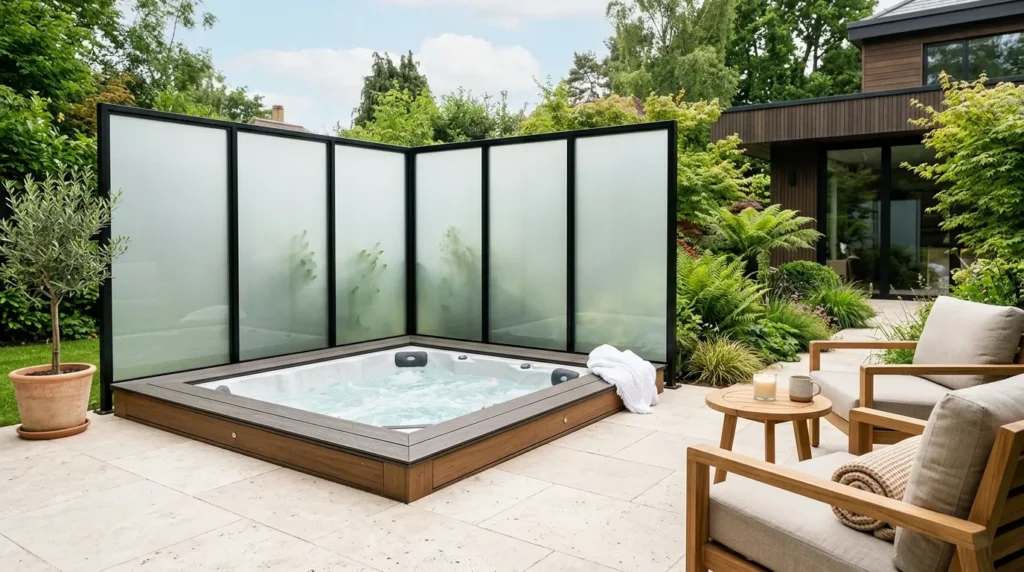
A glass privacy screen offers a more open alternative. Frosted, textured, tinted, or partially obscured glass can block direct views while preserving light and maintaining a sense of spaciousness.
The clean vertical and horizontal lines of a glass panel also pair naturally with modern jacuzzi designs. When framed in black or another dark architectural finish, the screen can look like a deliberate extension of the home’s exterior.
This idea is particularly useful for urban backyards, townhomes, patios, and properties where neighboring houses are relatively close together.
How To Style It
Choose the level of privacy based on your surroundings. Fully frosted panels provide more visual separation, while textured or partially translucent glass can preserve more daylight.
Keep the area in front of the screen uncluttered. A long planter with ornamental grasses can soften the bottom edge without hiding the glass entirely.
Black metal framing creates a modern industrial appearance, while frameless panels offer an even cleaner aesthetic.
Place a slim bench or pair of lounge chairs opposite the screen. Use neutral outdoor cushions and natural wood accessories to prevent the space from feeling too formal.
If children or pets use the backyard, make safety and appropriate glass specifications a priority and follow local installation requirements.
5. Linear Water Feature
Quick Benefits
- Adds movement and sound
- Enhances a spa-like atmosphere
- Creates a strong architectural focal point
- Works well with minimalist landscaping
- Connects the jacuzzi to surrounding design elements
Why It Works
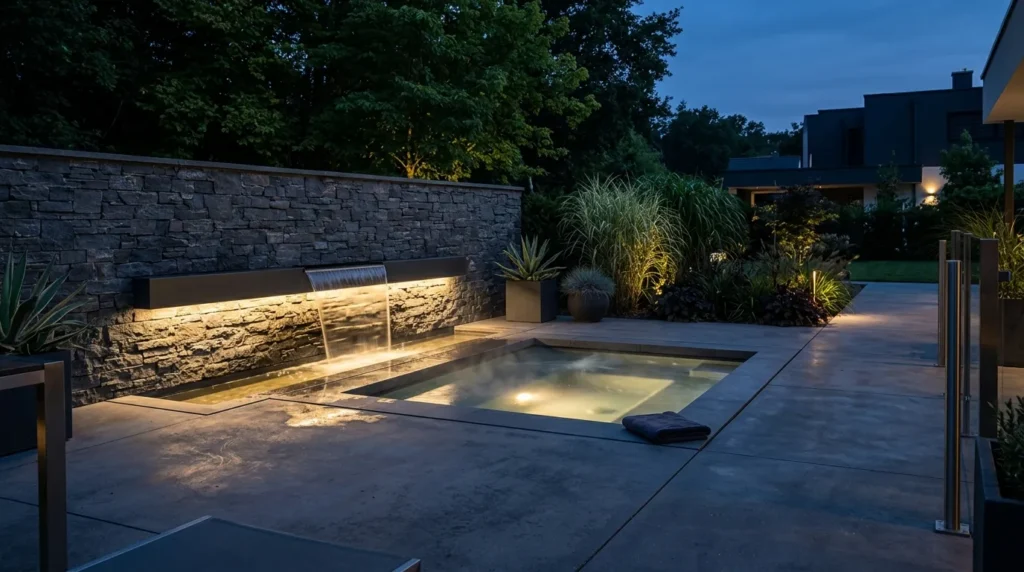
A narrow linear water feature can make a modern jacuzzi area feel considerably more intentional. Instead of adding decorative objects, you’re introducing movement, reflection, and sound through another architectural element.
A simple wall-mounted spillway, narrow reflecting channel, or small water blade can complement the strong horizontal lines of a contemporary spa.
The most successful versions are restrained. You don’t need an elaborate fountain with multiple shapes and finishes. A single clean water line can be enough to create the impression of a luxury outdoor retreat.
Water also reflects light beautifully in the evening. When paired with subtle illumination, even a small feature can give the backyard a more layered appearance.
How To Style It
Position the water feature along a wall, raised planter, or edge of the jacuzzi platform. Keep its proportions long and narrow to reinforce the contemporary aesthetic.
Use materials that already appear elsewhere in the yard, such as concrete, porcelain tile, stone, or dark metal.
If the jacuzzi itself already has a lot of visual activity, make the water feature extremely simple. Conversely, if the surrounding area is plain, the water feature can become the secondary focal point.
Add low planting around the base and keep decorative accessories minimal. The combination of moving water, clean surfaces, and warm lighting can provide plenty of visual interest without adding clutter.
6. Built-In Lounge
Quick Benefits
- Creates additional seating
- Makes the jacuzzi area more functional
- Provides space for relaxing between soaks
- Looks integrated and intentional
- Works well for entertaining
Why It Works
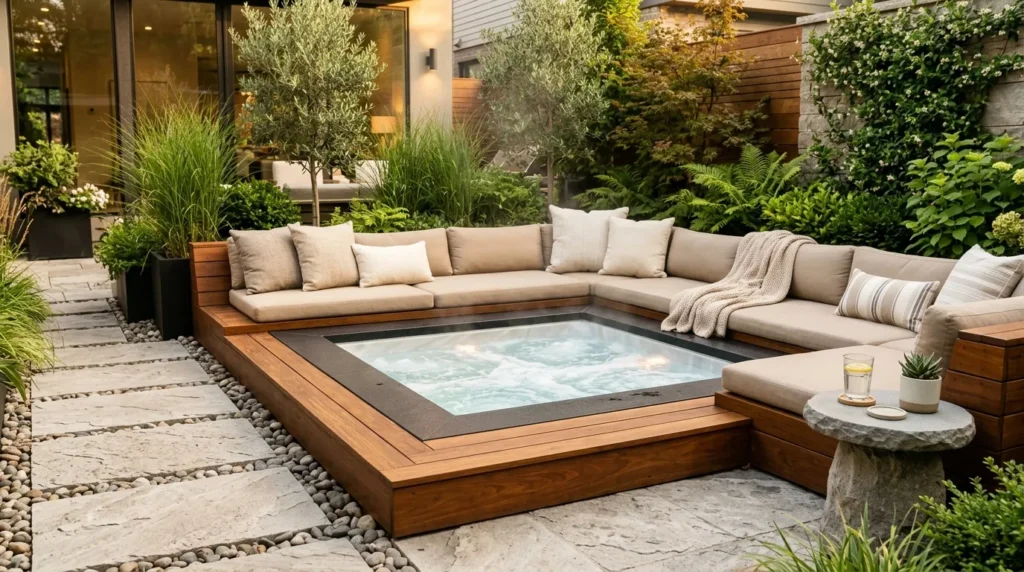
A jacuzzi becomes much more useful when the surrounding space supports more than soaking. An integrated lounge area allows you to sit nearby, dry off, enjoy a drink, or socialize with friends without needing to move indoors.
Built-in seating is especially effective in modern landscapes because it maintains clean sightlines. Rather than adding several individual chairs, a long bench can provide seating while visually connecting the jacuzzi with the surrounding architecture.
This is also a practical solution for homeowners who want a polished appearance without filling the backyard with furniture.
In my experience, the best outdoor seating areas provide different ways to use the space. A jacuzzi can be the centerpiece, but a nearby lounge makes the entire backyard feel more inviting.
How To Style It
Construct a low bench from concrete, masonry, stone, or weather-resistant wood. Add outdoor cushions only if you want a softer, more casual look.
For a sleek appearance, use cushions in one neutral color rather than mixing multiple patterns.
A small integrated side table can hold towels, beverages, or decorative objects. Make sure the table surface is weather-resistant and easy to clean.
Leave enough walking space between the seating and jacuzzi. You want the area to feel open rather than packed.
For larger yards, arrange two separate seating zones facing one another, with the jacuzzi positioned between them. This creates a natural social layout while preserving the clean geometry of the overall design.
7. Warm Wood Slats
Quick Benefits
- Adds natural texture
- Provides partial privacy
- Softens modern architecture
- Creates attractive shadow patterns
- Works in both small and large spaces
Why It Works
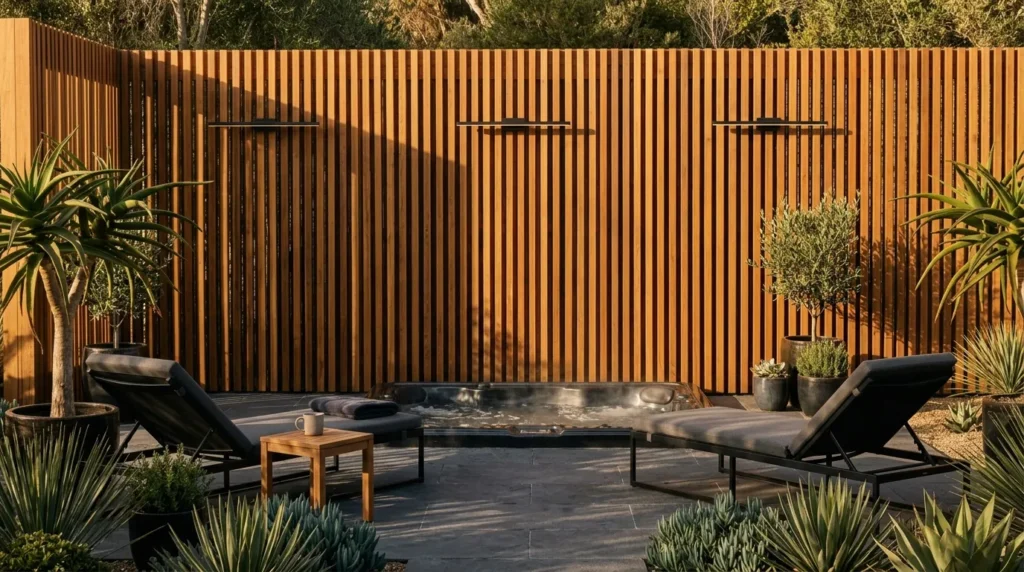
Vertical wood slats are a favorite for modern outdoor spaces because they provide privacy while still allowing light and air to move through the area.
The repeating rhythm of the slats also adds architectural texture without introducing a complicated pattern. During the day, sunlight creates shifting shadows across the wood, while nighttime lighting can highlight the vertical lines.
This design is especially useful when the jacuzzi sits against a plain fence or exterior wall that needs visual interest.
Warm wood also helps balance cooler materials such as concrete, porcelain tile, steel, and dark composite surfaces. The result feels contemporary but still comfortable.
How To Style It
Install wood slats vertically with consistent spacing. The exact gap should depend on how much privacy you need and the orientation of neighboring properties.
Cedar, teak, and other appropriate outdoor woods can provide beautiful natural character. Composite alternatives can also work when low maintenance is a priority.
Keep the surrounding palette restrained. Pair the screen with gray pavers, black fixtures, neutral cushions, and a few green plants.
For an especially polished look, continue the slatted material on another nearby architectural element, such as a bench or covered patio wall. Repeating a material gives the backyard a cohesive designer feel.
8. Minimal Greenery
Quick Benefits
- Softens hard architectural surfaces
- Adds natural color
- Creates a relaxing atmosphere
- Keeps the modern design uncluttered
- Works well in small spaces
Why It Works
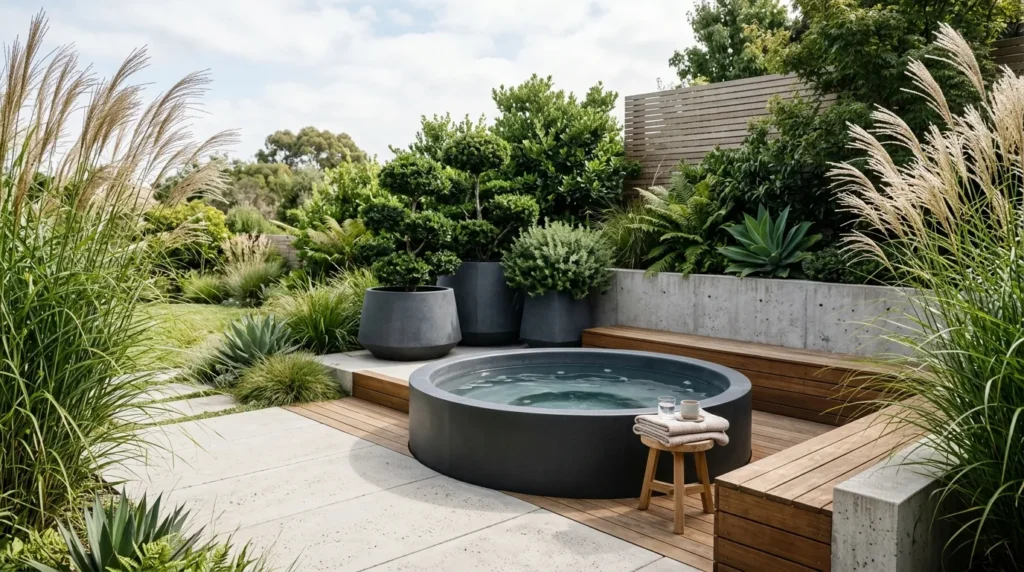
Modern landscaping doesn’t mean eliminating plants. In fact, greenery is often what makes a minimalist jacuzzi area feel comfortable and inviting.
The difference is in how the plants are selected and arranged. Instead of filling every available space with different flowers and containers, use a limited number of plant types and repeat them throughout the landscape.
Architectural grasses, sculptural shrubs, small trees, and simple evergreen plants can all work beautifully around a modern spa.
The goal is to frame the jacuzzi rather than hide it. Plants should soften edges, provide privacy where necessary, and introduce organic shapes against the straight lines of the architecture.
How To Style It
Choose plants that are appropriate for your USDA growing zone, available sunlight, drainage conditions, and maintenance preferences.
For a contemporary look, group plants in larger containers instead of using many tiny pots. Matte black, concrete, stone, or warm terracotta planters can complement the surrounding materials.
Use tall plants strategically where privacy is needed and lower plants around the base of the jacuzzi.
Avoid placing delicate plants too close to areas where splashing is frequent unless they tolerate those conditions. Leave enough clearance for maintenance and access to equipment.
A limited palette of two or three plant varieties usually looks more intentional than a collection of unrelated species.
9. Covered Spa Retreat
Quick Benefits
- Defines the jacuzzi area
- Offers shade and weather protection
- Creates architectural interest
- Supports evening entertaining
- Makes the space feel like an outdoor room
Why It Works
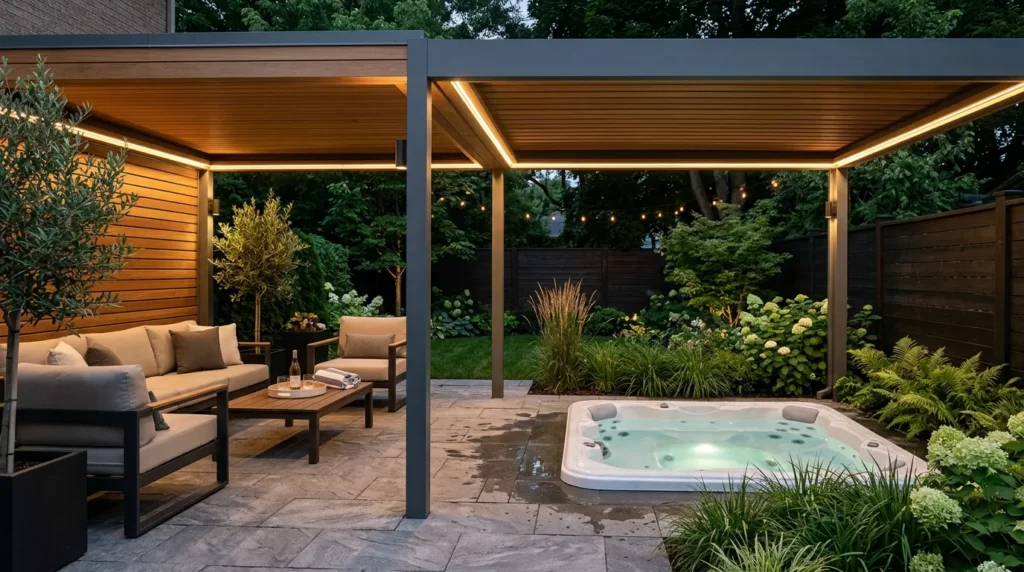
A simple overhead structure can transform a jacuzzi from a standalone feature into a destination. A pergola, slatted roof, or streamlined canopy visually establishes the spa as its own outdoor room.
This is particularly helpful in large backyards where the jacuzzi might otherwise feel disconnected from the rest of the landscape.
A covered structure can also make the space more comfortable by providing shade during sunny periods and creating a framework for lighting.
The design should remain proportional to the jacuzzi. A very large structure over a small spa can overwhelm the space, while an undersized canopy can look awkward.
For a contemporary home, simple posts, flat rooflines, and restrained materials usually work best.
How To Style It
Consider a pergola made from painted metal, aluminum, wood, or another weather-appropriate material. Black or charcoal structures create a crisp architectural appearance, while natural wood introduces warmth.
Add recessed or string-style lighting carefully so the roof doesn’t become visually busy.
Keep furniture low and streamlined. A built-in bench, two lounge chairs, and a narrow table may be all you need.
If the structure provides significant shade, choose plants that can tolerate the resulting light conditions. Add outdoor curtains only when needed for privacy or weather protection, and choose neutral fabrics that complement the architecture.
Always account for ventilation, drainage, electrical requirements, and local building regulations before constructing a permanent overhead structure.
10. Ambient Evening Lighting
Quick Benefits
- Makes the jacuzzi usable after dark
- Creates a relaxing atmosphere
- Highlights landscaping
- Improves visual depth
- Enhances architectural details
Why It Works
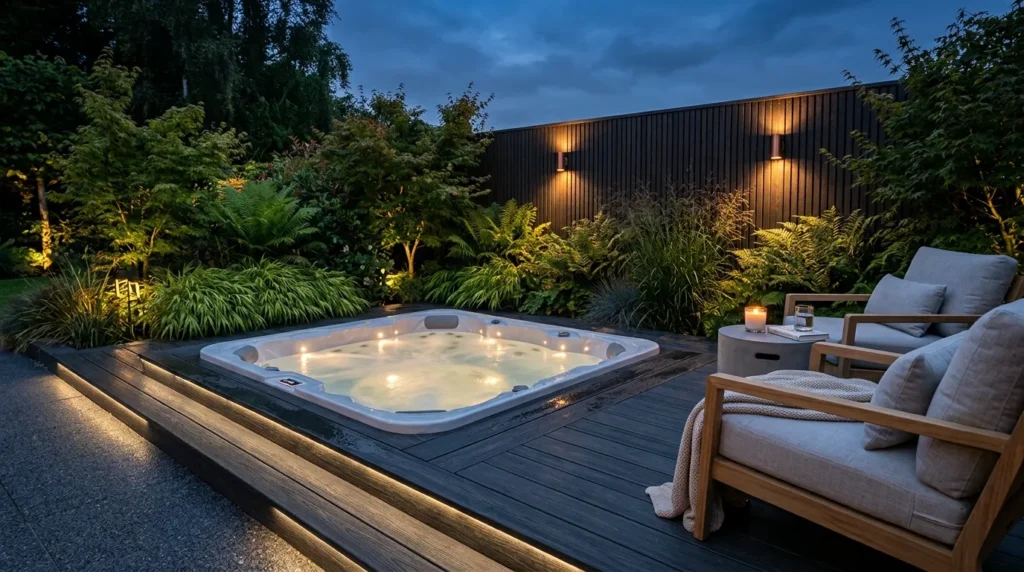
Lighting can completely change the personality of an outdoor jacuzzi. A space that looks simple during the day can feel warm, sophisticated, and almost resort-like at night when the lighting is layered correctly.
The key is avoiding a single bright overhead fixture. Instead, think about several low-intensity sources positioned at different heights.
Lighting beneath benches, along pathways, around plants, and near architectural walls can create depth without making the entire backyard equally bright.
Warm light is generally more relaxing for an evening retreat than harsh, cool illumination. The jacuzzi should remain comfortable and safe to use, but the surrounding landscape can stay relatively subdued.
How To Style It
Start with functional lighting around steps, pathways, and areas where people walk. Then add accent lighting to plants, walls, or architectural details.
Recessed deck lights are excellent for maintaining clean lines because the fixtures remain visually discreet.
For a more luxurious atmosphere, use indirect lighting beneath benches or along the edge of a deck. Wall washing can emphasize stone or textured surfaces.
Keep brightness levels balanced. The goal isn’t to make the backyard look like a sports field. You want enough light for safety while allowing shadows and darker areas to remain part of the design.
Use appropriately rated outdoor fixtures and have permanent electrical installations completed according to local requirements.
11. Luxury Minimalist Layout
Quick Benefits
- Creates a sophisticated resort-inspired look
- Keeps the backyard visually calm
- Makes small spaces feel organized
- Emphasizes quality over quantity
- Works with many contemporary homes
Why It Works
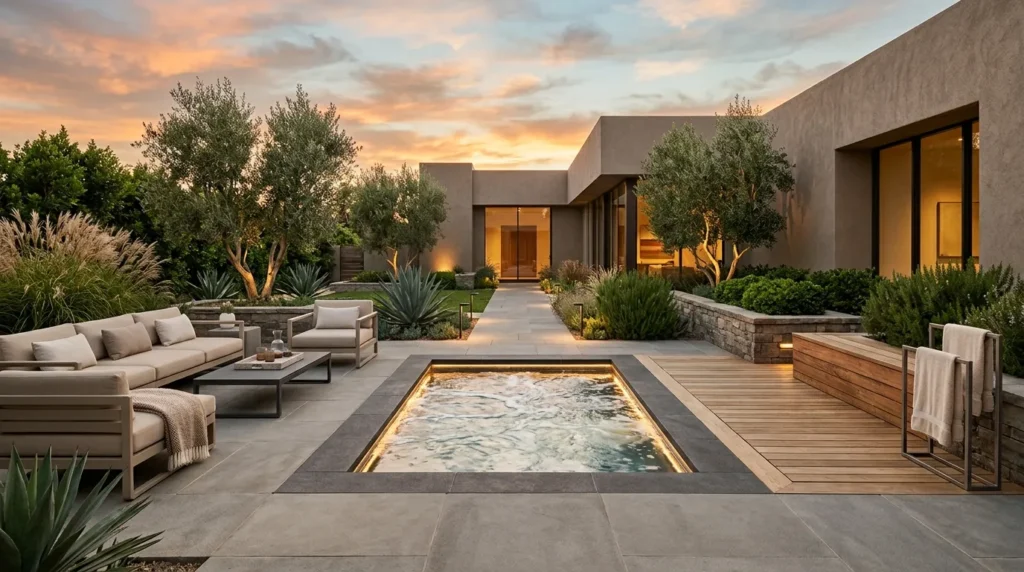
Sometimes the most luxurious jacuzzi design is the one that does the least. A carefully edited space with excellent proportions, quality materials, and a restrained color palette can look far more sophisticated than a backyard filled with decorative features.
A luxury minimalist layout usually begins with one clear focal point: the jacuzzi. Everything around it supports that feature rather than competing with it.
Think oversized pavers, clean planting beds, comfortable but streamlined furniture, subtle lighting, and a limited palette of two or three primary materials.
This approach is particularly effective for homeowners who want a timeless outdoor space rather than something based on a short-lived decorating trend.
The secret is not simply owning expensive materials. It’s making every element feel purposeful.
How To Style It
Choose a neutral foundation such as warm gray, ivory, charcoal, taupe, or natural wood. Then select one accent material and repeat it throughout the space.
Large-format porcelain or stone-look pavers can create a seamless appearance. Pair them with a modern jacuzzi, low-profile lounge furniture, and one or two substantial planters.
Keep decorative accessories to a minimum. A folded stack of plush towels, a simple outdoor tray, or a sculptural planter can provide enough personality.
Pay attention to scale. Oversized pavers and larger furniture often create a more luxurious impression because they reduce visual fragmentation.
Finally, make sure the layout allows easy movement around the jacuzzi, access to equipment, and comfortable space for getting in and out. A beautiful backyard still needs to work effortlessly in everyday life.
Choosing The Right Modern Jacuzzi Layout
Before buying materials or furniture, consider how you actually plan to use the space.
If the jacuzzi will mostly be used by two people for quiet evening relaxation, you can prioritize privacy, atmospheric lighting, and comfortable nearby seating. If you regularly entertain, you’ll want a larger circulation zone and additional seating.
The size of your backyard matters as well. A compact patio may benefit from a built-in bench and vertical privacy screen, while a large landscape can accommodate a dedicated lounge, outdoor kitchen, fire feature, or dining area.
Pay attention to the relationship between the jacuzzi and your house. Ideally, the route between the back door and spa should feel natural. You don’t want guests walking through a garden bed or across an awkward transition just to reach the jacuzzi.
Think about maintenance too. Leave appropriate access around equipment panels and avoid planting high-maintenance vegetation where it will constantly shed into the water.
Modern Materials That Work Well Outdoors
The material palette can make or break a contemporary jacuzzi area.
Wood
Wood adds warmth and helps soften concrete, metal, and stone. Use species and finishes appropriate for outdoor exposure.
Concrete
Concrete offers a strong architectural foundation and works especially well with minimalist designs.
Natural Stone
Stone introduces organic variation while maintaining a sophisticated appearance. Choose finishes that are appropriate for wet areas.
Porcelain Tile
Outdoor-rated porcelain can provide a clean, contemporary appearance and comes in numerous stone, concrete, and wood-inspired finishes.
Metal
Powder-coated aluminum and other appropriate outdoor metals can provide slim, durable architectural lines for screens, pergolas, railings, and furniture.
Glass
Glass is particularly useful for privacy screens and contemporary barriers because it preserves visual openness.
The best designs usually combine two or three of these materials rather than trying to incorporate everything at once.
How To Make A Small Jacuzzi Area Feel Larger
Small outdoor spaces require careful editing.
Start by reducing visual clutter. Instead of several small pieces of furniture, choose one built-in bench or two compact lounge chairs.
Large-format paving can also make a small area feel more continuous because fewer grout lines interrupt the visual field.
Vertical elements are another useful tool. A slatted screen, tall planter, narrow tree, or vertical garden can draw the eye upward.
Keep the color palette relatively light if the area receives limited natural light. Warm ivory, pale gray, beige, and natural wood can help maintain an airy feeling.
Mirrored or reflective materials can sometimes make an outdoor space feel larger, but use them selectively. A subtle reflective surface can work beautifully, while too many glossy elements may make the design feel commercial rather than residential.
Privacy Ideas For Outdoor Jacuzzis
Privacy should be considered early rather than added as an afterthought.
A fence is the most obvious solution, but there are many ways to create privacy without building a solid wall.
Vertical slats provide partial screening while maintaining airflow. Tall planters can create smaller privacy zones. Trees and ornamental grasses can provide a softer visual barrier.
Pergolas can also help define the space overhead, especially when combined with carefully positioned screening.
For neighboring properties that sit at a higher elevation, consider the sightline from above rather than only the view directly across the yard.
The most effective privacy plan often uses multiple layers rather than one massive barrier. A combination of plants, architectural screens, and thoughtful furniture placement can create a private feeling while keeping the backyard open.
Safety And Practical Planning
A beautiful jacuzzi area should also be practical.
Use surfaces appropriate for wet environments and select materials with suitable slip resistance. Keep electrical components and outlets installed according to applicable safety requirements.
Provide clear access around the jacuzzi and avoid creating narrow pathways where people could easily trip.
Think about drainage before installing decking, pavers, or concrete. Water needs somewhere to go, especially around a spa that will naturally experience splashing.
If you’re installing a new jacuzzi, work with qualified professionals for electrical, structural, plumbing, and gas-related work where applicable.
And don’t forget equipment access. One common mistake is designing a gorgeous platform that makes future servicing difficult. Leave the access required by the specific jacuzzi manufacturer and installation plan.
How To Create A Resort Feel At Home
You don’t need to recreate a five-star hotel to achieve a resort-inspired backyard.
Instead, focus on the experience.
Provide a comfortable place to sit. Keep towels within easy reach. Use warm lighting. Add privacy. Choose a small number of high-quality-looking materials and repeat them throughout the space.
A beverage table positioned beside the lounge area can make the jacuzzi more functional. A nearby outdoor storage box can hide towels and accessories.
If you have enough space, create separate zones: soaking, lounging, and perhaps dining. Even a small backyard can feel more luxurious when each area has a clear purpose.
The strongest designs engage several senses. Soft lighting, natural textures, greenery, comfortable seating, and the sound of moving water can all contribute to a more relaxing atmosphere.
FAQ
What is the best material around a modern jacuzzi?
Outdoor-rated porcelain, natural stone, concrete, composite decking, and appropriately treated wood can all work well. The best choice depends on climate, maintenance preferences, budget, drainage, and the overall design of your home. For a sleek contemporary appearance, large-format pavers, smooth concrete, and wide decking boards are especially effective.
How can I make my jacuzzi look more modern?
Focus on clean geometry, a restrained color palette, and fewer decorative elements. Large-format paving, dark architectural accents, warm wood, integrated seating, simple planters, and layered lighting can make an ordinary jacuzzi feel considerably more contemporary. Repeating two or three materials throughout the space also helps create a cohesive appearance.
How do I add privacy around an outdoor jacuzzi?
Consider vertical wood slats, frosted glass panels, privacy screens, pergolas, tall planters, ornamental grasses, or strategically positioned trees. Layering two or more privacy solutions often produces a more natural result than building one large solid wall.
Can a small backyard have a luxury jacuzzi area?
Absolutely. Small spaces can look particularly sophisticated when the layout is carefully edited. Choose a compact jacuzzi, minimize furniture, use large-format paving, incorporate vertical privacy elements, and maintain a consistent color palette. Built-in seating can also save space while creating a polished architectural appearance.
What plants work around a modern jacuzzi?
Choose plants based on your local growing conditions, sunlight, drainage, and maintenance needs. Architectural grasses, evergreen shrubs, small trees, and sculptural plants can work beautifully. Avoid plants that shed heavily or struggle with the conditions around your jacuzzi, and leave adequate access for cleaning and equipment maintenance.
Should I cover an outdoor jacuzzi?
A cover can improve comfort by providing shade and helping define the space, but the right solution depends on your climate and backyard layout. A pergola or streamlined canopy can create an attractive outdoor-room effect. Always consider ventilation, drainage, structural requirements, and local regulations before adding a permanent roof or enclosure.
What lighting is best around a jacuzzi?
Layered warm outdoor lighting usually creates the most inviting atmosphere. Combine practical path or step lighting with subtle accent lights around plants, walls, benches, and decking. Avoid relying on one extremely bright overhead fixture. The goal is to provide safe visibility while maintaining a calm nighttime atmosphere.
Conclusion
Creating a modern jacuzzi area is really about designing an experience rather than simply choosing a spa.
The most successful spaces balance clean architectural lines with natural warmth. Concrete can be softened with wood. Dark finishes can be balanced with stone and greenery. Privacy screens can provide seclusion without making the backyard feel closed in. And thoughtful lighting can completely transform the atmosphere after sunset.
You don’t need to use every idea in this guide. In fact, choosing fewer elements will often produce a stronger result. Start with the jacuzzi itself, decide how you want the space to feel, and then select materials, seating, plants, privacy features, and lighting that support that vision.
Whether your backyard is compact or expansive, a modern jacuzzi can become a beautiful destination for quiet mornings, relaxed evenings, and weekends spent entertaining friends.
The key is keeping the design intentional. Choose materials that complement your home, leave enough room for everyday movement, plan for maintenance, and add warmth wherever the architecture feels too stark.
Start with one or two ideas that fit your space, then build gradually. A thoughtful combination of clean lines, natural textures, comfortable seating, greenery, and soft lighting can turn an ordinary backyard corner into a relaxing outdoor retreat you’ll genuinely enjoy using.