11 Boho Patio Decor Ideas
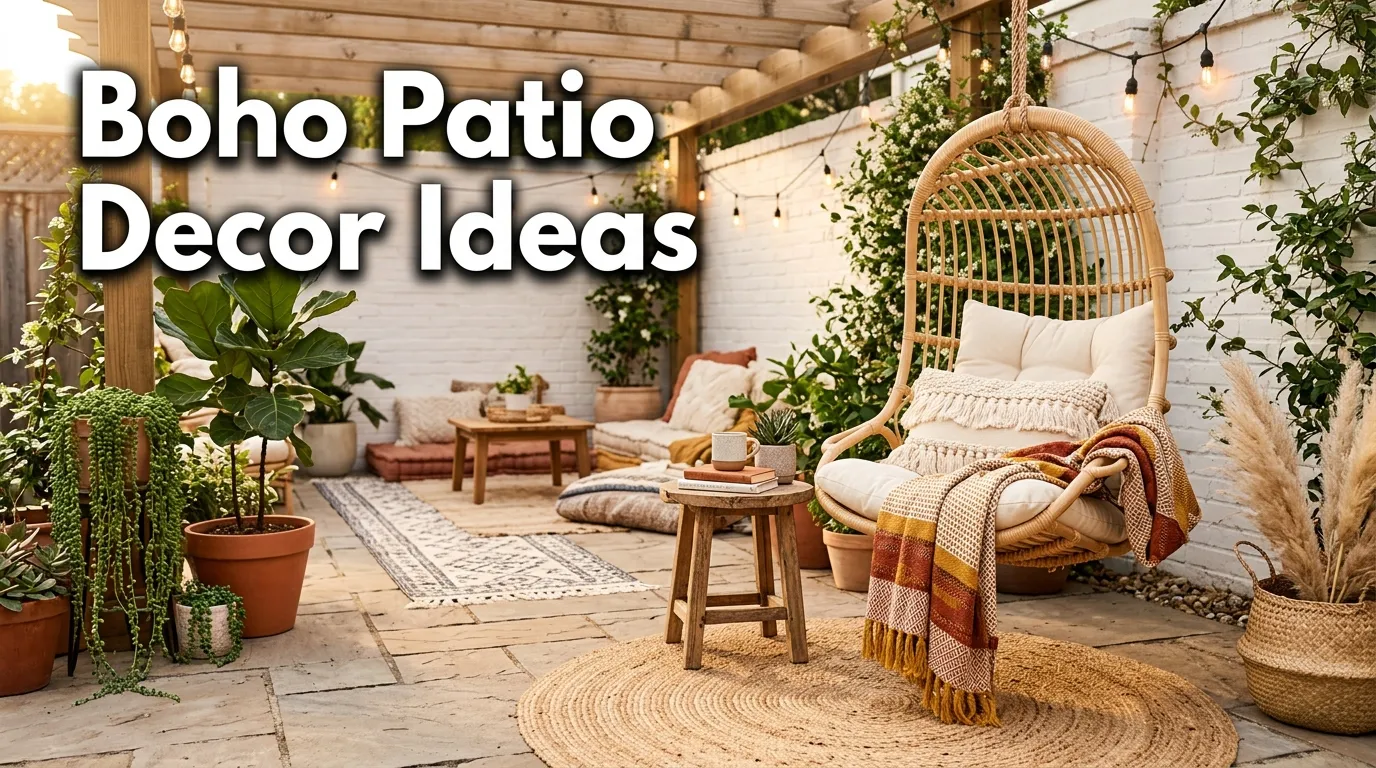
A patio can be so much more than a place to put a couple of chairs and a grill. With the right mix of texture, greenery, warm colors, and relaxed furniture, even a plain outdoor area can feel like a cozy extension of your home. That is where boho style really shines.
Bohemian outdoor spaces are appealing because they do not require everything to match. Woven textures can sit beside weathered wood, patterned textiles can complement neutral cushions, and plants can soften even the simplest concrete patio. The result feels collected rather than overly decorated.
In my experience, the secret to making a boho patio look intentional is balancing layers. Start with comfortable seating, add an outdoor rug or natural fiber texture, bring in greenery, and then introduce a few decorative accents that give the space personality. You can create that relaxed, vacation-like feeling without completely remodeling your patio.
Whether you have a spacious backyard patio, a small apartment terrace, or a narrow outdoor sitting area, these ideas can be adapted to your space. Some are simple styling changes, while others can become larger weekend projects.
The best part is that you do not need to buy an entirely new patio set. A few thoughtful additions—such as woven lanterns, terracotta planters, textured pillows, or a shade canopy—can dramatically change the atmosphere.
Below, you’ll find practical ways to layer those elements so your patio feels inviting, comfortable, and unmistakably bohemian.
Table of Contents
1. Layered Outdoor Textiles
Create softness with rugs, cushions, throws, and patterned fabrics.
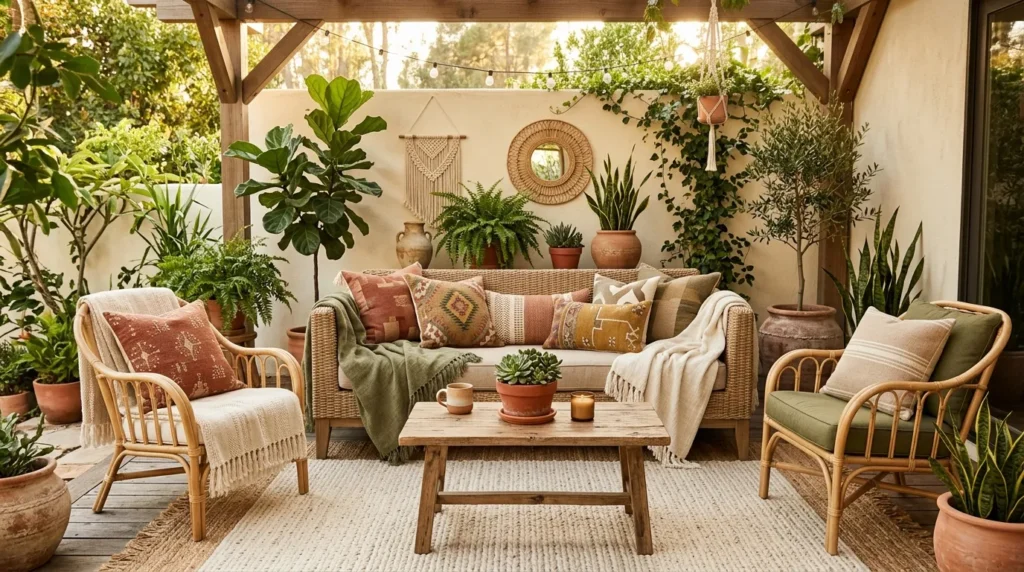
2. Woven Seating Nooks
Use natural woven furniture to create a relaxed conversation area.
3. Earthy Color Palette
Build a warm foundation with terracotta, cream, sand, and muted earthy tones.
4. Lush Greenery
Bring plants into the design to create a lush, natural atmosphere.
5. Vintage Wood Accents
Add weathered wood pieces for warmth and collected character.
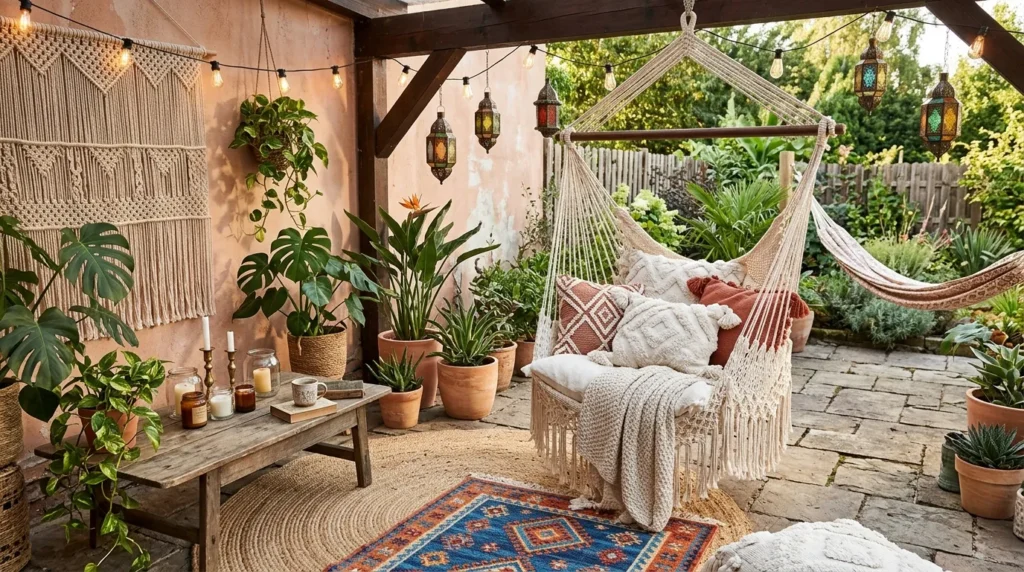
6. Macramé Wall Details
Use handmade-looking textile accents to introduce recognizable boho texture.
7. Ambient Lantern Lighting
Layer warm outdoor lighting for cozy evenings.
8. Low Lounge Arrangement
Create a casual floor-level seating area for relaxed entertaining.
9. Patterned Accent Pillows
Mix complementary patterns to make simple furniture more expressive.
10. Natural Shade Canopy
Add fabric shade for comfort while creating a dreamy outdoor retreat.
11. Collected Decor Layers
Finish the patio with small personal details that make it feel lived-in.
1. Layered Outdoor Textiles
Quick Benefits
- Adds softness to hard patio surfaces
- Makes seating feel more comfortable
- Creates visual depth
- Introduces color without permanent changes
- Works especially well for renters
Why It Works
Outdoor textiles are one of the easiest ways to make a patio feel finished. Hard surfaces such as concrete, tile, brick, and composite decking can look visually cold on their own, while layered fabrics immediately add softness and personality. A rug establishes a visual zone, cushions make seating more inviting, and a lightweight throw can add another layer of texture.
The key is choosing fabrics designed for outdoor use or placing decorative textiles where they can be protected from prolonged exposure. Natural-looking materials, subtle stripes, geometric patterns, and relaxed fringe details complement boho decorating beautifully.
A layered approach also helps a patio feel connected to the interior of the home. When the colors and textures echo nearby rooms, the outdoor space feels like an intentional continuation rather than a separate area.
How To Style It
Start with an outdoor rug large enough to sit beneath at least the front legs of your main seating. Choose a neutral base such as cream, sand, or faded beige, then layer cushions in terracotta, rust, olive, ochre, or muted brown.
Mix textures instead of choosing five nearly identical pillows. Try one woven cushion, one patterned pillow, one solid linen-look cushion, and one with fringe or tassels.
If your patio is covered, add a lightweight throw over the back of a chair. For uncovered patios, keep decorative fabrics in a weather-resistant storage basket or bring them inside after use. This small habit helps textiles stay attractive for much longer.
2. Woven Seating Nooks
Quick Benefits
- Adds natural texture
- Creates an intimate conversation area
- Works in large and small patios
- Makes the space feel relaxed
- Complements greenery beautifully
Why It Works
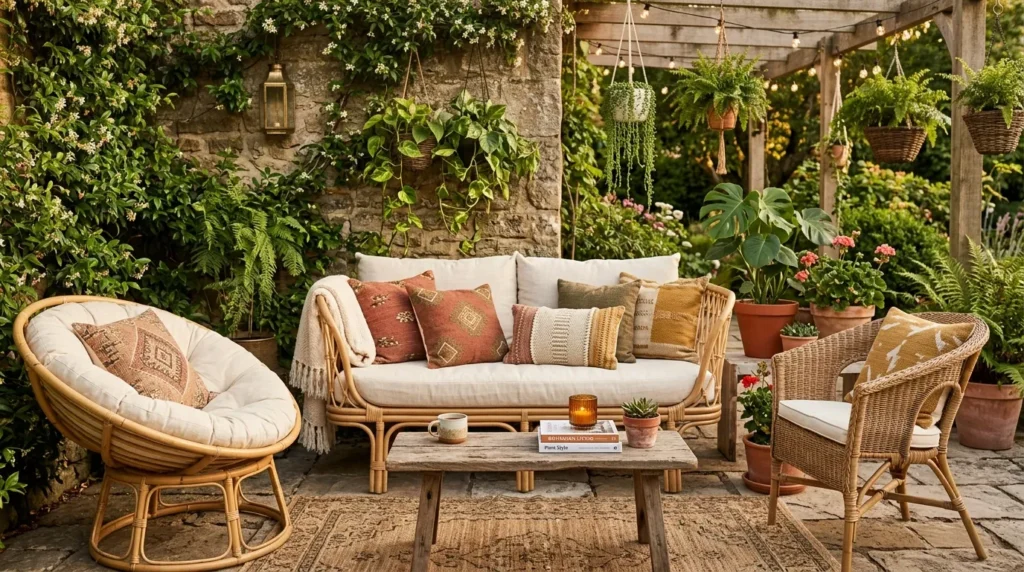
Woven furniture naturally supports the relaxed character of bohemian design. Materials such as rattan, wicker, cane, and woven rope have visual texture without making an outdoor area feel heavy. They also pair naturally with greenery and warm wood tones.
One thing that works especially well is creating a dedicated seating nook rather than scattering individual chairs around the patio. A small loveseat with two woven chairs can establish a comfortable conversation zone, while a single lounge chair and side table may be enough for a compact balcony-style patio.
The goal is not perfect symmetry. Boho spaces generally feel more interesting when seating looks collected and comfortable rather than formally arranged.
How To Style It
For a medium-sized patio, try a woven loveseat facing two accent chairs with a low coffee table between them. Leave enough room around the furniture for people to walk comfortably.
Choose cushions in cream or warm beige as the foundation. Then introduce patterned pillows in earthy tones. A round woven ottoman can double as a footrest, extra seating, or a casual place to set a tray.
If your patio is small, skip the full seating set and choose one substantial lounge chair with a small round side table. Add a floor cushion nearby for flexibility.
Keep the furniture palette relatively simple and let textiles, plants, and accessories provide most of the visual interest.
3. Earthy Color Palette
Quick Benefits
- Creates a warm outdoor atmosphere
- Makes mixed textures look cohesive
- Works well with natural materials
- Easy to update seasonally
- Complements greenery
Why It Works
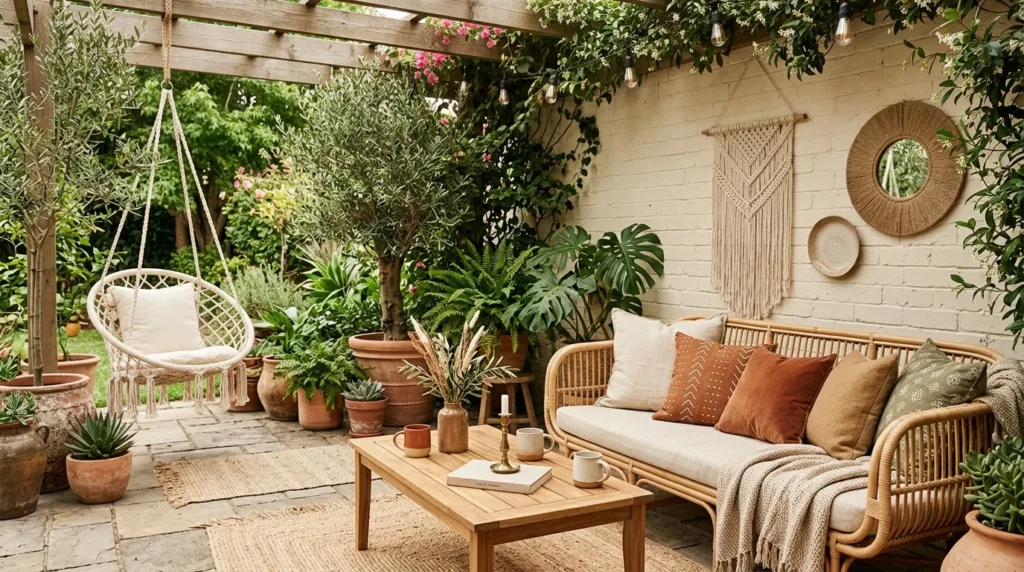
A bohemian patio does not need to be covered in bright colors. In fact, an earthy palette can create a much more sophisticated and calming result. Shades inspired by nature—sand, clay, terracotta, olive, cream, camel, rust, and warm brown—work beautifully with outdoor surroundings.
The reason this palette feels cohesive is that the colors naturally relate to common patio materials. Terracotta connects with clay planters, brown works with wood and wicker, while cream softens darker furniture.
If you already own patio furniture in gray, black, or white, you do not necessarily need to replace it. Textiles and accessories can shift the overall look without a major investment.
How To Style It
Choose two or three primary colors and one small accent shade. For example, cream can be your foundation, terracotta can provide warmth, and olive green can connect the decor with plants.
Use the lightest color on larger pieces such as cushions or rugs. Reserve deeper colors for smaller pillows, planters, pottery, and decorative objects.
If your patio receives strong afternoon sunlight, slightly muted colors can be especially practical because they tend to create a softer visual effect outdoors.
For a more colorful look, add dusty mustard, faded coral, or indigo through removable pillows and small accessories. Keeping larger furniture neutral makes those changes easy later.
4. Lush Greenery
Quick Benefits
- Softens hard patio edges
- Adds natural color
- Creates privacy
- Makes the space feel more alive
- Works with almost every boho palette
Why It Works
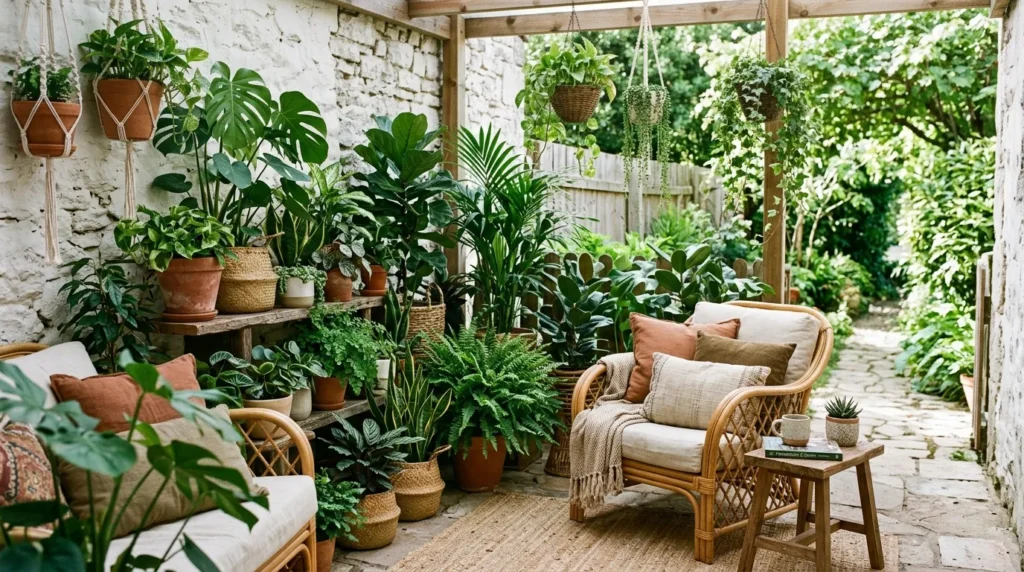
Plants are almost essential to the relaxed feeling many people associate with bohemian outdoor spaces. They introduce organic shapes, natural movement, and layers of green that contrast beautifully with woven furniture and earthy accessories.
I’ve noticed that patios often look more finished when plants are arranged at different heights rather than placed in a single row. Tall plants can frame a seating area, medium planters can fill empty corners, and smaller pots can decorate tables or shelves.
You also do not need a huge garden. A few strategically placed containers can create the same layered effect in a much smaller footprint.
How To Style It
Start with one tall container plant near the back corner of the patio. Add two medium-sized planters around the seating area and finish with a few smaller pots on a side table or plant stand.
Use different planter materials to keep the arrangement interesting. Terracotta, textured ceramic, woven baskets with protective liners, and weathered finishes all work well.
If your patio gets strong sunlight, choose plants according to the actual light conditions rather than selecting them only for appearance. Likewise, consider wind exposure, watering needs, and container drainage.
For renters, potted plants are especially useful because they can move with you. Grouping containers rather than spreading them randomly makes the greenery feel intentional.
5. Vintage Wood Accents
Quick Benefits
- Adds warmth
- Introduces rustic character
- Makes the patio feel collected
- Pairs naturally with woven textures
- Can be inexpensive to source
Why It Works
Boho decorating benefits from pieces that look as though they have a story. Weathered wood can provide that character without making the patio feel overly rustic.
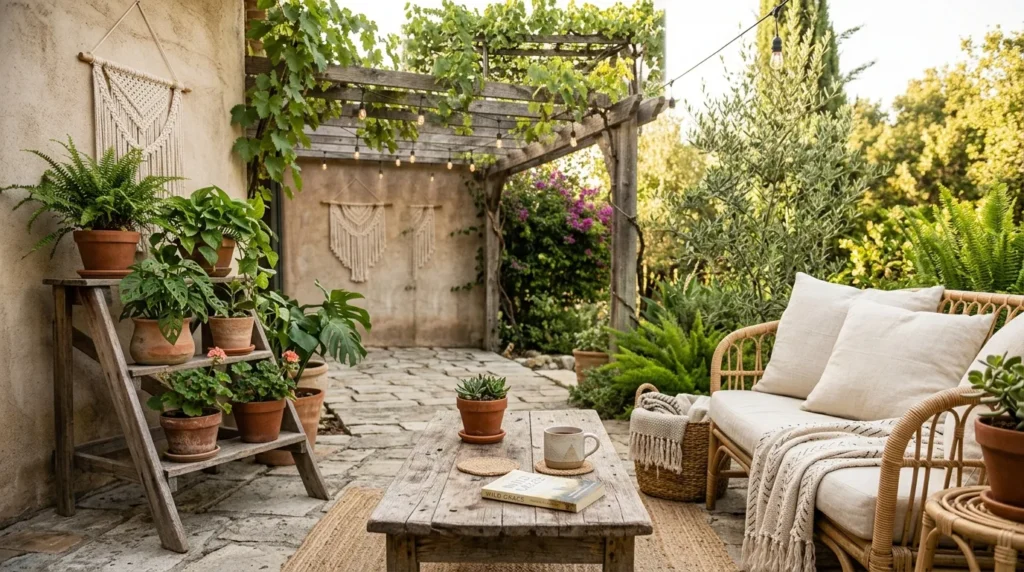
A small wooden stool, reclaimed-style coffee table, plant stand, tray, or narrow bench can add warmth against lighter cushions and woven furniture. The imperfections are often part of the charm.
The important thing is not to make every wooden piece identical. A slightly weathered finish or variation in tone can make the space feel more relaxed and collected.
How To Style It
Use one or two wooden accents as anchors rather than filling the patio with wood. A low wood coffee table can become the center of the seating arrangement, while a narrow wooden plant stand can fill an otherwise unused corner.
Place a ceramic vase, lantern, or small stack of outdoor-safe decorative books on the table. Keep the styling simple enough that the surface remains usable.
If you are using reclaimed or older wood outdoors, make sure it is appropriate for the environment and properly protected. Avoid placing untreated decorative pieces where they will remain exposed to constant moisture.
For a budget-friendly update, look for secondhand stools, small benches, and tables that can be cleaned and refinished.
6. Macramé Wall Details
Quick Benefits
- Adds handcrafted texture
- Uses vertical space
- Creates a strong boho focal point
- Works well on covered patios
- Can refresh plain walls
Why It Works
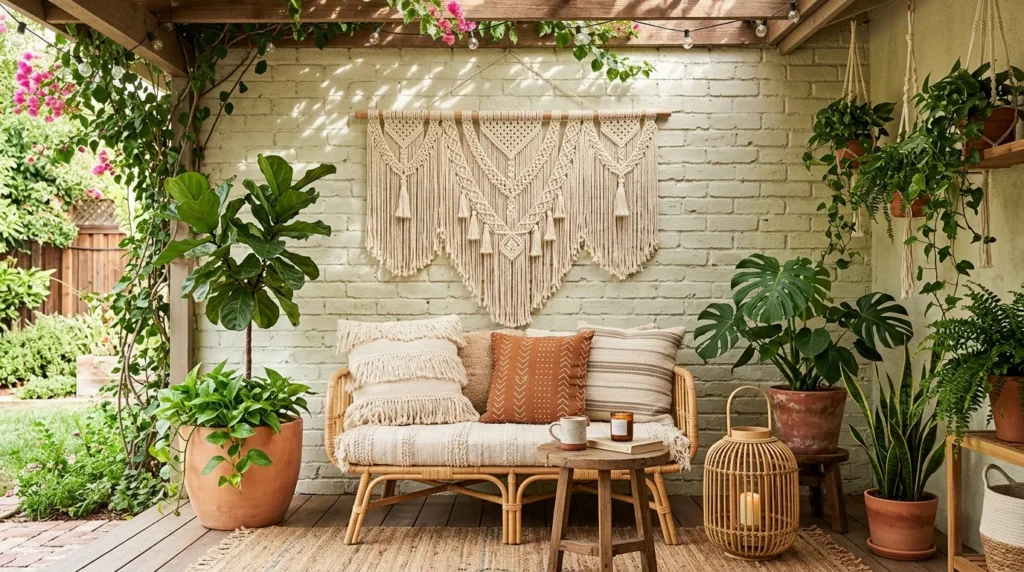
Vertical surfaces are easy to overlook when decorating a patio. A plain exterior wall can leave an otherwise beautifully styled seating area feeling unfinished. Macramé introduces softness and handmade character without taking up valuable floor space.
Its knotted texture works particularly well against simple walls because it creates subtle shadow and dimension. Natural cream, ivory, and beige are classic choices, but muted rust or olive can also work if you want more color.
Because outdoor conditions can be harsh, however, decorative textiles need more consideration than indoor wall art.
How To Style It
Choose one substantial macramé piece rather than covering every wall. Hang it above a loveseat, bench, or console-style outdoor table so it has a clear relationship with the furniture below.
Keep the surrounding decor relatively quiet. A few plants, a woven lantern, and one ceramic accent can frame the piece without competing with it.
For uncovered patios, consider weather-resistant alternatives or move textile wall decor indoors when rain or prolonged humidity is expected.
A smaller macramé hanger can also hold a potted plant, creating two layers of texture at once. This is particularly useful for narrow patios where floor space is limited.
7. Ambient Lantern Lighting
Quick Benefits
- Creates a cozy evening atmosphere
- Adds visual warmth
- Extends patio usability after sunset
- Provides decorative interest
- Works with many patio styles
Why It Works
Lighting can completely change how an outdoor space feels after sunset. During the day, furniture and textiles carry most of the design. At night, warm pools of light become part of the atmosphere.
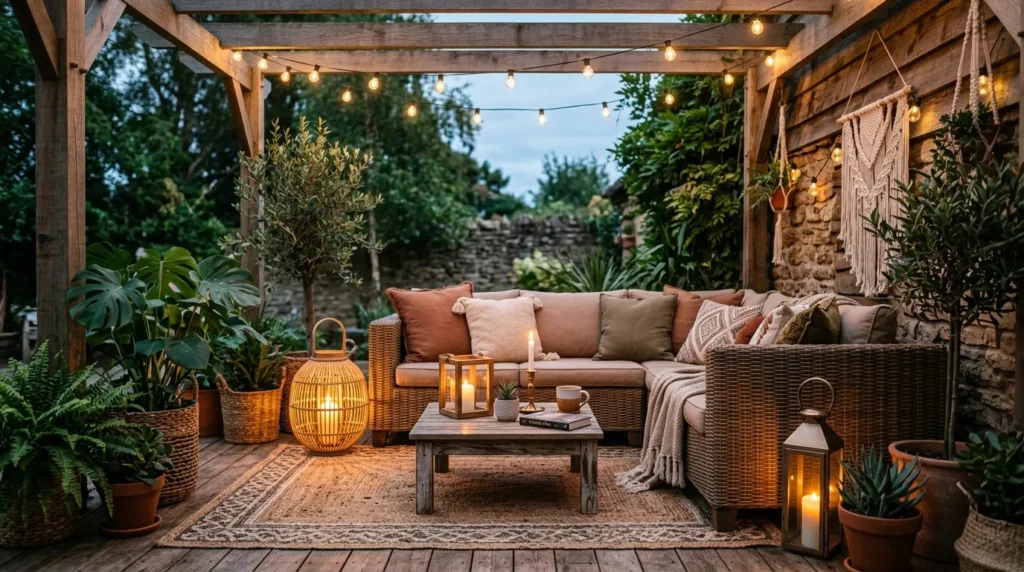
Boho patios look particularly appealing with layered lighting rather than one intense overhead source. Lanterns, string lights, small table lamps designed for outdoor use, and carefully positioned accent lighting can create a softer environment.
The goal is gentle illumination that supports conversation and movement without making the patio feel like a brightly lit room.
How To Style It
Start with one or two lanterns near the seating area. Add outdoor-rated string lights overhead if the patio structure allows for safe installation.
Vary the height of your lighting. Place one lantern on the floor, another on a side table, and perhaps a third on a plant stand or outdoor shelf.
Choose finishes such as aged metal, woven material, matte black, or warm natural tones.
Always use lighting products specifically rated for outdoor conditions and follow the manufacturer’s installation instructions. Keep cords and fixtures positioned safely away from water and high-traffic areas.
The result should feel layered and inviting rather than crowded.
8. Low Lounge Arrangement
Quick Benefits
- Creates a relaxed atmosphere
- Makes entertaining feel casual
- Works especially well in spacious patios
- Encourages lounging
- Adds a resort-inspired feeling
Why It Works
Traditional patio furniture often focuses on upright dining or conversation. A low lounge arrangement changes the mood completely. It encourages people to sit back, stretch out, and stay awhile.
This approach works beautifully with bohemian decorating because the style naturally embraces relaxed proportions, floor cushions, poufs, and informal arrangements.
You do not have to redesign the entire patio around low furniture. Even one low seating zone can create a distinct destination within a larger outdoor space.
How To Style It
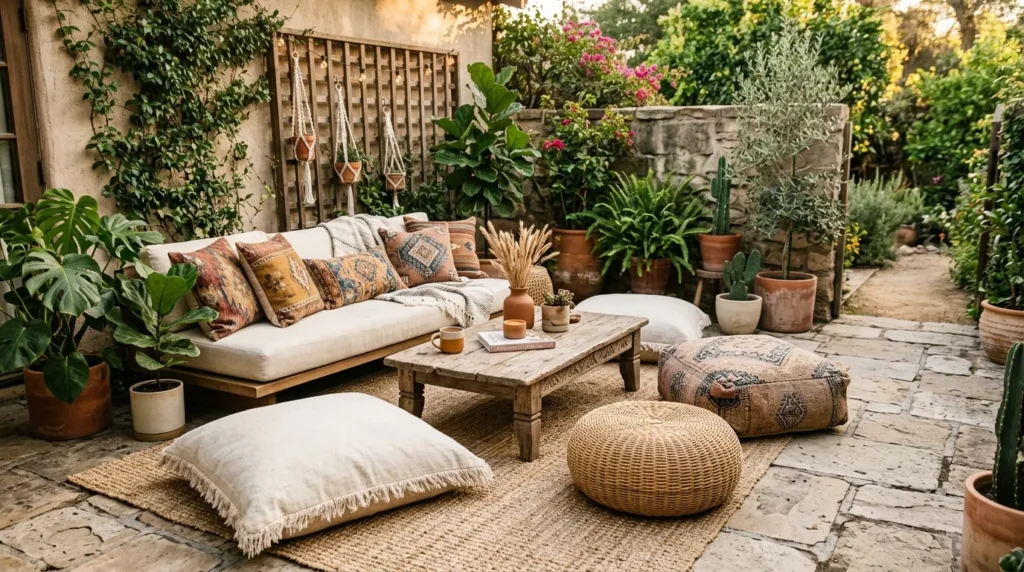
Use a low-profile outdoor sofa or deep lounge chairs as the main seating. Add a low coffee table in wood or a weather-resistant natural finish.
Layer two or three oversized floor cushions around the perimeter for flexible seating. Keep the cushions large enough to be comfortable without blocking walkways.
A round ottoman can add another soft layer while doubling as a footrest.
If you entertain frequently, make sure the arrangement still leaves clear paths through the patio. Relaxed does not have to mean cluttered.
For smaller patios, one deep lounge chair paired with a pouf can create the same feeling without overwhelming the available floor area.
9. Patterned Accent Pillows
Quick Benefits
- Adds personality
- Creates visual variety
- Makes neutral furniture more interesting
- Easy to change seasonally
- Supports a collected boho look
Why It Works
Patterns are one of the easiest ways to express the playful side of bohemian decorating. The trick is mixing them intentionally instead of selecting completely unrelated designs.
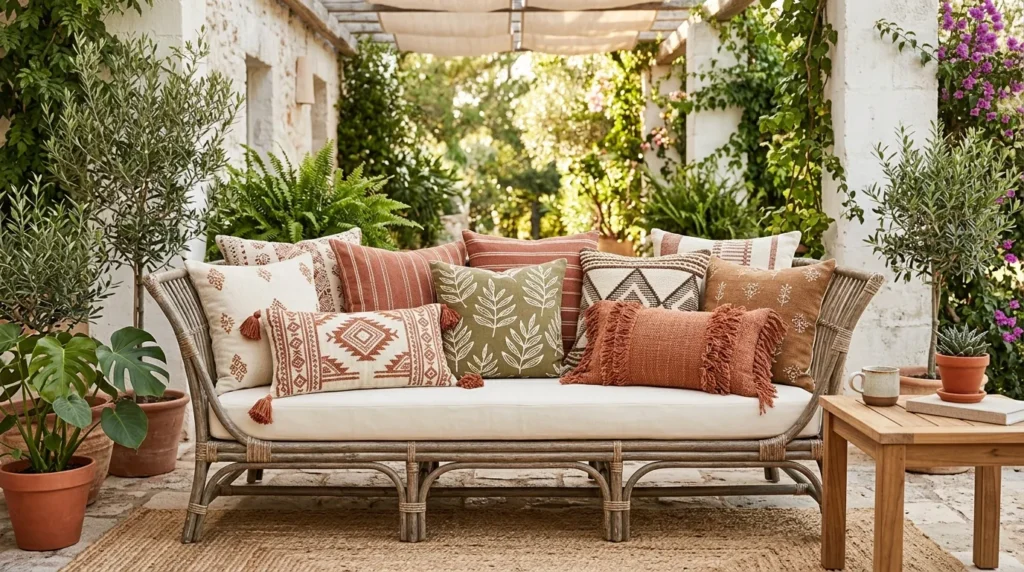
Geometric motifs, faded stripes, botanical patterns, tribal-inspired shapes, and small-scale prints can work together when they share a similar color palette.
A common mistake is using too many competing colors. When the palette stays controlled, different patterns can actually make the patio look more sophisticated.
How To Style It
Begin with a neutral base cushion. Add one larger patterned pillow, one smaller geometric design, and one textured solid pillow.
Repeat at least one color across several pillows so the combination feels connected. For example, if one cushion includes rust and olive, repeat those tones elsewhere in smaller accents.
Odd-numbered groupings often look naturally relaxed, so try three or five pillows rather than arranging everything in pairs.
If the patio is exposed to weather, use outdoor-rated cushions or bring decorative pillows indoors when they are not being used. This also makes it easier to switch patterns for different seasons.
10. Natural Shade Canopy
Quick Benefits
- Creates comfortable shade
- Adds softness overhead
- Defines the seating zone
- Makes a patio feel more private
- Creates a dramatic Pinterest-friendly focal point
Why It Works
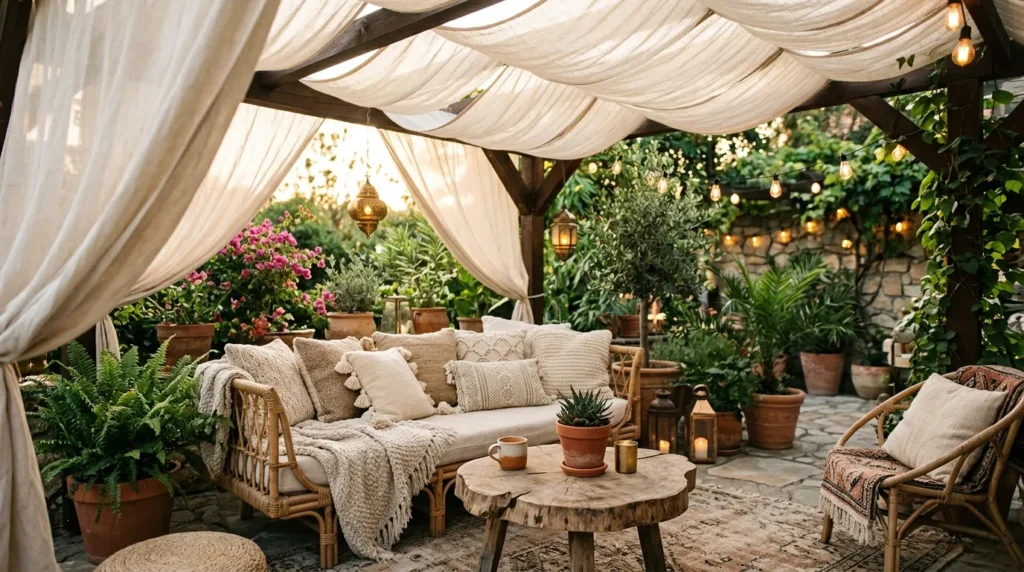
Overhead fabric can transform an ordinary patio into something that feels like a private outdoor retreat. A canopy introduces a large visual layer that furniture alone cannot provide.
Lightweight neutral fabric works particularly well because it reflects the relaxed quality of boho design while keeping the space bright. Natural-looking shades can also soften strong architectural lines.
Before adding a canopy, consider the patio’s exposure to wind, rain, and sun. Outdoor fabrics and secure installation are essential.
How To Style It
Choose a simple canopy, outdoor curtain panels, shade sail, or pergola-mounted fabric depending on the structure of your patio.
Cream, oatmeal, ivory, and soft beige are easy choices that work with nearly any earthy palette. If you want more personality, look for subtle stripes or a faded geometric print.
Let the fabric define the seating zone rather than covering every part of the patio.
Pair the canopy with woven furniture, greenery, and warm lighting underneath. The combination creates a layered ceiling-to-floor effect.
For safety, secure outdoor fabric according to the manufacturer’s instructions and avoid improvised attachments that could become unstable during strong winds.
11. Collected Decor Layers
Quick Benefits
- Gives the patio personality
- Prevents the space from feeling too staged
- Allows you to use meaningful objects
- Creates visual depth
- Makes the design feel finished
Why It Works
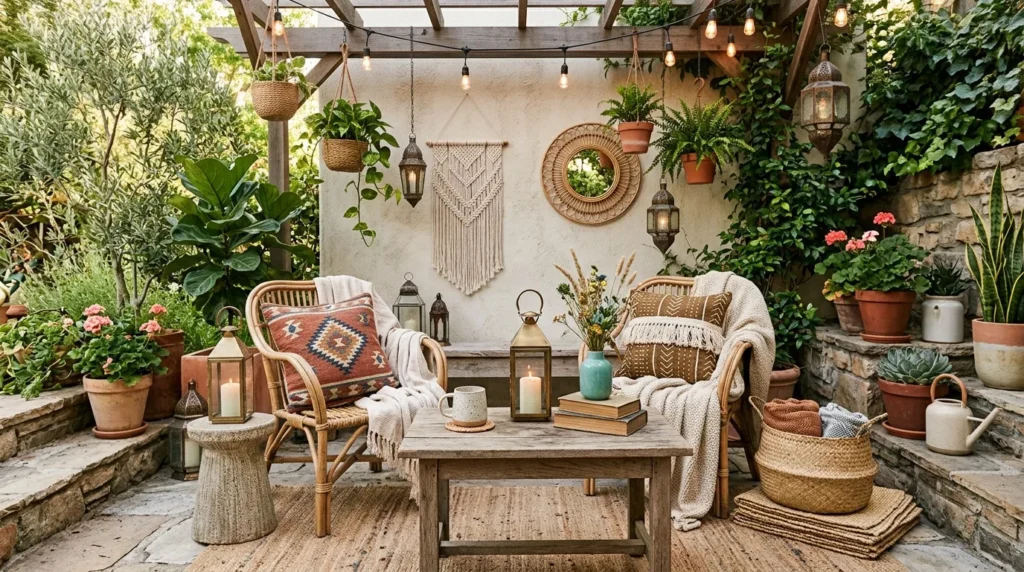
The final layer is what often separates a nicely furnished patio from one that actually feels like part of a home. Bohemian spaces tend to work best when they look collected gradually rather than purchased as one matching set.
Small objects can tell a story: a ceramic planter from a local maker, a textured tray, a vintage-style lantern, a sculptural vase, or a favorite outdoor-safe decorative piece.
The key is editing. Too many accessories can make a patio difficult to use, especially when people need space to move around furniture.
How To Style It
Choose a few meaningful accents and distribute them across the patio. A decorative tray can sit on the coffee table, a planter can fill an empty corner, and a small lantern can add height beside a chair.
Use different scales. One larger statement piece usually has more impact than several tiny objects scattered everywhere.
Mix materials such as ceramic, wood, woven fibers, stone, and metal while keeping the color palette connected.
Most importantly, leave some breathing room. The beauty of boho style is that it can feel abundant without becoming chaotic.
Step back after arranging everything and remove anything that makes the space harder to use. A beautiful patio should still be comfortable for morning coffee, afternoon reading, and evening conversations.
How To Pull The Whole Patio Together
Once you have chosen your favorite ideas, resist the temptation to use every element equally. The strongest boho patios usually have a clear visual hierarchy.
Start with the largest pieces: seating, rug, shade, and plants. These establish the foundation.
Next, introduce medium-scale elements such as pillows, lanterns, side tables, planters, and wall decor.
Finally, add the smallest details.
Think about texture as much as color. A patio with cream cushions, terracotta pots, woven furniture, wood, greenery, and natural fibers can feel visually rich even when the color palette is restrained.
Another useful trick is repetition. If you use terracotta in a planter, repeat that color in a pillow or small decorative object. If you use woven furniture, echo that texture with a basket or lantern.
This creates cohesion without requiring a matching furniture set.
Small Patio Tips
You do not need a large backyard to create a bohemian outdoor retreat.
For a small patio, prioritize multifunctional furniture. A storage ottoman can provide seating, a footrest, and hidden storage. A narrow console can hold plants without consuming much floor space. Vertical planters can bring greenery upward instead of outward.
Use a small rug to define the seating area, but avoid oversized furniture that blocks circulation.
Light colors can also help a compact patio feel more open. Cream cushions, pale wood, woven textures, and greenery create warmth without visually closing in the space.
If you’re decorating a rental, concentrate on removable elements: rugs, textiles, freestanding planters, portable lanterns, and furniture that does not require permanent installation.
Budget-Friendly Updates
Creating a boho patio does not have to mean replacing everything.
Start by shopping your own home. Outdoor-safe baskets, trays, cushions, plant stands, and small stools may already provide useful texture.
Secondhand stores and resale marketplaces can also be excellent places to find wood furniture, vintage-inspired accessories, ceramic planters, and small tables.
Another practical approach is to update only the textiles. A neutral patio set can look completely different after adding a patterned rug, earthy cushions, and a few plants.
DIY projects can also help. A simple wooden plant stand, painted planter, or fabric canopy can become a focal point without requiring a major renovation.
The goal is to spend money on the elements that have the biggest visual and functional impact first.
Making It Weather-Ready
Outdoor decorating requires more practical thinking than indoor styling.
Choose materials based on the conditions your patio actually experiences. If the area gets frequent rain, fabrics should be designed for outdoor use and cushions should have a place to dry properly.
Strong sunlight can fade textiles and certain finishes over time. Wind can damage lightweight accessories and unsecured shade fabrics.
Storage is one of the easiest ways to protect decorative pieces. A weather-resistant storage bench or outdoor deck box can hold cushions, throws, and smaller accessories when they are not being used.
Good drainage is equally important for containers. Plant pots should allow excess water to escape, particularly during periods of heavy rain.
These practical details may not be as glamorous as choosing pillows, but they help your patio stay attractive and usable.
FAQ
What colors work best for a boho patio?
Earthy colors such as cream, beige, terracotta, rust, olive, camel, warm brown, and muted mustard work especially well. You can add brighter colors through removable pillows or accessories, but keeping the main palette grounded in natural shades creates a cohesive and relaxing foundation.
How can I make a small patio look boho?
Focus on layers rather than quantity. Use one compact seating piece, a small outdoor rug, several textured pillows, potted greenery, and warm lighting. Vertical decor such as hanging planters or wall textiles can add personality without taking valuable floor space.
What materials are best for boho outdoor decor?
Woven fibers, rattan, wicker, wood, terracotta, ceramic, cotton-look outdoor textiles, stone, and aged metal all complement boho styling. For exposed patios, prioritize materials and products specifically designed for outdoor conditions.
How do I make my patio feel cozy at night?
Layer several sources of warm outdoor lighting rather than relying on one bright fixture. Lanterns, outdoor-rated string lights, table lighting, and strategically positioned accent lights can create comfortable pools of illumination around seating areas.
Can boho decor work with modern patio furniture?
Absolutely. Modern furniture can become the neutral foundation while boho elements provide texture and personality. Add woven accessories, earthy cushions, greenery, patterned pillows, wood accents, and natural materials to soften clean contemporary lines.
How many pillows should I use on a patio sofa?
The right number depends on the sofa’s size, but avoid filling every available space. Leave enough room for people to sit comfortably. A combination of three, five, or several varied cushions often creates a relaxed look without making the furniture difficult to use.
How do I keep outdoor boho decor from looking cluttered?
Give every major accessory a purpose or visual role. Establish the furniture first, then layer textiles, plants, lighting, and decorative objects gradually. If several pieces compete for attention, remove one or two. Leaving some open space helps the patio feel relaxed rather than crowded.
Conclusion
Creating a bohemian patio is less about following a strict decorating formula and more about building layers that feel natural, comfortable, and personal.
Start with a strong foundation of comfortable seating, then add an outdoor rug, earthy textiles, greenery, and warm lighting. From there, introduce woven materials, weathered wood, patterned pillows, handmade-looking accents, and a few objects that reflect your personality.
You do not have to complete everything in one weekend. In fact, a patio often feels more authentic when it develops gradually. Start with the areas you use most and add pieces as you discover what works for your space.
If your patio is small, focus on vertical greenery and multifunctional furniture. If you have a large backyard, create several distinct zones for lounging, dining, and entertaining.
The most successful outdoor spaces balance beauty with everyday usability. Your patio should look inviting in photos, but it should also be somewhere you genuinely want to sit with your morning coffee, read a book, share dinner, or relax at the end of the day.
Start with two or three of these ideas and build from there. A few thoughtful layers can turn an ordinary patio into a warm outdoor retreat that feels collected, comfortable, and completely your own.
Related Articles
- 10 Small Patio Ideas for a Cozy Outdoor Space
- 11 Outdoor Living Room Ideas for Summer
- 10 Backyard Seating Ideas for Relaxing Outdoors
- 11 Boho Living Room Ideas for a Cozy Home
- 10 Small Balcony Ideas That Feel Like a Mini Retreat