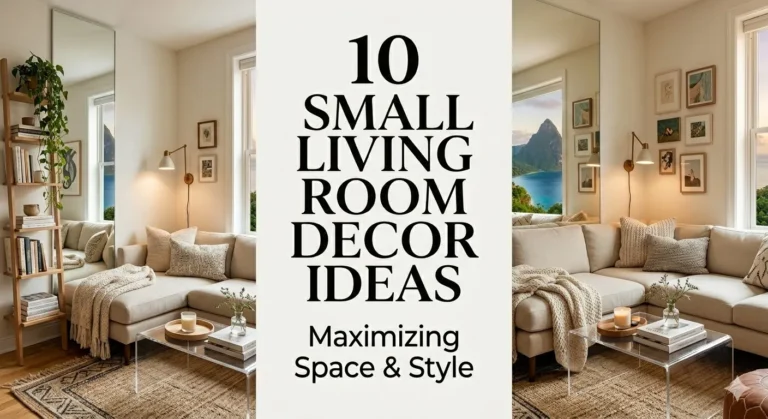

11 Modern Living Room Decor Ideas to Elevate Your Space
A modern living room should feel fresh, comfortable, and intentional—not cold or overly decorated. The most appealing modern spaces combine clean silhouettes with warm materials, thoughtful lighting, and enough personality to make the room feel lived in.
If your living room feels cluttered, dated, or visually disconnected, you don’t necessarily need to replace every piece of furniture. Sometimes the biggest transformation comes from simplifying the room and choosing a few elements that work harder visually. A streamlined sofa, generously sized rug, sculptural coffee table, or carefully selected artwork can instantly change the atmosphere.
I’ve noticed that modern rooms look their best when there’s a balance between structure and softness. Straight lines can be warmed with boucle or linen. Smooth surfaces can be paired with natural wood. A neutral palette can gain personality through greenery, artwork, and subtle contrast.
The goal isn’t to make the room look like a showroom. It’s to create a space that feels current while still being comfortable enough for movie nights, morning coffee, entertaining friends, and everyday life.
Whether you’re working with a large open-plan space or a compact apartment living room, these ideas can help you create a modern interior with better flow, stronger visual balance, and a polished yet welcoming feel.
Table of Contents
1. Streamlined Furniture
Create a clean foundation with simple, well-proportioned silhouettes.
2. Warm Neutral Palette
Use sophisticated neutrals to keep the room bright and inviting.
3. Sculptural Coffee Tables
Add an artistic focal point through shape and material.
4. Oversized Area Rugs
Connect the seating arrangement with a generously sized rug.
5. Statement Lighting
Use distinctive fixtures to combine function with visual impact.
6. Natural Wood Accents
Soften contemporary lines with warm organic materials.
7. Large-Scale Artwork
Give the room personality with confident wall decor.
8. Minimalist Built-Ins
Create useful storage while maintaining a clean appearance.
9. Layered Textures
Add warmth and depth without creating visual clutter.
10. Indoor Greenery
Bring organic color and freshness into the space.
11. Black Contrast Details
Use dark accents to define a modern neutral palette.
1. Streamlined Furniture
Quick Benefits
- Creates a clean visual foundation
- Makes rooms feel more spacious
- Improves furniture flow
- Works well in open-plan homes
- Provides a timeless starting point
Why It Works
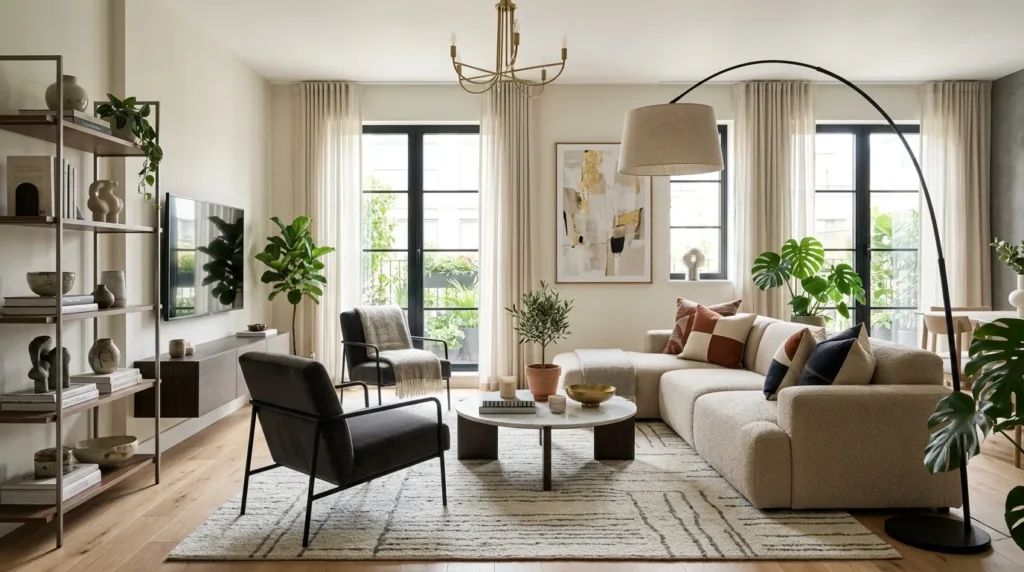
Modern decorating begins with furniture that has a clear, uncomplicated silhouette. This doesn’t mean every piece needs to have sharp corners or look ultra-minimal. Curved sofas, rounded chairs, and softly sculptural pieces can all feel modern when their shapes are intentional.
One common mistake is filling a living room with too many small pieces. A few substantial items often create a more polished result.
The key is proportion. Furniture should fit the room without blocking pathways or overwhelming the architecture. A streamlined sofa paired with a simple coffee table and one or two accent chairs can provide plenty of seating while keeping the room visually calm.
How To Style It
Start with the largest piece—the sofa.
Choose a clean-lined design in cream, beige, gray, taupe, or another versatile shade.
Add one or two accent chairs with contrasting shapes.
Avoid pushing every piece against the walls.
Instead, create a defined conversation area.
Leave clear walking paths between the seating zones.
For smaller rooms, consider furniture with raised legs because the visible floor underneath can make the space feel lighter.
2. Warm Neutral Palette
Quick Benefits
- Creates a calm atmosphere
- Makes modern spaces feel welcoming
- Works with many materials
- Provides flexibility
- Makes furniture silhouettes stand out
Why It Works
Modern rooms don’t have to be stark white.
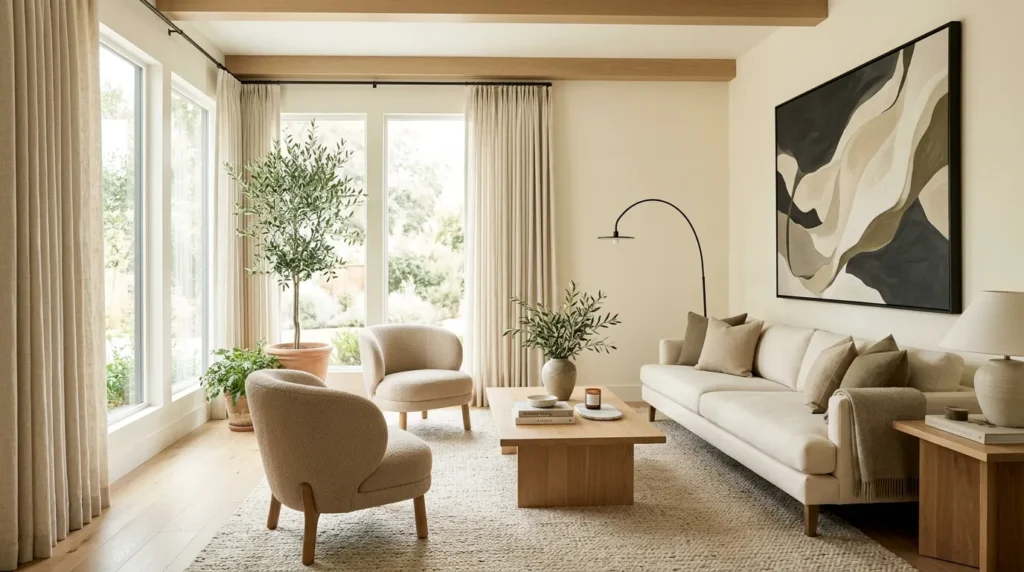
Warm neutrals such as ivory, oatmeal, beige, mushroom, taupe, and soft gray can make contemporary spaces feel considerably more inviting.
A neutral palette also creates a quiet background for wood, stone, metal, artwork, and greenery.
The trick is to use several shades instead of one flat color. Slight differences between walls, furniture, textiles, and accessories create depth without making the room busy.
How To Style It
Choose one primary neutral for the largest surfaces.
Add a slightly darker supporting shade through furniture or curtains.
Introduce one accent color such as olive, muted blue, terracotta, or charcoal.
For example:
Warm white + beige + walnut
creates a cozy modern look.
Ivory + taupe + black
feels more architectural.
Cream + mushroom + olive
creates an organic modern atmosphere.
Repeat the accent color in small doses throughout the room.
3. Sculptural Coffee Tables
Quick Benefits
- Creates a strong focal point
- Adds personality
- Introduces interesting shapes
- Works with simple furniture
- Combines beauty with function
Why It Works
When the rest of a modern living room is relatively restrained, furniture shapes become important.
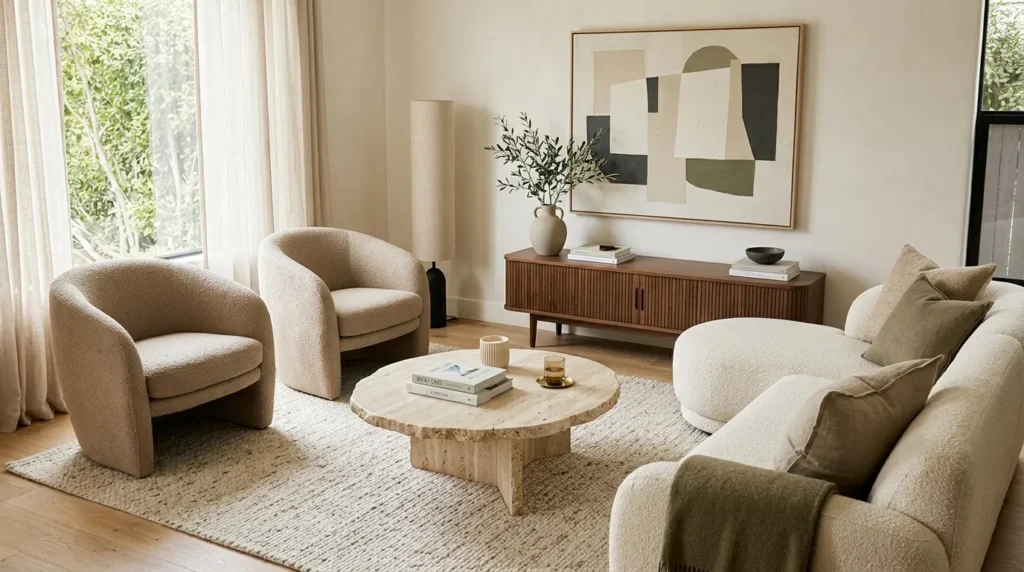
A sculptural coffee table can act almost like functional artwork.
Rounded pedestal tables, irregular wood designs, stone forms, glass surfaces, and geometric bases can all introduce visual interest without adding clutter.
This is particularly effective in neutral rooms where there are fewer colors competing for attention.
How To Style It
Choose a coffee table that contrasts with the sofa.
Pair a boxy sofa with a rounded table.
Try a natural wood table for warmth.
Use travertine or marble for an elevated organic feel.
For a small room, a round table can improve movement around the seating area.
Keep the styling simple.
A tray, a few books, and one ceramic vessel are usually enough.
4. Oversized Area Rugs
Quick Benefits
- Defines the seating area
- Adds softness
- Improves visual flow
- Makes furniture feel connected
- Introduces subtle pattern and texture
Why It Works
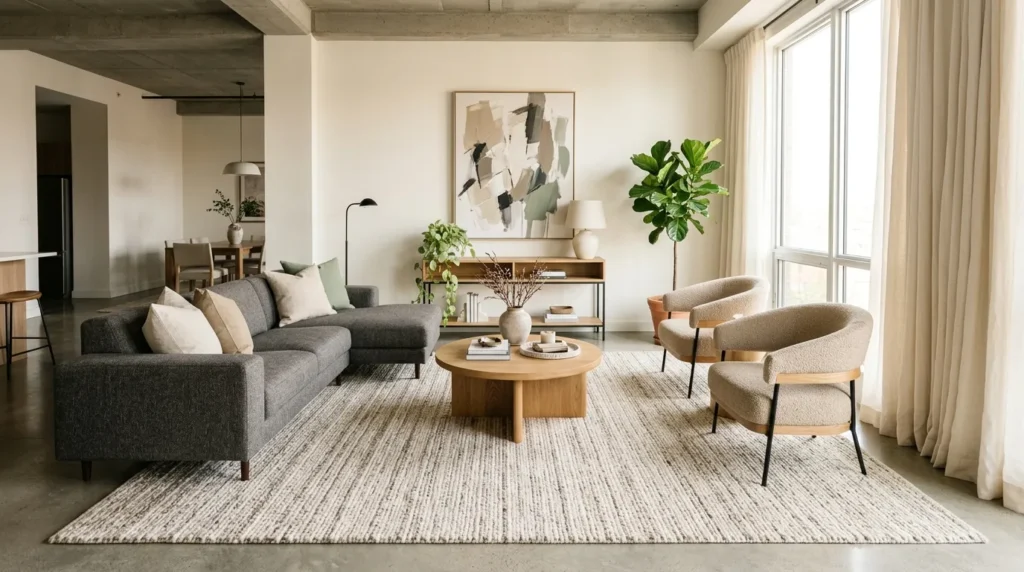
A large rug can make a modern living room feel dramatically more cohesive.
When the rug is too small, furniture can appear scattered across the floor. A properly sized rug creates a visual boundary that brings the seating pieces together.
This is particularly important in open-plan homes where the living room needs to feel distinct from dining or kitchen areas.
How To Style It
Choose a rug large enough for at least the front legs of your sofa and accent chairs to sit on it.
If the room is spacious, consider placing all major furniture fully on the rug.
Choose low-contrast patterns for a minimalist room.
Look for wool, cotton, jute, or high-quality performance materials.
Cream, beige, taupe, charcoal, and muted geometric designs work particularly well with modern furniture.
5. Statement Lighting
Quick Benefits
- Adds architectural interest
- Creates a focal point
- Improves evening ambiance
- Makes the room feel finished
- Combines decoration with function
Why It Works
Lighting is one of the easiest ways to add personality to a modern living room.
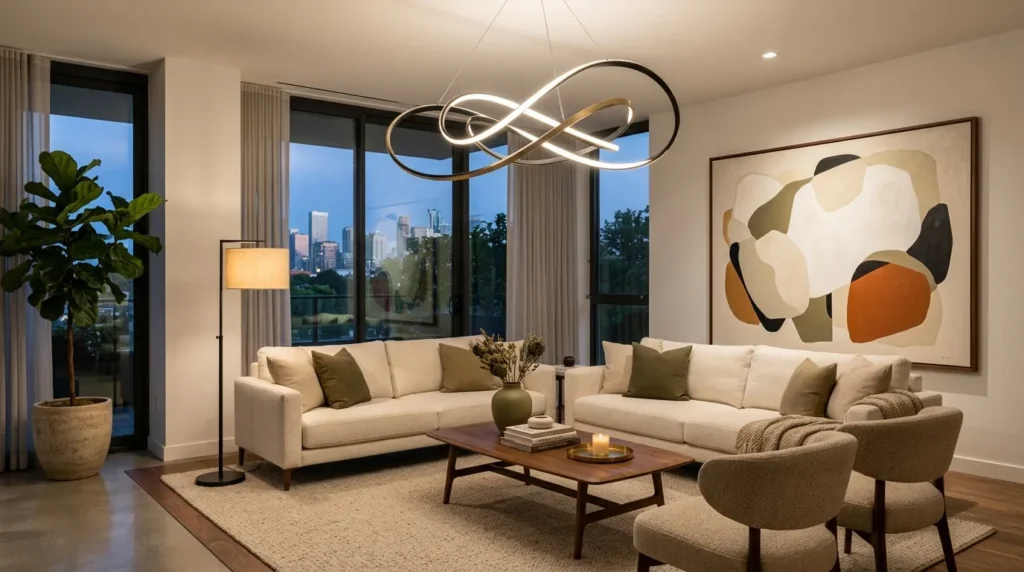
A sculptural pendant, oversized chandelier, sleek floor lamp, or minimalist wall sconce can become part of the room’s visual identity.
Modern interiors benefit from layered lighting rather than relying entirely on one ceiling fixture.
Different light sources create depth and allow you to change the mood depending on the activity.
How To Style It
Choose one statement fixture for the main visual focal point.
Add a floor lamp beside a reading chair.
Place a table lamp on a console.
Use wall sconces where appropriate.
Consider directional accent lighting for artwork.
Select warm-toned bulbs for comfortable evening illumination.
Whenever possible, use dimmers to adjust brightness throughout the day.
6. Natural Wood Accents
Quick Benefits
- Adds warmth
- Softens modern lines
- Introduces natural texture
- Prevents neutral rooms from feeling sterile
- Works with contemporary and organic styles
Why It Works
Modern interiors can sometimes feel overly smooth when every surface is painted, polished, or manufactured.
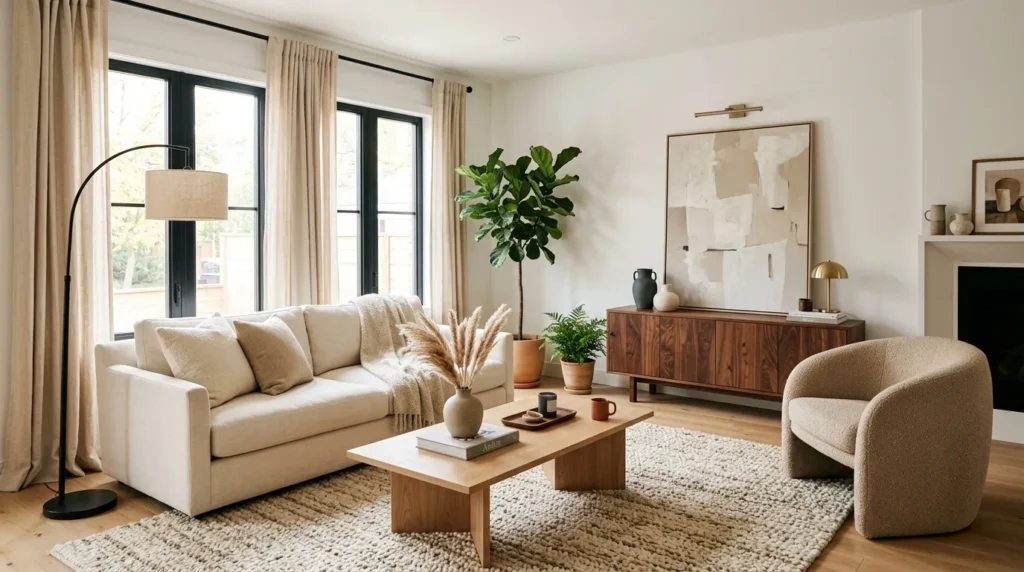
Natural wood adds visual warmth and variation.
Oak, walnut, ash, and teak each bring a different personality. Light oak feels airy and Scandinavian-inspired, while walnut creates a richer, more sophisticated atmosphere.
You don’t need a room full of wood. One or two substantial pieces can make enough of a difference.
How To Style It
Try a walnut media console.
Add an oak coffee table.
Use wooden side tables.
Choose a sculptural wood accent chair.
Introduce small wood frames or trays.
Pair warm wood with cream upholstery and stone for an organic modern look.
Avoid matching every wood finish perfectly. Slight variations can make the space feel more natural.
7. Large-Scale Artwork
Quick Benefits
- Creates a focal point
- Adds personality
- Fills large walls effectively
- Introduces color without clutter
- Makes furniture arrangements feel intentional
Why It Works
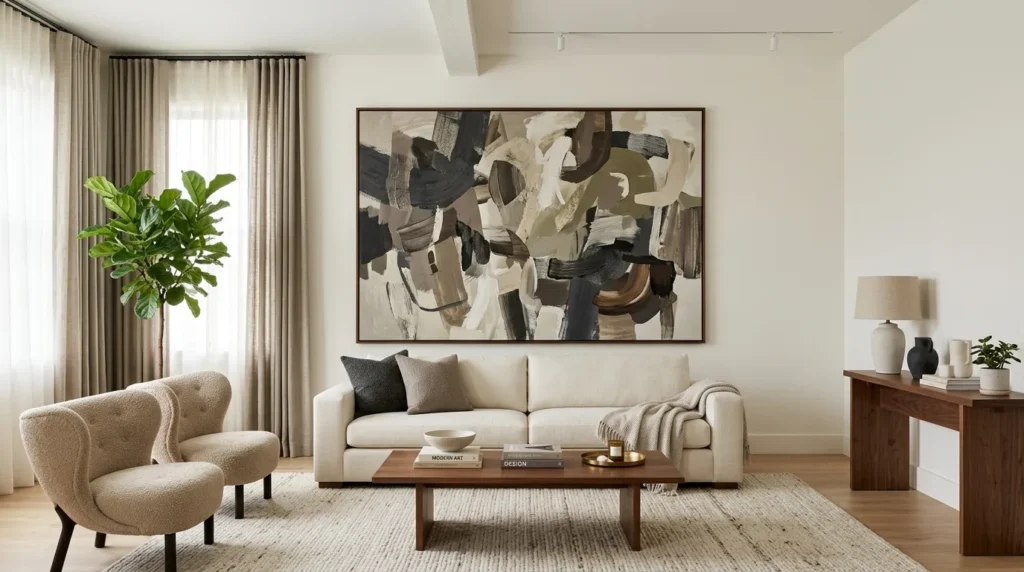
One large artwork can often make a stronger statement than a collection of tiny decorations.
Modern interiors particularly suit oversized abstract paintings, minimalist photography, graphic prints, textured canvases, and contemporary landscapes.
The artwork doesn’t have to match the room perfectly. It simply needs to relate to the palette and scale.
How To Style It
Hang one large piece above the sofa.
Choose artwork approximately two-thirds the width of the furniture below it as a useful starting point.
If you prefer a gallery wall, keep the frame finishes coordinated.
Use the artwork to introduce an accent color.
Keep nearby accessories restrained so the wall remains the focal point.
For a dramatic modern look, consider a large monochromatic photograph or abstract canvas.
8. Minimalist Built-Ins
Quick Benefits
- Adds valuable storage
- Creates a custom appearance
- Reduces visual clutter
- Makes use of vertical space
- Works beautifully in modern homes
Why It Works
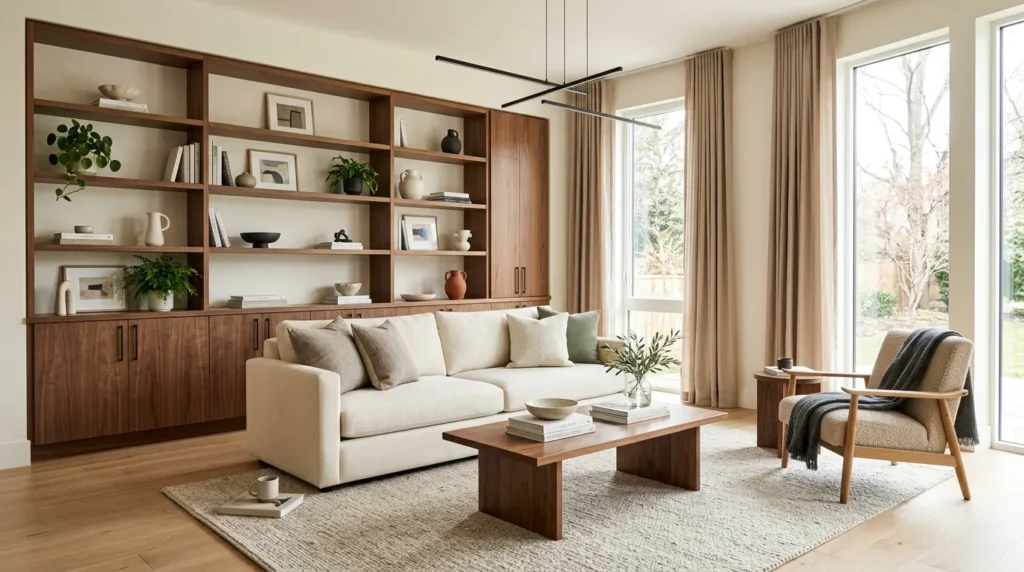
Built-ins can make a living room feel thoughtfully designed from the beginning.
They provide storage for books, media equipment, baskets, and decorative objects while keeping the overall architecture clean.
A simple wall of cabinetry can also make an awkward television area feel intentional.
If permanent construction isn’t practical, modular shelving and freestanding cabinets can create a similar effect.
How To Style It
Choose cabinetry with simple doors and minimal hardware.
Use open shelving sparingly.
Display books, ceramics, framed artwork, and greenery.
Leave some sections empty.
Group accessories in small visual arrangements rather than spreading individual objects across every shelf.
For a sophisticated look, paint the cabinetry in the same family as the walls.
9. Layered Textures
Quick Benefits
- Adds warmth
- Creates visual depth
- Makes neutral rooms more interesting
- Improves comfort
- Prevents minimalism from feeling sterile
Why It Works
A modern living room can be simple without being flat.
Texture provides the variation that color might otherwise create.
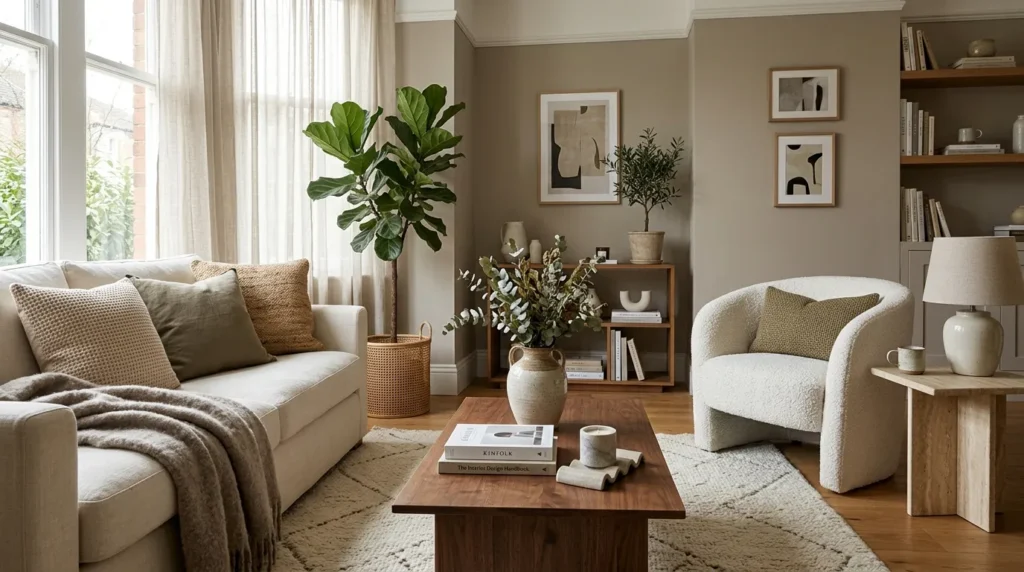
Combine smooth leather with boucle, linen with wood, wool with stone, or glass with woven fibers.
The contrast makes the room feel richer while maintaining a clean palette.
I’ve noticed that this is especially useful when decorating with cream or beige. Several different textures can make a neutral room feel sophisticated rather than bland.
How To Style It
Layer different textiles through pillows and throws.
Add a textured wool or jute rug.
Choose linen curtains.
Introduce a boucle chair.
Use wood and stone for hard surfaces.
Add a woven basket or two.
Keep the colors coordinated so the variety comes primarily from texture.
10. Indoor Greenery
Quick Benefits
- Adds organic color
- Softens modern architecture
- Improves visual balance
- Creates freshness
- Complements neutral palettes
Why It Works
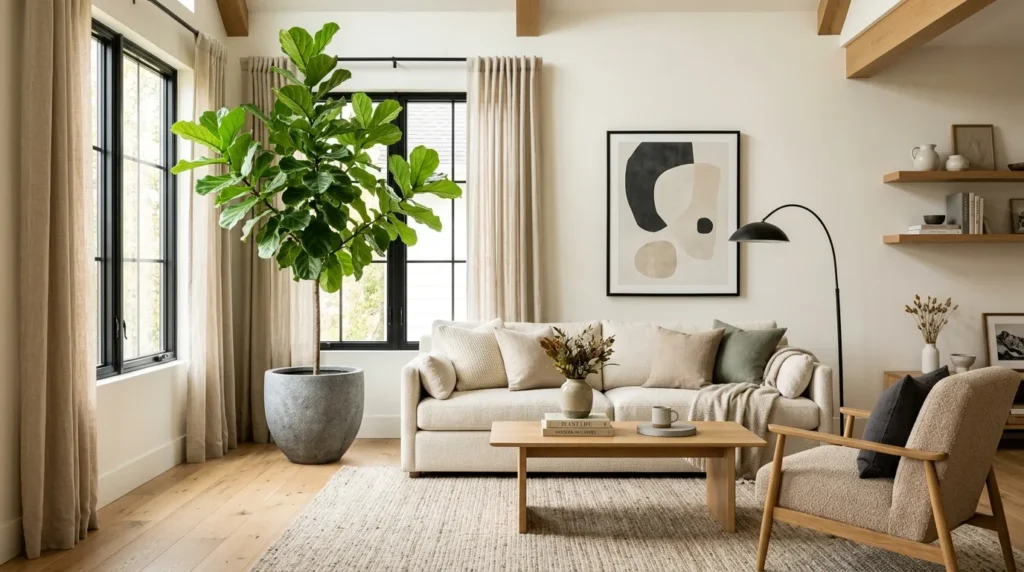
Plants add an element that modern furniture cannot: organic irregularity.
A tall fiddle-leaf fig, olive tree, rubber plant, or similar leafy plant can soften a room filled with straight lines.
Smaller plants can be used on shelves, side tables, or consoles.
If natural light is limited, choose plants appropriate for the available conditions or use high-quality faux greenery.
How To Style It
Place a tall plant in an open corner.
Use a sculptural planter that complements the furniture.
Add smaller plants to built-in shelving.
Try a branch arrangement in a large ceramic vase.
Use natural baskets or stone planters for additional texture.
Keep plants away from walkways and areas where they could easily be knocked over.
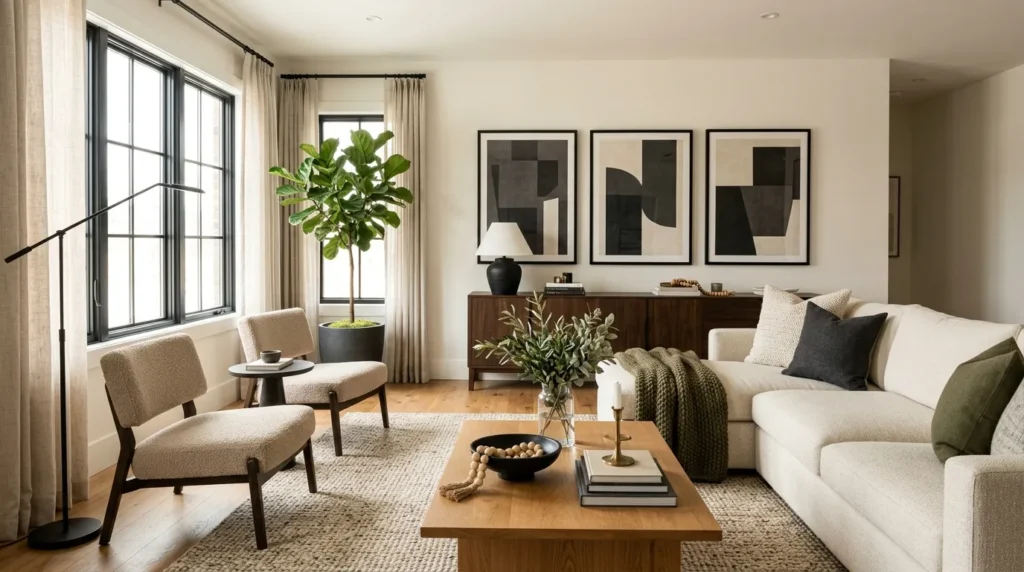
11. Black Contrast Details
Quick Benefits
- Defines the room
- Adds modern contrast
- Gives neutral spaces structure
- Complements natural materials
- Creates visual rhythm
Why It Works
Black accents are particularly effective in modern living rooms because they provide crisp definition.
A predominantly cream or beige room can sometimes look visually soft. Repeating a few dark details gives the eye places to rest.
Black doesn’t need to dominate.
A lamp, picture frame, coffee table leg, curtain rod, or small accessory can be enough.
How To Style It
Choose two or three places to repeat black.
Try:
- Black-framed artwork
- A black floor lamp
- Dark curtain rods
- A coffee table with black legs
- Matte black hardware
Pair black with warm wood and cream rather than using too much cool gray.
The result feels modern without becoming harsh.
How to Make a Modern Living Room Feel Cozy
Modern doesn’t have to mean minimal to the point of discomfort.
The easiest way to soften contemporary furniture is through textiles.
Add a generously sized rug.
Layer pillows in linen, cotton, boucle, or velvet.
Keep a soft throw within reach.
Use warm wood instead of relying exclusively on white or gray finishes.
Introduce plants and handmade ceramics.
Then focus on lighting.
Warm lamps positioned at different heights can make a modern room feel completely different at night.
The goal is contrast: clean furniture balanced with soft fabrics, smooth surfaces balanced with natural materials, and structured architecture balanced with organic shapes.
Modern Living Room Ideas for Small Spaces
Modern design can work exceptionally well in small living rooms because it emphasizes function and visual simplicity.
Choose furniture carefully.
A compact sofa with clean lines can provide plenty of seating without overwhelming the room.
Use a round coffee table to improve circulation.
Choose a rug large enough to visually connect the seating area.
Mount the television or use a slim media console if appropriate.
Use vertical storage rather than filling the floor with cabinets.
Mirrors can reflect light and make the room feel more open.
Keep accessories relatively large and intentional rather than using many tiny objects.
One large artwork can often have more impact than an entire collection of small decorations.
Modern Living Room Color Combinations
A thoughtful color palette makes modern decorating much easier.
Warm White + Walnut + Black
Sophisticated and architectural.
Cream + Beige + Olive
Soft, organic, and welcoming.
Taupe + Charcoal + Natural Oak
Grounded and contemporary.
White + Light Oak + Soft Gray
Bright and Scandinavian-inspired.
Beige + Terracotta + Dark Brown
Warm and earthy with a subtle Mediterranean influence.
Cream + Muted Blue + Black
Calm with enough contrast to feel polished.
Use your strongest accent color sparingly and repeat it throughout the room for cohesion.
Modern Living Room Mistakes to Avoid
Using Too Much Furniture
Modern rooms generally benefit from breathing room. Don’t fill every available corner.
Choosing a Tiny Rug
A small rug can make the entire seating arrangement feel disconnected.
Making Everything the Same Color
Even neutral rooms need contrast through texture, tone, or material.
Relying on One Light
Layering creates much more atmosphere.
Overdecorating Shelves
Leave negative space. Empty areas help important objects stand out.
Ignoring Scale
A tiny coffee table can look lost in front of a large sectional, while oversized furniture can overwhelm a compact room.
Matching Every Finish
A mixture of wood, stone, metal, and textiles generally feels more natural than a perfectly coordinated showroom set.
Frequently Asked Questions
What makes a living room look modern?
Modern living rooms typically feature clean furniture silhouettes, thoughtful proportions, restrained color palettes, simple decor, natural materials, layered lighting, and uncluttered layouts. Contemporary touches such as sculptural furniture, large artwork, black accents, and streamlined storage can further strengthen the look.
What colors are best for a modern living room?
Warm white, cream, beige, taupe, soft gray, charcoal, olive, muted blue, and natural wood tones all work well. A neutral foundation combined with one or two carefully repeated accent colors creates a polished modern palette.
How can I make my living room look modern without buying new furniture?
Start by simplifying the arrangement. Remove unnecessary pieces, update textiles, add a larger rug, introduce contemporary artwork, improve lighting, and add natural materials such as wood and stone. Changing pillow covers and curtains can also make existing furniture feel more current.
How do I make a modern living room feel warm?
Use warm wood, textured fabrics, natural rugs, greenery, ceramics, and layered lighting. Cream and beige can also feel warmer than stark white, especially when paired with walnut or oak furniture.
What type of coffee table looks modern?
Round pedestal tables, sculptural wood designs, glass tables, marble, travertine, and simple geometric tables can all work. Choose a shape that contrasts slightly with your sofa for more visual interest.
Can modern style work in a small living room?
Yes. Modern design can make a small room feel more organized because it emphasizes clean lines and purposeful furniture. Use appropriately scaled seating, a large enough rug, vertical storage, and a limited number of decorative pieces.
How do I decorate a modern living room without making it look boring?
Focus on texture and shape. Combine linen, boucle, wool, wood, stone, metal, and glass. Add one large artwork, a sculptural light fixture, greenery, and a few contrasting accents while keeping the overall palette cohesive.
Conclusion
A modern living room doesn’t need to feel cold, empty, or overly minimalist.
The most successful modern spaces balance clean lines with warmth. Start with well-proportioned furniture, then build the room through a thoughtful palette, generous rug, sculptural coffee table, layered lighting, natural wood, artwork, and comfortable textures.
If you’re refreshing an existing room, you don’t have to tackle everything at once. Start with the element that’s making the biggest difference. A new rug can improve the furniture arrangement. Better lighting can completely change the evening atmosphere. A large artwork can give a blank wall purpose. A few natural materials can soften an overly contemporary space.
Keep clutter under control, but don’t remove personality.
Books, plants, ceramics, artwork, and meaningful objects are what make a modern living room feel like a home rather than a showroom.
Choose pieces you genuinely enjoy, give them enough space to breathe, and let texture do some of the decorating work. With a balanced combination of simplicity, comfort, and thoughtful detail, you can create a modern living room that feels polished today and timeless for years to come.