10 Side House Walkway Simple Design Ideas
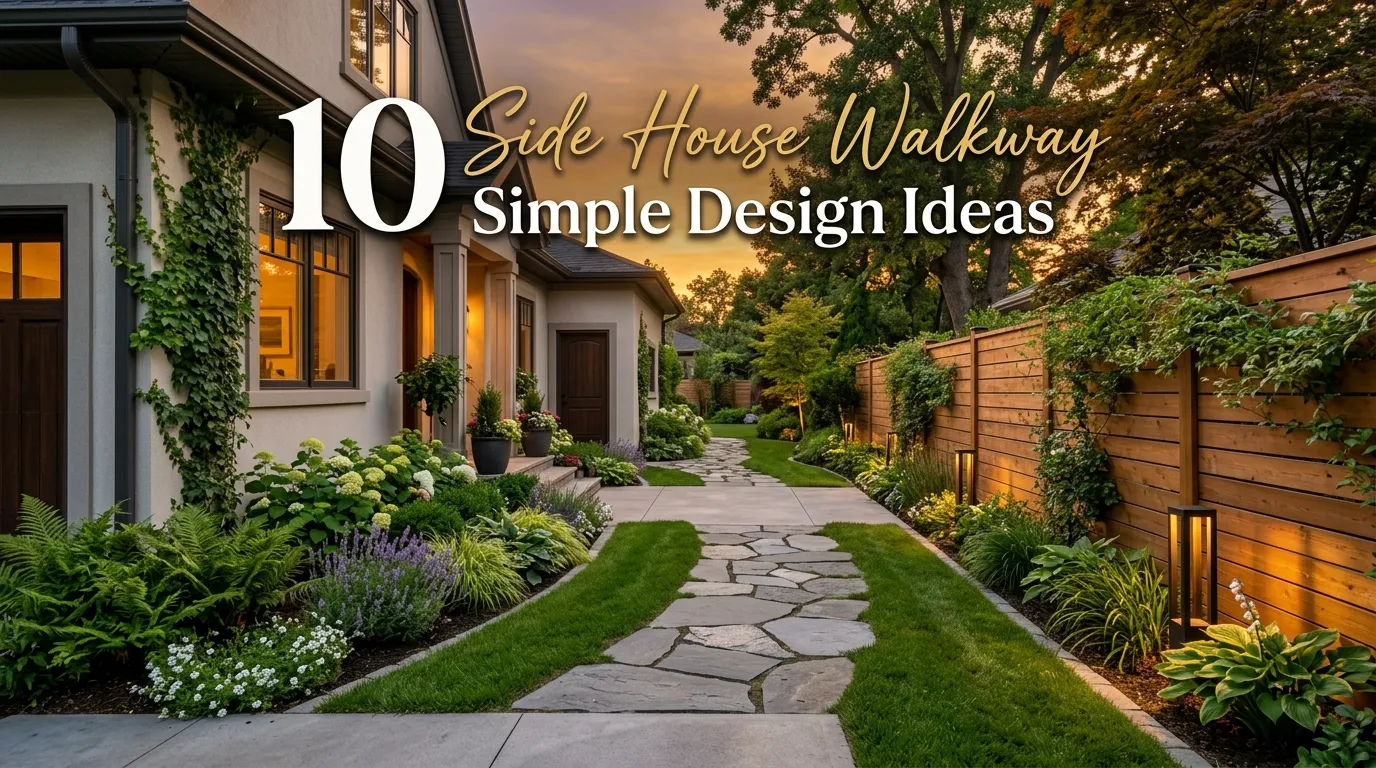
A side house walkway is often one of the most overlooked areas of a home’s exterior. While homeowners typically focus on front porches, landscaping, patios, and backyards, the pathway running alongside the house plays an important role in both functionality and curb appeal. A well-designed walkway improves accessibility, enhances drainage, creates visual continuity, and can even make a home feel larger and more polished.
One thing I’ve noticed is that many side yards become forgotten spaces filled with utility items, unused landscaping, or bare patches of ground. However, with a few thoughtful design choices, these narrow areas can become attractive extensions of the home’s overall landscape design. Even the simplest walkway can add structure and charm while making daily movement around the property more convenient.
The best side house walkway designs prioritize practicality while maintaining visual appeal. Clean lines, durable materials, low-maintenance landscaping, and thoughtful lighting can transform an ordinary passageway into an inviting feature. Whether your home style is modern, farmhouse, cottage, traditional, or contemporary, there are simple walkway ideas that can complement the architecture beautifully.
If you’re looking for inspiration, these walkway designs offer easy ways to improve the appearance and usability of your side yard without requiring an elaborate landscaping project. From gravel paths to stepping stones and modern pavers, these ideas create attractive pathways that feel intentional and welcoming.
Table of Contents
- Gravel Garden Path
Create a low-maintenance walkway with natural charm. - Modern Concrete Pavers
Achieve a clean and contemporary look. - Stepping Stone Trail
Add texture and visual interest. - Brick Border Walkway
Introduce timeless character and structure. - Mulch And Stone Blend
Combine affordability with attractive landscaping. - Narrow Cottage Path
Create charm in compact side yards. - Minimalist Linear Design
Highlight simplicity and clean lines. - Illuminated Evening Walkway
Enhance safety and nighttime appeal. - Decorative River Rock Path
Add texture and natural beauty. - Green Edge Walkway
Soften hardscape with lush landscaping.
1. Gravel Garden Path
Quick Benefits
- Affordable installation
- Excellent drainage
- Low maintenance
- Natural appearance
- Easy to customize
Why It Works
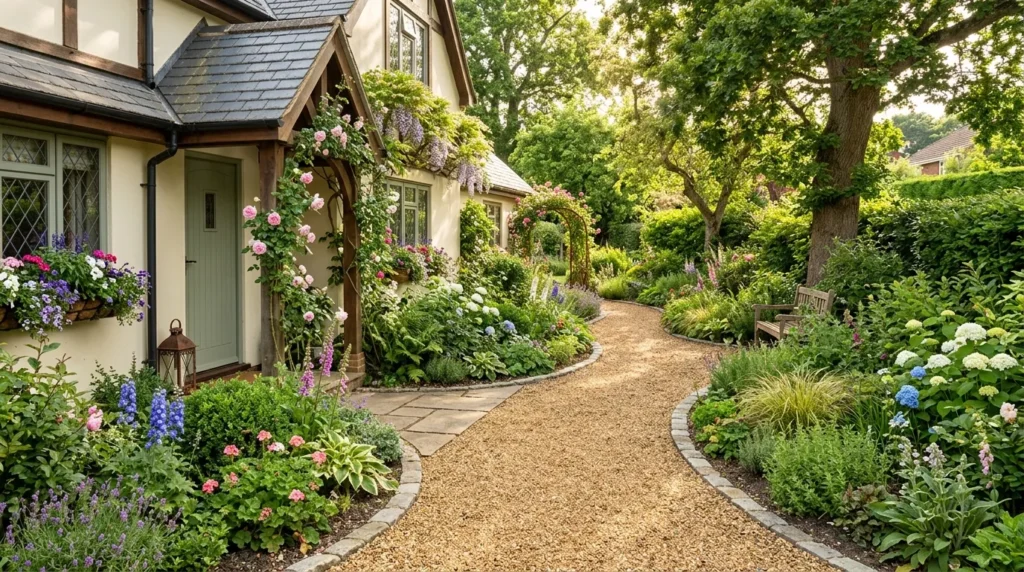
Gravel remains one of the most popular walkway materials because it is affordable, attractive, and highly practical. The texture creates a relaxed appearance that works especially well with cottage, farmhouse, and traditional homes. Gravel also helps manage water runoff, making it a useful solution for side yards where drainage may be a concern.
I’ve seen gravel pathways completely transform neglected side yards by introducing structure without requiring major construction. The natural look blends effortlessly with plants, fences, and garden beds.
How To Style It
Define the pathway with steel edging, brick borders, or stone edging to keep the gravel contained. Pair the walkway with low-maintenance shrubs, ornamental grasses, or flowering plants along the edges.
Choose neutral-colored gravel that complements your home’s exterior for a cohesive appearance.
2. Modern Concrete Pavers
Quick Benefits
- Clean contemporary appearance
- Durable and long-lasting
- Easy maintenance
- Supports modern landscaping
- Improves accessibility
Why It Works
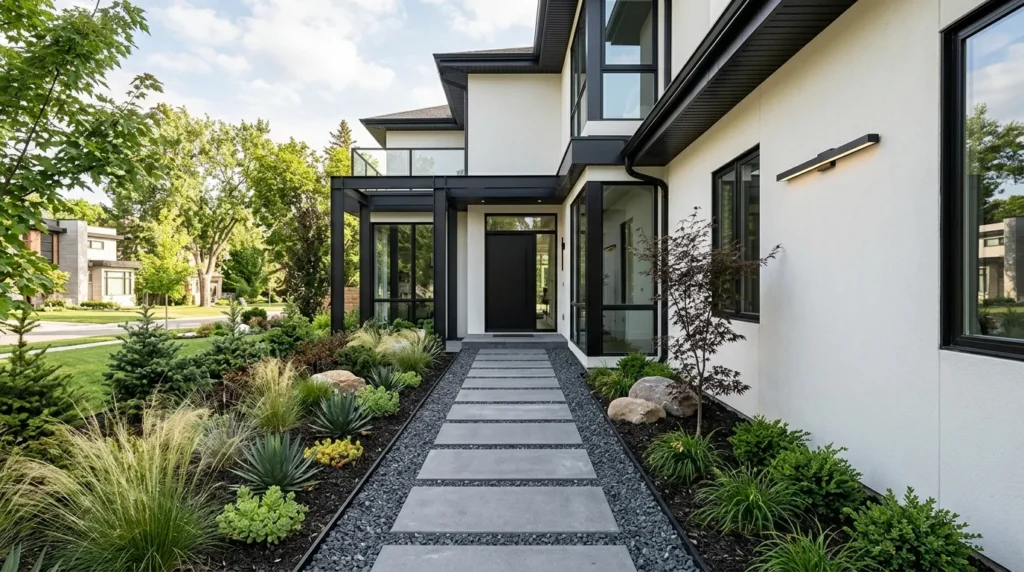
Concrete pavers create a sleek and organized look that works beautifully with modern and contemporary homes. Their clean geometry helps visually widen narrow side yards while providing a stable walking surface.
Many designers recommend large-format pavers because they create a sense of openness and reduce visual clutter. The simple design allows surrounding landscaping to become the focal point.
How To Style It
Install rectangular pavers with gravel or ground cover between them for a modern aesthetic. Pair with minimalist landscaping, black lighting fixtures, and simple plant selections.
Maintain consistent spacing for a professional appearance.
3. Stepping Stone Trail
Quick Benefits
- Adds visual interest
- Creates a casual atmosphere
- Supports natural landscaping
- Easy installation
- Works in many styles
Why It Works
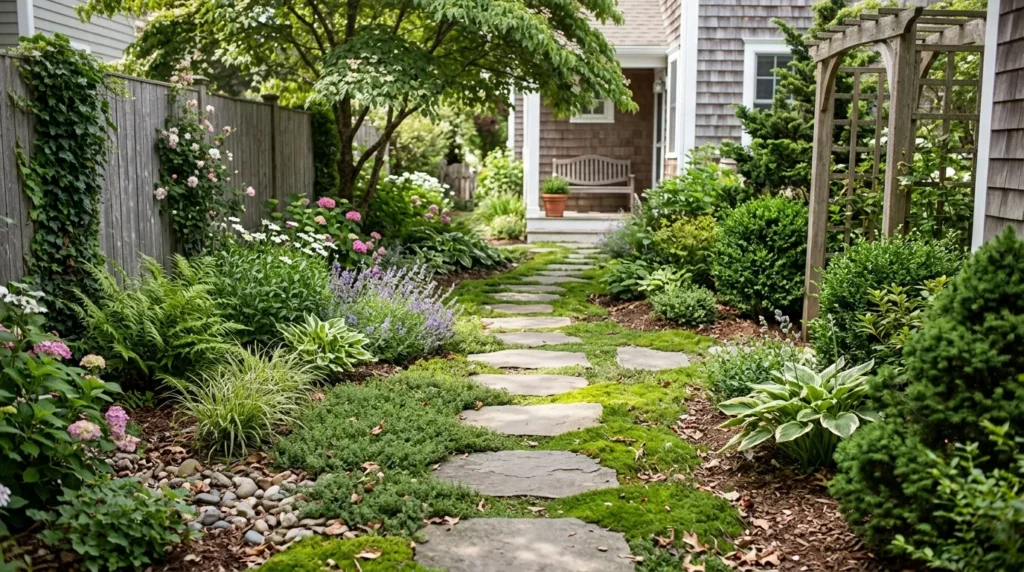
Stepping stones introduce charm and character while maintaining a relaxed aesthetic. Their spacing creates rhythm and movement, encouraging people to experience the landscape as they walk through it.
One thing that works especially well is combining stepping stones with ground covers or decorative gravel. This creates texture and softness while maintaining functionality.
How To Style It
Use natural stone or concrete stepping stones spaced evenly along the path. Fill surrounding areas with gravel, mulch, or creeping plants to create visual continuity.
Choose materials that complement other hardscape features on the property.
4. Brick Border Walkway
Quick Benefits
- Timeless appeal
- Adds structure
- Enhances curb appeal
- Supports traditional homes
- Creates visual definition
Why It Works
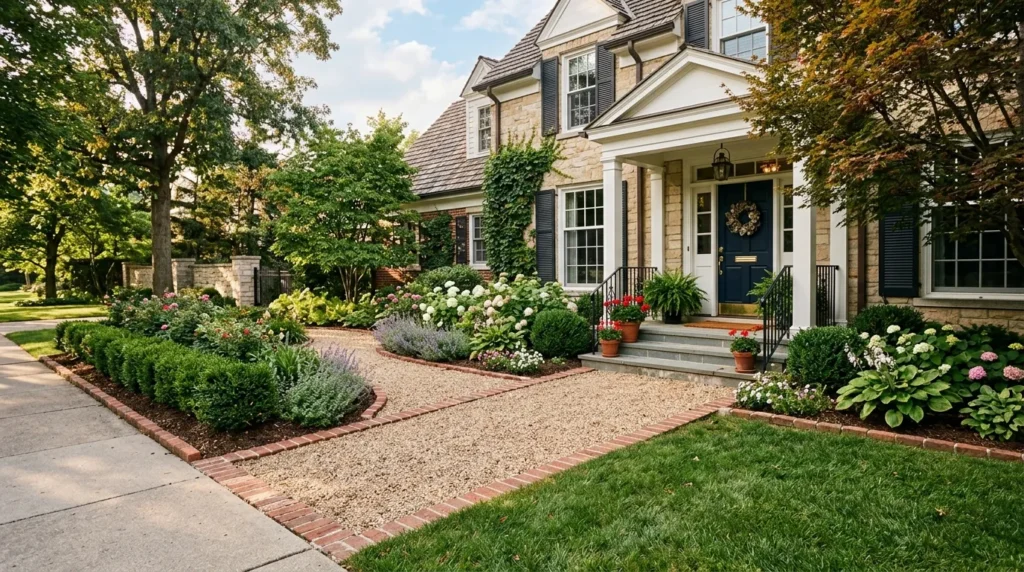
Brick borders introduce classic character while helping define walkway edges. The warm tones complement many architectural styles and create a polished appearance without feeling overly formal.
That’s why many homeowners choose brick accents even when using other walkway materials. The borders add structure while maintaining design flexibility.
How To Style It
Pair brick edging with gravel, concrete, or stone pathways. Coordinate brick colors with exterior materials for a cohesive look.
Maintain clean lines to prevent the walkway from appearing busy.
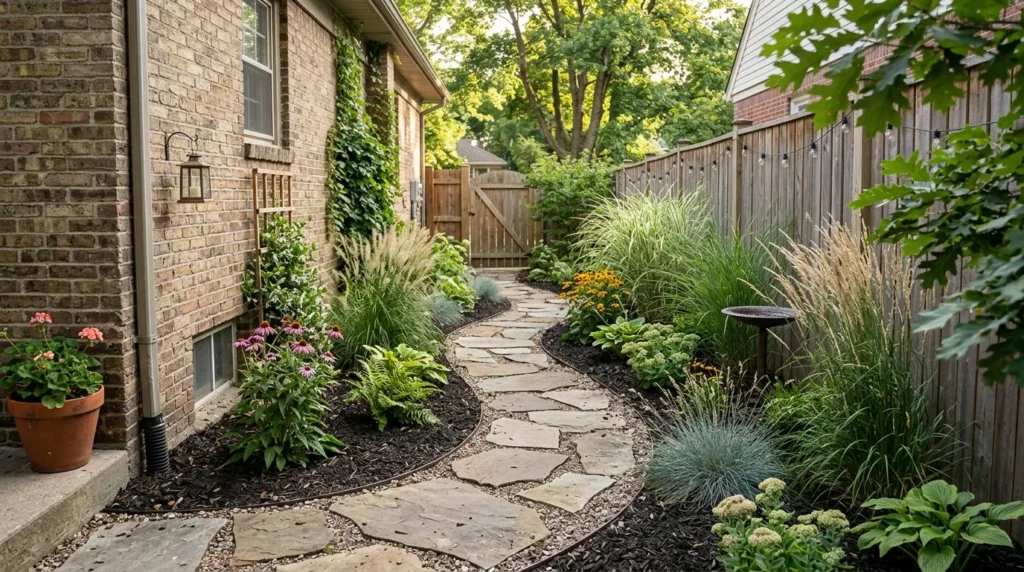
5. Mulch And Stone Blend
Quick Benefits
- Budget-friendly
- Natural appearance
- Easy installation
- Supports drainage
- Enhances landscaping
Why It Works
Combining mulch and stone creates a practical walkway solution that feels integrated into the landscape. The contrast between materials adds texture while keeping costs relatively low.
This approach works especially well in side yards where homeowners want attractive pathways without extensive hardscape installation.
How To Style It
Use decorative stone for the walking surface and mulch for surrounding planting areas. Add shrubs, perennials, or ornamental grasses to create a finished appearance.
Refresh mulch periodically to maintain a clean look.
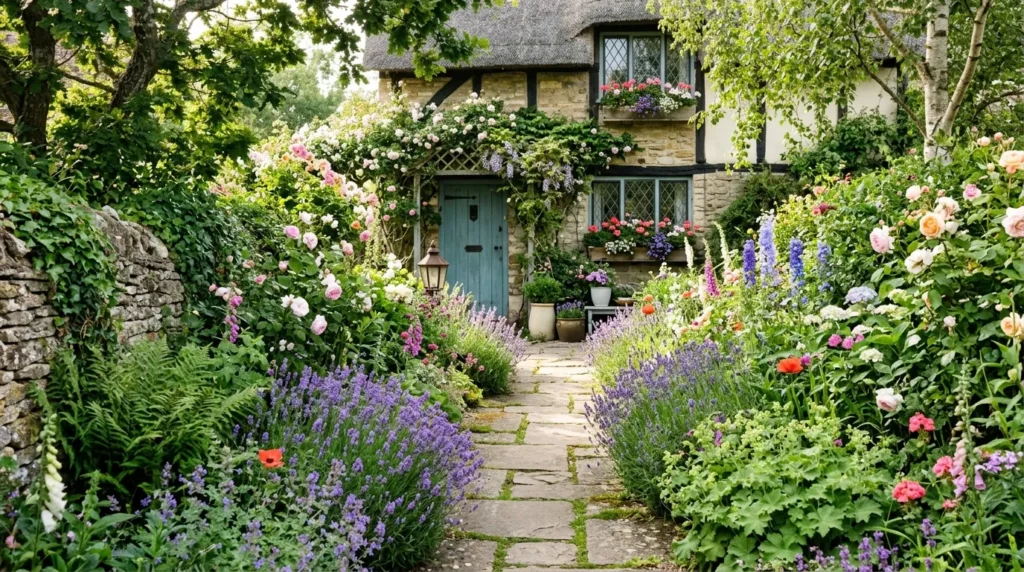
6. Narrow Cottage Path
Quick Benefits
- Maximizes compact spaces
- Adds charm
- Supports cottage gardens
- Creates visual softness
- Enhances personality
Why It Works
Narrow pathways lined with flowers and greenery create an inviting cottage-style atmosphere. Even the smallest side yard can feel charming when thoughtfully designed with layered plantings and simple materials.
I’ve noticed that cottage-inspired walkways often make homes feel more welcoming because they emphasize natural beauty and informal elegance.
How To Style It
Use brick, gravel, or stepping stones surrounded by flowering plants. Lavender, hydrangeas, and ornamental grasses work particularly well along cottage pathways.
Keep plant heights proportionate to the walkway width.
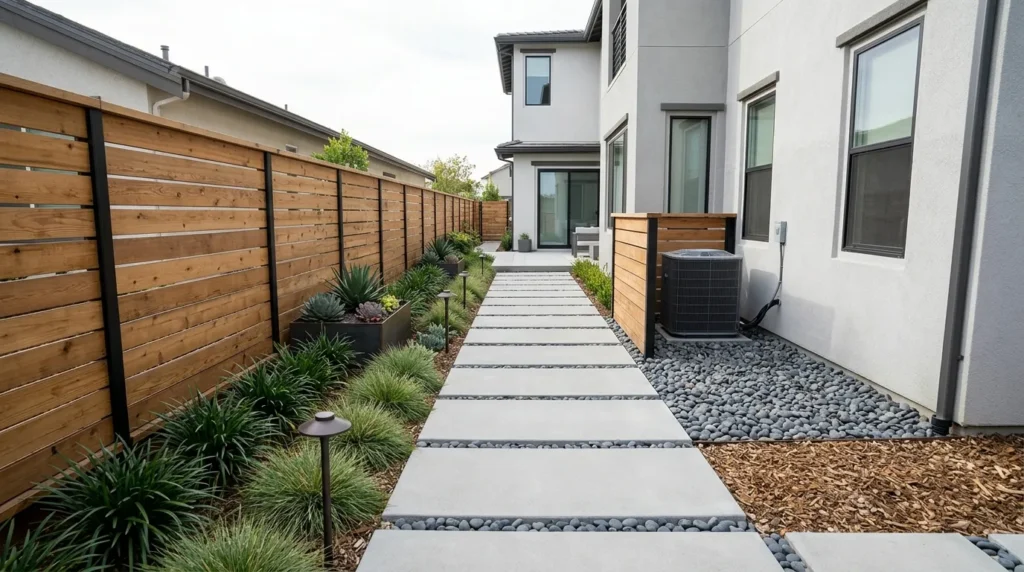
7. Minimalist Linear Design
Quick Benefits
- Clean aesthetic
- Easy maintenance
- Modern appeal
- Maximizes visual space
- Supports contemporary homes
Why It Works
Minimalist designs focus on simplicity and functionality. Straight lines, limited materials, and restrained landscaping create a sophisticated appearance that works particularly well in narrow side yards.
A mistake many homeowners make is overdecorating small spaces. Minimalist designs often feel larger and more polished.
How To Style It
Use large pavers, gravel, and structured plantings. Limit decorative elements and focus on quality materials.
Maintain consistency throughout the walkway for maximum impact.
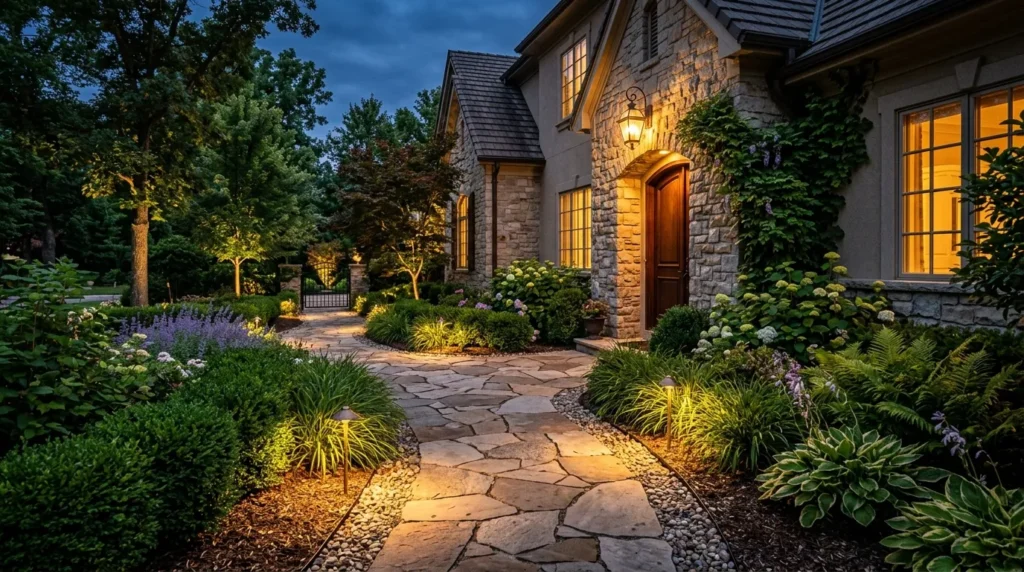
8. Illuminated Evening Walkway
Quick Benefits
- Improves safety
- Enhances curb appeal
- Creates ambiance
- Extends usability
- Highlights landscaping
Why It Works
Lighting transforms a walkway after sunset by improving visibility and creating atmosphere. Proper illumination also highlights architectural features and landscaping that might otherwise go unnoticed.
I’ve seen simple lighting upgrades dramatically improve the overall appearance of exterior spaces.
How To Style It
Install pathway lights, wall-mounted fixtures, or low-voltage LED lighting. Use warm light temperatures to create a welcoming atmosphere.
Focus lighting on key areas without overwhelming the space.
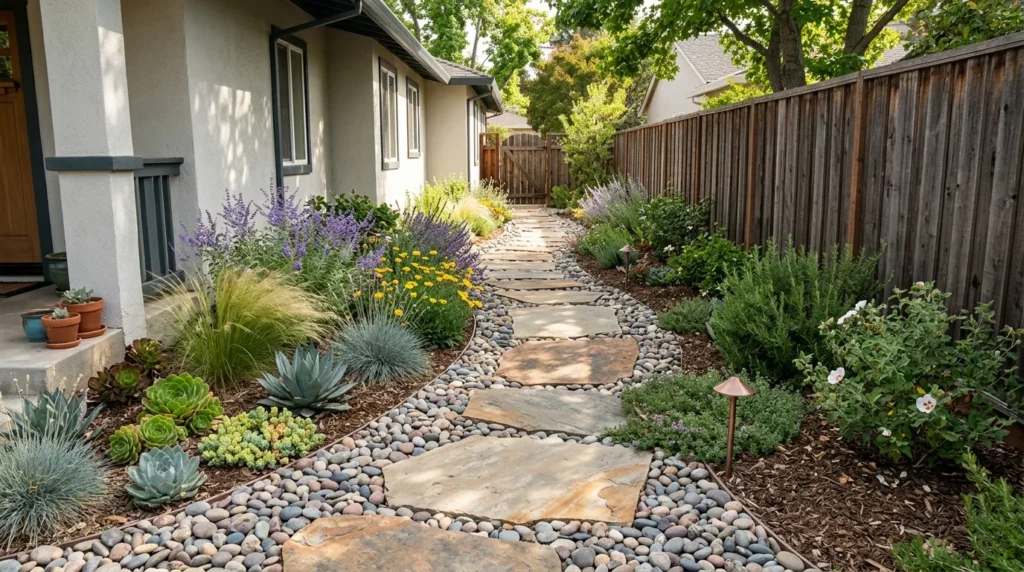
9. Decorative River Rock Path
Quick Benefits
- Natural beauty
- Excellent drainage
- Low maintenance
- Adds texture
- Complements many styles
Why It Works
River rocks introduce organic texture and visual interest to side yards. Their smooth surfaces and varied colors create a natural appearance that blends beautifully with surrounding landscaping.
Many designers use river rock because it feels timeless while requiring very little upkeep.
How To Style It
Combine river rocks with stepping stones or pavers to improve walkability. Add drought-tolerant plants and decorative edging for a finished look.
Choose rock colors that coordinate with the home’s exterior.
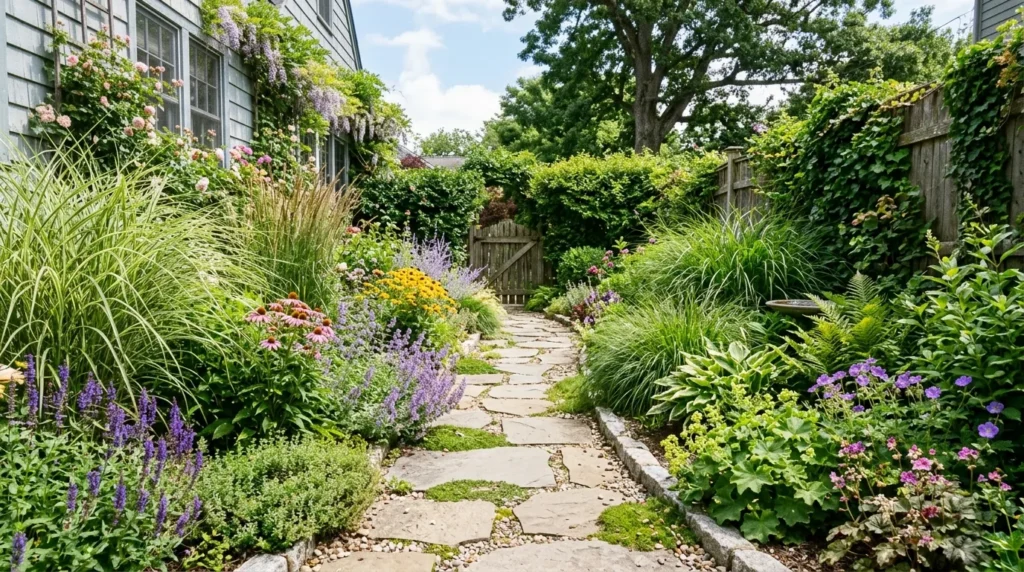
10. Green Edge Walkway
Quick Benefits
- Softens hardscape
- Enhances curb appeal
- Supports biodiversity
- Creates visual warmth
- Improves landscape design
Why It Works
Greenery along a walkway helps soften hard surfaces and creates a more inviting experience. Plants introduce color, texture, and seasonal interest while helping the path feel integrated into the overall landscape.
If you’re anything like me, a walkway lined with lush greenery immediately feels more welcoming than a bare pathway.
How To Style It
Use low-maintenance shrubs, ground covers, ornamental grasses, or flowering perennials. Keep plantings trimmed to maintain easy access.
Mix evergreen and seasonal plants for year-round appeal.
Frequently Asked Questions
What is the best material for a side house walkway?
The best material depends on budget, style, and maintenance preferences. Gravel, concrete pavers, brick, stone, and stepping stones are all popular options.
How wide should a side yard walkway be?
Most walkways are between 3 and 4 feet wide, providing comfortable access while fitting within typical side yard dimensions.
Do side yard walkways add value?
Yes. Attractive and functional pathways improve curb appeal, accessibility, and overall landscape design, which can positively impact perceived home value.
What is the lowest maintenance walkway option?
Concrete pavers and decorative gravel are among the easiest materials to maintain while still providing attractive results.
Should I add lighting to a side walkway?
Lighting improves safety and enhances nighttime appearance, making it one of the most worthwhile upgrades for side yard pathways.
What plants work best along walkways?
Ornamental grasses, shrubs, lavender, hostas, ground covers, and drought-tolerant perennials are all excellent options depending on climate and sunlight conditions.
Conclusion
A side house walkway may seem like a small feature, but it can have a significant impact on both functionality and curb appeal. By choosing simple materials, thoughtful landscaping, and practical lighting, homeowners can transform an overlooked side yard into an attractive and useful part of the property.
Whether you prefer modern concrete pavers, rustic gravel paths, charming cottage walkways, or minimalist designs, the key is creating a pathway that complements your home’s architecture and supports daily use. Small improvements often produce surprisingly dramatic results.
Start with one idea that fits your style and budget. Over time, these simple upgrades can help create a side yard that feels intentional, welcoming, and beautifully integrated into the rest of your landscape.
Related Articles
- Small Front Yard Landscaping Ideas
- Modern Garden Pathway Designs
- Cottage Garden Border Ideas
- Backyard Walkway Inspiration
- Front Porch Curb Appeal Ideas