
11 Decorative Living Room Pillows: Modern Cozy Ideas
Decorative pillows are one of the easiest ways to make a living room feel more finished, comfortable, and personal without changing the major furniture pieces. A well-chosen pillow arrangement can soften a modern sofa, add warmth to a neutral room, introduce subtle pattern, or make a large sectional feel much more inviting.
The trick is knowing how to make pillows look intentional rather than randomly scattered across the couch. In my experience, the most comfortable-looking arrangements usually combine different sizes, textures, and shapes while keeping the color palette connected to the rest of the room.
Modern cozy style is especially forgiving because it allows you to mix clean-lined furniture with tactile fabrics. Think linen, boucle, cotton, velvet, woven materials, chunky knits, subtle stripes, and soft neutral patterns. These textures add depth without making the room feel visually busy.
You also don’t need to replace your entire pillow collection every season. A few well-selected covers can completely change the mood of a room. Warm taupe and cream can create a relaxed autumn feeling, while muted sage and ivory can make the same sofa feel fresh and organic.
Another important consideration is scale. Tiny pillows can disappear against a large sectional, while oversized cushions can overwhelm a petite loveseat. The best arrangements usually use a combination of larger foundation pillows and smaller accent pillows layered toward the front.
These ideas are designed for real American living rooms, from compact apartments to spacious family spaces. Whether your home leans modern, organic, farmhouse, minimalist, or simply cozy, you’ll find practical ways to create a polished pillow arrangement that still feels comfortable enough for everyday life.
Table of Contents
1. Neutral Layered Pillows
Create a sophisticated arrangement using creams, beiges, and soft textured fabrics.
2. Boucle Texture Mix
Combine plush boucle with smoother fabrics for a warm modern look.
3. Earthy Accent Pillows
Bring natural warmth into the living room with clay, olive, camel, and beige tones.
4. Oversized Lumbar Pillows
Use elongated pillows to create a relaxed and contemporary sofa arrangement.
5. Modern Striped Pillows
Add subtle stripes for structure without overwhelming a neutral room.
6. Cozy Knit Pillows
Introduce chunky textures for a softer, more inviting living room.
7. Sage Green Accents
Use muted green pillows to create a calm connection with nature.
8. Velvet Statement Pillows
Add one or two rich velvet accents for depth and understated luxury.
9. Organic Pattern Mix
Combine subtle botanical and abstract patterns with solid neutral pillows.
10. Monochromatic Pillow Stack
Create a polished look by layering different shades of the same color family.
11. Collected Cozy Mix
Blend colors, patterns, and textures for a relaxed living room that feels personal.
1. Neutral Layered Pillows
Quick Benefits
- Works with almost any sofa color
- Creates a timeless appearance
- Makes modern furniture feel softer
- Easy to update seasonally
- Adds depth without visual clutter
Why It Works
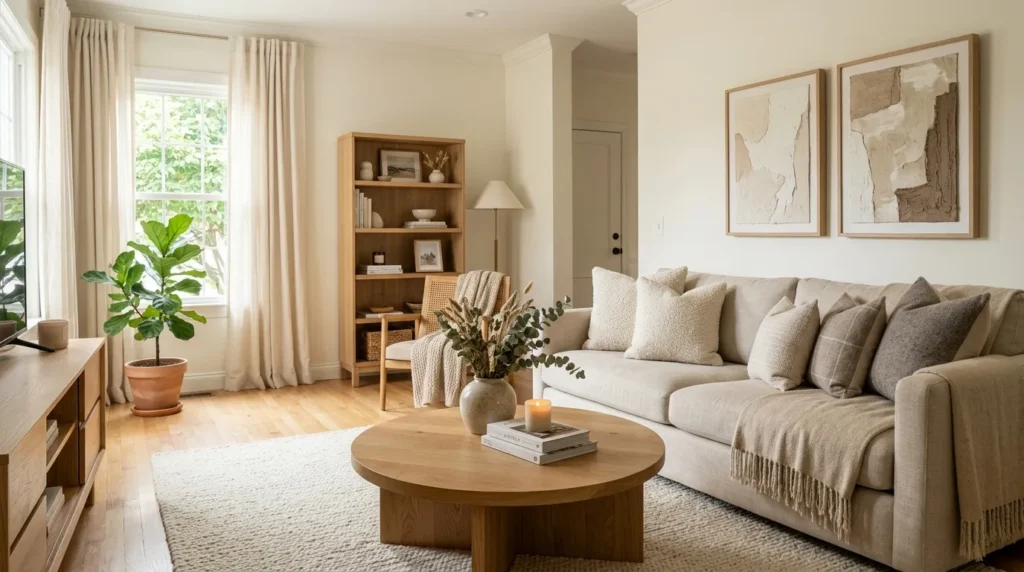
Neutral pillows are one of the most reliable ways to create a modern cozy living room because they add texture without introducing strong color competition.
Instead of using five pillows in exactly the same cream fabric, combine several related shades and materials. Ivory, oatmeal, beige, taupe, and warm gray can work together beautifully when their textures are different.
The result feels sophisticated but not overly formal. It also gives you flexibility when decorating the rest of the room. A neutral pillow arrangement can work alongside wood furniture, black accents, greenery, brass details, or colorful artwork.
The important thing is variation. A room filled with flat, identical fabrics can feel one-dimensional even when the colors are beautiful.
How To Style It
Start with two larger square pillows at the back of the sofa. Choose a warm ivory or oatmeal fabric with visible texture.
Layer medium-sized pillows in beige or taupe in front.
Finish with one smaller lumbar pillow in a woven or subtly patterned fabric.
For a sectional, repeat the same palette across both sides rather than placing every pillow in one corner.
Choose linen, cotton, boucle, wool-look, or woven covers for texture.
Keep the inserts full enough that the pillows look substantial but not so firm that they become uncomfortable.
2. Boucle Texture Mix
Quick Benefits
- Adds softness
- Creates a contemporary look
- Works beautifully with neutral furniture
- Makes the sofa feel inviting
- Adds tactile interest
Why It Works
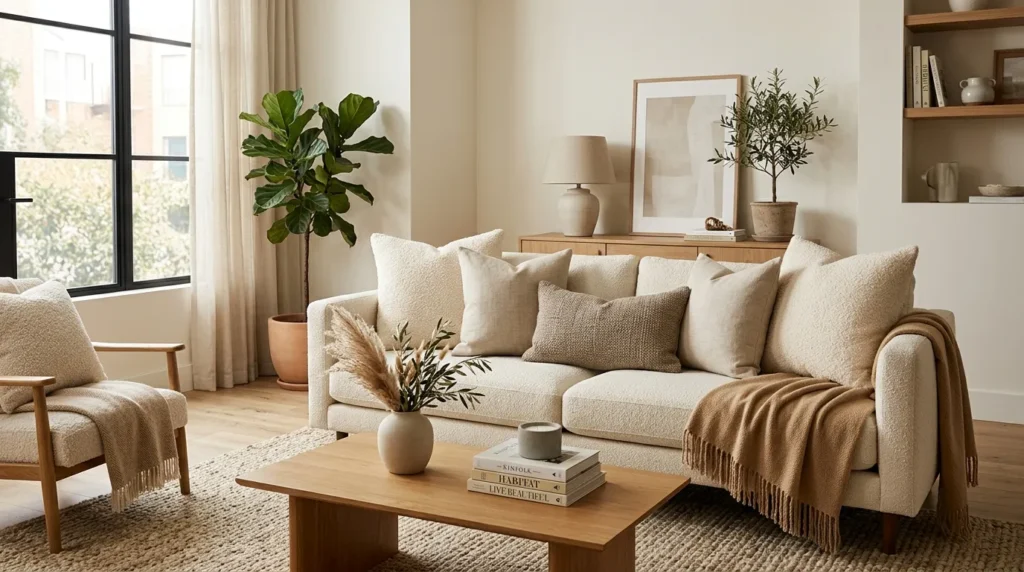
Boucle has become popular in modern interiors because its nubby texture immediately adds warmth to clean-lined furniture.
The secret to using it well is contrast. If every pillow and piece of furniture has the same plush texture, the room can start to feel heavy. Pair boucle with linen, cotton, smooth velvet, or woven fabrics to create balance.
This combination is especially effective on modern sofas with simple silhouettes. The furniture provides structure while the pillows provide softness.
A few textured pieces can make a minimalist room feel much more comfortable without adding unnecessary decoration.
How To Style It
Use one or two boucle pillows as the primary texture rather than covering the entire sofa in them.
Pair a creamy boucle pillow with a taupe linen pillow and a subtle woven lumbar.
If the sofa is white or light beige, introduce camel or warm gray for gentle contrast.
For darker sofas, ivory boucle can brighten the arrangement.
Keep the shapes simple. Square and lumbar pillows are enough.
Avoid excessive fringe or decorative trim if you want a clean modern appearance.
3. Earthy Accent Pillows
Quick Benefits
- Adds warmth
- Complements natural materials
- Works with neutral interiors
- Creates an organic feeling
- Makes modern spaces feel less sterile
Why It Works
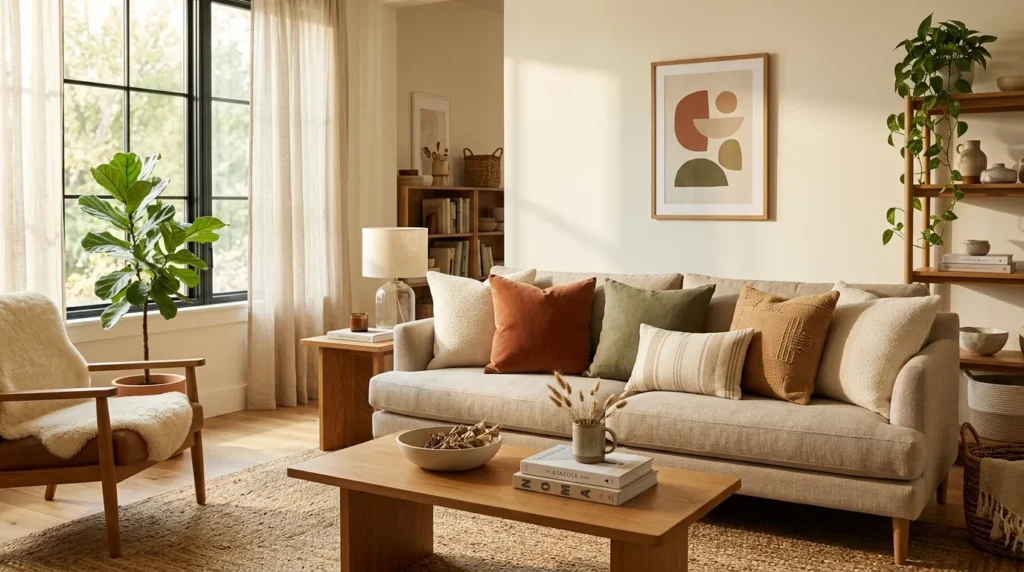
Earth tones can make a modern living room feel grounded and welcoming. Colors such as terracotta, clay, olive, camel, warm brown, sand, and muted rust work particularly well with wood furniture and neutral upholstery.
You don’t need every pillow to be colorful. One or two earthy accents are often enough to change the overall mood.
The strongest combinations usually connect the pillow colors to something already in the room. A rust pillow can echo a piece of artwork, while olive can repeat the color of nearby plants.
This creates visual continuity and makes the pillows look like part of the design rather than an afterthought.
How To Style It
Start with neutral foundation pillows in cream or beige.
Add one earthy accent pillow in terracotta, camel, olive, or muted rust.
Balance it with a natural woven pillow or subtle stripe.
Repeat the accent color somewhere else in the room through artwork, a rug, a throw, or decorative object.
Use natural fabrics whenever possible.
For a modern look, avoid combining too many saturated earth tones at once. One dominant accent and two supporting neutrals are usually enough.
4. Oversized Lumbar Pillows
Quick Benefits
- Creates a relaxed silhouette
- Works well on deep sofas
- Adds comfortable back support
- Looks contemporary
- Reduces the need for many pillows
Why It Works
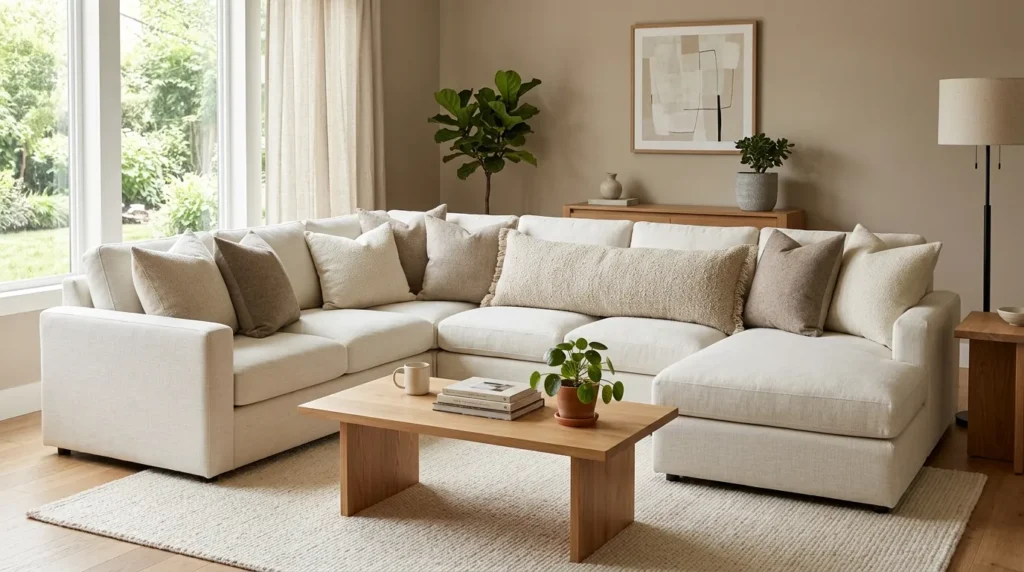
Oversized lumbar pillows are particularly useful when you want a cozy sofa without the clutter of a dozen small cushions.
Their elongated shape creates visual contrast against square pillows while providing practical back support. This makes them a strong choice for living rooms where comfort matters as much as appearance.
They also work beautifully with modern furniture because their long horizontal shape reinforces clean lines.
A single substantial lumbar pillow can sometimes have more impact than several small decorative cushions.
How To Style It
Place larger square pillows toward the back of the sofa.
Add one oversized lumbar pillow in front, centered or slightly offset depending on the arrangement.
Choose a solid fabric if your other pillows contain patterns.
If the sofa is plain, a subtle stripe or geometric weave can provide visual interest.
Use linen, cotton canvas, boucle, or woven fabric depending on the mood.
For sectionals, consider one lumbar pillow per seating zone rather than placing all decorative pillows in one cluster.
5. Modern Striped Pillows
Quick Benefits
- Adds visual structure
- Works with neutral interiors
- Feels timeless
- Creates subtle pattern
- Pairs well with solid pillows
Why It Works
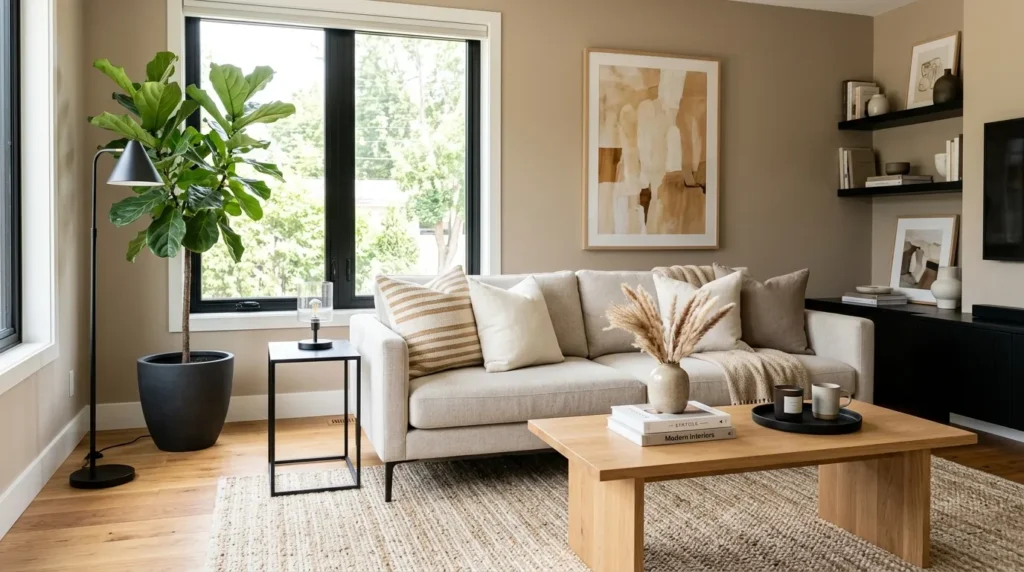
Stripes are one of the easiest patterns to use in a modern living room because they add movement without being visually complicated.
A thin black-and-cream stripe can create a contemporary graphic effect, while beige-and-ivory stripes feel softer and more organic.
The scale of the stripe matters. Wide stripes make a stronger statement, while narrow stripes provide a quieter layer.
Stripes also help connect different pillow shapes because the directional pattern gives the arrangement a clear visual rhythm.
How To Style It
Choose one striped pillow as the main patterned accent.
Pair it with solid pillows in colors pulled directly from the stripe.
For a warm neutral sofa, try ivory and camel stripes.
For a cooler gray sofa, consider soft gray and cream.
Mix the stripe with one textured pillow such as boucle or woven cotton.
Avoid adding multiple unrelated striped patterns unless they clearly share the same color palette.
A slightly imperfect woven stripe can be especially effective in an organic-modern room.
6. Cozy Knit Pillows
Quick Benefits
- Adds warmth
- Creates a casual atmosphere
- Works well in family rooms
- Introduces tactile texture
- Perfect for cooler seasons
Why It Works
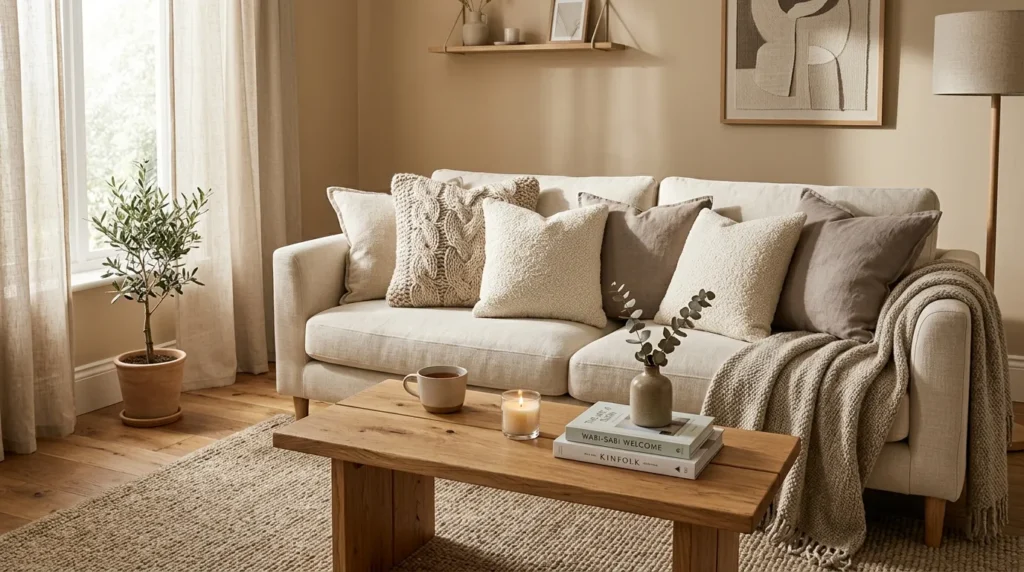
Knit pillows make a living room feel instantly more relaxed because their texture suggests comfort.
Chunky knits are especially effective during fall and winter, while lighter woven cotton textures can work year-round.
They are also useful for balancing smooth surfaces. If your sofa, coffee table, and flooring all have relatively clean finishes, a knitted pillow introduces the tactile element the room may be missing.
The goal is to create texture without making the arrangement look overly rustic.
How To Style It
Pair one chunky knit pillow with smooth linen and soft cotton.
Cream, oatmeal, taupe, and warm gray are versatile choices.
For seasonal warmth, introduce a muted rust, olive, or camel knit.
Use the knit texture as one layer rather than making every pillow heavily textured.
Add a matching or complementary throw blanket across one arm of the sofa.
Keep the rest of the room relatively simple so the tactile materials remain noticeable.
7. Sage Green Accents
Quick Benefits
- Creates a calming atmosphere
- Connects the room to nature
- Works with neutral sofas
- Feels modern and timeless
- Pairs beautifully with wood
Why It Works
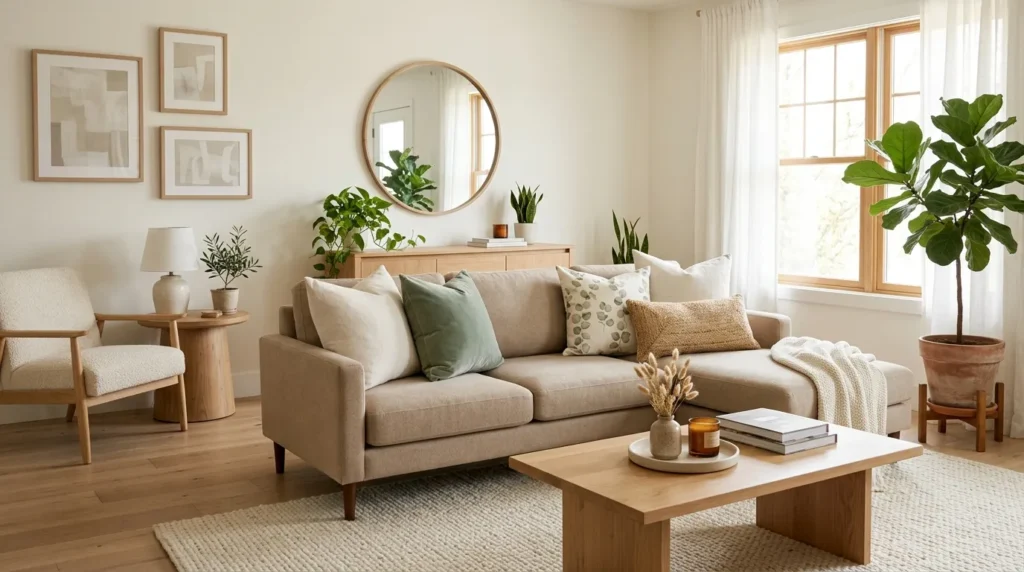
Sage green is particularly effective in modern cozy interiors because it adds color without feeling overly bright.
The muted quality allows it to work alongside cream, beige, warm gray, natural wood, black accents, and brass.
It also creates a visual connection with greenery, which can make the entire room feel more organic.
A small amount of sage can be enough. You don’t need to turn the sofa into a green statement piece.
How To Style It
Begin with cream or beige foundation pillows.
Add one sage green pillow in linen, cotton, or woven fabric.
Balance it with a warm neutral pillow or subtle botanical pattern.
Repeat sage somewhere else in the room through artwork, a plant pot, blanket, or small decorative object.
For a stronger modern look, combine sage with charcoal accents.
For a softer organic style, pair it with light oak, ivory, and warm beige.
8. Velvet Statement Pillows
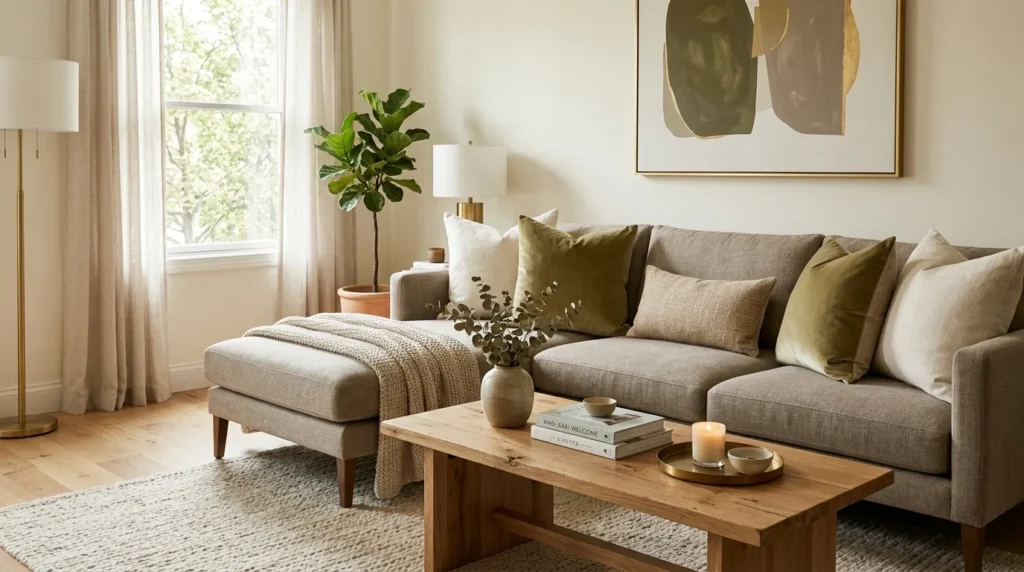
Quick Benefits
- Adds depth
- Creates subtle luxury
- Reflects light beautifully
- Works with modern furniture
- Makes simple sofas feel richer
Why It Works
Velvet introduces a different kind of texture because its surface changes subtly as light moves across it.
One velvet pillow can give a neutral sofa a more sophisticated appearance without making the room feel formal.
The key is restraint. Too much velvet can make a casual living room feel overly dressed. One or two accents are usually enough.
Choose muted colors such as olive, camel, dusty rose, navy, chocolate, or warm gray if you want a contemporary appearance.
How To Style It
Use velvet as the accent layer rather than the foundation.
Pair a muted velvet pillow with linen, boucle, or woven pillows.
Choose a color that already appears somewhere in the room.
For example, an olive velvet pillow can echo plants, while a dusty rose pillow can connect to artwork.
Avoid combining multiple intense jewel tones unless your room is intentionally dramatic.
A single velvet lumbar can also work beautifully on a deep modern sofa.
9. Organic Pattern Mix
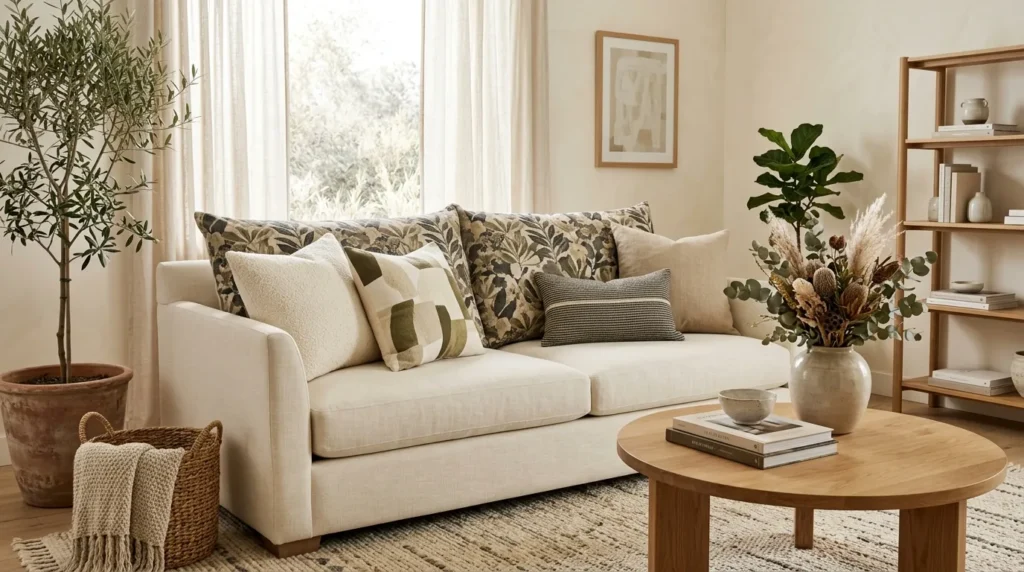
Quick Benefits
- Adds personality
- Creates visual interest
- Works with natural decor
- Feels collected
- Prevents a neutral room from looking flat
Why It Works
A modern cozy room doesn’t have to be completely pattern-free. Organic patterns such as leaves, abstract lines, small botanical shapes, and imperfect geometric motifs can add personality while remaining sophisticated.
The trick is to control the color palette.
Instead of matching every pattern exactly, choose patterns that share two or three colors. This makes the arrangement feel coordinated even when the designs are different.
A small botanical print can sit beside a larger abstract pattern if both use similar earthy neutrals.
How To Style It
Choose one larger-scale pattern as the visual anchor.
Add a smaller organic pattern in front.
Balance both with one or two solid pillows.
Keep the colors muted: cream, beige, olive, charcoal, brown, rust, or soft blue.
Mix pattern scale rather than using three patterns of identical size.
If the sofa itself is patterned, simplify the pillows and let one subtle design provide the accent.
10. Monochromatic Pillow Stack
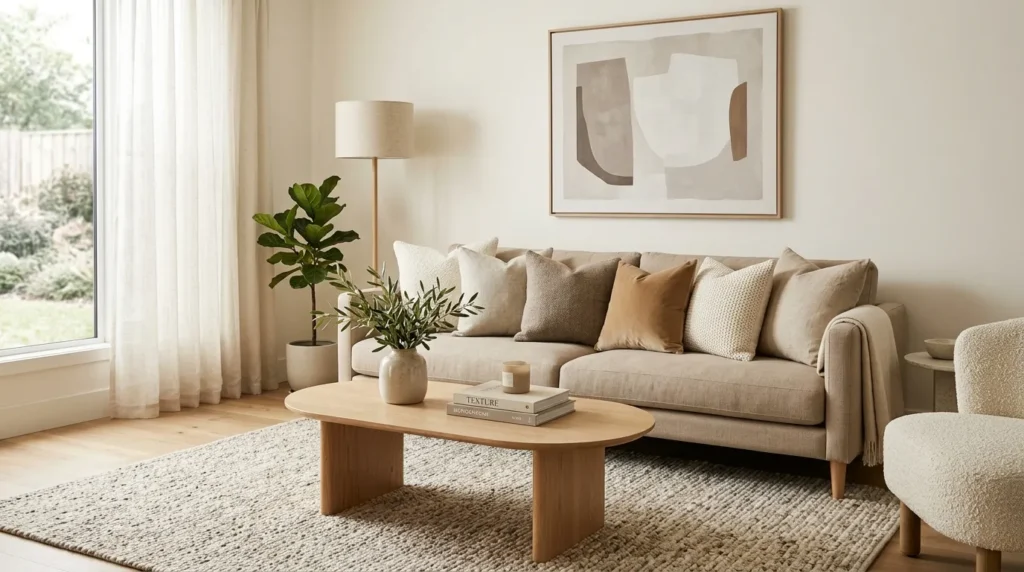
Quick Benefits
- Looks polished
- Creates visual calm
- Works in minimalist homes
- Makes texture more important
- Easy to coordinate
Why It Works
A monochromatic pillow arrangement uses several shades of one color family instead of introducing multiple contrasting colors.
This creates a sophisticated look while allowing texture and shape to provide the visual interest.
For example, a beige sofa could be styled with ivory, oatmeal, taupe, and warm camel. A gray sofa could use pearl, charcoal, soft gray, and stone.
The effect is particularly beautiful in modern interiors because the restrained palette reinforces clean architectural lines.
How To Style It
Choose one base color already present in the room.
Build a range of light, medium, and dark variations.
Use different textures to prevent the arrangement from looking flat.
Layer large squares behind medium squares and finish with a lumbar.
For a cream sofa, try ivory boucle, oatmeal linen, taupe woven fabric, and a camel accent.
For a charcoal sofa, combine light gray, stone, medium gray, and black.
Keep patterns minimal and let texture do most of the work.
11. Collected Cozy Mix
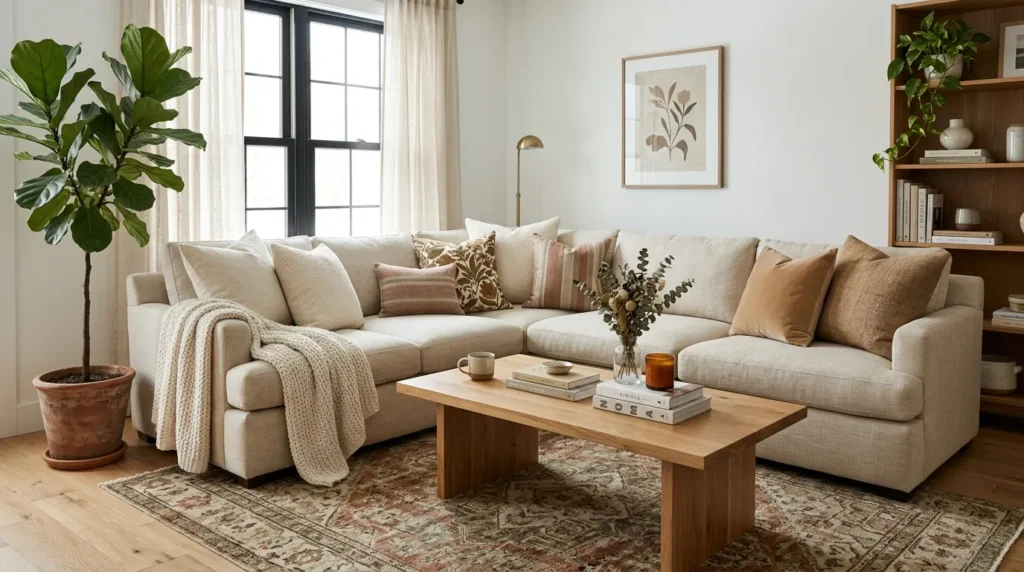
Quick Benefits
- Feels personal
- Works with eclectic interiors
- Allows more pattern
- Creates a relaxed atmosphere
- Makes the sofa look lived-in
Why It Works
Some of the most inviting living rooms don’t look perfectly coordinated. They look collected over time.
A relaxed pillow mix can combine linen, velvet, woven fabric, subtle stripes, organic patterns, and solid colors while still feeling intentional.
The secret is finding a common thread. That might be a color, material, pattern style, or overall warmth.
This approach works especially well for family rooms because it doesn’t require every pillow to remain perfectly arranged.
I’ve found that slightly imperfect layering often makes a room feel more comfortable and approachable than a perfectly symmetrical arrangement.
How To Style It
Begin with two large neutral pillows.
Add one textured pillow, one subtle patterned pillow, and one smaller accent.
Choose colors that repeat elsewhere in the room.
Mix square and lumbar shapes for a relaxed arrangement.
Don’t worry about making both ends of the sofa identical. A little asymmetry can make the room feel more natural.
Use washable or durable covers if the living room receives heavy daily use.
The final arrangement should look comfortable enough that someone can actually sit down and use it.
FAQ
How many decorative pillows should go on a living room sofa?
The ideal number depends on the size of the sofa and how much seating space you want to preserve. A standard sofa often looks balanced with three to five pillows, while a large sectional can handle more. The goal is to create layers without forcing people to move a pile of cushions every time they sit down.
How do you arrange pillows on a modern sofa?
Start with the largest pillows toward the back and layer smaller pillows toward the front. Mix square and lumbar shapes and vary the textures. Keep the color palette connected to the room. For a modern look, avoid making both sides overly symmetrical unless you prefer a very formal appearance.
What colors make a living room feel cozy?
Warm neutrals such as cream, oatmeal, beige, camel, taupe, warm gray, and soft brown are reliable choices. Muted shades of sage, terracotta, dusty rose, olive, and rust can add personality without making the room feel overwhelming. The best choice depends on the existing sofa, rug, walls, and wood tones.
Should living room pillows match the sofa?
They don’t need to match exactly. In fact, pillows that are slightly different from the sofa usually create more visual interest. Choose colors and textures that complement the upholstery while connecting to other elements in the room, such as the rug, artwork, curtains, or accent furniture.
How do you make throw pillows look expensive?
Focus on quality-looking texture, generous sizing, and coordinated colors. Linen, boucle, velvet, woven cotton, and substantial textured fabrics can make an arrangement feel more elevated. Avoid using too many tiny pillows or unrelated patterns. Full inserts also help decorative pillows maintain a polished shape.
How do you mix patterns on living room pillows?
Use different pattern scales and keep the colors connected. Start with one larger pattern, add a smaller pattern, then balance them with solid pillows. Stripes, botanical prints, abstract shapes, and subtle geometric designs can work together when they share a cohesive palette.
How often should decorative pillow covers be changed?
There is no need to change them frequently unless you enjoy seasonal decorating. Many homeowners simply rotate a few covers for fall, winter, spring, or summer. Neutral foundation pillows can remain year-round while smaller accent covers provide seasonal updates.
Conclusion
Decorative pillows may be small compared with a sofa or coffee table, but they can completely change the personality of a living room.
The easiest way to create a modern cozy arrangement is to think beyond color. Texture, scale, shape, pattern, and repetition all influence how the finished sofa looks and feels.
Start with a few larger foundation pillows, then layer in softer textures such as boucle, linen, cotton, velvet, or knit fabrics. Add one or two accent colors that already appear somewhere else in the room so the arrangement feels connected rather than random.
If your style is minimalist, try a monochromatic palette with different textures. If you prefer an organic look, combine sage, beige, warm wood, and botanical patterns. For a more collected room, mix subtle stripes, woven fabrics, and earthy accents.
Most importantly, don’t sacrifice comfort for styling. Your living room should still feel like a place where people can relax, watch a movie, read, or spend time together. Choose washable covers and practical fabrics when necessary, especially for busy family spaces.
You don’t need dozens of pillows to create an inviting sofa. Sometimes three carefully chosen cushions with beautiful texture can make a bigger difference than an overflowing collection.
Start with the colors and materials already in your room, add a little contrast, and let the arrangement evolve until it feels both polished and genuinely comfortable.