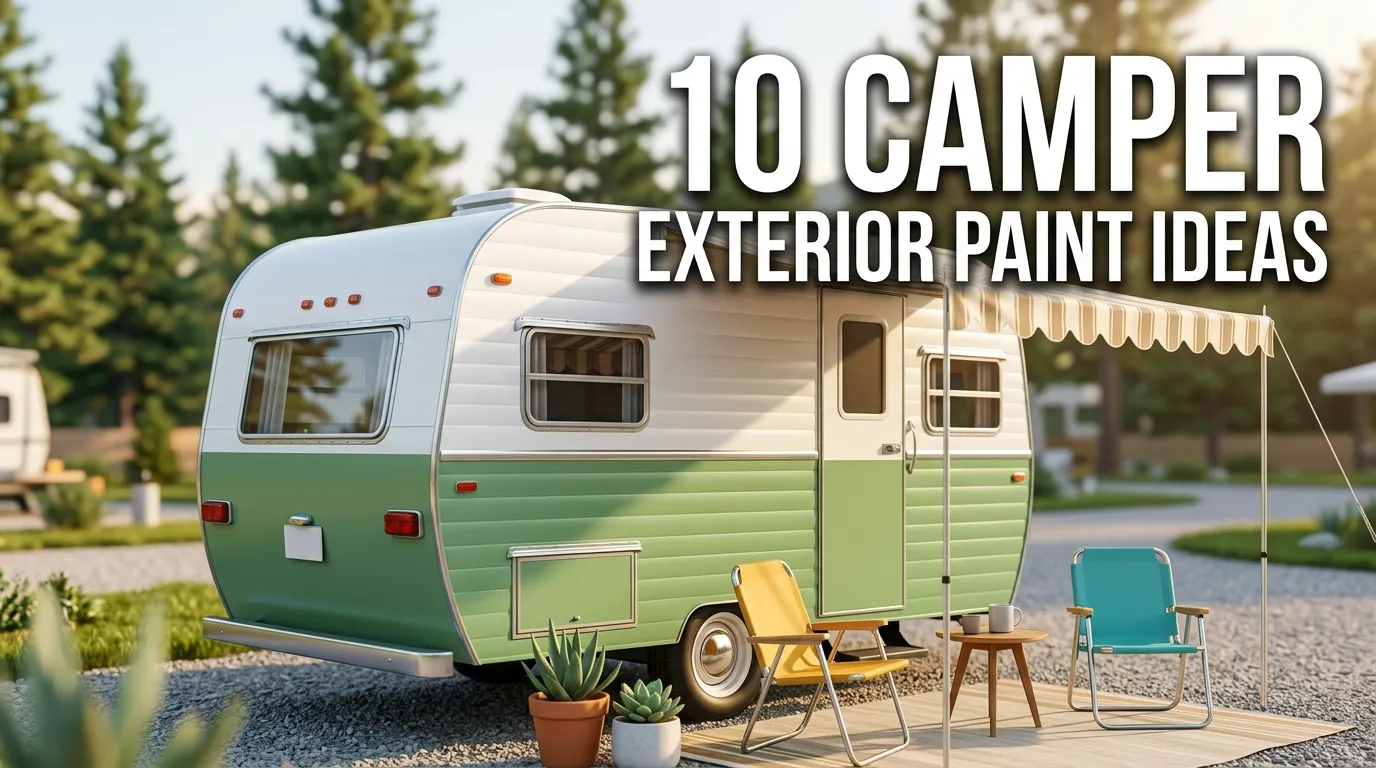
10 Camper Exterior Paint Ideas
The exterior of a camper has a surprisingly big influence on how the entire RV feels. A dated stripe, faded finish, or overly bright factory color can make an otherwise comfortable camper look older than it really is. On the other hand, the right exterior paint color can give a travel trailer a cleaner, more modern appearance and make it feel much more personal.
Choosing an RV exterior color isn’t quite the same as choosing paint for a bedroom or living room. The surface needs to handle outdoor exposure, changing temperatures, road dust, moisture, and regular cleaning. That means color matters, but preparation, product compatibility, and finish are equally important.
I’ve noticed that the most appealing camper exteriors tend to use relatively simple palettes. Soft neutrals, warm whites, muted greens, earthy taupes, and classic charcoal can create a polished appearance without making a compact RV feel visually overwhelming. You can also use contrasting trim to highlight windows, doors, storage compartments, and architectural lines.
If you’re considering updating an older travel trailer, a complete color change isn’t always necessary. Sometimes painting the main body while keeping trim lighter can produce a dramatic transformation. In other cases, a two-tone design can make a long camper appear more balanced and intentional.
The ideas below cover a range of styles, from modern neutrals and farmhouse-inspired combinations to earthy greens and classic white. Each option focuses on how the colors work together, where to place them, and how to create an exterior that looks attractive while remaining practical for life on the road.
Before beginning any project, verify that the coating system you choose is appropriate for your RV’s exterior material and intended use. Proper surface preparation and manufacturer instructions should always come first.
Table of Contents
- Warm White Exterior — Create a clean, timeless camper with a soft white body and subtle contrasting trim.
- Sage Green Body — Bring an earthy, nature-inspired feeling to the RV with a muted green exterior.
- Charcoal Gray Finish — Give an older camper a sophisticated modern appearance with deep gray tones.
- Greige Two-Tone — Combine gray and beige for a versatile neutral exterior with visual dimension.
- Cream and Black — Create a bold modern farmhouse-inspired look using warm cream and dark accents.
- Dusty Blue Exterior — Add a relaxed coastal feeling with muted blue and warm neutral details.
- Taupe Neutral Finish — Use earthy taupe to create a sophisticated exterior that blends beautifully outdoors.
- Olive Green Accent — Add personality through a restrained olive-green color block or accent section.
- Sand and White — Create a warm desert-inspired palette that feels natural on the road.
- Modern White and Gray — Refresh a traditional camper with a crisp two-tone combination that feels contemporary.
1. Warm White Exterior
Quick Benefits
- Creates a timeless appearance
- Reflects sunlight
- Works with many trim colors
- Makes older campers look cleaner
- Easy to coordinate with accessories
Why It Works
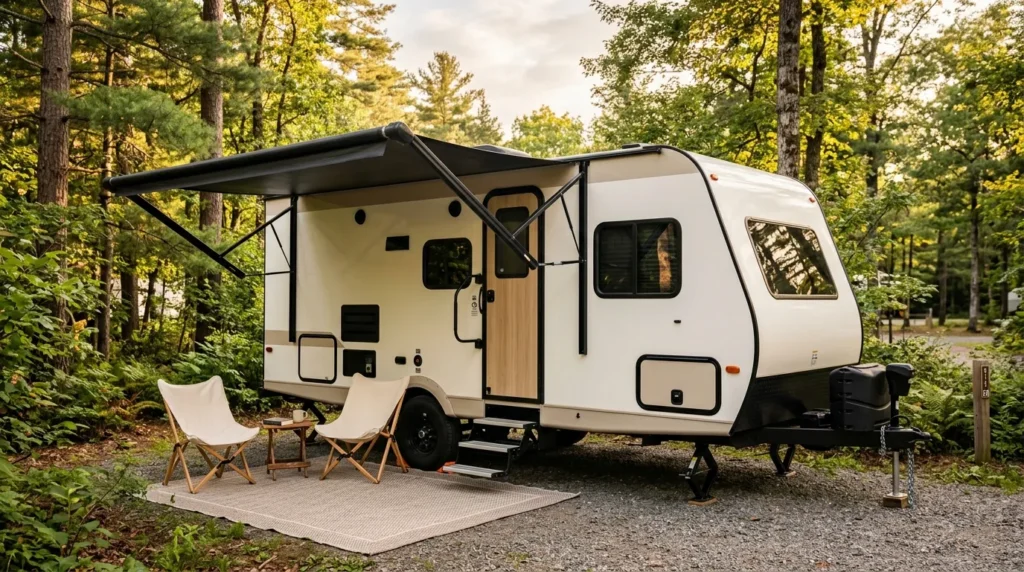
Warm white is one of the most versatile choices for a camper exterior because it can make the entire vehicle feel cleaner and more intentional without looking overly trendy. Unlike a stark, cool white, a warmer white can soften the appearance of an older RV and coordinate beautifully with beige, tan, wood-look, black, or gray accents. It also works naturally with the outdoor environment, whether your camper spends time at a wooded campground, beach destination, or desert campsite. In my experience, warm white is particularly useful when the existing RV has multiple architectural details because the lighter color allows those details to remain visible without creating too much visual contrast.
How To Style It
Use a warm white as the primary body color and reserve a slightly darker neutral for trim or lower panels. Black window frames or hardware can provide a crisp contemporary contrast, while warm gray creates a softer appearance. If the camper has existing decorative stripes, consider simplifying them rather than adding more colors. Coordinate the exterior with outdoor rugs, camp chairs, cushions, and an awning in beige, sage, charcoal, or muted blue. Before painting, thoroughly clean and prepare the exterior according to the coating manufacturer’s recommendations and confirm compatibility with the specific RV surface.
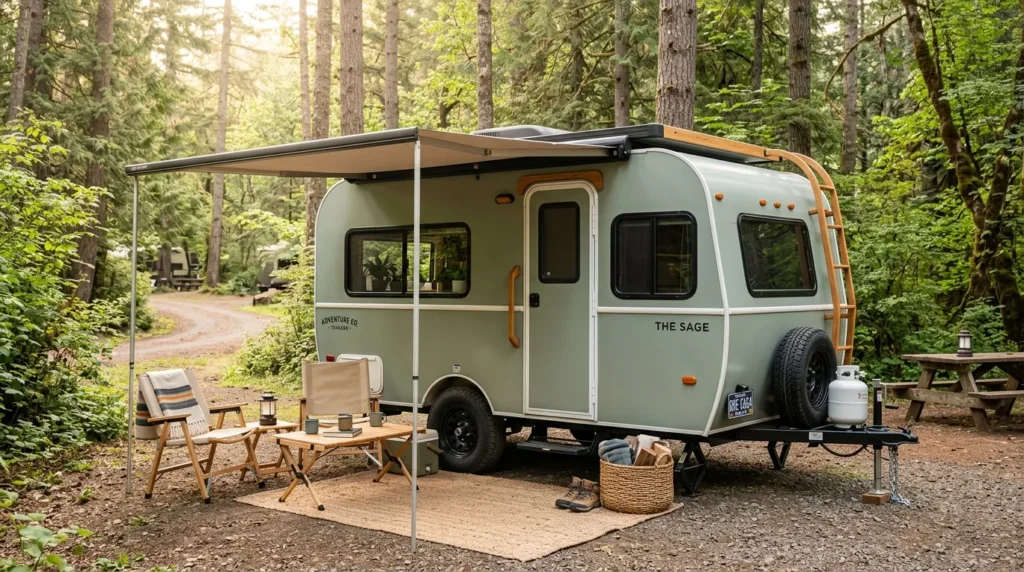
2. Sage Green Body
Quick Benefits
- Creates a natural appearance
- Works beautifully at campgrounds
- Feels current without being flashy
- Complements wood tones
- Adds personality to older campers
Why It Works
Sage green has become a popular interior decorating color because it feels calm and natural, and that same quality works beautifully on a camper exterior. A muted sage can visually connect the RV to trees, grass, mountains, and other outdoor surroundings without attempting to camouflage the vehicle. It also pairs naturally with cream, warm white, tan, and natural wood-look details. The key is choosing a subdued shade rather than an intensely saturated green. A dusty or gray-based sage tends to look more sophisticated and works across different seasons.
How To Style It
Consider sage green for the main body with warm-white trim around windows and doors. Another option is to keep most of the camper light and use sage on a lower panel or broad horizontal section. Add natural wood-look accessories, tan outdoor chairs, and a cream-colored awning for a relaxed camping aesthetic. If your RV already has green-tinted decorative graphics, choose a shade that coordinates rather than trying to match them exactly. Keep the remaining colors simple so the green remains the focal point.
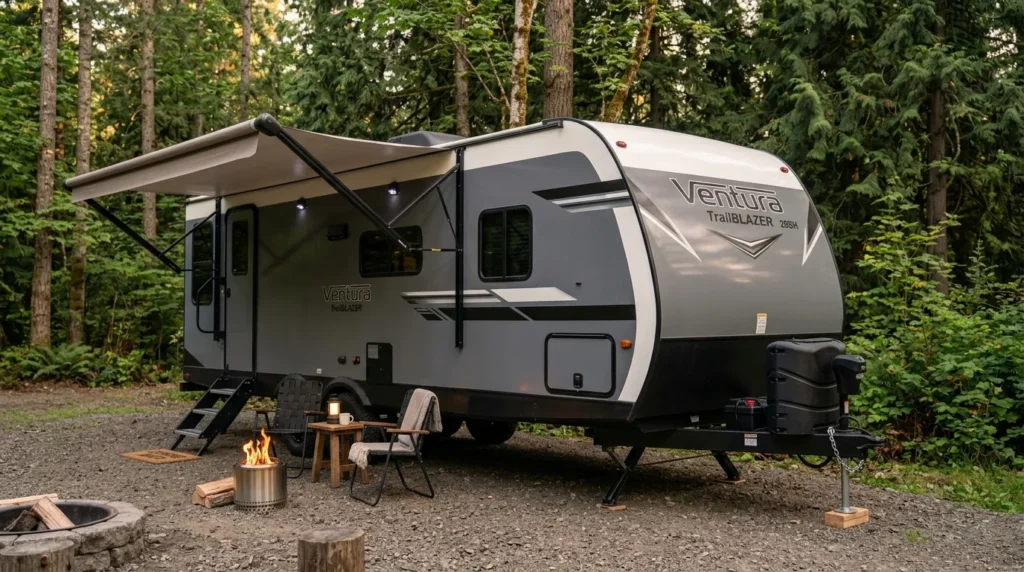
3. Charcoal Gray Finish
Quick Benefits
- Creates a contemporary appearance
- Works with black hardware
- Adds visual sophistication
- Hides some everyday dirt visually
- Complements light trim
Why It Works
Charcoal gray can give a dated camper a dramatically more contemporary appearance. It has enough depth to create contrast while remaining more versatile than pure black. When paired with lighter trim, charcoal can also emphasize the horizontal shape of a travel trailer and make the exterior feel more streamlined. This color works especially well with modern RV accessories, black window frames, brushed-metal hardware, and minimalist graphics. However, darker exterior colors can absorb more solar heat, so climate and manufacturer guidance should be considered before committing to a large dark-painted surface.
How To Style It
Use charcoal as either the main body color or as a lower accent section beneath a warm-white upper body. For a modern look, pair it with black hardware and minimal graphics. For something softer, combine charcoal with cream trim and natural wood-look details. Keep the awning and outdoor accessories relatively neutral. Beige, gray, ivory, and muted green can all work well. Before choosing a very dark finish, consider how much direct sun your camper receives and whether the product system is appropriate for the intended surface.
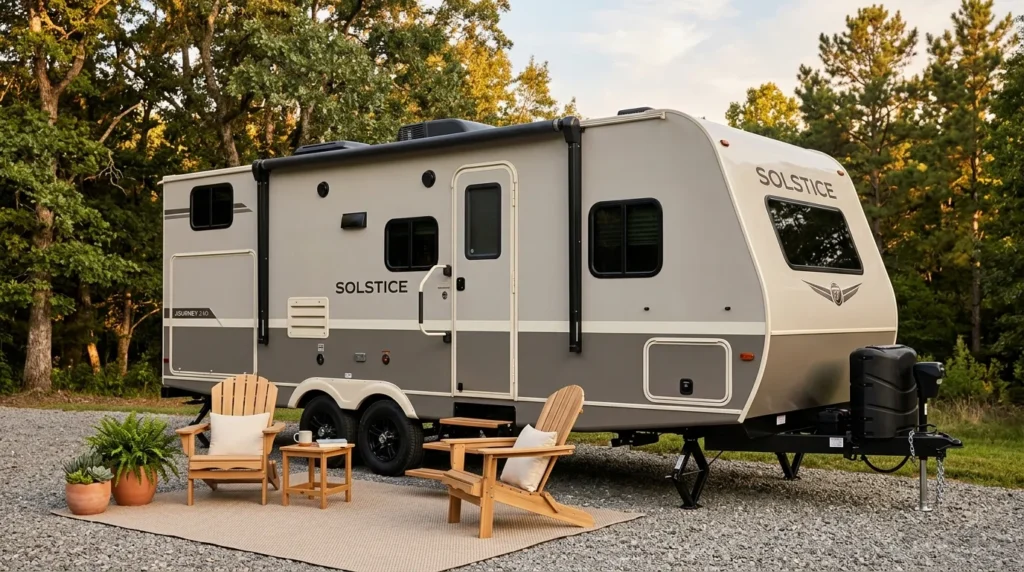
4. Greige Two-Tone
Quick Benefits
- Combines warm and cool neutrals
- Adds visual dimension
- Feels sophisticated
- Works with many RV styles
- Helps break up a long exterior
Why It Works
Greige combines the softness of beige with the sophistication of gray, making it an especially flexible color for an RV exterior. A two-tone greige design can also help divide a long camper visually, which may make the proportions feel more balanced. Rather than covering the entire exterior in one shade, use a lighter greige above and a slightly deeper taupe-gray below. The subtle contrast creates interest without looking busy. This is an excellent option if you want your camper to feel updated but don’t want an exterior color that immediately looks tied to one particular design trend.
How To Style It
Use the lighter shade across the upper portion of the camper and the deeper tone on the lower third or around selected architectural sections. Cream trim can soften the combination, while black accents make it more contemporary. Keep exterior graphics minimal. A neutral outdoor rug, beige chairs, and natural woven accessories can reinforce the palette at the campsite. If your RV already contains several decorative stripes, simplify the pattern where possible so the two paint colors remain the primary visual elements.
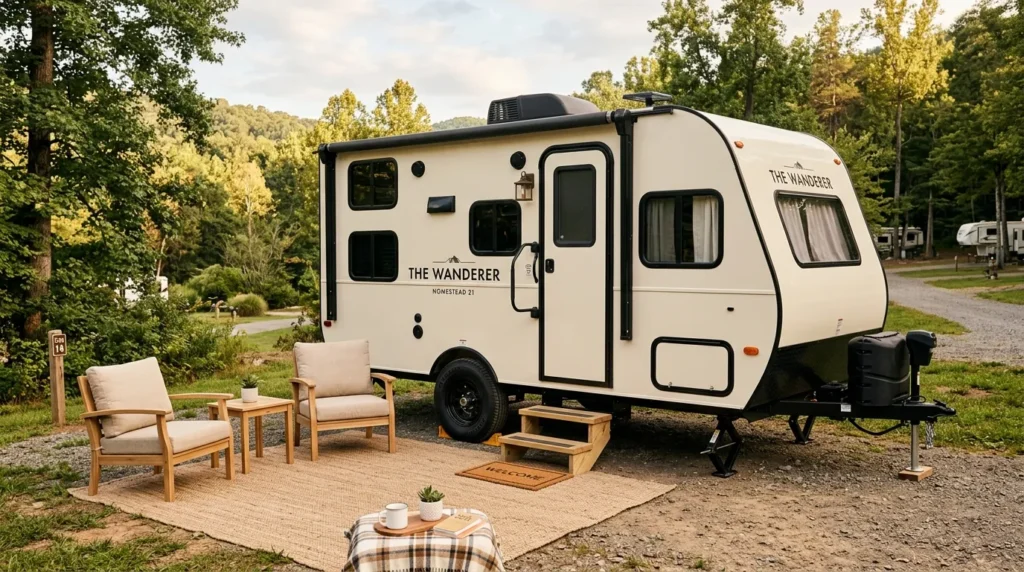
5. Cream and Black
Quick Benefits
- Creates strong contrast
- Fits modern farmhouse style
- Looks polished
- Works with simple graphics
- Makes hardware stand out
Why It Works
Cream and black create a classic contrast that works surprisingly well on camper exteriors. The cream keeps the RV feeling warm and approachable, while black adds definition around windows, doors, trim, and selected architectural features. This combination is especially attractive for campers inspired by modern farmhouse, minimalist, or contemporary design. The trick is using black as an accent rather than covering the entire camper in it. A predominantly cream exterior with restrained black details can look sophisticated without becoming visually heavy.
How To Style It
Use a warm cream as the main body color and introduce black around window frames, lower trim, hardware, or a simple horizontal stripe. If the camper’s existing structure doesn’t support black window frames, use black graphics or carefully selected exterior accessories instead. Add natural wood tones through outdoor furniture or a small decorative element. Keep the overall design simple and avoid adding multiple accent colors. A cream awning with black hardware can complete the look while keeping the palette cohesive.
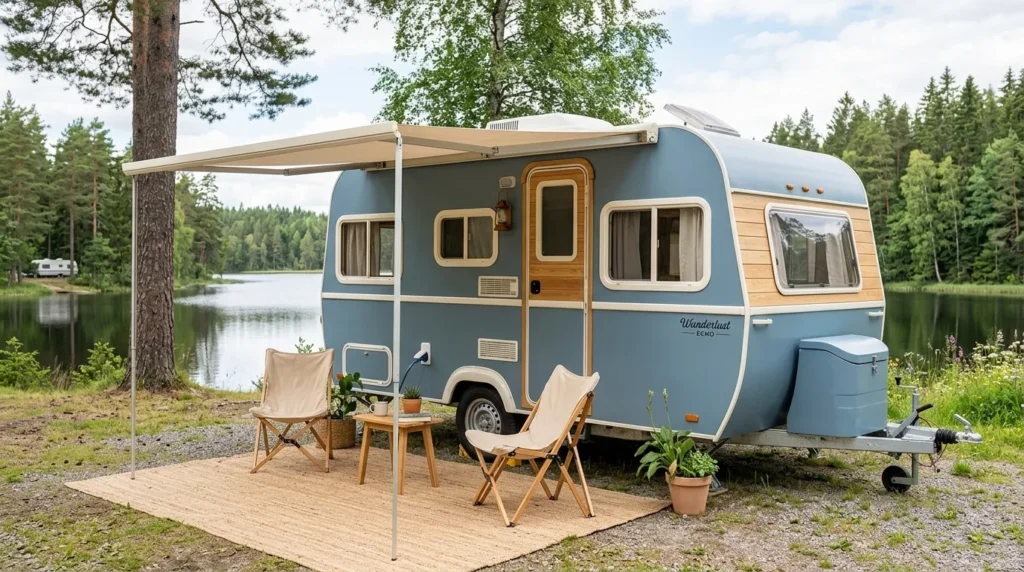
6. Dusty Blue Exterior
Quick Benefits
- Creates a relaxed atmosphere
- Works well with white trim
- Complements coastal styling
- Feels distinctive but subtle
- Pairs beautifully with natural materials
Why It Works
Dusty blue can make a camper feel relaxed and vacation-ready without becoming overly themed. A muted blue-gray has enough softness to work with warm neutrals, while still providing more personality than beige or white. It naturally complements outdoor surroundings such as sky, water, and open landscapes. The color is particularly effective when combined with warm-white trim and natural wood accents. Rather than using a bright beach blue, choose a slightly grayed or softened shade for a more sophisticated appearance.
How To Style It
Paint the main body in a dusty blue and use warm white around doors, windows, and trim. Add tan or natural wood-look accessories to balance the cooler blue. Cream outdoor cushions and a woven rug can reinforce the relaxed vacation feeling. If you want a stronger coastal identity, add a very subtle stripe, but avoid covering the exterior with nautical graphics. The goal is a fresh color palette rather than a literal beach theme.
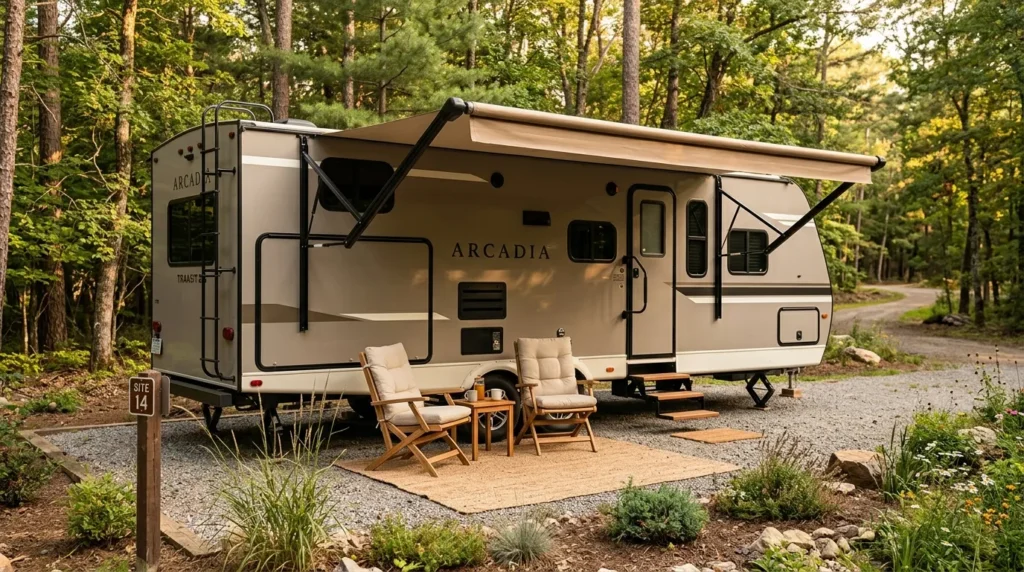
7. Taupe Neutral Finish
Quick Benefits
- Blends beautifully with nature
- Creates a refined appearance
- Hides visual imperfections well
- Works across decorating styles
- Pairs with warm accessories
Why It Works
Taupe is an excellent choice for campers because it sits comfortably between beige, brown, and gray. It has enough warmth to feel inviting while remaining sophisticated and understated. A taupe exterior can also work particularly well for older RVs because it doesn’t emphasize every small visual variation the way a very bright or highly contrasting color combination might. It pairs beautifully with wooded campsites and natural landscapes. If you want a camper that looks polished but doesn’t attract attention through bold colors, taupe is a strong option.
How To Style It
Use taupe as the primary exterior color and add warm white around the windows and roofline. Dark bronze, black, or brushed-metal hardware can provide subtle contrast. Add outdoor accessories in cream, olive, tan, or muted terracotta. For a more contemporary appearance, keep graphics extremely simple. For a rustic aesthetic, introduce natural wood-look accents and woven outdoor textiles. The resulting palette should feel earthy, calm, and timeless.
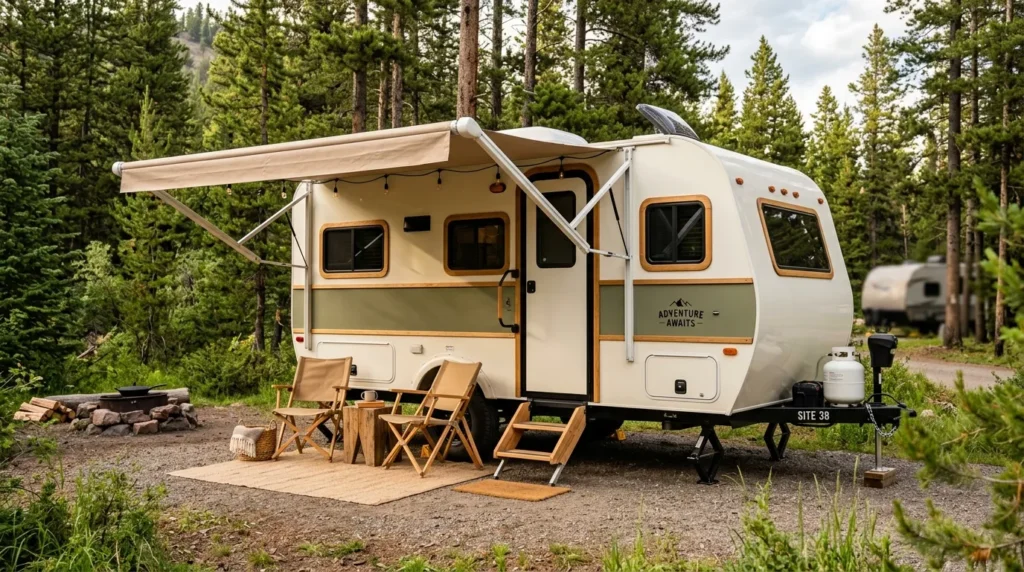
8. Olive Green Accent
Quick Benefits
- Adds personality without overwhelming
- Works with neutral campers
- Creates an earthy appearance
- Complements outdoor surroundings
- Easy to combine with warm tones
Why It Works
If you’re not ready to repaint an entire camper, an olive-green accent can provide a noticeable update without requiring a complete color transformation. Olive has more depth than sage and can create a grounded, outdoorsy feeling. It works especially well as a lower body section, broad stripe, door color, or geometric accent. This approach is useful when the existing RV finish is still in good condition but looks visually dated. Instead of fighting every original detail, you can use one carefully selected color to create a more intentional appearance.
How To Style It
Keep the primary camper color neutral, such as cream, white, or light beige, and use olive on a lower panel or selected horizontal section. Add warm wood-look details and tan outdoor accessories. A cream awning and olive cushions can subtly repeat the color palette at the campsite. Avoid combining olive with too many additional colors. One neutral body color, one green accent, and a warm natural material are usually enough to create a cohesive exterior.
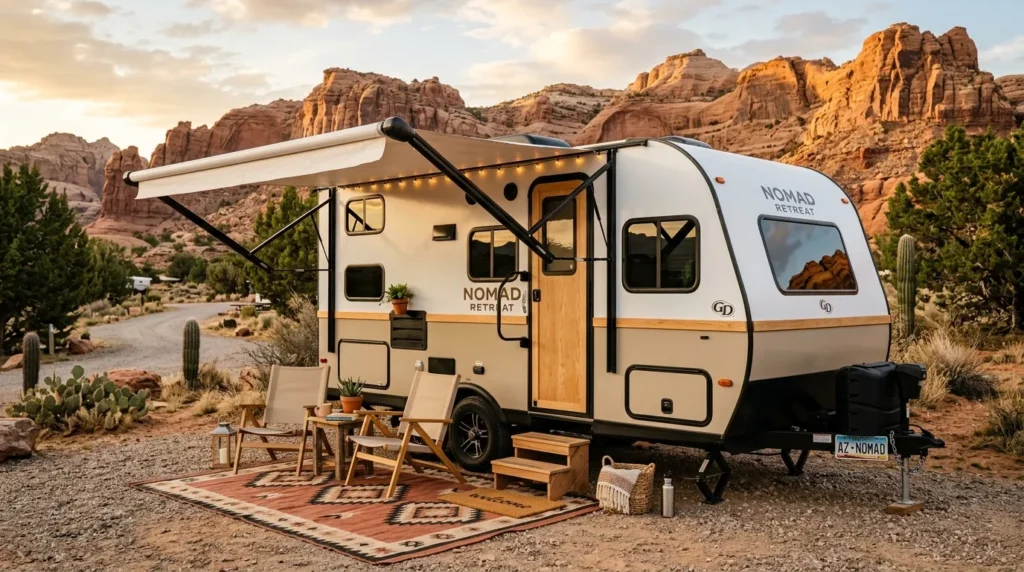
9. Sand and White
Quick Benefits
- Creates a warm outdoor palette
- Feels natural and relaxed
- Works beautifully in sunny environments
- Complements beige accessories
- Gives the camper a modern earthy look
Why It Works
A sand-and-white combination takes inspiration from warm landscapes, beaches, deserts, and natural stone. The palette feels particularly appropriate for a vehicle designed around outdoor travel. Soft sand tones provide warmth while white keeps the overall exterior light and clean. This combination is also easy to coordinate with campsite accessories because beige, cream, tan, and natural wood are common outdoor colors. If your travel style includes national parks, desert destinations, or coastal campgrounds, this palette can feel especially natural.
How To Style It
Use warm white on the upper body and a sandy beige on the lower section. Alternatively, keep the body white and use sand-colored graphics or trim. Natural wood-look accessories and woven outdoor furniture complement the palette beautifully. Add muted sage or dusty blue only if you need a secondary accent. Keep the graphics simple and horizontal to reinforce the camper’s long, streamlined shape. A neutral awning and outdoor rug can complete the cohesive campsite look.
10. Modern White and Gray
Quick Benefits
- Creates a fresh contemporary look
- Works on many camper styles
- Makes the exterior feel cleaner
- Easy to coordinate
- Provides subtle contrast
Why It Works
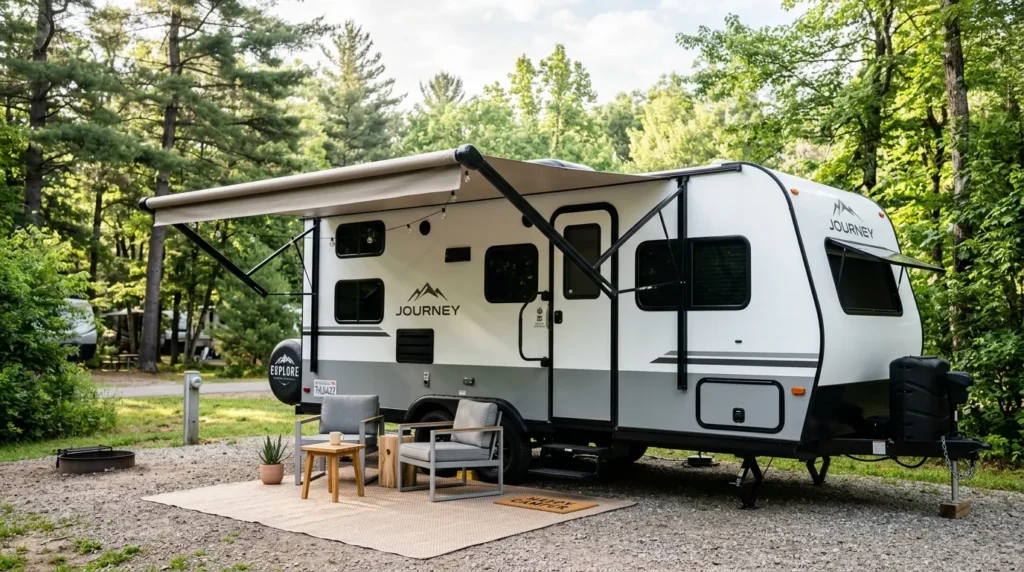
White and gray offer one of the safest ways to modernize a camper while keeping the overall design timeless. The combination can make an older RV look more intentional without requiring bold colors or complicated graphics. A bright or warm white body provides the clean foundation, while medium gray adds structure through lower panels or horizontal accents. This approach also works particularly well with modern black window frames, gray outdoor furniture, and neutral awnings. If you’re unsure which direction to take, this combination provides plenty of flexibility.
How To Style It
Use white across most of the camper and place medium gray on the lower third or in a broad horizontal band. Keep black accents limited to hardware and selected details. If the existing RV has decorative stripes, consider replacing them with one or two clean lines rather than several competing graphics. Use charcoal, beige, or gray outdoor furniture to continue the palette. Warm wood accessories can prevent the exterior from feeling too cool. The final result should look clean, simple, and contemporary.
How to Choose the Best Camper Exterior Paint Color
Choosing an exterior color should begin with the camper itself rather than the color you happen to love in a paint store.
Look at the RV’s shape, windows, trim, roofline, doors, storage compartments, and existing materials.
A long travel trailer may benefit from a two-tone design that visually breaks up its length. A smaller camper may look better with one dominant light color and minimal contrast.
Also consider the environment where you typically camp.
A sage or olive palette can look beautiful surrounded by trees, while sand and white may feel especially appropriate near beaches or desert landscapes.
Your interior style can also guide the exterior. A modern neutral camper interior may look best with white, charcoal, greige, or taupe outside. A farmhouse-inspired interior can pair beautifully with cream, sage, or black accents.
Most importantly, don’t choose a color based only on a small paint swatch. Exterior surfaces, sunlight, shade, and surrounding colors can dramatically change how a color appears.
Test your chosen coating system on an inconspicuous area or sample surface when possible and evaluate it under different lighting conditions.
Best Camper Exterior Color Combinations
Some combinations are particularly easy to coordinate.
Warm White + Sage
Fresh, natural, and relaxed.
Cream + Black
Modern farmhouse with strong definition.
White + Charcoal
Contemporary and sophisticated.
Sand + White
Warm, earthy, and travel-inspired.
Greige + Cream
Soft and timeless.
Dusty Blue + White
Relaxed and coastal.
Taupe + Black
Earthy with a modern edge.
Olive + Warm White
Natural and distinctive.
When choosing two colors, one should generally act as the dominant base while the other provides contrast. This prevents the exterior from becoming visually fragmented.
How to Prepare a Camper for Exterior Painting
Preparation is one of the most important parts of an RV exterior paint project.
The correct preparation will depend on whether your camper exterior is fiberglass, aluminum, gel coat, previously painted material, or another surface.
Start by identifying the exterior material and checking the coating manufacturer’s recommendations.
The surface may need thorough cleaning, removal of contaminants, sanding or other preparation, repairs, and an appropriate primer or bonding system.
Any loose, peeling, chalking, damaged, or contaminated surface needs to be addressed before applying a new coating.
Protect windows, seals, lights, vents, handles, tires, and other areas that should not receive paint.
Also consider the weather. Temperature, humidity, direct sunlight, and wind can all affect application and curing.
Don’t rush this stage. A beautiful color cannot compensate for poor preparation.
If you’re uncertain about the material or coating system, consult the RV manufacturer, paint manufacturer, or a qualified professional before proceeding.
Should You Paint the Whole Camper?
Not necessarily.
A full exterior repaint can be a significant project, and sometimes a partial update provides enough visual improvement.
Consider painting only:
- Lower body panels
- Entry doors
- Decorative stripes
- Selected trim
- Exterior storage doors
- Accent sections
A two-tone design can sometimes create a more dramatic result than a single new color.
If the existing finish is still in good condition, carefully chosen graphics or professionally applied accent colors may also be worth considering.
Think about the condition of the entire exterior before deciding how extensive the project needs to be.
Common Camper Exterior Painting Mistakes
Choosing color without considering sunlight can result in an exterior that looks very different outdoors than it did inside.
Skipping surface preparation can compromise the finish.
Using incompatible products can cause adhesion or durability problems.
Painting without checking the substrate is another common issue because fiberglass, aluminum, and previously coated surfaces can require different preparation.
Using too many colors can make the camper look visually fragmented.
Ignoring the roof and seals can create unnecessary problems around areas that require specialized materials or maintenance.
Forgetting travel conditions is also a mistake. Your camper is exposed to road debris, weather, washing, and movement in ways that a stationary building is not.
When in doubt, prioritize compatibility, preparation, and durability over appearance alone.
Frequently Asked Questions
What is the best color for a camper exterior?
There isn’t one universal best color, but warm white, cream, gray, greige, sage, taupe, and muted blue are versatile choices. The best option depends on the camper’s existing materials, climate, trim, shape, and your preferred decorating style.
Can you paint the outside of a camper?
Many camper exteriors can be painted, but the correct preparation and coating system depend on the exterior material. Fiberglass, aluminum, gel coat, and previously painted surfaces may require different approaches, so identify the substrate and follow the coating manufacturer’s instructions.
What colors make an RV look newer?
Clean neutrals such as warm white, cream, light gray, greige, and charcoal can create a more contemporary appearance. Simplifying dated stripes and combining a dominant neutral with one contrasting accent can also make an older camper look more modern.
Is white a good color for a camper?
Yes. White is a classic RV exterior color because it feels clean, versatile, and bright. Warm white can soften the appearance while coordinating with black, gray, sage, blue, beige, and wood-look accents.
Is dark paint good for an RV exterior?
Dark colors can create a sophisticated appearance, but they may absorb more solar heat than lighter colors. Climate, surface temperature, product specifications, and manufacturer recommendations should be considered before using a large dark exterior surface.
What color camper looks best in nature?
Earth-inspired colors such as sage, olive, taupe, sand, cream, and warm white tend to coordinate naturally with wooded, mountainous, desert, and coastal surroundings. Muted shades generally create a more sophisticated look than highly saturated colors.
How do I modernize an old camper exterior?
Simplifying the color palette is often an effective starting point. Consider warm white, gray, greige, sage, or cream, then use one contrasting color for trim or lower panels. Improving faded graphics, cleaning the exterior, and updating compatible exterior accessories can also make a noticeable difference.
Related Articles
- 10 Camper Storage Ideas to Make Your RV More Organized
- 11 Camper Bedroom Ideas for a Cozy, Comfortable RV
- 11 Camper Table Ideas for a Cozy, Space-Smart RV
- 10 Camper Flooring Ideas to Freshen Up Your Tiny Camper
- 11 Camper Ceiling Ideas to Freshen Up Your Tiny Camper
Conclusion
A camper exterior doesn’t have to stay stuck in the style it came with. A thoughtful color palette can make an older RV feel cleaner, more personal, and much more current without changing its basic structure.
Warm white is a timeless starting point, while sage and olive bring a natural feeling to the campsite. Charcoal and gray create a more contemporary appearance, while cream, taupe, sand, and greige offer softer alternatives. If you want something with more personality, dusty blue can create a relaxed vacation-inspired look without becoming overly themed.
The most important part of an exterior paint project isn’t simply choosing a beautiful color. The coating needs to be compatible with the camper’s exterior material, and the surface needs to be prepared properly. Take your time with cleaning, preparation, testing, and product selection.
You also don’t have to repaint the entire RV. A lower accent panel, updated stripe, contrasting door, or two-tone design can sometimes provide the refresh you’re looking for.
Start by looking at your camper as a whole. Consider its shape, windows, trim, existing materials, and the environments where you travel. Then choose a palette that feels like an extension of your personal style.
A well-planned exterior can make your camper feel fresh before you even open the door—and give you a space you’re proud to bring to every campsite.